How I Saved Client Relationships | Scaling Together
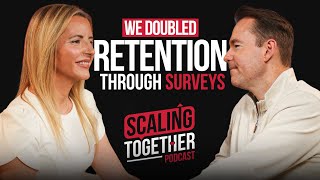
Two agency co-founders explain how client surveys saved their business after early churn from mismatched expectations. They use Google Forms and AI to synthesize feedback on meeting cadence and ROI communication, then implement changes quarterly. The key: ask specific questions instead of relying on Net Promoter Score alone.
Chapters
If you don't know what your clients are thinking, then you don't know how your business is doing. And it could be a very costly mistake if we're not ear to the ground.
You kind of brought a sense of we have to definitely drill down on what clients are feeling, where we're doing well, where we're doing poor, and look in the mirror so that we can make an objective assessment and make adjustments so that we can get better.
What is the worst mistake we made because we didn't ask sooner?
For a window of time, we just assumed that this was how every client wanted to engage. This was the questions that they would want us to answer. And we would get churn. And until we started to drill down and realize different clients have different meeting expectations, have different things they want to see to feel like you're doing a good job, to feel like you're generating results, we were losing clients unnecessarily. And so asking those questions and getting that feedback is mission critical and adjusting your setup can really make a big difference. 100%.
When did a client survey call us out hard and were they right? Hmm.
All right. Welcome to another episode of the Scaling Together podcast where we're talking all about how we've grown and scaled our agencies and how we do it together. As a couple, and on today's episode, we want to talk about the importance of surveying and getting feedback from clients so that you can improve as an organization.
Yes. If you don't know what your clients are thinking, then you don't know how your business is doing.
Mm-hmm.
And it's, it could be a very costly mistake if we're not ear to the ground. In fact, every single piece of our business, from the way that we handle our digital marketing agency to the way that we handle our coaching business, is from listening to clients. And so it has evolved over time and it is what it is today because of that feedback.
I think this is something you, you really helped to bring to the company because I'm very much a business growth-focused person, like, I want to grow the revenue, I want to grow profitability, I want to focus just on positive, and so I don't want to hear the negative, I don't want to hear the complaints. And I think, you know, you, you kind of brought a sense of, well, no, we, we have to definitely drill down, you know, on what clients are feeling, where we're doing well, where we're doing per— poor, and look in the mirror so that we can make an objective assessment and, and make adjustments so that we can get better. And if we don't, like, we're just gonna stay exactly like we are.
Well, that plays into our roles in the company as well, because you are more sales inclined and I'm more ops inclined. And so for you, you, in order to have the, what's the word I'm looking for? It's not the motivation, it's not the excitement, but just the drive on the sales side, it's important to stay positive and look at all the great things that are happening in the organization and not be too bogged down into the weeds of what the issues are.
Mm-hmm.
So it completely makes sense to protect, so to speak, just all of the negative details that are going to be worked out anyways. They're small little things, and if they're brought to your attention all the time, can affect your psyche and keeping the positive— the positivity energy for sales. And that goes for all the sales team as well. So it is important to stay focused on the positive. What is the worst mistake we made because we didn't ask sooner?
I'll let you speak to that one.
Well, we've had a situation with— at our own events where we allowed people on the stage to speak that didn't actually have a topic that was in line with digital marketing agency. We've had people on the stage who don't speak the language and basically doesn't resonate. And so we learned that the hard way through surveys of, oh yeah, we do have to really make sure that we vet. And we always do going into it, we're always like, all right, who's the speakers? We get into a room with an entire team and like, what's the content? What is the theme? What are we going for this intensive? And so we do that with a digital marketing agency as well, and plumbing agency.
Yeah, I think, you know, like you could assume for like for your client account management process, the client wants to meet with us every week, right? Or they want to meet with us every single month. But you may survey the client base and realize, well, this client is a type A personality, has entrusted you with their internet marketing strategy, And they just want to see a report at the end of every week with the metrics and the numbers, right? And I think we made that mistake early, or for a window of time, we just assumed that this was how every client wanted to engage, this was the questions that they would want us to answer, and we would get churn. And until we started to drill down and realize different clients have different meeting expectations, have different things they want to see to feel like you're doing a good job, to feel like you're generating results, we were losing clients unnecessarily. And so asking those questions and getting that feedback is, is mission critical. And adjusting your setup can really make a big difference.
100%. When did a client survey call us out hard and were they right?
Hmm. Do you have an example?
I wouldn't say hard. We survey since the beginning. So any little thing we've been adjusting. So what we do is when we do the survey, we think about every aspect of the entire experience. So unfortunately, and sorry guys, when you fill out one of our surveys, they are kind of lengthy, but we do strategically ask these questions to try to keep it to a certain length. But they're specifically designed questions that aren't just asking a question for the sake of, hey, how do you feel about this? But they're specifically asking in a way that we can actually fix something in our organization based on how the question is asked. And so that is number one, the key to us being so successful with our surveys is how we ask, asking the right question, right? That's from Marcus Sheridan. It's all about the ask. And so that's where it starts. And then the second thing is actually reading the surveys when they come in because a lot of times we put these surveys out, They're automatic, they pile up. It's like all this data, what are you gonna do with it? But we live in a land of AI now, so it's super easy to just dump all of that into AI and have it spit out all the information that you wanna ask it. But, um, even with artificial intelligence, it is super important with surveys to read every single one because you get the actual feel when you're reading the actual comment of how the person talks and how they say it in the message makes a difference. And so I still sit through and read every single one of those surveys and we take it to heart. We prioritize them. We do two different waves. We sit with a team and we go over every last issue that's documented and make sure that we implement a change to it as soon as possible. That's the other thing is like implementing changes right away. And I get it all the time from clients, members that say, wow, I, you know, I entered that in the survey and then all of a sudden the next time I look, it's, it's already changed, it's already updated. That's insane. And so, um, love hearing those. And that's the reason why we do it is for them. Again, going back to we are here to serve our clients and our members, and we just listen and do.
So I think in the agency world, usually, at least from my perspective, I would be like, okay, I want to do a survey because I want a positive review, right? Literally, that's the only reason. How would you rate us on a scale from 1 to 5? Did we go— okay, go write us a public review. Let's make a testimonial. But really, if you're intentional with surveying, you're looking for the negative feedback too. Because the negative feedback is going to be the thing that will help you improve more than anything else. And so onboard survey, right? Like, what are your expectations? What are your goals for the next 12 months? Monthly check-in survey. What's your revenue? Has that number grown? What are you, like, wanting to see more of or less of from your account managers? And then an annual check-in with your client base, not just to look for the 5 stars, but to look for that account manager's dropping the ball. We're not getting a return on investment. We're not happy with this, that, or the other. If you can get that feedback before they cancel, you might be able to save the relationship. But more importantly, systemically as an organization, you can solve problems that are going to improve retention for every other client that you serve as well.
So when survey and data comes back, its content, its comments, its ratings, how do you determine whether it's gold or garbage.
I think it's important, right? Because like, let's just face it, if 50 clients all say, you know, 49 of them say one thing, but there's just one person that has this random request or this random thing, you can't change the entire model based on one piece of feedback. So you have to take it with a grain of salt. I'd love your thoughts on how you think about this in the 7 Figure Agency Summit.
I do. We get this all the time, and sometimes it'll be a random, like you said, a random, that no one else has said, but this person said it. And if it's something that we can implement fairly easily and right away, we do it. Even if it's the tiniest thing, like, man, the hotel was cold the couple of days we were there. And so we're like, sweat our merchandise out for giveaways and we make sure that the temperature changes and we keep an eye on it. And anyone that brings it up during the conference, we make a change right away. And, uh, one of them was like, I have a peanut allergy. It would be great if you had an option that didn't have peanuts. And so we did that. So it's like the tiniest little thing, who cares kind of thing, could be the approach. You could be like, oh, this one person, like, we're not going to change our entire strategy because of this one thing. But if you can it makes such a difference to that one person and they notice the next time. So that's my philosophy on it. If we can, we do. What's your biggest fear when you hit send on a client feedback form?
I mean, it's always that you're going to get a one. You're going to get like, wow, you guys are terrible. Thanks for reminding me. I've been meaning to cancel, you know, for the last 3 months. So you're always— you're fearful that you're going to get really negative feedback and a wave of client cancellations.
Yeah, it's like, am I just disrupting something by sending out a survey? Like, they're going to be like, oh yeah, that's right. I've been meaning to, by the way. Yeah, that's true. But the reality of the situation is that it is false fear appearing real and it is not true. That is so rarely and oddly the case, if ever happened.
And it really, when they do receive the survey, it shows that you care.
Yeah.
It shows that you want feedback.
Yes.
Ideally, that client that may have something that's really upsetting them right now has another channel to vent that frustration and is trying to give you the opportunity to get it right. So, yeah.
Have you ever ignored a red flag in the data and paid the price?
I think, yeah, often, unfortunately, over the years, you, you'd look at, you'd look at things that were obviously an issue either an account manager that just— you had the gut instinct they probably weren't doing a great job. Clients start to complain and you're like, well, you know what, they've been with us for a while. They're very loyal. They understand our process. It's going to take a lot of time.
It's the clients. We've got to go find a whole other account manager and train them up.
And, you know, you lose— you lose clients. You— you burn your reputation with those people. Uh, and, you know, it's always better to act than to ignore.
Yes. What's a juicy truth a client told us that totally shifted our business? Mm.
I'll let you talk about that one.
A juicy truth would probably have to be when we had people selling on the stage.
Mm.
Would be the closest thing. Yeah. At Seven Figure Agency, we had to make that change and nip it right away. Didn't realize that people were so offended by that. It's, it's, it could be a couple of things. Cursing at the stage is in our brand. And so that's another one that we've been told about.
So there's, from, from an agency perspective, one, one piece of not so juicy truth, but truth was, you know, you guys are giving me smokes and mirrors, right? We had a couple of clients just say, look, You know, you're showing me this ranking report, you're showing me this analytics, but I'm not seeing the revenue growth, right? And if you guys can't show me that I'm investing the $2,000 a month with you and that's turning into $20,000 in revenue, I don't care how fancy your reports are, I don't care how good the data is, I'm not going to remain a client. And that really helped us realize, look, it's not about, you know, the number of clicks. It's not about the traffic. It's really about the results. And the return on investment and connecting the dots for the client and really showing them, hey look, so those leads generated to this amount of booked jobs and this amount of revenue. And when you make that really clear, retention gets much better.
Yeah. How do you keep surveys honest, not sugarcoated? I think that's feedback from the team when you're bringing it back to the group. There is no sugarcoating. We have the survey comments exactly as they appear, and we share the good, the bad, and the ugly.
I think the other thing though, like sugarcoating it for the, for the client specifically, you like think about when you go to a car dealership.
Yeah.
Go to the car dealership. The guy sells you the car and then afterwards he's like, I'm gonna fill the survey in. I need all 5s. If I don't get all 5s, I'm gonna be fired.
Oh geez.
And the intent of the survey is this guy's job is on the line here and I have to say 5 regardless.
Mm-hmm.
Versus. Look, we're asking for your honest feedback. This isn't for us to feel good. It isn't for us to get a pat on the back, even though we love those. This is for us to get honest feedback on how we can improve. And if you ask for that feedback, you're more likely to get honest, unsugarcoated responses.
Was there any feedback that you've ever received that made you want to crawl under a desk and hide from society?
Obviously, yeah. You know, there's times where you get, you get feedback that you don't want to hear, but it's the, it's the problem, it's the issue that you need to solve.
How do you read between the lines when clients are being nice but not honest?
I'll let you answer that one.
Um, well, a lot of times people are like, yeah, it was great, it was okay, but they give it a 3. And so, you know, we know that it didn't hit home. And so that's when you get enough of those, you realize there's an issue in this category in your business. And so getting together with that leadership team in that department and looking into how can we solve these issues. But it is sometimes reading between the lines, digging deeper And if it's a hallway conversation, it's like, hey, what do you think about this? They're like, well, it's okay. You're like, oh, tell me more about that. And really, really wanting to know. And then I think that's also something that we have is just we want to know what the situation is versus being blind to, oh, I'm not even going to ask people how things are going because I don't want to hear it. I just hope that it's great. We don't feel that at all. We feel, we want to know if there's like dirt, like we want to know what the dirt is before anyone else does, you know, because we want to be able to clean it up right away and make this an amazing place for anyone that steps into it.
So practically speaking, for the agency owner that's thinking, well, I get it, I need to get these surveys so that I can get feedback so that I can improve. Like, what are some of the tools that you use? And/or some of the cool AI things that you're doing to extract the knowledge so that you can action it quicker.
Yeah. What's your secret weapon question that gets brutally real answers?
I don't know. You don't know? No, I was, I was waiting. I just asked you a question right then.
Oh, did you ask me? What was the question?
Cut!
This is when listening helps in a relationship. It's so funny. I literally— I don't know why I didn't even register that you had asked me a question.
Yeah. Yeah.
Go ahead. I was probably thinking about the next question.
You were trying to think of the next question. So the question was, for agency owners that want to do surveys, what tools do you use and what are some of the cool things you're doing with AI to extract feedback? So I don't know if editing— hopefully we're going to have to look at this one closely to to find the cut point. But that question, and she's going to chime in now.
So agency owners, there's so many tools out there that we can use for surveys. I mean, we use just like the simple ones, Google Forms. Exactly.
Typeform.
Our team goes in and we let them know what the questions are that we want to ask. They create it for us and then have access to our HighLevel database and send it out to everybody. We receive the data and then we take the data and put it— we have another team member who is our AI coordinator and throws everything into, um, Claude and gives us the data so that we can digest it and provide it, the feedback to the team. So there's so many ways to go about and skin a cat when it comes to surveys, but that's what's working really, really well for us and getting the job done quickly. We also use Google Forms internally because it's one thing to have survey feedback from the clients that you work with and it's a whole other piece to survey your actual team members on the service that we provide. So we have this really long document, really long document. It starts off blank and it's called the takeaway document and then the team members fill in all of the things that they see that can be improved within the company. And, uh, we have scheduled meeting, and, uh, periodically it's once a quarter, and we go through the document and attack each one and say, how can we solve this? With a whole team on the call, because sometimes some things touch on different departments. And so it's all of us coming together and saying, how can we work this out? And we patiently wait, and we go through each one, and each person speaks and has a chance to talk. And that's how we dig into feedback from our clients and our team members.
Yeah. And as an agency, you probably want to put in— if you've got HighLevel and you're using HighLevel forms or surveys, put in an automation where after the monthly review call, a question goes out where on a quarterly basis you're requesting feedback. Ideally, like, what's the revenue? What's the revenue versus target for the year? like what are they like? What would they like to see more from you as an organization? I know you have a strong opinion on Net Promoter Score, and I love Net Promoter Score. Not a lot of agencies, when you think, oh, we're gonna survey, we're just gonna ask for Net Promoter Score on a scale from 1 to 5, how likely would you be to refer us to somebody else? Um, tell us your perspective on NPS, why you like it, why you don't, where it fits in.
Yeah, so Net Promoter Score is wonderful in the sense that it gives you a score rating on how you're doing in your organization as a whole, what that client perceives you in general, which is great to know. But were you to take that data and you bring it back to your team and you're like, hey guys, we have a Net Promoter Score of X, you can't really do much with fixing things if you just have a reading. You need to know more detail. You need to know, okay, how was their experience on the onboarding? How has their experience been with SEO and PPC and all the work that we've been doing behind the scenes and what is their experience with communicating with our team internally? What are their expectations? Do we meet them? There's so many questions that if you ask the right question, you will get a so much better solidified answer that you can actually now take back to the team and say, hey, look, they're saying that their onboarding didn't go great. Let's, let's figure out what's going on and drill down. Maybe the next time we survey them, we ask a more specific question. We're like, oh, we think we've narrowed it down to this area in our onboarding process. Now let's survey that specific question and find— so you just keep digging deeper until you get to that solid why so that you can fix things in your business and continue to grow.
So good. Love it. So if you're not doing surveys today, I would highly recommend it. You know, I always shied away from doing this type of work, but if you can have the courage to look at yourself in the mirror to find those areas for improvement, it'll improve your client retention, it'll improve your average client value, it'll improve the services you provide as an organization, which ultimately is gonna improve your growth and your, and your profitability.
Yeah. And when you ask those questions, aside from the Net Promoter Score, the, the inclination, if this is the first time you've ever sent it out and gotten the data back, it's, it's very stressful. You're like, oh my gosh, what are they gonna say? Say immediately, we always think the negative, like it's probably gonna be— I'm not gonna want to see what comes back. But delightfully surprised when it's mostly good, you guys. And we know it's going to be mostly good for you too. So do it knowing that you're going to get a lot of great feedback and a lot of constructive criticism that you can use to catapult your business to the next level.
So good. Well, thanks for joining us on this episode of the Scaling Together podcast. If you've got follow-up questions, drop them into the comments. Be sure to subscribe and share this with another agency owner that might benefit, and we'll see you on the next one.
More from Joshua


From 26 Years in Business to Nearly Doubling Recurring Revenue | Sandy Waggett




How Luke Truetken Scaled His Agency to $110K MRR by Going All In on One Niche



Website Production at Scale - The AI Tool Stack for Modern Agencies with Marcel Knopf

