How Jason Call Scaled to 400+ Clients Using AI & Smart Systems
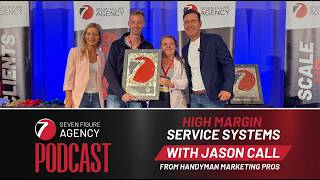
In this episode of the 7 Figure Agency Podcast, host Joshua Nelson interviews Jason Call, founder of Handyman Marketing Pros (HMP). Jason explains how he grew a niche agency serving small, family‑owned handyman businesses to over 400 clients and $92K MRR with a low‑ticket ($300‑$500/month) offering that includes a high‑converting WordPress website, local SEO, Google Business Profile management, review generation, monthly reporting, and optional services such as Google LSA and AI phone answering. He details the evolution from a legacy agency to a focused niche, the importance of a "niche‑within‑a‑niche" strategy, and the role of a viral client‑turned‑influencer in jump‑starting growth. The conversation covers client acquisition via a handyman‑focused podcast, JV referrals, organic word‑of‑mouth, and emerging paid ads. Jason outlines the sales funnel: a public pricing page, a pre‑call demo video, a brief one‑on‑one phone consult, and a self‑service e‑commerce sign‑up with a 12‑month commitment. Operational efficiency is achieved through ClickUp project workflows, GoHighLevel automations, a lean team of six (including an offshore operations specialist), and a transparent support system using Hiver. Retention is driven by clear expectations, rapid delivery (websites launched in under a week), proactive resources, and a 97.5% retention rate. Profitability is managed with the Profit First methodology, detailed monthly spreadsheets, and disciplined allocation of profit to personal wealth, real‑estate, and experiences. AI is being integrated to accelerate account‑management responses, automate onboarding‑to‑website generation, and produce hyper‑personalized client content. Throughout, Jason emphasizes fundamentals, transparency, and the mindset of committing fully to a niche while shedding legacy clients.
Chapters
Hello and welcome to the 7 Figure Agency Podcast, where we're interviewing highly successful digital marketing agencies from across the country. And today we've got a really special treat. Excited to be joined by Jason Call from Handyman Marketing Pros. He's grown his agency to almost multiple 7 figures, definitely high 7 figures, serving the handyman space. Jason, thanks so much for being here.
Yeah, man. I'm happy. Feel blessed to be here, Josh. Looking forward to our conversation.
So give us the lay of the land. Approximately how many clients, approximate revenue? Like what's the current situation there at Handyman Marketing Pros?
Yes. We serve, obviously our niche is handyman businesses. I'm a big believer in the niche within the niche, going deeper. And so for us, it is small family-owned handyman businesses. That's what we have on our marketing. Our ideal clients are actually doing less than $500,000 annual revenue. So our niche is small family-owned handyman businesses doing less than $500,000. We serve about 400 clients across the United States and Canada at the moment. Our current MRR is about $92,000. We've 6 team members, including myself. Our profit margins, we run a little bit above 50% margin on a low-ticket offer that's focused around websites, local SEO, Google Business Profile, that good stuff. And the last thing that comes to mind as far as a summary is my role is as of December, we brought on a sales and marketing manager. So I'm in that true CEO role and in charge of culture and the money and making sure that the vision and where we're heading, we maintain our kind of place in the market to be indispensable to our ideal prospects.
That, and one of the, I love that you said niche within the niche. I definitely want to get into that. But you know, that's a tough, that's a tough niche. You know, financially, you know, they might not have as much to invest as some of the other industries. I want to get into how you made that work. And I know you're kind of on a lower ticket operation, but what's really great is it's not just top line. So many of us, we think like, okay, we're growing the revenue, growing the revenue. But revenue's vanity, profit is sanity. And the fact that you've dialed in the profitability in the business while creating that world-class result, while being indispensable to your clients, uh, I'm excited to get into all of that. So if you're listening to this live or potentially after the fact, drop a like and/or drop a comment. Let us know if you've got a question or if you're impressed by something that, that Jason has shared. Put that in the chat. Let's make this a running conversation. So that's where you're at today, and that's amazing. Just kind of take us back a little bit. How did you get into, without going too long, how did you get into the agency world in the first place?
Yeah. So like most, I started a legacy agency where I was serving landscapers, lawyers, life coaches, coffee shops. Like if someone was willing to give me money to do internet stuff, like I was there for it. And so that's how I started. Uh, my first big company was in HVAC and that taught me a lot about the game. You know, I was Googling like HVAC SEO, plumbing SEO, and that's how I originally found plumbing, plumbing SEO, HVAC and plumbing SEO, your agency, right? And that literally, Josh, was the spark of like, ooh, that's a good idea. Like if someone's searching handyman SEO, like I want to come up for that. So yeah, one of my best friends had a handyman business. I gave him a website and a basic marketing strategy for a Christmas gift. He took off and blew up with that. And so that was my kind of spark of like, you know, I'm sure there's more of these handymen out there that I could help with these services. And so, you know, then the niche agency was born and I didn't even know about 7 Figure Agency back then. I just saw your Google profile ranking for plumbing SEO, which sparked the inspiration. Then full circle, like I was stuck between that $10K to $15K MRR on the legacy agency. I just couldn't, it was just hard work, uh, like working like 60 hours a week, uh, 80 hours sometimes just grinding it out. And I knew that the niche was where the, the freedom was both financially and time and, you know, it's processable. So as the niche started building up traction around $15K MRR, I found 7 Figure Agency. I was like, oh my gosh, this plumbing guy has this program. I could just learn from it. So that was in late 2020. So I've been a happy member of Joshua's program and truly got anyone listening, if you're in that like stuck phase, like $10K to $20K MRR and you have the heart to really serve your niche and your clients and you have the commitment to put the hard work in, because the first few years, I mean, it's It takes a lot of work, right? Dedication. Highly recommend their program. World class. So shout out to Josh and that. So since joining though, over the course of 5 years, you know, Handyman Marketing Pros, we've just been that slow, steady climb of like $15K to $20K MRR growth per year. 100% organic. Obviously I have a huge focus on profit and, you know, that organic marketing strategy year after year, building up our authority reputation is kind of how I'm sitting here today. You know, where we are now, the sales and marketing manager, you know, we're starting to run paid ads. We're, you know, allotting some of that profit to invest in future growth where I'm not in the driver's seat. And so that's kind of, I guess, my quick, quick story, man, of, of how I got started. Like, like a lot of people, I'm sure.
Love it. So generalist kind of figured out how to do websites and SEO, learned that stuff, realized, man, it's, it's hard to get clients. It's hard to have that consistent sustainability. You know, got great results in handyman. Decided, okay, I'm gonna focus on this. Talk to us a little bit about how you made the leap from that friend that you built the handyman website for to like a handful of clients, maybe the, the next handful of clients in that first—
Yeah. Yeah. Um, so the big thing for me was at the top level, treat every single one of your clients like they're an influencer, like they're gonna blow up on YouTube, on social media. Because that's what happened to me. My good friend, he started documenting his journey. It's called The Handyman Journey on YouTube. He grew his YouTube channel to, it's like 80,000 subscribers, had a Facebook Facebook group that has thousands and thousands of people in there. So that initial traction was largely from people finding his YouTube channel, going to his website, going to the Facebook group and be like, well, this Jason Call, Handyman Marketing Pros guy, like I'm going to hit him up for a website. Right? So that was where the initial traction came from. And, you know, from there, I think a big bandaid that everyone has to rip off at some point is they have to let that legacy agency go. For me, it was the niche side was enough to sustain my household. You know, profitability-wise, the trajectory was going on the up, right? But I was getting these calls from legacy clients, from local leads. They're like, oh, you know, so-and-so told me about Jason from the Chamber of Commerce or all the local stuff. And that was also a huge part too of like, you have initial traction in the niche agency, but if you hang on to that legacy side, it is holding you back way more than you know. And so Initial traction was kind of like a JV partner that kind of blew up online. But I wouldn't be here if I didn't have that forceful ripping off the bandaid where I literally like gave my legacy clients away to a few other local agencies.
That's a tough call, right? It's because I see a lot of agencies get stuck in that in-between phase where they're like, okay, I've got my legacy clients. I know I want to go niche, but I, you know, I'm still taking from both and you can't really grow with that diverted focus. And it sounds like you made that tough call and it paid off in spades. Absolutely.
Absolutely. Yeah. There's a short-term hit there, obviously. You know, for me it was like somewhere in the ballpark of $8,000 to $12,000 MRR. And it wasn't all at once. It was like a, you know, slow trickle of getting rid of these clients and doing that in a positive way. Like I love, uh, Chris Rodriguez in the group says, love them on the way in and love them on the way out. And so it is a transition, but, and it's a hard transition, but the benefits, the mental space and energy that you're going to unlock when you're literally all you're doing is your niche, it is amazing. And there's so much energy and power and focus that comes from only having the one thing.
So good. So good. So talk to us about the selection of handymen and kind of let's go into that concept of the niche within the niche, because you could say home services, you've got landscaping, you've got plumbing, you've got, you've had an HVAC client. Talk to us about why the niche within the niche and why handymen for you specifically.
Yeah. So the one, the handyman industry is unique in that it's not as developed as plumbing, HVAC, other home services. Inherently because it's a strange niche because it's a niche that has no niche. Like they do all the stuff, right? Small plumbing, small electrical, all the things. So the whole market share, a huge chunk of the market for handyman businesses is the small family-owned doing less than $500,000 in your revenue. And that took me years to learn. Um, but why, why handyman services and, and that niche within the niche that was actually inspired Danny Barrera. Again, all these insights come from being a part of 7 Figure Agency. There's just gonna be so many nods. Let's do this, guys. And Danny Barrera, like he was targeting home services and then he targeted contractors and then that wasn't enough, concrete contractors. And so that's what really kind of made me think, 'cause it is tempting at first when you're sitting in that $10K to $20K MRR, you've got a few home services, you're like, oh, I'll just do home services. Yeah. The type of client that a, an HVAC company that's doing $2.5 million and an owner-operator handyman business do totally different things. What they need to fill their pipeline, achieve their goals. Their goals are very different. My HVAC client, she wanted to buy a boat and their second vacation home, right? The handyman, he wants to have a business and have freedom of time and to control his schedule. So their needs are so different, both in lifestyle and their like kind of goals they're working towards, but also just the marketing stack, the lead flow that they need. So the importance of identifying that niche and then that niche within the niche is so important because the niche, you can't identify just a comprehensive strategy, right? Of SEO, websites, paid ads, speed to lead, all the different things that we take into account. But when you look at one pocket within the niche, uh, and for us it's the small guys, we don't need to worry about paid Facebook ads because if they're not running LSAs or they're not even on Google, like they don't need to worry about Meta ads, right? Um, and then on the flip side of that, bigger companies, you know, if you're targeting HVAC companies that are doing $3 to $5 million plus, you know, they need all of it. You know, they've got the budget to pay a marketing consultant $3,000 to $5,000 a month. They've got the ad budget of $5,000 a month, and you can come prepared with your systems and your people that know how to serve not just the niche, but that niche within the niche. So huge value, I think, in really drilling down, uh, by like size of a company within the niche.
So good. Lots of great insights and takeaways there. Talk to us a little bit about what the deliverable is for your handyman clients. Like, What is it that you do for them? How much do you charge for that? Kind of walk us through that piece of it.
Yeah. So anyone's welcome to go to our website. You'll get retargeted. Please don't click on my ads. We got our pricing and everything fully visible. I'm huge on transparency. I believe in life and business. If you just live in truth and transparency, it just makes everything way easier. All your conversations, everyone you're signing up, they know what they're getting. Our programs range from about $300 is our core, uh, core program to $500 a month. We don't have any setup fees. We just require a 12-month commitment. I know that sounds absolutely strange. Like, how are you doing that? There's no way that you have these margins. It is possible with the right systems, the right people, the right culture surrounding those people. It's all these things work together to be able to, to do this. And that kind of theory can be applied to any niche, any industry, any focus, the systems, the people, the culture. So our specific offering is based around rolling out a really professional, high-converting WordPress website, getting our clients set up on Google Business Profile, training them, teaching them how to— the importance of building 5-star reviews. We do ongoing content as part of an SEO strategy that gets posted to their website, their Google profile. We send them a monthly report. We do anytime website updates. They can reach out to change this, add a page, whatever it may be. That's kind of our core offering there. And then kind of further up from that, we do email marketing. Google LSA is fantastic as a service because there's really minimal management compared to PPC, which is, you know, in, in the weeds with PPC. That mostly kind of covers the extent of our offerings. And right now one of my projects is building out AI phone answering service.
Hmm.
Client's biggest pain point for the small family-owned handyman business, they are losing leads and jobs because they're not able to answer the phone. You know, they're sending estimates and invoices in the Home Depot parking lot. Uh, they're hanging drywall. And so that's something that we're gonna be adding, like this more AI as a service to our offering. But right now the bread and butter is rolling out great high-converting WordPress sites, uh, alongside SEO, ranking Google, ranking in AI platforms.
So love it. So $300 to $500 per month, you're gonna build a great website, make sure it's coming up organically. Um, and then potentially run LSA and that's the extent of it, right? There's not like, not a massive, you know, marketing automation piece on the backend or running retargeting and meta ads. You understand your market. You understand their budget and their kind of investment cycle, and that's the sweet spot for them where if it was much more expensive, you would kind of price yourself out of being valuable for them. It's kind of like, walk us through that, that philosophy.
Exactly. So that, that is the key point there. Like our ideal client, they, their marketing budget is less than $1,000 a month, maybe up to $1,500, and they're underserved. The only people that will serve them with a professional marketing service is like Townsquare Interactive or, you know, the big kind of generalists that just have really terrible service. So how, like, so to build that and have it be a win-win where someone can pay us $300 a month, no setup fee, just require a 12-month commitment, is it requires us to do things incredibly efficiently, right? So it forced us to have a super tricked-out ClickUp. It forces us to have 9 to 10 out of 10 team players that are owning their role, doing amazing work, and not letting anything slip through the cracks. So the importance of Yeah, uh, creating an offering that fits within that price point, it requires us to kind of come correct with like, hey, we gotta be super efficient, but at the same time, we've gotta provide a great value. You know, we built almost 200 5-star reviews on Google. That's just, that's an encouragement for anyone listening. If you don't have a Google profile for your own agency verified and you're actively building reviews on there, it's a huge piece that you're missing out on. So there's a lot that goes in my, my mind kind of goes crazy, Josh, because there's a lot that goes into how can we profitably you know, roll out a $300 a month website SEO service. But on the theoretical economic level, we have to be within those price points because that's what these businesses that are doing $80,000 a year to $250,000 is probably the biggest range of our owner-operator husband-wife duo revenues. That's what they can afford. But if we can do that and blow them away with value and be there Johnny-on-the-spot with customer service to be able to get them results. It obviously works amazing. And also something about these price points is that we fly under the radar on the profit and loss. You know, $300 a month, even if they have a bad month, anyone that's serious in business, they know that that's just part of their business. It's not a $2,500, $5,000 ticket that they're really sweating on because they've had a bad few months. So that's another kind of bigger picture variable that we I think inherently benefit from with our pricing.
Excellent. So that gives us a big, like, understanding, like, what, like, what the market is, what you're selling, how you landed that first client. So talk to us about, you said, I think you said like 400 clients, which is high volume. Talk to us about where those clients came from and what the, what the marketing strategy looks like.
Yep. Um, our initial kind of JV partner, um, was our initial traction in that. Um, we have a podcast called the Handyman Success Podcast. Uh, we're coming up on our 5-year anniversary. I wish I did it a few years before that because our biggest client driver over the last 4 years has been the podcast. So podcast is huge. That JV partnership, naturally when we start serving, you know, 200, 300, 400 people, the Facebook groups, when someone asks about websites, getting people are, we have great clients that are, you know, singing our praises. That's where, you know, we're getting some like gifting strategy together. So if someone like recommends us, we're going to send them a nice little gift and you know, show that appreciation because they don't have to. That referral strategy, uh, on Facebook at this point, we get clients sign up because their nephew has a handyman business and they have like a drywall company. So we do serve related services if it's the right kind of fit. If it's a referral, typically they understand what they're getting into. So podcast, Facebook group referrals, that kind of JV partnership, I like, I lead coaching calls within that group. So just tons of authority moving forward. We just started doing paid advertising, cracking the code on Meta ads. Haven't figured that out yet. So we're working on that. I'm now creating more strategic relationships of other industry leaders. Just have the time, the space to start doing that. But I encourage everyone out there. I didn't even mention too, Josh, the fundamentals. I love, you always say focus on the fundamentals and I was big. That's, I think Michael Jordan original quote is just focus fundamentals, really good at the jump shot, your free throws. So you need the niche agency website. You need a basic funnel for appointments. You need your basic lead magnet. You need your Google profile, building reviews, uh, long-term nurture setup. There is so many just under the hood things that can be running. And if you just take the time to set those up within the next 30 to 60 days, you are going to be benefiting that for years and years and years. And all you have to do, uh, one of my favorite quotes from Alex Hormozi is better is best. Like, don't try to chase all the shiny objects for doing this AI service or that. I mean, there's so, so much of it these days. Focus on the fundamentals and make the website better. Make your funnel better. Make your ads better. Make your copy better. You know, the podcast, JV partnership referrals, but do the fundamentals and do them really well.
So good. So it sounds like the flywheel is a big part of this. So you got that one client, which is this the first website that you did kind of as a friend for a buddy? And then he became an influencer and he started talking about you, and then that started bringing people into your world. And then you went very, you leaned heavily into organic, which is the podcast, and then creating such a great experience and such a great value that one client turns into another client, turns into another client. And so 400 clients, you didn't have to do a lot of Facebook ads, you didn't have to do a lot of cold outreach. It all grew very organically as a function of that. Talk to us a little bit about the, format of your podcast? How frequently, what types of people are you interviewing? What's the content approach for that?
Yeah, so I actually kind of took your model of having a casual, friendly conversation where we asked basically the same questions to our handyman that, that are on the show. You know, how they started their business, how they estimate jobs, how do they price jobs, what their pricing journey was like. Cuz everyone prices low when you start, like the lowest price you'll charge when you start, how they market their business. And it naturally flows goes into this 45-minute to 60-minute conversation. Uh, we do bring a lot of clients on, obviously. Um, so there's just so much natural, um, social proof that comes from like, oh yeah, we hired Andy and Marketing Pros for website. They are awesome to work with. And so that's our format, uh, for the podcast. We only release, we do one interview per month. Uh, we chunk it into two episodes. Uh, we're trying to get our downloads up. We're at like 5,000 a month downloads. Nice. Um, And that's it. And I love it because it's simple. I don't have to prepare beforehand to talk about a topic or anything like that, like the webinar strategy. I just get to show up and have a conversation with somebody about their business, which they're naturally excited. Like I joke with people, like I really don't know much about much, but I know a lot about me and my business. Right. And so people are just so easy to talk to about their business and their story. That's truly just the simple truth of, of the Handyman Success Podcast. And the last thing I'll say there too is as it picks up steam and traction, you bring on like influencers or people that are kind of successful in your industry. If they're a client and you have an amazing service that it's just, you know, whoever it is, they're gonna naturally say how awesome you are. And as the podcast picks up steam, people go back and they binge through our episodes. Like we've got like 60 episodes or something now. They're all like, 30 to 60 minutes and they'll listen to every single one. And they just get this reinforcement of everybody says Handyman Marketing Pros is like the go-to. Like we hear that all the time. Everybody says, and so it's cool to witness that branding, that authority just takes shape in the market of everybody's talking about Handyman Marketing Pros. So podcast's a huge part of that.
So it's simple format, not over-engineered on, like, talk to, is it on Riverside? Is it on Zoom? Like what's the—
Yeah. So right now it's Zoom, but we're switching to Riverside. We did Riverside a bit, but we, our ideal client, our prospect, like we had a guy in the Home Depot parking lot on his phone, you know?
Yep.
And Riverside does take a little bit more bandwidth to do it well. So we do it on Zoom. One thing I didn't mention is that, that Handyman Success Podcast, that's with that JV. So there's this kind of like dynamic there with his two co-hosts, the guest, and it's just really fluid. We kind of hit it off. And it's fun. There's an entertainment value there along with the education. We are just launching Monday our own podcast. That's just me and my sales and marketing manager. That's to build up his authority in the marketplace. So people are not like, oh, I'm not talking to Jason anymore. Like, what the heck? Like, I thought I was talking to Jason. Because on my, when I was doing sales, people would, you know, answer the phone and be like, oh, Jason, how's it going, man? I'm, I'm, I can't believe I'm talking to you. It's like a celebrity effect. I'm sure you've had that experience, Josh. And This podcast we're creating, it's called the Home Hero Podcast. And there's a bigger, longer-term play there that we could get into if, if the conversation veers that way. But a big part of it is to have our own control over scheduling. Cause I can just, you know, quickly meet up with my team member and talk about a topic. I not necessarily have to interview a client. So we have a lot of freedom in content and the frequency we'll be able to weekly post. But a huge part is to build up his authority in the market as his name's Coby. He's actually a former client of ours, former handyman. So the stars aligned where he's just the perfect fit. And so we're using this to build up his authority where Jason slides in the background, which has always kind of been the vision for this. I think of that Homer Simpson meme or GIF that's really popular. He kind of slides back into the hedging. So that's the plan with this podcast. A big part of it is building up somebody else that can have that authority, that celebrity handyman status.
So I love what you said there. It's not, Like the podcast, sometimes when people think about it, they're like, oh, this is gonna be complicated. And I gotta come up with topics every time I gotta do all this work. You're, you're engineering it even more aggressively going forward. But over the last couple years to 500 to 400 or so clients, it was once a month on Zoom, hit record, same series of questions and adding value. Like the fact is when you interview somebody in a, in a very specific pocket, like handyman, you're probably the only one asking those questions and creating that content. It becomes magnetically attractive. To that industry. I think what's really cool is you, you, you might think whatever niche you're in, whether, you know, whether it's home services or medical or something different, is there actually an audience? Are there actually people like that that would listen to something like this? And it seems to be yes in just about every vertical because, you know, if there's handymen that are congregating at, at the tune of 5,000 per month to listen to these interviews, then there, there's an audience. For you and for the clients that you wanna serve as well.
Yeah. That would— my encouragement to anyone out there, if you don't have a podcast or even if you do and you're kind of spinning your wheels on what kind of content do I wanna create for it, just bring on your ideal client, ask 'em the same questions about their story, their business. There is an audience for that cuz there's— it's a mix of entertainment cuz you get the story side, right? You get the tactical side. If you got the right kind of balance of people and, you know, just good vibes and just fun conversation, it, it will build up steam and You don't have to worry about it. You just gotta show up, have an hour-long conversation, then syndicate it. Uh, it does not have to be complicated. And that's my general encouragement for your whole niche marketing. Doesn't have to be complicated. Really doesn't. You need to have a big focus on a high-quality product that achieves your margins, that it, that meets or exceeds the client expectations 97% of the time. You want to get 97% retention, right? Um, and so it does not have to be complicated. The mental space will be alleviated because you don't worry about topics. You just show up and have a great conversation. There's so much freedom in that for you to focus on other things that demand more of that mental space and creativity.
Awesome. So organically, main play, and then joint ventures. I, I'm a big believer that everyone listening is like one joint venture away from a, an additional 7 figures or from a 7-figure agency. Yeah. It doesn't sound like this was an intentional joint venture. I think you were just trying to add value to your friend.
Yeah.
Talk to us a little bit about that relationship and that, you know, sometimes it's a rev share, sometimes it's just because, sometimes it's, you know, there's a win-win involved. Just talk to us about how that, how that evolved.
Yeah. So, you know, it's complicated. It's gotta be the right person. Expectations are huge across everything, guys, like your team, your clients that you're bringing on, your JV partners, really crystal clear expectations and everyone on the same page is so important because, you know, obviously as like my business has grown, his business has grown, the bigger things get, like I do believe, like obviously money is an essential part of life. We need to pay the bills. We want to go on vacation. We need to save up for retirement, whatever it is. But taken the wrong way without guardrails around money, it, it is evil. It will create so much division in relationships. And so, So my encouragement for people is, is have those expectations clearly set. For, so for us, we did the kind of revenue share as far as people that signed up for Handyman Marketing Pros. We'd have, you know, we had a one-time, we tried the one-time kind of fee for a signup. Then we started doing some ongoing, like 10% of the MRR share. But the balance of that relationship, I historically was helping him a lot with his coaching business and his content and all these things. There was this off balance there that started to develop. And so this was years ago now, but you know, I'm grateful for our relationship because we can have hard conversations and be transparent with each other where we ultimately just created really clear kind of guardrails around, okay, I'm going to do this, you're going to do that. And we're both of course in charge of our businesses growing and using this shared asset as the podcast to benefit our businesses and to bless our clients, our audience from. I don't have a really clean, clear-cut, like, do this, do that, Josh, because it's a relationship and there's money involved and some people can gain, some people can, you know, not flourish as much. And so it creates complexity. So my encouragement for everybody is just have it crystal clear, whatever that JV looks like on paper, what that looks like if someone sends you a client or you're doing a joint podcast and what does that look like in the details, especially addressing the money that is that is flowing through it.
So good. Rewinding back and kind of just on the explosive growth portion of this, around 2000-ish, 2020, Jason landed on the handyman niche. He had one client. His initial focus was, let me deliver world-class result. Let me knock it outta the park for this one client. If you're thinking about entering the niche industry and you're like, well, how do I, how do I approach this? That's always the, the, the case. You've gotta create your case study client. You've gotta create the proof that what you do works. From there, that one client can turn into 10, 20, 30, 100, especially if you wound up with a client that has a viral audience. And then you want to nurture that expertise in the industry by either doing podcasts or webinars or some type of consistent content. And, you know, Jason's a beautiful example of this. Chose the niche, created that one amazing case study client, started doing the podcast on a consistent basis, really doubled down on making sure his program, the, the thing he sold was amazing and generated great results. And then the flywheel started to ensue where one client became two clients, became three clients. I think that's, that's super powerful, super impactful. Talk to us a little bit about the sales process because at $300 a month or $500 a month, are they jumping on a one-on-one sales call or are they just buying online? Like how does that work in your model?
Yeah, so the big picture of our model is we need to be, we, we don't do monthly check-ins. We've gotta minimize our labor time going into not only like our prospects, but also our clients. So when we look at presale, everything in the agency, like I, my encouragement is anything that's done on some cadence, whether it's weekly, monthly, like it needs to be processed. It, you need to find those things that can save a minute, 5 minutes, 10 minutes, 30 seconds, because it compounds over time. I'm a, the big believer of that time is the value multiplier. Right? So if you invest in efficiency over time, you're going to be profiting from that, right? And the negative side of that, if you don't do this stuff and make things efficient, you're going to be losing profit off that. There's, there's real opportunity cost to not looking at the regular things that happen in your agency and making them as efficient as a po— as possible. Of course, our model, we're forced to do that. Because if we, if we didn't, weren't efficient, we would not be in business selling $300 to $500 a month. Of marketing plans. So how our presale works or presignup, uh, you know, kind of standard. We've got our call scheduler and we use GoHighLevel for everything, for all automations. Uh, so depending on how they found us in marketing, they schedule a call. So it is a one-on-one phone call. We are gonna add an option for Zoom here this next month, but it's a one-on-one phone call. Uh, of course the standard reminders and everything to improve your show-up rate. Something unique that we do, um, and again, this is from how can I cut my time I'm spending on sales calls from 30 to 45 minutes to maybe 15 minutes. So we set, we have a pricing page, super detailed on what is included in all those things. When they schedule the call, we have a 13-minute screen share demo video where it's me and I literally walk through like, here's our website kind of design. Here's what conversion optimization, on-page SEO elements, personalization. Here's our SEO service, our project post ongoing content strategy. So our great best leads or that turn into great clients, they take 13 minutes to watch the video. We are going to be shortening that because 13 minutes is a little bit long. So before they get on the call, they watch this video, which answers 90-95% of the questions they could have about, well, you know, how, what's the website built on? Or what do you guys do for SEO exactly? So it's very educational, but also showing them exactly what we do. So that reserves the phone call to be a truly like, I'm here to help, man. Like you, you watch the video. Great. Like, you know what we do? Do you have any questions about that? Like, where are you at? Like I can find things that are more consultative. So while my time is very valuable because I've saved so much of those frequently asked questions about our services in this video and in our content pre-phone call, it allows that sales call that now Kobe, our sales guy's doing to be just jam-packed with personal value. And that's just a personal thing too, is at the end of the day, like we're here to help people whether they pay us money or not. And if someone takes the time to talk with us for 15 to 30 minutes, we can answer all that regular service stuff. That's kind of boring. Like, yeah, it works and it's important to know, but let's, let's see how we can help you and make sure that you're signing up with the right program. So it is a one-on-one phone call, typically, you know, 15 to 30 minutes, but it is highly consultative and of personal value building rather than like, well, what do you do for SEO? What about the report? You guys report high-value sales call. And then of course the hot lead follow-up where they get into a nurture that automatically follows up with them. One thing we do differently in our model as well is we've got a self-sign-up order page, like an e-commerce thing, because I can't chase people down with a contract and get their signature because we charge $300 to $500 a month for our service. I can't spend that time, right? I, my team can't spend that time. Everything drives people to an order page where they pick the program, they make their first month payment, they agree to our 12-month commitment. From there, it kicks off the magic of our operation efficiency and all the, all the value that we just jam people with right when they sign up. So that kind of, it's a quick overview, man, of our pre-signup process that allows us to—
Super helpful. I love how you warm them up in advance. Like pricing is publicly on the site and then here's what it is. Here's how it's gonna work. Here's what you're gonna get. So when they come into the call, it's not a, an hour-long conversation. It's, you should already know what it is. You should already know what's included. And it's just, let's answer some questions. Let's add some value. And if it's the right step, let's get started and let's move this thing forward. 400+ websites. That's a lot, right? Talk to us about what, like, what is the delivery? What's the behind-the-scenes infrastructure?
Yeah. So everything, so there's lots of systems involved here, right? Like there's so many options for hosting and you know, social media management, all the different things. So we have to be very in tune with what those systems are. We can't really, we're very cautious of buying anything or paying for something that's per user, right? We like the unlimited user, the big bulk users. So that's an important aspect. And that's my encouragement for any agency owner. Most people listening, if you've got an agency that's at least a $10K MRR, you're sitting on at least a couple hundred dollars a month in savings from your, your tech stack. So highly encourage everyone to be really honest about what you need and what's really scalable. So what our delivery team looks like, how that all works is, is first off at the base level, like you need a simple yet robust ClickUp or project management software. All the tasks get generated, due dates, there's dependencies that unlock when certain things get done. I view it like, you know, when you're, if you're on a road trip, you, you go from Denver to Santa Fe to wherever, like you need to go from here to there to here to there. Like those dependencies in the ClickUp setup is important because you want your delivery team to just be focused on the next thing they need to be doing. So ClickUp setup, absolutely vital. You need someone on your team that has a strong understanding of how to take your services and make sure they're really efficient within ClickUp. So the system that makes it all efficient, super, super important. The team that's managing that system, what ours looks like is we have one account manager and we have one, what we call operations specialist. She's on the backend. Uh, she's international in Serbia. So she does kind of the WordPress site setup, all the backend stuff that's not client-facing. And then those are only two full-time deliveries. People. And we have a kind of part-timer that, that does help with account management and site design stuff. Uh, we've got a operations manager, operations leader. She's technically our COO as of, uh, this last year. Um, that kind of makes it all, makes the magic happen. Right. Um, we've got our sales and marketing manager and then myself. I'm not sure if I answered your question there, Josh, as far as like the people that are running the systems, anything specific you want me to dive into there?
No, I think that's super helpful. Just the fact that it, it triggers into a project management system and ClickUp all the steps, all the tasks. And you've kept the team really lean because, you know, it, you know, you gotta, you gotta do it quick. You've gotta do it efficient. Talk to us about retention, because the retention model's different on low ticket than high ticket. What, like, what does customer service and client retention look like in, you know, this type of agency?
Yeah. So, um, upon signup, so presale, I kind of talked about all the expectations that are there, right? The video they watch, they know exactly what they're getting. And then right when they sign up, We establish really clear expectations, timelines. Hey, we're going to have the website done within a week. Hey, we need you to fill out this onboarding form. Hey, we need some photos. We need access to your Google profile. So ultra, ultra clear expectations right when they sign up. And then they're kind of reinforced through that onboarding phase. We want— we like our average time from start to launch. We're about to be able to say launch your website in less than a week. We're consistently hitting like getting our first draft complete within 5 days. Our average website build, it is dramatically decreasing over the last 3 to 6 months with some of these AI updates. They're pretty dang smart, like elementary school to PhD level now. So it takes us, you know, an hour to create a first draft of the website, and that's only going to decrease. So super clear expectations, man. Cannot understate the value of expectation setting, no matter what kind of agency you have, because it's gonna get someone on board where they understand the relationship. Like for example, for us, our clients know we don't do social media posting. Our clients know, like, we do the website, we're gonna do their SEO, we're gonna send them a monthly report, we're gonna answer all their questions and be there for website updates. They know they need to be networking, they need to be joining local Facebook community groups, they need to be creating strategic referral partners. We set these expectations and What that does for retention, account management here, circling back to your question, is because they understand the expectations, we get less account management that bogs us down. Like everyone knows those questions that come in, like, hey, how do I set up a Nextdoor account? Like, I don't, do you guys do Nextdoor? It's like, no, we don't. But our clients know what we do and what we don't do. So that minimizes the account management flow to a huge degree. And as far as, you know, retention, you know, we set the expectations, we deliver the goodies, you know, we get them an amazing website. That, that gets results that they can use. They have to use it. They know that, that it's not a magic thing that launches and you're just, your business is gonna blow up. Clients are very distinct in that we know our best clients, they care to provide a great service. They know the work that has to be done for them to be successful. And they also know where we fit in, into that. So that is kind of a bigger picture attribute, certainly of retention. So delivering the goodies, when someone does reach out with questions, we're Johnny-on-the-spot. We get back to them super quick with great responses. We've We've got tons of resources, blog posts, videos, articles that answer these common questions. Uh, for example, I'm not getting enough leads. What's going on? That's kind of the most popular question. It's negative that agencies get, right? So we've got an amazing kind of template resource, uh, template emails that we fire off for all these common questions for account management. We jam 'em with value. Um, and between delivering the goods, finding great service, finding great resources, uh, Setting clear expectations, having a team that truly cares. We achieve, we had like 97.5% retention last year. Wow. With, with our model. So that's kind of, I guess, my, my answer for how, how we retain people. But you do deliver the goods.
That's amazing. Yeah, it's, it's obviously it's working. That's an amazing retention rate. Technically speaking, one of your clients, do they call in? Do they submit a ticket? Ticket? Like, do they email support@? Like, what does that look like, technically speaking?
So we're big email, uh, so we've got a support inbox. I went through all the, you know, the ticket software, right? Like Front App and all the different ones. My weakness, maybe, of getting over it is I was a Gmail junkie. You know, it was in my email. If it wasn't in my email, I wasn't gonna do it. And so we use a software called Hiver, which sits on top of your, your to your Google Workspace. So someone emails support, our whole team, our support team can see that. There's a support inbox. It can get assigned to somebody. You can make comments on it, you know, ask questions of like, you know, is this response okay? And you can share a draft. So our Hiver email support is a huge thing for us. We just started answering the phone as of December. My sales and marketing guy now answers the phone temporarily. We're trying to expose him to account management kind of questions and things so he can be Ultimately the JSON replacer, right? Not big on phone. We do texting. Uh, so our, any text that comes in, any phone calls that are missed, uh, automatically, uh, we get a notification from GoHighLevel. It goes to our support inbox. So our team sees that and gets back to somebody right away. So that's kind of the summary of this, of the support. And a huge part of it though is that expectations. We don't get questions for the most part. It's not perfect because humans are humans. Um, but we really don't get many questions that are irrelevant, unapplicable to what we're doing, what we're serving somebody with. With. So that's a huge— reduces the load of that waste in account management. And we also set expectations in the front end, like, hey, we love email. Like we, we email, we're here to help if you want to do a phone call onboarding or whatever it may be. But we really kind of set the tone of like, we, we use email mostly to coordinate. And it's also our most efficient way to do the things. Last point there is we're marketing agencies. We're not heart surgeons. Like there's nothing in most cases outside of website going down that just needs that immediate attention, So we set that expectation. The clients that we all know, those clients that they just need you now all the time, or when they do need you, it's just a big deal. Call me back ASAP. Like we churn those out. Like we don't, I'm big on, we don't want to bog down our space and energy, that mental space that those people take. So we are very quick to set clear expectations of like, hey, like we're going to do this for you, but just so you know, like we'd really appreciate if you just sent us one email, not firing off 5. Jive, you know, consecutively about something. So really filled our customer service, filled with truth and transparency, setting expectations. If someone can get on board, awesome. We'd love to be able to serve you and help you. We obviously can do a great job. If that doesn't jive with you, then here's our cancellation form. Really appreciate the opportunity. And we have, of course, our cancellations all processed. Churn is a part of business, especially at scale. Um, so anyway, that's kind of my response to that.
No, super helpful. Like being intentional, like here's the expectation of what you're gonna get. We're gonna delete, we're deliver that. Here's the centralized inbox so that you can quickly and efficiently handle from the team perspective, all of those questions, all of those concerns, all of those tickets. And then I love the idea of having these preset answers. Like if these are the things that are coming up frequently in the account management process, what's the best answer? What's the best resource? And, and having that at the ready instead of inventing it from one, one moment to the next. One thing I know you're very passionate about and very intentional with is profitability and, and really understanding the financials, managing to profit. The industry norms in the agency space is somewhere around 20, 25%. Obviously you've done much better than that. Talk to us about how you think about profit and how you're able to execute and, and get that level of profitability.
Yeah. Um, so when I got plugged into your program, Josh, one of the early trainings I feel so fortunate to watch was Mike Michalowicz and Profit First. I joke with people, I'll name my first kid after Mike Michalowicz.
Love it.
Profit First system. I could see people scaling out of it after $2 or $3 million, but that has been a massive win for me. So applying the Profit First model aggressively, my, my, I love personal finance and the financial side of things. So everyone needs to be in touch with their profit and loss first. Like that is like, if you're not looking at your P&L statement every single month, like you are just shooting yourself in the foot as far as I want to be profitable. Great. You're not looking at your profit and loss, then you don't want to be profitable. So you need to have a bookkeeper, get your profit and loss, uh, organized. So you're reviewing that every single month. Now, where the power is to ultimately build up to 50% plus margin is I have an internal kind of spreadsheet that is a monthly, month-by-month tracking where we pull in our, our MRR. We've got all of our regular expenses clearly documented. So we know kind of our ongoing expenses for hosting, for payroll, for tax, for whatever it may be. We've got line items there for one-time expenses, our variable recurring expenses. For example, we send out cookies as an onboarding welcome gift, you know, set the tone of like, you know, that digital— we, I like to call it the digital hug. Like, welcome, you know, so excited to have you. You know, depending on how many clients we sign up, that changes how much we spent on cookies that, that month. And so really transparent, digestible tracking, because us as agency owners, business people, profit and loss, QuickBooks, all that stuff, kind of makes us dizzy, right? Like we just have a different way of approaching, uh, numbers and tracking. So a spreadsheet that, that is digestible to you, that you can understand your MRR that month, how many new clients you signed up, your total expenses. Now the, the power in having this sheet is that when you apply Profit First to it, and I'm happy to, I could create some kind of template of this and share it if that would be valuable. It's one of my biggest assets, I think, in, in the business and our profitability.
But that would be super valuable. Yes. A group of lawyers. Yeah.
I'll make a note. I'll, I'll get that sent. Finance tracking template. Okay. I'll get that to you, Josh. So baked into this, I'll zoom out. I'm not going to go into details here. I don't want to lose people with the numbers and spreadsheets and such, but baked into this tracking, you know, your MRR, your, your revenue that month, you know, your ongoing expenses. When you apply Profit First to that, you plug in your profit percent and your tax contribution. So we have an operating account, profit account, tax account. That's still all we have to this day. We keep it super simple with the Profit First application. So I started with, you know, whatever it was, 10, 15% of our revenue, like that number's automatically calculated in the spreadsheet. So on the first of the month, I look at that spreadsheet and I'm like, there's my number. It gets transferred to the profit account. It's gone. It's dusted. I can't use it. And so when you start applying that, you can work that profit distribution up where we have it at 40%. Goes to our profit account, 10% goes to our tax account. We have just reduced it this year for our sales and marketing, but that is the muscle that we worked that forced the issue. It forced the profit because through these kind of mechanisms, if you're working that up to 20, 30, 40%, when you make those transfers out of your operating account, it forces you to operate off of 50% of your revenue, 60, 70, 80% of your revenue, wherever you're Give yourself some grace and just start working that system and work it up to a reasonable and prudent number. 'Cause you do need to grow. You can't just be profit-taking to the point of you're not going to grow because you can't hire because you're taking too much profit. You need to be a good steward of that. However, that kind of profit-first and spreadsheet tracking, paying close attention to the P&L. I also note our operating account bank balance on the first of every month. Super casual. Just have it in a note. That's just for me to a quick kind of check on, oh, our numbers are moving like this. So it gives me a good live gauge on cash flow month to month. Pay attention to the numbers, guys. A lot of people don't look at their P&L. They don't have any internal tracking that's digestible as an owner. If you implement even something basic and start working profit first, you can absolutely totally transform your financial situation within 12 months. I truly believe that.
So good. I think it's a great example just to the fact that profit isn't, it's not naturally going happen, right? Like there's always gonna be things you could do. There's always gonna be more money to throw at growth, to throw at delivery, to throw at retention. But when you're intentional and you say, I'm, I'm gonna maintain profitability in this business and you use a system like Profit First, you can say, just like you said, you know, I'm gonna take 40% and take that out in advance. Now the container is smaller, right? There's only 60% to spend on operating this business. You, you limit that and that's where profitability comes out. I think That's beautiful. We definitely want to see the spreadsheet. I dropped a link to the video with Mike Michalowicz on how to implement a profit first in your agency.
Yeah.
Talk to us about, because I think this is one of the other things that you do really, really special is you're very intentional with what happens with that profit. Like, and you and your wife, you're not just like, hey, extra money in the bank and it's either spent or blown. Like, talk to us about how you think about what you do with your profit and how you deploy those financial resources.
Yeah, man. So, You know, one thing I didn't mention, guys, is that at the end of the day, like, we take incredible risk to be here, to be an entrepreneur, to start a business. Uh, it is hard work. It is risky. It is, it is on the shoulders, right? Even as you grow and as you separate from the business, like Josh, you're CEO, like you're like the dude, right? But that weight is still there, right? You have a lot of responsibility and just like any of your employees, Like you need motivation. Like you are valuable in the marketplace. And if you don't reward that value, that risk, that pain, that hard work, those hard times with an above average profit, a good payroll to bless your own household, your family, it's just going to be that much harder. And when you can show up every single day knowing that, like, you know, I'm taking care of my business, I'm taking care of my family, you're going to be able to show up with more energy and more excitement, more enthusiasm to just keep that shit moving forward. Because it's hard, you know, like you gotta let go of people that you love and care about. You have bad months of high churn, whatever it may be. If you aren't really rewarding yourself, like with motivation, we, we are humans, like we need motivation to make it all worthwhile and to show up positively. That's my higher level theory, guys. If you're kind of really cutting profit to grow, especially if you don't have your service offering dialed in to hit your retention rates, you need to take a, take a step back And really take your profit seriously. You need that motivation to keep you going. So how we use our profit. Yeah, very intentional, man. I don't want to go in the weeds because there's lots of differences here of, you know, personal flavor and how people use money. At the end of the day, I would encourage anyone, wherever you're spending your money on, have it fill you with authentic joy. Have that be lasting. For us, we live a pretty simple lifestyle. I'm really big on real estate as a great investment that's just going to keep going up in value over time. I joke with people that I have more faith in the board of directors at Google than I do with puts and calls, big on equity market investments and kind of almost hedging the bet here of my agency being hyper-successful. And then a big part here is, so taking care of your household, your personal finances, being wise with how that's done. Not overloading debt. That's just going to stress you guys out. Some of the most high-income people I've met are some of the most broke. I'm big on Charlie Munger and Warren Buffett, how they approach personal finance. That's a whole different subject, man, but that's kind of my approach is simple and spending money on what fills you with joy. And the last thing I'll say here is I had one of the best life experiences just 3 weeks ago. I spent a week and a half with my aunt who had just lost her husband of 65 years and was with her right after that happened. After he passed away, I got to learn from her what she was thinking about. About what was important about life. And she wasn't all— she wasn't thinking about the little problems and money and little stressors or news headlines or whatever it was. She was thinking about the memory she had with her husband, the trips they took, their rituals of their evenings together and their work together. And so I say this as an encouragement to people that whatever you're thinking about and worrying about in your mind and your it's really not what you're going to be remembering as valuable about life. And so to that end, go on trips, go see the world, bless your family and your life with like really cool experiences. It can be local. It doesn't have to be super extravagant, but we do love to travel and create these memories that even when we're at home in the monotony of life, you know, there's only so much you can do on a Tuesday night after work, right? But you start to build up these memories and experiences that you can cherish. That's what it's all about, man. So that was quite a little tangent on personal finance, lots of flavors, but that would kind of be my heart in using finances prudently, but also creating great life experiences and memories that are going to last a long time.
Beautiful share. I think you, you, you, you're a living testament to, you know, you can be really successful. You can have accelerated growth. You can be very intentional with your profitability and you can create a great life, right? That's impacting And not just your personal family, but, but everyone around you, which is, it's just great. I'd love to hear your thoughts on AI and where you think things are headed with AI in the, in the immediate term and how you're implementing AI strategies into your own agency.
Yeah.
Yeah.
Obviously just the massive topic and it's been exciting the last 3 to 6 months. I think it was like, uh, ChatGPT 5.2 was like, oh my gosh, elementary school just went to PhD. So my, my top level encouragement here is first, I wanna share this, Josh, that one of the, I think the wildest thing I'd experienced in business just happened 2 months ago.
Hmm.
Like the strangest thing I've ever seen in business. And it was Open Claw. And I even thought, I was like, wow, Open Claw, this is the first big, like, okay, this is worthwhile to invest in and to really like, this is it, right? Because I'm, I'm very much like, let the market work its way out and you know, wait for the winners to reveal themselves, then invest in it rather than investing time into something that's just going to evaporate and it's not going to be valuable and you've just sunk whatever, 10, 20 hours into a project. So the OpenClaw phenomenon, and it's obviously still valuable, but you know, I saw all these agencies dumping tons of tons of time and I was, we were almost there and doing that ourselves. And then it was like 2 weeks later, Claude and everything updated. It was like, oh, well now Claude can basically do what OpenClaw did. And so it's it's a, it's an, it's an interesting time, right? For AI and technology in general. And one last upper level point, uh, an encouragement for people before I dive into the specifics of how we're using AI, the opportunity to be efficient by using technology is not new. We have been able to build websites in under 2 hours for 3 to 4 years. Zapier, ProcessEase, tricked out project management system. It, it's always been there. And now AI's a new tool that can make that even more valuable. It can multiply the value and the efficiency you're creating. So my encouragement for people that are just now thinking like, oh, I'm gonna get efficient now with AI, it's not gonna be that easy. Like, you need to realize that efficiency and building real value in your processes and your offering, it takes hard work. It takes smart work to figure it out. AI is not gonna make that magically easier for you. I'll probably eat my words in like 5 years when everything is super easy, but So that's just something to keep in mind, guys. Anyone listening, like AI's not a shortcut. You have to learn how to use the tool. I think Tony Ricketts, again, value from 7 Figure Agency, you know, the crowd you're around just influences you in magical ways. AI is a tool and, you know, I probably use it like a shovel for myself personally. Tony Ricketts, he's got the, you know, he's got the big old, what do you call it? The tractor, you know, that can scoop out, you know, massive cubic yards of dirt. And I'm over here with a shovel. Levels. AI is a tool that you have to know how to use. It's not just gonna be that easy. It takes work. That's an encouragement for people. And it takes time. Carve out and really try to learn a scalable way that's gonna stick around, not something that's gonna evaporate in 2 to 3 months out of your agency because you've literally just lost whatever you would value your time by putting time into that, right?
Mm-hmm.
So as far as how we're using it in the agency, firstly, our account management is slowly transforming where, you know, we've historically used, uh, template emails to address a lot of the questions that come in. Even simple things like updates received. Someone says there's an update, hey, we got a template for that. Why spend 30 seconds to 2 minutes trying to create a custom response? So we've got all these template emails. That is evolving now where we're using, uh, AI to help formulate more unique responses that can reference resources. I think in the future we'll be able to reference all our client communications and maybe their specific business to make it hyper-personalized and, and hyper-valuable, uh, for that account management request, whatever it may be. So we We are actively developing account management. By the end of this quarter, we should be able to cut our account management time by around like 40 to 50% because a lot of our stuff, you know, emails that come in, they're about website updates. They're about, you know, really simple canned response that we can actually automatically generate something to, with a high confidence that it's gonna be perfectly fine. So account management is transforming. So we're using that, using AI to improve our account management efficiency and the quality. So how can we improve efficiency? But people forget about quality too. You need to, you need to make everything better. AI can absolutely help you do that. I think the most exciting thing, obviously for most people, I know there's just waves of threads in, in the, the private 7 Figure Agents Facebook group over the months of, hey, who's using AI for websites? Can I just like snap my fingers and design a great website? Right now, I don't think so, but we are heavily implementing AI into taking an onboarding form. Form and spinning up a custom website with the client's services, their service areas, the unique differentiators, their even design flavor. So in our onboarding form, which is a huge part of our efficiency, by the way, anyone out there that serves a niche, if you don't have a specific onboarding process that for us it's like, hey, we've got, we need to learn about your services. Here's the most popular handyman services. Check the ones that you do. And then it opens up boxes. They can fill out more information. That's a high-value thing. You can instantly build trust and authority for your niche when people sign up with you. Like, oh, it's a great decision. These guys know my business. So we are using AI to, we'll be able to improve our onboarding for one. But the exciting thing is to be able to take this picture, this onboarding information, and drum up an amazing optimized website that follows our processes, our processes, nice prompts to do that. So that's probably the most exciting thing that we're using AI for. My COO Lauren, who I, I wouldn't be here by, I haven't even made that clear. Project manager, first hire, super, super important. She's actively working on this. We initially carved out this year 5 to 10 hours a week has to be done on AI projects. So that's something if you've got operational capacity, a leader that's savvy with that, make it part of their job, carve out that time. So she's actively building our, our AI into our current website process. And the thing I want to emphasize is that we have the processes, we have the instructions of how to optimize and the on-page elements, the title tags, the heading structures. You need the guts of the processes and the right prompting for this to work well. So that's the most exciting thing we're doing to cut down our website development time from. Right now it's about an hour, hour and a half maybe if they send us a lot of photos to, you know, by the end of this year, we'll be able to spin up a nice first draft of the website. Site instantly when that onboarding form's completed. So that's the most exciting thing I think we're doing.
Super cool. I love that. I think the important thing you said there, you know, as an agency owner, you need to be thinking about AI. You need to be investing time and energy in it. But standard prompts aren't going to carry the day on any of these platforms. That's where you can become an AI-powered growth partner when you're like Jason and you've built hundreds of these websites and you understand the copy and you understand the design components. Components and you bake that into your AI process, then you can more quickly, more autonomously generate a best-in-class outcome because you're, you're so entrenched in the industry and you're, you're feeding your proprietary engine all of the examples and all of the frameworks. Yeah. I think that's, that's the key.
And you know, man, like all this agency is literally, it's a product of learning from the best within Seven Figure learning the best tactics and what's working and having the insight to translate that to our niche, our niche within the niche. So it's going to look different for everybody, but I cannot understate the importance of learning from the best and then translating that to fit your model. Because what we do isn't— it's not going to instantly copy paste over to somebody else. You have to know the outcome you're trying to get for your focus niche. One other thing I'll mention as far as huge value in AI that that we do, our main deliverable for SEO is, uh, we call them project posts. So every single month it's someone's in an automation where, you know, they get reached out to, to submit a project to us. We collect up to 3 per month as part of our service. And so this is like a ceiling fan replacement. We collect the town it was done in, Miami, a little job description, photos, and that goes through an automation that's connected to the client website. That goes through a, a Zap with various AI prompts, QA checks to put a draft blog post highlighting this project on the client site where then our team member, it goes into ClickUp, it's got the due dates and our team member goes into the site, looks at it, publishes it, checks a box, client gets notified, Google Business Profile post goes up. So, you know, you can look at AI in your deliverables as well, especially receiving content. One of the big things I'm super passionate about with AI and content is the necessity Capacity for truly unique proprietary content that no one can duplicate. Like they can't make it up. Gone are the days of the top 10 home maintenance tips for the wintertime in Tampa, Florida. It's just junk, right? Google doesn't care because they know that consumers don't care. So depending on your niche, like what is the, what is the real tangible result that your clients are doing and how can you create content around that? For us, it is highlighting their focus projects naturally as their focus keywords. We can trick it out and make it really automated, um, and high quality too, as far as on-page, internal linking, external linking, et cetera. And then click some buttons to approve it and boom, it goes out and it, and it really works. Uh, Google loves that really authentic, true to the client content.
So good. Love, love that. Are you gonna be at the intensive in July? Just, just slide.
Uh, right now I'm a 50/50.
Okay. Yeah. Because, uh, Marcus Sheridan is gonna be there and he's looking for real examples like that. That of using authentic content.
Yeah.
And that's a great example.
Happy to share, man. Yeah.
Okay.
Yeah.
That, that's great. Well, I mean, Jason, this is, this has been fantastic. Thank you so much for sharing kinda how you started the agency, how you chose the niche, how you've grown, you know, multiple, almost multiple 7 figures, very healthy profit. So many great insights, so many great takeaways. Thanks for your willingness to come on and just share from your abundance of spirit, like what's worked for If you had one last piece of wisdom for that agency owner that's trying to get to the next level, what would that be?
Yeah. Um, like truly guys, if you're at least $10,000 to $20,000, uh, 7 Figure Agency is an amazing investment in your business. Uh, yeah, I get nothing for that. Uh, just been blessed by that. Outside of that, commit to a niche, commit to a niche and get the fundamentals in play. Like don't overthink it. Get your landing page, get your basic little funnel in play. Start doing some like cold outreach DMs. Comes, like, don't overthink it. Start slowly building up that niche. Take your product super seriously. Like, it cannot be flimsy. It has to be long-lasting. And commit to releasing the legacy side. You're never going to have true freedom and joy from your agency life doing both. You might be able to have joy in some, some level, but it's that legacy side's always going to hold you back. So my encouragement is bite the bullet, commit to the niche, get the fundamentals set up, do not skimp on the fundamentals. Care to provide a great service to that niche and you're going to be just fine.
So good. Jason, beautifully shared. Jim here says, amazing podcast. Thanks, Jim. Thanks for being on with us live and for hanging out throughout. See, I think that's Jin Hao says, so much information and knowledge. Thank you. I'm starting out. This is super helpful. So glad you got value. Wesley says, thank you. Amazing. Guys, thanks for watching. If you have follow-up questions, post them into the comments. Jason, if somebody did want to connect with you, what would be the best way if they wanted to connect with you? Or—
Yeah, I'm kind of a dinosaur for my generation, but I am on Facebook. I'm not very active on there, but I do check every day notifications and messages. So you're welcome to hit me up, send me a friend request. If I don't get back to you right away, it's because I am quite a— I try to be very purposeful with my online engagement. But yeah, I'd love to connect with anyone that has any questions or whatever it may be. I'm here to help. So good.
Let's see, last one here. Khan says, excellent insights. Amazing guys. Thanks for, thanks for joining us live. Be sure to tune in for a future episode of the 7 Figure Agency Podcast, and we'll see you all again real soon. Thanks everybody.
More from Joshua


From 26 Years in Business to Nearly Doubling Recurring Revenue | Sandy Waggett




How Luke Truetken Scaled His Agency to $110K MRR by Going All In on One Niche



Website Production at Scale - The AI Tool Stack for Modern Agencies with Marcel Knopf

