How To Build a Team That Actually Scales Your Agency | Scaling Together Podcast
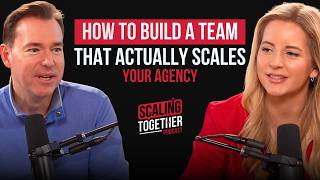
In this episode of the Scaling Together podcast, hosts Joshua Nelson and his co‑host dive deep into the practicalities of hiring, team building, and scaling an agency. They discuss the critical role of uncomfortable performance conversations, outlining how quickly identifying and addressing under‑performance saves revenue and preserves culture. The conversation moves to interview tactics that many agencies overlook: on‑camera presentation, verbal communication, personal background questions, and a scenario‑based problem‑solving query. They stress cultural fit through five core values, especially responsiveness, and illustrate the damage of bad hires through anecdotes about account managers who looked great on paper but failed to follow through, highlighting the need to consider Kolbe profiles and psychological traits. The hosts explain how to manage A, B, and C players, using performance improvement plans (PIPs) and decisive termination for chronic under‑performers. They also argue that paying more for higher‑quality or leadership candidates early on prevents future talent gaps and costly band‑aid hires. A personal story about their first operations manager hire demonstrates how a strategic early hire can transform a fledgling agency into a scalable business. Throughout, the tone is conversational yet instructional, offering concrete, actionable advice for agency owners seeking to build resilient, high‑performing teams.
Chapters
Your success is gonna be commiserate to your ability to have uncomfortable conversations. And so the quicker you can recognize, all right, this person isn't performing and address that with the person and move forward, the better.
When someone isn't a good fit culturally, it creates an environment where it rubs people the wrong way. It could be the fact that we have people who are hardworking.
Mm-hmm.
And this person isn't, and we've now taken a bad apple and put it into a bushel full of other good apples and it's gonna rot the rest.
When interviewing somebody, what's something you look for that most agencies miss?
There's 5 things that I like to look for. The first thing is how they present on camera. Number 2 is the way that they speak. Number 3, ask questions about their history. And then the 5th thing is talk to me about a hire that looked perfect on paper but ended up being a disaster. What happened? And what did it cost us, Josh?
Right. All right. Welcome to another episode of the Scaling Together podcast where we're talking about how we've grown and scaled our business and our agencies together as a couple. Today's episode, we wanted to go deep into just talking about hiring, team leadership, and growing the team of the, of the organization.
So excited to talk about this topic. What, what, what's one hire that actually changed the trajectory of our business? The one person where we were realizing, okay, it's real now. Yeah.
I think—
We got a good business here.
Like the, the biggest hire right outta the gates was operations. Because at, at first it was, it was a business, it was producing income, but it was like, it was, it was me, it was Dean, it was you. And we were just going out and we were getting clients and we were serving those clients and we were doing it all ourselves. When we got that first hire, which was Norton, um, as the operations manager, we figured like this guy's gonna do everything, right? He's going to build the websites, he's going to do the SEO, and we can just focus on business development. But working with him in that little 10 by 10 office squeezed in, it really brought things from like, hey, this is just an idea to this is a real business that's actually going to have wheels. Absolutely.
Yeah.
Okay. So you're the one on the operations side of things that usually is like very in tune with hiring and firing. So when interviewing somebody, What's something you look for that most agencies miss?
There's 5 things that I like to look for. The first thing is how they present on camera. So do they have— are they caring enough about their backdrop, about what they're wearing, how they look?
Oh yeah.
Number 2 is the way that they speak. Depends on the situation. You might need somebody who has really good English or is able to communicate and able to communicate Regardless of what position you're in, that is huge. So if they're stumbling and fumbling and not able to articulate correctly what their thought they're trying to complete, that's also a no-go. Number 3, like to also ask questions about their history. So are they married? Do they have kids? All of that is gonna come into the work environment. This is a relationship that we're building with our team member, and we wanna know how that dynamic is going to impact their day-to-day life. So asking about that. And then the fifth thing is asking the serious question, and it's not the, if you were on a deserted island, which tool would you wanna take with you? You know, but like the real question of, here's the situation, here's the problem in our company, how would you go about solving it when we hire you? And getting that answer. So, uh, it's all 5 of those together. What would you say, Josh?
Yeah, I like what you said about how do they present, how do they communicate, and then really do they have the capability to do the job, and do they, do they pass the vibe check? And I think that's something you've really done well. It's like on paper they can look great, right? You can answer all the questions correctly, they can have the right Colby profile, but sometimes there, there's just something that doesn't seem right, and trusting your gut. And you've always had a really good instinct with that.
Yes, that's a good point, trusting your gut, because sometimes Times that they may be fidgety, it could be nerves, but also if they're not looking at you straight in the eye when they're answering questions, it could be maybe they're not being completely honest. Maybe they're, they're keeping something. And when people talk badly about their previous employer is also red flag. So it's looking for little issues like that that we've noticed now to pinpoint right in the interview versus waiting for it to come out once they've already hired.
Yeah, and much better to catch it early in the interview process before they're hired, before like you've taken all of the time and the energy to get them onboarded.
100%. Uh, talk to me about a hire that looked perfect on paper but ended up being a disaster. What happened and what did it cost us, Josh?
Right. I, I, I've made a lot of bad hires, unfortunately, just because Initially, when we were growing the business, I was looking for somebody that was very similar to me. I was like, okay, I want somebody that can be articulate, that's going to be great conversationalist, that's going to be polished and professional. And so that was what I was looking for. And that's what I was like, oh, this person's going to be amazing. I can think of a couple people we hired as account managers that they just— everything looked good on paper. I vibed with them, put them in the role. They were great for like the first week, the first 2 weeks in the honeymoon period. But then By month 2, they weren't following up on their calls. They weren't following up with the customers. They, you know, they were starting to get complaints. They were halfway checked out in the organization. And it cost us. It cost us client retention. It cost us reputation. And I think it was just a function of not realizing you've got to look at— really, you got to look at their Kolbe profile and kind of what their psychological— are they high follow-through? Are they high fact-finder? Are they just a good quick start. Because entrepreneurs like you and me and probably most of us listening, we're high quick start people, right? And we're like, we're on top of the ball and we're very polished and very professional. But sometimes your best candidate isn't that way, right? And they're the kind of person that, you know, might not show up amazing on an interview, but they're going to stick with the role and they're going to do a great job.
So good. You don't know what you don't know until you start researching and experiencing. And then, but even if you have a hire that doesn't end up working out, you just got that one step closer to knowing what you don't want. So you're one step closer to having that ideal candidate. So even if you're not experienced, don't worry, because you're going to take all the steps that you need to do in order to bridge the gap and make sure that you find the right person. It takes time, it takes experience. Be gracious with yourself is what we would tell agency owners going through this process, because it is, it's scary, and it's like, 'cause you're like letting somebody into this group, you're protective of them, and they're going to do great things. And so you want to make sure that the person that you bring in has great synergy with everyone else around them too. So it's not just like, are they good on paper, but will they fit our culture in our team too?
So let's, let's talk about that. Like, now you've got somebody on the team, they're already onboarded, they are kind of integrated into the organization. Uh, tell me about a time you realized somebody wasn't a good fit and kind of how you surfaced that to me and the leadership team. And, you know, how do you work through that situation?
Yes, when someone isn't a good fit culturally, it creates an environment where it rubs people the wrong way or something gets misinterpreted. It could be the fact that we have people who are hardworking and this person isn't, and then we've now taken a bad apple and put it into a bushel full of other bad— good apples, and it's going to rot in the rest. It happens so quickly too. It will spread like wildfire. So all the leadership books that tell you to fire fast, it's real. It's a thing. And if you don't nip it in the beginning, it will become a situation. And it's something that's avoidable, but it's so hard to do because we've already gone through the whole process, as we know, right? You're looking for the right person. You— there's all this documentation, and then you got to weed through interviews, and then final 3, and then final one, and finally you get to the point where you're like, "All right, we picked this one. We finally have a go-getter that's going to be amazing." And then they come through the onboarding process. There's a lot of expenses that we're pouring into this person already as they've come through the door, and to realize that they're not the right fit culturally. Like, they're good on paper, but you know what? They're— they just— we missed something in the interview process that is core to what we do, which is why we have those 5 core values. We go over the core values before they're hired now and just get a yes. Like, responsiveness, that is something that is really important to us. That means same day. Is that something that is— are you capable— like, is that something that you think you feel is an important thing as well, to be able to respond to someone same day?
Yep.
And so just getting that in the front end clears a lot of that, oh, I wasn't expecting it to be this way. And also having those awkward conversations after the fact, stepping backwards and saying, hey, by the way, this is really important to us to have responsiveness. So it'd be great if you can message back right away. So things like that, culture fits of not fitting any one of those 5 core values, and letting them know ahead of time, having a team meeting and saying, we do this now with our leadership, but with the team that you have currently, it may not be your leadership team, it may be just the team at that point, which we've done as well when we were smaller, and talking it through and saying, hey, where are the issues? And then having one-on-ones with the person and the rest of the team as well to make sure that we figure out what is it exactly that is the uncomfortable situation. What is the thing that— and then just do a PIP of correction, performance improvement plan, for the next 30, 60, 90 days depending on the situation. And that should help correct itself. And, or, you know, that you don't have the right person.
Yeah.
So let's continue. Next question. A lot of agency owners keep bad hires way too long because they feel guilty. How long is too long to wait? And what's the sign that it's time?
I think we all, we get people that we're getting comfortable with, and it's like, even if they're not doing a good job, it's easier to keep them than to replace them. I've heard it said that your, your success is going to be commiserate to your ability to have uncomfortable conversations. And so the quicker you can recognize, all right, this person isn't performing, and address that with the person and move forward, um, the better. Because every day, every week, every month you keep someone on that isn't the right person is costing you. It's either costing you in terms of revenue growth, it's costing you in terms of the, the success within the organization. And so, you know, just be willing to have that tough conversation, to put a metric behind it, and I promise you're going to find somebody else, you're going to find somebody better. So you might as well just make the decision and move forward.
100%. Um, the fact that when we have an A player, B player, or C player that we're looking at and trying to determine, is this a good fit for us? A players are so easy because you already know that they're a go-getter, they're getting things done, they're hitting their KPIs. The C player, they tend to be pretty obvious that they don't fit, like a sore thumb. It just, there's so much frustration that it causes with you, with the rest of the business, that they're kind of easier to let go. It's the B. It's the people who are just not good enough, just by a little bit, that they squeak by and it's like, well, we've already invested all this time and energy with them. Well, they've already, at least they do X, is really what it comes down to. And so those are the hardest to make the decision on. And so what we've realized is that in those B scenarios, it's so important to decide concretely what is it that this person isn't doing to be an A player. Mm-hmm. And then when we get that fully fleshed out, having a one-on-one conversation with them and saying, look, we need to, be here, and right now it's here at the level of performance. And so do the PIP, do the performance improvement plan with them on that. And so if they improve, great, you keep them. And if not, then you, you should move on to somebody else who doesn't cause you stress and doesn't cause the team stress.
Yeah. So, so wrap us up here. What's one hiring truth you wish somebody had told us 10 years ago?
There's a couple. The first one is one we were just talking about earlier today, which is the fact that if you have candidates that you're looking at, the one that is more expensive is probably going to be the better fit. If it's depending on the situation, right? But what we've realized is you want to pay more for the better quality candidate versus paying less for somebody like, oh, you know, well, this one's less expensive, but you also get what you pay for. And so what we've realized is you do kind of have to stretch funds a little bit for certain positions to get what you're looking for. And then the second one is it's so important to not just look for the Band-Aid person that's going to fix the solution today, but especially in the early days, is be looking for leaders too, because otherwise you'll end up with 5 or 6, 7 people on the team, and then you realize, oh, I'm gonna have to end up raising somebody as leadership because we're getting more clients, we're actually succeeding. And when you look around your team, you're like, but nobody fits raising them up for leadership. And so now you have to be forced to hire somebody outside to come in to your already created workforce to try to lead them from the outside. And it can be done, it's great, but just having that foresight of thinking, we're gonna need leaders one day, let's pay a little bit more, get a leader today that's going to be great long-term that hopefully I can promote versus just a quick fix for today.
Yeah, so good. Hopefully some good insights and takeaways here on how to grow and scale your team and how to find the right people and how to deal with the internal issues that we all struggle with as we grow and scale our agencies and deal with people. If you've got follow-up questions or thoughts on this, please drop them in the comments wherever you happen to be watching. And stay tuned for a future episode of the Scaling Together podcast.
More from Joshua


From 26 Years in Business to Nearly Doubling Recurring Revenue | Sandy Waggett




How Luke Truetken Scaled His Agency to $110K MRR by Going All In on One Niche



Website Production at Scale - The AI Tool Stack for Modern Agencies with Marcel Knopf

