If We Had to Start Over Tomorrow, Here's What We'd Do First | Scaling Together Podcast
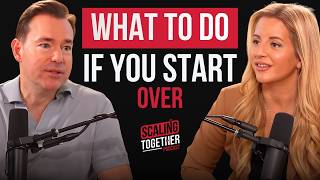
Josh and his partner built a 7-figure home-services agency. If starting over, they'd pick a niche from personal experience, validate it with 25 prospect conversations, skip the physical office, and hire sales and operations people earlier than they did.
Chapters
You choose the niche, you get the client, you actually prove it with some results, and then you can scale that to the moon.
Looking back, it's nice to get very clear on what were the really important things that if we just had these things dialed in from the get-go, oh my gosh, we would've gotten to 7 figures so much faster.
I would say for the agency owner that's trying to decide like, okay, I'm only at $5K, what do I do? Think about your background, think about where you've had some success in the past and use that 'cause it's gonna be much easier than trying to enter something you don't understand at all.
If you've been a plumber before, Why not go into plumbing? You know that inside and out how that business works and what they would need in order to get more clients.
Sometimes the things that is our superpower becomes the Achilles heel, and that's the thing we need to let go of.
It's also the belief of there is somebody out there. You are going to find someone that does this better than you.
And knowing what you know now about your own energy and capacity, what would you protect from day one that you didn't the first time around?
What I would protect is our—
All right, welcome to another episode of the Scaling Together podcast where we're talking about how we've grown and scaled our business as a couple. And today I've got a really exciting topic because I love to think about like if we had to start over from scratch, right? Going back 15 years now, what would we do differently?
Right?
And so let's get into that on today's podcast.
And that is— let's just jump right into it. So if we had to restart everything, no plumbing and HVAC SEO, no 7 Figure Agency, what would we do in the first 30 days? Josh, what would you do?
I still, I still think, you know, just, just based on my experience from our first couple of failed businesses and the success of Click that turned into Plumbing and HVAC SEO, first thing I would do is I would pick a hypothetical niche, right? Whether that's plumbing or something else, I'd pick a hypothetical niche. I would come up with a program, a growth program, because like, hey, here's how we're going to help your company grow, generate more sales, generate more revenue growth. I would package that and then I would go to market. I'd start talking with prospects in that industry in the first 30 days and start to have conversations. Hey, look, I've got an idea for this industry. I'd love to sit down with you and kind of learn what you're doing today, where you're struggling, and see if this might be a good fit. And my goal would be to have at least 25 conversations with businesses in that industry in the first 30 days. Not expecting to sell them all, but just to get to know the industry a little bit better, to get to start those conversations. Uh, and I feel pretty confident that we'd be able to get at least one paying client that we could use as the case study client. Uh, because that's my belief. You choose the niche, you get the client, you actually prove it with some results, and then you can scale that to the moon.
So good. How fun. Those early days, they're very stressful, very crazy, but, um, A lot of learning experiences came from that. Wouldn't take it back, wouldn't take it away and have never had that experience. I mean, it's part of who we are and what got us to where we are today.
Yeah.
Very special, but yeah, looking back, it's nice to get very clear on what were the really important things that if we just had these things dialed in from the get-go, oh my gosh, we would've gotten to 7 figures so much faster.
Yeah. So same question for you on the operations side. If we had to rebuild back from zero, mm-hmm. What would be the first system you would wanna put in place?
So the first system is what is going to be success for the client? What does success look like? So that means creating the SOPs that are gonna make those happen for each position in the company that we would hire first.
Mm-hmm.
Right? Account management. And then, um, from there, an onboarding process so that every time we have a new client coming on board, they are welcomed with gifts and letting them know how important they are to us, and here's all of the ways that we're going to help you improve in your business. And so having those systems in place are huge. Leadership activities like EOS meetings, the sooner the better. They create structure and have communication happening throughout the organization. So there's a lot of things to put in place on that side, aside from the sales and marketing. And then there you have the fulfillment piece as well of working on the websites and, and what the team is going to be doing there too.
Yeah.
So next question: what's something we spent a ton of money on early in business that you would completely skip if we started over?
I would, I would say the office, right? Early on in the business, we decided, oh, we need an office, right? Because we're going to get together, we need a place to work, we need a place to collaborate. And it served us well at that time. We spent a lot of money, you know, in office equipment and design and trying to make it cool and fun. But in today's world, with the, you know, digital, you know, digital employees and agentic delivery, you don't need a big office, right? You can do— you can create a great culture, you can create world-class results, you can create a great business without needing a really expensive office?
Oh my goodness, that is a great answer because COVID was horrible in many ways. But the one thing that we got from it that was positive was the fact that we realized we can still run a business without having the overhead of owning the business and paying for an office to go in. We tested it in a forceful way, both at Plumbing and HVAC and at 7 Figure Agency, and we were able to realize, wow, we can actually get this done, all the employees can still work at home. We— our team can, can still rock it and we don't have to micromanage in order to get it done. As long as we have great tools in place like Slack and communicate with each other, right? Meet on the team weekly level 10s and still hit the KPIs. Are we still winning as far as great retention? Are we still hitting the leads and revenue targets for sales? Then we don't need to see your face every single day in person. We can see you on Zoom and have the same turnout, same result. So that was eye-opening.
Yeah. So we did start multiple businesses before this one worked, right? And a lot of failures, a lot of struggle over the years. If you could go back and skip the failures, would you?
No, actually, we just talked about that, right? That we wouldn't skip the failures. Yes, they were stressful. Yes, they were. Some crazy times where we would be working until late and working on the weekends, and then we have the kids and, um, conversations that escalate because, you know, there's also maturity of not having to be in that environment where both of us are working in the business and just figuring out our way of how we communicate, structuring the conversations of This is when we talk about personal stuff, and this is when we talk about business stuff. But it is those challenges that make us who we are today. It's going through the fire and making it through on the other side that really shows us what we're made of, what we're capable of, and reminds us that it's bigger than we are. We're here to serve other people. It's not about you and me. It's about the mission. And so it's made clearer and clearer through all of those challenges that we've had to incur of every employee that we chose and didn't work out was one step closer to knowing what would work out and cause us less stress down the road. And I wouldn't have it any other way looking back. I mean, how different our lives would be had we not decided to do this. And to do this together is also another special choice that we made pretty early on that, you know, we want to do this together. We want to live life, not just— I mean, us together doing this, I can't imagine us going home and having totally different conversations and not being in each other's lives. I know different people, right? Different stroke for different folks. There's people who like that separation and be able to have their private thing that they have. But it's nice to be able to go home at the end of the day and we know about what's going on in each other's lives and we can talk about it and have fun with it. But there's times where there've been turmoil of like, I'm frustrated, you're frustrated, and coming together and trying to figure out how we can solve this. But the underlying thing is always respect. And love and knowing that we're in this together has been really instrumental.
No doubt. Yeah. So yeah, we can't, can't eliminate the failures because the failures are how you learn, right? And that's how you become capable of being successful. So I wouldn't wipe it out either.
Yeah. If you were starting an agency with $5,000 and a laptop, very specific, what niche would you pick and why? $5K in the bank.
$5K. I would, I would still do home services, right? I, I mean, I think it's going to be dependent on what your background is, but me personally, having already, having had some experience in plumbing, HVAC, home services, having an understanding of the industry, the average transaction value, the, the struggles of like who they've hired in the past, would give me a really good shortcut to um, have good conversations, create a program that will actually get them results, um, and then confidently go out and, and sell that service.
Yeah.
But I would say for the agency owner that's trying to decide like, okay, I've only got $5K, what do I do? Um, think about your background, you know, think about where you've had some success in the past and use that because it's gonna be much easier than trying to enter something you don't understand at all.
Yeah. And at 7 Figure Agency, we have this list too of like 25, um, niches that we think would be a good fit if you're still unsure after that. But Definitely, if you've worked with lawyers in the past, then you want to go into that niche. If you've worked with contractors in the past, you want to go into that niche. If you've been a plumber before, why not go into plumbing? You know that inside and out how that business works and what they would need in order to get more clients and have more work.
So, yeah. So knowing what you know now about your own energy and capacity, What would you protect from day one that you didn't the first time around?
What I would protect is our time. It's always a thing that we're constantly fighting towards is more time, more time for the business, for us to be in that owner position in the company so that we're doing podcasts like this, Josh, and we're doing webinars and we're doing leadership meetings that we should be involved in, but also looking towards the future and analyzing the different things in the business of what's going on to make the better strategic decisions and building relationships, us getting plugged into learning environments ourselves and meeting more and more successful business owners that we can relate to and that we have fun with. And so that's a big piece of the puzzle of what would make us more successful. And what about you, Josh?
Yeah, I think we didn't protect the, you know, fitness, you know, and making time to focus on the diet, focus on exercise. Knowing what we know now, right, that is— making time to exercise and making time to make sure the diet is on point is what is going to give you the energy to go out and do what you need to do. And so I would've protected that a little bit more and made sure that I kept that dialed in while growing the business, while pushing through all the struggles.
Yes, the workouts. I feel like every time when we looked at doing workouts later on in the past, the beginning stage, it was always like, one day, one day we'll get this all dialed in and we'll have the time to work out every single morning. And be one of those gym buff people that are wild and crazy about fitness. Not us. So that was something of, if you actually don't make the intentional decision of doing it, it doesn't matter when in the business. You can do it in the early days. It's gonna be hard, but it is blocking the time to say, this is important to me and I'm going to get it done. And that's what I would've done going back too, is blocking our time more. Looking at the calendar and saying, this is the time that I'm going to block every week, 1 hour to go over training, to go over reading a book that I wanted to based on the situation that we're going through right now. Like, let's say if hiring is a pain point, then let me go into training about hiring. Let me read up on hiring. Let me bounce off as a soundboard people that I can contact about that, that have been doing this really, really well. And so then I have enough information experience that I can borrow from somebody else to make better decisions. And so that is part of being a really great owner of a company that's going to be very successful, is making sure that you are blocking your time in that way so that you can make better decisions, um, continue to be successful.
Yeah.
What's the one hire you'd make way sooner than we did, and what's the one you'd wait longer on? Let's start on the first one though. What one hire would make you make it way sooner than you did?
I mean, I think you have to hire operations as quickly as possible. You have to hire account management as quickly as possible. The one hire I probably would have hired sooner would have been sales because that was something I was doing and something I had capacity in. But I was like, okay, well, I need to be sales. And I sat in that seat for a very long time, which prevented me from being more strategic and looking for bigger opportunities like at the higher level. So I probably would have hired that.
Oh my gosh, I love that you said that because it is a pain point for a lot of people. And I know we talk to agency owners and this is the hard thing to do is how do you determine whether to let go of something that you're really, really good at? And you're like, no one else can do this in the company and I'm really good at this. And if I hire somebody else, there's no way they're going to be better than me. What would you say to somebody like that? Because we get that.
I mean, what is it? 80% done by somebody else is 100% awesome. I think Dan Martell says that all the time. But there are people that are going to be just as good, if not better, than you at whatever function is in the business because you're the entrepreneur. And so you've got a million things you're focused on, where somebody that's a specialist in that thing, whether it's sales or marketing or account management or finance because they're in their box and they're a specialist in that thing, they'll be able to give it much more attention than you could, which means they're gonna do a better job. And so don't feel like you have to hold on to it, right? Sometimes the things that is our superpower becomes the Achilles heel, and that's the thing we need to let go of.
Yes, yes, that's what it's hard. And you have to trust that the other person is going to do a good job. And it's also the belief of there is somebody out there, you are gonna find someone that does this better than you. Mm-hmm. And maybe they don't have the knowledge and experience just yet, but they have the ability, they have the inner workings between their COBE profile and their Working Genius and the, the different assessments. The interview process will come out, um, showing that this is an ideal candidate for a sales position. And then you teach them what you know. And imagine somebody who's a business owner who's got 7 different things that they're trying to accomplish in their business versus a salesperson who is passionate about it, probably has experience, now has equipped how you sell that they're going to just get better and better at as time progresses with you coaching them. But it's the only thing that they do. They're getting paid full-time to be a salesperson. Already they're gonna make more sales than you, even if you are amazing, because you're not a full-time salesperson. You're a CEO of the company. And so that's a big distinction of when you're trying to let go of something. Remember, this isn't your job. That you're doing this job in the interim until you can hire somebody to replace it. That is the main goal. You're not meant to do this forever, and you're meant to do the things that have your unique ability that no one else in the world or even the company can do.
So, yeah. All right. Last question. What's the piece of advice that sounds simple but would have saved us years of pain if we had someone tell us early on from day one?
For me, it's communication because it stems and weaves its way through every bit of life. If you can understand how to communicate with people, and how to have those difficult conversations and be okay with it and just be— allow yourself to be in the uncomfortableness as long as possible and just stretch that out for yourself, you are going to be able to accomplish anything. Because at its core, there's so many issues that come up just from miscommunication, whether it's in a a team member to another team member, or a team member to the owner of the company and vice versa, to, um, a father and their son, to a mother and their daughter, to the husband and wife. There's so many issues that can come up and can be avoided if we just get really, really good at communicating what our frustrations are and communicating what we are expecting from the other person and just get really good at softening how that sounds coming out and asking for what you're looking for. So many things could be resolved. So communication for me is like how important. It would have been great to have known that from the get-go. So I would have just like thrown myself from the beginning of just inner workings of communication is is so key and vital to a successful business and a successful life.
Yeah, no doubt. Well, so there, there you have it. There's kind of like our key, key takeaways and things we would do differently if we had to start from scratch. Hope you enjoyed this episode. If you've got follow-up questions or thoughts, please post them in the comments wherever you happen to be watching. Be sure to subscribe for future episodes, and we'll see you on the next episode of the Scaling Together podcast.
More from Joshua


From 26 Years in Business to Nearly Doubling Recurring Revenue | Sandy Waggett




How Luke Truetken Scaled His Agency to $110K MRR by Going All In on One Niche



Website Production at Scale - The AI Tool Stack for Modern Agencies with Marcel Knopf

