Matt Foreman's Podcast Interview with Josh Nelson
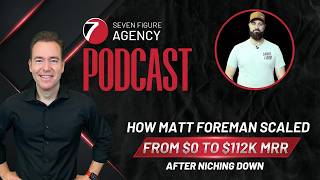
Matt Foreman grew Lawn and Land Marketing from a $99/month web design agency to $105K monthly recurring revenue by niching into landscaping. He uses cold email and Meta ads to acquire clients, charges $1,200 to $2,850 monthly, and maintains 98% retention through direct communication and AI tools like OpenClaw agents.
Chapters
Hey, we are blessed to be joined by Matt Foreman of Lawn and Land Marketing. He's grown his agency to now over $105,000 a month in recurring revenue, doing some really cool things with AI and Open Claw. Guys, welcome me in joining Matt to the call. Matt, thanks so much for being here, man.
Josh, always a pleasure to just be around you and talk to you. Thank you for having me. A real privilege. And surreal to actually be here. I've been watching these even before, uh, I had an agency. And so to now be on the podcast with you, uh, yeah, wild experience.
So good, man. Well, congratulations. I know we celebrated your 7-figure status at the last intensive. You gave an amazing speech to the group on your journey. Uh, for those that weren't there or didn't get a chance to hear it, just tell us where we're at in the business today. How many clients? How much recurring revenue? What's the kind current lay of the land?
Sure. Without getting into the exact number, we're over 50 clients now. Love that. We get to be super intentional with our clients. We're over $105K in MRR. We offer two distinct different programs based off of the stage where they're at. And so we have a really good mix of both of those client types right now. And yeah, we're growing, great retention rate, and there's a reason why people stay with us. And so yeah, it's— now we get to grow very— in a very intentional way. We get to pick and choose our clients, and they obviously pick and choose us. So whenever we're adding somebody on, it's a great start to relationship, and it's one that we do a really good job of maintaining. So good.
So, very intentional also with the niche. So, it's like landscaping, you know, type of businesses, lawn care companies, which is a competitive space, right? It's even been competitive over the last couple years. So, to thrive in that space, you've done so many things right. You've done so many things well to separate yourself. Take us back a little bit. We know you've got a $100,000 agency today, and that's amazing, and you're continuing to grow, and I have no doubt that number is gonna continue to expand, but You know, take us back a couple of years back where you were just getting things started, and you know, like, why did you get into agency in the first place? What made you choose the landscaping niche?
So, uh, so I had an agency back in 2016. I founded one. Um, I just learned how to build websites. Um, I mean, I could take you really far back to my college days where, um, I was an entrepreneur and I, I was an ideas guy And I would join all these pitch competitions like Shark Tank-esque. It was like right when Shark Tank came out. So I was part of all that. And then I needed somebody to build websites, hired somebody, didn't live up to expectations. So I just learned how to build websites myself, built a website for my little tech startup. It was cool. But then I had people asking me about websites. And so then I started building websites for friends and people saw those and started asking me and I'm like, I could probably just start an agency out of this. So I did, started up that agency. So we call it a generalist agency working with everybody under the sun as long as you have a business and are willing to spend money. And yeah, I didn't have a, I didn't have a playbook for that and I didn't have like how much things should cost and I really didn't even know how to run a business at that point. So I kind of settled in on, and it's wild thinking about this, but I settled in on we're going to charge $99 a month. $99 a month. And, but I mean, it's going to be so cheap and like, we'll add 1,000 clients and that would be insane, insane amount of money. And it'd be so easy. And boy, was that a tough thing to do. First off, $99 a month is not very easy to sell because you're selling to really low, like smaller businesses. One, they're probably strapped for cash, but two, there was a lot of burnout. Um, yeah, I would say in, uh, 2020, um, I don't know if anybody remembers that year. That was a tough one for everybody, huh? Um, I, I was not a reader. And so this is funny, um, I, I love this story, uh, and I won't name names, but there was, uh, in my generalist agency, there came a time where I'm like, man, I need to get better at selling. I need, I need, I need to get more leads. And so I found, um, I found this company, third-party company that was going to run my marketing for me. And I brought somebody on board. They set me up with someone, and this person that they introduced me to said, like, I told them about my business, what I want to do, and they're like, have you ever thought, like, we should niche down? Again, this is like a random employee now. I've never talked to him. Like, ah, no, I don't want to do that. There's just so much work out there. Like, why would I cut off 99% of that to niche down? And he's like, oh, you should check out this guy named Joshua Nelson. And I'm like, okay, yeah, cool. And just went back to working. And I think he eventually sent me a link and I filled it out, got a free book. And I'm not a reader. I never was a reader. And so the book shows up to my house. And yeah, it's like a 7-figure agency. I'm like, well, that sounds nice, but that's like, that would be, that'd be crazy. I opened the book up and I just remember like I made it to, I think, page 6 and I'm like, this is what I need to do. That's, this is, this is it. This is what I need to do. Like, this is, I'm really big on my faith. I want to— I've always wanted to have a business that was Christ-centered. And I don't know if it's where I live or the space that I'm in, but it always just seems so cutthroat. It's like you had to screw over the other business to get business. That's kind of what I learned over the years. And so to like read this book that allowed you to not sacrifice your values and still grow the business, build a business that had value. Um, again, I'm 6 pages in, I'm like, whoa. And then, so I think I flipped to the back of the book and it's like, oh, there's a group. And I'm like, let's try it out. Um, and signed up for it that day. Um, at that point, my agency, um, again, generalist agency, was, um, getting worse and worse, making less and less money. So This was like kind of scary, just all the investments, whether it was time, money, or whatever. Huge leap of faith. Best thing I ever did. And so, yeah, I've probably already forgot your original question, but as it relates to this industry, okay, how did I end up in landscaping? One of my generalist clients happened to be a local friend of mine. and, uh, he was in landscaping. And I remember, like, again, I just built a $99 website, and, um, I went a little bit above and beyond because he was a friend of mine. So I'm like, okay, let me do a couple things here and there, uh, that I know about SEO and whatnot. And, um, the results were awesome for him. Like, he started crushing it. And so I'm like, okay, like, let me try again. Let me, like, let me try somebody else. Let me, like, lean all into him. And so Um, he ended up— so I, I was pretty committed to this. Um, I had to jump in with both feet first. So I'm like, okay, I'm gonna do lawn care and landscaping. And all right, now I gotta come up with a company name. How can I be super on the nose so that there's no, uh, no question about who we service? Well, Lawn and Land Marketing, uh, still get some questions. I'm like, oh, who do you serve? I'm like, okay, well, you're like, really? I don't know how much more to change the name for you. But, but yeah, so I, I committed to all of that. I consumed everything that I could in a 3-month timespan because I joined Seven Figure right at the end of March— or sorry, at the end of August. So September, October, November, and December. So 4 months, I just consumed everything, everything, everything. Really didn't put anything into play yet other than maybe building like what I was going to do. And I told myself, January 1st, we're going all in and like we're going to get started. And I told my buddy, I'm like, I will work for you for free. Like, I got to build up the case studies. I want to showcase what we do. So we got our first client on January 1st, which was him not really paying anything. He did offer me $600 a month. So I'm like, okay, that helps a bit and absolutely crushed it for him.
We actually—
he's still a client of ours. Now he has two businesses under us. He started a second one because the first one did so well. And yeah, after that, built the case studies and I'm like, okay, we are— we're off to the races. And I couldn't be more— I couldn't be happier about the industry that we're in. One, I love the people. I love and appreciate all the hardworking blue-collar people in this industry, but also the appreciation that we get with it. With our clients. And at the end of the day, like, if I'm going to be honest, like, I don't want to say it's easy, but I always think about it. It's like, okay, if I'm going to market and I'm a professional marketer and I have to compete against, let's say, a landscaper that doesn't know marketing like I do, I'm going to win 10 out of 10 times. So I would love to, like, bring on a partner in that area to show, like, hey, Like, your competition has no chance against what we're about to do for you. So, yeah, it's just been, it's been fun. I know I took a long time to get there for you, but that's how I ended up in this industry. We're here to stay, we're here to lean into it, and we're here to absolutely crush it for our clients. So good.
I love that. I love that you kind of talked about the starting point, right? I think a lot of agencies are in one of those two places. I want to be a generalist and I want to serve everybody. And it would suck to go down like the niche path. And so you had to work through that. And then the other big mistake a lot of agencies make, well, why don't I just charge $50 a month or $90 a month and hopefully it'll grow over time and the money math just doesn't make sense. And so you just, you crossed both of those hurdles and you kinda, you invested in training, you invested in yourself and then you focused on one client out of the gates. You didn't try and say, "Hey, I know everything about landscaping and I'm the man and go hire me," because nobody buys that, but you found one local client that you were connected with, you cared about, you poured yourself into that, you actually generated an amazing result, which gave you confidence, but it also gave you a case study, and it sounds like that was the parlay. It's, "Okay, now I've got proven result and I can build on that." Yeah, yeah.
And that's what I tell a lot of people, like, um, when I talk to them and they're, uh, thinking about niching down or even starting an agency for the first time. Um, there is a massive value in proof. And sometimes, like, the hardest— no, not sometimes— the hardest client to get is your first one or first couple. And so if you could just bite the bullet assume you're not going to become a millionaire overnight and just work for cheap or free to get those case studies to prove it to yourself and say, hey, is this something I actually even want to do? But let alone, uh, can I do it? Uh, but once you do that and once you get those case studies and, and the proof is in the pudding, um, it's going to be a lot easier to sell your services. And then that's also the start of, uh, figuring out how to build out a system that's repeatable. So yeah, for so many agencies, obviously you want to immediately make money, you want to be profitable. I get that. Everybody wants to be, but I think in the early days, you got to earn your stripes. And so work for cheap or free. That would be some of my earliest advice that I would have. Like, if I were to do this over again, I'm very happy that I did that. So good.
Yeah, you had to earn your stripes.
By the way, they are paying full price.
Right, right. Like over time, you get them. Well, I'm just curious, how did you pay the bills? That's like a 3, 4-month window of time, very low fee. I know you had other generalist revenue. How did you make do during that time? What kind of sacrifices did you have to make to live the life that you're living today? Sure.
And so, I mean, okay. I mean, it wasn't— Like, I wasn't eating ramen. I still had my generalist agency and it was fine. Like, it paid the bills. It was able to sustain that ability to just kind of like, all right, I'm going to laser focus in it. So it paid for like all my early setup, like with hosting and all the stuff, like all the technicals. So that we weren't just like burning cash. I mean, marketing doesn't— isn't the most overhead thing, but it helps sustain me early on. And I know that's obviously not going to be the same for everybody, but I did have some sort of recurring revenue even with the $99 websites. Got it.
Okay.
So I have a rockstar wife that helps too. So she helps pay the bills. So, and she trusted me. So that's another big thing. Always have a partner that believes and trusts in you and can support you.
Yeah, it was good to have her there in your corner, believing in you, and she was there to celebrate you at the intensive, which was a lot of fun.
Yeah.
So, you've got this one client, you've crushed it for them, you feel like, okay, I'm ready to go all in. How did you take that one case study client and turn it into your next 5? Because that's the other big hurdle, like I got one, how do I know, like go get those other handful of clients, just kind of like the seed revenue?
Yeah, and so, when we built this first one, I mean, I can't say we, I, I mean, I didn't have a team at this point. Um, again, I just poured a ton of love into the website. Great visual, so you can send that as like screenshots or even send them to the link. Um, showcase results, like where were they versus where they were. Funny enough, um, what one of the before and afters that I had, because I never had the original website they had back on my previous generalist agency, so I literally used our generalist agency's website that we built and said, look how bad that looks and now look how good it looks now. So I literally compared my work to my work. Um, but yeah, it, it showcased, okay, this company knows what they're doing. Um, I will say like I also kind of went forward with, uh, an approach of like, I'm gonna look bigger than we really are. So I, I did build out like this perception like, okay, Lawn and Land Marketing, wow, big agency, they've been around for a while. Like, again, I just poured my love into this thing. So I would say that, that probably helped me too. I mean, my first client that we landed, first like legitimate client, was a $4.5 million landscaping company. 2 years later, they're $12 million. So like, this is a big company. Like, they're, they're like no joke. And I don't think, I don't think, no, at the beginning they did not realize that they just hired a guy. They thought they hired like a really good agency, which they did. At the end of the day, they did. And I had a great relationship with the owner there. And like, I've kind of like, we got to laugh at the serendipitous of like how we even connected in like, hey, just want to let you know, thanks for taking a, thanks for trusting me. This was the reality and I'm glad it worked out. And yeah, we both laughed about it. And we even said like, hey, probably wouldn't have joined you if I knew it was just you. Yeah, so it was a fun journey, but yeah, the perception really helped, but also just that single case study like made it look like, okay, hey, this company knows what they're doing. They specialize in this. They're not like focused anywhere else. And yeah, hey, we are the agency, even though there's obviously other agencies in the space.
So you focused on two things really early, it sounds like, crushing it for the first client and getting undeniable proof, like this is where they rank, this is how many leads they're getting, this is how much revenue is generated. And then you invested early in your own website, and I did put the link in there, uh, landandlawnmarketing.com if you want to check it out, to make it look legit, to make it look professional, to show that you could craft really good marketing messaging, branding. Um, but logistically, was it a phone call? Was it a drop-in? Was it So, like, how did you get that $4 million company's attention to get the app back? Was it you went to a BNI meeting? Like, talk to us about that first one.
Yeah, so I used one of the trainings in 7 Figure Agency Model about cold outreach, building the Dream 100 list. And so I did that. At this point, again, even with my generalist agency, I really had no approach, I had no structure. So this was all new to me. So I'm trying to figure out how HighLevel works, how automations work, and all this stuff. And so I gathered a big list from another company that like was able to scrape or build lists and I sent them out and kind of en masse. And it was funny. And I know this probably won't help anybody. I just think it's a funny instance. So at this point I'm like, okay, I'm just going to target Florida. I'm here in Florida. I'm going to target people in my area to make it feel a little bit more local. Eventually I'll branch out to the other states. And so I reached I originally wanted this list of all local businesses in Florida that started in the Tampa Bay area. And the company that I landed has a very just kind of generic landscaping name. I mean, there's so many like ABC Landscaping, there's probably 50 of them in the US, stuff like that. And so I asked for this list and I went through and I just kind of automated my emails. And my intention was if anybody replied, Like, I'm gonna jump right on it, call, email, like speed to lead sort of thing. And one of my first responses, this company not in Florida, the email scraping list got me wrong contact information. So it was a company in a completely different state. And because I— and the problem was like, it said it was this state in Florida. So I'm like looking at their website, I'm like, I'm just It's like, I'm having a hard time piecing it all together. But yeah, eventually replied. And again, it was just a very serendipitous, like running into each other, figuring it out, actually moving forward, getting on calls and eventually like closing the deal. So, but yeah, it was just, it was a grind. It really was. I didn't get, so this wasn't until, again, I started January 1st with my first client, my friend, super, like not making money, that's for sure. And then my next one wasn't until middle of March.
Wow. So like 3 and a half months in, you're like, all right, let's see if we can't get another client. When did you start sending those emails? Because was it quick that you started getting replies and got this, or was it you did that for quite some time?
I did it for quite some time. So yeah, like I said, those first 4 months was me prepping. So January 1st, I'm going to be working for this, um, basically free for this company. And I'm going to be putting the wheels in motion. And yeah, I mean, it wasn't instant gratification, a lot of like getting your teeth kicked in. Um, but yeah, it's just trusting the process. And I tell this to my clients all the time. I mean, like you, you do marketing for clients and, and if anybody's a digital marketer, they're going to know, like you're going to have those clients month 1, month 2, like, hey, where's all the— where are all the leads at? And you got to remind them, hey, it's momentum, it's about doing the right thing, it's consistency. You gotta like— you are marketing too, you have to remember that yourself. So, um, you have to practice what you preach. You have to know that like, hey, marketing does not mean immediate gratification. It can in some instances if you're pumping a ton of money into ads. I didn't have the money, so, um, just, just, uh, cold outreach, um put my steps in and then yeah, eventually landing one. I think our first like 4 clients were all cold outreach. So good.
And I think this is really important to share and I think it's also very encouraging and inspiring. So if you're one of those agency owners, it's that in those early days, right? And it's like, man, I'm sending the emails, I'm making the calls, I'm doing the personal DMing, I'm doing all the work, but it's like, I'm not getting a lot of hits. Like you're either gonna quit and go get a regular job or you're gonna keep at it, right? And this is the same thing Matt and all agencies have to deal with, right? It's not easy. If it was easy, everyone would run a 7-figure agency, right? You have to stick with it. You've gotta face the fact that it's not gonna just naturally fall into your lap. You're gonna have to send different messages. You're gonna have to make calls. You're gonna have to be uncomfortable. But the transformation that happens when you do stick with it And when you do keep putting in the steps, like he says, is now he's running a 7-figure agency. Now, obviously, we're going to hear more about the journey, but that's, I think, just a beautiful share. If you can think back, what was the basic gist of that introductory message, like cold outreach message?
Yeah. I think it started out off a bit with kind of like, picking them apart, picking their online presence apart and saying, hey, you're doing this, but you could be doing this, or even reaching out and highlighting competitors because every company has competitors and most business owners are aware of their competitors. So if you can strike a chord, that definitely really helped. And so we did just kind of take a relatively generic approach and like Hey, your website looks terrible. It's not a great reflection of you and your company, I'm sure. And obviously we wordsmithed that a little bit better. But yeah, it worked. It struck a chord. And, and I think a lot of marketing really does come down to timing. And I'm not talking specifically like seasonality timing. I'm talking about like the owner's mindset. Their perceived problem.
Yeah, your website does suck and I do need to do something about it.
Right. Right. I might've hit him like right after he looked at his website and said that to himself or said that to his team and like, wow, perfect timing. So, um, and you'll never know that timing, but it's Wayne Gretzky, you miss every shot you don't take. And so just, just having a consistent, um, system in place, uh, that is, that is all constantly following up. And it's not just a constant like attacks and saying, hey, yours is terrible. It's giving value. Like maybe like, For instance, like, we send out, um, an updated annual Google Business Profile list, uh, a checklist to literally everybody for free. Um, and maybe that's something that they were just looking on and, and realize that they're like, it's, it, it's not as good as their competitors, and I just happened to send them one at the perfect time. And so it, it's just a matter of, um, timing, um Again, just doing the right things. Also, like, being multi-channel too, because I can imagine, like, a ton of my emails are probably going to spam. Um, a lot of them are not, and that's very obvious. But, um, you can't just focus on one channel. I mean, we tell that to our clients too. That's why we're very full service. We, we're not just going to be your SEO agency, we're going to be your omnipresence. Because while one thing may work at sometimes, it doesn't mean it's working all the time. So you want to have multiple things going. Um, and, and that's what we've done a really good job of building is a system, a multi-faceted system that focuses on organics, focuses on outreach, focuses on inbound leads. And, uh, yeah, now, now that's all, uh, humming pretty, pretty nicely.
Super cool. So, so zooming out, right?
You got—
you chose the niche, got the one client, really poured into it, created a great case study. All right, I'm ready to go market this thing. Got a list of prospects, started doing some cold outreach, got some replies, jumped on some sales calls, got the second, third, fourth, fifth client, continued to grow that. Talk to us a little bit about what the marketing approach looks like today, 'cause obviously it's much different than it was then. What's working in today's market now at 50+ clients, over $100,000 a month of recurring revenue to get new clients in the door?
Sure. So, um, it's a little bit nicer now because we make more money, so we can invest a little bit more in ourselves and our marketing. So, um, if— and maybe even other agency owners, uh, maybe you see my ads, but, um, I also realize that like I'm not as big as I think I am. I see my ads all the time, obviously. Um, but yeah, we, we invest heavily in ads, uh, specifically on Meta, uh, so I love being on camera. I love talking. I love being outgoing. And so like, it was just kind of a bit of a natural fit for me. So, um, I make some, uh, we made, we made a lot of videos. Uh, I want to say in a 3-month span, 3-month span, we probably made 150 different videos, just, just giving away information, talking about what we do and like the industry, both industries, digital marketing and the green industry. And yeah, and then we just put some fuel on the fire, put it in Meta ads, and obviously Meta is always changing their stuff. So staying up to date on that. But now we have a lot of inbound leads from ads. I'm currently working on our podcast, so like I get to meet with other green industry business owners, even ones that we don't know. And so that's been great. Mo Money, Mo Problems podcast, by the way.
I love the t-shirt and I love the branding behind it.
Yeah. And so, yeah, it's just a— it's a matter of like taking— doing the steps. And I think this is one of the hard things that I struggled with maybe in the first to second year was, OK, the clients are starting to come in now. I need to focus on delivering for them. And so what that did was pull me away from getting more clients. And then just so you know, like with my generalist agency, I never had more than one employee. Before. Um, and that at that point, that agency was 4 years old and I had only ever hired 1 employee. Um, and so hiring was always a tough thing for me. So that was, that was where, um, hiring really helped free me up because, um, they say you should never stop selling. Um, it doesn't necessarily mean you need to get sales every single day, but you need to be doing something that is going to drive your company forward, whether it's just making a video and then editing it today I would consider that some sort of sales process because you're working on the marketing that's going to lead to the sale. So you always need to find a way to do something to get your company out there, to, to whether it's a follow-up on somebody that told you no previously because maybe they weren't ready or, or getting back to the basics, getting back to the foundations, maybe starting like doing a cold email again? Because I can imagine, uh, look, I just— back when I first started, I was sending cold emails. I landed my first 4 clients, for first 4 real clients, for through cold email, being a one-man show. Let's say I run that exact same cold email campaign today with a ton of proof. We're super legit. They can check us out. We got a huge team now. Um, it's gonna be far more successful. And so, it just continues to compound, but you can't forget about the foundations. You can't forget about the fundamentals. And again, you just don't want to take your foot off the gas.
Super good. I love that. So, it seems like for you, it's mainly been the cold outreach, the Facebook ads, which you've got dialed in and you're very creative and you really stand out. Like, guys, go check him out on Facebook, the company profile, and like peep his ads library because it's not the standard ads. He's very creative. Definitely standing out in the feed. And then a little bit of authority positioning in terms of the podcast. Is that kind of the mix today? Even though like, you're like, I know I gotta go back and get consistent with the cold outreach and the daily tasks, the monthly webinar, the monthly podcast. And then I know you're starting to get involved in some industry events and conferences as well.
Yeah, and that's a big thing for me that I know I've been neglecting is getting at the conferences. I know, and I see this with my peers, uh, whether it's peers in the agency space that are not in my niche, or if it's people that, that are in the niche, uh, going to these industries, building those personal relationships is super important. That's something we haven't really tapped into yet. Very excited to tap into it. Um, I, I know it's going to go well. Even if I like leave with no new clients, it's going to be rubbing the shoulders getting a better understanding of who my clients really are. Um, that in itself is just going to, um, really help me understand kind of the framework and how to talk to people. And, and again, just like get a better understanding of the niche that I'm serving. And so, um, yeah, I know that's going to be a really important thing. Um, I always look at things that I'm not doing, and I tell clients there's things that they're not doing, whether they're not running ads or not. Not as issues, but as opportunities. Because like I tell my clients this all the time, like, you built a really successful company without doing this. Imagine when you do do something like this. It's a massive opportunity. And so, yeah, it's a huge opportunity we haven't really tapped into yet. So I'm excited to get started on that. I think the hardest thing for me is actually getting started. But once I get it, once I get into a rhythm, I'm really good at staying consistent with things. So good.
I think it's also super encouraging for like different people find different marketing mixes that work for them. There's agencies that go to 7 figures just with cold outreach. There's agencies that go to 7 figures just with Facebook ads. So, you know, in Matt's case, either he didn't find it a priority to go to these conferences, or maybe he's, I know you, he's got a wife and a young baby and it's just time-wise, it wasn't the most efficient use of his time. So don't feel like you have to do it all. Like find your lane, get really good in that one channel, get it dialed in. Donna's asking a question here, and I think you answered it, but I think it's good to come back to you, Donna. Thanks for listening to it, joining us live, but she says, did you do any online ads in that first year, or was it exclusively cold outreach?
Hey, Donna, we did zero ads. Yeah, we didn't run any ads. I just didn't have any money to do it. And so, like, yeah, if the money was there, money was available, I would have also, now that I know how to run them, I think with running ads, and maybe you see this with your clients too, um, there's that leap of faith. And, and sometimes you have to like, okay, I'm about to put the money in the, in the machine. Am I actually going to get a return? And so no, first year we didn't do that. I mean, my first year we only had 4 clients total, and by the end of the year. And so, um, no, we just didn't have the money to do it. So It's not for a fact that I would say not to. Again, if you have the funds, do it. But yeah, no, we didn't get a chance to.
So good. I think it's a story of perseverance, right? Like your story here is like the fact that 3 months before the first client came in outside of the freebie, and then the whole first year with 4 clients, would've been easy to say, "This isn't enough money, right? I'm really working hard," and just kind of fold up shop. How did you stick with it? And like, what was your mindset as you kind of went into that second and third year? Like, you know, coming to the intensive, seeing like, you know what, I want to be further ahead, but being happy with your journey.
I promise everybody, Josh isn't paying me to say this, but it was being part of that group and seeing that it is possible. I can imagine if I was doing this alone, especially being a digital marketer where I'm just sitting behind a computer and not around other people. I could see where the doubt would creep in, but I constantly saw people breaking through barriers, like breaking through those plateaus, being celebrated at every stage of the way. Yeah. So in 2023, when I officially started the business. The, um, the first intensive I went to was March. I didn't get to go to the second one in July. Um, but then I went to the one in November at that time. I think they're in October now, but it was November at the time. And, um, that was when I just crossed, uh, $10,000 in monthly recurring revenue. It was tough. I mean, still not making a ton of money, but, and it was, it was interesting because like, I, I was part of the group and I'm seeing all of these other agencies just absolutely crush it. And, and again, I only had 4 clients. Like, like, yes, I was happy about getting those, uh, but at the same time, like, there is the like, oh my goodness, I'm just watching all these other ones. I'm so far behind. Can I even compete? Because you see other people in your industry too, and you're like, oof, like, they're always gonna be better than me. But it was, again, seeing those breakthroughs, seeing people like, and talking to people that have been through exactly what I've been through. And yeah, just, I went up there and I slinked up and I actually didn't put in my numbers. Joshua Nelson is always like very intentional in asking for updates the numbers so he could celebrate you. And I didn't put in my numbers almost out of embarrassment. But then I saw people walk up on stage and celebrate hitting the 10K as well, like alongside me. And that was one of my biggest regrets is like I didn't get on that stage. So I actually went up to Josh afterwards and said, hey, like, I, like, I was supposed to get that medal. I didn't. And gave me one and congratulated me personally. But Yeah, and that's what, that's what kept me going. And then year 2 was substantially better. And then by the end of year 3, I mean, we hit the 7-figure mark. And so, and it was being a part of this community, not doing it all by myself. I think that was really hard thing for me is sucking up my pride. I've always been of an entrepreneurial leadership mindset and the pride part was like, okay, I'm going to do this. I don't need, I don't need help. I don't need a business partner. I don't need any of that. And that was definitely a pride thing, a huge fault of my own. And in learning to lean into others has substantially helped me become a better person, a better business owner, a better friend, everything. And so, yeah, it was watching the community succeed that ultimately led me to continue to succeed.
So good, man. You stuck with it and you continued to make progress each time. I love the fact that when you came up, you had the white ribbon with you because, you know, like, it's easy when you're getting the 7-figure plaque and it's like, hey, we've crossed 7 figures, look at us. Like, now it feels like it was easier, but you had to go through all of those steps. And all of us did, right? From the agencies that are crossing 8 figures, we all had to get that first $10K, that first $20K. and so we want to celebrate that as much, and that's encouragement for everybody that's, you know, starting. But, you know, I love the fact that you did that. Um, I want to come back to Cody's question. Cody, it's great having you on here with us. And he's asking specifically on the Facebook ad stuff, because you really do have that dialed in, what do you feel like was the knob that felt made that click? Was it the creative, the messaging, the targeting? Any, um, you know, anything you can share without feeling like you're You're opening the kimono too much on that.
Um, oh, and I'm happy to give all of it away. I'm not gatekeeping anything. Uh, I would say the thing that really stood out— one, video, um, but two, putting a talking head, like making sure it's, it's you. I, I know a lot of times, especially with AI— and don't get me wrong, I, I love AI, um, but you have to be real, um, especially in this, the agency space. I mean, you might not ever get a chance to go and shake the hand of your owner. But you— so you need to come off as real. And early on, like my early success in my Meta ads was, was just me like filming like, hey, this is who we are. This is what we do. I'd love to work with you. And, and it was— yeah, we just call them ugly ads and we were just very intentional. We're real people. This is what we do. And that's what at least a lot of our client types like, is like a real person, not something, somebody corporate, somebody relatable. I will say, like, I a lot of times strategically will like grow out my facial hair in a certain way to kind of be more relatable to my industry. So occasionally, I mean, the next time you might see me, I'll probably have a full beard. Who knows? But it's— and if you see that, you're probably think like, okay, he's in, he's in film.
He's matching, he's matching the audience, right, with these ads.
Yeah, exactly. But yeah, it's, it was just a matter of like putting out more content. Um, and yeah, not everything's gonna work. And, and so, but don't get discouraged. I would just say keep doing stuff. Right now we also are in a, in a great time for Meta ads because before you had to almost manually control it, watch the data, turn things off, turn things on. Now you can just continuously dump things in there and let Meta's Andromeda update figure it out for you. You never have to turn things on or off. We have a lot of ads out there that have some of them were doing nothing, but we were just told, leave them on. Then after months of getting no impressions, boom, now they're our most popular ones all of a sudden. You just let it do its thing, never stop. Creating. And yeah, just kind of just be real, be a person. And I would say also don't go complacent. Like, it's fine, put some graphics out there as kind of maybe a supplement to some of the stuff, but get on video. I highly, highly recommend it.
So you're like leaned into that know, like, trust, right? Like the personality brand of Matt Foreman as the individual behind the company. That when you hire us, you're gonna get me as the thought leader that's gonna drive you forward. And the fact is, people wanna do business with people that they know, like, and trust, and they're willing to pay a premium for the best in that space. And so what you've done there with your videos is you've made yourself personal and relatable, but you've also positioned yourself as the expert, which commands a premium price.
Yeah.
So good. How much of that is organic content versus just straight up, this is getting loaded up for ads exclusively?
So that's interesting. We definitely have a lot more organic content, but we are eventually going to just be dumping all of it into ads with call to actions on the end. So we'll be able to repurpose all of those with some sort of call to action, whether it's as intentional as like, hey, book a call with us, or like if we, if we made a piece of content that was talking about your Google Business Profile, the call to action might be download your free Google Business Profile checklist. So eventually All of it will be in there because again, we're now at the time where we don't have to be so picky and choosy because your budget, like, it will not be split amongst all of those. So you don't have to only select your winners. Meta will do that for you now.
Got it. And are you driving your ads to like a lead form or are you going to a landing page? Have you like, what's your preferred modality that you're seeing works best?
Yeah, that's, that's interesting because I mean, I've heard, um, the differences in, in, um, what, what's good and what's not. Uh, you'll have some people that will always say like, oh, the leads from Facebook lead forms are trash. Um, and, and others will be like, oh well, our, our landing pages don't work that well. We build like— I'm— I will brag about it. Our— we build some great landing pages, some great websites, some great workflows, very high quality stuff. Tested, tested, tested. And proven to like have amazing messaging. And even with that, we have still noticed that Facebook lead forms, just capturing that information and then obviously great follow-up afterwards, has led to more high-quality leads and better conversations than just redirecting them to a landing page with an intentional book your strategy call. Now, that's not going to be the case for everybody. It's not going to be the case for every industry. Um, you got, you got different types of personalities. Uh, I can imagine most of my, uh, owners are maybe in their truck, um, maybe just checking it out after a long day's work and they just want the ease of doing something. And so a lot of them don't immediately book a strategy call after seeing the Meta ads. Um, but we have great follow-up and The money's made in the follow-up, truly. I don't know if we have a single client that just like immediately said, hey, I just heard about you and like, I would love to give you all my money. Like, you have to have conversations, you have to be real, and you have to kind of— you have to water that seed.
Love that. Yeah. Like multiple touchpoints, almost letting them binge a little bit your content and get to know, like, trust you over time. So it sounds like video ad to lead form to automation and sprinkling. But most of your lead forms that you're advertising on Meta would go straight to, you know, lead form to schedule appointment, right? Or are you— yeah.
Okay.
Very cool. I think that's super helpful for everybody that's watching. Your follow-up after the fact, it sounds like HighLevel's running in the background. How much of it is email versus SMS versus phone? And is there any, you know, DMing on the back end in terms of your sales process today or personal messaging on Facebook Messenger?
And again, huge opportunities. We're definitely not doing a lot of those things yet. Huge opportunities for when we do, because again, that's just going to be another great lever to pull. Right now we are doing primarily text and email follow-ups. And it's so interesting. So I have done a few personal outreaches on, um, on, on Facebook, like using my account, not the Lawn and Land marketing account, um, to put a face to, to the company and say, hey, I'm a real person, I want to have a real conversation with you. Which, um, kind of harks back to my early days in 7 Figure Agency. Um, Josh, you did that so amazingly. That, that's probably what encouraged me immediately after Reading the book, getting started, and making me feel like— because as a lot of agency owners know, like, after you spend some money, you might have— your clients might have some buyer's remorse. And so getting that, um, getting that reassurance, uh, it was so funny. I, I sent a message to Josh, um, and said, hey, I'm really excited about this, um, opportunity to be in 7 Figure Agency. And I even said, I'm like, I don't know if this is actually you or somebody manning your Facebook page, but I just want to thank you for the opportunity to be here. And 2 minutes later, so, so funny. 2 minutes later, I get a video message back from Josh and he's like, he's like getting in his car and he's like, hey, sorry, Matt, I was just getting some Starbucks. Yeah, it's really great to have you in the group. And it's just so funny. But it was like, man, what a real guy. Like, actually intentional, like actually cares. And that's, that's what I've wanted to emulate in my business too. And it has worked really well. So I haven't done that enough. And I think I want to say, and I hate making excuses, but I want to say it's because of the growth of the company that has unfortunately pulled me away from where I would like to be. And that would be more of the face of the company. But I definitely want to get back there and I would highly encourage it. I mean, you're only going to win by being personable, reaching out, and eventually, like, the teeth getting kicked in stops. You know how to talk to people, you know, like, how to kind of temperature check and everything. So, yeah, I can't wait to get back into, like, kind of that more personal touch again.
Amazing. And so it's straight up Facebook ads with the video, straight to lead form, lead form to email and SMS. Let the automation bring them through. If they're hot and ready, they schedule in. If they're not, they're on your nurture sequence and you're touching them, I'm sure, into perpetuity. And that, that playbook is working without having to take a lot of your personal time. I wanna switch back to something you said earlier, which I thought was really relatable for everybody watching, which is, I got the 5 clients and then I got super busy making sure I crushed it for them. And then I couldn't continue to market. How did you manage that and start to transition back to focusing on business growth? You know, what would be your suggestions in retrospect to agencies to balance that so you can continue to grow while still pouring into the clients and making sure they're getting great results?
Yeah, I love this question. So for me, and this might not be for everybody, I genuinely think it could be for a lot of people though. I knew I needed to hire, and so that in itself is its own struggle and time sink. Like, you gotta get your team up to speed. Um, that early on we didn't have SOPs. Uh, I was the SOP, and so like it was all stuck in here, and I, I did a bad job early on, um, equipping my team. Um, but they helped. Now, that being said, you still have entire departments and entire things that you're trying to sell. So what we did early on was we, we white-labeled a lot of stuff. Um, we white-labeled Meta Ads, we white-labeled Google Ads. and we white-labeled a portion of the web, the website management and, and, uh, content creation. Um, we got really lucky, um, and everybody right now is really lucky. Um, again, agency started essentially January of 2023 and ChatGPT hit the scene on March 2023. So that helped a lot. Um, but yeah, we white-labeled a ton of stuff. Very expensive, really hurts your margins, uh, especially the bigger you get. But it freed up my time. It freed up my time to deliver. And so, I mean, we didn't make a ton of money. It goes to like why we couldn't run ads or anything like that, because it was really going into fulfillment. And so, um, and if you're a white label provider, uh, I'm, I'm sorry, uh, that I'm about to say this trick, but yeah, what we ended up doing was, um, we worked with our white label providers for months and months and months, and then I eventually started hiring people and said reverse engineer what they're doing. And then I brought it all in-house, and that was one of the best things— no, not one of— that is like the best thing we ever did for our margins. And it helped train our team, it helped save my time because I didn't have to train, because at the time I didn't really understand Google Ads. Now I'm pretty good at it. And I didn't understand Meta Ads, and I'm really good at it. And yeah, it— I use that as an opportunity to to free up my time, train my team, build a team, and, uh, yeah, now we, uh, now everything's in-house. We do everything ourselves, and, um, and now we have a lot more control and understanding, obviously, of our clients. Um, I love our white label providers and partners that we've had in the past, um, but, um, as— and they know that as a company starts finding more success, they become at more risk of leaving, and that's just kind of where we were at in our journey. So if you're getting started, yeah, you don't have to burn yourself out. There are providers out there that are wanting and willing to help you and can get you really good results.
I love that. And I think the best white label providers plan for that, right? That's their— like, they realize they're there as a bridge to help you grow the company, and they're totally good with you. Like, when you get to the economies of scale where it makes more sense to have your own web dev, your own SEO, your own paid search, they're willing to kind of transition that out, and that's kind of par for the course. And so, I also think, you know, if you're gonna get to 7 figures and multiple 7 figures and be on the cutting edge and deliver world-class results, you need to own the production, right? You can't outsource your core competency. And I think that's been a recurring trend with almost every agency that's, you know, in the program that's gone to 7 figures and multiple 7 figures, you know, white label is not going to be the best in your space, right? Only you can bring that innovation. I think, Matt, you've done a world-class job just saying, okay, we know what to do and now we're gonna elevate it internally and not only improve my margins, but massively improve the outcome that we get for the clients.
Yeah.
Awesome, okay, so we talked a little bit about, you know, kind of that. Talk to us today about, you mentioned the tiers, like the different programs. Talk to us briefly about what are the programs, what are you delivering, what's the cost today?
So I'm very proud of this. When we first started, we had one program. It was the everything program. So website, local SEO, Google Ads, Meta Ads, reputation management, getting them set up on a CRM, helping them with automations, lead nurturing, all that stuff. And we put a great price point on it, one that is obviously good for us, but two, the value and understanding our clients, their margins, the size of clients that we're working with, it was really a great win-win. However, and that went well, like I love it and I love that program and it's still continuing to get better and it's our most popular program as of right now. But we still saw a massive gap. We still saw a lot of people not fitting our criteria for a perfect client for that program. And, um, and when I say a massive gap, I want to say like a heavy, heavy, heavy majority of the people that we were talking to just wouldn't qualify for it. And so, but they were so close, they were so close, they just kind of like needed that like little nudge to get them over, help maybe build some foundational systems, specifically online. And so, um, that is when I, I really started thinking and asking. I asked a lot of people, uh, in the space, in the industry, um, and, and I will say I got a lot of, um, pushback on it, uh, of us wanting to offer, uh, a tiered-down program. And, um, even though I got a lot of negative feedback, I still decided You know what? I, I've, I've done a good job of understanding this industry. I've done a good job of understanding, uh, the type of clients that I work with, um, and their pain points. And even though, um, I, I was getting pushback, I genuinely felt a conviction that I think this program will work well. And we did it with intentionality. So we did create a tiered-down program. It's all about foundational building. So it's not as aggressive. Aggressive as our flagship program, but it's more affordable. We're really big on math for them, showing like, hey, you're only going to spend this much and this is what you can expect out of it and why this is going to potentially work in your company based off of your annual revenue and stuff like that and your margins. And but here's what— here's our goal here. And so with this foundational program, We give them hope. We don't just like, great, you're on this program, let's go sell it again. Like, we're on this program with the intention that you're going to get to this flagship program. This is going to be win-win and here's how we're going to do it. And so now we have this program. Sure, it's foundational building, but it's a path. It's a path forward to get to that flagship program, to give them that nudge to build their foundations. And now we have like a graduation ceremony of when they upgrade from, we call it our Growth Program to our Authority Program. Love it. And, and it, it, it, it seeds the vision. They know that, like, and we try to do a really good job of setting these expectations. They know that it is not gangbusters when you get on this, but it's about doing all the right things now so that when you're about to pour fuel on the fire, whether it's more ad spend or more aggressive SEO, that you have the foundations in place, your money's going to go farther. You understand what's about to happen. And, and again, now they're making more money. They're spending more money with us by graduating in this program. And we've captured the people that may have never been able to work with us again and maybe we never talk to again because we said, no, you just aren't there yet. And so now we've captured the almost there, got them on a program. It helps them win, it helps them get to the next level up, and throughout this entire journey, we're building a great relationship with them, we're helping them grow their business, not just generate more leads, but helping them understand, like, no, let's get the foundations in place. Hey, I see you're doing this, we see that our clients that succeed the most do this, maybe we can help you with that. And we're building relationships all along the way. So we took something that was immediately told to us, like, don't bother with the lower tier customers to now that's one of our best funnels into our flagship program. I love that. So that's why we have two right now.
Yeah, easier said than done. And you've pulled it off, which is great. Because I know, I think I was probably the one that was like, don't even deal with it, right? Less than half a million, like let somebody else deal with that. You deal with the established companies. Stability-wise, your retention typically is better on the higher end, but you've got a passion for the upstart, right? And for that one-man, two-man operator that has growth aspirations, I think it's about setting that proper expectation. Like, this isn't going to— it's not going to blow you up, right? But it's going to put the foundation in place so that you can start to grow. Star just asked— and Star, thanks for being on here with us live and participating— well, how much do you charge for that? And like, kind of ballpark, like, what are the fees for the foundation and kind of the other ones?
So our flagship program is $2,850, and we do annual contracts. Just one time. After that, it becomes month to month. So it's $2,850 for the flagship program with— and you need to have your own ad spend, right? So we kind of talk to them about, okay, well, this is what your annual investment is going to look like with us, and this is what our recommended annual investment is in your ad spend. So it's substantially higher than our foundational program, our growth program, that is $1,200 a month. 'Cause that one we can very easily say, hey, you're gonna spend $14,400 for the year. And then we can have, again, like a really good, like logical conversation. All right, you're about to spend $14,000. You sell 5-figure projects. If we will land you one client in this next year, obviously not taking into consideration margins, but like it could be a massive win. And also again, we're thinking about the future. And one of the big reasons and what we tell them when we sign them up for an annual contract is like, look, it's a— this is a seasonal industry. Um, like for instance, like our northern clients, unless they offer snow removal or holiday light installations, uh, they're met— they're not making money in the winter months. Um, and so, um, we, we have to work with them for a full year to show them the big picture because we can never say, oh yeah, we brought somebody on in March and then How come all of a sudden it's December, I'm not getting any leads? I've had marketing for 8 months now. What's going on? Well, we can't force people to search in the colder months, so we like having a full year, take a good look at the picture. All right, you like end of the year, like you spent $14,000, what are we looking at? Like, how did this year actually turn out? And same for the Flagship program. So $2,850 for Flagship and $1,200 for our Foundational.
Super good. Follow-up question here from Ray is, for the annual clients, do you charge the full year or do you break it up?
So when I, when I say annual, meaning they just sign an annual contract, so we allow them to pay month by month. Now we do, we do offer just for the Growth Program, our foundational program, the ability to pay for the year in full. And we take off 2 months worth. So you pay for 10 months, you get the full year. The reason we do that for the foundational program only is because these would be the clients that might be more inclined to disappear during those slow months.
And so drop off with the, the agreement for the year, right?
Yeah, yeah. So it, it, it benefits us and benefits them. if they pay for the full year, even though obviously we make less money, for the full year. But, yeah, for our foundationals. But we don't offer that program, like you're on it, for, for our main program, our Authority program, that's month by month. Essentially, we look at it the full year and says, hey, this is what you owe over the full year. And we, we don't— we've never really had to, but If we need to work with them and say, hey, let's not charge you guys in December, January, February, maybe double it up in March, April, May when they're flush with cash, we can do that too. But ultimately, it's, hey, you're signing up for a full year. That's what your cost expectations are going to be.
And so the important thing here for like the question you asked, Ray, is it's annual. Do we charge annual? No, like you break it down, but it's really important, especially in a seasonal business. You're signing up for a year, right? We're building this website, we're building this strategy, we're building the foundation. There's gonna be months where there's practically no revenue coming in for you, but this is an annual project, you know, it's gonna pay for itself over the year. And that massively impacts your retention, not just in landscaping, but in any industry. Get them to commit for the year, but you can still break it into monthly payments. This has been great. I know that we're at the hour mark. You said you might have a little extra time.
I got a little time, keep going. I always got time for you.
So good. Because I do want to make sure we get in a little bit into retention, right? Because you've got now 50+ clients, you're very focused on the results. Sounds like the retention has been really strong. Talk to us about what you do to create a world-class experience and keep those clients with you long-term.
Yeah. So very proud of my team for our retention. And I will say again, not plugging Josh, but like, this is a book that's always really important. The thing that's mentioned a lot in that book is perceived indifference. And I would say early on, yeah, like we could— we could get great results. And again, like with the seasonality part of it, you could get great results in March, April, May, but if you're slow and you can't properly seed the vision of like, why are you slow in October and November? I'm still paying the same amount. And you're not helping them kind of understand the big picture, there is that perceived indifference that you don't care, you're not doing what you're supposed to be doing. Where am I getting this value? Because they may have already forgotten and spent all the money that they made in the early parts of the month. So we do a really good job of setting those expectations, talking to them throughout all of it. Hey, this is the month coming up. This is what we expect. Being, being an advisor for them. And I don't want to say necessarily dumbing down marketing for them, but helping bridge the gap in the understanding of what to expect, what we expect. Also not, not lying to them. Like, not everything goes up all the time. And so letting them know, and then also letting them know what we're doing and why. We don't want to kind of create a bit of friction caused by miscommunication or the semblance of like, okay, they're just lying and saying the right things to my face and but it's not the reality. So we have a core value called courageous communication and it means having the tough conversations all the time and saying like saying the truth to anybody. And so we are just very good at communicating with our clients. And it's also meeting them like how they want to communicate, because a lot of our clients, like, I mean, they don't want to jump on a phone call. They don't want to like, and they're not in front of a laptop. And so like sometimes we'll just text them. Sometimes we'll leave them a voicemail. But nobody— I tell this to every single one of my team members— we are— we will never get fired for overcommunicating. And so we're very transparent, like our team every single Friday, um, we will reach out to our clients. Hey, how's your week? I hope you're doing great. Hope you have an amazing weekend. Um, we try to treat our clients as friends. Um, I think the, the, the thing that I wanted to always avoid was being perceived as a vendor. And so really leaning into like, okay, how would a partner act? How would, um, a, a friend act? And, and, and Again, just being a human and being— just meeting them where they are, talking to them like they would talk to a buddy has really helped our retention. And obviously, like, the results are super necessary. I mean, you can only build so many good relationships and get bad results, but it does it. I mean, just that combination of the two. Yeah, I mean, we have over 98%, I think like 98.5% month-over-month retention. Like, it's— yeah, and there's a reason. And so, for instance, like, again, our clients are super slow in December, January, February, and they're still paying us in full. We lost zero clients during these 3 months. So they have the choice. They could, they could leave, especially the clients that are after over the year mark, because any of our clients could technically leave. And the only thing, if they don't finish the full year, they just don't get the website. But after that, They get to make the decision every single month, do I want to continue working with you? And there's a reason why.
So 98% is phenomenal. And I think it's world-class delivery. Obviously, you care really, really heavily about the results that your clients get, focus on proving ROI, really understanding what's the value of those projects versus your fee, and then perceived indifference. Like you said, the number one reason a client leaves is perceived— they feel like you don't care, that they're just another one of your clients up on the shelf somewhere, but you show them that you care and your team is checking in, in the way that they want. And what makes it even more impressive, that 98%, is that some percentage of your clients are on that Grow Program, right? Which is arguably the hardest type of client to retain. So if you're retaining at 98% in that world, you're doing a lot of things right. So thanks for sharing. Ray here has been really interactive in the chat. So Ray, thanks for joining us and hanging out with us this whole time. He asked the question, which is, how are you using AI in your agency? And we could probably go like all day just on AI with Matt, 'cause this is Matt's point of genius. He's got a lot of points of genius, but he won the ninja hack at our mastermind for some really cool things that he's doing with AI. So just talk to us a little bit about that. Like how do you see AI and how are you leveraging it in your agency?
Yeah, we could talk a while on this. AI is here, it's unavoidable. Is it perfect yet? No. Will it be? Probably. Probably very soon, a lot faster than I think a lot of us, even people that are diving into it, realize. But there's a bunch of different ways in which you can use AI. I think client-facing, a lot of people are like, okay, well, I want an AI chatbot or even an AI answering system and service. And then you have the things that you can build internally to, so to like make your internal operations function a lot better and a lot faster. And then you have the operations, the output in terms of like what we can do, be doing with AI. And so I would say right now, like our biggest thing is leveraging AI for, for and with data, because there are so many data points that are, are necessary for digital marketing success. Now, Google algorithm change, there could be technical things that, again, to the naked eye, to a human, you might never see on your website. I mean, something as stupid as like, oh, one of this, this website looks incredible, but you accidentally have a noindex tag on it. And sure, there are tools to see it, but it's one of those things like you have to be super intentional as a human to do it versus you can quite literally send an AI agent to crawl the entire website, diagnose everything, figure out where the weaknesses are, what's working well, also cross-reference competitors, and it can do it all in an instant. And so, yeah, one of the big things that we're doing right now is leveraging now the availability of thousands of data points that sure was always available, but I mean, how much can you really parse through? And using that to strategically place our clients' deliverables, whether it's a blog or a landing page for a Google ad or even the Google ad setup itself, the messaging on, let's say, Meta. It can leverage all of these different data points and says, okay, well, this works well. This is where there's gaps and opportunities. This is where there's weaknesses. This is where keyword strength is at its lowest, where you can probably make a big improvement. And then we build stuff— either we, our team, our human team, or we as our AI agents are building stuff based off of this proven data that is going to be moving the needle. And, and now we can do this with, uh, like an astronomically more amount of confidence in what we're delivering. Um, and we can then ask the AI to dumb this down for us so that we can relay this, uh, to the rest of the team or to the client and what we're doing. And so now our output— and again, I feel like I just talked about a lot of stuff, but I think the beauty in all the things I just talked about is that's just all instant now. Like, it just gets done so quick. Um, and so yeah, now we can deliver more for our clients, deliver it faster with a lot more accuracy, um, much better margins, and, um, and, and eventually in many cases fully automated. So it's, it's a tough one. Sure, I can get into the intricacies of like what exactly we're doing, but it's it's going to come down to like, what do you do for your company? And what I recommend when it comes to AI and like actually building something, um, simplify it. Simplify it into an SOP. And this is what we've done. We've simplified, okay, what do we do in terms of SEO for our clients? We've broken it down into 38 different tasks when it comes to local SEO. And then we've broken down those 38, okay, what can be automated with AI? What What can be automated? What can be done with AI or what needs to have human touch? And, and then from there, yeah, you'll very quickly see a lot of those things can be at the very least improved with AI, but in many cases fully autonomous using AI.
So good. I think you're on the cutting edge of like agentic AI. Like I know a lot of agencies are talking about AI, but you're truly leveraging agentic AI. And, you know, can you briefly touch on, like, the tools that you use, how you stitch that together, um, if you're willing to talk briefly about that?
Yeah, so I use, I use OpenClaw, um, and there, there's other ones. There's Claude Code, Claude Cowork. Um, in a lot of cases, it becomes an Apple versus Android thing. Um, for OpenClaw, for me, it's really nice because it's AI, large language model agnostic, meaning you can use any different AI model and a lot of them have their strengths and weaknesses. And it's also very, it's open source, so there's far less limitations. So like it's, once you get it to a point of understanding how to use it, it's very much like, hey, I want this done and it goes and does it and it reports back. So I'm big on OpenClaw. I spent a good month learning it, and I feel like I, in one month time, I've learned two years worth of stuff. It was crazy. And so now we have 7 Open Claw agents in the team. My team uses it. They all have their own agents. Not all of them yet, but our leadership team has their own agents. And yeah, it's fascinating. So for instance, like our account managers, They were never hired on to be web developers. They were never hired on to manage Meta ads. They were always hired to build and maintain great relationships and be advocates for our clients. Well, now they have AI agents that can quite literally, and I was like looking at a task that was created today. Account manager got on a call, a client wanted a new meta ad update, and they told the account manager, account manager made the task, and then the account manager also finished the task because they had their AI agent do it. And I mean, early on, we like, and it got reviewed and it was done perfectly, but it just, again, it's like, um, we're making superhumans with our, with our team now. And so how much, how much can we do with it? I mean, again, it's like, it's getting better, uh, I think eventually, and I said this, I said this at the 7-Figure Agency Intensive, um, your team's just going to be made up of account managers, like, because that's all that's necessary, going to eventually probably be necessary. And, uh, obviously that's, that's a bit of an extreme, like, I would, I would still recommend having like a web dev, an expert to, to to visually see everything and to speak on it. But I mean, our account managers are just like technical rock stars now. They can do, they can do so much. I'm so proud of them and what they're doing. So, um, yeah, it's, it's not a coming. I mean, yes, it's coming, but it's, it's already here. And so, um, my, my big thing is, especially with agencies, and I, I had a fear for some of the bigger agencies, it's like, yeah, some of these agencies have huge teams and kudos to them. And, and I hate the tough reality. And I know I didn't make a ton of fans saying this, but I mean, I, I, again, this is like the whole courageous communication thing. Um, we're gonna have to fully, like, we're gonna have to look at team structure. And, um, unfortunately, humans in many instances are going to slow, slow things down by having so many. And that's not even a greedy thing to, like, and I'm not talking about like profit margins, I'm saying like one, one AI agent could do the task of 10 people. And but if you had those 10 people, it probably would still be done slower. And so there's a lot of things and a lot of advantages. And it's one of those things that people will unfortunately be impacted. But there's also going to be other opportunities that are going to be made from it. So, yeah, it's just a— it's a wild time. Yes, I feel like I could have a great conversation on this. And I know I'm probably going to be putting my foot in my mouth because I know there's going to be so many agencies that have amazing teams. And I'm not degrading the work of like my team or anybody's operations team, but it's just a reality. I think like I noticed like a lot of content companies went out of business because AI came out and they beat the drum for a while. It's like, no, AI will never be able to write content as good as our team will. Okay, I mean, I wanna believe that for a while, but like we noticed it getting better and better and better and better, and then the reality hit, and I think that's happening again.
So, and like this was the really cool ninja hack that you shared, right? Was like kind of how you've actually started replacing internal processes with OpenClaw. Here's another great question from Ray that I think will be beneficial for everybody. Are you running OpenClaw on a closed network or a paid network?
So I have, um, I have— and nobody needs to do this— I, I have 3 different computers right behind me. Each one of them has an OpenClaw agent, um, and then I have 4 VPS agents, uh, as well. So those 3 maintain each other, and then they also maintain the VPS agents, so nothing ever breaks. They can all update each other, um, they all learn from each other. It's really cool, um, super nerdy. Again, this is just kind of a more like advanced case. This is not what other people need to do. You don't need to have like a Mac Mini or anything. You could do this all on VPS, but I'm trying to— I'm trying to learn at the speed of light and stay up to date on all the stuff. And I found that there is a benefit. So yeah, I mean, if you want to have a VPS, that works perfectly fine. I would say there is some maybe complications and confusions setting it up. I will note that OpenClaw, their setup is far more complicated than others. If anybody wants an easier, like, OpenClaw alternative, which I also use, so this would technically be my 8th agent, I use an agent called Hermes, H-E-R-M-E-S. The setup's a lot easier. It's a lot slower. I don't wanna say a lot slower. It's slower than OpenClaw, So it goes at a more reasonable pace. I've noticed it never breaks and it's, it's self-fixing. I feel like this is like the perfect beginner to semi-advanced agent. OpenClaw, super advanced. So if anybody's really wanting to get started and maybe seems overwhelmed, I would look up Hermes. It is— OpenClaw was made by a guy. Hermes was made by MIT.
Okay, super cool share. Um, you mentioned 7 agents, and I guess there's a lot of ways to skin that cat. Is that 7 literal machines, or would it be 1 machine potentially with 7 separate instances on it? How do you think about that and, and kind of scaling that out?
Yeah, so 3, 3 are on machines, 3 are on Macs Mac Minis, all that have their own screens, keyboards, all the stuff. 4 of them are on VPS. I could have technically 7 on VPS. I could have just one and on my Mac Mini and it manages the other 6 on VPS. It— that was just a personal choice. I feel like I was kind of on the cutting edge of it, so like I dove like really hard into it early on. Would I change it? Probably not, because I personally have seen that the ones that are on Mac Mini actually do perform a bit better, a bit smarter. I, and I don't know why. I also know that I can like see the files, uh, and the files are essentially its memory and how it performs and operates. Um, and so that's really helped me visually understand how it references things and does what it does. Um, but I don't think anybody needs to be as technical and advanced as what I'm doing here. Got it.
So I guess the, the qu— like, that's 7 different machines. Have you looked at using, like, because I, I've seen where you could have one virtual private server with multiple installs of OpenClaw as separate instances and have like the, the same benefit of multiple agents but on one machine per se.
Yeah, yeah. And we have that, um, yeah, we have like one, one VP, or yeah, we have 2 OpenClaws on 2 different VPS servers. Got it.
Okay.
So I mean, yeah, and it's super cheap. I mean, I think it's like, you pay for 2 years, it's like $8 a month or something like that on hosting. Yeah, so very, very affordable. Yeah.
Awesome. Amazing share. I know we could talk about OpenClaw and AI agents with you for at least another hour, but I wanna be respectful of your time. You shared with us kind of how you grew the agency. Congratulations on crossing $100,000. And I know you're just gonna continue to grow because you care so much about your clients and you're delivering world-class results. Talk about how you structured your programs, how you think about retention, how you've scaled the team. If you have one last piece of wisdom for those agency owners trying to get to the next level, whatever that is for them, what would it be?
Leverage your, your, your community and your friends. I, I've learned so much and I care so deeply for the relationships and friendships that I've built in the 7 Figure community. And people are wanting and willing to help. And so lean into that. Don't be afraid. Obviously, like I want to say, continue to give. Don't just always be a taker. But like, people are wanting and willing to help. And so you're not in this alone. That was my biggest thing. If I could go back 10 years ago when I founded my first agency, when I was like, I can do all of this on my own. That was my biggest roadblock, was me, was me thinking I'm, I'm, I have the best answers for me. So leverage the people around you, leverage the community. There are people that have done what you're doing, have run into the issues that you're running into, and there are people that are wanting and willing to help you. So without a doubt, that is I think my most important takeaway, um, in this entire journey, um, up to 7 figures.
So good, amazing share. Don't do it on your own, right? There's, there's— whether it's 7 Figure Agency or some other community, plug in, right? And get, get to the live events. That's one thing you've always committed to, other than a couple times where you couldn't. Like, you come to live events, you immerse yourself in the information, you're there.
One was for the birth of my daughter.
Otherwise, we'll give you a pass, right? Um, but like immerse yourself, right? And, and be a, be a student but also be a giver. And you're, you're an amazing example of that where you're, you're willing to share everything you've learned, but you're also, you know, willing to say, hey, that's a different way to do it and that's a different way to approach it. Um, so congratulations. If somebody did want to connect with you further, kind of get to connect with you, what would be the best, the best way?
Yeah, you can reach out to, um, I mean, obviously feel free to check out our website. Uh, I always welcome people, like especially new agency owners, like, hey, you need an idea Hey, take it from our website. Like, I think we do some really cool stuff, and I think it would work for a lot of people if you need any kind of creative. And obviously you can reach out to us in the company from the website, but if you want to reach out to me personally, shoot me a message on Facebook. That's, that's, that's a great way to connect there. Like I said, I'm happy and wanting and willing to help if you have any questions. I might not have all the answers. I'm still learning a ton of stuff too, but yeah, I would say definitely connect with me there. It is me. So, and it'll probably always be me. I will, maybe I'll hire an EA at some point, who knows, but.
Awesome, Matt, thanks so much for your willingness to come on and share your journey, share your success, be so abundance-minded that you're just, here's what I've done, here's how I've done it. If you want to learn from me, come, come, like come to the group, come ask questions. We're gonna wrap it up there. For those of you that stuck around throughout this whole thing, Thank you for participating. I hope you were inspired. I know I was. Um, be sure to reach out to Matt even if you don't have a question, just to congratulate him and thank him for his abundance mindset. Uh, and if you have follow-up questions, drop them into the chat. Um, we'll definitely try our best to find your questions even after the fact and answer them for you. So that's it for today. Thanks for joining, and we'll see you on a future episode of the 7 Figure Agency Podcast. Thanks everybody.
More from Joshua


From 26 Years in Business to Nearly Doubling Recurring Revenue | Sandy Waggett




How Luke Truetken Scaled His Agency to $110K MRR by Going All In on One Niche



Website Production at Scale - The AI Tool Stack for Modern Agencies with Marcel Knopf

