Pam Mashburn's Podcast Interview with Josh Nelson
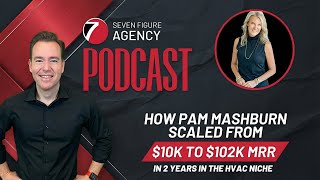
In this 2026 podcast episode, Joshua Nelson interviews Pam Mashburn, founder of Explore Media (formerly Explore HVAC/Explore Marketing). Pam walks through the evolution of her agency from a 20‑year‑old publishing business and a generalist digital marketing service into a $4 million‑annual, 7‑figure niche agency focused on HVAC contractors. She shares key metrics (28 clients, $110 K MRR, 23 full‑time staff), the strategic reasons for narrowing to HVAC (geographic expansion, reduced industry fatigue, authority building), and how a pivotal joint‑venture partnership supplied the majority of new HVAC leads. The conversation covers the agency’s full‑funnel service stack (website, local SEO, Google PPC/LSA, social, programmatic, streaming TV, SMS/email), tiered package design (Foundation, Branding & Reactivation, Visibility, high‑ticket streaming TV package), and the shift from relationship‑based sales to data‑driven, recurring‑revenue models. Pam details hiring philosophies—emphasizing expertise, Kolbe testing, rigorous interview questions, and a preference for smart, trainable people—along with the creation of a Customer Success (CSS) team and a structured onboarding process. Team culture is highlighted: a hybrid in‑house/remote model, EOS operating system, a “Chief Fun Officer,” regular virtual team‑building, and a studio used for bi‑weekly podcasts that serve both branding and SEO purposes. Operational excellence is achieved through transparent budgeting, profit‑based incentive plans for all staff, weekly financial reviews, and an intentional over‑staffing strategy to avoid bottlenecks. Finally, Pam discusses AI adoption to boost productivity, the importance of “known before needed” branding tactics, and offers advice to other agency owners to fully leverage 7 Figure Agency resources.
Chapters
successful digital marketing agency owners from across the country. I'm really excited today to be joined by Pam Mashburn by Explore HVAC, Explore Marketing. She's grown a 7-figure and growing agency. Pam, thanks so much for being here today.
Hey, thanks for having me. I have to say, it's been my dream to be on your podcast. I've watched all of them, and before I joined 7 Figure Agency, I really like studied everybody that was on it.
So, wow, I love to hear that. I love to hear that. And now you, like, you get to inspire the other agency owners that are on this track. So, um, congratulations on your success and thanks for taking the time to do this. Um, just kind of tell us a little bit about the lay of the land. Like, what, what does it look like in the business today? How many clients? How much recurring revenue? What's, what's the lay of the land?
Yeah, so we've got 28 clients. We're at $110,000 monthly recovery— monthly, or MRR, monthly recurring revenue. We have 23 people working in the business full time.
Oh, wow.
So, yeah.
Okay. All right. So, you know, good, good margin per client in terms of the number of, number of clients and the monthly recurring revenue. A large team. I know that the HVAC piece isn't the only thing that you do. Talk to us about the other divisions and how that plays into it.
Right. So we started the business 20 years ago and we have basically 3 pillars of the business. So we have the publication side. Which is about a quarter of the business. We have a generalist agency, and then we also have the HVAC niche. And so it's interesting because we started the publications, and around 2019, we decided to kind of dabble some digital marketing. And so we just started learning about it. We're like, oh, we could offer this as an upsell to our publications clients. And thank goodness we did, because then 2020 hit and a lot of, you know, a couple of our publications shut down. And it was just, we were worried the business was going to go under, but fortunately digital took off. And so our generalist agency took off. And, um, that was, I mean, it was really a blessing. Um, and God has truly blessed this business. But what we realized is in this, we are, we're in Montgomery, Alabama. It's a small city. About 200,000 people, and, um, we knew that we wanted to grow bigger than that. So, um, we were around 2 million, we're at about 4 million now, agency, and, um, we knew that we needed to grow outside of our area. And we were also getting tired of learning about every different industry. And so that's— so I started doing some research, found 7 Figures, started watching all your webinars and your podcasts and learning about that, and really started getting jazzed about it. So, so cool.
So you've got a $4 million per year enterprise and you'd already had a multiple 7-figure business, but you decided to shift to niche-focused. Talk to us about like why, like what were some of the reasons you wanted to go niche and how that's impacted your ability to continue to grow?
Yeah, I think the biggest reason was what I just said was just going outside of our area because now we have clients all over the United States, right? So we've got so much more potential to earn more. And I think that there was just a fatigue. There was just a fatigue of, you know, we've got the landscape business, we've got the, the med spa, we've got doctors, we've got all these different people. And it was just exhausting for our staff to kind of figure out what would move the needle for each one. Whereas now we get so excited because we're like, ooh, HVAC. Well, if we do this and we, we can make this happen for another client, we're able to kind of become, truly become the authority in that space. And to be honest, you know, we had like a credit union, and this was kind of our first aha moment about getting into a niche. We had a credit union that we'd had for years, and they said, oh, we're going to use this boutique agency that just helps credit unions. And then we heard another client say that, and we said, you know what, This is gonna be the way of the future. And so we need to adapt and change too.
Amazing. So it was to simplify, it was to streamline, it was to really be able to put your laser pointers on it. And from when you decided, all right, we're gonna focus on our niche, HVAC, to now over $110K in that one space, how much time elapsed? And kind of talk to us a little bit about that journey.
Yeah, it was pro— it was about 2 and a half years ago that we made the decision, and I kind of took the team kicking and screaming into it. And I don't know if you remember this, Josh, but like, I came with one person and then I brought my whole leadership team to the conference because I needed them to buy into what we're doing. Because the niche stuff is a lot more work, you know. We're used to selling because based on relationships and just being known in the community and seeing people at the grocery store. And now we still have those relationships, but people are looking at something bigger. They're looking at results. And, you know, I have an engineering background. I used to work in manufacturing. So I love data. I love kind of looking at an equation and saying, if we do this, this should happen. Like, I love strategizing that way. But our branded kind of generalist clients, they didn't care about that. But our HVAC clients, they really care about it. And so it took us a couple of years to really dial it in. And then also to get everybody on my team to become authoritative when they're doing it and feeling confident in delivering results. So, yeah.
Love that. So you made that pivot. Obviously you're thriving. I think you're just like about to even go to the next level even quicker. Talk to us about why HVAC, 'cause that's something people struggle with, especially in a case like yours where you've already got all these verticals where you have success you know, it's like, okay, it would be nice to be in one vertical, but how do you choose the right one? And so what, what guided you towards HVAC, and what kind of, what was your decision criteria for that?
Yeah, that's interesting. So we looked at two different niches. One was med spas, because, um, most of the people in my office are women. And since we started, we've added a few men, but it was mostly women. So we're like, oh, we know a lot about that, we'll do that. And then, but we also had a couple of HVAC clients. And so, um, not as sexy as med spa, right?
Right.
But what we decided was the med spa industry was really fickle, and I applaud the people that are in that niche because it's a fickle group and they're a little bit more needy, and you're dealing with doctors. And so it's just— it was just— we decided that clientele was going to be harder. And so, but what we did love about HVAC is we liked the guys that run those businesses. We understand the nitty-gritty of, of what they're doing every day. And then we also knew that we could get results. And that was the— that was, that was really truly the real trigger, was how do we get results and can we do it. And, you know, they already recognize that they need advertising, whereas the med spas, they didn't always recognize that they needed that. The HVAC guys, they know If I want to grow, I've got to invest in marketing.
So it sounded like you were looking for like where you can have a big impact, where you've already got some experience, where you've already got some wins. And that was kind of like the let's go down this track. How many, like how many HVAC clients did you have? And then like, what was the approach to go out and grow that like you have?
So we had two. But we really, I enjoyed working with them. And so Um, we— okay, so let me just back up. We kind of did, did things in a little opposite from what we talk about with 7 Figure Agency. Like, you know, we have the different tiers at the different, you know, MRR that you're at. And I already had a sales team, so I was able to like— so our sales team was doing different things. We brought somebody on to really do the, the cold outreach, and we got a couple of clients through cold outreach. But then I had another salesperson that made a um, a JV connection. And so actually, that's really how we've grown the most, is just the leads from that. So, um, we're actually starting to, to do a little bit more with our cold outreach because we don't want to have all of our leads coming from one source. But we really enjoy working with this, with this, this coaching group, and we've gotten some really great clients from it. But that's really what propelled the growth.
So good. So you had this, this sales team, and you were like, okay, let's, let's go let's go from 2 to whatever the next level is. And there's a lot of ways to grow, like in 7 Figure Agency, we talk about podcasts and webinars and Facebook ads and Google ads and trade shows and events and joint ventures. And it sounds like you probably did a mix of that, but what really worked is you landed on one great strategic relationship that started to plug you in to these clients that helped you grow the company.
Yeah, and yeah, that was really the key. And I think you even say you're only one JV away from, you know, a million dollar or 7 Figure Agency. That's right. That was really truth for us.
So good. And so, you know, if you don't mind, talk to us a little bit about like how that relationship was formed. Sound like you had a salesperson that connected. Was it a win-win? Was it some type of rev share? 'Cause a lot of people are like, I love the idea of the JV, but like obviously you were already very successful in a very established business. So that gives you an advantage in those types of conversations. But just kind of talk to us about, if you can, like on a high level, what the structure of that looks like.
Yeah, so it's pretty easy. We— so he, um, this coaching group, um, he is from our town of Montgomery, and, um, it was just kind of a God thing actually. So my sales gal Christina, who was at the conference last time we were there, um, she reached out to him because he had a local HVAC company, and then they got to talking, and then they saw each other out at a restaurant, and he's just such a nice guy. And so we met with him and his trainers, and they actually were already recommending a different agency. And they were like, well, why should we recommend you guys? Because we were a lot smaller, and it wasn't a 7 Figure Agency that they were recommending, somebody else. But, and I said, you know what, I, and I remember in that meeting saying, you know, we talked about all the things we could offer and the things that we do, and I just said, I unapologetically will tell you that we are better than they are. We're going to be more responsive. All of our team is in-house. You know, they're all on salary. We're not just, you know, white labeling stuff, although there's nothing wrong with that. But we weren't. And I said, you know, we will take care of your clients because we were— and we treated it like we recognize that they are your clients first and that we are a part of the puzzle that will make them successful. And so we keep a very close relationship with those trainers and coaches within that group. and we let them know how, how their clients are doing with us as our clients. And, um, it's just been a really nice relationship. There is no revenue share. They don't need any— to be honest, they don't need anything from us. They're making plenty of money, um, and they have made so many great connections for us, um, and have just been a terrific partner. But on the other hand, they make a lot of their revenue based on their clients increasing their sales. So it's, it's actually been very symbiotic because we can help increase the sales, they end up benefiting. So it's been a really good, a really good JV.
Love that. So proof again, like, you're just one joint venture away from a 7-figure business. You have to approach it in the right way. So, you know, in Pam's case, it sounds like you guys created a great relationship, you found the win-win. And it's not always, hey, I'm gonna pay you 10% of the recurring revenue. It's not always Sometimes it's, what's the win-win? Well, you wanna see your clients grow and we can help accomplish that, right? And we're gonna go to bat for them and we're gonna make sure that happens. And if you deliver on that promise, now you become indispensable to that joint venture partner. And that's just gonna continue to be a win-win for both of you guys as the companies continue to grow.
Right. And you know, it's interesting 'cause to continue with that JV, one of the things that we realized is that our ideal client that we really like going after is not— they don't have that many of those clients. Like, they have the clients that are under $700,000 in annual revenue, and they need help. And so we actually created like a visibility package just for this— these clients, because we want to help them, help them fill a need. 'Cause they're not gonna keep sending us leads if we keep saying, "I'm sorry, you're not the right fit." You're not big enough, right? Right. So, you know, you have to sometimes make some accommodations for that.
I love that. So a great, great example there, kind of how you transitioned into HVAC, how you grew. Talk to us a little bit about what you deliver. Like what is the typical package and what kind of, what are you doing for these HVAC contractors?
So, okay, again, we're a little bit different. We consider ourselves a full funnel agency. And so we can do it all. Now our packages don't include it all, but we can do it all. And what this is approach we took a long time ago is we don't want them talking to the billboard guy because the billboard guy is selling digital too. We don't want them talking to the— so like we don't want other people whispering in their ear that they can do a better job and they see them at the grocery store. So we'll, we talk to them about, oh, we can create those ads for you to complement your branding. So we do, um, we'll, we'll do TV, streaming TV, whatever. But typically our packages are the, the basic website hosting, website design, Google PPC, LSA. Um, let's see what else. Uh, we also do social, we do programmatic advertising, and we'll do emails, and that's kind of standard. We do text messaging. So anything that's going to bring them results. So we have like our foundation package, then we have our branding and reactivation package, and then we have, um, gosh, we don't sell the other one very much, so I can't remember the name of it, but whatever the bigger one is, um, that one, um, has more of like streaming TV. It's, it's really, we've only got, um, one client right now that's big enough to afford that, and it has like streaming TV, geofencing, uh, mailers and that kind of stuff.
Okay, so you're trying to come in and say, hey, we're going to be your full digital marketing or marketing partner, and it's not just website SEO, even though that's kind of like the fundamental that most people are buying.
You know, well, we do website SEO too. Yeah, and the local SEO. So we, yeah, we are truly full funnel. Um, and one of the things that we learned the hard way is that if you can't control that whole funnel, then you're not going to get results. Because everybody, all these clients, they think, oh, if I just do this one thing, I'm gonna get all the leads I need. And they don't understand that customer journey of I saw you here, then I, I see you everywhere. And then when I go to Google, I pick you. And one of the biggest things we learned was if you take on a client and nobody knows them, and we call it known before needed, if nobody knows them, nobody's gonna pick them. So you've gotta have, make sure that your clients are known in their community. And then, then Google works. Otherwise, Google doesn't work, right?
I love that. So how do you, how do you build that known before needed approach? Is there any like secret sauce that you're bringing to the table that helps to, especially for those $750,000 a year companies, to get them known before that, you know, like, okay, now, now they've got a problem and they're gonna choose that company, right?
So there's a couple of things that we really talk about. One is their Google Business Profile, obviously, because that's like Google's website for you. And then we've really leaned into the social piece because that's where everybody is. Everybody's on their phones, right? And we're really leaning into the video as well. We're doing some AI videos. We're doing, you know, if they send us stuff, we'll, we'll edit it. But most of the smaller guys, they're not going to do it. We've got to— I mean, we're having to, to be creative to come up and, and come up with what their branding is. But the other piece is, you know, we Talk to them about— and this is something I learned from some other people in 7 Figure Agency— is we really talk about what is your revenue, where do you want to go, and like how many new customers did you bring on last month? You know, because that's really— we're trying to build for those smaller revenue clients is just building their base. You can't reactivate a database if you don't have a database. So one of the things we always talk about is are you wearing your shirts, are you wearing your hats, are you going out, what are you sponsoring? And so we talk a lot about What are some things you can do? And I mean, we'll have discussions and people say, we know they're building a new Publix grocery store. Should we buy the things on the grocery cart? You know, and so then we talk about the cost and the time and, and what it would look like. And so sometimes we're like, yeah, spend the money on that because you've got to be everywhere. So we really see ourselves as partners for their whole marketing campaign. And we'll even— I mean, we have some clients and they show us their whole marketing budget and we'll go, and it may not be spent with us, but we're like, yep, that's a good spend. Or, uh, I know this is, you know, your son's whatever, but is that the best use of money? And so we really have some honest discussions with them about that.
I love that. It sounds like you've kind of elevated yourself beyond just being a digital marketing provider, but to be almost like a marketing consultant. Uh, do you position yourselves as like fractional CMOs or anything like that in the mind of the the clients that you serve?
We haven't because I don't think they understand what that is. And so, yes, but what we talk about is that they can lean into our authority. And so, um, and we talk about the fact that we, we call ourselves strategists. You know, we've got to have our monthly strategy meeting. And actually, for our more advanced clients, that meeting, it used to be, here's what we're doing for you, um, here's, you know, the clicks and the and the conversions and that kind of stuff. But now we've moved past that because now they trust that it's bringing results. And what we talk about is, um, I, I'm seeing a lot of leads on my end. Tell me how your month went. Did you hit your goal? How was service? How was installs? And we really talk about the business. And so I think they see us as an, as an extension of their business team. And so, um, I don't meet with— I have 3 clients of the 28 And I know like a lot of people like to get, pull themselves as an owner or as we do EOS or as the visionary out of that. But I think it makes me stronger to stay with these 3 clients. And I really enjoy digging in the weeds with them. And I also enjoy, and this is something all of us do, is talking about what's worked for other clients. Like, hey, my guy in Iowa, this is, this is something we did and it got a lot of traction. Do you want to try this? And they really value that authority of they don't have to throw the spaghetti noodle at the wall and see if it'll stick because we've tested a lot of that already. And then we have a few clients and they're like, I wanna test it. Like, I wanna be, I wanna see if this is working first. I don't wanna have to wait for somebody else. So that's been fun.
I think that that's gonna be a big part of your retention and why you do as well as you do because you're not just coming in as like, here's our preset package. Here's how much you pay and, you know, we'll meet once a month to look at the results. You're really trying to meet with them on a strategic basis and saying like, what's the goal? How are we performing against that? And not like more links, more citations, but more like what can we do to drive that outcome, whether it's branding-centric or something different? And so I think that's really neat. How do you pass that level of thinking down to your account management staff? So you've got your 3 clients that you still meet with, and I think that gives you a good pulse and it gives you the ability to train that down. How have you baked that into the culture of your account management strategy?
Yeah, that's the difficult part because we didn't have CSSs until, oh, maybe a year and a half ago. We had one and then she left, and so we had to get new ones. But so we're— and we now have a CSS manager and he's doing an amazing job with training my people. So we've got 3 CSSs, and I'm actually, um, I used to be more focused on the marketing and the sales piece, and now I am digging into the fulfillment and the CSS piece. And so, and the whole reason is because I need to make sure my knowledge gets in their brains and they think like me. And so we go through the dashboards and I'll say, this doesn't look good to me. Why do you think that is? And so we have a lot of sessions where we're just like, I, man, I have a rule. I only hire really smart people. Like, if you're not smart, you probably aren't going to fit here. So I like to hire smart people that are trainable. And so far, we've, the, the new group that we have has been really good at that. But my CSS sits in with me, and then I have two salespeople that we're calling strategists. And so they sit in on the monthly strategy meetings with their CSS. But the— what we're trying to do is get them to the point where the sales and strategist person doesn't have to be there every month. You know, it might be quarterly. I do try to sit on each one. The part that I like is I really like helping them grow their business. So if I— like, one of our clients in Atlanta is talking about growing a second location. So we got on the phone or on a Zoom and we talked and we were like, okay, it's really about proximity. It's like, I'm looking at this space and I go, let me look at it on the map. And then we look and I go, you're in an industrial park. Like, that's gonna be hard for you to get 5 Mile Famous in the areas you want to get. So I love doing that part. And so just helping those CSSs learn the questions If we bring in a new CSS, it's going to take a while. I mean, we have already accepted the fact that it's going to take 6 months to a year to really get them fully trained. But that's the hope. That's the hope. I hope it's scalable. I guess we'll see.
No, I think it's great. And investing that time is really like your competitive advantage, right? It's your ability to have those strategic conversations even though you're not there, which drives better results for the clients, drives better buy-in, drives better client retention long-term. You said, and I love getting into like operational hiring philosophies and things, you said you only hire smart people. Objectively, like how do you test for that? How do you, is there any types of like IQ testing or thing? Or you just judgmentally, you're like, I think this sounds like a smart person.
Well, we look for experience and I will say this, we used to hire people that were inexperienced and now it, And I'll tell you, this was, was used to be my philosophy. I can do all of your jobs and I don't have enough time, so I'm going to hire you to take this off my plate. And now I don't hire that way. Now I say, I don't, I can do this not very well, but I need somebody that can do it better than me because to bring us to the next level, I need experts, you know. And that's one of the things that makes a marketing agency so attractive to a business owner is they can't be a Google expert and a social media expert and all the different things, right? So that's what our group brings. The pro— I think the hardest thing, and then I'll get back to your question. I think the hardest thing though is to get everybody in your organization to not work in their own little expertise of silo, but work together. And that's really what we're— right now it's on my mind because we're about to do our state of the state. And that's one of the things I want to talk about is being results-focused through collaboration. Um, but getting back to hiring, we like to use the Kolbe test. And then we have hired, um, some people overseas, and that was not something that we did before 7 Figure. Like, that was something that scared me, made me really nervous. Oh, I don't know about that. Um, but we met some, some great people through that. And one of our staffing agencies that we use, they really um, what's the word, they really go through and find the ones that they think we'll like. Like, they know the ones that we don't like, and I'm like, yep, they're not smart enough. Like, nope, they're not grasping this quick enough. And so we really ask a lot of questions during the interview process. Like, if you were setting up an, you know, um, a Google PPC campaign, tell me all your steps. And usually we can figure out pretty quickly if they've done it if they're good at it or if they've just read a little bit about it, right? So, so we ask some hard questions.
I love that. I think the philosophy that you said there and the shift is kind of one of those key shifts from getting to 7 figures to getting to multiple 7 figures is I just need someone to help me out and kind of take some stuff off my plate versus I need someone that can actually innovate this process and do it better than I would. And that's how you continue to elevate the company you know, to multiple 7 figures like you have.
Yeah, I mean, I need— and that's, and that's a great way to say it because I need people that don't just are people that do tasks. I need people that look at the process we have and say, ooh, I don't think that's gonna work. I think a better way would be this. And, you know, now we are embracing AI. I'm calling us an AI-forward agency, and, um, we're really trying to figure out— because to be competitive Again, I'm always looking at— I'm not worried about my competitors, but I want to stay competitive for my clients to say, are we offering the best we could offer? Are we offering the best results that we can give? And for the money that they have, they're, that they're able to spend, right? And so we're really turning to AI to help us with our productivity pieces, um, so that my people have time to think. Because I think that is a lost art, is actually thinking, like looking at this and going, oh, I don't know, that doesn't seem right, or I think we could get better results if— but when you're just so busy just trying to get your tasks done, you don't have time to think, right?
And in the last year, that has been a real struggle for us, creating that, that mental space with the amount of clients and the amount of revenue and the amount of tasks. And so you're gonna use AI as a multiplier there to say, hey, let's create enough mental space so that you can really be strategic and you can bring better decisions to the clients that you serve.
Exactly. That's exactly, I'm writing that down, multiplier.
I love that. No, that's fantastic. The other thing I noticed is it sounds like you, I don't know if this is intentional, but you have a lower client to CSM ratio than the norm. So it sounds like maybe like 8 to 15 clients per CSM. I don't know if that was intentional or you're kind of growing, you know, or hiring in advance of need.
Yeah, we're, we're actually growing that. Um, I'd like to have them around 16 to 20.
Okay, nice.
And then, um, it could be more than that if they're a smaller kind of Visibility client that doesn't need as much, you know, hand-holding. Um, and the Visibility kind of package, that smaller package that we're talking about, it's not going to generate leads. It's about getting them ready to generate leads. And so that's more tasks and creativity, but it's not about the equation of lead generation, which I think takes more— it's such a dynamic environment out there, and it's such a competitive environment in HVAC that you've got to be on your A-game.
Yeah, no doubt. One thing I want to make sure we talk about, because it's such a common thing where an agency grows to high six figures, seven figures in a generalist market. And that was kind of your role. You had the publishing company and you had a generalist agency and making the pivot to a niche. Talk to us about some of the struggles and kind of how you were able to balance. You can't just turn off the generalist business, right? While you go down this track. Talk to us about how you balance that and any lessons for other agencies trying to make that pivot.
Yeah, I mean, it's what helped us fund because I mean, I'm just going to admit I'm kind of a bougie girl and I don't, I don't want to like go into debt. And I will say this, one of the things we did grow slowly. So our business, we own our building, we don't have any debt in our business and we have funds that act as like a credit line for us because I think as a small business you can't hire people that are worried about getting a paycheck. So we have grown very conservatively. And, um, but the generalist agency is what helped us kind of get our coffers, you know, have, have that surplus so that we could invest in this. And it was really actually the 7-figure agency. It's been very humbling. Like, it's been hard. And I would— if you asked anybody on our staff, they would say it is the hardest thing this business has ever done. It's because it's not based on relationships. It is based on just nitty-gritty getting down there and doing the work. And I did, I knew you were going to ask this question because I watch all your podcasts. So I got myself prepared to answer this one. And I think here are some things that, that, um, were big ones for us. You always say that revenue is vanity, profit is sanity. And so we really embrace that. And one of the things that we were doing is like for their Google spend, we were charging them for the Google amount and the management fee. And so it was a really hard transition to move our generalist clients and our HVAC to putting their credit card on file. But it was such a, it was so freeing for us for invoicing and management. It really made it so much easier, less complex. So that was one thing that we did. And that was, if I hadn't had an amazing integrator and finance person, like, because us salespeople, we were like, oh no, they gonna drop, they gonna drop, we're changing something, they're gonna drop, you know. I mean, we were freaking out because we've always set up our contracts so they automatically renew. And so we were kind of like, oh no, this like signals something changing and they may decide, oh, I need to rethink this. But you know what, we didn't. And so that was good. So don't worry if you're in that situation. Um, the other thing is with our generalist clients, we always would take anybody. And in fact, we had to make this rule because they were— because these ones that were really small were like taking all the life out of us and we couldn't use that to grow. And so we had to make this rule. Our salespeople really fought it, which was if a generalist client can't spend $1,000 a month, we're not taking them on. Yeah, that was like incendiary. I mean, like, people were ready to like go to fisticuffs over that deal. I don't even know if people say fisticuffs anymore, but They were, they were like, I can't believe you're restricting my ability to sell. But we had to because if they weren't a big client for Generalist, we didn't want them because we needed to focus on this niche. But I will say in the niche, one of the things we learned was not everybody is a fit. And there are some, like, we finally started realizing the signals of they're going to be not easy to work with. They're not. And so we started looking at people more with our core values. And so when we look at potential clients and vendors with our core values, it makes it a lot easier to make that decision. But it is hard because you're— because we would see it and we'd have to tell ourselves, people, no, you're not— we're not taking them. And they're like, but I worked so hard to get this, and this is their livelihood and their money and all this stuff. And so, but we, we finally got to that point. The third one was Y'all have always said in 7 Figure, set up your packages, run on packages. And what is it? Simple— uh, wait, what is it? Complex fails, simple scales. And so we've been trying to get more simple, more simplified. And, um, but you know, when you're so desperate to hire those clients, you're like, you'll do anything, you'll customize it, you'll break the packages. We had packages set up, then we were like, we need this other little package. And what we realized with that one, like we had our 3 tiers, right, where you could kind of grow. And then we had this like one-off package that had a little bit of different things. And what we realized is that package didn't allow anybody to go back into the 3 package. So that was a big learning. So we've gotten rid of that package. There's a lot of package changing. And then we added the Visibility package. So that's our little mini package. But what we did is we set it up so that they could grow into those next tiers. So we finally got smart about that.
As they're winning with you guys.
Yes. Yes. And so that was some big learnings that we had. And then the other one was just taking on CSSs. I think salespeople and even myself, we're so protective of these relationships and these people that we've met and we're afraid somebody's going to screw up and all of that kind of stuff. And so we didn't, we were very resistant to taking on CSSs. But you've got to have someone— a salesperson and a strategist person is different sometimes than a CSS person who gets stuff done. And so that has been a big shift for us, and it has been such a healthy thing for our organization.
So good. So many great insights and takeaways there. You've mentioned a couple times the sales team, and I'd love it if you could talk to us a little bit about like What, like, what does the sales role in your organization look like? How have you identified those people? How do you structure that in the organization?
Yeah. So with our publications, most of those sales are recurring sales. And so it's a lot of just renewals and a lot of those are kind of incoming sales. And so we have both our— I have 2 salespeople right now. I used to have 3. One left to take a job that was not so stressful. So we have two that have been with me. One's been with me for almost 11 years, and one has been with me for like 5 or 6 years. And then I still dabble in sales because I love it, but I've really tried to let them take the, the helm at sales pieces. But what we— what really helped us, because, um, what I was telling Josh is like our generalist clients, we have a few generalist clients and they'll spend $300,000 or $400,000 on a project-based piece. And so it's really hard to turn that away when it was helping fund this niche development and investment. But what we ended up having to do is— and I will, I will say that one, some of those whale clients we lost, which is what also propelled us forward in our niche, is we needed stability, we needed monthly recurring revenue to grow as a business. But what we ended up doing is we ended up defining lanes And so we have one that focuses on generalists and we have one that focuses on, um, the niche. And now our generalist person is also dabbling and starting to handle some of the cold outreach that we're doing with the HVAC. So, um, I mean, at some point I know we're going to end up having to hire another person, but we're hoping that instead of hiring another person, we can have the CSSs take on more of the roles so that my closers close. And that's what they focus on.
Awesome. Yeah, that's super, super helpful. So we've talked about like how you got into HVAC. We talked about kind of what the program package looks like and how you've landed the clients and kind of what the client acquisition piece looks like. Let's talk a little bit about team structure. I see you've got a, like a beautiful studio there. You've got the building that you run. Is it mostly in-house? Is it, you know, a mix of in-house, out-house? Talk to us about the team culture and the kind of the team organization.
Yeah, so we do have some people that are remote. So we've got, let me think about that a minute. We have about 8 or 9 people that are remote. And that, I think 8 of them are outside of the US. And we've had 2 people on our staff that are remote because their husband's got jobs. And so, My philosophy when I started this business, I was a stay-at-home mom at the time who realized that she was created to work. But one of the things that I realized is that if everybody has a laptop, then if we have sick kids or we need to go help a parent or whatever it is, we can still work when we need to work. So everybody in our office has laptops, and that's just been a culture that we have. But when 2020 hit, one of the things that we realized is we're a lot more productive. In-house. And so we bought— we always had an office. We bought this building 3 and a half years, almost 4 years ago. And so, um, when I bought it, I thought it was really big, and I was like, oh, we just need half. I'm gonna rent the other half. Being a good business person, I'm gonna rent the other half. Well, my team had another idea, and so they turned it into conference rooms and, you know, lunch areas and podcast room. And so it's been good. It's allowed us to do some growth and have some some— oh, um, was that the question that you asked? Oh, you asked about team structure.
Yeah.
So we have, um, we run on EOS and have for like 10 years, and that I attribute to a lot of how we've grown because it just has given us the structure to be able to, to realize and adjust with changes and growth. But we have a finance group. So the way our organization is, we have a visionary, integrator. And then, um, below that we have a publications piece, and then we have sales, we have fulfillment, we have CSS, and then we have finance. And, um, some of— most of our remote people are either publications or, um, some fulfillment.
Okay.
So, well, and CSS actually. We have CSSs that are remote.
Some, some remote CSSs. Yeah. So that's, that's the org structure Some people come to the office, some people work from home, and it's kind of a flexible, you know, if you need to work from home, you work from home. What is it like? What is the culture like? It seems like it's probably a fun, vibrant culture. Talk to us about that and how you create, like, people have been with you for years and years. It's like, I think you said 13 years for that one person, so.
Yeah, so I still have the same employee that, the very first employee that I hired, she's still on staff.
Wow.
And it's been 14 years. So it's crazy. Um, I think, you know, we work really hard here, and I really— I mean, we talk about the Explore Media way is, is seeking excellence in all that we do. And so there's a natural tension in the office because if you're seeking excellence and somebody else is seeking excellence, you're both going to be a little bit at odds because I'm trying to get this done, but my priority over here is something else. And so there's always going to be a little natural tension there. But we have a gal on staff, I call her my CFO, my Chief Fun Officer, and she does make things really fun. We just had an Easter egg hunt and it had White Claws that we also like searched for around the office. Um, we do a lake day, that's kind of a tradition for our people that are here in the States, um, at my lake place, and that's always fun. And then we'll even have a lake day for our families so that we get to know each other But on a monthly basis, we have an online team-building exercise that we do. And it's only been in the last few months that we've really embraced those overseas folks and really made them a part of our team. I think we just didn't know what to do. And Angie just really took that. She really did some research and she's done some really fun things with it. Like the last one we did was, it's kind of sounds really dopey, but it was really fun. It was this show and tell. So everybody brought one thing, and like one of the guys, um, our videographer guy brought the ashes of his dog that was just like best friend, Nug Nug. And one of the girls that hunts with her husband brought in her frozen duck that they used for their hunting dog. Yeah, it was some crazy stuff. Mine was not anything like that, but it was just— and then our overseas guys, they had like, this was my original book that I learned English out of, this was my guitar. I mean, it It's really— so when we have those fun moments, it makes those stressful times a little— like there's still, there's still that tension, but it makes everybody a little more forgiving and give everybody a little bit more grace in their work. So I love that.
I think a lot of organizations as they grow, they forget, like, if you're not having some fun with the team, like, you know, like if you think about traditional office, you would like take them out to lunch or you'd go bowling and stuff like that. When you've got a virtual team, how do you still create that fun hair-down moment? And it's, that's, those are the moments where trust is built and it's, you gotta trust the person next to you. You gotta trust that team that creates results, but it also creates loyalty. And you know, like yourself, people that are staying with the organization for a long, long time.
So I love those. Yeah, I have my CSS manager, he is here in the States And he works a lot of times remote because he lives in Birmingham. But his team is remote. And so I'll get on theirs and he'll do fun things. Like he was going to Vegas, so his backdrop was Vegas, you know. And then the next month, the next week, it was like a Southwest theme and he had a Howdy hat on. I mean, it was just like he really creates a fun environment and just creating some Slack channels that people can communicate on. So That is something that my team has done. That is not something I've done. And I think just bringing in— I like to bring in a lot of different age groups, but we have mostly young people and a lot of them have worked remote. So they bring that into, into the mix and it makes it fun.
Super good. And I love the studio backdrop there. It looks like you're getting yourself set up to do more of that type of content. Talk to me about how you use that space, how you're planning to use that. Space?
Yeah, so we, um, are trying to do podcasts twice a month, and so we've been inviting people that can be JV-type partners, um, like vendors. We've had distributors on and, um, clients. And so one of the things that we're doing is we've actually created a website with our podcast and we're promoting it so that we can have a really good high-quality backlink for them for SEO. So that was part— so we're trying to use it for twofold. Then we can also use it for social media for those clients to have clips from it so that we build authority for them. And then we're also starting to reach out to people that aren't clients and getting them on. And it is interesting, um, we've had a couple of clients on our podcast, and then before you know it, they're up in their package deals, you know, because they get to know us and, and we get to know their business better, and that trust just kind of naturally builds. So the podcast has been great.
That's great. So twice a month, and are you actually bringing people there, or is it on Zoom, or like a little bit of both?
So it's mostly on— we use, uh, Riverside, I think the same thing you guys are using. Yeah, so we use Riverside, and we don't do it live. Thank you, Josh, for making me a nervous wreck making this live. Um, we don't usually do it live, but, um, we've had a couple of people that wanted to come into the studio, and— or if they're just passing through town, they'll come in. And we had one guy one of my favorite clients, and he came from Nashville, and he goes, I just think it'd be better if we did it in person. And it was awesome because he came down, he got to see our office space, and, um, he's, he's really a godly man. He like ministered to a couple of guys on our staff, gave them a book. I mean, it was just a really neat experience. So if I can do it in person, yeah, I would love to, but we don't let that be a—
yeah, very, very cool. So last question, kind of as we, as we wrap up, You guys won the Operational Excellence Award, which means out of all the agencies in 7 Figure Agency, you had the best retention, profitability kind of combined metrics. Talk to us about like how you think about efficiency and any secret sauce that you've gotten that has helped you, you know, really love, you know, produce at that level.
Yeah, I, there's a, I don't know if we have a secret sauce. I will temper this with last year, we were, I feel like, understaffed. And I had heard Tim Chernak at the conference talk about you're either going to be understaffed or overstaffed. And we made a decision, a strategic decision this year to be overstaffed so that if someone is sick for 3 weeks, we're not scrambling. If somebody leaves, we've got somebody that can cover or whatever. So, so we may not be quite as operationally efficient this year. But it's an investment in growth, and so we're okay with that. But I will say that some of the things that we have done intentionally, um, is one, um, my director of ops, she and I sat together and went through the packages and came up with every— like, this should take this amount, this person or this role makes this amount. So we know what our fixed costs are, what our variable costs are. And so we really looked at a project management thing. And we then, we said, okay, based on that, we're going to have this percentage. And that's how we pack, you know, price the packages. And so, um, we were very, I would say, aggressive in really pricing those packages so that we made money, so we profited. So that was one thing that we did. And then the second thing that we did, um, is we decided to incentivize not just the salespeople but also our operations team so that we could take on more revenue and more profit. And so we set a profit number and based on that profit number, we would take whatever the— we would take 2% of the revenue, not after profit. But if you had, you know, 9% profit, then you would get— we would take 2% of that revenue, that eligible revenue. and then we divide it amongst the people on the team. Okay. So, and we do that on a quarterly basis. And if we hit the re— we hit the profit for the whole year, there's an extra 1%. So we look at those numbers, um, revenue and expenses every month, not every month, every week. We look at it every week and every, um, 10 or level 10 meeting for each of our departments. They look at those numbers every week. And it's so interesting because I think I mentioned this last year. It was like, I want to buy this printer, I want to buy this new— I want to buy a drone, I want to buy all these things. And they're like, no, we won't make our profit number. Like, they are— so it's not great if you like to just spend money, which I do. They're like, nope, not spending that. Nope, we're getting pizza. We're not gonna get the, you know, better catering thing. We're getting pizza for the lunch and So anyway, so they have really held me accountable, and we're finally maturing enough after 20 years to actually have a budget and review the budget and make sure. And so I, I mean, I think that transparency, um, around the business has made— I have some really good stewards in my business, and they really hold me accountable as well as everybody else. So it's been good.
That's phenomenal. So like really being intentional about the gross margin And I think most agencies don't do that. They just pick a monthly price and it's like, "All right, that's what we're selling it for." But like really figure out what are the hard costs to deliver and make sure you're looking at your cost as the owner, you're looking at all of the team members and their hours and have a healthy gross margin. That's like kind of the starting point for profitability. And then I love what you did where you got the whole team involved in being aware of what those numbers are and being incentivized by it. Because You're right, most agencies, salesperson gets a commission, everybody else is on a base salary, and so they have no care whether the company is more profitable or less profitable, it doesn't impact them. But when you open up that number and you kind of get them all bought in, now they're making decisions not just based on, is this gonna improve revenue, but also is this gonna improve the profitability? 'Cause they're incentivized by it. So I love that, I love that example, that's awesome.
Yeah, yeah, it's been a really great help for us. As far as, you know, we're trying to create a business that is going to last longer than Pam, right? That is going to be, I mean, it supports our livelihoods. And, you know, the other thing I'll say on that package piece, because we were talking about our social media and to keep up with what's going to move the needle, we've got to do X amount of posts per month, not just what we've been doing. So that affects our profit. So how do we do that without affecting profit? Is it AI? So it makes— it forces us to figure out, to be competitive, we have to do this, but we also have to make this profit. So it challenges us to get better. Yeah, iron sharpens iron, right?
Yes, love it. Pam, this has been amazing. Thank you so much for sharing how you've grown the business, how you've kind of structured the team, how you've structured your packages. So many great insights and takeaways. Guys, if you got value, be sure to reach out to Pam, thank her for sharing, thank her for, you know, being abundance-minded and really just coming on and being willing to share exactly what's worked and how she's done it. If somebody did want to connect with you, what would be the best way?
Yeah, pam@exploremedia.com is my email and I'm at 334-201-8787. Oh, wow.
Leaving her number on there and everything. Pam, last question and we'll wrap up. If you had one piece of advice for that agency owner that's trying to get to the next level, what would that be?
I would say that you need to lean into the 7 Figure Agency learnings. We made all— this has been the best investment that our company has ever made, is in 7 Figure Agency. We used the training, so we trained all our people on, you know, the Google stuff. My salespeople attended every week the sales that Josh Koenigsberg used to do. So we really took advantage of all the resources. We go to all the conferences. I usually bring more than just me. I bring some of my A-players, trying to make sure everybody is bought on. And then we do monthly lunch and learns where I provide lunch and usually I like to do not pizza, something healthier. But we a lot of times will watch a podcast, Tony Ricketts or somebody within 7 Figure Agency, and then we'll stop it and we'll say, that's really interesting. Can we adopt that? And then we use it as like, how do we get better? And so my coach Nick has been amazing. I called him the other day about something I was struggling with. The resources, the Facebook group, I mean, yeah, you should be charging more, but don't, don't, it'll mess up my profit.
Thank you so much for saying that. I really appreciate it. And it's been an honor to be part of your continued growth and success. Excited to see you at the next intensive. So thanks for listening, everybody. If you've got follow-up questions or thoughts, drop them into the comments and be sure to drop a shout out for Pam for sharing today. Thanks so much, and we'll see you on a future episode of the 7 Figure Agency Podcast.
More from Joshua


From 26 Years in Business to Nearly Doubling Recurring Revenue | Sandy Waggett




How Luke Truetken Scaled His Agency to $110K MRR by Going All In on One Niche



Website Production at Scale - The AI Tool Stack for Modern Agencies with Marcel Knopf

