The AEO Blueprint with Kasim Aslam - How to get clients recommended on AI
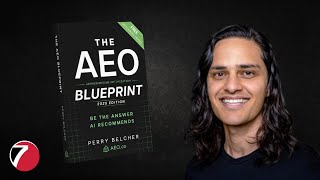
In this live workshop hosted by Joshua Nelson, digital‑marketing expert Kasim Aslam presents the emerging discipline of AI‑driven Equivalent of SEO (AEO). The session begins with introductions that establish Kasim’s credibility (co‑host of Perpetual Traffic, founder of Solution8, etc.) and frames the urgency of mastering AI‑generated search. Kasim then details a nine‑month research project that collected daily queries across three large language models (ChatGPT, Perplexity, Gemini) for 20 queries per day, across ten industry categories, generating tens of millions of data points on source citations, domain metrics, and ranking positions. The analysis uncovers several high‑impact signals: (1) schema markup is the single most powerful technical factor for LLM citations; (2) personal authority and meritocratic content (especially Reddit) outweigh traditional brand signals; (3) overlap between LLM citations and Google search varies widely—ChatGPT and Perplexity often mirror Google rankings (40‑70% overlap), while Gemini shows minimal overlap (≈25% or zero for local queries). Kasim argues that SEO and AEO are fundamentally different: SEO’s KPI is backlinks, whereas AEO’s KPIs are hard‑coded schema and authority‑centric signals. He provides tactical recommendations for agencies and SMBs: build hard‑coded schema, cultivate personal brands, create Reddit profiles that demonstrate expertise, produce robust comparison content, leverage multimodal assets (YouTube, Shorts, TikTok, podcasts), ensure NAP consistency, and adopt a BR‑A‑I framework (Brand Representation, Authority, Indexability). The discussion also covers strategic implications—Google’s AI products are still immature, suggesting a long‑term advantage for early AEO adopters, especially small brands that can deliver highly contextual, personalized answers. Kasim promotes his free AEO book, a paid community/school for deep practitioners, and invites participants to join his upcoming podcast and help solidify “AEO” as the industry term.
Chapters
Welcome everybody to today's special workshop. We're gonna be talking all about the AEO opportunity, and we've got an amazing guest, Kazim Aslam, just a world-class digital marketing expert, uh, who's done a lot of really great work on this. And this is brand new, right? As we all know, you know, AI's not brand new, but the way that it's changing, the way the consumers are using ChatGPT and other platforms, it's changing rapidly. And so you need somebody that's really on the cutting edge, that's paying attention to what's working, to paying attention to what's changing. I don't know anybody that I trust more with this type of thought work than Qasim. And so I was like, Qasim, was there any chance we could get you to come on, unpack what you're seeing, unpack what you're like delivering and where do you think things are headed? If you're already seeing the importance and the urgency of having a solution for your clients, on how to get them recommended in AI searches, in generative search. Just type AI or just type AEO for the sake of consistency. Type AEO in the comments here.
Awesome. Right.
So we've got a bunch of really smart digital marketing agencies. I see some of the best digital marketing agencies in the country on with us today. So pumped to have you guys here. Honored that you're investing your most valuable asset, which is your time. We see this as a challenge. Without further ado, I want to introduce you guys to Kasim If you don't know him, he was one of the co-hosts on Perpetual Traffic. He runs the Driven Mastermind. He was really successful at Solution8, sold that for an 8-figure exit. One of our most popular interviews on the 7-Figure Agency Podcast. Qasim, again, thanks for coming on, man. Really excited about what you're learning and what you have to share with the group.
Well, I appreciate you having me. I'm going to start by pandering and hopefully the authenticity will glaze over the pandering enough to make everybody forgive me, but I've been in the agency space for 20 years. And dude, what I would not have given to have your group when I started or anywhere along the line, because I think you do Agency Mastermind better than anybody I've ever seen do it. And so if y'all are here, for whatever it's worth from a graybeard that's been around, the value that Josh brings is insane. And, uh, the thing I really love about you two, dude, and this is where I'm going to pander a little bit, is so many people treat agency owners like prey animals. You know, they like get them in and it's like, well, you can buy this and I'll take this and you can do that. And it just feels, I always felt like it was constantly just on this ascension path where I could see, and because I'm a marketer, I know what they're doing. And I feel like you do the opposite. It's like you get them in and then it's just like, give, give, give, give, give. So appreciate and honor what you're doing. Uh, appreciate everybody who showed up live too, because this is where we learn. Like you're here, your time is being invested in this way. And what a phenomenal framework for all of us. And I imagine if you have a question, somebody else has that question too. I'm not an AEO expert because such a thing does not exist. I actually don't think AI experts exist, to be honest with you, and I hope that's not incendiary either. Because, you know, there's not been the 10,000 hours yet. So what I can say is I think I have more data on this topic than any human on the planet, except maybe Monik Bahn, who's also a friend of mine, and we go back and forth. So I have the privilege of access and that's what I built my career on. I built the number one ranked Google Ads agency in the world and I've never run a Google Ad campaign myself end to end in my life. But what I did have is I had the privilege of access. I had $100 million in ad spend under management. So I just got to see what was happening. And, uh, that's what I used to do. That's what my whole career was built around, just showing people, hey, y'all, look at what happened. And people seem to kind of like that approach, especially agency owners that like helping crack the code. So I cannot promise you that I'm going to show you exactly what lever to pull and what knob to twist in order to start ranking inside of LLMs. What I can show you is a collection of, I think, very well placed assumptions based off of flawed lag indication data. But more importantly, I can show you the data. And my hope and my expectation is y'all come back to me and say, oh dude, have you thought of this? Or what about that? Et cetera. So let's make this as interactive as we possibly can. By the way, this is not going to be a keynote style discussion. This is going to be a rambling attempt at a masterclass. And we're going to dive deep and we're going to look at data. We've spent 9 months researching LLM source citations. Some of that work is done manually. Some of it's done on an automated basis. Julian's built this freaking leviathan of you know, an N8N plus MCP plus words that I don't know and acronyms that I don't understand in order to start to capture this data. I'm going to show you a snapshot of what this kind of looks like with a bunch of caveats because I want to show you the value that I think we bring to the table and where a lot of my assumptions are coming from. So this is one day's worth of research. You can see this is actually June 11th, 2025. And there's 4 employees that are doing the research, and then there's Julian that manages those 4 employees. This is Mateen, who's one of the employees. And every single day, our data analysts are asked to conduct 20 queries. So here's query number 1, and then here's query number 2, and then here's query number 3, and here's query number 4. And y'all know how numbers work, right? So all the way down to 20 queries. And each query has a 3-tier comparison, 3 LLMs. And so in this particular research study, we're looking at ChatGPT and Perplexity and Gemini, and that can change, right? Like we could look at ChatGPT and Perplexity and Grok if we wanted to, or Claude, or insert your chosen tool here. We're trying to do the analysis based off of where we think the context is most appropriate. And the three-tier comparison, to be honest with you, has as much to do with the fact that we, we have a labor limitation as anything else. We have, I think it's 10 categories. Julian, drop it in the chat if I'm wrong. Actually, if you can drop the categories, that would be really helpful. But the categories are things like, uh, local brick and mortar, professional services, e-commerce, info marketing, courses, et cetera, et cetera, et cetera, et cetera. So we're trying to figure out cross-categorically and from top of funnel, bottom of funnel, how LLMs choose what information they deliver and why, right? Like that's what we all want to know. How do I get ChatGPT to say I'm the best? Is more or less the thesis. And I'm gonna ask all the statisticians to sign off, go play on the freeway, or jump off of a cliff. I understand the, you know, oh, this is lag indication data and blah, blah, blah, blah, blah. Okay, then we bury our head in the sand and don't do it at all. So yes, there's flaws in, in the model, and this is the absolute best that's available and accessible to us. And I've talked to the smartest people in the whole wide world. I've sat Chris Mercer down, who's in my mastermind, by the way. If y'all don't know Mercer of Measurement Marketing, one of the smartest guys in the whole wide world. And I was like, dude, how do I do this? And he beat me up and told me all the reasons that I was stupid. And then he helped me figure out how I do it. So this approach is admittedly, there are some issues with it. And I am actually really proud of what we've been able to pull. So to go in sequence, here's what we're figuring out. The first query, best boutique coffee shop in Kingman, Arizona. You'll notice a couple of things. That's a high commercial intent phrase. It's a localized high commercial intent phrase. So we would ask that query of ChatGPT, best coffee, boutique coffee shop in Kingman, Arizona. And we're looking for things that allow for some specificity because the LLM, the ability to distill LLM logic becomes easier when there's levels of granularity. So boutique here might be a keyword. Best boutique coffee shop is gonna yield more specific results than just best coffee shop. That type of, that's the type of logic and thinking. So I asked ChatGPT, Perplexity, and Gemini. And ChatGPT, Perplexity, and Gemini each give me a different answer. But included in their answer is a list of citations. So after ChatGPT provides you with an answer, they also tell you, here's how we came up with our answer. Now, quick note, I am of the conspiratorial opinion that we're not getting all the citations that are being used. And I'm of that opinion because anecdotally, when I asked ChatGPT or Perplexity or Gemini for information, it delivers more information than the citations could have yielded. Yielded?
Is that a word?
I went to public school. Let's go with it. And it's going to give us the most, or the most available and the most accessible. We've listed them in the order that the citations appears. So first position is the first citation listed. We have to be really careful with LLMs because first citation doesn't mean the same thing as first rank in Google. So already we have kind of a semantic problem that I don't know how to contend with. We'll work with that together. So here's the list of citations that ChatGPT yields. Here's the list of citations from Perplexity. Here's the list of citations from Gemini. And then we do the things that marketers know how to do. So we take every single individual citation one at a time. Some of this is automated, some of this is manual, and we look at all the pedigree data. So things like domain ranking and backlinks and key phrase permeation and total referring domains and page speed and schema validator and categories and on and on and on and on and on at nauseam. And we try to figure out what, what makes this feel relevant to this particular LLM. And we have approaching tens of millions of data points at this point. I have 4 employees and a supervisor. So 4 people over the course of 9 months, every single day conducting 20 queries across 3 separate LLMs. I did the math at one point. I think it's, with each facet that we're looking at, we have 8.5 million data points on why these things tend to be ranking. And we're starting to find correlative connections. Correlation isn't causation, Kausum. I know, statistician. Didn't I tell you to play in the freeway? We're finding, trying to find some correlations. Couple of things. First one I want to note is, and this was brilliant. This was Julian. Julian decided to start checking the citations against search position. And in this particular instance, you'll notice that ChatGPT's first citation is Google's 4th position, and their second is Google's 5th, and their 4th is Google's 3rd, and the 5th is Bing's first and Google's first, and Perplexity has some overlap, and on and on and on. After doing this analysis, we found that there's one, there's one key performance indicator when it comes to LLM source citations. There's one thing that moves the needle. In the world of SEO, the single greatest key performance indicator is link building. If you're an SEO and you tell me that SEO isn't actually link building, then I don't think you know what you're doing. We give all this lip service to quality content and pillar pages and semantic indexing and reviews and blah, blah, blah, blah, blah, blah, blah. But really, you buy a bunch of links and you're going to rank in Google. And that's been a fact for about forever, right? That's why the HOTH, SEO.co, PosiRank all exist. So SEO to link building is AEO to— what would y'all guess? What's the single greatest key performance indicator for AEO mentions? It blew my mind, by the way. It's also a word that I was not wholly familiar with. Any guesses? Stephen says backlinks. It's a good guess. Brand mentions is a great guess. Authority is a great guess. I see brand, I see brand, I see reviews. I've got a slide for this. I promise I'm not going to play death by PowerPoint, but the slide is really, really helpful. Y'all ready? The slide comes with a grand reveal, by the way. All right, we're gonna do— Is there a Zoom drum roll? Yeah.
I'll do like da-da-da-da-da-da-da-dah!
Schema. Schema markup. Y'all, I didn't know what the hell— it's been 20 years since I built a website. Schema is the thing I had to Google. This is ChatGPT, by the way. In web development, particularly in SEO, schema refers to a type of structured data markup. Schema is kind of like the— I was calling it the table of contents, but it's not really that. It's like the explanatory notes used to tell digital entities, what data is. And this is from the book, which is free, by the way. I've dropped a link to the book in the chat. If you haven't gotten it, I'll drop it again.
I'll grab the link now.
Yeah, thank you, Josh. Schema markup. And it kind of makes sense because if you're an LLM, schema helps you understand what you're looking at. Now, this gets more complex. And this is where I told you the conversation is going to get heady and nerdy and nerdier than I am or capable of understanding. So I'm pulling this from really smart people that are just coming to me saying, hey, look what it is that we're finding. Schema is easy to game. So if schema markup is this, the big key performance indicator, really what LLMs are doing is they're pushing us back into like 1997 SEO where you can do keyword stuffing and start to find yourself ranking, which I would anticipate, by the way, being curbed. So what do marketers do? We ruin everything. So now that we all know schema markup moves the needle, we're all gonna go play schema and then the LLMs are gonna be like, all right, they're gaming our results and we're gonna have to change this. So as with all things in a world like this, assume change. And schema's hard to get away from because an LLM would want to know the information that schema offers. Now this gets very important. AI bots crawlers don't fire JavaScript as a general rule. So Java-led schema isn't REDD. Now, I didn't know what that meant either. A lot of you probably do. I've been out of the game. You sell your business, y'all, don't give poor people money. We think we're investors. You run around doing a bunch of things and what you don't do is, is learn and do the real work and keep sharp. So I'm not sharp. I'm a dull tool. Java-led schema is schema that's being injected by third-party tools on your behalf. And most schema, especially on SMB websites, is Java-led. So the schema that we need to get good at building is hardcoded schema. Here's the craziest part. Hardcoded schema is hard to code. It's difficult. And we've been trying to find an SMB vendor for hardcoded schema and one does not exist. There's a ton of enterprise providers, but I have yet to find anybody who's cracked the code on SMB schema. If you know of one, tell me. I need a white label partner. Uh, yeah, Brandon, there's your next step. That's exactly what we're trying to do. So Julian and I are going to school on schema. And there's a couple of notes that are really interesting. It's a lag indication. So it's not schema by itself. You can't just schema a website and all of a sudden expect it to appear inside of the LLMs. There's some other factors at play here that I think are relevant and worthy of going through. But I wanted to bring up the schema discussion first because all of the SEOs in the space, and these are people that I love dearly and deeply, y'all. Like, I mean, this is a group of humans that I'm rooting for. And they're wrong because the whole SEO world right now is telling everybody SEO and AEO are basically the same thing. It's the same principles and the same approaches and the same tools. And they're saying that because they're facing forced obsolescence and it's just easier to bury your head in the sand than to look at hard facts, right? It's like people would prefer the kind lie to the inconvenient truth. Well, the kind lie is SEO and AEO are the same thing and just keep doing what you've been doing. The inconvenient truth is they are very, very, very, very different. And the differences, I think, are going to continue to make a departure. Here's the thing that blows my mind and is the thing that I'm most excited about. In the world of SEO versus AEO, now we're going back to death by PowerPoint. Can y'all see my screen okay? You see AEO versus SEO? Wonderful.
See it.
So the mention earlier of the overlap between an LLM citation and the search results with ChatGPT, what would you guess the overlap is if somebody wanted to guess? You think it's significant or do you think it's light? Is it high? Is it low? What would the percentage be? Is it 10%, 90%, or somewhere in between? 70, 75. Those are great guesses. 85 from Jackie. 50. So everybody's veering high, which kind of makes sense, right? The ChatGPT overlap is 40 to 70%, which is, it's category dependent. So there's a category dependent 40 to 70%. 42% of cited URLs also rank on Google. And ChatGPT, which is interesting because ChatGPT, regardless of what anybody wants to say, is a Microsoft-owned product. And yet it indexes towards Google more than it indexes towards Bing, which I think is interesting. Uh, here's that visualized. Perplexity, 50 to 80%. So Perplexity indexes towards Google more than ChatGPT does to a really significant degree. This at 80%, you're just searching Google for me faster, right? So like, this is just a faster Google search. Here's the crazy part. Gemini, which is a Google-owned product. What do you think the overlap is between Gemini and Google Search? Is it higher? If it was, I wouldn't be acting this way. Y'all, it's 25% at best. And in certain instances, and let me show you, look at this. So for localized search, here's Gemini, zero overlap. Here's Gemini, zero overlap. Here's Gemini, zero overlap. I'm getting a little— so it's crazy. This is the most exciting thing that I could possibly posit. And I'll tell you what, now, first of all, I do not know what this means. I'll tell you what I think it means though. And this is somebody who spent 20 years studying. Google's, Google's search graph is flawed. And we've always known that. And we've known that because if you've ever done SEO, you know, it's actually easy to game. So Google search doesn't show you the most relevant results. It shows you the most gamified results. ChatGPT, Perplexity, Claude, Grok are all crawling Google's forest and they're delivering trees from Google's forest is the analogy that we're going to use.
Okay.
Now this is a very, very, very, very well-developed forest, but it's flawed. Google is starting over. From the ground up. Now, this is why when you use ChatGPT and Perplexity, you're usually pretty happy with the answers. But if you use Gemini, has anybody noticed that the Google-led AI sucks? It's never as good. It's always sparse. It's always, it, there's so many things that it says, sorry, I can't do that with. Here's why I think that is. ChatGPT and Perplexity are farming their results in a mature forest. So it's easy for them to go out, find answers, bring them back. Google is growing theirs. From the ground up, brand new. So what you're looking at when you use a Google AI-driven product is you're looking at a sapling. And because Google's forward thinking, they don't care that they're losing the AI game right now. Google has a history of letting other entities take the arrows. I don't know if y'all remember this. Do you remember when, when Zuckerberg was dragged in front of Congress and had to explain to a bunch of geriatric morons what internet marketing was? That happened, that was catalyzed because of privacy concerns. The privacy concerns came about because at the time Meta allowed people to market according to demographic and psychographic profiling factors, and they made those profiling factors visible. And Congress went, we can't have that, bring that young man in. At the time, which I don't remember the date, I wish I did, Meta had 55,000 demographic and psychographic profiling factors. 55,000, 5, 5, 3 zeros. At the same time, Google had 72 million. There was no congressional hearing about Google because Google didn't tip their hat. That data was available, but they didn't inside of a UI say, hey, look at all these things that you can do. They kept it very at arm's length. And then they waited to see what happened with, you know, policy, legislation, public opinion, et cetera. And then over time started to reveal more of their data. I think they're doing the exact same thing now. I think they are holding back massively. The only other organization on the planet that has the data, 'cause LLMs are data hungry and they have to be trained. And ChatGPT does not own this data. Perplexity does not own this data. Claude does not own this data. Google has owned first-party data. Google is the only company on the planet that has the owned first-party data that would be necessary to rebuild the internet's knowledge graph from the ground up. There's another company that could do it, but it would be a violation of their existing terms of service, which is Amazon, because Amazon has AWS and AWS hosts something like 70% of the public web. But it would, it would require them crawling the sites that they're hosting, which at present time wouldn't be compliant. So what I'm telling you is one, I'm long, long, long, long, long on Google. Now I've only ever lost money in the stock market. I like to buy high, sell low. And this isn't financial advice, but I have gone deep on Google. I think that they win the long game. They're going to lose the short game horribly because they're regrowing their knowledge graph. The other thing that this means though is when you're looking at ChatGPT and Perplexity and Claude and Grok and all the— and Grok actually has its own kind of well, so I'll asterisk them for just a minute. But they're an entity built on somebody else's house of cards. Which becomes really interesting, becomes really interesting to see, like, the day that Google wants to begin inhibiting the access to this data, what are they going to do? They have no— they don't have their own well. They're drawing from other people's well. So I'm going to pause there. Josh, do we have any questions that I need to address before I keep going? I don't want to—
there were a bunch of questions, but then a bunch of comments that pushed them down. So if you've got, like, a burning question, put it in the chat or even raise your hand. And we can, we can knock out any high priority questions.
Do you think search will die? Yeah, I do. I know that's, that's, um, catastrophic. I don't want to catastrophize. Here's the thing that the paradigm change that we need to accept. We don't, and if you're used to search, if you're indoctrinated to search, you don't even realize how much LLMs aren't search. What I'd rec— I have 2 children, 8 and 10, and when I put them in front of ChatGPT, it's intuitive the way they use it. And it's with searches layered, multivariate tier, and it's, it's prompt response is Pavlovian. So you, when you're searching for something, when you're trying to solve a problem, you start with the top tier problem, you know? So, so you, you ask Google like, um, I don't know, I'm trying to learn how to use my 3D printer. So What's the best 3D printer for a novice who has children? And then Google says, here's 10 answers that you can pursue. And then you walk over to each one of those 10 answers and you say, ah, I don't like that. I kinda like that. I really like that. Oh, there's my answer. And then I grab that information and then I do a deep dive and then I come back because it's, you know, probably a review site. And I say, hey, I really like the idea of non-toxic resin. So, so now I'm gonna say, what's, the, for non-toxic resin 3D printers, how big do I need it to get in order to blah, blah, blah? And so it's prompt response, prompt response. And it'll take me hours potentially to have that conversation in an in-depth way because Google gives me some information and then I go and I bring it back. And I'm being dramatic for a reason 'cause that's not, that's search. Search is prompt response, it's Pavlovian and it requires me to, to, to carry the intent with me. Because as I'm asking these questions and traversing the information, the intent is not articulated. I'm the only entity in this, in this relationship that, that understands my intent. With LLMs, and this is why I say go give, hand your LLM to a child, because adults are using LLMs like search engines, because that's how we've trained ourselves to do it. Give it to a kid, and a kid doesn't talk about 3D printers. A kid is like, I wanna make a chessboard. They go straight to the end result and then back up. So the real way to engage with LLMs is begin with the end in mind to evoke Covey. Start from your, what's final, what's the output? And then now that the LLM knows your intent, it works, it works backwards. Google's already gone AI first. It's go do, everybody should do this right now. If you really care about the future of your profession, Go sign up for a new Google account, buy a Chromebook fresh, have no preexisting data, go sign up for a new Google account on your new Chromebook. And what'll happen may surprise you. Google Search isn't just deprioritized, it actually does— I just bought my children two new Chromebooks. Google Search does not exist. Google gives away Gemini for free with 2 terabytes of data for 2 years. And guess what the preloaded tool is? Gemini. Gemini Search? No. Gemini AI. Google Search isn't in the pack. It's Gemini and the Google search results, the way that we're used to seeing the AI results with the search results underneath, the Google search results don't even deliver, which is mind-blowing because that still makes up something like 80% of Google's gross revenue. So Google is taking its most profitable product out back and shooting it like a beloved old dog, and then hoping in the next 20 years they can build a plane around this thing that they're flying. Like, it's an amazing decision and it's the best decision that they could possibly make if you really consider where we are in terms of, and I'm not gonna talk about the, you know, the tectonic shift that is AI, 'cause we've already heard it, but this is for me one of the most tangible experiences we've ever had in terms of how this relates. So I'm going to give you some really specific things to do that move the needle for AEO. Is that okay?
That's great.
Awesome. First, quick guesses again. What's the number one cited website in all LLMs? What's the number one cited website in all LLMs? More guesses. David says Bing. Oh wow. We're getting people all just right out of the gate. Look at that. All right. I love that y'all actually guessed this because I did not. This blew my mind. Reddit, 10,000, 10 million citations, excuse me, a study from Profound, which is an organization that claims to be able to report on LLM positioning. I actually don't believe them and I like their data. 10 million citations, Reddit 21% to YouTube's 18.8%. So here's Reddit with the majority of citations. This is Google, by the way. Think about that. Google's AI is delivering Reddit 21% of the time. Google owns YouTube, if you don't know. Google's AI is delivering Reddit-led citations 21% of the time and YouTube citations 19% of the time. And you think like, oh gosh, wow, Reddit's kind of winning the war. Consider the size of YouTube versus the size of Reddit. Consider the size of YouTube versus the size of Reddit. YouTube, 33 billion views to Reddit's 1.7 billion views. So Google is 15 times the size. What is 33 divided by 1.7? Somebody help me not embarrass myself. 33 divided by 1.7, 19 times. So 19, is that right? Wow. God, that's worse than I thought. 1.7 times 19 is 33. 19 times the size. And yet Reddit is the number one cited website in all LLMs. Now, why is this? Here's the thing that we don't want to do. We don't want to be bad marketers and go commit to Reddit. What do we really want to do? We want to commit to meritocratic content. That's what the LLMs want. Meritocratic content. Reddit is one of the only websites on the internet that forces user authentication and then allows users to upvote other users based off of specific realms of proficiency. So if you're an LLM and you need to go figure out who should I believe, who should I cite, Reddit is a goldmine because it's a bunch of, and I know y'all, Reddit's, Reddit's a bunch of very angry incels that like to say very mean things and they're the smartest people in the world, right? Like they're just very, they're very, very upset and they're brilliant. Reddit's an absolute goldmine when it comes to meritocratic content. So should we invest in Reddit? Yes. But as a core thesis, we invest in wherever the most meritocratic content exists. And I wanna make that point because we don't want tactics, we want strategy, right? The tactic is Reddit. The strategy is meritocratic content. I do think everybody on this call should go invest in their Reddit profile. I really believe that very strongly, specifically on the realm. What, what am I trying to say? Choose a pillar. Don't be— God, if anybody ever introduces themselves to me as a marketer again, I swear to God, I risk murder. 'Cause there's no such thing. What do you do? What do you really do? Right? Like niche down enough to actually offer something that makes sense. And it doesn't have to be a service. It could be a category. It could be a geography, right? But choose a pillar upon which you can stand and you and your clients should start cultivating a Reddit following that puts them in a position to actually being an expert. And guess what? Nobody's going to do this. This is the single biggest needle mover that you could possibly make and nobody's going to do it. Want to know why? Because it's hard. It's hard. It's not really even hard, is it? It's tedious. It's not difficult. It's tedious. But if you can go in and you can cultivate a Reddit profile that shows you as an expert on a specific topic, that's the thing that's going to get you mentioned inside of LLMs. And here's what's really fun. It's a meta-analysis. Meaning not meta like Facebook, meta like little Russian dolls, right? So if you look within, being an expert on any topic doesn't just help you get ranked, it helps anything that you say get ranked. So the new link building is going to be authority mining. Authority mining. We are going to start hunting down authorities the way that we currently hunt down links. Here's the thing that's crazy. LLMs prioritize people over brands. LLMs prioritize people over brands. Why? Because a person can get a PhD, a person could publish a book, a person can do all these things. The AI prefers people to brands. This also flaws my data because if the LLM cites the Huffington Post, I look at the URL and say, oh, why did Huff Post rank? Let me examine the URL in 500 million different ways. But if you go look at the Huffington Post article that was cited, the author of the article interviewed or referenced the authority that the LLM decided was the smartest person on this topic based off of their Reddit profile. And there's no way for us to know that unless we were to build like a multidimensional knowledge graph that crawls all the content and does a cross-pollination. What would you call that? It'd be like, you, you'd almost have to view the content in 4 dimensions. I discovered this on accident, by the way. My best friend, former business partner, is the smartest Google Ads mind in the world. His name's John Moran. And when I ask ChatGPT anything about Google Ads, John Moran's name shows up. And the thing that made me really interested was it's never John Moran's website. It's Reddit, LinkedIn, other websites, other citations, Joshua's YouTube channel. And I thought to myself, well, gosh, that's so interesting. The results are being delivered. This website is being cited because John Moran's on it, or this YouTube video is being pulled because John Moran's in it. And if I were doing my data analysis, I would be attributing the value to the website or the YouTube channel, not to the speaker or to the interviewee, which changes the way that we do digital marketing. I don't know if y'all remember Google+ 15 years ago. Google+ asked everybody to take their Google+ ID and append it in their author tag on every article that they ever wrote across the internet. It was a brilliant idea that was poorly executed. It's because Google saw this 15 years ago. They were like, we don't want to rank websites, we want to rank people. Well, AI can do that now. AI can tell who's an authority. And that means, and a lot of people spotted this by the way, when I said, what's the number one needle mover when it comes to being mentioned inside of LLMs? From a technical perspective, it's schema. From a thematic perspective, it's authority. We need to build brands. Here's the worst part. Ready for this? Y'all need to do what Joshua Nelson's doing. You need to build a personal brand. You need to build a personal brand because according to an LLM, 7 Figure Agency gets usurped by Joshua Nelson. An LLM is far more likely to cite Josh than they are to cite 7 Figure Agency, which actually kind of sucks. Sucks for us that wanna sell, wanna exit, wanna grow, wanna have a beachside lifestyle, right? You're like, I don't wanna be in front of the, I don't wanna be dancing bear all the time. Well, too bad for you. That's what the LLMs want. It's the balance of risks. So we have to get really good at building a personal brand. Uh, the brand seems to be, and that's the hardest part about this, is it feels almost impossible to measure. And that's because it is. We cannot measure LLM citations. And there's a bunch of software tools that promise they can. What they're doing is the old school version of web scraping search results. So they basically have proxies asking questions with your queries, figuring out where you show up, rolling their IP a couple of times, and then telling you whether you rank or if you rank. That is not only inaccurate, but it's irrelevant. LLM positioning has nothing to do with rank. It has to do with likelihood. And likelihood is highly, highly, highly contextual. This is the most specific, most contextual delivery of information that has ever existed to a degree that none of us are even equipped to understand. We could be, if I'm whatever, I'm a man and you're a woman and I'm gay and you're straight and I don't have kids and you do and I'm a Republican and you're a Democrat and I'm anti-vax and you're pro-vax and, and, and, and, and, and, and, and, and we ask for the best boutique coffee shop in Kingman, Arizona, I'm going to get wildly different results. Because, you know, Google used to contextualize search to the degree of 5 to 10%. This is 100% contextualized search based off of demographic and psychographic profiling factors that you don't even realize you've delivered the mechanism. Which means there's not going to be one number one. There's going to be an increased likelihood in representation based off of who the prospect is, which to be frank, I like, and I'll tell you why I like it. I think that AEO benefits small brands massively. AEO benefits small brands massively because small brands, small thought leaders, individual contributors can dive so much deeper than the batch and blast organizations would ever dream of. I used to do lead generation or consulting for, um, one of the largest hospice care lead generators in the world. You know exactly who they are if you go look for, where do I put my mom with Alzheimer's? They spent millions of dollars a month and they would generate the leads that were, they were invaluable because of the lifetime value of these prospects. Here's what's really interesting about that is if you went and, and now if you search inside of an LLM, if you search inside of Google and say, where do I put my mom? You're going to get them because they've built the most links and they have the site and the repository and the trust and all that fun stuff. SEO favors them. If you ask your LLM, well, I happen to know you're in Fargo, North Dakota. I happen to know you're Catholic. I happen to know that your mom is, you know, not just has Alzheimer's, also has knee issues. I happen to know, know all these other things. And so you're going to get a very specific result that's localized to Fargo, North Dakota and you're Catholic. Heritage and your mom's knees, right? Like those things are going to favor small micro creators that dive deep. And, uh, and there's gonna be a, a massive swing back towards localization. This is all prognosticative, by the way. If I knew what I was talking about, I'd be much, much wealthier. So everybody please temper my statements against my ego and the fact that I just have the sad, pathetic personality that enjoys attention. And I'll say just about anything for it. These are my opinions and I believe them. And we'll see, right? Like, it's so— I'm not held accountable to these opinions. We'll see. But that's more or less where I think I see things going. Julián's— let me pause. Pausing for questions again, Josh. Is that acceptable? How am I doing so far?
I think we can. This is— I like— I'm getting lots of positive comments. There's been a lot of questions, but there's so many on here asking. If you've got like a really good question, drop it back into the chat. Uh, actually, Roger, I see you get your hand raised. We'll come to you. We'll prioritize live, you know, voice questions. Go ahead, Raju, unmute.
I did catch a few of the questions that was sent by some of the team members here. Okay, other attendees. So I hope these questions would be helpful. These are not from my side. These are from other people. Okay.
So, Raj, thank you.
Reddit profile, how does that work for a niche agency like us? Bracket, auto repair. Do we create a Reddit profile for each client? That's fucked, am I saying that?
Yeah, it's both. So, yes to both. For your clients, your clients want to be authorities within the realm of, if they're doing the credit repair. So the way that I understand the question is you're an agency that helps credit repair companies. So as an agency that helps credit repair companies, you have a Reddit profile that starts helping credit repair companies understand how they increase visibility, what their funnel should look like, what their offer should look like, what their pricing and ascension should look like. All the questions, think about FAQs, all the questions your client asks you. You're now helping answer in Reddit in a very in-depth way, and y'all give away the motherfucking farm. We are not allowed to gate things any longer. We're not allowed to gate things any longer. Information is too readily available. So do not answer a Reddit question with, here's step 1, here's step 2, and for step 3, download my free ebook. You will get slaughtered by the incels. Give it all away, and then just understand that on a long enough timeline, the law of reciprocity says it comes back to you. That's the way you promote yourself and the way you promote your client is by helping your client create a Reddit profile that helps other people understand how they repair their credit. Now you have to choose because how many clients can you have in a broad category before you're kind of doing the same thing for all of them? So in my world, I offer exclusivity on a geographic basis, but that might not necessarily work inside of Reddit. So maybe you can offer exclusivity on a topical basis or categorical basis, or maybe you don't offer exclusivity at all. I've seen agencies take that approach too. Josh is going to have a better opinion on that than I am. But you are going to have to help your clients create profiles that establish them as an authority. If you wanted to play a game that I have played, there's nothing wrong with this. I had the highest performing real estate investment campaign on the planet for 7 years. Minted money. Instead of optimizing my, my client's website and then putting myself in a position where they got to fire me and walk away, I own Fair— or I owned— I've sold the agency in 2019. I owned fairpropertybuyers.com. I optimized for propertybuyers.com and then I sold the leads to individual real estate investors in every single major geography. So if you wanted to get really strategic, what you might do is have a faux profile that teaches people how to repair their credit that you own, and then that faux profile can start referencing and linking to and mentioning individual client brands while they're paying you. And the day the check doesn't clear, maybe that post gets updated. I don't think there's anything wrong with that personally. Everybody has their own opinion on those types of things.
Can I jump in on that? Because that was my question and it was for auto repair shops.
Yes.
And so if we created a profile—
I'm so sorry, I heard credit repair. Auto repair.
No, that's no problem. But this is like if we created a profile for every single client that we have, we currently have over 100 clients at this.
How are you going to do that?
Then then we would have to, 'cause I can't ask my clients who are auto repair shop owners, most multi-location, if somebody asks you a question on Reddit, you need to answer it, right? So then that would become something that we would have to manage as well.
Yep. So I think what, if you and I were business partners, Michelle, what I would tell you we need to do is create a Reddit profile that we own that is a, it's an auto mechanic avatar where we are answering questions in very deep ways and then referencing our clients. Now the danger and risk there is that's not a real profile. So you can get boo-bopped for that. The second danger and risk is if you try to be too broad categorically and somebody else comes in and you're the, you know, I'm John the mechanic and somebody else says, well, I'm John the Honda mechanic, you kind of get usurped. And so can you create John the Honda mechanic, Jane the Toyota mechanic, and Ralph the European auto mechanic? Like that's, you know what I mean? Like you have to figure out your balance of risks. How is it that you're going to do this? And I have not done this. This is a guy who doesn't have stakes telling you what I've seen from a Reddit perspective. And this is what I'd recommend you testing. I would own these profiles, y'all, because you're going to build immense value. And I hate being in a position where a client says, good job, kid, pat on the back. Now get out of here. I'm taking it in-house. That's my soft opinion. Great question.
Awesome answer. Uh, Brandon, uh, Brandon, I see you've got your hand raised.
Let's go to you. Yeah, it's, uh, it's not necessarily a question, but more an observation from your presentation.
Um, do you find organic social media just in general is going to become more important?
Yes.
Do you think Instagram?
Absolutely. It's such a good question, Brandon. Thank you. I'm so glad you asked that too, because I forgot to touch on it. They just opened up Instagram for indexing across all of Google. I think that not just posts, mentions. Think about the way an LLM, dude, the way AI is going to outsmart all of us. So when somebody posts something, great, you've posted something. That's what you tell us. When somebody comments, mentions, argues, disagrees, that's the type of thing that if I were, pardon me, if I were an LLM, I would really want that content. That it's like the Reddit upvotes. It's the social periphery. It's the social proof. So I think, and actually Julian created a really amazing framework. Let me just share it here so y'all have it. This is in the book. The book is free, by the way. There's no sales pitch or upsell or course on the backend. I don't know how to sell this, y'all. That's the other thing. People, after I talk about this, they're like, well, can you do it for me? And I'm like, no, I have no idea what I'm doing. So there's no, there's no sales pitch because I'm not comfortable enough with our levers and our knobs to tell you that I can move the needle, especially 'cause we can't track it. 3 most important things for you to think. There's a brain framework. BR is brand representation. How well do you brand online? It's no longer about your website. It's about where you're positioned globally. A is authority. Do you look like you know what the heck you're doing? And then I is indexability, which is things like schema markup. And then to some degrees, I don't want to use backlinking, but You, for instance, you want like really, really, really solid reviews. You wanna make sure that your, what is it called? The, your, when your telephone and email address and your physical address all match up, those like Yext type tools that help you maintain continuity, stuff like that. NAP. Thank you. Thank you. NAP. So that ends up being important. Here are the, the 5 needle movers. Robust comparison content. If you look at the citations that LLMs draw from, they love me versus my 3 biggest competitors or 5 biggest competitors or 2 biggest competitors. And they appear to be solution agnostic. Ahrefs has their own on, you go to ahrefs.com/something and they compare them to all their competitors. And what's really funny is when somebody asks an LLM about Ahrefs competitors, it pulls up the Ahrefs website. So do a robust comparison, but be brutally honest. Don't try to sock puppet your argument. Be brutally honest. Robust comparison website ends up working really, really well. YouTube is my favorite content repository because it allows for multimodal content. What Julian has identified, and he identified this early and often, and it seems to be coming more and more true, is LLMs like, they like repetitive content across multiple spheres. So you shoot a long-form video inside of YouTube and then you cut that into Shorts and put it on TikTok and Instagram, and then you cut those into carousels, and then that becomes a Twitter thread, and then you pull the audio and that becomes a podcast. And all of a sudden an LLM's like, Wow, you really do know this stuff and you have people commenting on it. It's it. And I think that we're about to find ourselves in a position where we really need depth, not breadth. People are producing insane amounts of content and that's okay, but I'd produce one amazing pillar piece about that thing that you do. And then I would work really hard to promote that everywhere. I, I believe, to be honest with you, if you don't have a book, Go invest in writing a book because the book is, we all still trust it. We still believe it. I don't know how long that ends up being true. But the book ends up being that pillar piece. And from the book, you can pull all this content. Reddit is the new link building. Please don't get stuck on Reddit. Meritocratic content is the new link building and Reddit appears to be the best meritocratic site for now. Somebody mentioned in chat that Google's looking to buy Reddit. I didn't know that, but it makes a lot of sense. Schema. Let's all figure out schema. And then the last thing, which is kind of tied up into all of this, is it's no longer about your website. It's about your global presence and your global brand and people talking about you, not just in reviews, but just regular comments and questions. And so those are the things that appear to be moving the needle for LLMs. One note that I'll offer from a technical perspective, and Julian tagged this too, is the schema markup tag same as. Julian, is it same as? I think it's same as.
Yeah, exactly.
This is—
hi everyone.
This is one of the most powerful tools that we have in the schema markup set of properties because it ties your website as the home entity, but it validates every other profile that you have. So you are going to be building your entity string like that. So everything that is referenced about you is going to be attributed to that site. You will get to control your digital presence in a way. So it's worth checking out.
What that means, y'all, is you want to go throughout the internet and basically say, hey, the costume that you see on this website is the same costume you see on the YouTube channel and on this Facebook page and in this comment and in this article and this video. I have a benefit. This is so funny. I'm a boy named Sue in so many ways. I've hated my name my entire life. And all of a sudden I'm like, thank God. Super unique.
Yeah, you're the only one, right?
Yeah, you're the only one. Dude, because Josh Nelson's screwed. There's probably a professional football player named Josh Nelson, a musician named Josh Nelson, a politician named Josh Nelson, a serial killer named Josh Nelson, you know what I mean? Like, and so the other ones are like, which one are you? So you have to go in and tell them where I'm probably easier to identify, but that same hashtag ends up being really critically important. Just as a note. And I realize we've got 8 minutes left. With the last 8 minutes, I'd love to answer the burning questions. But what I really wanna drive home is this is going to change. There's no such thing as white hat SEO. Everybody in the world that ever said, I'm a white hat SEO. No, you're not. Because according to the search engine terms of service, anybody who tries to modify the results in any way is already non-compliant. All SEO is black hat. All AEO will be black hat. Meaning, now I'm not telling you to cheat or do bad things. What I'm saying is ChatGPT and Perplexity and Grok and all those things don't want you manipulating the results. So what we're trying to do, it's us versus them. So when they come out and start telling you the things that work, it's like, who remembers Matt Cutts? Do y'all remember anybody as old as me? Anybody remember Matt Cutts coming out and lying to us about what worked and what moved the needle because he was trying to protect Google's search graph? It's not. If you go to ChatGPT and say, how do I rank inside of ChatGPT? I would just caution you against believing that information. As we learn more, we will be sharing more. The book is already outdated, I'm sorry to say. We plan on updating it hopefully every quarter, probably every 6 months. When you download the book, we'll send you the new one for free. That will always be free. And then what I'm really looking for, the needle for mover for me, are strategic partners, white label providers, people that can do things like schema. Social's gonna be really, really important. AEO's gonna be very holistic. And I'd love if people want to play with us in that sandbox, I'd love to play. Ready for questions in the time that we have left.
Question, brother. I do have one quick question. I think it will be very much helpful for us as well, because we, when it comes to schema, we are doing something very similar to what we are discussing. So if I have a permission to share my quick screen, I'll do it and you can maybe better guide us.
Yeah, that's up to Josh. This is Josh's show. I'm just the dancing bear.
Yeah, I mean, I'd love to answer more questions. I do want to make sure. Kasim has been very generous. He's given some amazing insights here. He's given a copy of his book. Obviously he's on the cutting edge of like really looking at this, figuring out how it works. You know, if they want to do more with you, Kasim, what's the best way? I know that you've got some additional resources and things.
Yeah, download the book is the easiest way. We do have a community. We have a school community for AEO. It's not for the faint of heart and it's also not inexpensive. And we did that on purpose. I can't have pedestrians right now. I need people that are bloodthirsty killers and wanna actually dive deep and do the work. So I'm, I'd like to talk you outta the community unless you're like, I'm gonna make this my goal in life to crack the AEO code, then maybe you're a fit. But otherwise it's download the book and, and I'd love to know what people are seeing in the wild and more or less stay tuned. Jose asked a great question that maybe dovetails into this, the llms.txt file. We've seen zero indication that that works. Somebody create— I forgot who it was— in 2024, somebody said, hey, we should have an llms.txt file. Now, should you do it? Sure. Because at a certain point they might start drawing from it. But as of yet, that doesn't appear to be a needle mover at all. So those are the things that I want to help people understand. And in the short term, Juli and I are about to launch a podcast in the YouTube community. Stay tuned for that too. Here's one thing that I'd really love everybody to do is help me convince everybody else that AEO is the term. People are saying GEO, they're saying AISEO, they're saying a bunch of garbage. I have a YouTube video with 15 different renditions of what they're saying, and I have a whole thesis as to why AEO is, should be the brand in the nomenclature.
So good. So you were, you were talking about the school group, like what's the best? I just put a link to it.
To shepherd people right now. I want people that are going to help us figure it out, not sit there and be like, what do we do next? Because they end up kind of dragging us down. I, that came across as really negative, y'all. I'm so, so sorry. I love you all. And God, am I rooting for you. And this is just where we are in the growth phase. Awesome.
Kasim, thanks so much for sharing. Lots of great insights. Guys, if you've got value, be sure to connect with Kasim. Join his YouTube channel as a subscriber. And if you're, if you're a baller and you're going to play big, join the school group. Um, we're going to wrap it there. Kasim, thanks again. Great questions, everyone. The conversation will continue because this is constantly evolving.
More from Joshua


From 26 Years in Business to Nearly Doubling Recurring Revenue | Sandy Waggett




How Luke Truetken Scaled His Agency to $110K MRR by Going All In on One Niche



Website Production at Scale - The AI Tool Stack for Modern Agencies with Marcel Knopf

