The Future of the Digital Marketing Agency Business with Marcus Sheridan
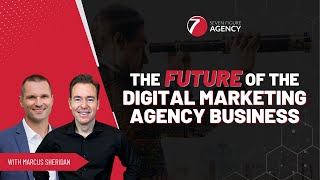
In a live interview, host Joshua Nelson talks with marketing author and strategist Marcus Sheridan about how digital‑marketing agencies must evolve in the age of AI. Sheridan explains why he renamed his book to Endless Customers and how the rise of AI (e.g., ChatGPT) forces agencies to move beyond traditional SEO and “task‑doer” models toward becoming strategic growth partners who help clients get "recommended by AI." He outlines the four pillars of a known and trusted brand – saying what others won’t, showing what others won’t on video, selling in ways others won’t, and being more human than competitors – and shows how agencies can coach clients to adopt these pillars. Sheridan stresses three core capabilities agencies need: world‑class strategic coaching, AI training (including an internal AI brand‑ambassador), and first‑party data/self‑service tools such as pricing estimators, self‑scheduling, configurators, and assessments that deliver quick wins and dramatically boost leads. He shares concrete case studies (350% lead lift from a pricing tool, doubled close rates from a salesperson‑choice scheduler) and provides practical sales‑coaching questions agencies should ask prospects to position themselves as growth partners. The conversation also covers the importance of communication training for account managers, the need for agencies to own the conversation rather than just produce content, and a personal‑development mantra – work harder on yourself than on your agency – to sustain long‑term success. The interview ends with calls to action for listeners to join an upcoming agency event in Miami and ways to connect with Sheridan.
Chapters
All right, hello and welcome to this special session. We're gonna be talking all about the future of the digital marketing agency business, and I'm super excited and super honored to have the one and only Marcus Sheridan joining us live on this topic. Marcus is the author of They Ask, You Answer and his latest book Endless Customers. I'm a longtime fan. I really, a lot of the way we've structured our SEO strategy for clients over the years came from what he explained in the Ask You Answer. And, and now Marcus has coached and consulted hundreds and hundreds of businesses. I think he's on the cutting edge of what's working in digital marketing, where things are headed. And so I wanted to have him on just to kind of pick his brain on where he sees the agency business going, how we as agencies can be more effective in how we serve clients and meet them where they're at. And so without further ado, Marcus, thanks so much for being here.
Josh, let's go! I'm excited about this. These are my people here, man. Agency World, man, these are my peeps. In fact, I'm so stoked to be coming to your event here in a couple weeks. So yeah, this should be a lot of fun.
It's gonna be a blast, guys. If you're excited, type Marcus into the comments. And this is live, so you have the opportunity to ask questions as we go. Um, Marcus, tell us a little bit about the, the new version of Endless Customers and kind of how— why you felt like it was time to relaunch it and you know, like how your thinking has evolved in this new iteration.
Yeah, so this is just a side note for agency people. Like, why— a bunch of people said, Marcus, why did you change the name? And, uh, I changed the name because I learned from Rory Vaden that a great title, not just books but like webinars, other stuff, ideally should pass the I want or the I wish test, which means before the title of the book, you should be able to say I want or I wish. Like, I wish I could have a 4-hour work week, or I want to win friends and influence people, or I want Atomic Habits in my life, right? But nobody ever said, I want— they ask, you answer— if they didn't know what it was. So unless somebody heard me speak or got a referral about the book, then it didn't, it didn't sell. So somebody walked by it, they just didn't have the intrigue. Whereas somebody will say, definitely, I wish I could have endless customers. So just a lesson on messaging. For all marketers out there, because it certainly makes a very big difference, man. We've seen a lot of changes though. I knew it was time. As soon as ChatGPT came out in November 2022, a lot of folks said to me, you know, what's this mean for content, Marcus? What does this mean for websites? What does this mean for They Ask, You Answer? Should I even be producing, uh, uh, content if, you know, we're gonna be overwhelmed with it, if we're gonna be saturated with it, if somebody can just get the answers directly from AI, right? So there's a lot of, a lot of concerns there. And of course, you know, um, I felt like I had to really drive my stake in the ground as to where I thought the world was headed and, uh, what this means for the future of search. I wanted to— what's interesting, Josh, is a lot of— call them thought leaders, I'm just using the phrase, right? I'm not saying that I'm a thought leader, but A lot of thought leaders, they, they are married to their previous IP. And the one thing that I didn't want to do was hold on to everything that was They Ask, You Answer and say, oh yeah, all is the same, it still applies 100% the same, because the truth is it doesn't. Now, it doesn't mean that you can't get massive value from the, you know, first and second edition. It just means that yes, we need to evolve with the marketplace and we haven't seen an evolution of the marketplace in the previous 25 years like we've seen in the last 3 years. It's quite extraordinary. The rate of change is something that most people cannot keep up with. Certainly businesses can't keep up with it. It's a challenge, major challenge for agencies to keep up with it. But because the rate of change is so massive, It opens up a ton of business opportunities, value for agencies if they're willing to lean into it versus say, "Well, I guess we better not talk about this or teach our clients about this," whatever that thing is.
Yeah. So true. And I know in the book you talked a lot about the whole idea of the ask, you answer and endless customers is giving the information in the way the customer wants to receive it, right? Saying the things that aren't necessarily easy to put out there. And you're pretty forthright with saying like, you probably don't wanna outsource that, you probably don't wanna try and hire an agency and just abdicate it. But you talk about kind of building an internal team and internal capacity. How do you see an agency taking the concepts and kind of coming beside the small, medium-sized business and helping them implement those strategies while maybe even working with an internal content team?
Well, you know, first and foremost, I mean, I have, I have received over the past, since the Ask You Answer came out, man, I'm sure hundreds of emails from either agencies saying, man, the content strategy, the framework we use is the Ask You Answer, Marcus. Or a client of an agency will say to me, hey, the agency I'm working with is using your frameworks. All of, all of which I'm happy. I'm thrilled. I didn't, I didn't write it so I could have it all. It's like, you know, uh, uh, you know, when Meta did their big, you know, um, when they, when they took all those books and trained their, trained their AI with it, a lot of authors got really upset. I was not one of them because I wrote the book so that it would, it would change businesses and change mindsets, mindsets, and really just change business in general. So in terms of in terms of the way that, uh, an agency might use the strategy. If they are producing their company's, uh, their client's content, either through text, video, audio, whatever it is, they should be leaning into it hardcore still, because the fundamentals of what it produces— now, what we've lost is necessarily the ability to get explosive traffic growth because naturally we're seeing attrition that's coming in the form of AI answers, and that's just going to be normal moving forward. But we still have to own conversations because the owning of that conversation is a fundamental trust signal to the Big Three. See, for 20-ish years we had the Big Two. We had to make, uh, consumers happy, right? Customers happy and get their attention. And we had to make search engines happy and we had to get their attention. The way we got search— the way we could make search engines happy or get their recommendations from a search engine was we either did content really well through SEO or we did paid. But that's, that's how we did it for the last 20-plus years. But now we've added a third party, and this third party is going to change all of our lives. It already has. It's certainly going to change agencies as we know it. And that's AI, getting recommended by AI. And this whole idea of, are we being recommended by AI, is going to be the thing that keeps business owners up at night for many, many years to come. And so already, if you, as an agency, are not shifting your general language as to how you talk about this, you You can't just say SEO services anymore. You should be saying, we help you get recommended by AI. And so a lot of folks— by the way, that's— use that phrase. Don't say AIO or anything like that, right?
Oh, it's confusing jargon.
It's not an established phrase in the marketplace. Even SEO is slightly dangerous. I mean, if you look at they ask, you answer. How little I say the phrase SEO because of the fact that I never wanted to alienate the language therein. I didn't want it to alienate any potential, uh, business, you know, person, somebody that didn't necessarily know what the phrase meant, right? So we got to be careful about the curse of knowledge, but that's going to be a big part. So I think, I think agencies should absolutely be evolving in that direction. Of course, there's a lot more When you look at endless customers now, what it's really pushing organizations to disrupt their industry. And the way that it pushes it is really 4 pillars. We call it the 4 Pillars of a Known and Trusted Brand. First pillar is to say what others aren't willing to say online. All right. And that is actually very They Ask You, Answer-esque. It's the Big 5, those subjects that every buyer wants to know. That businesses still don't wanna talk about. It's the agency's job to wake them up though and help them understand if you want to be the most known and trusted brand in your market by humans, by traditional search, and by AI search, well then you need to be willing to do that which others haven't done. And you've gotta stop saying, oh, I've gotta hide this until I meet with the prospect directly. Like, come on, we have to move past that. Because we know the buyer has. And even if you're listening to this, you have. So we've got to be careful about that. We've got to become, uh, very strategically minded as agencies, and we've got to become strategic coaches as agencies. And if you think like a strategic coach, then you help companies say, like pillar number 1, I'm going to say what others aren't willing to say. Pillar number 2 is I'm going to show with video what others aren't willing to show. And so as part of that, I think it's our job as agencies to really help organizations start thinking and becoming more like media companies. Now, I don't think most agencies want to be the one that are toting around video cameras, you know, around the country. But you can certainly be that guide, especially that strategic guide, and you're going to have a lot of value there for a long time, even if they can punch it into ChatGPT. And get that guidance. They will still— many want someone to grab them by the hand, and they want a human accountability partner, and they want someone, believe it or not, to say no, which a lot of agencies, by the way, aren't very good at, Josh. And they have to improve because what I have seen— and, you know, I'm going to talk about this more at the event— but, but I took an agency that was a traditional inbound agency— me and my team, not just myself— but took a traditional inbound agency where the majority were just doing traditional inboundy, HubSpoty types of services. And we had most employees were yes people. Yes, I can do that for you. Yes, we can fulfill that need. And oh, by the way, we've got to now make that shift from just being yes people to teaching the, the client and getting them to understand what challenge looks like. It's very difficult at first, but it can be done, a transition to go from a yes agency to a coaching agency to a challenging agency to a strategic agency. And I think everybody needs to become that And of course, you know, we're going to lean into that. And just the other two really quick of the pillars in the book. You got to be willing to sell in a way others aren't willing to sell. I think agencies absolutely have to become more involved in the sales process. It's a no-brainer. Because if you think about the fact that 80% of the buyer's journey happens during what we might consider the marketing, the research phase, and they reach out to the company, the final 20% is sales. And, you know, sales can make marketing agencies look pretty dumb. And that's really frustrating. Everybody's listening to this right now has had a client before where you were doing your job from a lead gen perspective, but the client wasn't bringing it home. And there's a lot of reasons for that. But I think when it, when you look under the bucket of strategic coaching, part of that is your digital marketing strategy. Part of that is your digital selling strategy or just your sales strategy in general. So I don't think we can be aloof to that. I think we need to be paying attention to it. And I think oftentimes, successful agencies naturally have the ability to do sales coaching. It just comes when they trust you. It just, it becomes a very natural thing. And so if you have that skill set, and you can hire for it, or you can develop it on staff, it's pretty, pretty extraordinary. And then the final pillar is We have to be more human than others are willing to be. And I think agencies really need to help their clients get their faces out there. And, you know, my general mindset on this, Josh, is if a client hasn't seen your face and heard your voice before you shake their hand the first time, you utterly failed them. B2B, B2C, it doesn't matter to me. It's all the same. It's all the same thing. We buy from those we know, like, and trust. That's not going to change. And so, I think that's a, I think that's a really, really big deal. But that's just a, I know I just did a big, a little bit of a word vomit there. But those are some of the just general trends I'm seeing with respect to Endless Customers.
Yeah. And guys, if you haven't grabbed a copy, highly recommend on Amazon. Where's the best place to grab Endless Customers right now for you, Marcus?
Yeah, Amazon's great. EndlessCustomers.com is great. Either one of those two. If you get it, please leave a review. As you know, it makes all the difference, right? Makes all the difference.
Yeah. So I think, you know, if you're an agency owner right now and you're scared because you're like, oh, you know what, AI is gonna replace what I do, you know, clients are gonna start to bring this in-house. I think that the reality is if you recognize there's always gonna be a demand for marketing support and growth support. And so if you're trying to put yourself in the box, like I do SEO, I do Facebook ads, I do some microservice, you're probably setting yourself up for displacement, 'cause it's like you're just in a small box. But if you set yourself up as an agency saying, I'm a growth partner, right? I'm here to help you go from here to there. I'm your growth partner, whether that's through Endless Customer Framework, whether that's through leveraging some type of, you know, getting you recommended on AI, or whether that's helping you drive paid search. Plugging in the gaps to help them grow. And they're always gonna need someone that understands the technology, that can take leadership on, okay, here's what needs to get done. And then being the guide and really helping them implement those strategies. If you think about it from that lens, really there's no worry about being displaced because you can just help them solve the problem they're looking to solve.
You said something there, Josh, I think is really relevant. And, you know, half of my brain thinks from a marketing perspective and the other half thinks from a sales perspective. And one of the, one of the questions that I believe every agency should ask during the sales process, when does— and I don't care what services you do, but they should ask to the client. And let's pretend you're the prospect here, Josh. I would say to you literally, so, Josh, I got a question for you. Might sound a little bit odd, but this is actually really important as you consider what agency you're going to choose. Are you looking for a traditional agency as it's always been done, or are you looking for a growth partner? If you had to choose one, which would you choose? Now, the person's gonna say, I wanna choose a growth partner. Now, your next statement should be obvious. It's why. And they're gonna explain the reasons why they want a growth partner. And this becomes one of the anchors to the messaging that you bring to that. Company as you're now going through that buyer's journey with them, right? And so there's a very, very big difference between that traditional do-it-for-you agency and a growth partner. And you want to get your messaging down when it comes to helping organizations understand what that difference looks like. So another, another example, um, because I do a few of these, and most salespeople when it comes to agencies, they don't ask these questions. I believe in asking these questions because they matter and they make the person think. And if the company's not thinking, you're not going to stick with them. You're not going to be like, leave a very, very strong impression. So I want people to think like, "Dang on, oh, he asked me some things that, you know, nobody has, you know, ever asked me before." So one of the ones is, one of the questions is, "Are you looking for an agency that will just do it for you exactly as you ask, or do you want someone that will challenge you as to what you believe to be true? And when you ask this, they're always going to say, I want somebody to challenge me. Once again, you know the response, right, Josh? It's why, why, why does that matter to you? And now they're gonna say, because I need to be corrected at times. I need to make sure that because of my blind spots, that we're not making some of these major mistakes. I need that partner, right? And so that has to be the core theme, because to your point, the Strategic Growth Partner is so fundamental to the messaging. And that's how it should always be. It's got to be a two-way street, always. This is also why— and I'm sorry to go on a little bit of a tangent here— But, uh, this is also why when I tell— when I'm talking to a client during the sales process, and I know everybody's different, but this is how I do it, okay? I will tell them, now listen, I want you to know, at any point in time, if we're not fulfilling our obligations, you can fire us. You can let us go. All right? Just want you to know that at any point. I want you to do that, in fact, if we're not doing our job. Now, at the same time, if I feel like you're not a true partner in this and you're not doing your job, we're going to fire you too. Is that fair? Use that exact phrase just like that. And the person's like, wow, yeah, that's really fair. And so this is how you become a partner versus, uh, just a task doer or a marketing babysitter, right? Or a box checker, none of which we want to be, especially if we want to demand top dollar for our services, which is which is obviously key.
Yeah, I think, you know, there's kind of two components to this. There's the component of if you wanna land clients in today's market, you have to recognize where things are, right? Right now they're thinking about AI, they're thinking about algorithm changes, they're thinking, could I just do this in-house and use ChatGPT to do the whole thing? And a lot of them will stumble on that, but recognize that's kind of their internal dialogue. The other thing you have to recognize is they've tried every single, company you wanna do business with has tried at least 1, 2, 3, 5 other agencies. They've tried the big company, they've tried the small company. And so if you're coming at today's market with the same story, the same message, without differentiating, without understanding that this is the internal dialogue, you're not gonna resonate and you're not gonna get deal flow. And what Marcus just explained there is kinda how you wanna change that positioning in the marketplace to be effective at converting agency clients.
Yeah. And what you just said reminds me of a stat. I'm sure you've heard this one, Josh, but I think it's really powerful. And I need last year's numbers, but in 2021, 30% of brands planned to leave their agency within 6 months. In 2022, that number had moved up to 38% of brands planned to leave their agency within 6 months. In 2023, that number jumped to 55%. And I know the number was higher in 2024, I just haven't seen it yet. So what does it— what does this mean? It means clients are becoming less, less patient. And I also think this is why when I look at what an agency needs to be doing today, I see three major elements. Can I share those? Is that all right with you, Josh?
Yeah, and guys, if you have questions, tee them up. Go ahead, Mark.
Yeah, um, first one we've already talked about, which is you have to be a strategic growth partner, which means you're doing strategic coaching. The question is, have you developed the skill sets to do strategic coaching? As you know, Josh, one of the biggest problems that agencies have is one of the only people on staff oftentimes that thinks like a strategic coach is the CEO or the leadership team. But you need to go that across the board, even to your, whatever you call them, your account managers or, or whatever, you know, whatever the phrase is that you use, customer, you know, client-facing individuals. So that's No. 1. No. 2, I think it's your fiduciary to the client as an agency to do AI training. And if you think that doing AI training is going to hurt you in the eyes of the client because now you're showing them how to do things that you may have done in the past. I think that's really short-sighted and naive thinking. Everybody is so hungry to implement AI. The FOMO is starting to really percolate. The problem is most business owners don't know where to start because All investor money has gone into AI-based tools, right? And so the problem is, you know, if you're, if you're just a regular business and you're like, all right, I need to, I need some, uh, AI-based sales software that's a call listening tool and gives me feedback. Well, we've already got something like, you know, I think there's like 75 of those in the market right now. Okay. And so as an agency, you should have these horses that you're already betting on. That you vetted and that you're, you know, essentially partnering with and you're recommending to your clients. And you got to move on this pretty quickly. This is really, really important. So you should have those ready. So we're going to train you how to use these specific AI tools. We're going to train you how to do these specific AI skills. And we're going to make sure you stay ahead. And so as— which is why every agency now needs, uh, one, one, at a minimum, one person that is like their AI brand ambassador, thought leader, that is swimming in it all day long, bringing it back to the team, applying it with the clients, right? With the, you know, with the ideas. And what's, what's powerful is all it takes is a few cool case studies using AI within an industry, and then everybody's like, I want that. And not enough agencies are doing that. So number 2, big, big shift here is AI training. And there's so much opportunity there that you want to talk about, um, a wave that is just starting to crest up, man. I mean, just, just incredible amounts of, of money is going to be spent by companies, uh, with folks willing to do AI training and that can do it well. Now the third one is the— and this might sound a little bit odd, but let me explain it— is, uh, first-party data tools, i.e., uh, self-service tools for websites. One of the major drivers for your success as an agency that many of us sleep on is our ability to get immediate results for clients.
Quick wins.
Quick wins is the name of the game because everybody that's listening to this has been talking to a prospect before and has said during the sales process, now listen, I want you to know, although we're going to start to see results, major results come in that 3 to 6 month time period, or whatever it is that you say, all right, especially if you're talking about things like maybe SEO or anything like that, right? Notwithstanding, the client will come to you at 60 days even though you said 3 to 6 months. It's like, I'm just, you know, I mean, I know you said it was going to take a while, but like, what's, what's happening here? Like, hoping to see some results. Okay, so that's problematic. That's problematic. If you can get an initial big win with the client, you will utterly change the trajectory of the lifetime value of said client. And of course, the way that you do that is through self-service tools that are conversion monsters. Monsters. Now, I'm particularly close to this, because in Endless Customers, I wrote about 5 essential self-service tools. Now, this comes from the stat of Gartner that says 75% of all buyers today would prefer to have a seller-free sales experience. 75%. That number's growing, right? There's no secret there. So what does this mean? Doesn't mean that we hate salespeople. It just means that we don't want to talk to a salesperson. Until we're good and ready, until we feel like we're confident, comfortable, informed, and we're not going to make a mistake, right? So in order to do that, what has to happen is the business needs to give more control to the visitor, to the prospect. Agencies, of course, can help them and facilitate this process. Starts with the education like we talked about, and the coaching, and then the production of the tool. So a self-service tool is an interactive tool that allows a website visitor to take an action that previously they would have had to have done by speaking to a human first. So some of the ones mentioned in the book: self-pricing tools, i.e., calculators, estimators as I call them, estimators, all right, uh, self-selection or recommendation tools, all right, that's when you get a recommendation, because there's choices and the prospect is trying to say, which one should I choose? So you got self-selection, you got self-assessment. This is when they get a score, right? A score. The original of this was WebsiteGrader.com by the great Dharmesh Shah, right? Giving people a score on their website. So that's an assessment tool. Then you've got self-scheduling tools, and you got self-configuration tools where they can build the thing, build the plan, build the building, whatever it is. They build it, they will come. They build it, they'll be married to it because it's theirs. The whole key to self-service is when they do an interactive experience on your website or on your client's website, they increase the sunk cost fallacy. So this means that they are looking for reasons to now work with this company because they've invested more time in them. And so one of the easiest ways for you to get to the most massive wins with your client is through self-pricing tool. Now the issue is a lot of people think, oh gosh, my clients won't, won't want to do this. Now I was talking with an agency owner today, and he's got about 150 clients that are active. And he said, yeah, I asked my clients, um, how do you feel about talking about pricing? And 70%, Marcus, said no, they didn't want to do that. I said, well, you posed it the wrong way, my friend, right? I mean, that is the wrong way to pose it. If you asked your clients If you knew you could increase leads by literally 300 to 500% with a pricing estimator tool that gives your prospects a general range as to your service or product, would you be interested to learn more? And I guarantee you, when they hear 300 to 500%, which by the way is the impact. Now it's lights out, you know. I mean, I, I, I remember we had somebody come to our team at Impact. It was a year and a half ago. It was a pool company, and I don't work with a ton of pool companies. It just happened to be a pool company, right? They're like, ah, you're a pool guy. But it's a pool company in this case. I said, Marcus, we're getting into our busy season right now. We get 75% of our leads for the year in the next 90 days. Should we be doing They Ask You Answer? Is that gonna, is that gonna really help us in the next 90 days? I'm like, well, it's gonna help you, but here's what you really need, because They Ask You Answer is more of a longer play. It's gonna have longer-term impact with AI recommendations, regular traditional Google search. I said, what, what needs to happen here is you need to do an estimator. And they said, gosh, I just don't know if we could do that because Nobody's ever done that here in our space in Arizona, and it's kind of scary. And I said, I'm telling you, it's going to produce dramatic results. Right? Well, make a long story short, they got about a 350% increase in leads as soon as they turned it on, which for them equated to millions of dollars in revenue. I mean, it was just, just a massive delta. And they said, it just utterly changed the trajectory of our business. Had another company that implemented one of these. And in the, in the first 5 months, they got 3 times as many leads in 5 months of the year as they did all of last year. This was another home improvement company, and this is extraordinary what we're seeing. Now think about that for a second. If you suddenly 3x your clients' leads the first month, they love you forever.
You're in. Yeah, you bought a lot of grace and a lot of time with that account.
Are in. And listen, I got the data on this, you know, because I developed a software called priceguide.ai. Price Guide is incredible. It's got, you know, we've got a bunch of agency partners on this that are using and just crushing it with their clients. And this is what brings me so much satisfaction. We're killing churn rates for agencies, we're crushing conversions for clients. Everybody is winning. That's the circle of life, man. I mean, that's the whole idea. It makes me really, really happy. So that's, that's something that I'm pumped about. So those are the big 3: world-class strategic coaching, right? Digital sales and marketing, both sides. AI, AI training, and first-party data tools, self-service tools.
Love that. Love that. So, you know, as, as agencies, right, especially if you want to be an agency going into the future, you have one objective, and that's to get results for your client. And that's not like ranking results, it's not traffic results, it's increased in revenue, right? That's how you justify your existence, right? And we do that typically by driving leads, whatever channels we're gonna drive leads with, SEO, paid search, maximizing conversion, which is how do we help them convert the leads, the opportunities that they already have, and then optimizing the results, right? Really tracking, measuring, figuring out what works, helping them use their dollars as efficiently as possible to hit the goal, right? Your whole objective is to help them hit the goal. And what Marcus is talking about here is like, how can you put some tools and some systems in place— price calculators, online scheduling if they don't already do that— to generate better results, right? To be more efficient and always run it through that, that filter of how do we, how do we drive more leads, maximize conversions at a higher level, and, and quantify and quantify the return on investment.
I just want to stress, as you say those things, Josh, and I know I mentioned this already, but I can't I, I just cannot stress enough the importance of learning how to communicate this to the client so that you get to yes. Because again, if you say to a client, I suggest we do such and such that almost nobody has ever done in your space, they're naturally going to resist. So you start with the payoff. Going back to endless customers, right? Start with the payoff of the thing and help them see the impact it could have. Another thing I'm gonna, I'm gonna share with the 7 Figure group: we've been building tools for clients that, uh, have created extraordinary results. Now, traditional scheduling tools are fine where someone can schedule time with a salesperson They're fine and they're good, they're helpful, they're great. But let me tell you the magic when you have a scheduling tool that you build for your client. And so imagine you got a client that's a real estate agent. Somebody goes to their website, they can schedule time to meet with an agent, but here's the catch— they get to go to the agent's page where they get to see a bio on the agent, they get to see, watch a video on the agent, and they get to compare all the agents against each other. And then they get to choose which agent they select to meet with. In other words, what we have found is when someone can choose their salesperson beforehand, closing rates double every time. Josh, isn't that wild?
Yeah, that's amazing.
Now, if, if I was like talking to this group right now and I did a poll and I said, how many of you have created a tool for your clients, at least the ones that have multiple salespeople, where the prospect gets to choose the salesperson? Nobody would say I've ever done that before. No, I'm telling you, if you did this, it's going to double closing rates. It's shocking. So if you take a What is, um, and I've done this, I had this one company, Yale Appliance, I talk about them in both They Ask You Answer and Endless Customers. When somebody schedules time for a showroom visit because they sell kitchen appliances, if they call the store and are, and are, and are given a salesperson versus if they go on the website and they choose the salesperson, Double, double closing rates. It's extraordinary, dude, because the uberization of everything is happening. You want control, that's what you want. Now, this is the type of stuff though that you've got to teach to your clients. You have to become a great storyteller to become a great salesperson, to get your clients to take action on things that haven't been done that make them say, of course we'll do that. Yeah, one of the things that, that I believe every agency should do is help the client disrupt their industry. There's different ways to disrupt the industry, but sometimes the word disruption in and of itself is very, very scary, right? And so can you do that? Yes, but you gotta understand how to frame the things you say. It's your language, it's how you set it up, and this is— this gets overlooked You know what's interesting to me too, Josh? When I talk to agencies and I say— this is hard for them to hear— but when I say, how often do your account managers receive communication training? Hmm. Almost always the answer is they don't.
Never. Or like the day they were hired, they got a little bit, right?
A little onboarding. Uh, I, you know, I might give them a little feedback every once in a while. No. Can't do it. So what's happening is we're practicing on our clients instead of practicing on ourselves. And me personally, I'm not okay with that. So you want to create world-class strategic coaching where you become utterly indispensable to the client? You have to learn as an agency how to communicate better. You really do.
Love that. So you can't just be on the cutting edge of what's going to work. You can't just have all the right tools in your tool belt. You also have to be trained, or your team has to be trained, how to set that up, ask the right questions so that they are compliant. So they're like, oh yeah, let's try that. Yeah, let's give that a whirl.
That's right. And, and it— and every second you spend on it, you'll get a 10x return. And oh, by the way, this helps your account managers, your— anybody that's client-facing feels so fulfilled because they're growing their skills. When you teach somebody communication skills, it affects them in their personal life more than their professional life, and they attribute that to you. They, they realize this is coming from my job, and so they are more aligned with the brand. They're more passionate about the brand, the more tied to it. It's really beautiful. You want to change the culture of your company, start with the communication.
Love that. On the, you know, Looking at the traditional, like, so most of the agencies that are listening, watching, that are part of 7 Figure Agency are niche-focused. So they work with pool companies, or they work with attorneys, or they work with plumbing companies, and they're growth partners with that industry, right? And typically the playbook is make sure the website's built to convert, you know, optimize it for the search engines, drive paid traffic, and put the tracking in place, right? Maybe some automation to follow up with the leads that are generated. We know that getting the client involved more, getting them like on video, getting their team on video as part of that process to actually generate better results. Any suggestions, practically speaking, like how do you, how do you partner with the client in that way without personally having to fly out to their office and do like a whole video thing there?
That's— yeah, I think it's great. So I'm sure a lot of your clients, uh, excuse me, a lot of your members are doing this that are in the community, but If, if you're not doing a monthly webinar or training, call it, with all of your clients, you're missing a serious opportunity. So much of it comes in, in just that simple education where you— where they have to stop doing what they're doing, they focus in, and, and you can give them the vision. And, and when you set up a training like this, you've got to have arc. To the training. So it's no different than when I meet with your community at 7 Figure. I'm going to start with the problem, right? Because that's like, this is what's wrong with the world. And, and because there's this problem, this is the pain that we're experiencing. Because we have this pain, we need to solve this. There is a way to do this, and here's the specific steps to pull that off. And if you do that here's what the end result is going to be, right? That's the hero's journey. Everybody like responds to that. And so you have to learn to teach that. So it's no different than like, you know, if you're teaching, uh, video to clients, you, you might start with that simple training to all of your clients, and you show them where everyone is headed with videos. You show them what the most successful companies are doing, because I can guarantee you one thing: if they see what other companies are doing, especially their peers, and they're not doing it, they get very, very jealous, right? Everybody knows this. We're all competitive bunch. And yeah, and like, you know, they won't move until all of a sudden they see a competitor doing— they're like, whoa, whoa, whoa! This is how they get very, very motivated, right? And, uh, that's why— but again, this is why we've got to be strategic coaches. Because let's just use this video one as an example. I have people tell me all the time they're not good on camera, and I always say the same thing. Okay, would you say that you're good with people? And they always say, yes, yes. And then of course I say, what makes you say that? And they say, well, I'm this, this, and this, and this. And then I say, is it possible, is it possible that you could see the camera instead of a camera as one of those people? Is it possible? And of course they say, well, I mean, I guess it's possible. And always ask, because, you know, and this is how we teach. I'm up— if you haven't figured out, I'm obsessed with communication, right? Right. It's, it's— but this is the way we always teach it, is you, you have to— if you want to create change, you have to ask better questions. Ideally, ask perfect questions, right? I'll ask people all the time because somebody might say, well, I don't want to be judged. I just don't want to be judged. If we get to the core of it, I'm like, okay, that's fair. So let's say somebody's coming to your website right now. Let's say they want to watch a video. Is it safe to say that some people want to watch a video, see the thing when they get to your website? Person says yes. Okay, and if they can't find a video, guess what they then do to you? I guess they judge me. That's correct. Why are they judging you? Because I don't have anything to show them. And then I say, "Are you OK with that?" And they're going to say no. And then we're going to have a conversation. You see what I'm saying? Same pattern over and over again, right? But you've got to be extraordinary at asking questions. This is why your account managers, whatever you call them, they've got to be extraordinary at asking better questions and really making— oftentimes our job as the agency is to just hold up the mirror and have them see it clearly for what it is. And if you don't hold it up, they'll never know. But if you hold it up and they see it and they're like, oh my goodness, that's when you create that light bulb moment. That's, that's the magic, my friends. That's when they're like, ah, now I know what I need to do. Like, what, what do you think? Well, I need to get over myself and we need to think like a media company. Okay, I'm picking up what you're putting down. Why do you say that? Well, if we don't do this, we're going to be bypassed And we need to start developing relationships with the people long before we shake their hands. Okay, are you ready for our guidance on this? Yes, I'm ready. Let's do this. Here we go, it's time to cook.
Love it.
Yeah, I think, I think, Josh, I'm so fired up about your event. I'm telling you, it's going to be— I mean, I'm, I'm just, I'm not trying to promote it. I'm just trying to say I'm so jacked because I love agencies, because I have been in it, in that grind for about a decade myself, you know, and we're more of a coaching agency, but I mean, we started as a traditional, right? So I've got a lot, I've got a lot of passion about this subject, man.
I feel it. And I'm excited about it. I know a lot of our members are really, really looking forward to it. And if you happen to be watching this and you haven't registered to participate, just type event. There's still some opportunities to plug in if you wanna come to Miami. We're just a couple weeks out, but we'd love to have you. So, I mean, what I'm really hearing is a lot of us as agencies have tried to engineer a completely done-for-you thing, where it's like the client's busy, they don't wanna deal with the marketing, they just wanna hand it off to us, and so we're gonna, spin up a beautiful website, we're gonna write great content, we're gonna create prefabricated videos. What I'm really hearing is, like, to be effective in the future, you're gonna have to interface with the client more, you're gonna have to ask the right questions and sell them on why they've gotta partner with you in this process, and you've gotta do the ongoing training to get them to buy into that vision for them, for their own good, right? In order for them to win and for you to feel good. Because I don't think any of us as agency owners, you know, just want to get our retainer fee and wait for the cancellation, right? We want to have that retainer fee. We want to knock it out of the park for our clients. We want to feel good that we're really having an impact. And, you know, that's what it's going to require.
I think you summed it up really nicely. Generally speaking, if the client's going to do something extraordinary, they need to be holding the paintbrush to a degree. If you're the only one that's holding the paintbrush, producing all their content, for example, it's going to be very difficult for them to reach their greatest potential. Now, I'm not saying there isn't a time and a place for you to hold the paintbrush. There is. And sometimes there's a period where there's a bridge. Sometimes you might always do 25% of it, but they have to have they have to have the ability to create. You have to instill in that the vision and then the guidance to pull it off, because they'll screw it up unless you step in. But that's where you start to get these wild case studies that you can write about in books, and people are like, holy cow, how did that happen? It's like, well, it happened because we did things very, very differently, right? So yeah, man, this is going to be— man, I'm just, I'm just excited about this. Exciting times. For those that are willing to say there is opportunity that comes with a closing chapter. We had 20 years, friends. 20 years. You can't— you can't argue with that, man. There's seasons of life, there's seasons of business, there's certainly seasons of technology. We're leaving now a season and entering a new one. Let's go, baby. This is exciting times. And this is how some serious wealth is going to be accumulated by those organizations that say, guess what? We're leaning in. We're not shying away. Yes, we're offering that thing. And by the way, you don't need to know a ton about AI. You just need to know more than your clients. That's never changed.
No doubt. Uh, Marcus, I'm pumped. I'm really excited for your session. For those of you that are attending, um, I hope you're excited. Um, it kind of— in, in conclusion here, Marcus, like, what other piece of wisdom would you have for that aspiring agency owner that wants to deliver better results for clients and it's just trying to continue to elevate?
To the owner, I would say One of the single most important statements I've heard in my life, and this might sound cheesy to some, but I really, really mean this, and I think the greatest agencies I meet tend to have the greatest leaders. And the phrase that changed my life came from my mentor Jim Rohn. I know you've heard of Jim Rohn, Josh, but Jim Rohn said, "You've got to learn to work harder on yourself than you do on your job." Well, you also have to learn to work harder on yourself than you do on your agency. And if you did that, imagine what would happen if you developed yourself personally, just invest in yourself so much, poured into yourself like you have poured into your agency. What type of impact would that have? You would be utterly unstoppable, and you would just permeate such energy that people had to be around you. They had to have a piece of that in their life as well, and people would stay with you longer. They'd be more loyal to you. You would just be electric. And then that electricity permeates to them and they would have it too. And everybody's like, I don't know what it is about those, that company, those guys, they just got something special about them. Yeah. Yeah. And it came from you, came from you. Work harder on yourself than you do on your job. Work harder on yourself than you do on your agency.
I love that so much, guys. Times are changing. The agency game is changing. You have a choice, really. Try and play the status quo and try and remain out relevant. Or be on the cutting edge, right? Be on where things are headed, serve your clients at a higher level, deliver world-class results that you can feel proud of, that you can put out there as case studies, that's gonna drive industry recognition, that's gonna drive referrals. But the only way that you're gonna be on the cutting edge is if you're in the room where these conversations are happening, you're learning from people like Marcus and myself. And so we'd love to invite you guys to join us in July in Miami, if you happen to be watching it, All you have to do is reach out and say event and I'll get you all the details. Marcus, if somebody wants to connect with you further, learn more about you, what would be the best way?
You can find me on LinkedIn. I'm very active. I respond to everything personally there. You post this from me. My website's at marcussheridan.com. I probably want to check out Price Guide. You can see Price Guide at priceguide.ai. We've got an incredible agency program there. And, uh, yeah, those are the best places. Marcus@marcussheridan.com is my email. Marcus@marcussheridan.com.
Fantastic. Marcus, thanks so much for taking the time today. So excited to see you in person in a couple of weeks in Miami and really change the game for the agencies that plug in. Thank you so much. Yeah, guys, thanks for watching. Thanks for listening. If you've got follow-up questions, drop them into the comments, and we'll see you in Miami, and we'll see you again on a future workshop just like this one.
More from Joshua


From 26 Years in Business to Nearly Doubling Recurring Revenue | Sandy Waggett




How Luke Truetken Scaled His Agency to $110K MRR by Going All In on One Niche



Website Production at Scale - The AI Tool Stack for Modern Agencies with Marcel Knopf

