The Untold Truth About Managing Money in Marriage and Business | Scaling Together w/ Josh & Yesenia
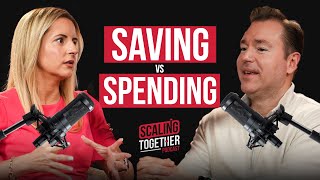
In this episode of the Scaling Together podcast, hosts Yesenia and Josh, a married entrepreneurial couple who run the Seven Figure Agency, discuss how they handle personal and business finances as a team. They begin by emphasizing the importance of aligning on a shared vision of their ideal life and using that vision to reverse‑engineer financial goals. Their foundational philosophy combines biblical tithing (10% of income), the "Secrets of the Millionaire Mind" savings framework, and Mike Michalowicz’s Profit First system for both personal and business money. They explore how their differing money personalities—Josh as a saver and Yesenia as a spender—play out in business decisions, especially in allocating funds toward experiential investments for family and client events. The couple outlines concrete systems that keep them on the same page: a dedicated financial manager, monthly personal and business reviews, peer benchmarking through Craig Crabtree’s Simple Numbers mastermind, and regular pros‑and‑cons discussions. They discuss strategic choices between reinvesting profits versus taking payouts, referencing the book Die with Zero to justify spending on meaningful experiences while their children are young. A high‑stakes example is the $350,000 venue investment for a large agency event, which they detail as a risk that paid off. Throughout, they stress communication practices—transparent transaction thresholds, regular check‑ins, and mutual appreciation—to prevent financial tension in their marriage. The episode concludes with actionable advice for other entrepreneurial couples: start by getting crystal‑clear on a shared financial vision, set consistent tithe and savings percentages, and maintain open, structured dialogue about every significant expense.
Chapters
If another entrepreneurial couple is feeling financial tension, where should they start?
If everything was perfect and you could wave a magic wand and say, like, what would life look like? What kind of house would we live in? What kind of cars would we drive? Like, just get clear and on the same page with what that is.
What's our strategy for appreciating each other's financial contributions?
I think it's just, you know, giving the person the ability to do what they want to do and to buy the things they want to buy and to have— feel like they're being penny-pinched on every financial decision they want to make.
I'm just thinking about the goals in my life personally, and you're already thinking about the goals in your life, what you want to accomplish in this world. That's easy to do, but it's more difficult to be intentional and sit down together and say, well, what do we want to accomplish together? What systems or habits help us stay on the same financial page?
I would say like one of the biggest systems is—
Welcome to the Scaling Together podcast, where we talk about how to scale together when there's two business partners who are in the same house. And today's topic is going to be about finances. How do we handle them? Not just our personal finances, but in the business as well. How does that tie in together?
Yeah.
So these questions are a lot that we've been getting from different members in the group, and we thought this would be a great place to hash them out and discuss them deep and go deep into some of these topics. So the first question is, what was our earliest money disagreement in the business?
Hmm. You know, I was trying to think about that and we don't get into a ton of money disagreements. It's, you know, obviously we've got revenue goals and targets. We've got hard constraints in terms of the profitability that we want to measure against. And we invest the rest of that money, you know, in regrowing the business or in personnel or in marketing strategies. I think we've been pretty well aligned on that front from the beginning.
100%. If anything, I would say it would be on how we— because we're both so passionate about it, it's how we look at coaching for ourselves.
Right.
So I like to connect with the social aspect and be around people like us who get us and things like that. And so I'm looking when it comes to coaching of what groups we can get into that are satisfying that social need and you like the sessions and training and looking at groups that have alignment in that area. And so we both benefit because we really need both in our lives. So which is what we, we provide at Seven Figure Agency as well for agency owners.
I think it's like when it comes to finances and the reason our finances haven't really been an issue for us is we kind of have the same underlying philosophy. Initially, we read The Secrets of the Millionaire Mind and we went through T. Harv Eker's financial training. And really the philosophy there is you have income that comes in, 10% goes to tithe, 10% goes to savings, and maybe another 10% goes to long-term savings for future purchases, and the rest you can live on, right? So you have that constraint. And the same thing for the business. We really believe in the idea of Profit First by Mike Michalowicz. Which is the money comes in, we take the profit off the table right out of the gates, and then we've got a certain amount that has to be set aside for taxes. We've got a certain amount that's set aside for our compensation, and what's left is our operating bucket. And when you operate with that type of philosophy, there's not as many potential concerns where you overspend. You have those hard constraints and you put them in place and you honor them from the get-go.
You said something really important right there. Part of our foundational, uh, knowledge and experience together as a couple— yeah, the fact that we both went to the same training and we both read similar books.
Yeah.
And so that kind of paved the way, kicked off this whole relationship that we were going to have together in the business world to be aligned. Yeah. Um, another thing that was really beneficial for us being on the same page as a couple in business is the fact that we met each other at a very young age. We met when we were 17, and growing together in just our own personal way, uh, of immaturity, you know, maturing together and going in that same direction has been super helpful as well versus a couple who just met and got together a couple of years ago, and they're still understanding each other. We had a lot of deep connection that we've grown over the years. We're just about to celebrate our 21st wedding anniversary. So there's a lot of history and experience that we've gone through together that also helps with how we communicate and come up, you know, come to these different parts of our lives where we have to talk about business, like how we're going to invest in this, should we invest in that, is just leaning on each other and trusting each other on these decisions.
Yeah.
The next one is, how did our personal money habits show up in our business decisions? Our money habits.
Yeah, I think you wanted to speak first on this, this one.
Um, well, this topic resonates with the fact that you are such a good saver. You're super cautious with money, and that's something that's been very helpful for us. Uh, and just instilling in both of us, in me as well, I've learned a lot from it over the years, is just how powerful it is to, you know, do all the, the basics of, you know, you want to save, you want to think ahead, you want to plan, um, and you want to try to put your money in the best investment possible. There's going to be risks, and risks are good. That's another thing that, you know, you've been very strong and passionate about making sure that we are taking risks all the time. And when it comes to financials though, you do this so well in the business. Like, you're definitely pushing us all the time in the business to take risks, and financially you tend to be more cautious. Uh, you're more the saver, I'm more the spender. I do it more though, not— I'm not like going out buying Louis Vuitton and Gucci this and, you know, my wardrobe. It's more about experiences with how I like to spend the money in our family and in the business as well. So at home, I, I'm very big in investing into where are we going on vacation, where are we spending time one-on-one where we just get to unwind, have that attention just to you and I, just to our kids, where we have fun and we experience life in the same space. And so that's super important to me. And I take that financial wanting to spend frivolously, if you will, in that area. I take that into the business as well because with the members, I love thinking about the experiences and how members can grow in a space with the right people in the right room and what kind of chemistry we can create with the different environments and who plus where that we can get out of things. So definitely spending financials in the experiential is something that I bring into both.
Yeah, no, and I think that's one of the things we get the most compliments on from 7 Figure Agency members. And like one of the things that, anchors the community together is the care that goes into the event experiences and the cool things that we do and the unexpected touches that I probably just looking at it black and white wouldn't even consider. But like you bring your financial perspective and it's like, hey, this is money well spent because it creates a great experience and it's going to drive more retention. It's going to drive more referrals. And I definitely see that.
That's one big half of the business. But the other big half is the training, the sessions that you're very passionate about making sure that we have the right tools, the right SOPs, the right GPTs and stuff like that, that we can offer the member base so that they know exactly the path that they need to have in order to get to 7 figures.
Mm-hmm.
And so just, you need both of 'em. And so that's why I think we feel like we complement each other so well. Yeah. Um, as a couple. "How do we handle differing financial philosophies, saver versus spender?" I mean, I don't know that we're like—
I think the only times where we do get into an argument might be if you want to do some elaborate trip personally or do some crazy thing. I think when we do differ, it's just talking through it, right? It's getting on the same page. It's doing the pros and the cons list. Making a decision that we're both comfortable with.
100%. I lean on you for reeling into reality, like, okay, this is wonderful. This is a great thing to go after, but how do we now put a plan into place to get there? And trusting each other that, yes, that is a place that we both want to get to. And figuring that path where it's, you're happy about it, I'm happy about it, and we end in a good place. It's a lot of times if I'm just thinking about the goals in my life personally, and you're already thinking about the goals in your life, what you want to accomplish in this world, that's easy to do. But it's more difficult to be intentional and sit down together and say, but what do we want to accomplish together with our family, with each other, with this business? What does it look like in 3, 5, 10 years from now? And so that extra piece of finding out what we— where we want to go as a whole is, is the extra dynamic that we have to be more intentional about. And we have been But one of the things that we had to think about for sure. What systems or habits help us stay on the same financial page?
I would say like one of the biggest systems is Profit First. It's having a financial manager that's managing the financials for the business, like profit and loss, keeping the books up to date, but then looking at that together and kind of analyzing it and making sure the profit words need to be, we're making making the proper investments, but then also having somebody that does that with us on the personal side. We've got an organization and an individual that we meet with every month to look at our personal finances, to look at our tax planning, to look at our investment strategy. And it's not me doing that on my own and it's not you doing it on your own, but it's where we come together. And I think that system and that rhythm keeps us on the same page, but it also helps us to make the decisions that need to be made. you know, for the, for the positive and sometimes for the negative as well.
And in the business side, we even have taken it another step further and have signed up with this group that we're all getting together as agency owners.
Yeah.
And comparing our finances against each other and against the top agencies that are out there and how are they winning and what do we need to do in our financials in order to meet and exceed the expectations that we have there for that. So that has also been instrumental.
Yeah, no doubt. And that's actually through Simple Numbers by Craig Crabtree. We had him come speak at the mastermind and everyone loved it. And it was like, well, what if we did pull together our top 20 Titans and we all had our revenue, profit, labor costs, and we compared them and contrast them? And it leads to great quarterly reviews. It really leads to great quarterly conversations, which I'm glad you brought that up. I didn't even consider that. "How do we decide when to reinvest in the business versus taking profit?" I think that comes down to if there's something we want to do with the profit, whether it's an investment, an experience, like a new house, like we just recently in the last couple years moved into a great new house. If we don't have something intentional to do with those dollars, then we typically will reinvest it back into the business, whether it's in team, infrastructure or, or something else.
We had this great conversation as well, um, not too long ago where we had to make a decision of do we want to use more profit now while the kids are young, or should we hold off on spending a little bit more now and, and do it when we're older? Because a lot of people talk about retirement and saving money for retirement, but what about the young ages when the kids are still at home with us? And that's when, you know, we're able to go on trips and show them the world when they're so young.
Yeah.
And have that family bonding time. And that's when we, after talking it through, made the decision with each other that that's what we want. We want to be the family that's going on big trips and going big. While the kids are young versus delaying gratification as we get older.
Yeah, there's a great book that we both read called Die with Zero. And the whole premise is, yes, we want to have great businesses. Yes, we want to create a lot of money. Yes, we want to create wealth. We want to have something to hand down to the next generation. But the reason we run these businesses, the reason we have that money is so that we can do the things we want to do, so we live the life we want to live. I think so many people delay oh, when I get to this level or when I get to that place, I'll be able to take those trips. I'll be able to do those things. Where time is passing. We've got 3 young kids right now. They're never going to be as young as they are right now. And yeah, maybe we could put another million, $2 million in the bank over the next year or 2 years. Or should we invest some of that in the experiences, in the time, in the better living experience? And I think reading that book, Dive With Zero, really kind of helped to reframe the philosophy there. Because I mean, who cares if we're 80 years old and we've got $100 million in the bank if we missed those prime years and we missed those experiences while the opportunity was there?
We're trying to take trips with a cane and try to enjoy these. This is the time, right, when we're younger and we're able to really feel the fruit of it for sure.
100%. When I was young, I would've given all my youth for more money. And when I was old, I would've given all my wealth for just another day of youth.
That's it. Yeah, really powerful, and that really touched us and changed our whole perspective on how we should deal with life, for sure. What's one high-stakes financial decision we made together, and what did we learn from it?
I know you had one right off the top of your head for this one.
Well, when we when we first started with 7 Figure Agency, it was in a, in the plumbing and HVAC SEO office with 12 seats around a table in the conference room that you were running specifically on your own. And Dean was there. And so then we needed to expand in order to reach more people. And we had to make that leap of faith of reaching out to a hotel. Now we're talking about a venue and coming out of pocket for that. And also now it's more risky just personally, like, are we going to embarrass ourselves? Are we going to put ourselves out there, ask people to show up and, you know, book a room for 50 and there's going to be like crickets? Maybe we like 13, 14, because we know we could do 12, but can we do more than 12, enough to fill an entire room so it doesn't look ridiculous, right? And I remember when we signed the contract, it was for $350, and it felt like it was— might as well have been like $5,000, $50,000. It was— we were sweating. We were like, oh man, is this the right move to make? Are we doing this too early? Is this the right time? And you did a fantastic job promoting, um, making sure that everyone was aware of what it is we're going through, and then putting the agenda together. And it was a walkthrough the Plumbing and HVAC SEO office where they got to see behind the scenes. It was a wonderfully put together 2 days. So much heart and soul, time, experience put into these 2 days. And then the day comes and did— is anyone going to show up? And it's getting closer and closer to the time. And then we end up filling the room, which is wonderful feeling. Um, if you build it, they will come. What word of advice do you have for people, Josh, looking back that are hesitant to— even as an agency owner, you are, and you have the, the ability to teach others in your fields and be that person who's leading on the, on the forefront. What advice do you have to someone who's hesitant to make that leap?
Yeah, it was, it was a big financial leap. $350,000 might have been a little bit more in terms of the, the full scope of, of that step.
Oh, for sure. That was just the, the rental of the room.
Yeah. And it, and it paid off, right? And, you know, but you have to step outside your comfort zone, right? Sometimes you got to roll the dice. And obviously nowadays we're dealing with multiple 6-figure expenses to do these events and even going from the small hotel to the bigger hotel and bigger experiences, it always feels like a little bit of a risk and you just have to be able to push through it. And yeah, you had the confidence to say, hey, let's just, let's go, let's sign that big food and beverage commitment and hopefully the people will come. I think we actually talk a lot about this with our members, like why they should bring their client base together and why they should do industry-specific events. And Brad Ferris recently did this and he did one specifically for their med spa niche. And it seems from what I can tell, the pictures on social media, it seems like it was a great event. He posted in the group, "Man, I wish I had listened to Yesenia and Tim and the others that have been talking about these live event experiences." I would say, you know, You got to put yourself out there and it will pay dividends when you do.
100%. How do we keep financial tension from creeping into our personal relationship?
I think if no one's looking at the money and there's no conversations about what's happening with the money, that's where the tension comes into place. But if you're looking at it on a consistent basis and you've got intentionality around how the money's being spent and how it's being invested, and there's conversations that happen, there really isn't that much tension. So it's just, you have to communicate about it and you've got to shed some light on it. And it really doesn't become a massive problem.
It's that, and I think going back again to us reading and having the same experiences as far as what it means to really be good stewards of our finances and being responsible with our finances because If I was just going around behind your back and like spending a bunch of money and then you come around and be like, hey, wait a minute, when you see bills, you're like, hold on, where did this transaction come from? And why'd you pay for, why'd you buy this? Every single transaction that we do that's a large transaction is always something that we talk about. And what's a large transaction, would you say, Josh?
$10,000, $20,000.
Even less than that. Like if it's a $1,000 thing, we have a conversation about it. And that helps substantially, I think, with any kind of fight we would ever have. We just talk it through. And you want what's best for me, I want what's best for you. So when we talk about something that each other wants, when it's financially based, we're like, yeah, let's have a conversation about it and see if it's something that makes sense for our goals and what we want out of life. And for right now, does it make sense right now? Should we put it off? And And after the conversation, we're left both with, yeah, that makes sense. Let's either proceed forward right now, or yeah, that's true, we should hold off a year and circle back to it again.
Yeah.
Yeah, absolutely. What's our strategy for appreciating each other's financial contributions?
I think it's just, you know, giving the person the ability to do what they want to do and to buy the things they want to buy and to have, you know, not like feel like they're being penny-pinched on every financial decision they want to make.
100%. Last question to close. If another entrepreneurial couple is feeling financial tension, where should they start?
I think the best place to start is just to get clear. Here's where we are right now. Here's where we want to be. And I spent a little bit of time like really getting clear. Like what if everything was perfect and you could wave a magic wand and say like, what would life look like? What kind of house would we live in? What kind of cars will we drive? What kind of school experience will we have for our family? Just get clear and on the same page with what that is, and then reverse engineer. Okay, maybe that's not available for us right now. Maybe that's too big a leap, but how would we get there? How much money would we need to make? How much profitability would we need to have? I know there was a time where we felt a little bit in the doldrums with our living situation and with the kind of how things were going. And we went to a long sit-down breakfast and we mapped out our ideal life. And that really propelled us to that. So I think the question, where would you start? Just get on the same page with where you want to go.
One thing that I'll say to finish this is something you were very passionate about. And one of the things that I absolutely love about you is there's a verse in the Bible that says, bring your storehouse.
Bring your full tithe.
Bring your full tithe to the storehouse. And the fact that you were the first person to say, it's super important that we set aside 10% of our income and tithe. That I feel has been the turning point in our life. I know we've had this conversation before, but that was a turning point of the blessings in our life of where it started.
Yeah.
We had financial turmoil where we felt like we couldn't ever move forward, and we're kind of like 3 steps forward, 2 steps back, and constantly just teetering in the same area. And it was the moment that the decision was made of we're going to tithe 10% no matter what, consistently. And we've been doing it for decades now. And it's because you made that decision and you brought that into our house and we made, and we talked about it and we're like, yes, that's what we're going to do and implemented it. And it's just been, don't even think about it now. But that we strongly believe is one of the main core reasons why we have so many blessings in our life.
Yeah, no, I vividly remember, I grew up, we both grew up in Christian families and this was something that was always talked about, the whole principle of tithe. And I was working in a job at ReachLocal making $40,000 a year. You were making, I don't know what you were making in your full-time, but it wasn't a lot of money. And we were in church and this principle came back up again and it really just hit me that it's a biblical promise where they say, bring your whole tithe to my house, the storehouse will be full and test me on this. I'll pour out more blessings. Than you can handle. And I was like, well, that seems like a pretty cool promise. Let's test it out, right? And we did.
But at first, when you're looking at your salary, if your salary is $75,000 a year, that means $750. And so wrapping your head around that for the first time that you think about it, you're like, that's a chunk of money. Yeah. So just giving that up and fully just committing to yes, it's not mine to use anyways. So that has been a huge blessing, game changer for us for sure.
For sure. Look up the Bible verse in Malachi and test it out and see what happens. Excellent. Well, hopefully you enjoyed this conversation about financials and money in your relationship. Hopefully there's lots of takeaways. If you're enjoying these episodes of Scaling Together, be sure to like, Be sure to subscribe and tune in for the next episode of Scaling Together.
More from Joshua


From 26 Years in Business to Nearly Doubling Recurring Revenue | Sandy Waggett




How Luke Truetken Scaled His Agency to $110K MRR by Going All In on One Niche



Website Production at Scale - The AI Tool Stack for Modern Agencies with Marcel Knopf

