Hour of IDEAtion with Travis Thomas
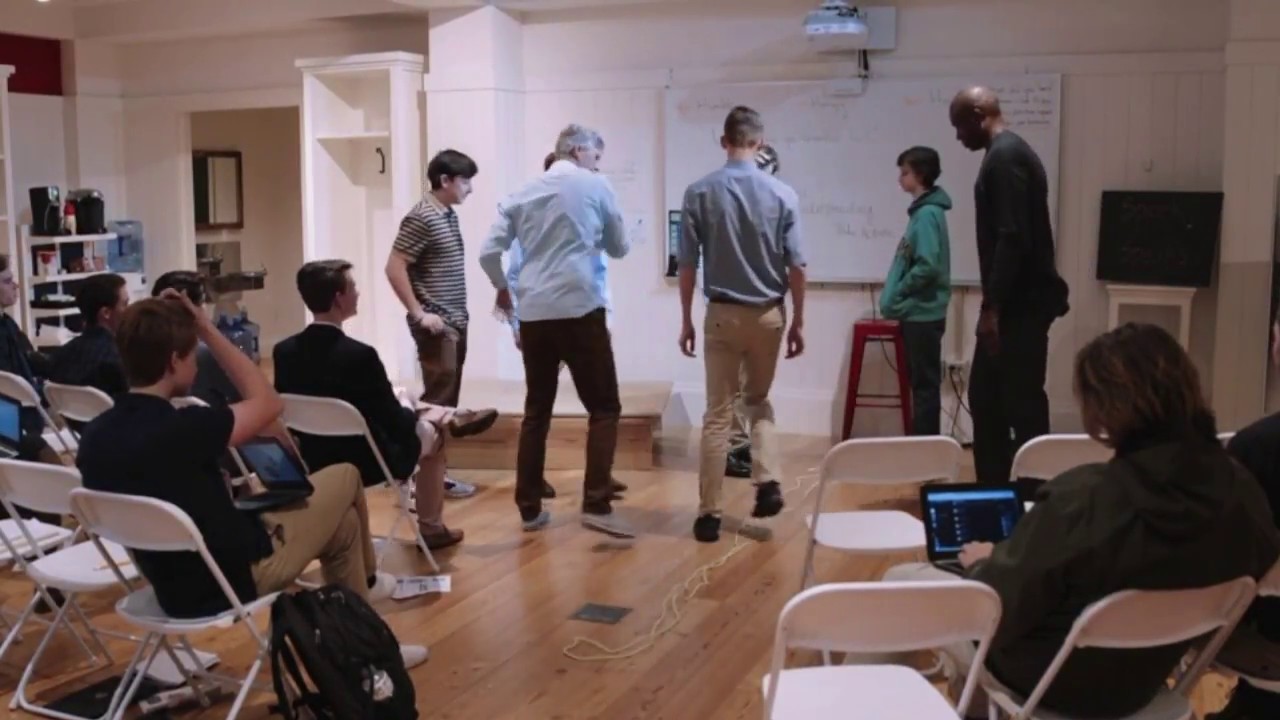
Travis Thomas leads a workshop on three foundations for creativity: starting with a clear purpose, building collaborative culture over competition, and adopting a growth mindset. He uses exercises like a staring game, a rope activity, and improv to show how purpose reduces self-consciousness, psychological safety multiplies strength, and saying yes to ideas keeps momentum going.
Chapters
Alright, so big idea number 1 is start with purpose. And so in this video, you are going to see me addressing a live audience, and the activity that we're doing in this video is directed at helping the students Or the group think about what is the purpose, what is the reason, what is the inspiration or the motivation of the problem that they want to solve. So creativity and innovation is really about solving a problem. So starting with the problem, starting with the inspiration, and working from there. So in this video, the activity that we're doing that you can recreate is asking for some volunteers to come on up, and you're going to ask them to stand there, and you're going to ask the audience to stand there and stare at them. And then you're going to give them 45 seconds again to stand there, but this time you're going to give them something in the classroom to focus on and count. And then afterwards you'll see— you'll ask them, what was the difference between the 2 45 seconds? Which time did you feel more awkward? And it's always going to be the first 45 seconds because they had no goal, they had no purpose. And so what we're showing them in this activity is when you give yourself a purpose, a motivation, a why, It completely transforms how you look at the world. It completely transforms your focus, and it actually, it allows you not to get distracted with all the things that try to take you away from your motivation. We're here today to talk about 3 ideas to spark creativity and innovation. You like that? You like the spark? Yeah. 3 ideas to spark creativity and innovation. or how to get unstuck creatively. So one of the, one of the things I struggled with when I named my book, 3 words for getting unstuck, Live Yes And. Live Yes And. One of the things I struggled with was I didn't like having my title focusing on the negative, which was getting unstuck or being stuck. But I realized most of us, most of us relate more to being stuck than we relate to just totally thriving all the time. So I wanted to speak to people who are like, yeah, man, I'm more stuck than I am feeling like I'm in my flow, I'm in my zone. So that's why I titled my book that way. Actually, a friend of mine is here who helped me come up with that title. So we're gonna focus on 3 ideas to spark innovation and creativity. And we're gonna have an activity for each, but we're gonna motor through it really quickly. So the first idea is start with purpose. Start with purpose. Muhammad Youssef, who won the Nobel Peace Prize a few years ago. He started the Grameen microlending banks in India. He won a Nobel Peace Prize for it. He was an economics professor outside of Calcutta. He would go to school and realize that the poorest people in his country were right across the street from his classroom. And here he is teaching economics in the classroom but realizing that all these people are right on the other side of the street and most of them were in debt because they couldn't get loans to get out of debt Because basically they were lending from basically loan sharks who would keep them in poverty so they would never be able to make enough money to get out of debt. So he started talking to these people and realizing, hey, how much money are you in debt? And literally it would be $50, $100, but that was so much money over there, they would never be able to make enough to get out of debt. So he's like, he goes, So he started giving them his own loans, loaning different people, and guess what? 100% of the time, they paid it back. And he was helping people single-handedly get out of debt, and he's like, this needs to be a bank model. And he went to dozens, if not more, banks saying, I will underwrite and I will co-sign these loans. And the banks said, no, these people can't be trusted. They will never pay you back. So what did he do? He started his own bank. And now these banks are all over the world. They're microlending banks. He is helping people in poverty through entrepreneurship become their own leaders and entrepreneurs and heroes. And he won a Nobel Peace Prize for it. Kind of awesome. But I saw him talk live here in St. Louis a few years ago. And he said— and people were like, how do you get money to start your idea? And he's like, money's not the issue. He's like, if you have a problem to solve, people will be willing to give you money. And he's like, most people get into business for the wrong reason. Most people get into business to make money. He's like, the bigger question is, what problem are you trying to solve? So as we think about ourselves as entrepreneurs and creators, the bigger question is to think about what problem are you trying to solve? Now find the solution, and that's your business. Right? I'm talking about my clashing outfit. Everyone knows TOMS, right? What's TOMS stand for? Anyone? Tomorrow's Shoes. Tomorrow's Shoes. It's not— the guy who started it, his name's not Tom. TOMS stands for Tomorrow's Shoes. This is just a regular guy who was on vacation in Argentina when he came along 2 Americans who were going town to town giving shoes to poor people. And he's like, can I come along with you? And they're like, yeah. So he's loving going into these towns and giving away free shoes. And the idea hits him, wow, this is a business opportunity here. He loved giving. And literally on his vacation trip, he started TOMS Shoes. TOMS Shoes. And you guys know their business model. For every shoe, for every pair you buy, they give a pair to someone else in need. Right? What is the problem? Find the solution. So when I talk about why or purpose, your understanding your why, understanding your purpose, if you have a clear sense of who you are and what you're about— I know Jason is here, he's all about the why— if you know who you are, what you're about, your why, what inspires you, you will find something to go all in on. Actually, you're going to find a lot of things to go all in on. But you will, and your business will come from that inspiration by wanting to solve that problem, just like Jamie in the back with her business and everyone who's speaking here. Everyone is inspired by a bigger purpose, a bigger why. I need 3 volunteers. 1, 2, we'll go 3. Come up on stage, guys. You're gonna stand side by side on stage. Oh no, with Hayden. Awesome. All right, so you guys You're rocking some nice socks too. Santa's in the house. Those are sweet. Nice. That sock game's on point right there. All right. Is on fleek, is that still relevant? No? Dang it. Man, Jason, you're supposed to help me out. Fleek, not fleek? Are these socks lit? Yes. Oh man, I'm old. Guys, I was 44 yesterday. I'm old. All right. So thank you. Thank you. Ah, stop it. Stop it. You guys didn't get me anything. It's too late. It's too late. All right. So you guys are going to stand there side by side. Your job, gentlemen, is just to stand there. Just to stand there. You guys can make eye contact around the room. Everyone else here, your job is to stare at them and actually silently judge them. But just sit there and silently judge them. You guys stand there for 45 seconds. No talking. No talking from you guys. No talking to them. We've got 45 seconds on the clock. Go. That clock is going slow, isn't it? Yeah. All right, time. Ooh, exhale. Good, good, good. Caleb, take a nice exhale. That smile was— you were pressing through it, man. I could see. It hurt. Yes, yes. All right, here we go. 45 seconds this time while you guys are standing here. You're gonna stand here, you're just gonna scan the room and I want you guys to count as many red objects in the room as you scan the room in 45 seconds. So you guys are counting in your head the number of red objects. You guys are still staring at them and judging them, but you guys are counting the red objects. 45 seconds, go. 1, 2, 3, 4, 5, 6, 7, 8, 9, 10, 11, 12, 13, 14, 15, 16, 17, 18, 19, 20, 21, 22, 23, 24, 25, 26, 27, 28, 29, 30, 31, 32, 33, 34, 35, 36, 37, 38, 39, 40, 41, 42, 43, 44, 45. All right, time. How many did you come up with? 54. 54. Oh, wow. Like 41. 41. 37. 37. All right, I don't really care. That's irrelevant. All right, so from you guys sitting there, raise it, raise it, give me a 1 finger or a 2 finger. The appropriate one finger. Give me which time did they look the most awkward? Did they look the most uncomfortable? The first 45 seconds or the second 45 seconds? A 1 or a 2? Hold up a 1 where they looked uncomfortable being on stage. All right, I see a unanimous number of 1s except one 2. Someone's got to be different. All right, so you guys tell us what was more uncomfortable, the first 45 seconds or the second? Definitely the first. First. Why the first? Point-blank judgment. Point-blank judgment. All right. Why for you? Probably the first. Yeah. I disagree. Because like we were looking around, so we couldn't even see them judging us. We were just like counting stuff. Oh, so the second time you were looking around, so you were distracted from their judgment. Excellent. And you had— Caleb, you disagree? I think like neither of them were awkward. Okay. Your smile was pretty awkward though, Caleb. My smile is like— Caleb, that's not your natural smile. I know. I'll give you that. I'll give you that. Okay. I'm like, well, it hurts, so I'm gonna leave it there. All right, all right. All right, good, good, good. All right, let's give these guys a round of applause. Thanks for coming up, gentlemen. I appreciate it. Appreciate it too. Awesome. All right, so really simply— and here's the thing, guys. In both 45 seconds, you guys were still being judged by the audience. The audience had the same goal each time, is just look at them and judge them. Except the second 45 seconds, you said it, you said it, is I was distracted. I was distracted by what I was doing to the judgment. And the reality is, right, you gave yourself a little purpose, you gave yourself a little goal in those 45 seconds that kept you focused on something which was more important than, wow, everyone's looking at me and judging me. Because when we didn't have a motivation for the first 45 seconds, all we did is look at all the people who are judging us. And it makes us feel really uncomfortable. But when you just give yourself a why, when you give yourself any motivation that this is what I'm about, you don't even notice the haters. Can I still say haters? You don't notice the distraction because you are about something bigger than the distraction. And that's what your purpose is. So whatever project you're inspired to work on, whatever your why is in your heart, When you stay true to that, that's your compass, that's your North Star. When you stay true to that, no matter how much people judge you, no matter how badly they want to tear your ideas down or disagree with you, you stay about your purpose and you just kind of navigate right through the distraction, right through the negativity. Because as entrepreneurs, are you going to fail more than you succeed? Yes. Yes. Yeah, absolutely. You are going to fail more than you succeed. So your motivation, your purpose, your why is going to push you through all the failures when you wanna quit. So remember, if we wanna get unstuck, we have to be really clear on what we're about, right? And that inspiration is going to give us the motivation to keep going through. Right, but think about what problem do you wanna solve for yourself, for the world, for your community? And then find something, find a way to solve it. We often stop with the— start with the opposite. I wanna make money, how am I gonna make money? I need to create something. No, find the thing that you're passionate about, find the problem to solve, and money will follow you. Make sense? So that's idea number 1, start with purpose. Awesome. So a quick recap. Starting with Purpose is all about helping your students get clear about what is their true motivation, what is their why. Not thinking about, oh, I just want to make money. Thinking about what are they inspired by, what inside of their heart really is yearning for them to do something, and getting them to think about, is there a problem in your life, a problem in the community, a problem in the world that you would like to solve? Because when we have a problem to solve, now find the solution, and that's your idea, that's your innovation. When we start grounded with a more inspired sense of purpose and why, that is where our best innovation and creativity is going to come from. Big idea number 2 is about establishing the right culture. Again, innovation and creativity is about having the right people around you and knowing how to Work with people in a way that is going to spark creativity and inspiration. So we want to be able to create the right, the right culture with how we work with ourselves, but also how we work with other people. It's about the relationships that we create that is going to help with our innovation. So in this activity, what you're going to see is a really simple activity. All you need is a rope or anything that can create a divide in your classroom. You're going to ask for volunteers to come out. And it's very clear. This is how you want to set it up. You're going to ask for volunteers to come up and you're going to tell them that— to partner up. And so they all, they all get their partners. And then you're going to tell them the person across from the rope from you is your partner. They are your partner. And then you're going to say your goal in this activity is to get your partner to cross the line and come to your side. But their goal is to get you to cross the line and come to their side. 2 rules: you can't physically touch them, and 2, you can't put the rope over them and say, aha, I fooled you. So the goal is to see how do they get their partner to cross their line if they do. Clearly what happens is we unintentionally turn this into a competition, and it's not meant to be a competition. It's meant to be a collaboration. Our mind turns it into a competition, so you want to make sure your language is very clear that you're not saying winner or loser. You're not saying adversary. That's why you're, you're telling them your partner, your partner, your partner. So as you debrief it, you can show when it comes to creating a culture, we want to create a culture that is collaborative, not competitive. We want to create a culture where we're building empathy by crossing the rope instead of focusing on differences. Because at the end of the day, innovation and creation and building the right tribe around our ideas is about creating healthy, dynamic relationships. Where we're trying to yes-and solutions by working with each other's ideas instead of trying to prove to everyone that our ideas or our perspective is better. Number 2 is we need to create the right culture. Alright, so I need— let's go with 6 more volunteers. I need 6 volunteers. To come up, not all at once. 6 volunteers to come up. We go 1. Wait, no, Caleb, you stay. We're gonna give other people. 2, 3, 4, Jason 5, Carter 6. Carter, you just got volunteered, Carter. All right. He got voluntold. Actually, voluntold, I like that. All right, so as you come up, grab a partner. Grab a partner as you come up. Someone who's up. All right. All right, if you know this activity, stay— so you're going to be on one side, you're on the other, all right? So Jason, do you know this? Nope. All right, you on one side. I want you guys to partner up. You on one side, your partner on the other. So you guys, you on one side, your partner on the other. Awesome. So here's your goal, guys. So it's going to be— it's going to get loud in here for about 20 seconds. Try to focus in on your partner. Actually shake hands with your partner. Say, hey partner. Hey partner. Say, howdy partner. Howdy partner. All right, good. Nice. Alright, so you're going to focus in on your partner. Don't get distracted with what the other groups are doing. Focus on your partner. Your goal for you guys over here, your goal is to get your partner to come to your side. But your goal on this side is to get your partner to come to your side. 2 things you can't do: you can't physically touch them and pull them over. Alright. Alright, so you can't physically grab them. One. 2, you can't pick up the rope and put it over them and say, aha, you're on my side. So you've got about 20 seconds to get your partner to come to your side. All right, hold on real quick. I think he's going to his wallet. All right, you got 20 seconds. On your mark, get set, go. All right, we're a team, right? So the sooner you get over here, the better. We're both on the same side. We are not enemies here. We are friends, right? We're friends. Tell me what you think. Why is that the better side? You don't have more space. Look, he's over there. He's over there. He takes. Now he's not. All right, freeze, freeze, freeze, freeze. All right, time. All right, hold on real quick. We're going to start back here. I heard a lot of arguing going on. What what were you guys trying to do here? They stayed put, by the way. They stayed put. So what what was your tactic? I tried to say that we were a team, and the sooner that he got over the better. That didn't work. I like that logic. We're a team, so the sooner you come to my side, the better. All right, interesting. What was your standpoint? I said that everyone wants to be nice people over there. Oh, he was convincing them that the nicer people are over here. Nice. All right, but you guys stayed put. We're gonna come to you guys in a second. All right, you guys stayed put. Andrew, what was your tactic? I said this side is better looking. Oh, this side is better looking. That's debatable. That's debatable. All right, so you stayed put. What about you? I offered money. Oh, we all saw. He ran to his book bag for cash. All right, did you offer him the $5? I did. You didn't take the $5? Wait, let's redo it. I'm your partner now. Go. All right. No? Well, he got to get on my side first. Once he got on my side, he gave me money. Okay. All right, all right. So you stay put. You guys wait. All right, you 4 have a seat real quick. Thanks for volunteering, guys. Thank you, thank you, thank you, thank you. Appreciate it. I saw something really interesting go on here. Guys, tell me what happened in your group. Well, at first I was going to try and get him to come to my side, right? So I told him he needed water to come over there. Oh, you were convincing him with the water, yeah. Right. But he said, you know, hey, maybe we can work together here. All right. So Jason, what'd you say? I just said, like, if the goal is to get the other one to the other side, how about I'll come over to your side and then you You come over to my side, and I even initiated I'd go first. So you, so you built your trust by you went first, because he could have said, aha, you're on my side, and he didn't have to cross. But his idea was, hey, this is a team. You come to my side, I go to your side. So they switch sides. What do you guys think about that? Genius? Oh, I heard genius. Yes, yes, yes, yes. Perfect. Awesome, guys. You killed it. You killed it. You killed it. Well done. Well done. Did I just get left hanging there? Yeah. Man, who— you left me— yes! It was this innate feeling that went through my body like I just got left hanging. Jason gave me some love, but I— there was like air that just bristled by my hand. All right. So huge idea here that I don't have a lot of time to think about— to talk about, but guys, it is so huge. Huge. Raise your hand if while you were sitting there you saw that activity as a competition. Be honest. Be honest. I knew what this activity was. You knew it before, yeah. So we— the reason we have a hard time with this activity is because we immediately turn it into a competition. That's what the other 2 groups did, right? I'm not picking on you guys because guess what? What the other 2 groups did, I've done this activity hundreds of times. That's what happens 90% of the time. Yeah. Is that we get into a stalemate where neither person wants to cross because they believe if I cross over the rope, I lose. If I cross over, I lose. So we have to convince the other person that my side is better. We have to convince the other person that my idea is better. We have to convince the other person that my perspective is better. And isn't that what we do as we go through our day most of the time? Yes. Convincing everyone, maybe not maliciously, but convincing people I'm right. You should partner with me because I'm right. You should partner with me because— or you should just listen to me. You should just shut up and listen to me because I'm right. This is my experience. So we view life through a win-lose perspective when we need to view life through a win-win perspective. And as entrepreneurs and as creators and creatives, you are going to build a tribe of supporters if you show up with a win-win mindset compared to a win-lose mindset. Does that make sense? So what you're really doing, what Jason initiated by saying, if I come over to your side, will you come over to my side? He made the relationship safe. And your job is to make your relationship safe. But Jason showed vulnerability in order to do that. He showed him it was safe. So he said, it is safe, and he crossed over. And what Jason was doing was being empathic. Empathic. What does empathic mean? To understand where the other person's coming from, right? So by crossing the rope metaphorically and literally, Jason said, I want to understand things from your perspective. And by doing that, and if Jason now says, will you come over and see things from my perspective? What's the odds that he's going to do that? Pretty high, right? Because he gave him the same respect. Google has their own in, in-department sociology department. They study all of the people, all of the performance, all of the teams, thousands of teams, thousands of people at Google. Right. They did an in-house private study called Project Aristotle. In Project Aristotle, they wanted to figure out what made great teams perform at a higher level than other teams. And this applies to sports, this applies to work, this applies to relationships. And they couldn't figure out what it was, what these great teams had in common. Was it their degrees, where they went to school? Was it the mixture of sexes? Was it personality types? And none of it, none of it was consistent. There was no pattern until they realized that all high-performing teams had one characteristic in common. And they defined the term as psychological safety. It's just a fancy way of saying teams that performed at a higher level had a, had a built-in sense of trust, respect, and value with how they worked with one another. Trust, respect, and value. And that created what? That created safety. And when we feel safe in our relationships, We are authentic. And when we are authentic, we perform at our best level. Why? Because I don't need to fake it anymore. Right. When I can be authentic, you are getting the best version of me because I don't have to fake it anymore. So as creators, as entrepreneurs, we wanna create relationships and teams and cultures where people feel safe to be themselves. But most of the time, we get so boxed into our own perspective And judging other people and trying to push our agenda that we do this more than we do this. Most of the time. And you guys know that my organization is called Live Yes And, right? Creating Yes And is all about build off your idea, build off your idea. We build off of each other's ideas and our— and the idea becomes our idea, not my idea or your idea. It becomes our idea. Have you guys ever seen Belgian horses? Yes. Belgian horses, those giant horses. Like there's Clydesdales, Belgian horses are even bigger. They're huge in Europe. There's a camp in Missouri my kids go to, they have these Belgian horses, they're huge. So in Europe they do these strength tests with Belgian horses to see how much they can pull. So a single Belgian horse can pull about 8,000 pounds. One horse, 8,000 pounds. Guess, guess what 2 horses can pull? 16,000. 16,000, right? No. 20,000. 24,000 pounds. 2 horses side by side that don't really know each other, but you hook them up side by side, 3 times as much. But wait, wait. 3 horses. Yes, Belgian horses, there it is. 2 horses who have been raised with one another, who know each other, who have a relationship with one another, can pull how much? 32,000 pounds. 32,000 pounds. 1 horse by himself, 8,000. 2 horses who are strangers, 24. 2 horses who have a relationship, 32,000 pounds. How much does a semi-truck weigh? I have no idea. He asked me how much a semi-truck weighs. I have no idea. So the power, the power of empathy, the power of understanding, the power of pulling together. When we are creating relationships where we are pulling together, we can pull 4 times as much as what we can do on our own. Or we can spend our entire life going around and trying to convince everyone that we're right and they're wrong. Does that make sense? Yes. So big idea number 2 is creating the right culture for creativity and innovation. So recap, we need to have the right culture. We need to focus on the relationships in our life. Are we showing up empathically? Are we showing up trying to champion other people's ideas And are we showing up in a way trying to merge our ideas and our perspective with other people's ideas and perspective in order to build that trust, respect, and value? And when you build that trust, respect, and value, you build safety. Safety creates vulnerability, and vulnerability creates authenticity. And when we create authentic environments, that is when creativity and innovation is at its best. And idea number 3 is develop your mindset. Develop the correct mindset because as a creator, as an innovator, as an entrepreneur, failure is going to happen more often than success. And so do we have the growth mindset? Do we have the victor mindset compared to the fixed mindset or victim mindset where as we run into adversity, challenge, and obstacles, Do we quit by getting frustrated and discouraged, or do we say yes, and to it? Do we find a way to overcome the adversity by believing in ourselves and believing in the process and taking everything that happens and collaborating with it? So the activity we're going to do for developing the right mindset is really an improvisational game. You're going to bring a couple volunteers up. It could be 2, could be 3, could even be 1 person, although preferably 2 or more people. And you're going to give them an everyday object. You're going to tell them that they are going to turn that object into something that's never been created before. And you, as the facilitator, you're just going to ask a couple simple questions. What's the name of the product? What does it do? Who needs this product? What celebrity is going to endorse it? What's the tagline? What's the jingle? And the goal for the people, the kids that come up, their goal is to listen to the other person that they're working with and to keep yes-anding and building off of their ideas. To collaborate with one another, to use the improv mantra, to make each other look genius, to make each other look good. So what we're showing here is when we have a mindset where we're constantly taking new information and we're building off of it, we are able to handle whatever life comes our way, and we're actually able to creatively respond in a way that not only helps us get through it, but it often makes the end result better. Right. So I like to say that we cannot progress until you say yes, right? So what happens in life is often not what we expected, but how do we respond when our outcome doesn't match our expectations? It's the ability to say yes to it and to be flexible and adapt to the circumstance and to keep our purpose in line, thus making the end result still successful. And our last idea, guys, last idea is having the right mindset. Having the right mindset, because like we said, as entrepreneurs and creators, you are going to fail more than you succeed. If you have a victim mindset, or what we know as a fixed mindset from the Carol Dweck research, if you have a victim mindset or a fixed mindset, When you run into adversity, you will probably quit because you will blame, complain, make excuses, and you will believe that you don't have the ability by working harder to get better. So we need to have the right mindset. We need to have a growth mindset or a victor mindset or what I call a yes and mindset, which is we understand that we are going to fail. We know that adversity is part of the game. And we expect it to happen, and when it does happen, we are going to work with it instead of being in denial of it. Does that make sense? Yes. So we need to create a yes and response that, yes, this is happening, and I'm gonna turn this problem into a blessing. I'm gonna turn this roadblock into a ramp. I'm gonna turn this setback into a setup. By yes-anding it and dealing with it instead of being in denial of it. Creating a mindset where we yes-and it, creating relationships where we're constantly working with one another. We have an improv mantra, an improv mantra I told you guys last time. Improv mantra is, your job is to make your partner look brilliant. On stage, my job is to make my partner look brilliant and his job is to make me? Look brilliant. look brilliant, and anyone else, our job is to make them look good. So when you have a team or an environment when your job is to make each other look good, you're creating that culture. But you need to have the mindset that no matter what happens to you, I can deal with it and overcome it. So we're gonna have— I need 2 more volunteers. Yes, right there. I know one. Come on up. Yes, I need one of my ladies, one of my ladies to get up here. I know there's a few of you, but all right. Awesome. Oh, we got right here. Yeah, come on up. Come on up. What's your name? Noah. Noah, that's right. Noah, you spoke. Noah and— what is it? Fumi. Fumi? Fumi, awesome. Fumi, I was going to wear my hair like that today, but I just didn't have time. All right. Beautiful hair, Fumi. All right. So Fumi and Noah, come together. So you two, you two are brilliant inventors. Wow. All right, you guys are a team. You guys have developed some of the most innovative products like the plunger. You guys are fantastic. You guys are awesome. So this is your newest product, right? It's not a chip clip. It looks like a chip clip. It's not a chip clip. So together right now, you guys are gonna tell us— I'm gonna ask you guys some questions. You're gonna tell us what it does. And clearly you guys created this together, so no matter what your partner says, you're going to agree with it and build off of it and continue to collaborate off of each other's ideas, right? So it's Fumi, right? Yes. Fumi and Noah. Guys, welcome back. We've got Fumi and Noah. They are the creators of this brand new invention. There's one under your chair for everyone. You guys get to take it home today. Don't look under your chair. There's really not. Noah, this fantastic new product, tell us what it does. Yes. Have you ever seen the sound of The Sound of Thunder. By Ray Bradbury. You see, there's this book that when the sound of thunder sounds, all of time changes. So when I release this, all of time changes. Time stands still. Fumi, and then what can you do? And then you can use it to hold up your hair. And then you can use it to hold up your hair. So it stops time, Long enough for you to make this possible, because we admit it, right? We all we all are weighing are doing way too much in our lives. We just don't have time to take care of the coif, right? Why not just stop? Why not stop time long enough to fix the hair? And it also works on beards. It also works on beards too. Yes. So tell us, Fumi, the name of this product is what? That's actually not a beer that's available. It just came out. The name is— I don't even know. The name is the I Don't Even Know. Why, why is it called the I Don't Even Know, Noah? Because we didn't even know what we were making when we started innovating this life-changing product. We just accidentally caused a rift between space and time and opened the 15th dimension, and that happened. And so we don't even know. The I Don't Even Know was born a food. Space Age Innovation is your company name, and this product is called— I don't even know. Now, Fumi, you found a celebrity endorser who has already shot the commercial for this. What celebrity did you find? Kristen Stewart. Kristen Stewart. Noah, why Kristen Stewart? Because Kristen Stewart is the closest thing that we can get to real-life Jesus. So we were thinking to ourselves, who would be the perfect person to Endorse this product? And we were like, the Messiah. The Messiah herself, himself, Kristen Stewart. It's totally interpretable. Not the first time that Kristen Stewart's been called the Messiah. No. Not at all. Now, Fumi, um, you came up— well, the two of you guys came up with it. You guys came up with a tagline for the product, the tagline for the I Don't Even Know. Nike's got Just Do It, McDonald's has got I'm Lovin' It. The I Don't Even Know tagline is? I don't even know space-age innovation. I don't even know space-age innovation. That's a mouthful. Multi-use. Multi-use. We're still working on it, and we've shortened it, we've shortened it, Noah, into— It just does things. It just does things. It just— Perfectly. Perfectly. All right, now I know we're running out of time, but you guys, I said we don't have time, and you're like, they're like, no, Travis, we need to do it. I said, but no, we don't have time, and they're like, Travis, We need to do it. So I'm going to give you guys time to sing the jingle that you guys came up with. So I'll snap you guys in on a count of 3. This is the jingle. It's still a work in progress for I Don't Even Know. Here we go. A 1, a 2, a 1, 2, 3. We don't even know. It just does it. It just does things. Oh, perfect. Noah, well done. Yes. Thank you. Fumi, thank you so much. Excellent, you guys. Awesome. Have a seat. So, all right, so just to wrap that up, guys. So, well done, you two. Well done. So this idea of taking everything that comes our way and our job is to collaborate with it. And when we create relationships where our job is to work with one another, there ceases to be mistakes. An improv mantra is, there are no mistakes, only unintended outcomes. There are no mistakes, and I've added this, only unintended outcomes. Okay. So when we operate as an entrepreneur and a creator from the mindset that there are no mistakes, just unintended outcomes, everything is the next step forward. Some of the greatest innovations and creations in the world were mistakes that people turned into world-changing innovations. And just to end with, guys, this idea of to take these 3 steps and for your mindset to be so clear that no matter what life throws at you, you don't have to like it. You don't have to like failure. You don't have to like setbacks. You don't have to like tragedy that happens in your life, but you have to say yes to it. You have to accept it. And when you accept it and your and response comes from your purpose of why you're doing it in the first place, you will find a solution to every problem. So when your idea or your business doesn't go exactly where you thought it was going to go, you can be discouraged, but don't stay in discouragement. Quickly say, yes, this is, this is what is happening. And if I respond on purpose, what can I turn this into? And you will, you will continue to find success as a result. All right. So we start with our purpose, right? We create the right culture, and then we make sure we have the right mindset. Those are 3 ideas for creativity and innovation. And those are 3 ideas for helping you guys get unstuck. Thank you. Thanks, guys. Appreciate it. So the big takeaway from idea number 3, developing the right mindset, is making sure that we have the mindset for dealing with adversity and realizing that we can't control what life gives us, but we can control how we respond to it. So when we say yes to everything that life gives us, And I'm going to respond from my purpose. Again, going back to point number 1, responding from my purpose. I'm always going to have a response to whatever life comes my way. And sure, we can't always control the outcome, but creativity and innovation is all about being very clear on what our purpose is and then being very adaptable to whatever adversity comes our way. And when we have the right mindset, we will be a creator and an innovator. That's awesome.









