Improv Your Life
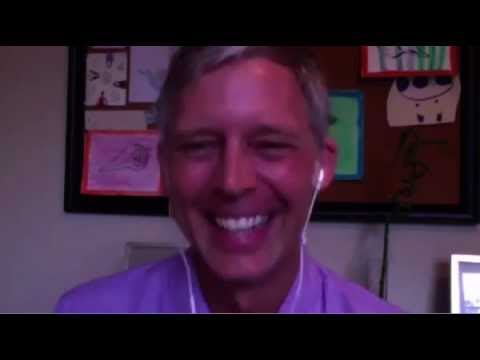
Travis Thomas, an improv performer and leadership coach, explains how the improv principle "yes, and" can reshape how you live. He walks through ten ideas: life is unscripted, say yes to momentum, mistakes fuel creativity, collaboration beats competition, and authenticity creates its own safety net.
Chapters
Hello, everyone. Welcome. My name is Travis Thomas. I am so excited to be a part of the Entheos Academy Optimal Living. I hope this is my— this is my first. Hopefully, it's not my last. Entheos Academy class. So you guys are going to help me with that. But I'm excited today to talk to you about a topic that I'm super passionate about, and that's improvisation. So today's title is No Script Needed: Improv Your Life. And so a quick background about me again, my name is Travis Thomas. I'm the founder of 30 Days of Yes. 30 Days of Yes is all about creating a more authentic life. And so I do that. My day job is I'm a leadership coach. At the IMG Academy here in Florida, we train amateur athletes as well as professional athletes, and so I get to talk about leadership, personal development, body communication with them all day. Then also, I've been a professional improviser for the past 15 years. I started up in Boston. Now I have my own group on the east coast of Florida called the Jove Improvisation. So a little shout out to everyone, all you Jove fans out there. But let's jump right in. What in the heck does improvisation have to do with life? I have to say I've been on a spiritual journey my whole life, but 15 years ago I took my first ever improvisation class, a beginning improvisation class. It was one of those huge aha lightbulb moments that went off. I remember taking this class and I was working a corporate job at the time and I remember thinking, wait a second, how are these principles different than work? How are these principles different than every relationship that I'm in? I quickly realized actually there is no difference, and especially being on the spiritual journey that I was on, and I was recently married, and I've got these corporate relationships. I'm starting to go, these principles of improvisation directly correlate to life. I've been blessed to start my professional career in Boston during that time, and I've been able to do corporate training and work with individuals and corporations and teams, sports teams, on how these— Yeah. These principles of improvisation actually impact your everyday life, and that's what we get to talk about here today. I'm excited to do it. Let's jump right in. If you're on your computer at home, feel free to talk to me even though I won't be able to hear you. This is a recording, but I might ask for your input at times. I might ask you to improvise on the spot. Here we go. Big idea number 1 is life is improvisation. Life is an improv, right? We wake up every morning and we think we have an idea of what's going to happen during our day because it looks and it feels similar than the last day We know we're going to work. We know we've got to wake our kids up. Whatever we're doing, we feel like we know what's going to happen. The reality is there is no script. There is no script to life. Now, we anticipate what's going to happen, but what we are essentially doing today is that we respond to every event and every moment, every moment that happens. Improvisation is. Now, comedic improvisation, which some of you may have seen like Second City or Upright Citizens Brigade or on TV, Whose Line Is It Anyway? Those talented performers take suggestions and they create comedy on the spot. But all of life is an improv. What we are doing every day is we're taking everything that's happening to us and we're responding to it. Because essentially there is no script to life. You could quit your job right now and go in a totally different direction. And so what I want to teach you today is just share some principles of how does an improviser go on stage and create magic out of nothing, and how do those skills relate to your everyday life? The first thing we have to do is actually realize and accept that life has no script. We're doing the best we can with what we have every moment. If we can embrace that, if we can embrace the reality that there is no script to life, now we can go, okay, there's no script, so I actually get to choose how I respond to every single situation. And that's improvisation. And so all of you are already improvisers, and hopefully by the end of our session today you'll feel more like a professional improviser ready to work your way through life. So big idea number 1 is life is an improv, embrace it. And that's what we're going to do. Big idea number 2, 2 words are the basis of improvisation. That's it. I can teach any of you to improvise in 30 seconds if you can say these 2 words. And those 2 words are yes Yes, and. That's it. Yes, and. When I go on stage as a performer, I've got a scene partner or a cast. A scene starts, we have no idea what the scene is about, but no matter what is said by my scene partner, my response is going to be, yes, and. Always. Even if I don't actually say, yes, and, I am responding to them by supporting their idea. Yes is all about acceptance. The yes is the acceptance. If I'm on stage with you and you're like, your hair's on fire, right? My response is, yes, and It's the newest hairdo. Whatever the idea is, I'm going to accept it and then we're going to build off of it. Yes is the acceptance that whatever is going on right now is actually going on. I'm just going to accept it. In life, whatever is going on right now, say yes to it. You don't have to like it, but say yes to it. That is what's happening. The and is how we respond to it. The and is what we do with it. Do we build off of it and make the best of it? Or do we actually make it worse? Or do we actually say no to it and deny it? If my house is on fire, I might not want my house to be on fire, but the reality is my house is on fire. So I need to say, yes, my house is on fire and I'm going to call the fire department. Yes, my house is on fire and I'm going to get out some valuable possessions and then my kids. Yes is accepting that whatever is happening is actually happening. So just say yes to it. What I love about it from a spiritual perspective is it's all about acceptance. Yes is accepting the current moment. The and is how do I choose to respond to it. For any of you Byron Katie fans out there, she wrote the book Loving What Is. That's improvisation. Whatever is happening is happening. Accept it, embrace it, and just love what is actually happening. That is improvisation. So all of improvisation is saying yes, and, and then just building, building, building, responding to every moment. So big idea number 3, if life is yes, and, big idea number 3 is there are no nos. No nos, as in N-O apostrophe S, right? There are no nos. So whatever is going on, again, that just goes back to when I go on stage with a scene partner, if he says to me, your hair is on fire, and I say, no, it's not. No, it's not. I've kind of just killed him and I've killed the scene. Now we're both going, oh, what do we do now? I don't want to negate or deny his idea to me. I have to say yes to it and then we can build off of it. Life is no different. Same idea. If I come home and my house is on fire, if I can't— nope, nope, it's not on fire. It's not on fire. Yeah, it is. You can say no to what's happening now and actually deny reality. We want to say no to it. No, no, no. We actually are denying it instead of saying yes to it. So in improvisation, there are no nos. You just say yes to everything. And again, it doesn't mean you like it, but yes, again, it's all about acceptance. So when you accept it, then you can move forward. Nothing happens until you say yes. Nothing happens in life until you say yes to it. And the reason a lot of— the reason a lot of us get stuck is because we're saying no to the current moment. We're saying no to what's happening to us, and so we get stuck, we get in denial. Remember, improvisation— there is no script. So whatever is happening is happening. Say yes to it and move forward. Big idea number 4: Peter Block wrote a book called The Answer to How Is Yes. My favorite, favorite quote. Think about that for a second. The answer to how is yes. Now, I'm a big believer that The question of how has killed more dreams and more impossibilities than any other word out there. Why? Because when we have an idea, when we say, I want to do this, or, how about if we do this? Or, this is what I want to be when I grow up. Or, wouldn't it be great if we could do this? What do we automatically do, or what does someone ask us? Well, how are you going to do that? How are you going to make that money? How are you going to earn that career? How, how, how, how, how? When you get caught up in the how, You don't leave room for inspiration. You don't leave room for the universe, for love, for God, for your own innovation and creativity to actually figure out a way. So the answer to how is say yes. Say yes to it and you'll figure it out. Rumi, the poet, said, say yes quickly. I love that. Someone comes and gives you an idea that charges you up, say yes quickly. Commit to it before how comes in and says, well, I don't know how you're going to do that. Say yes quickly and trust yourself that you will figure it out. I don't mean saying yes to everything. When I say yes, it's saying yes to the authentic opportunities, that authentic purpose, the authentic passion that we have. When those opportunities come along, there's going to be a lot of them that terrify us, but say yes quickly. Then trust yourself to figure it out. I had a big opportunity to do this back in 2005. My wife and I had just moved to Florida. We already had one child. My second child was just born. We moved into our dream house and then 3 months later, I get laid off. My entire team gets laid off from the internet company I was working for. It's like, okay, now what? I took some time like, now what? What's my next step? What's my next move? I had a friend of mine call me a few weeks later and she has a wonderful organization called World Blue. They help companies really be passionate, authentic, organizationally democratic companies. She and I hadn't talked in a year or two. She calls me and she says, Travis, I'm having this big international conference in Washington, D.C. There's going to be 30 speakers from all over the world. It's going to be on organizational democracy and how to run a freedom-centered organization. She says, I'd love for you to be the emcee, to be the host of this conference. Then she started to go, now Travis— I said, yes, yes, yes, Tracy, I'll do it. Inside I was scared to death. I'd been doing improv comedy at the time, but that was improv comedy where I can just go up on stage and be funny. But to be an emcee of a professional international corporate seminar or symposium, that was a big scary hairy beast to me. I had never done anything like that to me. But as soon as she shared that idea with me, my heart just said, yes, say yes to it. So I said yes to it and then spent the next months leading up to it putting in the time, preparing myself, getting to know these speakers, understanding what World Blue and what this was all about that by the time the conference came I was so prepared. I was so revved up and on fire about World Blue and this conference that I just knocked it out of the park to the extent that she asked me to do the 2007 event, and I ended up going on and working for her for a few freelance opportunities. I still remember that moment in 2005 of just— again, it doesn't mean you've done it before, but if it speaks to your yes, if it speaks to your authenticity, say yes quickly and trust yourself and trust inspiration in the universe that you will be able to figure it out. Why? Because you're passionate about it. The answer to how is yes. Now, this is a quote from me, big idea number 5. The answer to now is yes. The answer to now is yes. The reason I love yes and and improvisation so much is think about how much time we spend Thinking about the past, beating ourselves up, or projecting into the future. What's going to happen? What if? We do a lot of, if only that had happened, or what if, or when this happens. We spend so much time in the past or in the future, but the answer to now is yes. When we say yes to the current moment, we are just— we're bringing ourselves back to the present where we can do anything. We can do anything in the present moment. But we scare the crap out of ourselves about thinking about the past or thinking about the future. The answer to how— actually, the answer to now is yes. Now, having 3 kids, I watch all the different movies, the kids' movies that come out, but what I have found is that the kids' movies are filled with tremendous inspiration. Kung Fu Panda is one of my favorites. There's a big moment, for any of you guys who've seen it, where he is stressing out— Jack Black as the Kung Fu Panda is stressing out that he's not the guy. He's just not the guy. And the wise old turtle brings him aside and he's stressing out about, should I do this or should I do that? And the turtle just kind of puts his arm around him and says, yesterday is a mystery. I'm sorry, yesterday is history. Tomorrow is a mystery. Today is a gift. That is why it is called the present. And it's just like, wow, yes! That's what I'm talking about. The answer to now is yes. We can't change 3 years ago, 3 months ago, 3 minutes. We can't change 30 seconds ago, nor do we know what's going to happen 30 seconds from now. Today is a gift. Right now is a gift. That's why it's called the present. I love that. So the answer to living in the now is just about saying yes to the now. One of my other favorite books out there by Eckhart Tolle, A New Earth. I remember, again, a few years ago— again, I was unemployed for a few years as I was figuring out what I was supposed to do, and I was trying a bunch of different things. That was scary to watch savings go away, and I'm supposed to be the responsible father of 3 kids. I remember reading A New Earth, and there's a page early on where Eckhart says, one thing I know to be true, and I'm paraphrasing here. He says that whatever is happening right now is meant to raise your current consciousness. And then he says, how do I know this is true? Because this is what is happening right now. And I just love that, that how do I know that this is where I'm supposed to be? How do I know this is what I'm supposed to be doing? How do I know that? Because that is what you're doing right now. Accept that wherever you are, that whatever you're doing is the universe, is love, it's God's way This present moment is raising your consciousness, so embrace it and accept it. I love that. Alright, big idea number 6, a little shout out to Vanilla Ice: stop, collaborate, and listen. Alright, for any of you out there that are too young or too old, look it up, Ice Ice Baby. Actually, you don't need to, don't worry about it. It's just a quote from a song. Stop, collaborate, listen. The fact that he chose collaborate as a rap song, go figure. Stop, collaborate, listen. Improvisation is all about collaboration. Think about it. When I go out on stage with another performer, we're naked. We have no script, but your life is no different. We're naked. So what do we do? Who do we lean on? The best thing we can do is rely on each other, work with each other. So my partner says to me, your hair's on fire. Yes, collaborate with that. Yes, and yes, and it's the newest hairstyle. And then the two of you just tell and create a story. Yes, and yes, and yes, and yes, and. So I love that. So think about the difference between having a collaboration mindset compared to a competition mindset. Now, I love sports, so I love competition, but I love healthy competition. Now think about the difference. Collaboration is all about how can our ideas work together. Competition is all about how can I make my ideas better than yours. Think about any relationship that you're in. Think about any relationship that's gone bad. Or any current relationship that's a struggle— business relationship, a friendship, a spouse. I figured this out for a while now. Anytime my relationship with my spouse is rocky, it's because I realize that one or both of us are competing with one another. If any of you have ever been in a relationship where you start to keep score, oh yeah, well, I did this today. Oh yeah, well, I did this today. Well, I'm the one making the money. Well, I'm the one taking care of the kids. You start keeping score. Right. When your relationship becomes a, what have you done for me recently? When it comes to, I'm doing more, when it comes— it turns into a competition. If you want to straighten out any relationship in your life that feels like a struggle, I guarantee that on some level it's turned into a competition instead of a collaboration. Compare that to me coming home at the end of the day and walking into the house and telling my wife, what can I do to help right now? What's going on? How can I help? Instead of me coming home and going, hey, what are you going to do for me? It's collaboration instead of competition. Think about that in any relationship that you have. When you collaborate, you take ideas and you make something better. It's not even about compromising. It's about making something better by combining all of those diverse ideas. Look at some companies out there that have really nailed it when it comes to having progressive cultures where they embrace diversity, they embrace all those differences, Zappos, the culture that Zappos has created, so much so that Amazon— an article was just written how Amazon, who bought Zappos, is actually copying Zappos' culture for their bigger culture. Collaboration mindset. I like to use the idea with these athletes that I work with as well. When you go out on the field, don't think about, I want to look good, or, I want to make sure a scout or a coach sees how good I look. Yeah. This is an improvisation mantra that we use: make your partner look like a genius. Whether I go out on stage or I go out on the field or I come home from work, my goal is to make my partner look like a genius. Imagine how that feels to the other person when your intention is to make them look good. Imagine if you had an entire team or an entire company where everybody was thinking about, how can I make the other person look good? That would be an awesome, awesome place to work for or an awesome relationship to be in. Having that yes and collaboration mindset, that's big idea number 6. Number 7, there are no mistakes. Anyone who has ever improvised, you will quickly find out that the best improvisation comes from mistakes. It's because it's once you go off script, as soon as you think you've made a mistake or you don't know what's going to happen next, that's where the genius comes from because that's when you know you're doing something that's new. Now, you think about all the amazing products that have been created from medicine to just amazing products. Most of them were the result of creating something else. A mistake was made and they created this entirely new product off of the mistake. Improvisation is the same way. The best stuff comes when you make a mistake and you don't know what's going to happen next. Again, your scene partners are going to help you. are trying to make you look like a genius, so they turn your mistake into genius. They turn it into magic. My favorite scenes as an improviser has been— and I make a lot of them— is when I make a mistake on stage and my scene partners are right there and we just turn it into gold because that's creating something that you didn't plan and has never happened before. It's brand new in that moment. So you're taking a mistake and you're turning it into genius in that moment. Again, imagine Being in a relationship or being a part of a team that every time someone made a mistake, they supported you and actually turned it into something cool. So there are no mistakes. Your life is no different. Maybe you meant to do something else, or maybe you hoped something would have worked out differently, but it didn't. So you say yes to it, and that mistake might just be the thing that actually leads you to a bigger and better more authentic opportunity. There are so, so many wonderful examples out there of people who have started companies, who have done amazing things, where it's not what they started out to do, but a mistake spun them in a different direction. Again, if you get caught up saying, no, no, this isn't what I wanted. This isn't what I intended, then you get stuck in denial instead of saying, yes, this is what's happening, so how am I going to turn this into something good? There are no mistakes. Big idea number 8, choose or lose. I tell people all the time, the only thing you can't do in improvisation is do nothing. You have to do something, so make a choice. Most of us can scare ourselves into not making a choice because we're so afraid of what might happen. Paralysis comes on, so we do nothing. Instead of realizing, if there are no mistakes and I'm going to accept whatever's happened, whatever happens, make the best choice that feels authentic to you right now, and then whatever happens happens, and then you respond to that, and then you respond to that, and then you respond to that. Yes is an action word. It's a verb. So when you say yes, you give yourself permission to move forward, even if what happens isn't what you wanted to happen. You then deal with that. But if you stop and you wait for the conditions to be perfect, or you wait for someone else to move you, you're just going to kind of get stuck and a lot of things could pass you by. So don't let fear hypnotize you. Don't let fear paralyze you. Say yes to the current moment. Choose based on your authenticity. Move forward and then respond to that. You know, it's the difference between understanding the difference between control and influence. The only thing I can control in life is how I respond. I can't control anyone else. I can't control the weather. I can't control how you're going to respond when I say something. I can only control how I show up. But the influence and the impact I have on everything around me is immeasurable. So I can't control you, but I can have a huge influence on our relationship or the environment or my, my work team, but I can't control it. So I'm not going to take on that burden of trying to control it, but I know I have tremendous influence. So I'm going to say yes to the current moment, make a choice on what feels authentic, and just move forward. Which brings us to big idea number 9: embrace the unknown. That's all improvisation is, is embracing the unknown. That's all life is, is embracing the unknown. None of us know a darn thing. We don't know anything. We think we know, but we just don't. As soon as you come to peace with the fact that you just don't know and you're just going to do the best you can, well, you've done most of the work. By embracing the unknown, you embrace what is possible. You embrace adventure. It is that hero's journey. It is with Joseph Campbell's Hero's Journey. By embracing it and taking that step onto the path, then you're open to whatever can happen. I just love that. One of my favorite quotes by William G.T. Shedd is, a ship is safe in harbor, but that's not what a ship was made for. We've got to leave the harbor to go out and experience what it means to live life. Another one of my favorite quotes is, a sailor doesn't learn to sail on calm seas. If we want to be a good sailor, we got to get out there when the storm is pounding, when the waves are big, when the wind is howling. We've got to take our knocks. We got to make some mistakes. We got— we're going to get into some scary situations, but that's that adversity. That's where we learn embracing the unknown, embracing the mistakes, embracing falling down. But trusting yourself to know that you're going to get back up and know how to respond. I ran into that personally for those 3 years when my wife and I had done such a great job creating savings and we thought we knew where our life was going. And all of a sudden, I've got 3 years of not a continual income coming in. And so I remember this really clear moment. I was doing a coaching call with a friend and there was no solution in sight. And I remember feeling this tremendous amount of peace and knowing that I don't know what the solution is, but I know it's going to be okay. And I remember embracing that moment and going, you know what, this is what life is all about— finding peace in the uncertainty, finding peace in the unknown. It's not about, oh, when everything's perfect, then I'll feel peace. But what is it about you that can find peace in the unknown? And then continue to move forward. And that's big idea number 9, is just to embrace the unknown. Big idea number 10, my favorite quote, my favorite parable, my favorite idea of all time is leap and the net will appear. Leap and the net will appear. Now again, it's not about just going up to every cliff and jumping off. It's about finding yourself on the edge of your authentic cliffs. When you find yourself on the edge or on the verge of that journey, of that path that you know is a part of your authentic journey, and you're scared to death to step off because we don't know what's going to happen, but that's the leap you need to make. And guess what? There's going to be a lot more leaps after that. But when you know that that's part of your authentic journey, leap and the net will appear. Why will the net appear? Because it's your authentic expression. It doesn't mean it's going to work out exactly like you want it to. But it means that you've got the skills, you've got the chops, you've got the passion to respond to whatever happens. I think when you have a clear sense of what your authenticity is, of what your purpose or your passion is, and you move in that direction, it's kind of like a compass. It's a compass that no matter where you go, whether I plop you down here or I plop you down there, as long as you're clear— And what your authenticity is, you'll be able to always move to your true north. So you can leap off and that net will appear. It's going to take care of you. It is the anchor that is always going to right your ship and point you in the right direction. So whatever you're passionate about in life, whatever you're scared to death of in life, if those fears that you have show up on the path Of you being the person that you want to be or living the life that you want to live, if those fears are on that path, those are the fears that you need to challenge. Those are the cliffs that you need to leap off of. Why? Because they're on your path. It's not about just challenging every fear that you have. It's about acknowledging which ones are on your path and then jumping off and trusting yourself. That's what an improviser does every show. You go out on stage And hopefully you're embracing this is going to be something that's never happened before. I trust my partner that they're going to take care of me. Why? Because we've established that relationship. No matter where we go, he's got my back, she's got my back, I've got their back, and I trust myself. So let's go out there and have an awesome, awesome adventure. Those are my 10 big ideas. The, the conclusion I want to leave you all with That whether you have any intention of being a performer or ever stepping on stage, it doesn't matter. These principles are all about living a purposeful, passionate, authentic life. That's how an improviser does it on stage, but it is the same skills that work in life. These principles have enhanced every relationship in my life with my wife, being a father of 3. It's helped me with every company and every job that I've had. Just bringing that sense of yes, bringing that sense of collaboration, bringing that sense of embracing the unknown and just loving it and moving forward with it. I hope that you're starting to see for yourself that when you embrace and cultivate this yes and mindset, to approach life with a yes and mindset, how exciting it can be. My homework assignment for you, that's right. You got a homework assignment. Your homework assignment for today, for this week, is just to notice. Notice in your own thought how often you want to say yes to ideas or people, or how often you say no. This is a good opportunity for you to self-assess and realize, am I more of a yes person or a no person? Am I someone that looks to collaborate or looks to negate? All right, and when you start to realize that, then you can ask yourself the question, huh, Why do I do that? Why do I look to say no, or why do I always say yes? You can see if there's any fears or insecurities attached to why you might be a little bottled up or a little fearful. Then you can start to challenge those fears and start to develop and cultivate that yes and mindset. I could go on talking for hours, but I'm going to cut it off right there. I'm so honored to be a part of the Optimal Living Community. Thank you so much for taking the time to watch this, and I am excited to— please let me know how your Yes, And adventure is going, and I look forward to connecting with some of you in the future. Have a wonderful day, everyone. Thank you.









