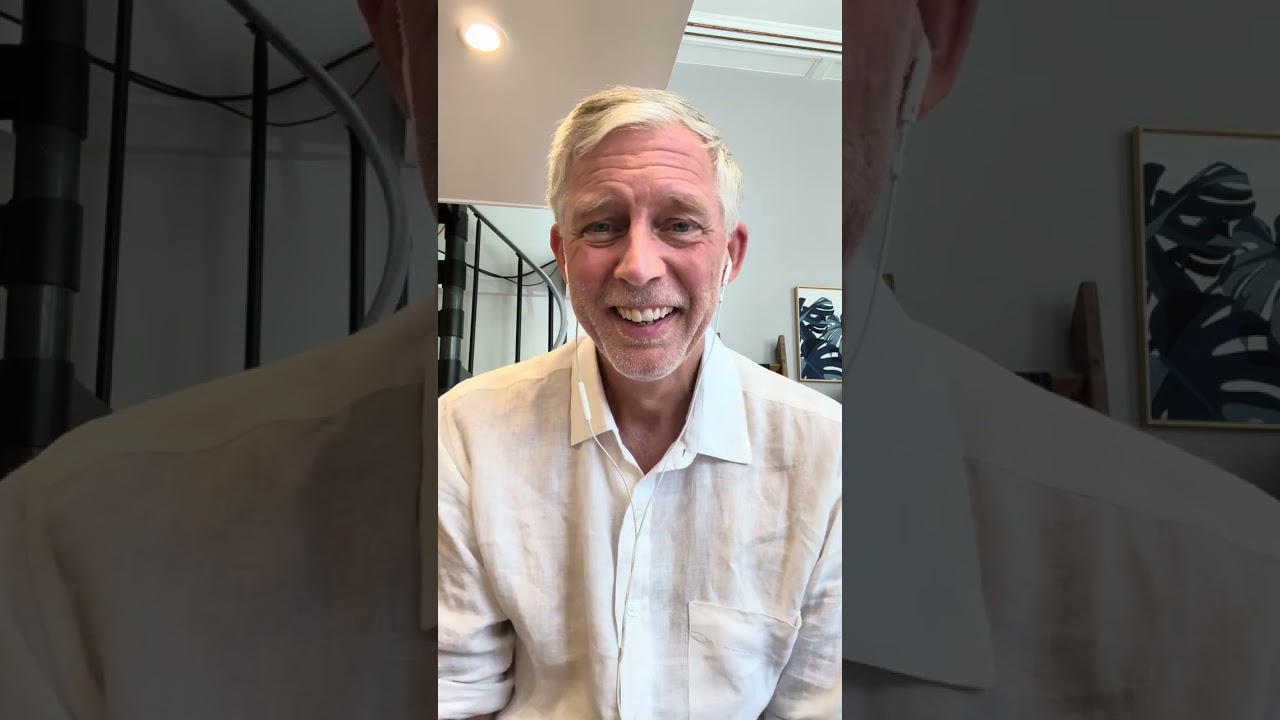
In this impromptu monologue, Travis Thomas shares a raw, personal reflection sparked by a convergence of personal loss and national turmoil. He recounts his father's recent death, describing the family's emotional landscape and the comforting presence of a friend, Chris, whose love seemed to bring peace to his father's final moments. Using the Rumi quote “my religion is love” as a guiding principle, Travis examines how love can—or should—shape our responses to the wave of political violence and tragedy in the United States, citing recent events such as a school shooting, the assassination of Charlie Kirk, an attempted assassination of Donald Trump, and the killing of legislator Melissa Hortman. He argues that responding to fear, anger, or hatred with love, humility, and grace is the only path to defusing conflict, rejecting any justification of violence regardless of political affiliation. Travis calls listeners to introspect on how they personally respond, urging compassionate dialogue across ideological divides, awareness of algorithmic echo chambers, and a commitment to treat each person with love. He closes by inviting respectful conversation, emphasizing that love must be lived, not merely professed.
Chapters
Hey everyone, Travis here. And so feeling sort of, I guess, motivated or inspired to just kind of impromptu share some thoughts or feelings. I'm sure everyone is dying to know what Travis Thomas thinks of the state of affairs in the world right now, especially when I refer to myself in third person. But here we are, here it is. And I think this has, there's some context, obviously last week between yet another school shooting, Charlie Kirk assassination, but on top of that, my father passed sort of in the midst of that. And so, you know, I'm sure there's lots of emotions all around as far as what I'm feeling. But more sort of kind of discouraged, discouraged, frustrated, fearful. I don't want to say helpless or hopeless because if you take away that, then there's nothing. But, you know, part of being around for being there when my dad passed, I was back in Michigan with some family members and we were kind of talking about the state of affairs. one of my nieces who's older said, like, what do we do? What do we actually do right now? And that's a big question. I think that's the big question I'm sitting in. Um, I think that's the question sort of I bring to you right now. Um, regardless of your politics, regardless of your, I think your beliefs and things like that, like, what are you feeling led to do right now? And I think more than anything, for me, because my— I don't know, my politics might be different than some people assume, or my beliefs might be different than some people assume. I guess my favorite response is a Rumi quote, which is, my religion is love. My religion is love. Or as my good friend Matt Miller loves to say, His religion is love the person in front of him. That's a good religion. Which actually, I didn't realize that there's a 1 Timothy, I think it's 1 Timothy 4:12, the quote is, love— I want to get this right— love the one in front of you. And so I think when I think about the question, like, what do we do right now? This idea of, well, is my response love? Is what I'm— is the rage or the frustration or the sadness or the discouragement that's being put in front of me, is my response going to be love or am I amplifying the situation? Am I diffusing it? Am I bringing peace? Am I bringing healing? Or am I bringing more anger, more resentment, more fear? You know, my dad passed the other day and I was reflecting on it. And just to give you a little bit of context, we all loved my dad. I would say the last 15 years or so, for a lot of things that I don't need to get into, it was often hard to like my dad. We loved him. It was hard to like him. And for the last few years, you know, my brother was really kind of in the situation, and my sister, my brother and my sister, that they were sort of, you know, having to sort of meet his needs on a day-to-day basis. That's really, really hard to graciously meet someone else's needs when you, you know, you're struggling in that relationship with them. And, you know, when I think about my brother especially, like, my brother always showed up with love. Doesn't mean he wasn't discouraged. Doesn't mean he was frustrated. Doesn't mean that he wasn't angry a lot of the times, but he always responded and showed up to my dad's needs with grace and with love. And that's, that's the option that we have. My friend Chris Pryor, shout out to Chris, when my dad passed last week, I reached out to my friend Chris, who loved my dad. My dad loved Chris. I thought, hey, you might want to, you might want to stop in. I'm not sure how much longer he has. And Chris showed up and went into the room. It was my brother and I, and Chris went into the room and just said, you know, Mr. T, Mr. Thomas, Chris, I'm here. It's Chris. And in that moment, my dad had been sort of unconscious and asleep. His eyes, he tried to open his eyes. And he didn't, but he actually passed in the next moment. He passed in the next moment with peace, surrounded by love. With peace surrounded by love. It's all any of us could have asked for my father. But what I love, or what I take away, because it's only about our story, what I took away from that was... When Kris came into the room, Kris only shows up as light, as love. And whatever fear or like fog that maybe had been clouding my dad's consciousness or judgment, whatever you want to call it, for a long time, Kris's light and love just broke straight through it. And not judging the man of maybe decisions he had been made— that he had made, but saw him for who he was and is. And in that moment of, I think, clarity, of unconditional love and clarity, I think he really gave my dad freedom and permission to move on. That's love. That's love. That's living with love. That's responding with love. And as I think about our state of affairs right now in the world, with the Charlie Kirk assassination and with school shootings and with the politics and all of that, and it's like how you respond either says you're one way or you're the other, and it's just not true. Yeah. It's just, it's just not true. It's what do these things create in us and how do we respond to them? I was not a Charlie Kirk fan and I'm devastated for his family. And no justification of an assassination or the attempted assassination on Trump. And I do not like Trump. And just as, you know, the political assassination of Melissa Hortman back in June. It doesn't matter what side any of these people have been on. The response of violence to anyone, it's not love. And responding to violence with violence is not love either. And so when I think about my niece asking, well, what do we do? I think this is the question for me. It's the question for any of us. If you're fearful like I am about where do we go as a country or as a world from here, if it's an eye for an eye, we're in trouble. But if it's love, we actually have a chance. If our response is to say, Yeah. If our response to anger is love, we defuse it. If our response to hatred is love, we defuse it. But if any of our actions and any of our beliefs lead us to justified violence, to justified hatred, it's not love. It's just not. And, and, and whatever your religious belief is, If it's justified violence, it's not love. Now we can trick ourselves and we can be fooled into thinking that it is justified, but it's not. It's just not love. So, so what do we do? How do we respond? And so how does love respond? How does love respond to someone who disagrees with your politics? How does love respond to someone who disagrees with with your life choices? How does love respond to someone who who insults you, who marginalizes you, who discredits your existence? How does love respond? How does love respond between countries that just are only trying to eliminate the other? How does love Respond. But it always comes back to me and how do I respond, and you, how do you respond. If my religion is love, my actions and behaviors need to reflect that. And if they don't, that's what I need to focus on. So If you're still watching this, congratulations. And here's another thing, love. If you are so convinced that your beliefs and your perspectives are right and the other side is wrong, well, that's not love either. Because love is nothing if not humble. And if there's no grace and humility in your beliefs, that's not love either. I constantly have to look at myself and I know my algorithms. My algorithms feed me exactly what I want to be fed and your algorithm feeds you exactly what you want to be fed. And if we switched algorithms for a day, we would probably go, oh wow, I can see where you're coming from. Oh, I can see where you're coming from. And so if we're convinced that we're right, that's not love either. So How does love respond? And if anyone wants to talk, I'm not a super, super political. I have strong, strong beliefs and views. I'm not super political. If you disagree with my politics, don't don't blow up my comments. Talk to me, and I'll openly share my views. If you want to talk to me about my religion and my spiritual beliefs, which are most important to me, I will happily share because you if you want to do yeah but yeah but yeah but if you want to yeah but me. I mean, I'm Mr. Yes, and, but if you want to yeah, but me, I'm happy to talk. But I'm not looking to debate. I'm not looking to argue. Because I have so many friends that are some of the best people in the world who I love so much, who have such different politics and beliefs than I do. And I still love them. And I hope they love me. And as Rumi said, my religion is love. And as Matt Miller and Timothy says, I'm just going to keep trying to love the one in front of me. Thanks everyone. Thank you.