Post Election 2016: How do we respond?
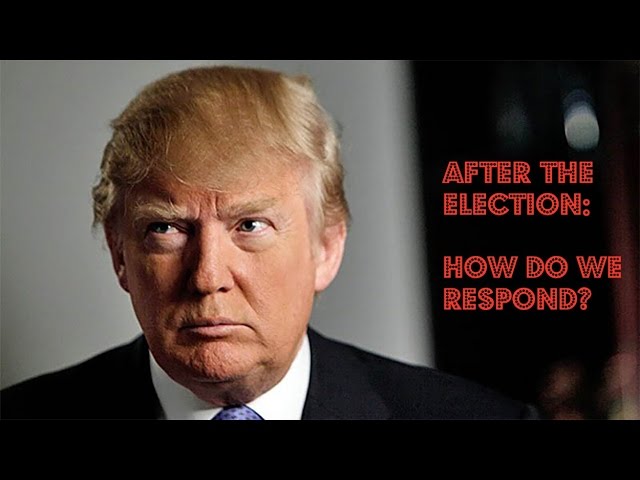
After the 2016 election, the speaker argues that political victory won't heal the nation's divisions. He calls for quiet listening and empathy instead of partisan battles, drawing on team dynamics to show how to rebuild trust and respect across disagreement.
Chapters
It's been a day, or shall I say an evening, of a lot of reflection, a morning of a lot of reflection. And I felt the, the healthiest thing for me to do was just think about how do I really feel that I need to respond right now from a sense of purpose and authenticity. And so for— if anyone is wondering, this is not going to be a political conversation. I will be completely transparent with everyone. I did not vote for Donald Trump. And so, yes, I woke up this morning, I went to bed last night with a whole lot of sort of disappointment, frustration, embarrassment in my heart. But again, the essence of this talk isn't so much about that as much as it is what now? And what has this last 2 years, what has the last What has this election sort of revealed to us as a country, as a world, as a society, as a community? And I think that's what's most important now. The easy thing to do today would be, if you were pro-Trump, to be really excited about the results, and if you were anti-Trump, to be very frustrated with the results. And again, I woke up very frustrated today. But what's more important, and I think I put this out in some messages, You know, the election is one day that happens every 4 years. What's more important is how do each of us show up and respond on a moment-by-moment, minute-by-minute, day-to-day basis. And I think what this sort of election has revealed to me more than anything is just the level of discontent, the level of disconnection. Is that a word, disconnection? Yeah. Yeah, the disconnect. And a lack of empathy and understanding that we have really for half of our brothers and sisters in this country. And when you have an unwillingness to want to understand where the other person is coming from, you have an election that we just had, which was— it was vicious. It was toxic. And it's representative of a deep-seated frustration that a lot of people in this country feel. And so what do we do with that now? It's been brought to the surface. If it was sitting there sort of resting under the surface, it has now been brought to the surface. And the question is, what do we do now? It's not about putting the person into office that we think is going to fix all the problems. I think what the election has done is exposed the level of frustration that is out there, the level of discontent, and the level of people who feel unheard. And I will be honest with you, I don't necessarily get it. I don't get it, but that's— but I actually say it's not my job to get it. Actually, it is my job to get it, and it's your job to get it. And I think as a community and as a country, it is our job to, instead of getting louder, in disagreement to actually shut up, to be quiet, and to listen, and to express the key quality of empathy. Whenever I go in and work with an organization or I work with a team, we can't get to collaboration until we have developed and nurtured trust, respect, and safety. And I think what we have right now is we have a country that doesn't respect one another. There's no trust amongst one another. Therefore, we don't feel safe with one another. And when you don't feel safe and you don't feel trusted and you don't feel respected, you go into your shell and it's a very fear-based mindset. And when you go into your shell and you're operating from a fear-based mindset, you're operating from your lowest common denominator. You're operating from a survival fight-or-flight mindset. And as we all know, that serves us in moments of danger and moments of panic, but that is not a mindset that is sustainable. And so we're all basically sort of in a culture of everyone is sort of in their turtle shells, feeling unsafe without a lack of trust and respect from each other. And so, so that's, that's where we are. That's what we're feeling. And I think that's— of what has come to the surface. So if we truly want to collaborate with one another, if we truly want to make our country great, and I'm thinking beyond borders, I think if we want to make our world great and we want to make it harmonious, we want to make it collaborative, again, we still have to build that same level of safety, trust, and respect. And how do you do that? You don't build safety, trust, and respect by ignoring everyone else's voices that disagree with you. And I will be the first one to admit, I really didn't want to hear what everyone on the other side of the discussion had to say. But the reality is, the only way that we're going to make any progress is by us genuinely caring about those who oppose our beliefs. Genuinely caring enough about their views and their perspectives and their beliefs, to sit down, to have a healthy conversation that is not about convincing them that they're wrong or that you're right, but it's about empathy. It's about understanding the road that they've walked. It's about walking in their shoes. It's about understanding their thoughts, their beliefs, and their perspective, and then yes-anding that. It's about us coming together with those who we disagree with most In order to find compromise, to find commonality, to find compassion. And we, we can't do that when we're continually just trying to one-up one another by insulting one another and by telling each other that you're wrong. And that's all this election was. And one person had to win. And so if you woke up today, you're feeling like, yeah, Either my side, my 50% was right or my 50% was wrong. And the reality is there really isn't a right or wrong in all this. There is a how is it going to change how we interact with one another? And so if we're gonna truly live our own yes and, we have to wake up today and you have to be in acceptance with what is. And with what is, is that we are a splintered and a fractured nation and we don't trust one another. And we haven't showed a capacity to care enough about one another to get to know each other through our disagreements. And we see it happening in the minority communities with what's been going on for a long time with the discontent there. And this election is just a greater reflection of that. So the opportunity is, are we willing to come together? Or are we just trying to put up a bigger wall? I'm sorry, no pun intended. Because the wall can never be big enough between our disagreements to create collaboration. And I am going to be in complete acceptance with who our president is now. And it's about how I am going to choose to show up on a day-to-day, minute-by-minute, moment-by-moment basis. to be about love, to be about compassion, to be about empathy, to understand my brother and sister out there who has felt ignored, and they feel like this election was their chance to be heard. You're being heard now, and you have our attention. And so I think this is a healthy wake-up call for each of us. I'm hopeful. I'm not pessimistic. I'm afraid. There's a good healthy dose of fear that I'm dealing with. But at the end of the day, I'm ready to have those conversations with people. And I feel like I did a really good job throughout the whole election cycle of not trying to get involved from sharing how I disagree with people. I was more mute than anything. But I think the next step is to actually engage with those that I probably disagree with so that I can understand where they're coming from and have love and compassion for them. And so I invite all of you, again, not to turn this into a political string as far as comments wherever you are seeing this, but to share your thoughts or your feelings of— Of what you're feeling today, of what you feel is important to you today, so that you are heard. And I encourage, if anyone wants to share anything in the comments, that no one else turns it into a disagreement or a debate. But let's love and respect each other to allow everyone to have their thoughts and their beliefs and their perspective shared, good or bad, and allow them to have that. And let's seek to understand. Instead of seeking to discredit or seeking to disagree with or seeking to convince otherwise. And so this is, this is what I'm doing today. I'm opening up the conversation. How are you feeling? Why are you feeling the way that you're feeling today? And are you feeling understood? And are you willing to comment in a way where you're inviting others to understand where you're coming from? So there you have it, everybody. If this is any value, please share it with others. I would love to, to open up this conversation to people I don't know. I would love to hear how people are thinking and how they're feeling in a healthy, proactive way. Again, without judgment, without divisiveness, without debate, and just letting your voice be heard. That's it, guys. Have a wonderful, wonderful day. God bless. Namaste. Namaste.









