August 10, 2026

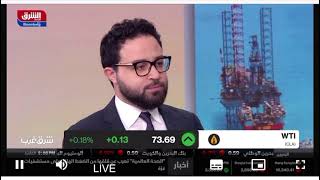
Dr. Umud Shokri, an energy strategist at George Mason University, discusses the Iran-US standoff and its grip on global oil markets. Iran wants $7 billion in frozen assets and US troop withdrawal, unlikely soon. Oil prices swing 7% on uncertainty, and high prices could shape the midterm elections.
Chapters
him to you. He's none other than Dr. Umud Shokri. He's an energy strategist and he's also senior visiting scholar at George Mason University. Dr. Shokri, thank you very much to have joined us. It's a pleasure to have you here. Uh, Iran says its agreement with Oman on new shipping lanes is in the final stages, but it will not reopen the Strait of Hormuz until Washington meets the conditions that Iran has laid out. Are we looking at a real breakthrough or simply the beginning of a much harder negotiation process? Iran wants compensation for war damage, it wants sanctions lifted, it wants frozen assets released and US forces pulled back. Are these realistic demands or is Iran setting a deliberately high price for reopening the Strait trade?
Thanks for having me on the show. Yes, you mentioned about the last development in Iran-US confrontation and the possible negotiation between Iran and US and indirect, I mean, indirect negotiation between Iran and US as well. Referring to your question, this, I mean, this agreement, we can see it's just technical agreement, but it's not political. We have to see this agreement signed officially with Iran and the US. But at present, I think there is no easy for Iran and the US to reach such agreement. Why? Due to a lot of reasons, especially some the last developed in the region as well. If we can see such a deal, we can see such an opportunity for the shipping route. We can see such the best chance for the insurance companies and shipping company to decrease cost. I mean, transit costs from the Strait of Hormuz. But as you mentioned, we can see more demand from Tehran, as you mentioned, about the withdrawal of US troops, pullback of US troops in the region and getting a concession and also lifting all sanctions. And the most important thing for Iran right now is getting more money. I mean, frozen assets as well. But in the real politics, Tehran will be able to get some easing of the sanctions and getting some frozen assets from some countries such as Qatar as well, because during the Raisi era, Iran will be able to release about $7 billion frozen assets in South Korea. And under Trump administration, this money transferred to the bank in Qatar, but Iran will not be able to get such money. In the real politics, Iran will be able— after this reaching such deal, Iran will be able to get some from this money. And Iran needs such money because due to sanction and due to current situation in Middle East and set up for most, Iran will not be able to sell oil and get money to recover its economy, which damaged for decades Due to many sanctions from the US, from the EU, from the UN as well.
Dr. Umud Shokri, I'd like to understand, are the US and Iran playing the waiting game as far as this conflict is concerned? Because if we go by the last statements by US President Donald Trump, he says, and I quote, that the US is only semi-negotiating and that it is waiting, or, I mean, I don't know whether the US is waiting for inflation, is it waiting for the blockade or the economic pressure to weaken Iran? Because Iran is trying to outlast the US as per different statements that we've also been seeing and hearing by keeping pressure on the global energy markets. Which version should we take as a true one, and is it going to work for the other side?
Yeah, it's a great question. You know, it's very optimistic to see that some deal between Iran and the US to solve that old problem there. And after that revolution, I mean, 47 years, there's a lot of problem between Iran and US. And No matter who is in the White House, I mean Democrat and Republican, Iran has many problems with the US and we cannot expect that during the Trump administration we can see a deal and solving all problems between Iran and the US. But you know that we have the upcoming election in November and we can expect to see some agreement, short-term agreement between Iran and the US to solve some problems, especially the transit, free transit in the Strait of Hormuz, as you mentioned. During the first term of Trump administration, he imposed a maximum pressure policy and then came to power for a second time, also using the maximum pressure policy and also economic pressure to weaken Iran, to, to weaken Iran, to pressure Iran to change, to revise its regional foreign policy to, I mean, supporting proxy groups and something like that. But we can see by August of 2023, Iran did not change any regional policy. And continue to supporting Palestine group, no matter from the Yemeni Ansarullah or Lebanon Hezbollah. And yes, economic pressure imposed by the Trump administration weakened Iranian economy. And it's not, it's not easy for Iran to get money. I mean, money revenue from selling oil in the gray market to China. But it just has economic pressure on the Iranian ordinary life. But we cannot see It's a change, a huge change in Iranian foreign policy and domestic policy due to continuing maximum pressure policy and also economic policy, economic pressure policy as well.
I agree there's a huge change in foreign policy. I agree there are economic pressures on, I think, both the sides, not just one side. But under the situation, there are also the attacks on the ships. The UAE says an Iranian attack hit an ADNOC-linked vessel. Adnoc reports that 15 of its ships have been attacked since the conflict began. Traffic is still in single digits. Warnings about drones and drifting mines are still there. Can any agreement restore the confidence without firm security guarantees? Also, the oil initially rose by more than 1% after both Brent and the WTI fell over 7% last week on hopes of some kind of a deal. What does this volatility tell us, and how sharply could prices move if talks succeed, or I hope not, if they collapse?
Yes, as you mentioned, without that credible security guarantee after that, the possible deal between, I mean, short-term deal between, short-term agreement between Iran and the US, all energy, I mean, all transit, or I mean, shipping companies and insurance companies will not be able to restart their ordinary, I mean, operation in the Strait of Hormuz and the Bab-el-Mandeb as well. And as I mentioned, without this credible security guarantee we cannot expect to see balance in the regional and global energy market. And we can expect to see oil price jump today after that situation in the Strait of Hormuz. Brent price jump about $2 or $5 per barrel. And if the situation— I mean, if current situation will continue and we cannot see such deal between Iran and the US, we can expect that oil price goes up. And it's against a global economy and global, I mean, global economy and also consumer economy, consumer countries' national security, economic security, and also global security as well.
All right. Also, I'd like to understand, Iran's Kharg Island export terminals are reportedly empty under the US blockade. US imports of Saudi crude oil have fallen to zero in July and Venezuelan supplies have surged. Are these temporary adjustments of some kind or is the conflict permanently reshaping global oil flows?
Yeah, during that energy crisis, especially during the COVID and after that, the Russian invasion of Ukraine, energy diversification will be the main and the key point in every country's energy security, no matter this country will be energy producer or energy consumer. US with the high technology, especially during the Obama administration, will be able to increase oil and gas production capacity after the shale gas revolution. And but after that, With the withdrawal of the— I mean, after that, the last development in Venezuela, US will be able to import more oil from Venezuela and some countries such as Brazil, Brazil and Canada as well, and use this oil imported from these countries to refine it in their own refineries and to— oil price goes down in the own domestic market and will be able to export such oil to its neighbor and ally to create a balance in the— I mean, to create a balance in the global energy market as well. In the short term, this option will be able to US to tolerate some energy prices, but it's not an option. It's not the solution for a midterm and a long term. And for the midterm and long term, if the current situation continues in the region, especially we can see some instability in the government of Andrési as well, we can expect that oil price goes up and we can upcoming election, as I mentioned before, and high oil prices, high energy prices. I mean, it means high inflation rate, and it's directly affected the voter in the upcoming election, and it's against Republican, especially Trump, uh, interests as well.
Of course, the impact is going to have, uh, be present as far as the upcoming midterm elections are concerned. So that is why the need to stabilize the situation before this happens is important for the US. Now, last question, uh, Dr. Umud Shokri. The Houthis have attacked Mokcha port and claimed a strike on
More from Dr.
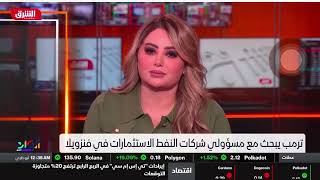
Trump seeks $100bn for Venezuela oil, but Exxon boss says country 'uninvestable'
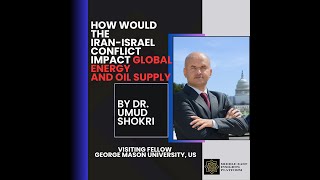
Episode 52: Impact of Iran Israel Conflict on Global Oil and Energy Supply | Dr. Umud Shokri

Yemen’s Houthi rebels attack a US-owned ship in the Gulf of Aden with bomb-carrying drone