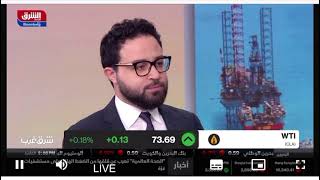
Episode 52: Impact of Iran Israel Conflict on Global Oil and Energy Supply | Dr. Umud Shokri
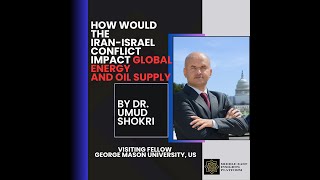
This content was created by Omid Shokri. This content was uploaded by Omid Shokri. This is a YouTube interview (Episode 52: "Impact of Iran Israel Conflict on Global Oil and Energy Supply") published 2024-11-12, featuring host Dr. Shobha Chaudhry and guest Dr. Omid Shokri, a senior energy strategist and foreign policy advisor. The multi-speaker conversation examines how the Iran–Israel tensions could affect global oil and gas markets, covering Iran's energy profile and domestic crises (gasoline/electricity shortages), sanctions and sanction‑bypass tactics, LNG and Russian/EU gas dynamics, U.S. election (Trump) effects on energy diplomacy, GCC relations with Iran and China, Eastern Mediterranean gas (Gaza/Tamar/Leviathan), Central Asia/Caspian energy geopolitics, COP29 in Baku, clean‑energy investment trends, and worst‑case supply‑shock scenarios (including potential price spikes). The transcript is an interview-style discussion with back-and-forth questions and answers.
Chapters
Good morning, good afternoon, good evening, good night to everyone who is watching it right now. My name is Dr. Shobha Chaudhry and this is Middle East Insights platform. And today we are going to discuss about how would the Iran-Israel conflict impact global energy and oil supply. And for that, because we always keep on thinking that oil, the prices went up, the prices went down, what country is producing oil, which country in Middle East is doing liquid liquefied natural gas US is producing, what is the Shell Rock oil, Russia is sending oil to India via the Rondry State, what are the implications of it. So we, for that, to understand all of it, we have the expert, the complete expert who will guide it. His name is Dr. Omid Shokri, who is a seasoned energy strategist and senior foreign policy advisor with over 20 years of experience. Holding a PhD in International Relations. His expertise encompasses global energy dynamics, which is very, very difficult to understand. It's macroeconomics, microeconomics, all of it. Flags, charts, pie charts, God knows what. And climate change, clean energy technology, energy security, and geopolitics. Currently, he's a senior visiting fellow at George Mason University. You'll have to Google where it is, but it's very famous. He contributes to academic discourses while analyzing oil and gas market trends. And advising on sustainable energy policies. He is very, very ubiquitous on most of the TV channels on this. Dr. Shokri has authored key works including US Energy Diplomacy in the Caspian Sea Basin— you should know where Caspian Sea is— and collaborates with governments, academia, industry to tackle how the various global energy challenges emerge. Wen'enf, as a Black Sea State Department Title 8 Fellow, he focuses on Azerbaijan's energy transition and COP 29 Climate Change preparations. This is in news right now. Very important. Providing insights into diversifying energy sources and reducing carbon emissions while engaging with stakeholders to promote sustainable practices and drive sustainable climate action. So thank you so much, sir, for the privilege of your time and being present here with us today. My first question to you, sir, is that How would you— before we go into the global energy and oil supply market, do you think that there's a conflict going on between Iran and Israel?
Thanks for having me. We have started our conversation since the middle of the summer to set up this conversation. And thanks again. I'm trying to elaborate what's going on in the global energy market, especially after that Trump election. Trump election, you know, it has directly affected global energy market and also the role of energy in India And the US under Trump administration, we can focus on later. And referring to your question, as you know, by the last month, Israel targeted some Iran military bases. And before that, also Iran sent about 200 missiles to Israel. And after that, the revolution, I mean, the tension between Iran and Israel look back at least 4 decades before. And but this is the first time that we have seen that some military confrontation between them. They're using the high technology, I mean, missile drones and something like that to target their military base. And until today, there is no direct affected and targeted energy infrastructure, no matter Iran targeted Israel energy infrastructure or Israel targeted Iran energy infrastructure. I think I have to mention about the current geopolitical Iran energy infrastructure, Iran energy profile, and Iran energy crisis as well. Iran holds the world's second natural gas reserve, world's first oil reserve. And but at the same time, Iran at present, by the— today is 8th November— Iran faced a huge natural gas crisis. Why? Because of a lack of financial capability. And the technology. Before Iran, energy sector after revolution many times faced sanctions by the US, EU, and the UN because of Iran nuclear program, because of Iran foreign policy, human rights issue, and proxy group as well, and also Iranian missile and drone. Last summer, Iran faced the electricity crisis as well. At present, we have the gasoline crisis. And also, if according to Iran, former Minister of Petroleum, Javad Ahmadi, under Raisi administration, If Iran will not be able to extract about $160 billion investment by the coming 8 years, Iran will be able to be net importer of oil as well. As I mentioned, because of high domestic consumption and lack of financial capability, and also majority of Iranian oil fields are in the second half of their production. And without using the high technology, Iran oil production capacity annually decrease about 8 or 10%.
This is, this is amazing because one thing which— and I'm coming from a point of ignorance, sir— how is Iran able to sustain itself amid so many sanctions, uh, which are of US, European Union, so many sanctions, uh, it is still able to have the so-called Axis of Resistance? How is it able to sustain itself?
Yeah, this is a great question. We have to mention about the strategy applied by the Islamic Republic after the revolution. Iranian policy priority is that deterrence, not economy or progress. Iran is more focused on the deterrence and using multiply methods to bypass the sanctions, especially from the oil sector. As you know, when by 2018, with Trump administration withdraw from the JCPOA, Iran has one option to sell oil to China in gray market. And using, as by 2019, Javad Zarif, former foreign minister, said that in Council of Foreign Relations in New York, Iran holds the PhD in bypassing the sanctions. And by the Ukraine crisis, Iran's trying to teach some bypass sanctions method to Russia as well, you know. And Iran will be able to use all domestic energy resource to create interdependency in its relation with the neighbors and their major power. But as I mentioned, Whereas their priority is that they are trying to sell some oil to use it for military and own domestic military expenditure and supporting proxy groups. And if you can see, we have the high inflation rate, high unemployment rate, and you can see some collapse of the major industry in Iran. They are just trying to use the oil exporting to feeding their proxy groups and its own domestic, I mean, military domestic assets.
Yeah. So now I'll ask you the most interesting question. How was your perception of the election results?
You know, which is very— the victory of Trump, I think, globally affected all countries, no matter developed, underdeveloped, and poor, you know, because US is a superpower. And due to high financial capability, technology, and also It will be the role model for the democracy for the whole country. But after the election of Trump and when he came to power, by 2 months later, we can see all dynamics in US foreign policy and domestic policy change. And we are entering the new era of global politics as well because of Trump's personal attitude, because of his supporters. And as you know, because of Elon Musk, I mean, because of high technology companies supporting him, you know, we are entering the new sphere of the great competition between China and the US over energy transition, high technology, and also electric vehicle, lithium-based batteries. And also, as you know, Trump administration and Biden administration tried to create a balance in US relations with China to change trade volume in favor of the US. But please keep it in note and keep in mind, and we can discuss it 4 years later. You can see trade volume during Trump's second presidency will be in favor of China. And it is expected that we have huge crisis, no matter political and economic, between US and China. But at the same time, you know, during the presidential campaign, Trump many times said if every NATO member wants to protect by the NATO has to pay more, you know, has to pay 2% of the GDP for the expenditure by the NATO. And if any European country wants to pay, has not expected to protect, but NATO's in the favor. I mean, such when this country faced such US, I mean, Russia-Ukraine crisis as well. As I mentioned, we are entering a new chapter of international politics. And I have some, I think we have major challenge, as I mentioned, Chinese growing roles in the global energy market. And as you know, we have the BRICS, we have Shanghai Cooperation Organization as well, and all countries trying to decrease the role of the dollar in international trading. And Trump will be faced a huge challenge regarding that. As you know, Trump many times said that the US trying to invite all companies to invest in the US, to produce in the US, to create a job and to affect the US economy as well, and trying to impose tariff for Chinese, for the European goods and for the other countries from Turkey, from Turkey, as in aluminum as well. But if you want to produce such things in your own country, you are not able to supply cheap workforce, cheap energies such as China will be able to provide for all domestic countries. And when you want to more invest in your own country, it means that high inflation rate. And I think for the next presidential election, if Petrobras will not be able to If the war is sabotaging the US economy and increasing the GDP, we can see Democrats maybe come back again.
Yes, if they do not solve the leadership crisis that they have. But I think that if Iran just gives a deal of creating a Trump Tower to Trump or having Jared Kushner make a real estate investment in Iran, all the entire, you know, hullabaloo between Iran and US will be solved. By real estate.
Yeah, you know, but the main problem in US-Iran relations post-revolution is the Iranian ideology, exporting revolution to other countries, supporting the proxy group. And, you know, after that, the First and Second Gulf War, Iran presence in the region increased by the vacuum created by the US, you know, and it's directly affected the EU, China, India, and the US national security. And Iran ballistic capability is not in favor of the regional and international community as well. And without solving this problem, we cannot optimistic about that maybe improvement relation between Iran and the US under Trump administration. The main problem is Iranian ideology. I mean, IRGC and Islamic Republic ideology. And without ideology, I think you will not be able to tell your people that you are changing your ideology and they take their I feel to ask you why we spent for decades and a billion dollars for spreading our revolution.
Yeah, that is, you know, like both on one hand, Trump, not predictable at all. On the other hand, Khamenei, he has to retire. He's retiring for the past so many years and he's making it difficult for themselves. But do you agree, sir, that the Gulf countries, for example, like Saudi and Iran, China was able to mediate a peace negotiation between them, between Iran and those, or between Iran and Saudi Arabia. Yeah. And, uh, yeah. And, uh, Saudi Arabia also came in defense of, you know, any kind of attack on Iran's sovereignty and airspace. The GCC countries came ahead and said that they are not going to use— let U.S. use their airspace. Now there is this, uh, perspective in the Gulf countries because Saudi is looking for Saudi Vision 2030. UAE is looking for the 2035 vision. They are much more involved into not just oil, but into financial tech, artificial intelligence, tourism, medical interventions, climate change, and all of that. So one thing, do you think that the Gulf countries are now realizing that, look, Israel at one hand is always dependent on US for so much of support, but Iran has been able to exist, so let us go closer to Iran. Is that one kind of hypothesis that is going on in their mind?
That's a great point. You know, let me get, get back to 2019 when Houthis targeted Aramco oil facility, and in the 24 hours Saudi Arabia lost 50% of oil export capacity and it shocked the global energy market. But they will be able to recover their production capacity and we can see that stabilizing the market. That time Saudi Arabia many times asked the Trump administration to provide the anti-missile system. And after that, when they see that after Biden administration came to power, Saudi Arabia saw that they need to boost its relations with China. Why China importing cheap oil from Iran. Also China exporting technology to all GCC countries. At present, China playing an important role in GCC climate change and also energy transition process. Last July, I made a presentation regarding that the US-China competition over clean energy technology in the GCC in Cambridge University, and I have a chance to find more information regarding that the Chinese present in the regional clean energy competition as well. You know, I think the best policy for the GCC countries is the multi-vertical policy because they are neighbor with Iran and they have a good relation with the West. We have a good relation with Russia. After that, you know, starting of the Ukraine war, Russia, Russia using UAE and especially Abu Dhabi and all facility for money laundering and something like that, or also using Turkey as well, you know. And also because if you have neighbor to Iran and because you are not change your geography, you have to accept your geopolitics of your location, your country location. You have to know that in every country, every condition, Iran will be able to use proxy group to target your energy infrastructure and something like. And without establishing the region, you cannot reach your long-term plans. 2030 is Saudi Arabia or 2035 are UAE and other countries as well, because Qatar himself has own plan, Kuwait, Bahrain, and Iraq as well. Without the peace and stability in the region, and every country knows that they will not be able to reach their long-term progress, development, and plan. And they need to solve the problem with Iran as well. And also without the helping that there's some major power, especially China, it is very hard for the GCC countries to solve the problem with Iran. Iran also under sanctions. And it needs more technology and financial capability and also needs to sell a lot of oil to China to solve some economic challenge in their own territory. And I think if we'll be able to solve the problem, it is very reality. Saudi Arabia is Sunni, Iran is Shia. They're trying to, you know, right-hand the Islamic world and the left-hand Islamic world. They believe that we are the leader of the Sunni world and the Shia world. You know, It's the reality and they're trying to just manage some short-term problem. And as I mentioned, also Saudi Arabia has a ballistic missile program imported from China. China made a huge investment, as you know, by I think September 2022, CNN released a report regarding that the Chinese major investment in the ballistic missile program and drone as well, drone industry as well in China. And but there is good relation between bin Salman and the Trump administration. We can see boost between relation with Saudi Arabia and all GCC with the US because, because of Republican good relations with the GCC countries. Altogether, without the peace and stability, it is very— both Iran and GCC to reach their long-term plan. And as you know, tourism industry needs stability in the region, high-tech, all other industry. Without the peace and stability, you cannot find the investor in your own project. And as you know, all energy project, clean energy project is a long-term project. Long-term project needs stability, needs good regulation, needs all conditions to every foreign country, foreign company to come your project. Saudi has a chance to invite all foreign countries, no matter from the Russia, I mean from the China, from the West, UAE and all other GCC. Iran understands she will not be able. But if we can see new deal, but this is very hard and I'm not optimistic about that, reaching new deal between the Trump administration and Iran over coming years. Maybe we can see the maximum pressure policy too applied by the Trump administration, tighten and impose new sanctions and maybe asking China to import less oil from Iran. And that time Iran economy situation will be more challenging by the coming years. Oh, I can hear you.
The points that you made, sir, these are very, very True, because, um, uh, there is a difference between, you know, like the GCC countries also have to take the aspirations of their own citizens into account while making any kind of economic diplomatic policy. The, uh, most of the oil fields which are there in Saudi Arabia, for example, even though Saudi Arabia is maximum Sunni, the regions of the oil fields are around the Shiite camps, like Shias live there more. And what I was looking at just right now, 10 minutes back, a test missile has been fired from Shahrood in Iran, and it looks like a huge ballistic missile as civilians have been able to see it from several kilometers away. People are thinking that it is an intercontinental ballistic missile test done by Iran just 10 minutes back. I was just looking at that. Or a satellite launch just 10 minutes back. 10 minutes back. And yeah, so this is also like, you know, performance of war, you know, like threat. This instead of direct conflict, indirect threats, like, you know, for the domestic consumption. But do you think like Trump, if he like after he comes into office on 20th of January and there's no civil war and everything goes according to the process, because both Democrats and Republicans have to accept the democratic process. Um, uh, US is going to put a lot of pressure on, um, uh, other countries for buying their own liquefied natural gas. Uh, do you think that is going to create any kind of, uh, change in the status quo of global oil supply?
Yeah, it's a great question. You know, let me give you information about that. The Iranian last missile testing after that election, it is a very meaningful the time of the testing this missile. And Iran wants to show that in the missiles technology, yes, has an upper hand. That is a reality. We can see all GCC and Turkey as well. We can see Iran missile system, missile industry, missile and also drone industry. I think in some cases has upper hand and it helped Iran to change the, I mean, balance of power in favor of itself. But we can discuss later. But to bring your question, last September I had a chance to meet and interview with the CEO of an LNG trading company from the EU. The main office in Switzerland and the second office in Singapore in East Asia. They said that we are waiting for the US presidential election and maybe after that, the end of the Ukraine war, we are interested interested to reimport gas and LNG from Russia, you know.
Oh, wow. Okay.
Yeah. Yeah.
Okay.
Private sector, and I'm sure that also government from the EU are interested to reimport cheap gas and LNG from Russia. And yes, Biden strongly supporting energy sector and very interested to export more oil and gas from the US. And, you know, last January, Biden administration posed some LNG project. When Biden took to office, the first decision I think will be made by the Trump administration to decline the post and trying to more invest in the LNG sector because EU wants, the US wants to supporting EU energy, EU and other allies such as India as well. Because during the last administration, we can see 20-year deal between the US and India for importing LNG from the US and Trump is strongly supporting more LNG and oil export from the US. And we can see more LNG. But if Russia can again get back to the market due to Russia's cheap oil and gas, it is very US to compete, to be more competitive in the European energy market. But it's such an inferior of the consumer side, no matter India or European country. If you have more options on the table, you can you can have upper hand, you can get the good with the high quality with the reasonable price as well and reasonable deal, I mean, contract condition as well.
Yeah, that is, let's see how the US pressure unfolds. Rupee has hit the lowest today and most of the Middle East currencies, West Asia currencies are also, you know, hitting low. Yeah, yeah, yeah. One thing which I always, you know, like, this is my hypothesis. Yes. But do you think that the discovery of or the exploration of natural gas reserves around Gaza played a pivotal role in this conflict?
Like, you know— Please go ahead. Please go ahead.
Please go ahead. Because we don't know what is exactly the quantity or the sustainability of the gas reserves that were found near Gaza. Uh, we still don't know that what is the plan, uh, eventual plan, because, um, North Gaza, uh, Israel has stated that the citizens of North Gaza do not have the right to return anymore.
Yeah.
And the extermination continues. Um, do you think that all of that is somewhere— because Israel does not produce oil So is it— is natural gas also playing a strong role along with the arms industry and the deep state and the military intelligence? Is natural gas also playing a very strong role in continuation of the conflict?
Thanks for your great question. You know, every country, no matter poor, underdeveloped, or developed, needs three major factors: energy, security, and food. No matter from the West, from the East, every country, every society needs food, energy security as well. And we can see one of the main reasons in any conflict around the world, no matter from the existence of the humanity, is energy, finding that, looking for the, finding the goods, foods, and a place for the living. And referring to Gaza and Hamas, Hamas-Israel war, by the last October, October 2023. I am not— I can't say that the main reason was the natural gas resource. But yes, it will be one of them. If we can outline 1 to 10, yes, natural gas reserve in Gaza may be one of the 10 major factors played in this conflict. But who started the war? Hamas.
Hamas. Hamas. In fact, Hamas officials have been asked to leave Qatar today. Yeah, in a very strong statement, Qatar actually said that Hamas officials who have their, not exactly headquarters, but their offices in Qatar, and for a very long time they have, you know, been in Qatar, they have been asked to leave the country.
Yeah, yeah. As you mentioned, Israel importing oil majority from Azerbaijan and Iran is not satisfied with Azerbaijan, why you're supplying more oil to Israel. But it is a reality. Every country is trying to focus on national interest and national security. And due to good relations with Israel and Azerbaijan, Azerbaijan continue to pumping oil from the BTC and Baku-Tbilisi pipeline to Israel as well. And at present, Israel producing natural gas from the Tamar and Leviathan oil field and also another field shared by Lebanon. And the last year they signed a deal and Hezbollah agreed with the deal. But as I mentioned, if Hamas did not start the war, it is the best chance for the Hamas, maybe Israel, the Palestinian people to use, and Israel and the Palestinian people to use mutually from this natural resource. But unfortunately, after they started the war, Palestinian people were not able to use this natural resource. And in the border generation, all conflict between the East Mediterranean countries— Cyprus, Turkey, Greece, Egypt, and other countries— just roots in energy and huge natural gas reserves as well.
Yeah, that is very— the geopolitics is twisting and turning after 6th of November completely. Yes, a lot. Every day there is a certain kind of dramatic geopolitical movement happening in some country, like yesterday night Amsterdam, so the Netherlands and everything. So my question is basically from one of our volunteers, Gorang, has asked this question. After many, many years, after, you know, I don't know, since once upon a time. For the first time, Biden administration took cognizance of the Central Asian countries. Europe started adopting the Look East policy suddenly. The 5 prominent Central Asian countries who were always considered as the backyard of Russia, they started having their own, you know, like identity. They had their identity, it's just the West did not recognize it. But now they are much more, they're given the space to interact more. But at the same time, both Russia and China have their, you know, albatrosses around the neck of the Central Asian countries that continues. So Goran's question is that in this instability that is being being caused right now. How will Central Asian countries, uh, uh, can they play any kind of geopolitical role like in peace negotiation or energy policy, energy diplomacy, or sustainable energy security?
Yeah, as you mentioned, I, during my PhD, I focused on the Central Asia and the Caspian Sea, have a chance visit there. And after that, after getting peace, just focus again on clean energy and energy transition in Central Asia and Southern Caucasus and Caspian Sea as well. Repeating your question, European country, European country, yes, is interested to more engage in the energy equation and all geopolitics in the region, but they have not sufficient financial capability. Oh, wow. Yeah, yeah, yeah. Because their priority importing natural gas and LNG from Africa. Why? Because Africa is near for them and it is very beneficial for them to invest in the African energy infrastructure to import from them. Last month I made a presentation at George Mason University and I have a colleague from Italy and we discussed about the European engagement in the region regarding Central Asia and they said that We have no sufficient financial capability and the best choice for us as a European to invest in some African countries such as Algeria and Libya as well.
Yeah, yeah, yeah. But the problem with Libya is the black market.
Yeah, yeah, yeah, yeah.
I know, I know. Yeah. And the corruption, nepotism, all of that because of state failure.
The majority of oil countries, the corruption is a major problem. Yeah. Unfortunately, regarding the Central Asia, Central Asia country, especially Kazakhstan under Nazarbayev and after, after him, Jamat Tokayev, using multi-vertical foreign policy, has a good relation with Russia because Russia sees this region as the backyard of Moscow. And it's a reality and you cannot change its geography. They need financial capability, technology. It comes just from China. If you just follow the leaders visiting from the region, from Kazakhstan, Turkmenistan, Uzbekistan, Kyrgyzstan, Tajikistan and other regions, Armenia and Georgia, you can see a lot of visit by Putin and Xi Jinping, I mean Chinese president, and you cannot see Obama, Biden, and Trump administration. You know? Yeah, yeah, yeah. It shows that Central Asia in general is not major foreign policy priority for the US. And if you follow, I think you followed the presidential campaign, and no Harris or no Trump They just focus on China, North Korea, Russia, and Iraq.
That's it. I doubt how many know where exactly Central Asia is on the map. Yeah.
That is there. Central Asia knows that they have to focus on keeping relation with the US. I mean, with China, because money comes from China and also from Moscow. I mean, they have a secure— they will rely on Russia as a security and a very good relied on China as technology and money. And also, you know that we have East Turkestan, I mean Xinjiang in Chinese, and Chinese is very worried about the extremist comes maybe from Central Asia due to using the investment in these countries to control its own territory. Regarding that, as you know, East Turkestan and Central Asia sharing the common language, common religion, and also ethnicity. China is using investment in this country to also keep its own national security from the possible threat maybe comes from this region, from the fundamentalism and something like that. And I'm not optimistic about that, the US more engagement in the Central Asia, Caspian Sea. And also, as you know, we are ongoing peace process between Armenia and Azerbaijan. And anytime US supporting Armenia instead of Azerbaijan, due to Armenian lobby in Washington and Trump administration, I think it is better to create a balance in its relations with Azerbaijan and Armenia. And if I want to summary, we can see during the next decade China growing roles in Central Asia and Russia also trying to, after that end of the possible war, trying to boost its relations as well with these countries because knows that East-West corridor, Middle Corridor, passing through these roads and hope every country will be able to keep influence in this region, will be able to control global trade as well.
Yeah, that is, that is very true. And also, you know, the entire media blackout also about Armenia-Azerbaijan clashes, that reminds me of Ibrahim Raisi. Yeah, he was trying very hard for making the diplomatic negotiations between Iran and Azerbaijan better. What do you think with Peshkaza and with the new Iranian, you know, president, how are the conditions between Iran and Azerbaijan as of now?
You know, we have the upcoming COP29 by the next week in Baku. And last week, Iranian media announced that Masoud Pezeshkhan, as Iranian new elected president, will be visited Baku to attend in this COP29 to make a remark. But yesterday they canceled this visit and just his vice president and head of the production— protection organization, environment protection organization, visited in Baku. It showed that we have a crisis ongoing between Iran Armenian and Azerbaijani relation. During the First Karabakh War by 1990 and the Second Karabakh War 1991, Azerbaijan expected Iran to be, to keep, I mean, did not supporting Armenia. And but many videos shows that during the Second Karabakh War, Russia, Russia tracks passing Iranian territory and giving some weapons to the Armenia. And due to After that, invading of some Iranian citizens to Azerbaijan embassy in Tehran and killing one guard, we have seen huge crisis between both relations. Raisi administration wants to solve this problem with the Azerbaijan government. But as I mentioned, the best chance for Iran to show its good relation with Azerbaijan was the COP29. Yeah. They preferred to did not attend in it. And it shows that we can see current tension will be continue by the coming years. But if, as I mentioned, we cannot change the geography and both countries have to learn to live together with peace and stability because peace and stability needs for them because of Azerbaijan long-term development plan and also trying to open the Zangezur corridor, trying to play an important and to China supporting Middle Korea as well, and also trying to more exporting natural gas to EU. And also last month, two countries from the Black Sea and Georgia and Azerbaijan signed a deal to Azerbaijan export 1 gigabyte electricity generated from the renewable energy to European countries and has a plan to double it by the next decade. And without stability, as I mentioned, like all energy project is a long-term project and needs stability and security. No country will be able to attract financial capability from the investor, foreign investors, especially from the West, without showing that we have their own regulation and stability and security and your investment will be guaranteed by the government.
Now, that is, that is, that's the same case with India, for example, India. So what European Union did was it put a lot of sanctions on Russia and then Russia is exporting the oil to India. India is refining it and then selling it it as a laundry state to Europe. And that is the mechanics of the national interest of Indian diplomacy. And it is correct in a way, like why shouldn't it? But then it also shows the hypocrisy of, you know—
You know, during the Ukraine war, some countries imported Russian oil and combined with their own oil and exporting The name of the GCC countries also using this oil production and raffinate it. As you mentioned, India do that. And also Turkey imported cheap oil from Russia and using it and produce some production and re-export to the European country. And during the last 3 years, GCC, India and Turkey get more from this sanctioning US by sanctioning Russia by the EU. If everyone is using the sanction method, you can find some method to bypass the sanction, you know.
Yeah, that is, you know, like I hear the— I don't know, the oil prices here are huge. They are so expensive. No matter how much we are trying to get leverage, the price of petrol and diesel is skyrocketing. And in Saudi Arabia, it is like 1 liter petrol for like 2 riyals. 1.5 riyals, 2.3 riyals.
Yeah, yeah, very cheap.
Very cheap. And I'm like, okay, I get it. So that is one point. But being an oil and energy security along with, you know, clean energy security analyst, sir, how many years will you give for the oil industry?
It's a very good question. Thanks for asking. I think as I working in energy about more than two decades, in energy transition process also we need fossil fuel, oil, gas, LNG, and coal. But what kind of fossil fuel? Low carbon, low carbon oil and gas. And at least for the next two decades, we can see oil play an important role in global energy security, in energy security energy transition also, we need all kinds of fossil fuels, but what kind? Low carbon.
So say by 2060, when are the oil wells going to dry up? For—
Yeah, yeah. As I mentioned, majority of oil countries, majority of oil fields in the countries are in the second half of their production capacity. Let me give you an example because I visited Azerbaijan. Azerbaijan at present exports, produces about 600,000 barrels per day. But 2045 production capacity decrease and reach by 100,000 barrels per day. Why? Because of the, as I mentioned, majority of oil fields are in the second field. And if you want to more invest using high technology, extracting oil will not be economically and you cannot use it for export because of high cost.
Yes, that is because this entire oil economy and this rentier economy, you know, that these states have, the GCC countries have, that is also not sustainable. They have started charging the citizens electricity bills, water bills. It's getting difficult.
Yeah, yeah. It's a reality. All countries need more investment in clean energy and renewable energy and in general energy transition. Matters— solar, wind, hydrogen, electric vehicle, nuclear energy, and something like that. And as I mentioned, by 2023 and 2024, investment around the world in the renewable energy about $107 trillion and investment in fossil fuel about just $1 or $2 trillion. And it is expected according to International Energy Agency and Dr. Fatih Duroglu, the managing director of International Energy Agency, we can see by the next decade the increasing gap between investment in the energy transition and investment in the fossil fuel as well. And majority comes, technology comes from East Asia, comes from Russia. And I think India also trying to boost its relation with China. And also India has a good relation with Saudi Arabia regarding the fossil fuel and also military and also clean energy.
Yeah.
And Saudi Arabia has a plan to import some technology and inviting businessmen from the India private sector to invest in all projects under cover of the 2030 Vision.
Yeah, yeah. They have, in terms of their financial laws, they have made it easier for businessmen of any origin and most of the businessmen from any diaspora that lives there to come and invest in Saudi. Saudi. Yes, which is a very smart move, and it is a 2030 vision. No matter how much everyone keeps on trying to, you know, like, use the propaganda of human rights and NEOM and all of that, but if you look at it as a financial interest for a country to have more entrepreneur diaspora, they have made it very easier to register a company in Saudi and all of it. And a lot of them are prospering. The only problem is the nationality issue.
You know, financial capability and money, just trying to find a place to get more financial, to be beneficial. They did not care about the human rights or something like that. It's a reality.
Yeah, that is the—
If you can see, major investment comes from China to African countries, to other countries that are trying to more focus on the human rights. But China is just focused on getting more money from the investing in this country, giving them debt and using debt diplomacy to boost its influence in their countries' foreign and domestic policy. Or when the country will not able to get back the money getting from China, China using their infrastructure for 100 years. And, you know, just money, the matter of money.
Yes, it's all cash diplomacy. And, you know, like, I don't know, crypto diplomacy right now. I don't know the right term for it.
You know, in the next decade, we can a new kind of diplomacy, cash diplomacy, AI diplomacy, you know. Yeah, diplomacy. Yeah, you know. Yeah. As you know, Elon Musk, as I say, of the Tesla, the company made major investment in AI, supporting strongly Trump. And I think under Trump administration, we can see some new revolution in the US as well. It's the best chance for the, you know, the majority of Indian comes to the US to work on the IT sector and cybersecurity, something like that. I think job opportunity for the next generation of India to come to China— I'm sorry, to the US. Yeah, yeah, to work in the new project.
Like, all said and done, what he basically said was that, you know, he welcomes all the legal immigrants. Yeah, the legal migrants. He's against the illegal ones. No country is sustainable— an open border policy is not sustainable for any country. So he's not wrong in saying that, but he might be stricter on the H-1B visa of Indians and many other aspects. So these are different kinds of—
you know, some project directly related to national security, every country is very careful about that, issuing the visa or something like that, because of security, just prefer to use their own domestic educated generation rather than import— I mean, getting visa for the other foreign countries, especially India, you know. But as I mentioned during that, from second era, we can see more investment in the AI and especially chip industry. During the Biden administration, US invest about $40 billion in the Arizona state for construction the chip industry, you know.
Wow.
Just, yeah, yeah, you can find it. And I saw the documentary last week As you know, about 80% of the chips produced by Taiwan, and every moment we need China to use to has a military operation against Taiwan due to the US trying to more invest in own chip industry. And I think Trump administration following the Biden administration policy to more invest in chip industry. And it is a very good opportunity for the educated generation, especially from the computer electronics and something like Yeah.
So my volunteer, Shrishti Bera, is asking this question that can US, in some dystopian context, if Trump, after Trump gets the Oval Office on January 20th, 2025, can Trump administration encourage Israel to attack the Iranian oil fields? Or will Trump be a bit like, no, no, this is going to impact the dollar and no war?
Let me give you more information. No matter Democrat or Republican was in the White House, US and EU in general are strongly supporting the Israeli national security, national interests, and Israeli security in general. Trump administration many times claimed that if came to power in the 24 hours, we'd be able to stop current war in that between Russia and Ukraine. US under Trump's second presidency continues supporting Israel's security and national interest. But I'm not sure that US really under Trump wants to see new war between Iran and Israel. Trump administration trying to withdraw all troops from Syria and Iraq. And if any war between Israel and Iran, the US has to send more military to the region, and it's not in favor of the US economy. And also the Trump campaign as well. I'm seeing Trump administration strongly did not support such scenario. And as he many times claimed that he's trying to end the current war, not to start a new war.
Yeah. And also how much of American taxpayers' money will go into this when they're not able to put food on unstable. Yes. He cannot take it for granted and he knows that.
Yeah, yeah. He's a businessman, you know. When you want to more investment in all sectors, especially in high technology, all clean energy, all fossil fuel as well, you need financial capability. If you want to supporting war or starting new war from your ally or your neighbor, you have to spend money comes from the taxpayer. But you can use it for economic improvement, for the new, for the education, for the, for the more improvement in current infrastructure, no matter the role, ports, airport and something like that, or investing in AI. AI needs more financial capability. Private sector, yes, private sector has a good potential, but the government, I mean federal government under Trump has to supporting all for innovation and investment opportunity. And if you want to supporting the war or starting a war or supporting the new, starting new war, you cannot invest in the own domestic project. And it is against your campaign. And you have to see that the new administration by 2028 comes from the Democrats.
Yeah, and this is like very, you know, nostalgic of the American Depression of 1930.
Yes.
And the government had to actually follow the Keynesian model of infusing finance from their side into the market.
Yes.
They have to do that first because that is the condition of the—
They have a bad experience. And I am sure that as Trump with business route and economic route, I think in the worst scenario, they may be supporting the new war in the worst scenario, but they trying to have a good relation with Israel, boost its relationship with Israel. But I am not optimistic about that. Starting new war and supporting new war. But if Iran targeted Israel, yes, in such case, in the worst scenario, as I mentioned, we can see maybe new war. But in such a war, we have not— we cannot see any winner. All country will be loser because present 20% of oil comes from the Strait of Hormuz. And if a new war between Iran and Israel, Iran using proxy group to targeting energy infrastructure in the Caspian in the GCC, and we can see major shocks imposed to the energy market, and we can see oil prices reach at least $200 per barrel per day. And it's very dangerous for the global economy, no matter China, India, or US as well. And every leader is aware of such a worst scenario.
Yeah. And the last question, sir, today is by Shristi. She's asking that, say, 50 years from from now, when you and I are dead, happily. So when, what do you think Iran will be exporting if not oil? Nuclear fuel, ballistic missiles?
You know, Iran did not join the FATF.
Yeah.
Yeah. Iran will be able to supply more drone and missile to Russia because Russia trying to get Iran money. I mean, gold, something like that. But if you want to send and export to the other markets, no matter from Africa, from the other countries, they have to use those FATF. You have to be— at present, Iran is the blacklist of the FATF, needs to go back to the gray list and to go back to the normal list. It takes at least 3 years. Iran will not be able to export to other countries, just will be able to supply more to Russia. Russia. And such case, Iran will not be expected to end up the war, have a good relation with Ukraine and European countries, and getting more financial capability after possibility between Iran and the Trump administration. If Iran continue to supplying the weapon to Russia, it's not expected to have a good relation with Ukraine, European countries, and the US. And it's a reality. And I think Iran under new administration, Massoud Pesechian, knows that. That has to solve the problem with the US. Without solving the problem from the energy security perspective, due to my educational and research background, we can see upcoming winter, winter 2025 and 2026, Iran face the world's worst energy crisis. As I mentioned, at present we have the natural gas crisis, gasoline crisis, electricity outage, and every year Iran has annual between 5% and 7% more need for domestic demand, but we're not able to create a balance between the production and the consumption. And at present, Iran is exporting natural gas to Turkey and Iraq. The current deal will be ended by 2026, and both sides will not be able to extend this production. Iran is causing us to lose the Turkey energy market as well. Iraq has a good relation with Saudi Arabia and inviting them to invest in renewable energy, also signed a deal with TotalEnergies as well. Iran also losing the Iraqi energy market. In domestic, we have energy crisis. In the international era, losing its share, and it's not in favor of Iran national security.
Yeah, that is, you know, like, that is difficult. And the government, I think the Iranian president is very, as you said, much more aware of these realities. And geographies, as you keep saying, that we all are prisoners of geography. There's a book written on that. So it's a very difficult and interesting time. And every day there is the kind of conflict that continues, you know, the under-the-table conflict that is going on between Iran and Israel and the seven-front war war that Israel talks about. Like today, for example, all the football fans that were brought back from Amsterdam, the cost of sustaining it is also huge for Israel.
Yeah, yeah, that's your point. After that, the end of— it's not going to be perpetual war. And we can see some sign of the ceasefire by the coming years, maybe by the middle of the 2025. But after that, the end of this war, Israel has to spend a lot of for PR and use of public diplomacy. Because Israel, after that they starting the war and in the global media, and we are living in the information technology world and you can see online every moment in the war between Israel and Hamas and also around the world. And we can see online anything. And I think Israel needs more investment in its public diplomacy. And also Israel lobby has to more focus on the PR around the world because of this war.
And yes, and their other massive failure is on their tourism industry.
Yes, yes.
The tourism industry has really taken a hit.
The first industry affected by the instability in the region is for is tourism.
Yeah, there has to be, like, there should be people who should go for tourism in conflict zones, but then they should not opt for an insurance policy. But the point is that it's the tourism is people are scared, you know, like the kind of impression also of public diplomacy of the kind of, you know, even today after what happened in Amsterdam, the kind of backlash that is going on to and fro. So the beauty of that is that there's no one side that is holding power. Yes. Immediately there's the other side that is coming viral that, look, this also happened and that also happened. So, and both can be true at the same time.
Yeah.
So that is the beauty of it, though at the same time, human life is human life. Any kind of violence is obviously unacceptable. It's human, the right to exist. Is the most important. So thank you so much, sir.
I'm just going to outline the last development in the global energy market from the Middle East to Central Asia and the current conflict between Iran and Israel. And that's it.
Yeah. No, if like we have 6 minutes and then you have an interview. So thank you so much. And I'm very privileged because to tell my scholar volunteers that I was asking Sir for an interview for the past, like, you know, so many, you know, like, days. And he was always— because he's so— if you watch international television, you'll always see him there.
Yeah.
So he has a very hectic schedule. So the moment he told me that we are going to do it, I'm like, I was like, yes, we are going to do this. So I was very happy.
We are started our conversation from the mid of May, and you know, during the summer I was in Azerbaijan regarding that the project founded by the Department of State and Middle East Institute, energy transition in Azerbaijan. And it takes 5 months, and after that working out another project. But yeah, because we— I promise you, I just mentioned that I will be able to make the presentation and speak with you by today or another day. And I'm really happy to share my insight with you and your students as well and hope to have more. But I think after that Trump came to power, we can discuss about the global energy market, I think by the March or something like that, because at that time we can see the effect of Trump coming over to US energy security and global energy security as well.
And many, even human security, we will see what impact he Yes, that is, that is, uh, I'm buying a television to watch him. So, but this is going to be, uh, you know, hilarious. But, uh, everyone is saying thank you, sir, for this serious and important session, and it was very interesting. And they're going to, uh, find out what is happening in Azerbaijan, why it is important, uh, who all are coming, who is representing India, how many times Indian diplomatic visits have taken place to Azerbaijan. All of these are very important, and for current for global news.
Yeah, it's the last sentence, you know, during the Second World War and after that war, we have good relation with Armenia and India and Azerbaijan is not— Azerbaijan is interested to have a good relation with India as well. And I think when I was in Azerbaijan, I saw many tourists come from India and they have a very good time in Azerbaijan to visit Azerbaijan historical places. I think India under Modi also needs to revise its relation with Armenia and Azerbaijan and create a balance between them because I think India needs both countries and both countries need India as well. It will be a winning game for both sides.
Yeah.
More from Dr.

Trump seeks $100bn for Venezuela oil, but Exxon boss says country 'uninvestable'

Yemen’s Houthi rebels attack a US-owned ship in the Gulf of Aden with bomb-carrying drone