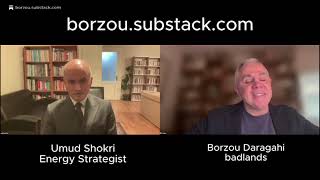
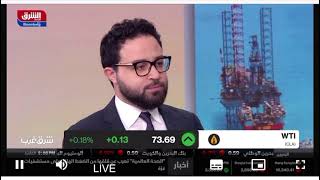
In this Badlands Podcast episode, host Borzu Daragahi interviews energy strategist Dr. Omid Shokri about the recent US‑Israel strike on Iran’s South Pars gas field and the broader geopolitical fallout. Dr. Shokri explains that South Pars, shared by Iran and Qatar, supplies the bulk of Iran’s domestic natural‑gas and electricity but is not a major export source, limiting its immediate impact on global markets. He warns that if Iran retaliates against Gulf energy infrastructure—particularly Israeli offshore gas fields and GCC oil and petrochemical facilities—oil could surge to $150 per barrel and natural‑gas prices could double or triple, triggering high inflation and a possible global recession. The conversation then turns to the psychological dimensions of the Strait of Hormuz, where insurer and ship‑owner risk aversion can choke trade even if the waterway is physically safe, and how Iranian proxy groups could threaten shipping from multiple fronts. Dr. Shokri assesses recovery timelines, offering a best‑case scenario of 2–3 years for market normalization and a worst‑case of decades, citing sanctions, lack of foreign investment, and the need for GCC diversification. He also critiques a U.S. plan to seize Iran’s Khark Island oil terminal, noting its limited market impact but potential psychological shock. Throughout, he stresses that a combination of diplomatic, military, and multilateral security measures is required to reopen the Hormuz corridor and stabilize energy markets.
Chapters
The US and Israel struck Iran's main natural gas refinery at the South Pars field. It was a major escalation of the 2.5-week war. Iran has vowed retaliation against energy infrastructure in the Arabian Peninsula, and perhaps by the time you're watching or listening to this, it may have already struck. Iran has listed a number of sites it intends to target. And oil and gas prices were spiking anyway. Many analysts fear a worldwide recession. I'm Boozoo Derragahi. This is the Badlands Podcast. Please, please subscribe at boozoo.substack.com. And I'm here today with Omid Shokri. He's an energy strategist and senior foreign policy advisor with decades of experience, really valuable experience analyzing global energy markets energy security with a focus on oil and natural gas. Dr. Shokri currently serves as a senior visiting fellow at George Mason University. Welcome, Dr. Shokri.
Thanks for having me on the show. And please go ahead. I'm here to share my knowledge about that, as you mentioned, what's going on in the Iran war and the effect of Iran war and today's attacks on South Pass Field on global energy market and regional dynamic as well.
Great. Well, let me ask you just the first question is, you know, what do you know about the South Pars field? And what, if any, impact will its destruction— or it doesn't look like a total destruction, it looks like it's been disabled. We know these facilities are very sensitive. What will it have? Will it have an— what kind of impact will it have on Iran? And will it have any direct impact on global energy markets?
Yeah, you know, South Pass shared by Iran and Qatar, and Qatar is the world's first LNG producer and using the natural gas from the South Pass to produce LNG and export to the global energy market, especially East Asia, China, Japan, and South Korea as well. And also during that energy crisis and Russia invasion to Ukraine, Qatar will be able to help European energy security. And refer to your question, South Pass field holds 24 phases, and Qatar, 10 years before Iran started investing in this field and produced major natural gas and a little oil from this field. And at present, Iran produces about 70% natural gas, I mean domestic natural gas from this field, and major Iran power plant using natural gas produced in South Pass field to generate electricity and shows that if we have such geopolitical accident or targeted by the other countries, this facility is directly affected Iranian people's, I mean, daily life, shortage of natural gas and also shortage of electricity as well. All shows that Iran, I mean, Islamic Republic after revolution did not, has not a strategic view for energy security, just more focused using natural gas to supply domestic demand. And did not use it, such as Russia, Qatar, and other procedures as a strategic weapon in its foreign policy to generate—
So it didn't export it is what you're saying?
Yeah, yeah, yeah, yeah. Iran holds its second natural gas reserve in the world. But we know that since Ahmadinejad, Iran, during Ahmadinejad, Iran maybe net natural gas imported and imported natural gas by 2011 from Turkmenistan. And after that, especially during that Rouhani era and Raisi Also, the situation in Iran, natural energy security, especially natural gas sector, continues. And due to current situation and due to January protests, all factories are closed. And due to Iran will be able to supply natural gas for just daily life and the resident.
That's it. Yeah. So it won't have much of an impact on the— as I understood it, it won't have much of an impact on the global market. You know, just the attack itself.
Yeah, yeah. Sorry, please go ahead.
Yeah, yeah. And what if Iran follows through on this list of targets? What kind of effect do you think that will have on— and we don't know yet at this point whether— and you know that even if the Iranians have attacked, it's never clear with the Gulf because of the censorship. You know, we don't know what is attacked. So, but if it is attacked, what will be the impact, do you think?
Yeah, you know, if Iran made a decision to retaliate and to target energy infrastructure in GCC and especially Israeli offshore natural gas, Israel holds 3 major natural gas offshore, Tamar, Leviathan, and Karish. If Iran tried to target this infrastructure, especially in the GCC, we can expect that oil price goes about $150 per barrel. And also it is a huge energy crisis in GCC, firstly in Israel, secondly, and in global in in a lot of perspective.
Yeah. In the global markets in general. Yeah, yeah, yeah. So, and what about, if any, secondary effects? For example, how would it, how would you describe, like, you know, I mean, we talk about these numbers, we talk about, we use these terms, these macro and microeconomic terms, but what would it mean to ordinary people, say, in, you know, India or, you know, Latin America or wherever, where is an importer of natural gas?
If such, I mean, retaliation continue from tomorrow, I mean tomorrow, and we can expect a global recession. Why? Because of the importance of the state of Hormuz and also if targeted, I mean, Aramco refinery facility, Aramco, other refinery or petrochemical in Saudi Arabia, in Kuwait, in Emirate, in Qatar, especially in Qatar, we can expect it natural gas price will double or triple, you know. And also, as I mentioned in this previous question, oil price will be went up by at least 150. And you know that after that, the COVID global economy will not be able to handle the oil effect of the COVID affected the global economy. And if we can see such huge shock in the global energy, I mean, energy market, high energy price means high inflation rate. Yeah, no matter you are a developed country, underdeveloped country, poor country, no matter from Africa or the European countries or Latin America or US as well. And high energy prices means high inflation rate. And it means in the— I mean, in the worst case scenario, it means global recession. And I hope that we cannot see such situation.
Yeah, I'll get back to that. The bigger— I wanted to ask you also this plan, this US plan to apparently to hit Kharkiv, Kharkiv Island. This oil is an oil transfer port, I guess you would call it. It's an oil terminal. And could that also have an impact on— because that is more for export-oriented, you know, that is for exports. Could that have an impact on oil markets, do you think, if the US Marines that they're bringing over there try to take this site?
Yeah, if US made a decision to try this strategic island for Iranian energy security, especially as you mentioned, Iran using this facility, this port, to export about 90% of daily oil export, especially to Chinese market. Because as you know, due to maximum pressure campaign, and Iran just will be able to export oil in gray market to the Chinese more than 90%. If we can see such situation and the US troops keep control of this island, yes, US will be able to export oil from this island to what destination it wants. And we cannot see such shortage of oil, but it's a psychological effect of global energy market and we can see such shock and it means that oil price goes up again.
Yeah, the psychological impact is important. And that brings me to Hormuz, you know, Because it's, it's, it is a lot of psychology with Hormuz, even if, you know, even if it's totally safe, if the, if the insurers, if the shipping companies, if Maersk, if the, you know, FLNG, whatever company doesn't feel it's safe enough, they're not going to put their ship through that. What is the minimum? I mean, if you know this, what is a minimum level of security that it would require for ships to begin sailing through there again? What's the minimum would be required?
Yeah, it's a great question, but we need a situation before they start the current war. We have to see such situation in the Strait of Hormuz and in the whole region. I mean, from the Persian Gulf, Sea of Oman, and Bab-el-Mandeb and all transit routes. We have to see such situation. I mean, before they start up the war. If we cannot see such situation in the short term, we can see oil price goes up and down in the coming months, no matter if we can see expected to end the war soon, because psychological effect play an important role in shaping dynamic in the regional and global energy market.
Yeah, the psychological effect is important. So without an inch— is what you're saying is that without an assurance from the Iranian side that they are going to be granted safe passage, there is no safe passage, they won't go like if they don't have the okay, if they don't have the all clear from the, you know, Iranian side, they won't go?
Could you please repeat?
If the ships don't get the okay from the Iranian side, you can go, they won't go.
Yes, because as I mentioned, they can try to use this transit route, but anytime they will be targeted from the proxy group as well. Iranian proxy group as well. We have to solve all problem. Firstly, IRGC and Iranian regime as well, they create instability, the mark in their region and also Iranian proxy group. And there is no need to keeping the Strait. You can target ships from the other province in Iran, no matter from the, you know, central province of Iran. Because—
So taking, you know, putting a whole bunch of Marines on one island, for example, on one of those little islands or even on Hormuz, you know, on the coast there, it's not enough for the ships.
Yes, because Iran will be able to target this strait from Yemen, from Ansarullah, and also from their own province in the center of Iran.
Yeah, sure. Yeah, yeah. It doesn't take a lot. Yeah. To do that. And so, yes, exactly. Interesting. So, yes. And so the, the Marine plan is not going to work so well. Now, even if some analysts speak of a delay, delay to normalcy. So they're saying that even if the war ends tomorrow, it could take months for supply chains to be restored, the oil wells to be repressurized, the ones that have been closed down, for refineries to be repaired and so on. How long, in your assessment of watching this, is the minimum time before things will get back to normal at this point?
Yeah, it's a great question. And I think I'm very pessimistic about that, the effect of the war, post-war.
And give me the good side. Give me the positive. What's the best-case scenario?
Yeah, please go ahead.
No, I said, what's the best-case scenario?
Yeah, I see. Yeah, 2 or 3 years in the best— 2 or 3 years. Yeah, yeah, yeah. Because, you know, if— we can discuss about the assault parts. If a refinery targeted, you know, Iran has no high technology to recover production and refinery capacity in the short term. Or GCC will be able to attract for financial capability and technology. But if Iran is trying to use proxy to target its facility again, wow, we can expect that you're not going to get the financing. Yes, yes.
Yeah, I see what you're saying.
You know, I'm not an expert in the— I mean, something like that, especially GCC and Dubai as well. I think oil and commodity market in the GCC needs more invest for PR to find foreign financial capability after the end of the war, no matter from the energy sector, all sectors, you know, especially AI sector as well. You know, Iran also targeted AI center in Dubai and Abu Dhabi as well. And we have to expect to see the effect of the war in all sectors, especially in the GCC.
So what's your worst-case scenario if it's, if it's, if it goes, if it, if it's, if things don't go well, if the war doesn't end in a clean way, you said 2 or 3 years is a best-case scenario. What's the worst-case scenario?
Most case, at least decades.
Wow.
Yeah, because, you know, more money comes from the exporting hydrocarbon for all GCC countries and for Iran as well. If targeted the infrastructure, Iran has no money to invest in this situation and no foreign country, no foreign company will be able to invest in Iran due to sanction and, you know, the old problem in Iran foreign policy and Iranian economic system as well. And If Iran using such situation to targeting the GCC energy infrastructure, I think especially Saudi Arabia has own long-term plan, 2030 vision to decrease dependency of hydrocarbon economy. But we can see such situation and targeting energy infrastructure will be face this long-term plan with the huge and serious challenge.
I just want to get back to one question. You know, have you ever been to, have you ever been through the Strait of Hormuz yourself? Have you ever visited there?
No, no, unfortunately.
Based on your understanding of the geography, do you think that there is a military, non-diplomatic solution to opening it? Is it possible to open it militarily without regime change or diplomacy?
No, no, no, no, no, no. We need all means. Diplomacy, military as well. Because as you mentioned about the Persian Gulf and something like that, if US will be able with helping the NATO and other countries to escort, I mean to secure oil and gas transit from the Strait of Hormuz and maybe to weaken Iranian regime in Tehran, but proxy group will be able to create instability in the region, especially in the Strait of Hormuz. We need all these. We need global endeavour to solve this instability in the region.
Yeah, yeah, that's— that I, I thought that as well. Um, Dr. Shokri, thank you so much. It's been such a pleasure. I really appreciate it. Um, uh, it's been really nice to talk to you. Thank you for taking the time on short notice. Again, this is the Badlands Podcast. I'm Borzu Daragahi. Please subscribe, borzu.substack.com. Uh, have a great day.