The segment opens with Swedish climate activist Greta Thunberg reflecting on President Donald Trump’s extreme rhetoric, suggesting it may inadvertently raise public awareness about the climate crisis. The hosts then cite the International Energy Agency’s (IEA) latest World Energy Outlook, which warns that global carbon emissions will keep rising by about 100 million tonnes per year until 2040 because oil demand is projected to increase by roughly one million barrels per day each year until 2025, then level off. This trajectory would cause the world to miss the Paris Agreement goal of limiting warming to 1.5 °C, and it would also forfeit economic opportunities tied to renewable energy. The discussion notes China’s near‑monopoly in electric‑bus manufacturing and its potential to fill the gap left by lagging Western policies. The IEA’s carbon‑neutrality timelines—by 2045 for rich nations and five years later for developing ones—are presented as unlikely under current U.S. policy. Energy analyst Omid Shokri joins the studio, reiterating the IEA’s call for governments and the private sector to accelerate renewable deployment and cut fossil‑fuel use. He highlights examples of countries making progress: Germany and the broader EU targeting 35 % renewable electricity by 2035; the UAE and Kuwait pursuing solar; Iran’s solar potential hampered by sanctions; and Turkey’s ambitious wind‑offshore and solar projects aiming for 30 % renewable electricity by 2030, which could reduce dependence on Russian energy and position Turkey as an electricity exporter. Shokri also points to China and India increasing LNG and natural‑gas use as a cleaner bridge fuel, while noting the U.S. under Trump is withdrawing from climate agreements. The segment concludes with a reminder that coordinated action from governments and businesses is essential to mitigate climate change.
Chapters
As she prepares to sail back to Europe after more than a month in the U.S., Swedish climate activist Greta Thunberg says she knows the shadow of President Donald Trump loomed over her trip.
He's so extreme and he says so extreme things, so I think people wakes— people wake up by that in a way. Now people must finally wake up because it feels like if we just continue like now, nothing is going to happen. So I— so maybe he is helping in a way.
The Trump administration's coal, oil, and gas-friendly policies go against Thunberg's main message, which is the world needs to move away from dirty sources of energy to reverse its —climate crisis. According to the International Energy Agency's latest World Energy Outlook, nations are not cutting back fast enough. It says carbon emissions are expected to grow 100 million tons a year until 2040. That's because demand for oil is projected to rise by a million barrels a day every year until 2025 before slowing to about 100,000 barrels. This means the world will likely miss the Paris climate target of keeping the global temperature increase below 1.5 degrees Celsius. That limit is meant to prevent catastrophic global heating. But experts say governments that fail to embrace the shift toward renewable energy also run the risk of missing out on economic opportunities.
Well, interestingly, I think that China will step into that void economically. And China right now, just for example, produces 99% of the electric buses in the world. At home, more than 400,000 electric buses. They'll take advantage of that and sell buses around the world.
To reach the Paris Accords goals, the International Energy Agency says rich nations need to be carbon neutral by 2045 and developing countries 5 years later. But analysts say that's unlikely. If big polluters like the US continue to hold out. Paulo Montesillo, TRT World.
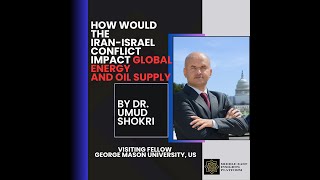
Well, for more, joining us in the studio is Omid Shokri. He's a Washington-based energy and security analyst and a visiting research scholar at George Mason University. Welcome to the studio. I know we've spoken to you in Washington before, but let's talk more about the IEA's warning. So it says that the climate crisis will only get worse unless governments and business take drastic action. Do you think governments and the corporate sector will listen to the IEA's call?
Thanks for having me. As you mentioned, IEA, International Energy Agency, mainly publishing a report and ask all countries and private sector to do— to do instruction for decreasing green gas emission and ask all countries to take more, take more concentration on using renewable energy and decreasing fossil fuel in their energy basket. At present, we can see some countries such Germany and UAE, they pay more attention to using renewable energy and trying to decrease carbon emission. But as you see, the US under Trump administration trying to withdraw all agreement regarding climate change and some other major energy consumers such as China and India did not pay attention on EIA instruction regarding to decreasing green gas emission. But I think if the countries and international energy— international oil companies and international companies wants to get more benefit from the renewable, they have to take note to AOA instruction regarding climate change threat.
Now, the IEA report also says that the world's reliance on fossil fuels— Sure. —such as coal and oil— Right. —remains stubbornly high. It says that renewable resources aren't keeping up with the energy demand. Energy demand. What needs to be done to correct this imbalance?
You know, some major countries such as China and India trying to pay attention to more using LNG and natural gas. You know, natural gas and LNG is cleaner than oil and also coal. If some major oil— major energy consumers try to use and increase share of clean energy such as LNG and natural gas, we can see some decrease of green gas emission in the future. And at the same time, as you mentioned in the first question, all countries try to increase share of renewables such as wind and solar in their energy mix and generating electricity.
Okay. Now, we know that some countries are better than others when it comes to addressing the climate crisis. Which countries, in your opinion, are doing the most to move away from fossil fuels?
Yeah, as I mentioned in my first— your first question, at present, we have Germany and Europe has a great potential in wind energy and trying to also increase the share of renewable energy by 2025. 2035 by 35%. And we have some countries in Asia such as UAE and Kuwait, and also Iran has a good potential in solar and renewable, but Iran under sanction is unable to attract foreign technology and foreign investment because Iran need foreign technology and foreign investment to use its potential to generate more electricity from renewable and decrease dependency of oil and natural gas. And let me give you more information about Turkey. We are living in Turkey. Turkey has a good potential in solar and in the wind. Turkey under AKP administration tried to pay more attention in using domestic energy resource such as renewable, and Turkey has a good potential in solar and wind, especially in, uh, uh, Ege Province. And during 2 years ago, Turkey signed an agreement with the Germans to build some facility to generate electricity from the offshore wind. And also Turkey is trying to more invest in solar in some region that has a good potential to renewable. Turkey is trying to increase renewable by renewable share to generating electricity by 2030, I think 30%. And Turkey also had a good potential to produce more electricity from renewable and It helps Turkey to decrease dependency of Russia and other foreign countries, and it gives an opportunity to Turkey to export electricity generated from renewable and to be energy hub in the future.
All right, Omid Shokri, thank you for joining us. We'll see if the IEA's message actually resonates with the business sector and with countries around the world.
As I mentioned, all countries and all business, especially private sector, needs to cooperate to decrease the effect of climate change, because climate change treat all human being and living the Earth. That's right.
Okay, Omid Shokri, thank you again for coming into the studio for us.