After Iran-linked attacks on two oil tankers in the Gulf of Oman, oil prices spiked 4-5% but fell 20% over the past month. Energy analyst Omid Shokri-Khalasar explains that supply and demand matter more than geopolitical drama: the IEA expects only modest demand growth while oversupply and weak Chinese and Indian economies push prices down.
Chapters
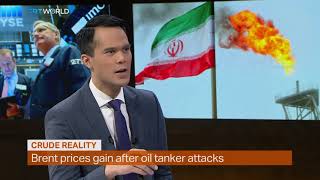
Fires that had raged on two oil tankers after an attack in the Gulf of Oman on Thursday have now been extinguished. But the war of words between Iran and the US is just heating up. Washington says this video proves the Iranian military used mines to attack the vessels.
This is only the latest in a series of attacks instigated by the Islamic Republic of Iran and its surrogates against American and allied interests.— and they should be understood in the context of 40 years of unprovoked aggression against freedom-loving nations.
Iran rejects the US accusations, calling them unfounded and Iranophobic.
Iran categorically rejects the US's unfounded claim with regard to the June 13th oil tanker incidents and condemns it in the strongest possible terms.
Despite the rising tensions, oil prices retreated on Friday, after surging by as much as 4% on Thursday.
The financial markets are monitoring the conflicts in the Middle East, but to be honest, this conflict between the US and Iran has been going on since 1979. As long as there is no military conflict, which would be disastrous, I don't think the oil price will increase dramatically. It's clear that Iran doesn't have an interest in getting into war.
Oil prices have fallen 20% over the past month on concerns global energy demand is slowing down. US oil imports from OPEC countries have fallen to their lowest in 30 years. The International Energy Agency is revising its forecast for growth in oil demand by 100,000 barrels per day for this year. And it says oil sales could fall further if US President Donald Trump follows through on more tariffs on China. With so many contrasting influences on oil demand, energy markets are expected to stay volatile. Shoaib Hassan, TRT World.
For more on this, let's bring in Omid Shokri-Khalasar in Washington. He's an energy and security analyst and a visiting research scholar at George Mason University. Welcome to Money Talks, Omid. As we heard, there are conflicting reports about who and what caused these latest attacks on those oil tankers. What do you think happened?
Thanks for having me. And I, for the first time, I have to say that the only measure which is important in oil price and in international oil market is only just supply and demand. In a situation we have a balance in supply and demand, we cannot see— expect to increase oil price in this situation. Yesterday's tanker attacks have a direct effect on oil price, and we see that the 4 or 5% increase in oil price. And in the, in this situation, if such tanker attacks or the risk of these attacks continue in coming months, we can be expected to increase in oil price. And also we can see the reduced oil flow from Strait of Hormuz. And in this situation is not in favor of oil procedure and major oil consumers such as China, India, Japan, and US allies who import oil from the region and the oil that transit from Strait of Hormuz.
Yes. Now, oil tanker owners are warning of the risks that rising tensions in this region might have on the oil industry. What are the risks to the oil industry, do you think?
As earlier today, Dr. Fatih Birol, Executive Director of International Energy Agency, said that Yesterday's attack to tanker— oil tankers increased the concern of energy security and also in global energy market and also reduce flow of crude oil from Strait of Hormuz. If the tanker attacks continue and insurance companies who insure tanker attacks will be increase the rate of increasing insurance for tanker— tankers. And I think if we can mentioned about this situation by US operation called Desert Storm. That time, US Navy supported and escorted tankers to keep their safety in the Strait of Hormuz. And if the tanker attacks continue, I think US Navy trying to use according to Carter Doctrine to escort and guard tankers who carrying oil from Strait of Hormuz for keeping security of supply for US allies in the region.
OK. Now separately, the International Energy Agency says that demand for oil will actually decrease as supplies dramatically increase. Do you think this might put further pressure on oil prices?
Yes, sure. As I mentioned in the first question, the only major factor in oil price is just supply and demand. At present, we have oversupply, and due to low economic growth in some major energy consumers such as China and India, the demand for oil is decreasing, and if we have increase in supply and decrease in demand, we can see the oil price going down in coming months.
Okay, Omid Shokri, Kalesar, in Washington. We will have to leave it there, but thank you so much again for your time.