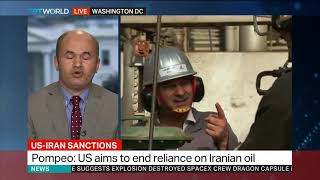
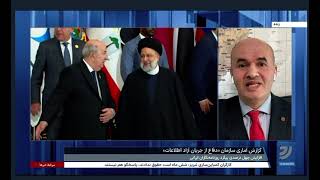
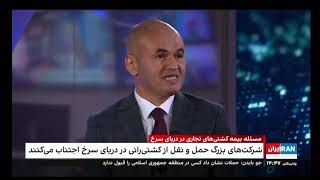
In a live interview, Omicron Shokri, a visiting research scholar at George Mason University, discusses the United States' decision to revoke oil-import waivers for Iran and its ramifications for five major oil‑importing countries—Turkey, China, India, Japan, and South Korea. He outlines the short‑, mid‑ and long‑term prospects for each nation to replace Iranian crude, noting Japan’s immediate cessation, South Korea’s technical shift toward U.S. oil, and the challenges faced by Turkey, India, and China in finding alternatives. Shokri explains how the Trump administration intends to use U.S. energy exports as a geopolitical tool to deepen trade with allies and China. He also assesses Iran’s limited options, emphasizing the need for diplomatic engagement and regional energy cooperation to sustain its market share, particularly with Turkey and India. The conversation concludes with a brief note on Iran’s willingness to work with partner countries to seek solutions.
Omid Shokri is a visiting research scholar at George Mason University. He joins us live now from Washington. Thanks again for your time. Now, 5 countries that are impacted by this waiver, namely Turkey, China, India, Japan, and South Korea— are they likely to even risk continuing importing oil from Iran, or will they actually find alternative sources?
Thanks for having me. As you mentioned, and in your question. Major countries affected by U.S. decision made today will be China, India, Turkey, South Korea, and Japan. I think at long and midterm and short term, it will be hard for— mainly for Turkey, for India, and China to find an alternative for Iranian oil. But at present, Japan decrease and drop to zero import oil from Iran, and South Korea last month will be the One of the major importers of U.S. oil, beside China and Canada. At present, a refinery from South Korea trying to make some change, technical change, to adapt for oil imported from the U.S. And I think in the near future they have no challenge with importing oil from Iran, and they will continue to more import LNG and oil from U.S. And Trump administration trying to use energy export to to overcome, to deepen trade volume with his major allies such as Japan and South Korea, and also trying to use energy export to deepen trade volume with China. And in this regard, we have only Turkey and India. India is trying to import more oil from Russia, Saudi Arabia, and Iraq. At present, Saudi Arabia plays major and key energy diplomacy in India energy market and India infrastructure, and made huge investment in energy infrastructure in India. And I think India will more import oil from Saudi Arabia and Iraq and try to decrease and maybe drop oil import from Iran. We have Turkey, and Turkey is interested to import energy and continue its relation from Iran, because Turkey import also natural gas from Iran. And Turkey is a major importer of natural gas from Iran. And— but I think it is possible for Turkey to find alternatives. The diversification of energy resources is a key pillar of Turkey energy policy, and Turkey could play a good— Turkey is a good player in regional energy market and planning to be energy hub in the long term. And I think it will be Turkey to find the alternative for Iran oil in the midterm. And also Turkey will be able to import more oil from Iraq and also from Russia to overcome the shortage of Iranian oil. Turkey energy market as well.
So, Mr. Khalilzad, just very quickly, we've got reaction from Iran. They're saying they'll work with partner countries to find a solution. What are some of those possible solutions?
I think at present Iran no major option on the table, and Iran tried to solve its problem with the US, and, and I think it was trying to prepare Iran to come to negotiation and come to table to solve the problem. It is better for Iran to have good foreign policy and energy policy in the region and try to solve the problem with neighbors and also with the West, especially with the U.S., to attract financial resources and financial capability and financial resources from the foreign country to produce more oil and gas and to try to keep its share and maybe increase its share in the regional markets, such as Turkey and India, as well. Omid Shokri. And it's better for Iran to solve the problem and Thank you.
Sorry for cutting you off there, but thanks so much for your time. Omid Shokri calls live to us there from Washington.