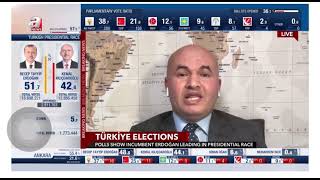
In this interview, Omid Shokri discusses Turkey’s extensive energy investments under President Recep Tayyip Erdoğan and their strategic importance for the country’s future, both domestically and geopolitically. He outlines the rapid expansion of renewable capacity, the launch of the Akkuyu nuclear plant, the development of the Sakarya gas field, new Black Sea oil discoveries, the rollout of a hydrogen energy strategy, and the introduction of Turkey’s first electric vehicle. Shokri emphasizes Turkey’s ambition to become a regional energy hub and a transition centre, targeting a 30% renewable share by 2030 and a 20% reduction in greenhouse‑gas emissions in line with the Paris Agreement. He notes that achieving these goals requires substantial financing and advanced technology, which Turkey seeks from private investors and international partners such as China, Russia, and Western nations. The conversation also touches on how energy policy intertwines with foreign policy and will be a pivotal issue in upcoming presidential elections, regardless of which party holds power, as energy security and climate commitments shape Turkey’s relations with neighbours, Europe, Central Asia, and the Middle East.
Chapters
Omid, thank you for joining us. I just lost my notes. You're in Washington, I think, at the moment. Omid, among the many great achievements of the Turkish President Recep Tayyip Erdoğan over the last 20 years has been in the energy sector. And even in just the last few weeks, we've had many steps forward with regard to solar power, to nuclear energy, and new gas deposits both being brought online and new deposits and oil deposits being found in the Black Sea. What, in your perspective, is the most important aspects of this new infrastructure that's being brought online?
Yes, thanks for having me. When Josykent Development came to power 2 decades ago, mainly focused on the role of energy in boosting its relation with the neighbor and trying to play an important role in regional energy security as well. As you know, Turkey located in the region that mostly 70% of oil and natural gas reserves located in Turkey, trying to supply more energy from the region and also trying to be energy center, energy transition center, and the international long-term energy hub as well. Replying your question, yes, we can see that Turkey under Recep Tayyip Erdoğan made huge investment in energy infrastructure. We can see that the share of renewable energy increasing Turkey energy mix as well, and also Turkey has a plan to increase the share of renewable energy by 30% by 2030 as well. And also by the last January, Turkey released its hydrogen energy strategy and trying to use the hydrogen to decrease the share of the fossil fuel in Turkey energy security as well. And also we have seen that Turkey's first electric vehicle came to the road by the last months. And also Turkey is also trying to use nuclear energy, I mean, active nuclear power plant as well. And also the main development in energy infrastructure during the last, I mean, 4 or 5 decades is bringing natural gas from the Sakarya gas field under, just again, development administration and also discovery of oil in Gabar Mountain in Turkey as well. This is all together shows that just again, development administration more focused on using the domestic energy resource and also trying to play an important role in regional and mainly European energy security as well. And then next administration, no matter who came to, who will become the power, trying to continue that same energy policy. And also I think Turkey energy policy under new administration needs revision. Turkey has more focus on energy transition and also As we know, Turkey, according to the Paris Agreement, has to decrease 20% of the greenhouse emissions by 2030. It needs high financial capability and high technology. And new administration has to attract many financial capability and technology from the private and from the state-owned company, I mean, from China, from Russia, from the West as well. And during the next decade, Turkey's energy, Turkey's Turkey's role in global energy security and mainly from the security perspective will be both. And as I mentioned, no matter who came to the power, energy will play an important role in Turkey foreign policy in next decade. And the Turkey new administration has to more focus, as I mentioned, energy transition, more using domestic resource, and also try to more focus on the decrease of greenhouse emission according to Paris Agreement and Glasgow Summit, because Turkey maybe face the effect of the climate change change as other neighbors face the same challenge. Yes, energy will be play an important role in presidential election campaign as well and will be the key of the, one of the Turkey's new foreign policy under new administration regarding the relation with the neighbor, Central Asia, Middle East, Europe as well, and also with the West as well.
You made a very important point there, Omid Shokri, that the ongoing policy of the that the new administration, whether it's under President Recep Tayyip Erdoğan or another, needs to continue. Now, we've seen in the last 10 to 15 years the great investment, and both in terms of physical infrastructure as well as the hopes of the Turkish nation for the creation of energy hubs. Now, part of this relies on having good relations with other countries, be it whether it's Israel or Egypt or more importantly perhaps today Russia, both in terms with Russia in terms of the TANAP pipeline and the supply of natural gas to Europe through Türkiye as well as the commissioning of the AKKÜ plant which is being built alongside Russia. So are there any concerns leading into the future that if there is a change in leadership in Türkiye that all this might be for nothing? Or is there the belief that Türkiye can drive forward with great energy into the future?
Yes, this is a great question. Thanks for asking me the same question. You know, as I mentioned, no matter who comes to power, I mean, more than 1 or 2 hours later or 2 weeks later,