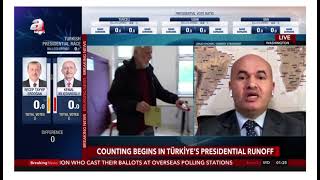
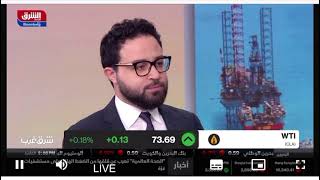
In a live interview from Washington, D.C., energy strategist Omir Shokri discusses Turkey’s evolving energy landscape under President Erdogan and the broader implications of the 2023 election. He outlines how energy has become a lever in Turkish foreign policy, emphasizing the country’s push for energy independence through projects such as Black Sea gas extraction, Europe’s largest solar power plant, and a newly announced deep‑water oil reserve in the Gabar Mountains. Shokri highlights Turkey’s ambitious renewable targets (30% increase in solar and wind by 2030), the rollout of the domestic electric‑vehicle brand Togg, a newly released hydrogen strategy, and plans for a second nuclear plant. He argues that Turkey’s geographic position makes it a natural candidate for an energy hub, but achieving this status will require massive investment in infrastructure, storage, market liberalisation, and technology transfer. The interview also stresses the political dimension: regardless of the election outcome, continued leadership support is crucial for sustaining foreign‑policy‑aligned energy projects and for counter‑balancing regional competition from the U.S., EU, and neighboring states.
Chapters
Joining me live from Washington, D.C. is Omid Shokri. He's an energy strategist. Good to see you, Omid.
Thanks for having me.
Now, Turkey is on its way to becoming an energy independent nation thanks to its efforts of President Erdogan. How important do you think it is for Turkey to reduce its external dependence for energy?
Yes, as you mentioned, when Çaşıkhan Development came to Turkey, tried to more focused on the energy as a leverage in foreign policy. And during the last two decades, energy plays an important role in Turkish relations with the neighbors, and mainly with Central Asia, Caspian Sea, and Arab countries as well. And before Erdoğan came to power, Turkey mainly imported oil and gas from the other countries. And during this period, Turkey also continued the same policy. But at the same time, Turkey, under And Erdoğan made a huge investment in energy infrastructure, in renewable energy as well. And also, as you are aware, last month Turkey will be able to bring natural gas from the Black Sea. Referring to your question, every country wants to be more sufficient, more, more, and also import oil and gas from the reliable resource. In this regard, Turkey has a very good step toward becoming energy independent, but in And during the new administration, no matter who came to power, the new administration has to revise Turkish energy policy and also revise foreign policy to gain better benefit from the new energy geopolitics, mainly after the COVID and after the Russia invasion of Ukraine. And Turkey, new administration has to support Turkish energy companies to going out to invest in the countries, neighbors, energy infrastructure, mainly invest in the new oil and gas field. And it is very crucial for the Turkish energy investment, I mean, private investment, to take a share and stake in the new oil and gas field around the world, mainly Central Asia, Caspian Sea, and also in the GCC countries as well. If Erdoğan is elected, I think that he will continue its current energy policy. And as I mentioned, it is better for the new administration, maybe Erdoğan as well, to revise energy policy and more focus on energy transition and also more focus on renewable energy, hydrogen, nuclear energy, and also electric vehicle as well. I am very optimistic about the future of Turkish energy sector because, as I mentioned, with the revision of the energy policy and foreign policy, Turkey has a very good location, mainly from the geopolitical perspective and from the new energy geopolitical, as I mentioned, after COVID pandemic and after the Russian invasion of Ukraine and energy crisis to play an important energy from the global perspective and also from the regional perspective as well.
Now, Turkey also recently launched Europe's largest solar power plant. To what extent do you think this will boost the country's renewable energy production?
Yeah, it's a great question. During the last decade, Turkey increased the share of the renewable energy in electricity generation and has a plan to increase the share of the renewable energy, mainly solar and wind, by 30% by 2030. Turkey has a very good potential from the solar and also from the wind and has also good potential from the private sector to produce wine and solar power plant and mainly solar power plant. As I mentioned in the first question, we have located the new area of energy transition and energy geopolitics and every country like the US and China is trying to more invest in high technology needed in the energy transition process, in the production of the new solar power plant and new batteries and electric vehicle. And Turkey started also investing in the new technology needed in the energy transition process. And as I mentioned, Turkey's new first electric vehicle came to road, Togg. And also Turkey released its hydrogen strategy by the last January. And also Turkey has a plan to construct its second nuclear power plant. Turkey has a good potential to boost its export of high technology in the energy transition, mainly in solar power plants and then also lithium batteries as well. And also in wind sector, Turkey has a good potential to produce more turbines and send it to the neighbor and also to some African countries as well. Turkey has very good R&D companies and also has a very good academia. They will be able to help Turkey to play an important role in global energy transition from the technology perspective.
Now, President Erdogan also recently announced the discovery of an oil reserve in eastern Turkey. What can you tell us about that?
Yes, the last month, Turkey, Erdogan himself announced that Turkey found oil, a huge amount of oil reserve in Gabar Mountain. But the real problem is that it's located in the deep water and it needs high technology and high foreign financial capability. During the new administration, Turkey will be able to attract foreign financial capability and also technology, because without the high technology, it's very hard for every country to bring oil and gas from the deep water. And let me give you an example. Iran has a good reserve in the Caspian Sea in oil and gas, but they're all located in the deep water. And Iran, under sanctions, is unable to sign an agreement with the foreign companies to bring oil and gas from the Caspian Sea. And, but Turkey With the new foreign policy, with the new energy policy, under new leadership, we'll be able to attract foreign financial capability and technology. And it's no matter this oil reserve located in the deepwater, because Turkey imported more than 90% of oil and gas from the foreign countries. Turkey will be able to spend more. I mean, extracting oil and gas from the deepwater, from the economic perspective, is not valuable. But from the strategic, from the energy security perspective, From the supply side, it is very crucial for Turkey to invest in new oil and gas fields. And I see last week Turkey signed a new deal for investing in the second phases of Sakarya gas field and interested to boost the production capacity from the 10 million BCM, 10 million cubic meters, to 25 by the next 3 years. And I think this investment will be continued under new leadership.
Now, President Erdogan has on numerous occasions expressed his willingness to make Turkey an energy hub. In your opinion, what steps need to be taken for this to become a reality?
Yes, as you know, last October, Vladimir Putin, President of Russia, proposed Turkey to be an energy trade center for, firstly, Russian oil and gas, and second, from the other countries. And last week, Fatih Demirci, Minister of Energy and Natural Resources, said that Turkey's integration with Iran, Azerbaijan, and other Central Asia countries, and also GCC, to import oil and gas from this country to trade in Turkey. And this gradually— Turkey became first the trade center, and the second one in the long-term plan for Turkey being an energy hub. Turkey has a good potential because located in energy heartland, and located between energy producer countries and energy consumer countries such as European market. Turkey needs, I think from my perspective, Turkey needs one or two decades more investment in energy infrastructure, liberalization energy market. And also Turkey has to, as I mentioned the second question, has to support its own private energy companies to make investment in other energy, other energy procedure and energy consumer energy infrastructure to play important role in energy supply and energy demand side as well. Briefing your question, Turkey has a good potential to be energy hub, but it needs high— huge investment in energy infrastructure, oil and gas storage capacity, and new, new technology in energy transition from this renewable energy, hydrogen, and electric vehicle. There is a huge progress in this regard in Turkey, but Turkey needs more investment because Turkey wants to be an energy hub. If Turkey wants to stay in this current situation, it's no matter for Turkey. But Turkey wants to be an energy hub in the midterm or long term, need high investment, huge investment from the technology side, from the capital. And also Turkey has to liberalize its energy market for foreign companies as well. And to sum up, Turkey is the best, has a chance to the next decade to play many important role in its own energy security. In the East Mediterranean, Caspian Sea, also Black Sea, and also in the European energy security as well.
Now, how important do you think today's election is for Turkey's ambitions of becoming energy independent?
Yes, no matter who came to power, but I think Erdoğan will be reelected. During new leadership, energy continues to play an important role in Turkish new foreign policy. And as I mentioned, with the new energy policy in the framework of the new foreign policy see Turkey's growing role, which you can see Turkey's growing role in global and regional energy market. And without the supporting of the leadership and without the supporting of the next administration, Turkey energy sector may face serious challenges because every country in the region wants to be energy trade center, energy hub. And, you know, sometimes the U.S. will start supporting Cyprus and also Greece, as well as European countries trying to more invest in some other East Mediterranean countries' energy infrastructure to bring oil and gas from this country without using Turkish territory. But under new leadership, we can see that Turkey is— we can see many progress in Turkey as a new energy hub and energy trade center and also a new dynamics for Turkey to play a more important role in global and regional energy sector from the energy security perspective and from this energy supply as well.