Türkiye Moves Closer to Completing Its First Nuclear Power Plant @trtworld
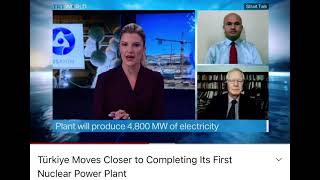
Turkey's Akkuyu nuclear plant, financed and operated by Russia's Rosatom for 25 years, is nearing completion as the country diversifies its energy. The deal carries geopolitical risk amid sanctions and the Ukraine war, though Russia's recent $5 billion payment signals commitment. Nuclear is resurging across Europe and Asia as countries seek low-carbon baseload power.
Chapters
pandemic, energy production wasn't able to rebound quickly as many economies reopened and global travel resumed. And now, with strains on natural gas supplies due to Russia's continued assault on Ukraine, many countries are looking to old sources to make up the shortfall. Could nuclear power help fill that gap? Türkiye recently began construction on the fourth and last reactor at the country's first nuclear power plant. The Akkuyu nuclear plant is being built along Turkey's Mediterranean coast near the city of Mersin. Russian company Rosatom began construction in 2018 and is expected to finish next year to mark the 100th anniversary of Turkey's founding. The $20 billion plant is set to produce 35 billion kilowatt-hours of electricity a year, about 10% of Turkey's total needs. Many countries began shutting down their nuclear power plants after the 2011 Fukushima nuclear disaster. But as energy prices soar, could nuclear power be making a comeback? And to discuss Turkey's first nuclear power plant, joining me now from Istanbul is Omid Shokri. He is a foreign policy analyst and energy strategist. And from Dundee, Scotland, Philip Andrew Spieth. He is a senior principal fellow at the Energy Studies Institute at the National University of Singapore. A warm welcome to you both, and thanks for joining me on Straight Talk. So, Omid, Turkey has launched the construction on the fourth and last reactor of its first nuclear power plant that is being built by Russia in the Mediterranean city of Mersin. How significant is this?
Yes, you know, in the energy transition process, all aspect of energy is needed. And if it's regard Turkey foreign policy and energy policy and Turkey concentration of diversification of energy resource, I think Turkey made a decision to use nuclear energy as well. And in this regard, Turkey signed an agreement with Rosatom. We can see electricity generated from the nuclear power plant, I mean Akkuyu, will be consumed in next year in Turkey. And I promote and I also very satisfied with Turkey's decision to use a nuclear power plant, nuclear energy to generate electricity. Turkey with growing economic needs, all the— all aspect of energy.
So, Philip, how would it contribute to Türkiye's efforts to diversify its energy resources?
Well, this is an important initiative. It does two things. It provides stable baseload for electricity that reduces the country's dependence on coal and gas, and it also is relatively low carbon. So you get two achievements with one installation.
But since the power plant, Philip, will be run by Russia for the first 25 years, how would that reduce Türkiye's energy dependence?
Well, it's in terms of physical energy, it reduces the dependence on Russia because you don't, once it's built, you don't need to buy much fuel. However, I think there's a risk, and as has been identified by Turkish commentators, of a political dependency. And one might say, if there is a crisis at the plant, who is in charge? The Turkish government and regulator, or Rosatom and the Kremlin? But that, of course, is speculation.
Okay. So, Omid, why is Russia financing this project? What's at stake for Moscow to have a fully Russian-built power plant on Turkish soil?
You know, after Russia invasion of Ukraine and the sanction imposed by US and EU, I think Russia is trying to show that it's a reliable supplier of technology in nuclear power plant building. You know, EU is trying to gradually decrease dependency of Russia natural resource, I mean natural gas, coal, and oil. And in this regard, Russia currently wants to show that it's a reliable supplier for technology and financial capability needed for construction nuclear power plant. I have to say that Russia is also constructing nuclear power plant for Egypt, and Russia is trying to, I mean, finance with own domestic finance for such project as well. And Russia just shows that it's a reliable supplier, I mean, in financial capability and technology in construction nuclear power plant for future customers.
Sopha, what's your take on that? I mean, could renewed sanctions on Russia affect the flow of equipment to Akkoye? I mean, could it hamper the financing and procurement of equipment needed for this construction of this power plant?
Yes, I think this is a risk. Although the financing has been secured now through different routes, we do have a potential problem with non-Russian suppliers, Western European suppliers of, shall we say, non-specialist equipment that is needed for the plant.
So some argued, as you said, that its construction, which is based on a build-on-operate model, which makes Russia responsible for all the expenses of its construction, could be at risk because of Russia's ailing economy. But we know that Russia has just recently wired over $5 billion US dollars for the construction of this project. So what are your thoughts on that? I mean, is Russia hinting that despite all the renewed sanctions, it can still deliver on this project?
Well, I think the issue is twofold. One is the financial issue, as you said, has been solved, but they still have contracts for equipment from non-Russian suppliers. And these suppliers may choose not to supply the equipment under the present sanctions.
So moving away from this nuclear power plant, Omid, how has the current energy crisis reignited the nuclear power debate in some European countries, especially in Germany?
Yeah, you know, between EU countries, Germany is most dependent on Russian energy resources, and Russia and Germany will have a very hard winter In the head end, after the energy crisis, some European countries such as Germany, they made a decision to more focus on renewable, I mean, nuclear energy and reopening some nuclear power plants. And I think because the lack of more supply for natural gas and LNG, Germany has no chance to reopen nuclear power plant. Germany and other major energy consumers in the EU. But in the midterm and long term, I think nuclear energy will be more beneficial for every country who wants to focus and concentrate the energy transition process as well.
So Philip, is there a renewed urgency for nuclear energy, especially amid the Ukraine crisis, and could nuclear energy see a comeback?
Well, I think we're at a sort of a potential tipping point here. I mean, the COP meeting in Glasgow, we saw a resurgence of interest in nuclear as a low-carbon energy technology for baseload. And what we've seen in the recent months is that countries are reconsidering their plans to close. And we're looking at Asia, which is where I work. We've seen Korea consider re-embarking on building new nuclear plants. And again, we've seen Japan considering sustaining nuclear power as a core part of its power industry. Southeast Asia. May again carefully review their plans.
So we also know that China is building 52 more nuclear reactors. So Philip, is Türkiye heading in Asia's direction? Can we say that?
In that respect, yes. And these are— Turkey is one of many growing economies that need more energy and more low-carbon energy. Western Europe, energy demand is flat. So the pressure to have nuclear is rather less than in economies where economic growth and energy demand are growing rapidly.
So, Omid, is Europe losing nuclear power just when it really needs it? I mean, has there been a miscalculation on Europe's side when it comes to abandoning nuclear energy so quickly?
Refer to your question, I'm sure that EU decision maker has to refine and redefine the EU energy policy and EU foreign policy as well, and the role of energy in EU foreign policy. The current energy crisis and the Russian invasion of Ukraine shows that energy policy has a lot of challenge and EU needs to redefine its energy policy as well, more focus on domestic potential and also more focus on nuclear, I mean, innovation and also electric vehicle, hydrogen and renewable energy as well.
So how would the, Philip, revival of nuclear energy impact the Western plans to reach zero emissions in the coming decades moving forward?
Well, I think, I mean, to build a large nuclear plant takes a lot of money and a lot of time. And although we are hoping that small modular reactors will reduce the unit cost and the construction time, they are still not coming off the conveyor belt. So yes, we can start to, you know, build out our nuclear power fleets in Europe, but it'll still take a long time to build enough capacity to make a huge dent in the low-carbon trajectory.
So, Omid, would countries from now on try to balance between green and nuclear energy? And how do you think it's going to play out?
Okay, thank you. And, you know, referring to your question, I mentioned in previous question, energy transition is a big priority for every country, no matter consumer or producer. And in this energy transition process, every country have to create a balance between renewable energy, nuclear energy, and all kind of energy without notice or without, I mean, forgetting any one aspect of energy damage the energy transition process and also in every country will be able to successful according Paris Agreement and last year's Scotland, I mean COP26. And with regard to this situation, I mean, every country has to create a balance in using all aspect of energy and nuclear is one of them.
So, Philip, let me repeat this question to you. How do you think these countries would manage to manage between green and nuclear energy? How do you think this transition process would look like?
Well, I think, as I understand it, the European Union, the Commission and Parliament have officially granted nuclear power green status for financing so that they've made that decision. But of course, it's up to each country depending on their own specific resources and political ambitions and political feelings of to what extent they move ahead with nuclear. So I think we will see different countries within Europe moving ahead at a different pace or not moving ahead with nuclear.
All right, gentlemen, unfortunately, we'll have to leave it here. Thank you very much for joining me on Straight Talk.
More from Dr.


Trump seeks $100bn for Venezuela oil, but Exxon boss says country 'uninvestable'
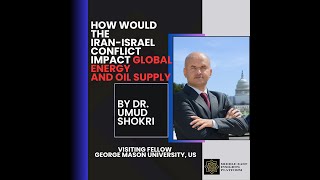
Episode 52: Impact of Iran Israel Conflict on Global Oil and Energy Supply | Dr. Umud Shokri
Yemen’s Houthi rebels attack a US-owned ship in the Gulf of Aden with bomb-carrying drone