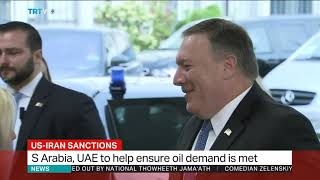
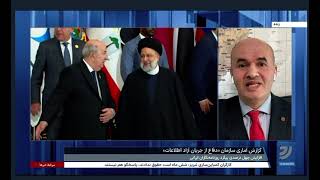
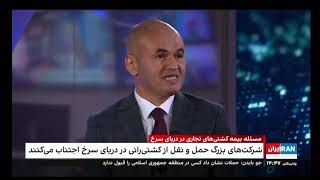
In a live interview from Washington, Omid Shokri Khalasai, a visiting research scholar at George Mason University, discusses the recent U.S. decision to end waivers for Iranian oil importers and its global ramifications. He notes that several countries—including Italy, Greece, Taiwan, China, India, Turkey, and South Korea—have already reduced or halted Iranian oil imports, and suggests that while China, India, and Turkey may find alternative supplies in the mid‑term, they are currently affected by the U.S. move. Khalasai explains that Saudi Arabia, the UAE, the United States, and Russia have agreed to increase production within one to two months to fill the anticipated supply gap, though a short‑term market shock is expected. He outlines the negative impact of renewed U.S. sanctions and the recent Iranian currency float on Iran’s economy, warning of worsening conditions and potential public demonstrations. Regarding oil prices, he predicts a short‑term rise due to the shock, followed by a re‑balancing of the market as OPEC and non‑OPEC producers ramp up output.
Chapters
Head to Omid Shokri Khalasai. He's a visiting research scholar at the George Mason University, joins us now from Washington. Thanks so much for your time. Now, since November, we've seen countries like Italy, Greece, and Taiwan, they're stopping oil imports from Iran. Do you think the other 5 countries affected will follow suit?
Thanks for having me. As you mentioned, these countries drop oil imports from Iran, and during the last 6 6 months, China, India, and Turkey as well decrease oil import from Iran. And South Korea, 2 months dropped to zero oil import from Iran. And I think in midterm and the long, long term, it will be possible for China, India, and Turkey to find alternative for Iranian oil. As you know, energy diversification is a key pillar as Turkey, India, and China energy policy, and it will be not hard for them to find alternative in midterm. But in the short term, maybe These countries have affected by this decision made by US today.
Well, Saudi Arabia has been named as one of the countries expected to fill the supply gap. How soon is that likely to take effect, and will other oil-producing nations follow suit?
As you know, last week Mike Pompeo had a conversation with UAE and Saudi Arabia to produce more oil. And also we have more production from the US and also from Russia. These countries together will be able to produce more in 1 or 2 months later. But I think we have a little shock in oil market. But in coming months, I think these countries will be able to produce more oil and create balance in the world oil market as well.
Well, how is this likely to impact Iran's economy at the moment?
As you know, the US withdrawal from the JCPOA and reimposing sanctions by last November had a very negative effect to Iran economy. And last month we have a float and it also has a very negative effect on the Iran economy. And it's seen during coming months the economic situation will be worse and maybe face Iranian people to have some demonstration against this economic bad condition. And Iran have to find a way to manage this And I think it not be very easy for Iranian government to deal with this situation.
So globally, what are we likely to see in terms of oil prices in the following weeks?
Let me give you more information. You know, energy export and energy policy plays key role in US foreign policy. And as I mentioned in the second question, we maybe face the shock in oil market, but during coming months with more production with OPEC and non-OPEC member, we can see balance in the oil market and oil price. But in coming weeks, maybe we have an increase in oil price.
Omid Shokri, Kalsa, live to us there from Washington. Thank you for your time.