What is the mindset of resilience in dentistry?
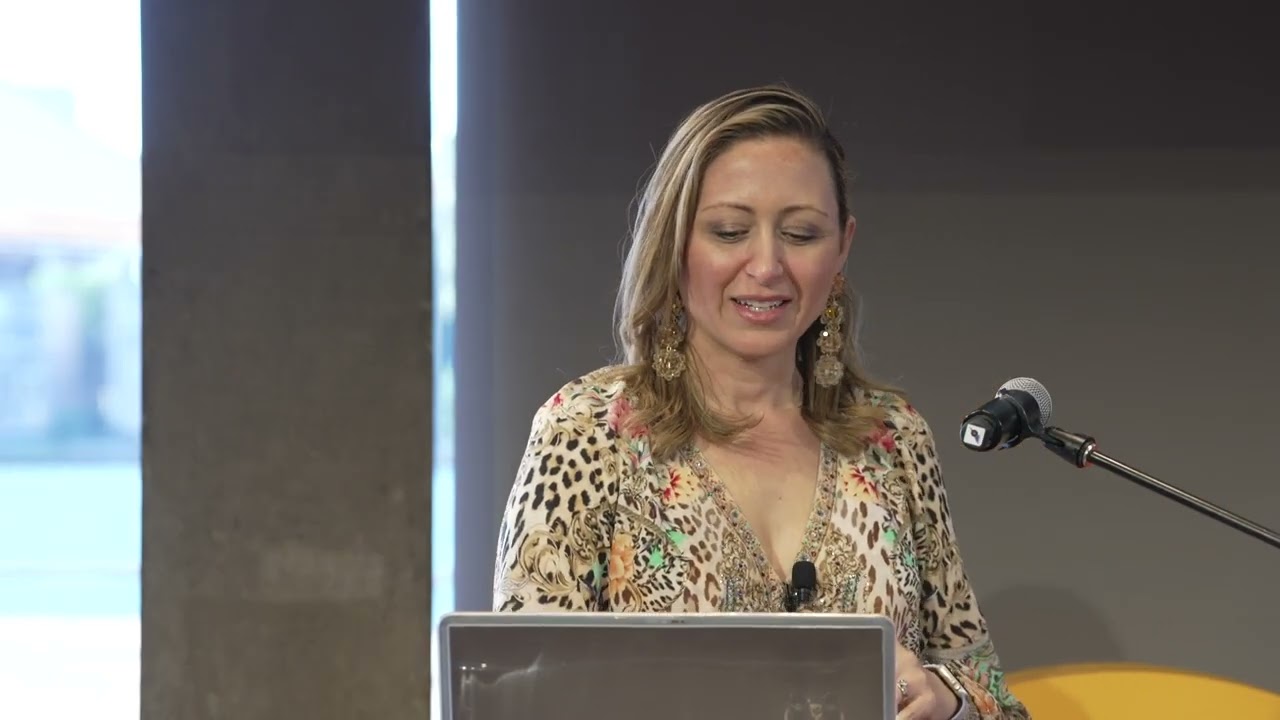
In this 90‑minute workshop, Vicky Samios (a former pharmacist, dentist, multi‑practice owner and coach) shares her personal career narrative and uses it as a springboard to teach dental professionals how to cultivate a resilient, growth‑oriented mindset. She outlines how early life experiences (the first seven years) shape beliefs, explains the difference between growth and fixed mindsets, and connects these concepts to basic neuroscience – describing the roles of the pre‑frontal cortex (the brain’s energy‑draining decision centre), the basal ganglia (habit and non‑conscious processing) and the limbic system (threat‑reward circuitry). Samios links mindset to the law of attraction and Hebb’s law, showing how repeated positive focus rewires neural pathways. She introduces a zone model (comfort, fear, learning, growth) and stresses the importance of attention, neuroplasticity, micro‑breaks, grounding videos, and the “Wheel of Life” balance tool for maintaining mental energy. Accountability and ownership are presented as essential for moving from a victim mentality to forward‑thinking action. The session concludes with a brief pitch for her “Leading Dental Women” coaching program, which offers online modules and one‑on‑one sessions aimed at practice owners and leaders. Throughout, she intersperses personal anecdotes (burnout, IVF, rural practice, family life) and encourages participants to identify three take‑aways.
Chapters
Hi everybody, thank you so much for having me here. So this is the first time I've spoken on any topics that's not online. So if you're in my Women in Dentistry group, the non-AU/New Zealand one, I'm making a presence there, so please join the group, women. Sorry, gents, I love you very much, but it's a women's group. I am beyond blessed to have this opportunity and I want to share with you what it is that I've found my calling in. So, um, it's really important to have your calling. So I have burnt out, uh, in the past. I was a pharmacist before I was a dentist, and I've been a practice owner for at least 12 years, and I've done 3 start-up practices. So opportunities have come, and I'm not one to not follow doors that open. So I suggest that you're aware, you're alert, and that you follow the doors that open for you. Because you will then take that next step to know what your future could be. So I would love for you now to get to know me a little bit. Let me just work this computer and my notes. So you might be a bit curious, so I'm here with the intention to sort of draw your attention to what it is that I do and what is possible for you as well and give you some tools. So just at the end, I'll be asking you what are maybe 3 3 things that you got out of my talk. 'Cause us coaches, we love talking in threes, 'cause your brain loves threes. We can only hold 4 or 5 bits of information at once, so that's why we like threes. It's a good number. So please get comfortable. The lights will go down shortly. They will go back up unless you want them down. I really don't mind, 'cause I am here to relax you as well and to make sure that you have the best conditions around you So keep warm, keep hydrated in order to concentrate. And if you need to hop up and stretch, please do so. It's all about getting your environment right for you. So let's go to the next slide. We're going to reset shortly, so this is where I'm gonna have a video pop up. So may we have the lights down, please? Thank you. Well, that was quick. Ooh, I feel so powerful. And it's so amazing to be in this room with all this talent, which is really great. Pop this in and let me see if I can press play. Oops, let's go back. Let's use your little play thing. There we go. Oh, can someone help me please press play on this YouTube video? 'Cause I know it's there down the bottom. Okay, it's not appearing on my screen. So I'm gonna just go here. All right, are we ready? Breathe in, breathe out. What is it about blue spaces that fills us with awe? Imagine you're a bird flying high above the ocean. What do you see? Can you feel the wind? A gentle breeze. Looking into the distance. Breathe in, breathe out. Notice how the water glistens and the peace that water brings to you? What does it make you want to do? To explore, perhaps? Where does it lead you to? Breathe in, breathe out. Breathe in, breathe out. Amazing. So the aim of that was to get your mind sort of out of where you might have been these last 2 days and kind of escape a little bit. So those places were actually, they're my photos. I love beach fishing, so that's something a lot of you might not know about me. Most of that was at the Central Coast, and then there was the Byron Bay beautiful Elements Resort that I went to, which was lovely. So if you want to share any of these with your team, so what I do in the mornings in our morning huddle Put a little video on, sort of get people to reset because we've all got our problems. We don't want to bring them into work and we want to be fully focused. So if you like, scan the code and there's a whole heap of longer ones. So if you're having a really tiring day or busy day or you're stressed or overwhelmed or between patients, I just put a little video on. So that one, for example, in order to be able to switch tasks and refocus. So it's all about training your brain. So a little bit more about me now. So I've got 3 children— George, Billy and Aliki. Sorry to my husband Peter, he didn't make it to the photos either, Vandana. So I've had a bit of a journey. I started pharmacy in 2000, I finished in 2004 and I graduated then. Then I worked as a hospital pharmacist as well as a community pharmacist. I was a hospital graduate at Westmead. And I burnt out, and I kind of felt uninspired. I felt like it was quite isolating. And then from there, I woke up one day and thought, oh, I'm going to do dentistry, as you do. But I did grow up in the dental industry. My dad was a dental technician. He actually retired this year, so I have been very fortunate to have his guidance throughout my career as well. So then after I graduated from dentistry, I opened up my first practice within 6 months in Burwood. Again, there I was isolated too. Like, I burnt out. I had no work-life balance. I dated. I dated the wrong people. I felt lonely. So you're getting the idea of kind of, look, you just put so much energy into something. And sometimes things might not be the right time for that period in your life. So for me, practice ownership was a challenge. I had no idea what I was getting into, but I've done it twice after that, so obviously I learnt something and I got something out of it. I do enjoy being a practice owner, absolutely. So then I met my husband, my now husband Peter, at that time, and then within 2 weeks of meeting him, I had planned a holiday to go away with my parents, so I'm like, "Bye, Peter." So he basically came on holiday with me on the iPad. Which we were very fortunate about. So, and then after that we made our tree change before we were even engaged or married. So we went to Coonabarren, and this is Coonabarren. It's the astronomy capital of Australia. If you've ever been, it is beautiful, 3,000 people in the town. I really found my sense of community there. So it's really lovely. You can't fly there, the aeroplanes stopped a while ago. And the interesting thing was, in Year 10 I did my work experience experience there, so I had a connection. And that's where I set up our dental practice, and during that time I also tutored at CSU as a clinical tutor, thoroughly enjoyed that, but then the commute was really, really difficult, and then the practice opened. So I was really, really busy there, and I pushed myself as a clinician, and as you know, when you're regional or rural, your skills heighten, and you push yourself to keep to do things, learn things that you may not have done. So your environment really plays a big difference. And with the community, it was amazing. So the other battle I faced while I was there rurally is I went through IVF. So I, I thought it's time to have a family, and it didn't go as planned. But thank goodness, I'm blessed with my 3 children. And just as COVID hit, the offer came for me to sell my practice there. So that brings me back to here. So again, you've got to see the golden opportunity when it appears. I had a 10-year plan, 15-year plan. I was prepared to never sell the practice and just travel back and forth till I retired. So yeah, sometimes you just never know, but you've got to follow it. So I'm back in Sydney now, I've got my practice, and then during that time I had off during COVID I was pregnant with my third, with Aliki, my little girl, and I just knew I had another calling. So that's where coaching came in. So I started looking into that. So here I am today. And I'm gonna talk to you about mindset mastery, about growth and fixed mindset, and you've heard those terms a little bit, and about a bit of neuroscience, not too heavily. I'm not a neuroscientist, but I learn enough to be able to apply it to getting optimal focus and how our brain works, and about accountability, 'cause it's really important to hold yourself accountable. So here we go. So the core of who we are basically is a result of how we grow up. So our first 7 years. So there's a person called Massey. He has come up with a theory that your first 7 years, which is the imprint period, is when you absorb everything. So that's when you even get all your morals, your beliefs, and also that negative sort of self-talk that we call it in coaching, that itty-bitty shitty committee on your shoulder. That one. That's my left side apparently. My right side's my little angels, my cheerleaders, my cheer squad. So we've all got that and we've got that self-talk within us. And we're a sponge at that age, so that's when we absorb everything. So the first 7 years happen to be the most important part in our development of our values and our beliefs. So I imagine it as a golden egg. I don't know, back to Willy Wonka, the golden egg from the goose. That's how I visualize it. I'm a very visual person. So there's those 3 stages. And we also have our conscious mind and our unconscious mind. And there's many different ways— unconscious, non-conscious, it's the same thing. And interestingly, our non-conscious mind is 90% stronger than our conscious mind. This is why it takes a lot of effort to change habits, a lot of effort to kind of get your brain working. We're gonna talk a little bit about the brain and what part of the brain works in order to make changes happens. So learning new things, being here today. So you'll notice there's that critical factor that is the little bodyguard. So I should have put a little picture of bodyguard. That forms about 8 years old, and that bodyguard is there to protect us. So in that non-conscious areas where our fears are as well, we want to feel safe. So we want to know that if we're going to take a risk, that we've got some information behind us and that our body then sort of unconsciously goes, "OK, this risk's worth taking. Let's move forward in that." So at 8 years old, we get that bodyguard, and it's our filter. It filters information from going in and out. So things might bounce off it, and things might go in and become new habits. Yeah, and please feel free to take photos. I'll also make this available on my website, and you can scan it and find where that is as well. So when we get new information, new experiences, we're judging. And it's really important to also know that this critical factor changes, and this is how we develop as we age. So then from there we have our modelling period. So this is where we are in the ages of 8 to 13, where we start modelling behaviours, where we have role models. So it could be people in the media, it could be your family, and it's where we kind of start experimenting a little bit. And from that period there, we then go to our socialization period. And that period's really important as well because it's where we start to challenge things. It's where we start to question and evaluate our values. So isn't it funny how the first 7 years kind of shapes who you are? But you can change, and you can change that critical factor. So let's talk about mindset. So here is something from the Collins Dictionary. "If you refer to someone's mindset"— 'cause I've heard that word a lot lately— "you mean their general attitudes and the way they typically think about things." So your mindset shapes your brain mechanics, and everybody's different. Even if you had a twin, you would have completely different wiring in your brain because you perceive things very differently. So all our senses are perceiving millions of bits of information coming right at us, We then take from that only— so it's too many bits— from that only 134 bits every second, and then we make of it. It goes through our brain processes and we make it an experience. That's why all of us here will take something different from every lecture that we've watched and from the whole experience, the whole weekend. Now I'm going to go through a few little theories or things that will shape to where we get to. The law of attraction. So this is a universal law, and I'll talk about the scientific part of it and the part that's kind of the universal sort of explanation. So this is a law that suggests that like attracts like. So look at us all here. We have something in common. We love learning. We are very motivated people. We are dentists. That's a basic one. But it is— so Dr. Vandana has done an amazing job to attract like-minded people here. So it's all part of that. We have a very similar mindset, though we are at different stages in our lives as well, and we are able to focus on whatever it is that we want to. So just keep that in mind. The more energy you put into something, the more you're going to get out of it. And there is a definite brain-based way of thinking about that too. So as mentioned previously, if we think positively, we're going to attract positive things in our life. So it's not about being positive all the time. We need a balance. You need the positive and the negative. Like, when you have great experiences, there's going to be things that will challenge you, but it's about how you tackle those. And the Law of Attraction states that we create or attract into our lives, um, what we think about. So if you're problem-focused, you're going to focus on problem after problem after problem, and you're not going to be able to come up with solutions because all you're thinking about is the problem. And you haven't given yourself the opportunity to be able to overcome that problem. So think about solutions. We do that every day at work, pretty sure of that. The other concept is that the whole world is made of energy. A lot of people call it Gus. Whether it's God, the universe, or spirituality, there's some part of all of us that believes in something. The life energy around us is what we are connected to. So find whatever it is that you're connected to, doesn't have to have a name, and that's what Gus is. And the theory behind the Law of Attraction is our thoughts and energy also attract the same sort of energy. So I don't know about your friends, but you will be attracted to certain friends, and you'll have your friendship group. Can't choose our family a lot of the time, but the friendship group that are very similar to you because you see in them values that you value. It's really interesting, you kind of mirror, you see a mirror of yourself. You see, let's say you admire someone because they're a great business person, well somewhere within you, you value that and you have that quality. You've just got to recognize it. In neuroscience as well, there's something called Hebb's Law. Hebb's Law is all about cells that fire together, wire together. That's kind of the scientific way. That's more about as well your brain working. And if you start believing something, if you start telling yourself, "I am fantastic, I am excellent orthodontist, I know how to do this," your brain believes it because it doesn't know what's fake and what's real. And we're gonna talk about perceived threat and real threat and things like that. So if we focus on failure, we are going to bring failure into our lives. But if we focus on fear, we're gonna bring fear into our lives. If we focus on success, we're going to have success, and success means something different to everyone. So you're also attracted to people, as I said before, who motivate you and uplift you if you're that type of person. So let's go into why your mindset matters. So your mindset matters. I've got 5 points there. So it affects your view of the world and what you'll get out of experiences, and it's, it's the way that you're programmed to receive your information, so from all your senses The next point is listening for potential. So in your workplace, it's super important as a manager, as a boss, as a practice owner, as a colleague, to be mindful of others' potential and not judge. So this is where your brain naturally goes, to judge and find problems and try to kind of go, oh, this isn't working. So what if you shifted that thought? What if you actually looked at the potential in people. So this is where I can help to train people to do that. So often when we listen, we are judging, and it's only there because we're trying to confirm our own beliefs. It's to make us feel better, feel safe. So listening for that growth mindset, which we're going to talk about, means focusing our attention on exactly what people's goals, strengths, and possibilities are. Then we're gonna talk about these next three as well. So why your mindset matters? Because it fuels your potential for growth and learning new things. You're also open to opportunities and growth, and your focus is on solutions rather than problems. And we've covered a little bit. So growth versus fixed mindset. These are the two mindsets that we have. And let's start on the positive one because we wanna go with that one first. Understanding growth mindset is really important. So it's been studied for over 30 years in psychology, and growth mindset is the belief that with effort and persistence, our skills and abilities can be enhanced over time. So that's why we're here. We're here to enhance our abilities. And embracing that growth mindset makes sure that you're enthusiastic about developing your skills. So it just creates a whole environment in your brain and whole body for you to succeed in whatever it is you put your mind to. So the neuroscience behind that explores that in order to be in that area, we have to possess sort of the right chemistry, and it then becomes comfortable and easy. And we're gonna talk about the zones, but not in a huge amount of detail, 'cause I can talk about it in a whole lecture. And everyone is a mixture of both mindsets. So different environments, different challenges will challenge both. But it's the tools and the way that we can get to that growth mindset attitude that are really important. And you can be triggered, so things will trigger you. It's about putting the effort in, and Tiahna, you told us, putting lots of effort in. So studies have showed that individuals who embrace the growth mindset have distinct brain patterns as well. So the brain wires differently. Also what's interesting is that faking it till you make it. So let's say you've just learned a new skill. And you go, oh my gosh, like dentistry, coming out of university, how am I going to do everything that I've learned at uni? Oh my gosh, I lack confidence. And so you go, okay, I'm gonna find a job. And you go into your job and you see your first patients. They have no idea that you are trembling inside. I remember where you're like, oh my gosh, I'm doing my first root canal out of university. How do I do that? You're gonna fake it till you make it. So you do it once, your brain goes, "Oh, you can do this." Plus you give yourself a pat on the back. And then you do it again. And you do it again. And it becomes really comfortable. And it goes in that bottom bit of that little egg into that nonconscious processing. Then you go, "Cool, I'm up for the next challenge. I'm gonna learn something different." So that's how our brain works. And this growth mindset's also really good because you're excellent at taking on feedback. You don't see failures as failures. You retain new information and setbacks are not setbacks. You bounce back and you move on. So it just, yeah, it creates a whole environment within your whole body. So when we have growth mindset, we tend to believe in challenges. We love challenges. So I don't know, I was always born to problem solve and challenge. And I think throughout dentistry I just felt a bit restricted with, kind of, I felt like I needed to be outside the box. And that's where coaching comes in. I've always thought outside the box and I've always gone, why am I so positive? Whereas other people, I go, well, why can't you just overcome it? Then training in neuroleadership and neuroscience has shown me, oh, this is why. So I've come to a lot of self-realizations as well. So that's just the way I'm programmed and that helps a lot with what I do. Our capacity to learn from feedback, as I mentioned, mistakes and failures expands. So if you've got someone at work and you can put You probably think of somebody going, 'Oh, they really don't take feedback very well. They don't have a growth mindset.' But they can if they want to. So we become more adaptable, we're innovative and resilient. And I know that when I'm not chairside 24/7, I'm more creative. So you've got to find that balance of whatever it is you want to do in dentistry so that you can have that innovation, that creativity, and that spark. And your body responds really well as well. You are solution-focused. You have a towards state, so we're gonna talk about that in a few slides. So you go towards the reward. So you go, "Okay, there's a reward in this." Your body makes this connection and goes, "Hey, I'm gonna do this again." Whereas when you retreat, you're going away from that, and there's a little arrow which I'll show you. You remain open, you adapt, and we all love adaptability in our workplace. If you're not adaptable, you probably don't make it in dentistry or in the dental environment. And it's also about how positively you view the world and you're able to reframe and shift circumstances and again the effort and the perseverance, really, really important. So growth mindset, the key message here, challenge, you love a challenge and you get a lot of reward out of it. So opportunities are thrilling, okay. Now we go to the limitations. It's just like, "Oh, okay." Sometimes we don't want to acknowledge, but we have limitations with our mindset as well. It's the belief that you can't change, that we're born with whatever we are. Well, no, actually. You can thrive. It can lead us to viewing performance as a test, so be really competitive, but an unhealthy competition, and this is where that is. We get stuck in that fixed mindset. Fixed mindset, we avoid challenges, we're like, "I hate this, I hate life, I'm gonna quit." And you constantly try to improve yourself and you can't focus. That's one big thing. So let's go to fixed mindset now. With fixed mindset, you just have to prove yourself all the time. How tiring does that already sound? I'm already anxious thinking about that, about demonstrating skills, about performing better than others, about constantly being in fight mode. The body doesn't like that. That's high stress. And we're more likely to feel defensive as well and then resist feedback. Feedback's wonderful. That's the only way we can grow. But again, it also depends on how the person giving you that feedback and communicating it to you, whether it's in a sort of more forward way where it sort of makes you more inclined to accept it and move on. And the physiology on it— on impact on the brain and body as well, we can also see that. So we perceive opportunities as threats. So fixed mindset is threat, and I'm gonna show you the next slide shortly. So this is where, in this fixed mindset, we question ourselves. What if I'm not good? I could have thought that coming here today, going, I've never spoken here before, I've never spoken at the Opera House, but no. Because my fear is far smaller than what I wanna get out of this, what my goal and growth zone is. And oh, maybe I don't have the skills. Okay, but maybe I do. And I could make mistakes. Don't fear mistakes. You're in a fixed mindset if you're scared of mistakes. We all make mistakes. That's how we learn. Or others may be better than me. So don't compare yourself to other people. You are yourself. Absolutely. So when we feel threatened, we also release cortisol, noradrenaline, adrenaline, dopamine. Our body goes into overdrive. And it also shuts down. You can't think clearly. When you have high emotions, think about when you're in an argument with somebody, highly inflated emotions, you can't think, you don't even remember what you said, you say things that you don't mean. It's because our intelligence goes down and that's proven. So that's why you walk away, cool down and come back and you're like, "Oh, I'm fresh again." Or go and watch that mindset video for 2 minutes and go, "Cool, I'm ready to go." So do whatever it takes. So I'm sure you get the picture. So here it is, the main message with fixed mindset: it's a threat. So now we're going to go into a bit of neuroscience. So threat, our body does not know whether it's a real or perceived threat. We respond in exactly the same physiological way, the fight, flight, or flock, if you've ever heard of that as well. So if you have a bear running towards you, you're gonna start feeling really scared. Or if you've got a presentation to make, you might feel the same. Your body does not know what is different, so it responds in exactly the same way. So we get that away response, and I'll show you soon, we're gonna get to it, to that little picture. Your brain organises things in a disorganised way as well when you feel threatened and feel scared, and it's a system that's more powerful and urgent, so all your resources go there. That's why you can't think, that's why you can't be logical in that moment in time. Our attentions narrow and we become solely focused on that problem at hand. So that's why we have impaired creativity, we have impaired logical thinking when we have high emotions. Neuroscience, here's a bit of fun stuff, excuse me. So our mind, we know we've got that conscious and non-conscious mind, so this is just a nice little visual. And when it comes to our work, we're quite fast-paced and we aim to accomplish as much as We can. And this approach is— this approach, sorry, makes us think that our brains are like computers. They're not. They're like a battery, and I'll show you that. And there's a certain part of your brain, the prefrontal cortex, which is like a battery. It runs out. We have 20 minutes of attention span. So if you need a break now, get up, walk away, have a little stretch, grab a drink. Absolutely fine. Reality is very different. So our human brain has limited resources. And limited energy. We want to work smoothly, so you've gotta give yourself the best environment and take little breaks. So here we go, there it is, the battery emptying and filling up. The prefrontal cortex is in the front of your brain, it's the little lining. It's paper thin, like bark or like a business card, and that's where your high-level thinking happens. It's slow, deliberate, and that's why it takes a lot of energy. Because you're making decisions. You are attempting to perform many cognitive processes together. And like, for example, you cannot perform reading and comprehending as well as talking at the same time. They are two conscious processes. You can do a conscious process like trying to read and comprehend and an unconscious thing like walking, but then when you have to think lots, you gotta stop. So how many times you might be walking with somebody and they've stopped 'cause they're talking to you? Think, 'cause it still requires a lot of energy and they've gotta put all their resources towards it. That's that prefrontal cortex working there. So it's about having the right balance in your brain in order for you to work, or in order for it to work efficiently, and it's where your working memory is. That's where I said before you can only hold 4 to 5 pieces of information at once. So when you remember a phone number, you've gotta put it in chunks. You can't remember all the single numbers. So we learn to adapt a little bit with that. But there's limitations. We'll make mistakes and then we'll go, "Oh, we'll go back, read the phone number. I can't remember that bit. I've gotta go back and do the other sections." And as we exceed our capacity and that battery goes down, our errors increase. So we need little breaks. And we need to recharge. We need sleep. We learn during our sleep. We emotionally regulate during our sleep. Sleep is amazing. There's something called the Healthy Mind Platter. Which I talk about with my clients, super important, where we have all these beautiful factors and you've got to do them every day, and you can combine these factors together. I'll save that for another chat, it's really interesting. Despite only making up a small percentage of the brain, your prefrontal cortex is where you make your decisions and it takes a lot of energy. Then from there, we get to the basal ganglia. That's where your non-conscious brain is. Processing happens. It's fast, it's instinctual, the motor learning's there, your executive functions and your behaviours are there, your emotions, your habits, all of that there. And it's where your hardwired connections are. So when you have hardwired connections, it can be tricky to break those. You can never dismantle hardwired connections, but you can make new ones. So you learn to sort of subdue those and dull those down. And then by learning new things and repetition and energy and that growth mindset, those new networks are what help you improve and make that happen and go, "I'm not gonna eat junk food at nighttime after 10 o'clock. I'm gonna change my habit and do something." You can't just change overnight. You need to get little bite-size steps and ways to do that. So there are many techniques with regards to that. So most of our thinking and our behavior lies right here, and it governs all of our walking, talking, habits, and the route we take to drive to work. You know how sometimes you drive to work or somewhere and you go, "How did I get here?" It's that area of your brain working. In contrast to your prefrontal cortex, it's very active, it's highly automated, and it's systemized. So it's like a little banker or a library, a little library there, and you pick out whatever you need to use to function without even knowing it. And it's not easily disrupted. Distracted. Another way to think about non-conscious processing is to reflect on all the things we can do without really thinking. We rely on this for everything we do, from breathing, riding your bike, to helping yourself to seconds at dinner. You're like, "Oh, I'm hungry, I'm gonna get another one." Why it takes over? Because it is crucial for us to be safe. Safe. And let's say when we have a fear and we need to put all our energy resources into our body, our body just automatically goes, "Great, all those resources are going there." So this is why we all absorb things differently, because it's in this area where all our programming is. And what we take of experiences is how we connect everything up in there. Then we go to our brain. So our brain, every second we are bombarded with the 2 million bits of info, and as I said earlier, we take 134 bits of those. They get filtered, things get chucked out that you don't need, and then other things might be stored or utilized. And then these programs are where your values, your beliefs, your decisions, your attitude, and your language lie. And we're gonna get a little bit into values and beliefs, 'cause that's what makes you who you are, and that's what governs the decisions that you make with actions. They act as filters to determine what information we pay attention to and how to interpret it. So no two brains are the same, as I mentioned. Everybody's different, and every experience we have hardwires our brain very differently as well. New ideas or behaviors use our working memory like a battery, so repetition is key. Fake it 'til you make it. Really, really important. Just do it. If you believe in yourself, you can do it. It's where that comes from. And we make our dopamine, dopamine and our adrenaline that drives our energy and our desire to take action. And again, all those then make us happy and keep us going. And then we want more of it. So we're like, cool, I'm gonna try this new action again. And your perception of the world is very unique depending on your hardwiring and especially on that first 7 years of your life. To. But you can hardwire— sorry, you can hardwire new connections, but you can't deconstruct whatever you have, your programming. So you can get over things, you can make new habits, new things based on your beliefs and your values. So attention is key. Pay yourself attention and pay attention to whatever it is you want to achieve. The other area that's really important, this is the fear area, your limbic system, where your threats come in, where fear of trying new things come in, and it is where the threat and reward system lies. And I'll just go quickly. This is that little arrow. So when you have a threat, you run away from something, whereas when you have a reward, you go towards it. So it's about determining what it is exactly that your reward and your threats are and getting the conditions in your environment more favorable towards getting that towards state and overcoming those fears. So the limbic system here is fundamental for our survival, and it is referred to as that itty-bitty shitty committee I said earlier, and it is really crucial. When we have that potential threat, as I mentioned, we respond as if we're being chased by a bear or a dog. Our body doesn't know. And there's certain areas in the brain, which I won't go into 'cause we don't have a lot of time, that also play key parts in there as well. So social threats, physical threats, same reaction in our body. So as we face the threat, our brain functioning is impaired, and we've got into that a little bit. So here we go back to this. So in here, again, really basic. Just if you remember that image, we wanna go towards the reward. Here we are holding ourselves accountable. So we have the power within ourselves to make changes in our lives. You can't blame other people, and a lot of people, um, may blame others for their past. You've gotta take accountability 'cause that's the only way to move forward. And, um, you might notice that some people in your lives might be like this. They might be blaming other people. For whatever it is that they've experienced. For example, I can't find a new job because I'm blaming this person. They didn't, I don't know, make it clear for me, or I wasn't trained right. No, it's you. You're responsible to find that next step in your life and to get that job. So when we take full responsibility in our actions, that's the only way we can make the actions progress into our goals and achieving those goals. So we don't want victim mentality. We want to be the forward thinker. Our values and beliefs are huge in this, and they underlie our every decision and everything that we go through. Grab your phones. Probably won't have time now, but please do it in your own time. Scan this. The Wheel of Life Balance. This is— this looks at all the areas of your life. This is from my website. And it maps out areas of satisfaction, so areas where you might feel that you may need a little bit more work. So if you look at that, that explains all of that there. If you have any questions, please come to me. But yeah, Wheel of Life Balance, really quick, interesting exercise. So I'm gonna talk a tiny bit about your comfort zone and your fear zone. So I've done a whole lecture on this in Women in Dentistry, happy to share that with you as well. But in order for you to get through to your growth zone and your learning zone before that, your fear zone has to be smaller than your comfort zone. So it's great, you feel comfortable doing something, but you might be uninspired or bored. Uninspired or bored, and then you go, "Okay, I'm gonna try something new." For me, for example, I would never do scuba diving. I'm freaked out of being under the water, out of control. I know it's beautiful, so my fear zone is huge. Big like that, I will not get to my learning or growth zone because, yeah, my fear's just way too big. But learning something new, like something you've learnt from our gorgeous lecturers here today, great, doable, right? You get out of that fear zone because it's not gonna be huge, and then you go into your learning zone. And then once you're in your learning zone, that's where the magic happens. That's where all these neurochemicals come in. You believe in yourself. You overcome that fear and then you go to your growth zone. And that growth zone is where your goals are. And then guess what's on the other side of that growth zone? A new comfort zone, a bigger and better one. So that's how you get better and better at things. So that's just a little summary about that. Um, little thing to remember, when you draw attention to yourself and work towards change, um, and hold yourself accountable, then that's when the magic happens in your life. Attention plays a crucial role in shaping your brain structure and your function, and it directs and sustains energy towards that as well, so that you can achieve tasks, so that you can make those new neural connections and maintain them as well. It's known as neuroplasticity, so that's what that is there. If we pay attention to something, we activate specific networks, We make our brain believe it and we achieve. So that's key thing here, attention to yourself. So a little bit more about holding yourself accountable. This is what I do to support my clients as well. I support them to take ownership. So you've gotta take ownership, little summary, ownership about whatever it is in your life. So whatever area or your whole life or your career. You are responsible for yourself. The future is in your hands. You can reset your mindset to a growth mindset, and change requires repetition. So you've got to keep repeating things in order for your brain to make those networks and make it a new comfort zone for you. And the decisions are all yours. Get out of that comfort zone, which is what you're here to do today. Try that new thing in dentistry, in your life. And take actions, 'cause dreams are only dreams, they stay dreams if you don't take actions. You've gotta take the actions. And here we have my dog Hugo. So we all should take a little page out of Hugo's book. Hugo's an adventurer. We got Hugo at 5 weeks old, best puppy ever, he was like our first child. And he believes he's a person too. So he's adventurous, he knows how to laugh, knows how to enjoy life, to spend time with his family. That's his top value, he loves us so much and we love him. He's happy to try new things. He explores. He dresses to impress, and he knows how to relax as well. Really, really balanced. Okay, my puppy is the best. Inspires me every day. So now I'll take a few seconds to just talk about Leading Dental Women. This is my course that I offer, my coaching course. It's online. There's also one-on-one coaching as well, 2 sessions within that. It's a 90-day transformation information. And it's for women— sorry, men again— for practice owners, aspiring owners, leaders in our industry, because we are wanting to be simply the best, right? So absolutely. Here is the little QR code. You can connect with me on Facebook if you like. It just goes back to my Messenger, or you can find me on Facebook. And it just teaches leadership. It teaches communication, more about the brain-based learning. More about active listening, emotional regulation, how to lead your team, how to manage relationships, wellness of course, boosting physical and mental health as well, all while connecting to the core of who you are. So it's gonna be, it's a fun journey. Yep, I've been going through it for years now, and this is how I found my calling, and it's all about living life with passion and purpose. So I promise it's a journey like no other, Here we go. There we go. I promised you I'd ask you, so you don't have to tell me, but you can come and tell me at the end. What are 3 things that you've taken away from this? Could be anything. So thank you very much. I appreciate you listening to me. Thanks. It's been an honour.
More from Vicky

Grab a pen — this is the exact manifestation exercise I use to reset my mindset every single day. 🖤