Zee Slingsby coaches health and wellness entrepreneurs on lead generation, pricing, and program structure. Topics include niching to specific pain points, designing offer suites with low-entry products that lead to recurring revenue, pricing group programs at $200-$300 per month, and using Instagram Stories with a 4-5 times weekly call-to-action cadence.
Chapters
Hello!
Hello! How are you guys? Can everybody hear me? Yeah, I think you guys today, too, you should be able to unmute. So how is everyone? 3 days of lots of info. And then this is the— this is the VIP session, which I love, and I'm so glad you— I know a couple of you joined at the final couple minutes, and I'm so glad you did. Those of you who've done VIP sessions with me before, this is your chance. I'm going to call on each of you, or you can raise your hand if somebody needs to go first. Just jump right in. The— hold on, I'm going to turn that chime off. You guys know how I feel about the chime. Also, we had some recording issues, so I apologize about yesterday's recording. For some reason, Zoom kept sending it to the hard drive on my computer, and then it took, it took forever to like turn into a video. So I left the house yesterday. We went to go do pumpkin stuff at my mom's house, and my VA is like, I need the recording, but it's on my hard drive, like not on the cloud. So anyways, we changed the setting, but I guess because this meeting was booked beforehand, it just every single day it kept saving to my computer. So thank you for bearing with us. Did you guys get the recording today? You did? Okay, cool. I'm glad we figured it out. All right, so the way I'll be ready by— you're totally fine, Natalie. Today's really my chance to give you some specific advice. So the last 3 days was a lot of, okay, if you're here, this is what I recommend. This is what we do in this situation. Um, I'll look into that, Sandra, or check your spam. Sorry, I don't know what's going on, but we'll get it to you. Don't worry, we will get it to you. Um, so this is my chance to look into your business specifically. I would like you to pick like one thing. So if you're like, Zee, I just can't ever seem to get past like 2K months in my business, um, pinpoint maybe like, hey, I'm getting leads but I'm not converting, or I'm just not getting leads, or— so we could kind of focus on one piece today, okay? Because This is only one call.
All right.
So anybody want to jump in? Don't be shy. Hi, Kim.
All right.
I've known you. I've known him for years.
So I know I love you so much, and it's hard for me to pick one thing. And I just realized I was just listening to my VIP section session from June, and Anyway, I don't even remember what I asked you in that, and it might even be the same thing. I guess I'm going to focus on one thing is, is I'm, I'm not, is, is more leads and conversion. I suspect that I am doing a great job for my competition.
Tell me what you mean by that. Great job once you work with a client or standing out on social media?
Standing out on social, like, what makes me different from, you know, you know, all the other— and I sort of asked this last time— is, is, um, you know, supplements are boring, everybody has them, why should I, you know? Yeah. And so I do a lot of—
you're talking solution right now, so supplements are the solution. What are the problems that your ideal person is going through? What are her problems? In her head? What does she think they are? Um, I know, but I want to hear from you.
No, I know, I get it. So, um, hold on, sorry. Um, okay, doing two things at once here. Um, okay, um, um, if they have a specific health issue that they're looking for— one of my issues is I don't— I haven't niched Yeah.
And I think the thing is, when it comes to health and wellness, to be honest, niching is how you're going to stand out. Even if you help someone with 50 different things, what is the thing that they're first going to contact you for? So I want you to think about something too. If my neck is bleeding and I have arthritis in this finger, maybe creeping up like I've never had it before, or I don't know what it is, I'm like, this finger feels off. Which one am I going to get treated first? You know, bleeding neck. Like, at the end of the day, I'm like, I'm dying. So I'm not saying you have to find what's killing them, but you have to find what's keeping her up at night. Like, you really got to figure out what is the one thing. So she might have a whole host of things that she needs help with, but there's really only one or two that are going to be at the top of the priority list for this person. And if you try to talk about everything, like you're over here talking about her finger and she's like, but my neck is bleeding. She's not going to pay attention, right?
Right.
And so you want to think of— now there's all— there also needs to be alignment with what she's thinking of and you're really good at. So if she's thinking, um, my neck is bleeding, you're like, don't contact me, like, you better call 911, right? So what are the things that are keeping her up at night that you happen to be very good at solving? What are those things? So give me a whole list of the things and then we'll try to prioritize them.
Well, okay, so now I want to— I want to totally shift because one areas that I have considered niching is, is from a business perspective.
Okay.
Yeah.
In terms of solving a problem for health professionals in terms of additional streams of income.
If you're going to go that path.
Yeah.
It is the harder one right now, but it is the long-term, very rewarding one. But it is a harder one up front. I'm just going to tell you that now.
Right.
Doesn't mean I wouldn't do it. But it is a little bit harder.
Yeah, no, I totally get it, which has kept me— but it's, it's been calling to me for a while.
Yeah.
Um, it's, um, and, and I can just— I can see niching them.
Who are the best people right now that you know that are crushing it? Did they start for the business, or did they start because they had a health issue, they got results, and they wanted to share it with their friends?
Um, from— in terms of health professionals?
Yeah.
Yeah.
Um, did it start with their own journey first?
Well, like, I can think of a chiropractor, for example, who was a chiropractor.
Oh, got it.
So like really health professionals that are— oh, got it, got it. You don't mean like someone that's never been a health professional that becomes one and has no— got it. Okay, okay.
No, marketing to existing, existing health professionals who, whose pain points are, I need another stream of income that I can implement. I'm getting asked about supplements, or maybe I already—
are you open to me doing in-person meetings?
Oh yeah.
Okay. If you're gonna go that route, I highly recommend that, like reaching out to people, having in-person meetings. Um, yeah.
Well, and I was going to say, one of the things that you said the other day in terms of niching down, which was like a big ding ding ding, is you were talking about the guy who's— who is— is even a specific region. So now I'm thinking, okay, what do I do? Women just—
I'm looking—
I am working specifically for health professionals in the Greater Hartford area in Connecticut.
If you're willing to do in-person, Kim, Yep. I love it. Now you still have to have a strong social media because what do we all do when we meet someone in person who is a professional? We go online and we look them up, right? So even though your content is not going to speak necessarily to millions of people, which is fine, we don't need that. You do want to have strong content that speaks to them, but you also want to be very open about like, hey, I want to come out and talk to you about this. I want to introduce you. And their big need is an additional stream of income that is more passive. Not right, exactly.
More passive and doesn't end when the client is done.
Correct.
And it could actually extend past the client. So if the client has a sister in another state, they could still— right, I like it. If you are feeling called to do it, I think it's, it's niched down enough.
Yeah, yeah. Um, okay, cool. Um, and I know I'm jumping around here, but the other question I had was I'm feeling like there's— I use an inquiry form. I followed the process. You know what process I'm talking about, right?
Exactly.
Yep.
My very first course I ever made, Kim was in.
I have noticed. Was that really the first course you ever had?
It was the first big one, I would say. There was like little smaller ones that I had done.
Oh my gosh.
And then I had done one-on-one, but that was like the first big course I ever did.
Okay.
Yeah.
So, and it, that, it works like a charm. Except what I'm noticing lately is I've had people are like, um, and maybe it's because I put— part of it could be I put the process up front because, because people wanted to know. Like, they can go to my website, I'll say, okay, this is what's going to happen, you're going to submit this form, um. I've had people like, I'm wondering if offering an option to like, listen, I can either personalize this and you can do, or I can give you just a generic if you just want to jump right in with a generic foundation.
I kind of like that. I like that a lot. I like the idea of giving them two options so you don't scare some of them away too, right? Yeah, I like that. It's like, hey, do you want personalized or do you just want the base package?
Okay, I do.
I like that. One thing I— if you guys are using an application, one thing I did recently and I love it, which I highly recommend, at the bottom of my application it says, thank you so much for completing this. Head over to my Instagram, send me a message and just say applied. And the reason I like it is because it starts the conversation instead of having to go via email and then you're like, oh, they didn't respond. So I just had someone this morning apply and then she sent me a message on Instagram and I was like, awesome, like, let's chat. What's crazy is I never got the application. I don't think it even went through. Something got glitched, who knows? But at least she sent me a message so we were able to figure it out. So if you do use applications, that's a little trick I did recently. Highly recommend it.
Speaking of tricks, were you the person who mentioned about having somebody reply to an email so they're out of your promos folder? Was that— did I get that?
If I did, I learned it from somebody else. It was not— I, I have a student that said to do that too, uh, but so if I shared it, yes, but it wasn't my idea.
And so that's true. So it is, is getting in the habit of telling—
you should— if you reply to an email, it— you could also just add the person. But yeah, supposedly replying will get them into your main tab. That's why I do send a lot of emails that say reply back to this email and tell me what you thought, you know.
So that's because that gets them out of the promo folder.
Should, should. Okay. Yes, it should.
And can you give me an example of a signature method? You were talking about signature method. You know, what is your signature method versus— can you give an example of what that looks like?
Yeah.
So my method is, for example, the strategy I teach, right? Which mine is very like what I teach when it comes to offer suites is your offer suite should start with, uh, it should start with the lowest resistance. And then we're going to teach— this is just my method— then I'm going to teach you how to create recurring revenue. When it comes to content, I'm really big on the funnel approach. Not everybody— some people teach like content buckets. I don't teach that. I teach funnel. So this is my signature method. Now the offer doesn't matter where you show up. You guys join the bootcamp, I taught you my signature method. If you jump into my mastermind, I'm still teaching the same stuff. I'm just personalizing it. So now I'm like, okay, Kim, let's look at your offers. Let's look at your messaging. But my method does not change no matter how you work with me. Doesn't change anything. That's the difference between signature method and your offer suite.
Gotcha.
Okay, okay. In the past, a lot of times what was taught was lower ticket stuff. Top— it was almost like you didn't get the full thing. You kind of got like a little bit of it and they weren't given everything. I don't teach that. I teach no matter how somebody works with you, teach them everything. It's just proximity that's the difference, meaning you just get more access to me, right, depending on which program you're in.
So I know when we were chatting yesterday, I had talked about, you know, I don't have the bandwidth right now in terms of offering something separate. But, um, if I'm going to go with this niching of targeting health professionals, okay, I could see possibly down the road where maybe I offer consulting or something like that.
Well, you could just start with one-on-one. If you're just jumping into something like that, I would start with one-on-one. Take on 2, 3 clients, give yourself some experience, see what their needs are before you jump into creating like a group program. Okay. Okay.
And oh, I had another question, but now I forgot what it was. So I don't know. I've probably reached my question. I've probably reached my question limit.
We'll come back around if you, if you think about it. Okay. Yeah, okay.
Um, so as far as that niche goes, I mean, other than social media, I mean, obvious— I mean, what stands out for you in terms of like really what to focus on initially? Um, oh, I know what it was. So you had talked about having show me examples, right? And, you know, I know of examples that aren't mine yet, so I guess I would tell stories in the same, in the same company though. Gotcha.
They'll tell stories. You're just not claiming they're your stories.
Gotcha. Oh, this is somebody. Here's a case study, blah, blah, blah.
Totally fine to do that. Yes.
Okay.
1 million percent. Okay.
Okay.
All right. All right. Um, Sandra, want to jump in?
Oh yes, thank you so much. You're welcome.
How are you?
I'm fine, thank you. I'm sorry with the emails and stuff.
It's totally fine. It was our recording issues, but we'll get it.
I'm sorry. Okay, so after the last call in June or July, I also cleared up my pricing, and now I have a question because I'm doing a standard method, I would say, that other practitioners also do. The resonance repatterning to change belief systems. That's one of the things that I do. And now I am there at the higher end of the range. Only if you buy the packages, you're like, um, still at the higher end of the other practitioners, how they price it. So, however, and my husband said, yes, but Sandra, if you're too high, then they will take 1 or 2 sessions with you or 5 sessions, and then they would jump to another practitioner who are lower priced because they know the method now. So what would your response be to that?
You know, I actually don't agree, and here's why.
Okay.
But it is a lot. It's a totally logical way to think. But here's the truth. I do business coaching, right? And I still feel that when people develop a bond with a coach and they really see value, they would rather stay with the same person and pay more.
Okay.
Now for you, it's much deeper than what I do. Like, you're actually getting involved in their life and changing their life. The last thing I want to do is share all of my trauma with you and then go hire somebody else. Like, I was hard enough to get that relationship built. So it's very unlikely that once someone says yes and builds that trust with you, that they're going to turn around and look for a cheaper option.
Oh, good. Yeah, yeah, because they prolong all the time. But that was something he said, and then it goes ruminating.
What you're doing is when you think that way, you're attaching the value to the method instead of the coach. And so even right now, those of you guys that are here, you could go to YouTube and learn how to create content and learn how to create offers, and you could get it all for free. So the actual method can be found anywhere. Like, AI could give you guys all method today, right? So for you, your client's not looking for this, like, even though you might think the method is proprietary, the truth is they're there because there's a relationship they built with you. So I really—
oh, thank you.
If you ever get a client who does that, uh, I would, one, be shocked, and two, whatever, they're not your—
yes, you're right.
I still really— and if they do do that, I would argue it's not because of price, they just didn't develop a bond with you. And that's okay. I mean, whatever it costs. Yeah, but they won't price shop you after they've poured out their heart to you.
Oh, thank you so much, Susie. Yes, that feels really good. Uh, and one more question, like about the newsletters. Do you also think in tofu, mofu, bofu with the newsletters? Because if I did tofu and mofu, people stay on my newsletter, and but if I do bofu Yeah, they, they're just like, sell, sell, sell, sell.
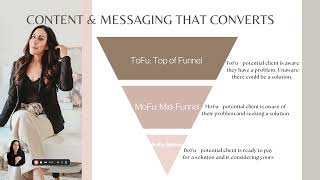
They're like, I don't want to. True. So here's my take on it. I love something called a snippet. A snippet is where I'm doing like tofu mofu. I'm giving value. I'm sharing case studies. My emails are really focused on that top part. And then at the bottom, instead of saying like, click here to sign up, there's just a little snippet and you'll see it on some of mine. I'll say like, Zee Slingsby is a strategy coach. If you're curious about working with her, you can apply here. And it's just at the very, very bottom. It's not really part of the email body. Now, the only time I hit my email list hard with like a specific purchase, something is like this, a low ticket, right? It's like, okay, this, like, you want to purchase, and it's about a 2-week window, we'll hit it hard. Outside of that, if you're doing tofu mofu, just put a little blurb. So it's like you write the whole email, then underneath, it's after the signature line at the very bottom, it's like, by the way, Sandra helps clients with XYZ. If you're curious about working with her, apply here. That's it.
And one more question, and then I let others. With the tofu, would you also— because in your Instagram posts you said you say what's the problem and the desired outcome, but you kind of left the middle part, how you get there, out.
Always leave the middle part out.
Yes. And in my newsletter so far, I write about the middle part, what they can do. Would you also leave it out in the The reason I leave it out is not to be secretive.
I'll tell you why I leave it out. I want you guys to picture someone that's got these issues going on, right? And they're not feeling good or whatever it is that's holding them back. What's going to happen if you tell them what your process is, the middle part? They're either going to be overwhelmed or underwhelmed. Let me explain. They're either going to feel like, oh, I really want help, but that feels like a lot of work. I don't know if I can do that. Or they're going to feel underwhelmed. They're going to go, yeah, okay, whatever. Like, I could Google this. It's not that big of a deal. And usually what happens is if they just jump in because they believe you and they trust you and they love the vibe and all, and the relationship is built, once they're working with you, they're like, I'll do whatever you say. Okay, because the trust is there. But if you know about the methods, like, think about it right now. If I have a couple clients who are macro coaches, if they're like I'm going to give you macros and then you're going to get a workout. It's like, all right, whatever. Like, I've already done that. It didn't work. But if you develop a relationship with a coach, like my gals who do macro coaching all have a different style. One of them is all about like, I go on date nights, I travel, I eat out, I eat whatever I want in the world, but I find a way to enjoy my life. And so people don't sign up because she's doing macros. They sign up because they're like, oh my God, I love your lifestyle. This is so great. And then once they get into her world, they don't really care. They're like, we're going to do whatever you say because we want this, we want this outcome. But if you share the method ahead of time, people will be underwhelmed or overwhelmed.
Okay. So also in the newsletters, you do only problem and desired outcome and nothing more. Okay. Yeah.
That's going to be the basis of it. And then you can do some that sell though. It doesn't mean you can never do bofu. You can sprinkle those in. Or you can just attach them to the bottom of the tofu, no problem, problem. If you're curious about working with Sandra, reply to this email.
Good. Thank you.
You're welcome.
Perfect.
All right, ladies, who wants to jump in? Hi, Nerissa.
Hi.
How are you? I don't know why.
Oh, don't be.
This is—
this will be super chill, I promise. And everybody on here is Uh, probably feeling kind of the same. It's like you have to expose your business, but don't worry, it'll be good.
Thanks. So I guess, can we talk like offer adjustments?
Is that—
absolutely. Tell me what your offers are.
So currently, um, I have like a low ticket, just like meal plan offer, which I don't really sell or like talk about too much. It's just kind of sitting there for people. Um, my main offer is a, like, my method in a digital guide.
Okay.
And then how much is that? $27.
Okay.
And then I have— it's like 65 pages long. I don't know, it's got recipes and like the whole method in there. Um, you know, kind of like what I want them to do, what a day would look like for them. I give tips like if they're traveling, if they're super busy, stuff like that. Um, then I have my membership. Yep, my collective. So right now that's $37 a month, but I'm like, I'm recognizing through talking to you, listening to you really the past few days, like, that's probably not my best.
Probably not. Do you have anything else that's not on this list?
No. I have had in my mind to make like some kind of—
I'm actually kind of happy you don't because we've got so much opportunity. So let me ask you this. Your ideal client, where's she at? She's got gallbladder issues, right? But at what point in the journey is she coming to you? After she's had it removed or when she's first— like, what— most of your people come to you, what are they feeling?
I've—
I really get a variety of both. Um, also like fatty liver diagnosis. That's kind of—
got it.
So fatty liver diagnosis, That's probably the most of it, because then whether they've had their gallbladder removed or not, it's like they're mostly done.
Excuse me for my ignorance here, because I don't know a whole lot about fatty liver. How dire is fatty liver?
So it really depends, like, what stage they're at, but it can definitely progress into things that are irreversible. But fatty liver itself is reversible. But it's scary because it's your liver and people are recognizing, like, that's a huge part of my body function.
This is going to be good for everybody to hear. If I was diagnosed with fatty liver, my doctor said anything like that to me and I found your page, I would be like, how do I work with you? And then I would see your offers. And do you want to know what I would think? No. Like, total transparency. I would actually be like, yeah, I don't think— I don't think $27 is going to change my life. I actually would give you more money because it's such a big deal. Right. So I would love to see you have an offer that— well, let me ask you this. Ideally, if I were to get that 65-page guide and you were to coach me through it, how much time would you truly want to work with me for me to start seeing results?
Like minimum 6 weeks, I would say. But, you know, ideally probably 12 or more.
Okay. I, if I got diagnosed, I would like immediately reach out and be like, put me in your 12-week program. Let's freaking do this thing. Like, I don't want to do a 27-page guide. Serious, right? It is. It feels like um, that's why I kind of asked you like, how serious is it? But I could tell you right now, I'm assuming your ideal client isn't jumping in as fast as we want her to because this is something that she really wants to take care of, right? Um, and the window of time might be kind of short because if she doesn't take care of it, I'm assuming the doctor's going to have a different plan for her.
Yeah, I mean, a lot of it, they— it just depends on where they're at. It can be just like diet, lifestyle, but a lot of them are just lost. Like, they come to me like, What do I eat? What do I do? How can I— like, they don't even know where to start. And I kind of—
I think you need a higher ticket. I would start at 8 weeks. I think we move it up to 12 for sure, but I would do a higher ticket 8-week program. Okay. And I would not jump you up to super high ticket because you haven't really been selling anything. Have you ever sold anything higher?
No.
That's okay. You're fine. I would not start you too high because I want you to kind of perfect your sales skills in selling. But I would start at 8 weeks, maybe like super low end. I would charge $199 to $299 a month and then I would bump you up, up, up. If you guys remember my client Brittany, the gymnastics PT, she came to me literally in the same place as you. She had people that wanted her help and she was doing gymnastics like online support for injury and was charging something very similar to this.
And I'm trying to make it like I felt like I was making it accessible. Like that's what I wanted.
I know. Accessible.
I get it.
Yeah, but the truth is, it happens when it's accessible is a lot of people ignore it. They don't even put the work in, right? Think for even like, think about personality. When you actually— they go in and they're like, all right, for 6 weeks I'm gonna do this, or 8 weeks I'm gonna work with a coach, I'm gonna fix it. You're gonna get better client testimonials. True, you really will, because they're committing. They spent a little bit more money, so they're really invested. And I would be bumping that up, like I wouldn't leave it that low, but I don't want to jump you up too high and then you're You're going to be like, Zee, this feels so weird to sell these packages. But women right now are spending a lot more for non-dire reasons. You have really good opportunity here, but I think you need to also sell a time period because when there's a specific thing going on, we want it to feel like there's a start and an end. If I have to work on improving my health in any way, my blood sugar, my liver, anything, if it feels like it's just ongoing, it's very hard to actually start and put because it just feels like I'm just going to keep doing this versus like, let's just give this 8 weeks. We're going to get 8 weeks, we're going to move towards this goal. You're going to commit. Then after the 8 weeks, maybe they could do another round with you because it's working and they love it and they develop a relationship with you. But I think you, you're solving a specific problem. And so when you solve a specific problem, it is, it will sell better when you have a start and an end date.
Okay.
Even if they stay with you forever, just initially you want to have a start and end date, right?
And so what you were talking about the other day about like the evergreen kind of like just keep people joining, is that something you can jump in?
So we would want to structure your program where they jump on board. You would probably have an intro video that's like, hey, this is what the program is like. Maybe you give them access to that guide, right? So they get the guide, they can follow along, and you have weekly calls. They jump on the calls just like this and you're like, okay, Norissa, you started with the program. Where are you at? What struggles do you have? Let me help you through it. Then the next person jumps in. Maybe they're only one and Norissa is only 3 and they just come in at different times. But the calls are really just like this. It's like coaching each person and they're getting the guide. But the truth is, a guide alone is not as strong as a coach, right? So the program is 6 weeks of calls. You could keep access to the guide and maybe you create like a chat box where they can reach out to you Monday through Friday and ask questions on the journey.
Okay, that makes sense. And then, so you're saying like 8 weeks but price it monthly, or price it like—
yeah, I always price monthly. They could pay in full if you— they wanted to, but I always price monthly. So you could start at like $199 a month, and that would be times 2 months. Okay.
Mhm.
And then we would just slowly bump you up over time.
Okay.
But I feel like if you come to your audience and you're like, hey, I have an 8-week program That gets people that actually want to commit, right? And I've moved a lot of clients, by the way, over from like this model to a time period model.
Yeah, I guess I'm just thinking like, what would they expect? Like, do I just bring them into the kind of like the community that I already—
Oh yeah, you already have a community. So I think that'd be great. They get access. What, what happens in the community? What are you doing in the community?
So I do live weekly calls. But it's not really like nobody's required to have the guide. It's more just like I train and then they can ask questions.
Are they getting results from that?
I mean, I have people like whether it's weight loss or blood sugar regulation, I have people using less insulin.
Oh yeah.
So they are getting it.
Yeah.
Okay. How many people do you have in the membership paying right now?
4.
Okay.
Which is why it's not like exciting. Yeah.
Are you open to canceling the membership?
Well, I do.
I like—
I am.
But at the same time, I'm like, what do I do? I don't want to leave these, like, women who have been—
I wouldn't cancel it yet. I would build the other program and then I would go to them and just say, hey, listen, I'm not going to keep the membership, but you have an option to join the group program if you want and maybe give them a special price.
Right.
But you have a business to run. And the truth is, if you don't make some of these decisions, I just worry you're not going to even help anyone in a couple of years. Right. And so, but I would probably go to them, like, I would get this group program going, start to get people in, give these women an opportunity to jump in at a special rate, but it's probably going to be higher than the $37. Uh, but, you know, give them— they're your people that trust you. So I'd give them an option and just say, hey, I'm starting this program, uh, it's a little bit different, it's set time. The other thing is when people sign up for a set amount of time, they're more likely to show up and do the work and show up to the calls because they know they don't have forever in here.
Forever.
Yeah. No, that's true.
I think you just need more structure. Like, truly, all of it just needs to be more structured, um, because you have— I would not change your niche. I know you kind of like— we were kind of talking in Instagram a little bit. I think you have a really strong— like, you have all of this is strong. It's just the structure on the offers.
Yeah, the structure to like actually get them.
Yeah. Yes, you need to put them in, they do the protocol, and then they can decide where to go after. But okay, you're gonna get wild client results when you do it this way, even better than now. And you're going to have way more yeses because people want to say yes to a thing. It cannot feel open-ended, right?
And that's what it is right now, for sure.
Yeah.
And that's okay.
I—
a lot of clients start with me like that. But I think that's the next phase for you is like actually create a group program, um, that has a start and an end and there's an action. And over time you can change it up too. You could add some more videos to help guide them along. But like the easiest method for you right this minute is they get the guide, they get an intro video, group calls 8 weeks long, and you're going to show up like you're not going to miss these calls, right?
Okay. I like it. Thank you.
You're welcome. All right, ladies. Hi, Lindsay.
Yeah, I got a—
Hi.
Okay, so my question is around, um, offers, I guess, and group coaching/membership. So predominantly I have worked, um, one-on-one with clients. I do, uh, gut health consulting, um, is my primary business and mostly has been one-on-one, um, work. And I'm trying to get out of constantly trading time for money on that one-on-one, but I feel like I have a really hard time creating, making that membership or group program highly desirable. I ran a group program, um, at the beginning of this year for 6 months. It was fine. I think we had like 7 women in it, which was great to start out and see how things were working. One big mistake I made was they had group access, but they also had one-on-one messaging access to me, which then created no community. So I know that was a big mistake. So now I want to try to— I always, um, advertise Black Friday stuff to start in January. So I want to do that again. And that always, that like works really well for me. But so I want to recreate, um, more of a membership actually, which is going to be honestly kind of like my low ticket offer. Because I've never— my lowest ticket offer I've ever had has been $2,000.
Okay, I love it. You're high ticket. Yeah. What was the price of your group?
What's that?
What was the price of your group that you ran for 6 months?
Um, when I ran it for 6 months, the first 5 women I gave it to at $3,900, and then the next 5 women I gave it to at $5K.
Okay, and you had 7 people in there. What is your one-on-one?
$7,500 for 6 months.
Okay. Do you mind if I ask where you're at for monthly?
Sure. This month I'm averaging about $2,225 monthly right now.
Where do you want to be?
Honestly, $30,000. Between $30,000 and $40,000.
And I noticed mostly with one-on-one.
Oh yeah.
How many, how many calls are you on?
So I used to be drowning. So Jamie Javett is actually a co-coach in my—
I was actually going to ask. I was like, I feel like maybe Jamie is okay. Yes.
Yeah.
With some of this?
Yeah. So we— if a client's working with us for 6 months, they see me once a month and her once a month. Okay.
So it's helped a lot. Definitely helps.
Yeah. So she's been with me for over a year now.
Okay. Amazing. That's definitely the way to go when you're— when you've got so many. But Lindsay, how many followers do you have on Instagram?
Maybe 3,000.
Okay. Well, first of all, I just want everyone on here to see 3,000 followers and she's over $20K per month. So just remember that, like, it is not about follower count. I'm going to tell you, I don't think you should do a membership.
Okay. Yeah, that's— and you know what?
Okay.
So I really battle with this mentally because I truly enjoy one-on-one the most. And I feel like people get the best results in one-on-one.
Well, I actually don't think you should think that way either. So I'm going to totally— I know, I know.
It's a— it's a little bit of both.
Your business is similar to mine in the sense where I, I always have been high ticket. Um, I cannot do a membership because I'm not signing thousands of clients. I sign a select number of clients and I really pour into them. Um, I charge a little bit higher because I give that attention, but I did not want to stay doing one-on-one because I was like, that's— you're capped, right? And so it's like, how do I make this work? You need to create a group experience. And I don't know what this one was like, like we can talk about the details of it, but I do think there's a world where you have a group experience. I'd say number one thing I would have done differently is not make it a 6-month program. I would have done one-on-one is fine the way— don't touch your one-on-one, it's working. I would have probably just started your group around 12 weeks just to start, but I would have done it evergreen where people can hop in at any time. And then what I would do is I would limit the spots. You— I don't think you're a volume player, and I say that with a lot of love, right? So the membership is going to be— you're either going to have 5 people because you're not a volume player, or 10 people, or you're going to have to put 50 to actually make this thing worth your time. And I get the feeling you're like, I am more about proximity, really giving them the attention. So why not create an evergreen group that's high ticket What did the $5,000 come out to? Were they allowed to pay monthly?
Yeah, I'm super flexible with payment stuff.
Okay.
I always tell people I never want that to be the ultimate barrier, so I'm pretty flexible.
Okay. So you could easily do a per month plan. I would not sell it as a paid in full unless someone really wanted to. I would have a monthly high ticket amount. I would only make it 10 spots at a time. So it's evergreen. So if you fill 7, the other 3 can still jump in. But I would keep a waitlist. So you would really advertise of like, hey, this group is these 10 women that are all in this together. They're all working towards this. You can jump in at any time when a spot opens. But if a spot doesn't open, this is what I did with Elevate. And that's why at first it was hard for me to fill. But once I filled it, it— to this day, it's like one spot at a time will open because I was very adamant. I will never put 11 people ever. Ever, and I never have. If I got an 11th person, I actually ended up opening up other call time. So I was able to give my first mastermind the exclusivity feel of my one-on-one, right? And so you get— you create an exclusive, high-proximity environment for the group program. You don't make it feel like a group program where anybody in the world can join, right? Which, by the way, I have clients that do have group programs and they're really good that are done that way,, but I don't think that's what I would do for you.
Okay. Okay.
There's one of my clients, she's an Elevate client, but her name is Jess Duke. She has a really big following. I don't know if you know who she is. She does nutrition coaching. That's what we did with her. We created an evergreen monthly— it's hers is it's $500 a month, but it's very exclusive feeling. It's hers is now 6 months, but I would start with 3 for you and then move it to 6. And it just feels very intimate. It does not feel like a group where the whole world is going to join.
So do you like minimum 3-month commitment and then they just roll month to month after that?
There's two options after that. They could roll month to month or they would sign a new contract. I find both ways doesn't matter. It's whatever you feel like. Yeah, for them or for you. But eventually I would make it a 6-month program because I just think people get better results. Yeah. At the beginning How— oh, let me ask you another question. How many people do you have that come to you that do want to, want to do one-on-one and you're feeling like you can't even put them in anymore?
Um, I mean, I have capacity right now because we just offboarded, but honestly, I feel like my calendar feels best to me in my life when I have like max 10 one-on-one calls per week.
Okay.
How many do you have right now?
About that.
Sometimes a little more.
But I mean, I've been in a place where I've had like 30 and, you know, you want to put your head through a wall.
So I have a client, Bree, who I showed you guys. She does our social media stuff. That's exactly where she was a few months ago. She had 30 one-on-ones. We were like, this has to—
it does not.
We just rolled her group out. No amount of money. It was like, this has to end immediately. Okay, Natalie, you're good. I think. Yes, you should be good to go next. But so you're in a really good place to roll this out. Here's why. You're already feeling a little capped on one-on-one. What you can do, what I would probably do, is I would pull the group out. I would raise the price of one-on-one so also people are more incentivized to join the group program. And then it's just your authority too and your assertiveness, right, when you're talking to someone. And it's going to take some time to get there, but you have to have that belief where you're like, the group is just as good. I struggled at first because I was like, how could group be better than one-on-one? But once the group was going— so Jess, the one I'm telling you guys about, she started me one-on-one because she was adamant. She was like, I don't want group, I will never do a group. So she became a one-on-one client of mine, and then I made her sit in on a call. I was like, Jess, will you just trust me? Like, my groups are not— but everybody's friends, like everyone helps each other. She ended up sitting in and she swapped, and I was happy to take that pay cut because I'm like, I know my group is better than one-on-one. So I think for you, like, once you get that group really going and it feels good, you're going to feel like, oh my gosh, this is better. But another thing is don't do a 6-month launch because I'm assuming you signed 7 and then you were— you never added a single person for 6 months.
Yeah, I added like 1 or 2 and then basically after my initial group finished because I was like, I need to change things, I just rolled her into one-on-one. So it felt like a bonus to her.
That's why I would do 3 months so that you also— it's in the beginning, I would do 3, move it to 6 when that thing is just rocking and rolling and you love it and you're like, this thing is so solid. But start with 3 months so that you can also make changes if you need to and you're not stuck with it for 6 months. Okay, so everyone that comes in is a 3-month contract. They can renew for another 3 or they can go month to month. Um, but I would give another chance. I would not go membership. For you.
Okay.
Okay. Do you think, okay. And I've thought about like once I roll something else out, raising my one-on-one too. For sure. Because I have an extremely high close rate even.
I mean, I have—
your audience is coming to you super warm, right? Like they're all organic.
Yeah.
Yeah.
Right.
And they just, I mean, yeah. And a lot of times it's because of that one-on-one. They're like, oh, I feel like, like you talk to me like a real person or whatever, you know?
But I would raise it to $10K for 6 months. If that feels okay to you. And it's supply and demand. Like, I price my one-on-one today, you guys, where I want most people to say no to it. Yeah, that's where it is. Like, I'm not offended if someone's like, your one-on-one's too high. And I'm like, yeah, because I've created group programs that I'm really proud of and they're really solid. So I want people to say no to one-on-one. So if you do raise the rate, we don't want everyone to say no, but you do have to be okay with— like, that's what we did with Jess and Bri, when we moved them to more group, was we raised it because we're like, we're okay with less people saying yes, right? And now both of them have significantly less one-on-one, but their income went up. Okay, so, so just— I would roll the group out, get people in there for 3 months and keep it open, like keep getting folks in, don't stop advertising it. And then your one-on-one becomes that anchor offer, meaning it's higher priced, it makes the group price look like a no-brainer. Mm-hmm. And you still get people in there, but less people.
Okay.
And do you think doing it, obviously I'll split it up into monthly like you said, but maybe like, I don't even know what to start off for monthly then, but like $700, $1,000. I wanna keep it below $1,000, I think for, for now.
Do $990, 'cause right now you did $5K for 6 months. You could do $990. $997 times 3 months. But if I did that, um, yeah, I would do $997 for 3 months for now, and then I would slowly start bumping it up to 4-month contract, 5-month, like start signing new people at higher contracts. Once you get your first like 10 established, anyone new that comes in— and, and here's the deal, Lindsay, if you're like, man, this is going amazing with these 10, I actually could easily have 15, 20, then you can bump it up. But I would start with slope, low, small proximity and advertise that like I'm only opening 10 spots right now. I may open more, but I'm not sure right now.
Yeah. Okay.
Okay.
Perfect.
Okay. Thank you. You're welcome.
Okay.
I think, Natalie, did you need to go next? Awesome. Hi.
Hi. Sorry, my kid's asleep. And if she wakes up, it's game over for me. I totally get it. Anyways, thank you so much for hosting this. And honestly, Lindsay, what an inspiring thing to hear. I was just like, wow. I'm like, she's just so calm and collected. I'm like 25, I'm like 30. I'm like, I'd like that too. So thank you.
Anyways, it's so good when women share because I feel like it shows you what's possible, right?
Yeah, for sure. Um, okay. So I have, uh, questions about like basically my offers. I have a group coaching program, a one-on-one, um, and then I also have this other offer and I'm trying to figure out how I price it.
Hold on one second. Now, like, Tasha, I'll either get you in in here or I'll connect with you offline. Okay. But we'll get you in. All right. Sorry, Natalie. So you have— you have a— you're pricing out a group offer?
Yeah. So I have one group offer that I just built out. I have basically— I'm a holistic movement coach. I help people— strength with strength and mobility coach for midlife adults. So I have a program that I created last year with my coach, Summer. So I'm a Steel Mace coach, head coach. So I developed something called Awaken The Warrior. It's a 12-week program. It hasn't launched yet, but everything is filmed. Everything is ready to go. The outline is there. Price point-wise, I'm pretty solid. It's around like a $2,800 full ticket, $2,200 as like a launch price, something like that. But what is happening now organically, the other part of my business that's like, I guess, kind of pays most of my bills is this program that I created, and it's my own methodology with chair yoga and mobility. And I teach that in retirement homes. And now I have a lot of people asking me to train their staff around the city. So now I'm trying to figure out how do I make that program maybe like an evergreen that I could run because they're two very different streams of income. But one is like hitting into the corporate and I'm not sure how to price when someone's asking me like from a hospital or an organization of how to price that kind of training. So it's like a level one is like 16 to 20 hours of like onsite training, full manual. The program again, the backend digitally is already built out. There's like 60+ tutorial videos.
So this chair mobility, you do have it already created videos and everything? Yeah, all of it. Yes. Do you have to be there in person to coach, to do this thing, to teach?
Yeah. So I basically teach the modules live. Everything is recorded, but I also have every other time that I taught it recorded on Zoom. So I do have the full modules and I also have step-by-step tutorials of each of the individual postures. I built it out like about 5 years ago.
But you can't give them access to the online? You have to go in person to teach it? I could give them access to the online, but right now I'm thinking about it is you're having to go in person every time you bring on like a corporate client. Yeah, you can, but that's not super scalable, right? But if you're able to create an online, like they want to get certified in this and they get access to these videos, you wouldn't actually have to be there and you wouldn't be limited to your own geography, correct? Correct. Okay. What's—
who's your audience made up of? Mostly midlife women and sometimes younger, but they're working as specific roles. So some of them are recreation therapists, some of them are other yoga teachers. In the corporate side, they're mostly people who are running programs for seniors and designing them.
Got it.
I would actually— so I usually say like niche down. I think this is still your niche. It's like the mobility. There's just two different pieces to it. I would be actually selling both. I would be selling the group offer, which is— who's your ideal client for that one? Is it, is it a mom?
Is it, um, well, it's sometimes— well, there's a lot of the times it's, uh, it, it ranges. Like sometimes they're the median age for like the Steelmason one-on-one coaching is like, I would say, 40s, 50s, and mostly maybe 50s and 60s actually.
Okay.
But I do, I do have younger clients that are coming in because they have like chronic ailments, because I work so like highly with other people, my specialty. So there are younger people, but they're usually coming in because they have ailments. They're not like typical.
I would roll out both offers. I would say this is— but I wouldn't do it at the same time. I would give one the full attention that it deserves. So I would give either your group. So the chair mobility right now, you're getting people in person probably just like word of mouth, right?
Yes.
Okay, let's leave that alone and let it run the way it is for just short, short term, right? I would get your other group program using your Instagram focused on this. So roll this out, get people enrolled into the group offer, make sure it's evergreen so you're not limited to like 5 people signing up and then you close your doors. Yeah, build up your income with that $2,800, $2,200 launch. Biggest advice I'm gonna give you is don't get stuck thinking it's a 30-day launch. You're just going to keep selling into this program online. Chair mobility. Eventually I would also pitch that on my Instagram once your top group offer is rocking and rolling, and I would stop doing in-person. It would be, you want to, you want to do this program, I send you everything digitally, maybe to get like an onboarding call with you, and then that's it. You're not— there's something in here, like a mosquito. Um, you're not showing up in person because that's just not scalable.
Cool.
Um, in the interim though, what do I do with all the leads that are asking for this?
Like, I have a lot of people asking for the chair. Yeah. Are they all local? Yeah. Do you have the time to actually go in there and do it?
Yeah, I do. I just don't know how to price it.
And I was like, oh, again, so it's just the pricing that's holding you back.
Yeah. Like, it's the pricing. And I really wanna kind of make it evergreen though for next year. I wanna have two evergreens.
So I do think it needs to be evergreen. The big thing about pricing when it comes to corporate, which I wish I could help you more, you have to find out who's actually paying, because sometimes they have funds that are allocated. And so— and I do have a client right now that does something similar in the speech therapy world. The most important thing is you create an application, have them tell you what's happening with the money first. Like, do you have a grant? Do you have funds allocated? Do you have certain— like, a lot of times they have money. I have a client who just got $300,000, you guys, from to build an app for speech therapy from a corporation that she's working with. So it's like, who would have thought to charge that? I mean, it's obviously not all staying in her pocket, but what I want you to do is be— when it comes to selling to clients, you need to have packages. You're not going to charge one client $1,000, another client $10,000 for the same thing. When it comes to this kind of stuff, you need to find out who's paying. Okay, that's the most important thing. Who's actually paying for this? Is it coming out of funds that are already allocated that need to be spent, I would also really try to get in front of them right now because the end of the year and sometimes with this kind of stuff, it's spend it or lose it. Like they have X amount of budget for this year and if they don't spend it, they restart next year, but they lose whatever they didn't spend. So I wish I could tell you like, this is what I would charge, but you kind of have to almost like have them reveal their cards first and it's usually not coming out of one person's pocket.
Um, because I'm going back and forth with a few people through email. So, um, originally I was, I was charging something like for the corporate rate, if it was 5 people and under, and I was going on site, I'm still giving them all the materials, like they're still getting a database and a physical manual and me as their coach. Um, I was charging, I think the lowest I quoted was like $650 a person, and they were all fine with that. Well, I didn't hear back from one of them, and one is a different organization is emailing me, but I'm like, if I'm selling it, I would just have a minimum, Natalie.
I would say $650 per person, but I would have a minimum. So it would be like, okay, um, $650 minimum, X amount of dollars that I have to make in case you only have 2 people in the room. It's like, I don't think that's worth you— you're a mom. Like, it's us going anywhere in person, to me, I need to It needs to be worth my time. So I would just create a minimum. But for future, when people reach out to you, I would just say, you know, I would have an application. I would say, are there funds allocated? Are these funds— do they need to be used by X amount? You know, those kind of questions.
Okay.
Okay. So then I can create something so that when an inquiry comes in, when I'm going back and forth, I'll say, sure, I would love to help you fill out this application.
1 million percent. You need to systemize it a little bit more.
Perfect. That's not great. And then use by a certain date.
And then you can also say, do you prefer in person or do you want to look at another option where I send you everything and you, you guys roll it out on your own, like almost like a licensing or something?
Yeah, I really, I really want to focus on this as well. Just in my, in my physical area, there's a lot more retirement homes being built and these facilities are huge. They're like multimillion dollars.
So I would give them multiple options. I would say option 1 is I come out, I'm rolling this thing out. Option 2 is self-led. You get access to everything, and I— maybe you do an onboarding call where you teach them how to roll it out to their staff themselves.
Okay.
Okay.
And I would charge a lot more for my in-person time.
Okay. So charge more for in-person.
Once you have both sides rolled out and you give them 2 options, charge way more for in-person. And the other option is self-led, but you would do like an onboarding call just to get them so they know what the heck they're doing.
And then also the accountability pieces. Maybe we're jumping on coaching calls and they have to start teaching them what they've learned in the— Yeah, the accountability.
I love that.
Okay, amazing. That's like so helpful.
Yeah, you're so welcome. Tasha, do you want to just get started and then we can continue? I'll reach out to you.
It's totally up to you. I don't, I don't want to rush you either.
So tell me what's going on first and then we'll, I'll still re-talk to you because I don't want to dip you today. I mean, it's my fault.
I just thought we, I, it's my fault. So I just, I had, yeah, anyways, I think what I've learned over the last couple days is one, I'm doing too much like nurture content, obviously, because I get a lot of the like, oh, this is helpful, this is great, blah, blah, blah, blah, blah.
You do a lot. I'm, I follow your account, you know?
Yeah.
I have for a while. So you do a lot of really good nurture, but it's a lot.
Yeah.
And I've been told several times you need to stop, but I don't know like where to move and or what to say or how to, because I mean, truthfully, prior to having a large account, I didn't provide a lot of nurture content.
Well, so it probably helped you grow. Yeah.
And then I started doing nurture content and then I grew really, really way faster than I expected, which is very common and it's not a bad thing.
But now you're in a place where you can really convert.
Yeah. And then now the problem is, is I don't know the right— it's always the wording. I'm like, I don't know the right wording, which I think I've learned some of it from you. And then I also think based on today's call that my membership is probably too low, which we've talked about already.
Anyways.
Um, so you just launched the membership, right? Yeah. Um, how many people do you have in it right now?
Like from last launch or from this launch?
Totally. How many people total do you have in it?
So last launch it was, um, a much higher, a higher price. Um, I had, I think 6 people come in. I think I had more, but they never showed up.
And this happens as well. It happens with everybody.
It's shocking.
It doesn't happen as much with business, but with health, if you have a membership, a lot of people will sign up. And then now last launch though, did you have a start and end date?
Yes.
So 6 months.
Yeah, it was, it's 6 months. So it started in June and it's, it's, we're winding down right now.
And then this one that you just launched right now, it's much lower ticket. Is it a start and— oh, it is actually. I remember seeing it. So I think what's happening with you, Tasha, is you're mixing methods. A membership should just be open-ended. People just continuously pay, or there's an actual program that has like a start and an end date.
Okay, because I— the first 8 weeks is where I kind of use my method, and then the rest is mostly like support. They're still getting content.
And I would make the 8 weeks more expensive, and it would be an 8-week program that's like $200, $300, $400, $500, $600, $700, $800 a month. Okay. And then they can go into a membership for like continued support. But I think for you, like, truly, how open are you to change up your offers?
Oh, I'm totally open to changing up my offers. It's just I have opinions coming out of my ears because for a little while I had 2 VAs. I had to let one of them go because, well, it happened because they each did different things. I didn't realize that the one that was doing my Shopify for my boost, I didn't realize that she did all the other things.
Also, you could just get rid of one and have one do everything, right?
Yeah, I got rid of one.
And then I think you need a program. I think you need a program. You have a program, but you're turning it into a low-ticket membership. And that's like, for you, what's your next income goal that you want to be at?
This year has been the lowest because I stopped doing one-on-ones, which I don't know if that was the right thing to do, but I was just so overwhelmed by I, I get it.
I don't think it was the wrong thing to do.
I think in health and wellness it's really hard sometimes. Um, so I stopped and part of me is like, should I start doing that again? I don't know. So I have gone down, uh, I've gone, it's gone down a little bit. So I would like to get back up to $10,000 months.
What, um, I know we're getting close on your time. What were you charging for one-on-one per month?
Uh, it wasn't per month. It was a 12-week program for like, uh, it was is just under $2,300.
Okay, I think with your audience truly and the fact that you were booking one-on-one and you were getting clients, we could totally run a group program that's priced where you could make more than you were one-on-one but less per person. Like, I think you need a high ticket. Have you ever— what was your 6-month program at that you ran?
Last time for— well, before the beta, I wanted to see if it was going to work. We just did, um, it was— I think it was $800, super low.
It was very, very— for 6 months.
Yeah, it was very low. But I was— I had never done anything like that before. I didn't know how it was going to work. I didn't know if people were going to show up. I didn't know if the way that I had it set up was going to work. It was my— still the same methodology, like it was exactly—
it's the exact same method. I was Same thing that I was mentioning to Lindsay. I would do a 3-month. I would not do 6. 6 you don't want to do till it's like so established and people are just like renewing, renewing, renewing, and they've been in there for a while. Like Bri, Melissa, those clients I was showing you, we started all of them at 3. Now they both have 6-month programs. So we first, we consistently get the 3 booked out and we roll out a 3, 3-month group program and See, I think you have the audience to support signing 20, 30 people in a group program. You just have to not stop selling it.
I just have to stop giving them all the answers.
You do. And like, by the way, Bri, we just moved her from a membership to a group and she's doing so much better. So she went all one-on-one then, and I tell you that story straight, but it— because it was like insignificant at the time, but she had 30 one-on-ones and life was really brutal. And then she's like, I really want to do membership. Membership. And I'm always hesitant with memberships because I'm like, you need to have a lot of people in there to be making good money. The other problem is it's open-ended, so people don't feel like they have to actually— like, they just like, yeah, I'll just get started one day. We just moved her to offering a 3-month, and then we added a 6-month, and it's— she is signing that so much better than the membership. So I would truly think for you, I would think of a $200 to $300 a month program. Okay. I would get at least 10 people in there at 3 months, and then I would tell everybody else you could pick between 3 or 6. Okay. They choose the 6, they get us kind of like the pricing I gave you guys. The 6 is a little bit lower per month.
Okay. So what do I do about what I'm doing right now?
How many people do you have in there right now?
Nobody.
That's the thing.
You're in a good place. I know, but I'm like, do I just stop talking about it or—
You create the new program, you stop talking about it, and And yep, exactly.
Okay, my VA—
none of your audience— nope, nobody will know. Nobody will know, I promise. Nobody pays that much attention.
No, I know that, but my VA is probably gonna be like, I'm gonna kill you.
Oh, who is, your VA?
Yeah.
Oh yeah, but that's— you get to do whatever you want because you're the one.
No, I know, I know.
There's a team of them, but I'm like, they're gonna be like— no, I think you go group pro— Yeah, everybody here, we are in the business of serving and making money and the memberships are so brutal. I do have a couple of clients have memberships, but very few stick to membership long term. Like even Jess, my client, she has 500,000 followers, you guys. And one of the first things we did when she came to me was nix her group. I was like, this thing is sucking your life dry and you're not even making half the money that you could be. We got close to that.
I think the problem too is with my— well, with my online niche, like my Instagram niche, I think that people feel like, well, there's all— all you have to do is learn how to read labels and then that's it. And it's like, well, no, you're still eating junk food.
We need to shift some of the— some of your messaging for sure. Some of the messaging has to shift, which I kind of have.
Like I talked yesterday about, like, because yeah, you're buying this doesn't mean that it's healthy. Like, you're not doing anything for yourself. So I, I definitely think I need to change my, my messaging for sure.
Okay, you good?
Yeah, I just now have to ruminate on all of this.
I know, and don't feel discouraged because I, I always joke around. I'm like, I have blown up so many clients' businesses and then they come back. Like, Summer is a really good example. I know a couple of you guys have coached with Summer before, and Summer's my client. I always tell that story. I'm like, we came in and blew everything up and then built it back better. You can move pretty quickly because you're not new to this. But the worst thing you can do is— it's like when someone buys a house, it's not profitable, and they just don't want to get rid of it, and it's like sucking your finances dry, like an investment. Just cut your losses. So don't hang on to something that might not work, that isn't— or that isn't working. And I'm not saying like jump ship and create new offers, but I will tell you, I've worked with a lot.
And then I guess the other question Oh, sorry.
I think there's a delay. You there? No, you're okay.
Yeah.
Okay, cool. Okay.
I was gonna say the other thing, I just text my client that I'll be a couple minutes late. But the other thing is like, is my audience gonna have whiplash now? Whiplash now because I'm like, oh, just, I stop and then I start talking again.
You'll be fine.
Okay.
You'll be fine. I promise you, remember, they don't consume content the way that we create it. And if two people end up in your DMs and they're like, I thought you were in a membership, great, that's an opportunity to talk to them and be like, yeah, I thought about it, but the truth is I think women really need focused help from me and I'm going to roll out my group program instead because that's actually going to get results. And now you have two conversations going.
Okay.
Okay, perfect. Yeah, I mean, I just gave my audience like massive whiplash because I worked with people in multiple business areas and I was like, I was like, my clients that I like the most are actually the ones in health and fitness. And I was like, that's it. I'm no longer taking people.
Yeah, but when you did that, for me personally, I was a little bit— not that I wasn't before, obviously. I've signed up for you. Yeah, yeah, yeah. When you did that, it was a little bit more attractive.
Totally. That's exactly what we should all niche down. Yes, that's totally— I agree. Instead of trying to serve everyone. But don't worry about the whiplash. And Bree's a great example. We were doing one-on-one. We got her income to where she wanted to be, but her life was miserable. Rolled out group membership and she sold that thing for like 2 months and actually had people enrolled. And then we switched it to a 3-month, 12, and her audience has been fine. Okay. You'll be okay. I'm going to trust you. You got this.
Yeah.
I feel strongly about memberships.
I know.
Very strongly. Yeah, I get it. I want you guys to make money.
I really do.
That's all it is. And I want you to actually get client results.
Results.
Like, that's at the end of the game. These are the only two things that matter: help clients get results and you guys get paid for it.
Okay.
Yeah, that's it.
All right, well, thank you. I will message you also.
All right, thank you.
Bye.
Welcome, Sarah, Erica, Audrey. I think you guys are okay, and I'm staying on until all of you get coached. Everybody good with that? Yes.
Cool.
All right, Sarah, you're up. Okay.
Okay, so, um, I need help with lead gen. Okay. And I'm, I would love for you to help me reframe my niche so it doesn't sound like pain point marketing. So I do specialize in like injuries, but I don't wanna be like, hi, you have injuries, how can I help you?
And then, okay, so we're gonna talk about it. Number one, the person who I actually want you to follow, don't be scared of calling out the injury. Okay, here's why. Like, I'll give you a great example. My sister has always been athletic and healthy and all these things, and all of a sudden now she's like, got this knee issue going on right out of nowhere. It's just like this knee issue. I'll tell you right now that if you had a post that was like, you're a mom of two going up and down your three flights of stairs and you've got a knee injury, she would be like, sign me up. So it's the same thing with like the bleeding neck. It is okay to call out the pain. You just don't want all your content to be pain. You also want to show the other side of it, which the other side of it is you can actually heal knee pain. You're not stuck with it forever. Tell me why you're feeling like the pain is something you don't want to lead with.
I feel like I just don't want like the struggle bus client who's like, in pain and stuck in this loop of— they don't realize maybe they need to strengthen.
And like, oh, okay, so you don't want to call in the person who's a victim that doesn't want to do something about it?
Yes.
Then say that you're— okay, so let me show you kind of, um, this is my client Brittany. So two things I think I want you to do: if you're looking for leads, it's— there's a really good chance that you are probably not niched down. So I want you to really call in Who do you want to work with? And so Sarah, what is your niche besides just like you're having pain?
Um, more woman embodiment. So, um, more overweight individuals who don't like their body but need to love their body now in order to get where they're going. Um, and then also I've noticed a lot of my clients are neurospicy, which is no surprise because I've worked in special ed for the last 15 years. So it's like I have this like secret weapon where like I could break things down easily, and I could like— I understand you might need more support with your proprioception or sensory needs, like things like that.
Okay, at first when you were talking, I was like, too broad, too broad, too broad. And then at the very end, I was like, wait, we have something here. So I don't know if that's what you're going to lean into, but everything else felt very broad. Like she wants to feel better in her body. She has weight to lose. Way too broad. And you're not going to stand out. The last thing you said about, hey, maybe she's someone who actually needs it broken down differently. She's neurospicy. I was like, wait a minute, now we're getting somewhere. So I would think about that niche or a different niche, but you've got to just niche down. Brittany, for a decade, had 2,000 followers. She's been online for years, 2,000 followers. It was not until she focused on gymnasts that her— and I'm not a huge, like, obsessive growth person. Like Lindsay, who was on earlier, is a great example of 3,000 followers and making $20K a month. But I'm just saying, if you like, she's getting tons of leads because she targeted one specific niche. And what's interesting about Brittany is her account was booming. She's making the signups. She's definitely starting to make the money. And then she came to me one day and she goes, I want to stop talking about the injuries. I was like, okay, something not so good happened. It was— she was like, it wasn't working. So I don't want you to be stuck in the pain, but there is a way to paint the pain in a way that is not going to call in victims. Okay, so she's just someone I would follow because all of her stuff is about the injury, but it's done in a way that's like, you're ready to fix it, you actually want to put the work in. Same as emotional healing. It is okay to talk about the pain, but you do also have to talk about the work. You are ready to put the work in. You're— you've been struggling with knee pain, but you recognize you can actually control your life and your choices, and you refuse to live this way. So there's other ways we call it in. I will say the flip side of it is, um, the, the desired outcome. You can still talk about that too. So what would the desired outcome be? You're 45 years old and you can walk 3 flights of stairs without your knee feeling off. So now we're not calling the pain, but we're still calling out the person that might have a knee problem, right? And then the next part of the message could be, it's because you did the work, you were willing to show up, you were willing to, um, do the things that you know you should do and you've avoided, and now you're finally ready to put the work in, right? Right. You decide that hiding the pain with a bottle of Advil isn't your game anymore and you're ready to actually do a program so we can talk to that woman you don't want.
Right.
Also, remember, people change.
Yeah.
Yeah. Right. So, like, give them, give them that, right? Give, give them that ability to, like, call her out and say, you lived with this for 20 years and today is the day you decide to change it. Mm-hmm. But I'd say the biggest thing for you, Sarah, is you can't be broad. I don't want you to try to help all the women that want to lose weight and have a, have an injury, or they're like— I— it's just way too broad. You're gonna get lost. Yeah.
And I feel very lost. Like, I just— yeah. And so I was looking at my current clients. I'm like, what do they all have in common?
Yes. So I would say call her out Maybe you failed with every other trainer because you're neurospicy and your brain doesn't break that down right. Or maybe it's because I'm trying to think like, what are some attributes? Because I would assume like, for example, like ADHD also falls under that. My husband is like ADHD since he was younger. One thing with him that I noticed, he does amazing with like 90-day fitness challenges. But if it's going to be like a lifestyle that he does forever, it's never going to work. So he's always doing a challenge, always. He's like, I'm on a challenge, because that's just how his brain stays healthy. But like, if you try to just tell him to have like healthy habits forever, it would never work. Where for me, it's like challenges don't do anything for me. I'm like, I just want to have healthy habits. So, uh, talk to that person. Just be like, your ADHD brain struggles with lifetime consistency. That's why in my program I teach you how to all in for 8 weeks and then we'll tackle the next 8 weeks. Like, I don't know what— you know what I mean? Like, speak to her, right? Right. You know that you should be doing this 20 minutes every day or 30 minutes, but you give up after every 10 days and life happens. But you— I really think you have to get super specific and you got to put it in your bio too.
Yeah.
Yeah, I know it's hard. Yeah. But you're just going to show up as everybody else. It's way too broad. And if that's not your niche, that's okay. But you got to really identify who the niche is. Okay.
All right.
Think about the Haitian trainer for women. I was like, I cannot believe that's his niche because he's online. He could probably serve and he's like, you know, the guy is like really fit and it's like amazing that you just one niche. So think about one niche. But there was another part of your question too. It was that and then it was, oh yeah, we already talked about it. Talking about the pain. Yeah, yeah, yeah. So just wrap that up in calling her out. Just because you talk about the pain, you can still say it in a way where she doesn't play the victim card with you.
Mm-hmm.
Right, right.
Okay. And then, um, I did the challenge that we talked about in the last call. It was super, super cool. Um, but still, like, nobody showed up but 6 people enrolled, so it was pretty exciting. So wait, 6 people enrolled for the program But yeah, but they didn't show up consistently on the calls. They didn't like in the forum, but like there were like micro wins happening.
So now I'm curious, what method, what are you handing them outside of the call so that they could do this on their own? What are they getting?
Um, they got 2 videos, one for days 1 through 4.
Okay. What if you just take out the calls? People don't want the calls.
Oh no, there were no calls.
I'm sorry, it was like, oh, okay, okay. So where did they not show up?
You said the Slack channel.
Oh, they just didn't. Do you think maybe you should use a different channel?
I think so.
I think, you know what I did one time for a little group like that and people loved it? I did an Instagram group, a channel, not a channel, not a channel, right? Right, right, right, right.
Chat.
Because people are already on Instagram and it was what it was booming. Everyone became friends. Everyone loved each other. It was amazing. Maybe for your audience, like, we try something like that.
Okay.
Okay.
That's what I was thinking. Because I'm like, maybe it was like too foreign. It was too—
Yeah, yeah. Do, do Instagram. I have a feeling they'll develop closer friendships that way.
Okay.
And then these 6 women, I have an opportunity to like— I was thinking of bringing them into a beta of my 12-week program. Or do I just do another challenge?
Don't do betas. I don't like betas.
Okay.
Because I'll tell you what, if I had done a beta for Elevate, I would have been like, huh, The data tells me this sucks and I should not do it, right? That's why I don't like betas, because I don't think that actual info we get is accurate. Yeah, just do it. Just open it up. Okay.
Yeah.
8 weeks or 12 to start, but eventually you can go longer. But you already have a 12-week program, right?
It's building. So I have like the manual, everything's like done, but except I need to film all the backend.
Okay. I would invite them into that.
Okay.
And you could invite them early to hold their spot and give them a special. Okay.
Okay.
All right. All right. Erica and Audrey. Thank you. You're welcome.
Hey.
Hi, Erica. How are you?
I'm good.
I'm good. So, gosh, I have, I have a lot of questions, but try to—
it's okay. Hit me.
Like, the one thing that I'm concentrating on right now, I'm like, I have a lot of things that I'm concentrating on, but—
and you do, you do hormone health, right?
I do, yes.
So I'm—
and I'm also a yoga teacher. So, and it kind of combines in like hormone health, nervous system work, yoga, um, all of that kind of together is, is what I'm getting to the offer of, um, building out a program for kind of all of that. But I have, um, a yoga retreat that I, um, scheduled and have 6 women signed up for Hey, um, in January. Okay, but I really want 12. Um, so actually I have 7 people signed up.
Yes, so much time to hit 12.
Um, by January? Yeah, I'm getting a little nervous because I'm like, oh gosh, I will not—
where's the retreat located? Costa Rica. Okay, so here's my advice for I would go all in talking about it right now because the— with retreats, here's the difference. With challenges and boot camps and pro— and even like coaching, the closer you get to day one, the more people are going to sign up. But with retreats, that's not always true because people are not going to buy a ticket the night before, most likely. And so right now is your window that I would really be focused on this. This is your gift to yourself for the new year. I'm assuming this is for women.
Yeah, that's a little—
I'd be like, you do, you know, women are the ones doing all the work during the holidays. This is your— I just finished everything and this is my gift to myself. Like, tell your husband you want this gift. I would be selling it very hard in the next 30 days.
Okay.
And then I think that's the other thing too. I was gonna, uh, like, I have, I feel like I've exhausted all of like my personal leads. Um, so I'm like literally at the point now where I'm like, and I don't have a big following on Instagram because I've kind of been like wishy-washy with it. Like, I'm not going to do social media, but I'm going to do social media. And I'm like back and forth all the time.
So, so here's my advice. You got to go all in on social. Okay, you do. I mean, at the end of the day, there are a couple things you can do with yoga. You could go— because I'm a big, like, I'm a big yogi myself, and I will say there's a lot of times that even at the studios I work out, they'll talk about a retreat. They're like, so you should come to the retreat. Exactly. Yes, I know.
Um, so I can send you a link for payment.
So cute. Well, send me the info. We'll see. But from I know I would love to. I've never actually done a yoga retreat, but no, I think they do talk about it in class. Like they'll say so-and-so is hosting. So I don't know if you have any option of that. But at the end of the day, Erica, you've got to go all in on social no matter what, because if you go all in on social, I can't promise you you're going to get a sign up tomorrow. You could. You'd be surprised. You don't need a big audience. You don't. You could have someone. I just had a client right now. She has a mastermind and things were kind of feeling slow. Someone showed up on her page in one day, the next day paid for a $6,500 program. They just found her and it was like the right fit. So I can't promise you that if you go all in today, you're going to get the signups that fast. Like, I don't really teach speed, but it could happen. But what I really want to set you up for is for future when you roll things out, there are people that are in your audience, in your, in your sphere that will move forward, right? So the going all in on social, I will say, if you want to build your business, that's the non-negotiable. Like, just go all in and build it so that every time you sell in the future, it doesn't feel like, oh my God, I don't know where to go for leads. Um, in regards to the retreat though, I would probably say you only— you have two options. Exhaust more in-person opportunity, like maybe talk to some yoga studios in town. And then number 2 is social media. Another thing you can do if you have friends in the industry is you could also say, can I go live on your page and maybe give them an incentive if somebody signs up? So it could be like, hey, can we do a joint live? I could talk about the retreat, or they could promote the retreat in their stories. And then if they get a sign-up, you pay them a certain portion. Of it. I don't know if you have the bandwidth to do that, but that would be another way that you could potentially get in front of people sooner than later.
Yeah, I, I don't— I'm like, I know I'm like thinking, I'm like, do I have anybody that I know? But maybe if I sat down and thought about it— I also live in a really tiny town that—
okay, so you don't have a ton of— then here's what I would say if you're in a tiny town: social media. That's your best friend.
That's why I'm your best friend.
I It has not been my best friend. I'm like, I know, I get it.
You have to go all in with it though.
Truly trying to get more comfortable with being on camera. And I don't know, I'm fine here, but when I get on social media, I'm like, all these strangers. Yeah, I don't do well with it. And I don't know if that's coming through when I do get on video.
And it's one of those things where it might come through, but it's never going to feel natural to you or your audience until you just keep— and it might not come through, I don't know. But the more you do it, the more it won't feel like that. That's like— that's what I say this because I started in 2015 on social and I came from a corporate HR background. I was leading sales teams for an HR company. Getting on social media felt so weird to me. I was like, oh my God, this is so strange. But 10 years in, I'm like, it doesn't even faze me anymore. But that's not because I showed up the way I do today. You have to get over that initial weirdness.
So what is your suggestion, or anybody else, to like, what, what should I say when I get on social media?
So I'll tell you the truth. Here's what I would do right now. I would like— that's just a big open-ended question. You're going to want to nail down who's your person, okay? Who is it that you're speaking to? And pretend like you're just speaking to one person. But at the same time, I don't teach like basic, basic social media. If you're not consistent on there, the person who I refer everyone to, and I adore her and she is very good at like if you're brand new to really consistently show up, is Abigail Pugh. I would go follow Abigail. She has low ticket stuff. Everything she does is super low ticket. But I would go and I would do one of her like low ticket programs to a tee.
Zee.
I would follow it like religiously, kind of like you're getting your yoga 200 hours in. They're like, this is what you're gonna learn. I would go and commit to like learning how to show up on social and what to post. She literally tells you what to post.
Oh, nice. Um, and you said her last name was Pugh?
P-E-U-G-H. Mm-hmm.
P-E-U-G-H.
Okay. Yeah, that's what I would do. Not to like send you somewhere else, but like if you don't have that consistency of showing up, she is who I refer everyone to. I don't make anything by referring her. I just adore her and And she's low ticket, so it's nice because you don't have to spend a ton of money to learn something before you're making money.
Gotcha.
Yeah, but she'll help, and I just love it because she'll tell you, she's like, here's the reel to post today, here's the carousel to post today. She has a community, but it's, I mean, it's low ticket, like you're, you're really getting a ton of value for it. So yeah, I would, I would go, and I've sent people there and then they've come back to me and they're like, hey, I'm here now, and she'll refer back to me and be like, okay, they're ready for you now, and then we'll scale from there. But she's good. She's the best when it comes to like, post this, post this, right?
I do have other, like, you know, nutrition offers because I'm a functional nutritional therapy practitioner for—
So here's the thing. You've got all the good stuff here. You just need the social. Like, you're in a good spot. You're not missing the knowledge and the skills and the offers. I think if you could get your socials really going and she's had stories of like people moving pretty quick if they really follow it. I think you'll get the audience that's going to buy all your stuff, but you've got to get that piece.
Yeah.
Yeah. Okay. Thank you. You're welcome, Abigail. The last name— let me type her name in here. It's Abigail P. E. Now I'm— is it you? I think that's how— thank you, Kim. Hi, Audrey.
Hi, don't worry everybody, you can get off because I'm— no, Zee knows that I'm, I'm— yeah, that I'm a struggle bus, but I've been taking very good notes on everything that you helped the team with today, and I appreciate you. And, um, yes, I, I don't have a good question. I know I just need to buckle down and do the work, and you gave— you answered questions. That I had.
Zee, so I saw your stories. I want you to keep doing it. Sometimes you guys, honestly, even at the point I'm at in my career, there's times I'll do stories and nobody responds, and then there's other days I'll do something and I'll get people wanting to work with me. So I— for you, the biggest thing, Audrey, is just the consistency, right? The thing is, uh, I think for a long time you did give a lot of value, but you weren't selling anything.
You want—
I need to be more consistent. Yes, I need to be—
well, not consistent. I need to be more pushy, maybe more forward.
I want to be forward. Yeah. I want you to tell people how to work with you and be assertive.
Yes, that's it. Yeah, just be— yeah, be more bold is better. A better word maybe than pushy. I don't want to be pushy, but be bold.
Be bold. Yes, I think that's exactly what it is for you. A lot of times you've shared and it's been like, hey, this is what I'm doing, but you really never tell us that we could do it too. It's just very inspiring. I have noticed a shift though, I would say in the last, like, probably couple weeks.
How— okay, so here's one question that— how— so you gave us a challenge on Monday to post and give people a chance to work with you. How many days in a row, like, if you're making it— like, I felt like you said to do it for the end of the month, so I felt like it was a short time and I wasn't sure how long to post that.
Yeah, I think it's along the lines of what Nerissa said. How often do you recommend selling in stories? I usually sell in my stories, I would say 4 to 5 days out of the week. But on the days I'm selling, I'm mixing in other things all the time. Like I'm not just selling, I'm mixing in random things about family. I'm mixing. Now, for all of you that are in health and wellness, you guys will be so shocked. People love to even just see what you're eating. Like even just to see like, this is what I'm, you know, this is what I'm choosing to nourish myself with today. This is how I make sure I get the water and this is how I make sure I get movement in. So that the nice thing about what you guys do is it crosses both. It checks both boxes, it checks the personal and it checks the— it's still helping your business. But I would actually use a CTA 4 to 5 times a week.
Mm-hmm.
Mm-hmm.
Yeah, 4 to 5 times a week. I would say this is how you could work with me. Or click this button to work with me or comment on this poll. Like I would actually put a call to action 4 to 5 times out of the week. Thank you. You're very welcome. All right, you guys, I still have a couple spots open for tomorrow if anybody wants to get on my calendar. The clarity call is not a coaching call, so I just make sure you guys know that. It's if you're interested in chatting about working together and taking advantage of any of those bonuses that I rolled out. If you have any questions about that though, feel free to message me first. All right, you guys, thank you for giving me the opportunity to learn about your business. Bye everyone.