Lesson 3 - Liks Prize
Ana and musician Daniel Vallejo teach students to tune water-filled glasses to musical notes by adjusting water levels and using a tuning fork. Participants submit a 10-15 second video of their glass song by October 8 as part of the Liks Prize X-Prize challenge.
Chapters
Reproduciendo desde iPhone de Anna Karenina. Conexión con iPhone de Anna Karenina finalizada. Wow! Hola, ¿cómo están todos y todas en Leaksprite? ¿Cómo están? Espero que muy bien. Otro día más, otra sesión. ¿Cómo les fue con las sesiones pasadas? ¿Cómo les fue con, pues sí, con lo que hicieron la semana pasada? Ya quiero ver, y vamos a ver al final, al final vamos a ver todo. Bueno, pues hoy vamos a tener un invitado súper especial para la lección del día de hoy. Vamos a tener a alguien que pues viene a platicarnos de, de hecho está tras bambalinas, que viene a platicarnos de una parte muy importante para nuestra Goldberg Machine. Entonces nada más recordando rapidísimamente, quiero platicarles que pues retomando, por si se atrasaron, por si no habían venido por si cualquier cosa. El reto que vamos a tener en el X Prize es una Goldberg Machine. Este es el reto del X Prize. Todos los niños que están participando vamos a tener que hacer una Goldberg Machine. ¿Se acuerdan? Hemos estado tomando todo, todo, todo, todo, todos los ejemplos alrededor de un video padrísimo y que nos encanta de este, este, pues sí, de esta banda, banda inglesa que se llama OK Go. Y bueno, pues para los que no se acuerdan, una Goldberg Machine, una Goldberg Machine es una reacción en cadena con diferentes máquinas simples, estilo como esta que vemos aquí. Y por otro lado, el día de hoy les tengo una sorpresa porque hoy vamos a hablar de la parte del vídeo, no sé si se acuerdan de esta parte del vídeo donde tocan una parte de la canción con— vamos a aprender algo padrísimo con esta parte de la canción y justamente eso es la lección 3. La lección 3 del día de hoy es aprendernos, o a os, sí, aprender a tocar con los vasos de agua, con unos vasos de agua, notas musicales. No se preocupen, vamos a tener un invitado especial para que nos va a explicar eso, pero primero, antes que nada, les voy a presentar el vídeo y después a nuestro invitado especial que también ya está por allá atrás.
Entonces les voy a poner el videíto y pues bueno, un momentito en lo que reacciona When we were thinking of ideas for this video, we thought it would be so cool if we could actually make the machine play parts of the song.
Then one of the engineers we worked with came up with the idea of playing tuned glasses for part of the song. Now, tuning the glasses to play the right notes was not as easy as it may sound. Sound consists of air molecules that are vibrating at various frequencies. What we recognize as musical notes are vibrations of air that are resonating at very specific frequencies. So in order to play the musical note known as middle C, we need to tune whatever our instrument is until the vibration hits the correct frequency.
In order to tune glasses, we can add water. That lowers the frequency. If we don't add enough, we'll get a note that's too high. If we add too much, we'll get a note that's too low. We add and subtract water until we get the note we want. To make sure that we've got the right pitch, there are a few different tools we can use to check our tuning. This is called a tuning fork. It's a metal fork. You see these two prongs, and when you bang those prongs, they vibrate at just the right frequency to make the note we want.
The other way is to use electronic instruments. You might have an app on your phone that does that, on your tablet. For the music video, we had to have our glasses hit these notes from the song.
So each glass had to be tuned until it was perfect. Now we got a challenge for you.
Make your own tuned glasses and play these notes from our song.
Letting go hands to shout hands. Did you get that? Here they are one more time. Letting go hands to shout hands. Ready? Good luck!
Wow, padricicísimo, me encanta, me encanta este video. Y justo por eso hoy quiero presentarles, han de estar diciendo bueno, pero ¿por qué Nakay en esta platicando en español si normalmente las clases en inglés. Bueno, es que la clase de hoy, la sesión de hoy, la va a dar un invitado especial. Nuestro invitado se llama Daniel Vallejo, es un mexicano multi-instrumentalista, compositor. Bueno, se los voy a leer en inglés: Daniel Vallejo is a Mexican multi-instrumentalist, composer. He studied music production and engineering and is currently pursuing his major in film scoring at Berklee College of Music in Boston. So I'm happy to present Daniel. Daniel, hi, thank you for being here. Thank you for—
Thanks, everyone. Yeah, hello everyone, thanks for the introduction, and I'm more than happy to be here and talking about one of the subjects I love the most, that is music. So I hope everyone is doing great. How are you guys? I can read you here in the comments.
Okay, yes, you can read them in the comments.
Well, let's begin. As Anna already told you, I am a musician. I am not a scientist, but I am a very curious person, and this means I I like to ask a lot of questions, especially why and how things happen. And in my journey— wash hands, yes, wash your hands— in my journey of trying to find the answers to these questions of why and how things happen, I found, I discovered physics. And physics is a wonderful science that explains pretty much everything in the universe, including including music. So, um, in the video we just saw, they throw those concepts like, like sound, like vibrations, frequency, hertz, amplitude, and concepts that may sound a little confusing. So I am here to try to explain the best as I can this concept. So I have prepared for you a presentation. Let me share my screen.
So yes, Daniele is going to share our screen.
Yes, so here's my screen. So I have, I have the first question, like, of the evening. What What is the first thing you need to make music? Don't be shy. The first thing you need to make music, to produce music. Okay, well, the first thing we have—
kids, if you don't know You can answer here, please. We have your comments, we can read you. But if not, I can— I don't know anything. Maybe it's sound?
Um, sounds. Yes, exactly, it is. It is sound. The first thing you need to make music is sound. And that, that brings us to the second question of the evening: what is sound? Okay, so sound basically, in not so many words, consists of vibrations. Vibrations that travel through the air and reaches our ear, and then our brain transforms those vibrations into sounds, so we hear. Vibrations can be visually— be represented visually like the animation I have in the presentation, like These waves, you see them? And we experience these waves on a daily basis. I mean, right now you're experiencing these waves because I am talking to you and hopefully you are hearing. And I am experiencing these waves at this very moment. And Anna, can we please focus my camera, please?
Yes.
Thanks.
Ah, no.
Okay, so I'm, I myself, I'm experiencing this vibration, vibrations. We have, um, in our throats what we call vocal cords, right? And in order for us to produce any sound, in order for us to produce words, uh, to, to shout, to sing, we need these vocal cords to vibrate. So I have also a guitar here. That will help me to exemplify this better. Here I have a guitar. So the way a vocal cord works is basically like the string of a guitar. So when I make the string vibrate, it makes sound, right? And if we could play this in slow motion, what we would see, it would be pretty much like the animation I showed you before. Those waves. And for example, in the video we saw earlier, we experienced these waves through glass, right? These musicians use a glass cup to transmit sound. So by its own, the glass doesn't make any sound. We have to make it vibrate. So Can you hear the sound? So we make the glass vibrate, and when we make it stop the vibrations, the sound stops, right? And it stops. So this is basically what sound is. Vibrations that travel through the air. So, um, can we get back please to the presentation? Yes.
Thank you.
Okay. So as I told you, we experience these vibrations in instruments, ourselves, in our vocal cords, or through glass. Now sound has two very important qualities. And from now on, I want to make the difference between scientific terms and music terms. Okay, so they are not quite different, they actually work as synonyms, but sometimes music terms are easier to understand. For example, in the first concept that we are going to talk about is amplitude, right? And in the slide in the right, at the right, we can see what is low amplitude and high amplitude. These sound waves, and says low amplitude and high amplitude. Can you please tell me what is the first difference that you can spot? Like, what's the difference between these two waves, the low amplitude wave and the high amplitude wave? Sound awesome. Yes, it has.
Well, one is like, it's like smaller. The other is bigger.
Yes, exactly. Nice. The size is the difference, right? And what— why is it important? A synonym that we use in music for amplitude is volume, right? So the amplitude is the volume of the sound. So if the wave is big, then the sound it produces is louder. If the wave is smaller, then the sound will get quieter, right? I think that's it for amplitude. It's really easy to understand when we use the music synonym volume. It's pretty easy. Um, then my personal favorite quality of the sound is the frequency. We can understand frequency as the speed at which this sound waves move. So, um, Well, first of all, we measure the speed, and like we measure the time with seconds and minutes and hours, we measure the speed of the waves with, with a unit called hertz, right? So hertz is the speed at which these vibrations move. Um, sorry, Anna, can we please focus my camera again? So I have I have my headphones here and I'm going to visually explain this. This is my sound, right? And right now I am having a slow frequency because we don't have many waves and they are going actually slower. They are moving slow. And what happens if we start moving the waves faster? Then we say we have a high frequency. See? Now, thanks, Anna. I have here a slide that will explain even better. And the frequency, the high and low frequency, bring— well, leads us to another term, that is pitch, right? What is pitch? Does anyone have any idea what pitch is?
I don't know anything from music. When you say pitch, I remember the pitch from entrepreneurs. Well, actually, like when Marcelo Pacora de Lobo says, like when you run, Well, not really.
Yeah, I heard that. Oh, well, the pitch actually in music, I'm talking about music. In music, the pitch helps us to make the difference in sounds. Now, I'm going to try to explain this even better. I have here with me my piano. So we already established that a low frequency makes a low-pitched sound, and a low-pitched sound would sound like this. I don't know if you can hear this. And the difference between this low-pitched sound and a high-pitched sound is this. This is a high-pitched sound. So basically, it's like the way it sounds. This is like darker in a way, and this is brighter, right? So another way I can explain this is with my own vocal cords and the way my vocal cords move. So let's just say I am talking in a low pitch, like right now. For example, right now my vocal cords are actually moving slow. In slow motion, right? And if I'm starting to increase my pitch and start to go higher and higher and higher, my vocal cords are actually moving faster. So basically, that's the difference between a low-pitched sound and a high-pitched sound. And that's the explanation of why it sounds like it sounds, because of the vibrations. Because of the speed of the vibrations, right?
So, um, wow, I just learned a lot.
Um, we humans, we humans, I think I have another diagram here. Let me see. Yes, here's another diagram for the pitch explanation. And again, the fastest the wave moves or the vibrations move, we have a higher pitch in sound. Like this. And the slower they move, we have a lower, a lower-pitched sound. Okay, so we as humans, we have a limited hearing range. We actually, humans, we can only hear sounds between, or hear frequencies between 20 Hz and 20,000 Hz. And I actually have prepared for you a video And I want you to pay attention to, first of all, the sound. I want you to pay attention to the pitch, if it's a low pitch or a high pitch, and also to see the behavior of the wave, if it's moving slow or is it moving faster. So let me— here is my video. So first, I have a warning. If you have headphones, you probably want to turn down the volume of your computer Just a bit, because as we reach the— as we approach the higher frequencies, the sound starts to get really annoying. So please be aware of that. And just for fun, just for fun, let me know in the comments when you actually start to hear something, because even though we theoretically can hear from 20 Hz. There are a lot of aspects that can actually interfere with our hearing. In this case, our environments where we live, for example, the cities are a very loud environment that affects our hearing. Even our mood and our body temperature can affect the way we hear. So don't worry if you don't hear the first 100 Hz, you're not going deaf. It's just that right now your, your ear is not used to this kind of frequencies. So let me play the video for you and let me know when you start to hear something. And remember to watch carefully the behavior of the wave. So we start at 20 Hz and it's starting to increase. The frequency. Okay, 26 Hz. 30 Hz. Can anyone hear something already? It's like, it's just like a, it's almost like a feeling, right? It's like something really deep. So let's bid this just a, just a bit, just a bit. Let's go straight to, let's say, 100 Hz. You hear it? So if you can see, the wave is actually starting to move faster, and also the pitch is starting to get higher as well. So let's increase this another bit, let's say 400 Hz. It starts to get really annoying, right? So I'm gonna stop it because it's already starting to annoy me. So what happens if you can't hear these frequencies? The reason we can't hear the lower frequencies, it's because, well, the shape of our ears. Let's say there are animals, for example, like dolphins, dogs, or elephants that can actually hear these even lower frequencies or higher frequencies. And it has to do with the shape of their ear. Compare the size of our ears to the size of an elephant's ears. They're huge, right? Or even dogs. You see dogs, their ears actually move. Our ears doesn't move, so we don't have any other way to capture those frequencies. But I mean, it doesn't mean we are going deaf if we can't hear the lower frequencies or even the higher frequencies. I'm going to play a really high frequency, so again, be careful with your volume. It's just like a feeling, just something like in your ear. It's not even a sound. So that's, that's the human hearing range. So again, now we have finally finished with the scientific part, so to speak. And how we solve this going to help us with the challenge. Now let's talk about this theory applied in music. How do we use all of this theory in music? So we musicians, we need, for instance, we need to tune our instruments, right? We, our instruments need tuning, and we tune based on a reference called Do you have— do we have any musicians here in the audience?
Do we have? We have a dentist. Someone that sings, play a song, guitar? No?
No, well, let's just say in music we have notes, right? In music we have notes. And in Italian, or if you want to say in Spanish, there are do, re, mi, fa, sol, la, si, right? Well, it's actually Italian. And in English we name those notes with letters, like for example do, it's C, re is D, and so on. C, D, E, F, G, A, B, and C again. So the note that we use as a reference for, um, in order for us to tune our instruments is the note A. And the frequencies here are important because the standard for tuning is a note called the 440 Hz A, or the 440 Hz la. I'm gonna play the note here. This is the standard and perfectly tuned 440 Hz A. This is the 440 Hz A. And why is this important? Why is this important? Has anyone here— has anyone here ever been to a live orchestra presentation? Let's wait a moment.
Yes, I have been in an orchestra in San Francisco.
Do you remember what the orchestra actually did before the actual concert began? No?
And also I have been in Los Angeles in the Disney Concert Hall. I just enjoy a lot of music, but I don't know anything about music, so I'm the same.
We are all learning today.
Sylvia says that she has been.
Oh, fantastic! Can anyone remember what the orchestra actually do before the actual concert begins?
Like, doo doo doo doo.
Exactly, exactly.
I love the sound.
What they're actually doing is a lot of noise. Yes, they make a lot of noise. And let me tell you, well, let me tell you why. What they're actually doing is tuning every single of their instruments, and they are doing it with this 440 Hz reference. How do they do this? So what they usually do— so I have my violin here. So it's the job of the violinist to actually tune the entire orchestra. And the way they do it is they play an A. So they start playing this. And then with that note in their ears and their heads as a reference, the entire orchestra starts to tune their individual instruments. And exactly, Monica and Brice says, "Afinan." Yes, they tune their instruments. So I have a video here that actually represents better what I'm trying to say, but this is just to explain the importance of the frequencies in music, because it's actually helping us to make music sound nice. So here's what happens at the beginning of an orchestra concerto. So, um, this is what happens with the orchestra. They use that frequency, they use that 440 Hz frequency. So they can properly tune their instruments. So that's it for the theory. Let's go to the fun part, that is the actual experiment, the actual challenge that you have. So how do we apply all of this to our experiment? So, second, so I have here with me as I told you before, my glass cup. And again, we make the glass sound with vibrations, right? Okay. This is the cup vibrating. And now that we know all the theory, I can tell you now that this sound, what you are hearing, is the highest pitched sound this particular cup can produce. So the first thing I encourage you to do is to actually play and experiment with different sizes and shapes of cups, because that will actually change the sound, the highest pitched sound of the cup. So the first step, play with different cups, different sizes, different shapes. Now, I already told you we can get this glass to vibrate faster, right? We can do it. And we can get any higher sound than this, but we can get it lower. We can get it— we can get those vibrations to slow down. Do anyone have like any idea how we can do this, actually?
Okay, let me see in the comments. Any idea if we can do something?
How to— what we can do to slow down the vibrations of the glass?
Okay, I have an idea because of the video.
This is important.
You can put something inside, like water.
Exactly, exactly. Water helps us delay or stop those vibrations, so I have my water here. So I want you to listen again. This is the highest-pitched sound that this cup can produce. So let me pour, let's just say, let me fill it to even the half. Water. Okay, I think that's enough. So now listen to the sound. It changed. Now it's lower-pitched sound, right? The vibrations now are slower. So this is the second thing I want you to do, or I would like you to do at least. The first thing was experiment and play with different sizes and shapes of cups. And the second thing that you can do is actually play with the amount of water you pour into your cups because it will change the sound. Okay, now in the video they mentioned something like a tuning fork. In the video they also mentioned something like a tuner app, and that's actually listed in the materials. So, um, this is another tool you can use. I have a tuner app just here. You can download these apps in any application store, Apple's App Store or Google Play Store. Just search for a tuner app, and a lot of them are free, so it's pretty easy. And what these apps actually do, so yes, they capture the sound vibrations of It could be an instrument, it could be my voice, or it could be our glass cup. So let me show you how this works. I'm going to try to sing. Let's hope I nailed it. I'm going to sing the major scale. You can see it there. So it captures the sound vibrations and tells us what note we are playing. So, hmm, C, C, D, E, F, G, A, B, C. See, this is how the tuner app works. So it is a tool you can, you can use. It is a tool that you can use in order to reach the note.
But Daniel, they, they, the class, the past class, they had, they had to download an app, and this app is Science Journal from Google, and this app has a tuner app, so they can use that app perfectly.
So go ahead, it works perfectly, perfectly fine. Um, um, well, I again It is a tool. You can use it to reach a perfect note if you want to see it in that way. But I would really prefer that you experiment and see what you like. Don't worry about the perfect tuning. I mean, that is, well, that is the point of music, to experiment and to have fun. So just go for the sounds that you like and find out what sounds do you like. Find out the sounds that you don't like. And experiment. I mean, I have here, let's see, I have here like an application that can go by— yes, so this will sound just like a glass. Experiment with different sounds. Let's see what happens if you play two cups together. I mean, sky is the limit, really. This is the moment you have to explode your creativity. This is the moment you have to really play, experiment. I can't say this enough. It's have fun. That's the whole purpose of music, have fun. I can give you some advices, as Ana told you before. I am a composer, so I'm constantly making compositions. I'm constantly making melodies. And a way I have, a method I follow to create melodies that I like is I sing them, I mumble them, or I whistle them. You know this quote of Walt Disney that says that if you can dream it, you can do it? Well, it's basically the same, just my quote is, if you can sing it, you can play it. So experiment with that. Sing. Try first with 2 notes. Let's see what happens when you just sing 2 notes. Oh, then increase to 3 notes. Really play, play with your cups, play with the sounds, have fun. So those are my advices, and if you have more questions please feel free to reach out to people of the LIX team, and I will be happy to get back at you as soon as I can. Yes, my name is Daniel Vallejo, and this was the physics or the science behind music.
Hi, thank you so much, Daniel, for being here. It was amazing, and I know that your time is limited, so girls and boys, Let's say, by hearing the— Daniel, I don't know if you have public social media, if you want.
Yes, you can search me, for example, on Instagram as— oh, let me send you my My social media in a link. Instagram.
I think Daniel—
There. So I have sent you my social media. You can find my work there and you can ask me your questions there. And again, please feel free to ask any questions and I will be happy to reach out to you as soon as I can. So thanks everybody. Can you hear me?
Sí, ¿nos escuchas? Hola, hola, Daniel. ¿Nos escuchas? Sí, ¿verdad? Perfecto. Creo que tuvimos un problema técnico ahí con Ana. Ana, súper.
Aquí estoy. Gracias, Daniel. Sé que tienes tiempo limitado. Muchísimas gracias por estar aquí. Como que se cortó la sesión un ratito, pero donde No sé si alcanzaste a decir dónde podemos encontrarte.
Te mandé tipo privado las redes sociales, es un link que los redirige a todas mis redes sociales. Ahí voy a estar más que feliz de contestar todas sus dudas. Ahí está el link. Voy a contestar todas sus dudas. Si necesitan más consejos para la composición de su melodía para su challenge, por favor siéntanse libres de mandarme mensajes. Les prometo que tampoco pronto pueda les voy a contestar. Tampoco tardo tanto, entonces este, un placer.
Si lo puedes volver a poner el link, porque creo que se borró con esto de que me salí.
A ver, te lo mando. Ahí está.
Ya cambiamos de idioma. Fue el estrés de que se me desconectó la llamada. Así pasa. Pues bueno, muchísimas gracias, Daniel, y yo voy a seguir con la sesión.
Muchas gracias por la invitación, fue muy divertido. La verdad les digo, a mí me encanta hablar de esto, entonces muchísimas gracias.
Yo también estoy muy feliz de seguirles compartiendo entonces la sesión que Daniel nos acaba de compartir. Nos vemos, Daniel, y gracias por todo.
Nos vemos, gracias a todos, bye.
Pues entonces vamos al reto con esta sesión que acabamos de tener con Daniel y esta clase que que tuvimos con Daniel. La verdad es que increíble, aprendí muchísimo. Obviamente trajimos a un especialista en música porque pues a mí me pueden preguntar cosas de tecnología, de música no. Entonces mejor alguien que sepa de esto. Y bueno, nuestro reto va a ser el de esta semana, va a ser hacer nuestra propia canción. Traten de inventar, acuérdense que dijo Dani que lo que se pueden imaginar lo pueden crear. Entonces, con los vasos con agua vamos a crear nuestra propia canción. Tampoco tiene que ser la orquesta, pues una cancioncita que dure 10, 15 segundos nomás, no tiene que ser de tanto tiempo. Pero pues sí, a lo mejor ahí descubren que tienen un talento para la música, y en una de esas van a estar trabajando, digo, estudiando como Daniel estudia en Berklee. Imagínense, una de las mejores escuelas del mundo. Y bueno, les voy a platicar que estos avances de este reto en particular no los tienen que enviar. Les voy a poner aquí, bueno, al final les voy a dar el link, pero se los voy a poner aquí en el chat. Les va a poner el link donde van a mandar los avances de esta sesión. ¡Ay no! Les puse el otro link. Entonces ahí van a mandar los avances de las evidencias de lo que hicieron. ¿A qué me refiero con las evidencias de lo que hicieron? Van a mandar las evidencias de su canción, 15 minutitos, suben un vídeo o una grabación. Ya al final les digo, porque ahorita antes de ponerles todos los links y todas las cosas, quiero enseñarles los avances de lo que hicieron todos los niños y las niñas, bueno, los tinkers Delics, fíjense lo que hicieron la clase pasada. Fíjense, ¿se acuerdan que hicimos como la parte del science journal y que estuvimos haciendo como nuestra libreta y les pedí que mandaran vídeos y sus evidencias? Bueno, justo por eso son importantes las evidencias, porque pues fíjense lo que hizo Rodrigo y Mariel. Rodrigo y Mariel me mandaron que ya estaban empezando a probar cómo iba a funcionar cerrar la puerta cuando su perrito lo jalara. Y entonces de este lado, si se fijan, pusieron sus observaciones y pusieron sus errores y lo que cometieron y lo que pudieron mejorar. Por otro lado, fíjense lo que hizo Valentina. Valentina también intentó hacer algo muy parecido ya a una Goldberg Machine. Ya empezó y se fijó cuáles eran sus errores, escribió cuáles son sus errores y cuáles son sus comentarios. Entonces su science journal le está sirviendo muchísimo para ir practicando. Y bueno, ahorita rápido les voy a enseñar de los que me mandaron sus evidencias. Faltan muchos de mandarme evidencias, no todos me enviaron, así que yo voy a estar poniendo de los que enviaron, como algunos ya hicieron sus libretas tan bonitas. Mira, Julia, qué portada tan padre hizo. Miren, Isabel, qué limpio diseño, todo recortadito, muy bonito. Me encantan los diseños que nos están mandando. Síganos mandando, no, porque No lo mandaron la sesión pasada, no pueden mandarlo. Sigan mandando las cosas. Miren, Emilio, qué cool está la portada de su libreta. Miren a Fernanda. Fernanda, está increíble lo que hiciste con tu science journal contract, está increíble. Y miren el boceto de Logan. Logan, tu boceto está como si fueras un experto. Bueno, eres un experto, pero está totalmente como de experto. Mira qué bonita letra tienes y la portada de Science Journal está súper creativa. Ve, te quedó padrísima, tú lo hiciste. Después nos das unas clases de diseño, eh, muy padre. Y vamos a ver lo que hizo Melisa, vamos a ver el video de lo que hizo Melisa. Si se fijan, Melisa ya es todo una música y está probando la parte de lo que vimos hoy, la parte de cómo identificar las notas musicales con una guitarra. Entonces, Melissa ya identificó notas musicales y también ya escribió su science investigation, su design process, y a lo mejor Melissa va a usar la música, no sé, pero me encantó, Mel, que estuvieras intentando esto con música y ya estás preparada, de hecho, hasta para este para esta sesión. Y bueno, para los que no se han registrado, les recuerdo muchísimo que se pueden seguir registrando en este link, en este bit.ly que acaban de ver aquí. Regístrense, es el mismo de las otras sesiones. Y que necesitan enviar, ahora sí, ahora sí ya les digo bien, que necesitan enviar una foto o vídeo de la canción que van a inventar para esta sesión. Esta sesión, como vieron, hicimos y aprendimos de las notas musicales y cómo la podemos hacer en vasos, ¿no? O sea, cómo pueden sonar los vasos con notas musicales. Y pues vamos a inventarnos una canción para esta sesión. Entonces, antes de la próxima sesión, no se olviden de enviarme si quieren salir también aquí enfrente de todos, quieren que mostremos ante todos su proyecto. Pues me lo necesitan enviar al menos antes de las 2 de la tarde del siguiente jueves, ¿sale? Entonces van a poner aquí su foto o vídeo de su canción en este link, evidencia Lesson 3. Ya les había puesto acá el link, pero se los vuelvo a poner. Y por otra parte lo pueden subir antes de las 2 PM del 8 de octubre. ¿Dónde lo subo? Aquí en este link. ¿Cuándo lo subo? Antes de las 2 PM del 8 de octubre. ¿Por qué les digo esto 20 veces? Porque luego me preguntan 20 veces y mejor lo digo 20 veces para que entonces nada más me pregunten 10 veces. Dudas, hemos tenido muchísimas dudas acerca de cuándo tengo de fecha límite para enviar toda la Wolverine Machine. Y es que no lo habíamos dicho porque nos queremos esperar para la penúltima clase pero como todos están muy impacientes dije mejor ya les digo cuándo y de una vez les paso un link donde pueden enviar todo entonces así la fecha límite para enviar toda la Word Barrier Machine , el vídeo... Todo todo todo todo todo todo todo— Es el 27 de octubre! El 27 de octubre sí. Y entonces tienen que mandarlo a este link que ven aquí, Bitly, Licks Price Final. Este es el link que van a usar para enviar toda la Goldberg Machine. Este es el link que van a usar. Cada semana se los voy a repetir, así que no se preocupen, cada semana lo voy a decir una y otra vez. Tómenle screenshot, tómenle foto, déjenlo, pónganlo, porque esto es súper importante, súper, súper, súper importante. Este, aquí se los pongo: bit.ly/leaksprice. Se lo estoy dictando, eh. Final. Ya, ya todo lo tienen. Ok, bueno, ya que todos lo tienen, ya podemos seguir. Ahora, ¿qué creen? Estamos haciendo asesorías. Ayer hicimos asesorías en Estamos haciendo asesorías cada 15 días. Ayer tuvimos una, entonces, y durante toda la semana me estuve metiendo a sus salones. Por eso ya también ya hicimos bastante tiempo de asesorías para dudas. Entonces, en 15 días tenemos la siguiente asesoría para todas las dudas que tengan que ver con este tema de Licks Price. No se preocupen, ahorita por seguridad no les voy a poner el link Meet en público, porque pues no queremos que gente externa se meta a nuestro link, que este sí es directo y sí podemos hablar uno y uno. Entonces ya les debe de estar llegando, en 10 minutos les debe de estar llegando el link de Google Meet. Ajá, entonces ya no debe estar tardando, en 10 minutos les llega el link con todo. Acuérdense que cada vez que reciban un mail de Licksprite, súper importante que lo vean, porque ahí siempre vienen las presentaciones, los vídeos grabados de Facebook y de YouTube, dónde tienen que enviar sus evidencias, y pues en este caso el link de conexión de Google Meet. Acuérdense que el link de conexión de Google Meet es todos los, todos los, me acuerdo, me acuerdo, me acuerdo, todos los miércoles a las 7. Bueno, de todas maneras ahí viene, no se preocupen, no se preocupen, ahí viene. Y bueno, cada 15 días, perdón. Y la segunda clave para esta lección de— la tercera clave para esta lección de Lickspice es un vaso de agua. Hoy era obvio, era obvio que les iba a poner un vaso de agua. Todos tenemos que usar un vaso de agua para, para nuestra siguiente pista de nuestra Goldberg Machine. Entonces, la siguiente pista para nuestra Goldberg Machine es un vaso de agua. Sí, sí, sí, les queda claro. Tómenle foto. Aquí es la tercera pista. Yo puse segunda, pero es la tercera pista para esta lección. Para poner en su Goal-Dream Machine es un vaso de agua. ¿Se acuerdan que les había dicho que pusieran un limón o lo exprimían, lo que quisieran? Tienen que haber un limón, tiene que haber una, unos dominós y un vaso de agua. Me preguntan que si no tienen dominós, ¿qué pueden hacer? Pueden poner cualquier ficha, no tiene que ser ficha dominó, ficha cualquiera. Hasta estos yengas, ¿no? Entonces, pues estas son las 3 pistas que llevamos hasta ahorita. Y pues sí, vamos a usar esto, va a estar muy entretenido, a ver si no se mojan mucho. Y por supuesto, nos vemos el siguiente jueves. El tema de la siguiente semana es Making a Prototype of the Goldberg Machine. ¿Qué es un prototipo? Traigan dónde anotar para que anoten que es un prototipo. Si quieren ir adelantando, tráiganse para la clase cosas de reciclaje, así para que podamos ir haciendo los prototipos, incluso así live. Y pues nada, sigan explorando y acuérdense que la curiosidad es lo más increíble que tienen. Ya ven que nos decía este niño, Dani, que nos decía que él podía, que él era muy curioso y por eso le encantaba la música. Entonces La parte de ser creadores, pues no solamente, ya vieron, no solamente está en la ciencia, también está en la música, que está padrísima, el arte, todas las STEAM. Estoy muy emocionada de que estemos haciendo esto. Y justo les traigo de sorpresa, ya llegó el astronauta mayor Adolfo y Roberto. ¿Están listos para la sorpresa? No se vayan, de verdad no se vayan, porque les vamos a contar algo padrísimo. De verdad, a mí me da muchísima emoción contarles eso, por eso venimos hoy vestidos del espacio. Creo que nos vamos a ir al espacio, ¿no?
Es una sorpresa.
Una sorpresa. Listo, vamos a compartir la sorpresa. ¿Estás lista, Ana?
Estoy lista, nada más que se está reverberando el audio, sí.
¿Ya? Aquí Adolfo Ferrer reportándose.
¿Me copias, Houston?
Aquí Houston, te copio, Adolfo. Todo listo para iniciar procesos a viaje internacional.
Enterados, activando experiencias, diversión y sobre todo Mucho aprendizaje.
Estamos fijando destinos en Kennedy Space Center, Cabo Cañaveral, para presenciar el segundo despegue tripulado de SpaceX a la Agencia Espacial Internacional por una mujer.
Aquí Roberto, chef de experiencias. Adolfo, un favor, aprovechando el viaje, ¿podemos hacer más visitas a lugares?
Adelante, Roberto, ¿qué destinos agregarás?
Incluye en la ruta un entrenamiento en la NASA para aprender a ser astronauta. También Disney y Universal Studios.
Increíble, todo listo.
Adelante, listos para el despegue, comenzamos cuenta regresiva.
10, 9, 8, 7, 6, 5, 4, 3, 2, 1, despegue. I don't need no permission. Super.
¿Cómo ves, Anita?
No, ya quiero que me digan.
Pues básicamente— Escucha, que tenemos aquí—
Listo, perfecto. Pues básicamente lo que acaban de ver es esta experiencia. La semana pasada SpaceX anunció que va a hacer su segundo lanzamiento tripulado que va a incluir a una mujer. Y pues en Leaks queremos que nuestros tinkers y Wayaks sean parte de esta gran experiencia y de esta historia que se está haciendo de esta carrera espacial. Y queremos invitar a todos nuestros tinkers, a todos nuestros Wayaks, a ver el segundo lanzamiento de SpaceX desde Cabo Cañaveral. Por eso venimos de astronautas y por eso les compartimos este vídeo. Y en este vídeo y en esta experiencia podrán ver que vamos, además de poder ver este lanzamiento, vamos a hacer una experiencia en donde nuestros tinkers y Wayaks van a poder vivir un entrenamiento como lo hacen los astronautas.
Las ciudades.
Vamos también a aprovechar, vamos a ir a Disney, vamos a ir a Universal. Pero lo que queremos es que a través de una experiencia de inmersión y de que los tinkerers y wayaks conozcan de la historia y que sean parte de esta historia que estamos viendo. Porque como ustedes saben, hace 3 meses, en mayo, se regresaron los vuelos internacionales tripulados hacia el espacio por SpaceX. Para los que no vieron el lanzamiento, tienen que ver el lanzamiento. Estamos en una época pues Sí complicada aquí en la Tierra, pero en el espacio están pasando cosas increíbles y queremos que nuestros tinkerers y wayaks sean parte de esta gran experiencia. Y para esto, en el correo que les va a llegar ahorita en 2 minutitos, va a llegar un link de registro para que se registren a nuestra sesión informativa, que de todas formas por aquí se los comparto, que tendremos el próximo miércoles 7 de octubre a las 7 de la noche. Se tienen que registrar a través de este link. También se los comparto aquí por los comentarios. Y la razón por la cual estamos haciendo este viaje es para realmente ver este lanzamiento, este lanzamiento que sin duda está haciendo historia en todo el mundo. Y pues nada, queremos que nuestros Tinkers y Waxers sean parte de esta gran experiencia. Vamos a seguir todos los protocolos de seguridad que el COVID tiene, este Ahí en la NASA se está llevando todo el protocolo de seguridad, en Disney, etcétera. Y entonces, pues básicamente es una experiencia a Orlando, a la NASA, a Disney y a Universal, únicamente para nuestros Tinkers y para nuestros Wayaks de nuestro League's Jam. Aquí Roberto, no sé si nos quiera compartir algo.
Parece que nos están escuchando por allá.
Sí, ya.
Que nos estamos divirtiendo muchísimo. La verdad es que ser parte de la historia es lo mejor que hay, ¿no? Vivir un suceso como lo es este despegue tripulado, y ahora que incluyen a una mujer, que era por obvias razones que tenían que estar ahí, siempre han estado, pues nos llena de emoción y queremos que lo vivan, que sean parte de la historia y que algún día, cuando sean grandes, le cuenten a sus nietos: yo estuve en este viaje y vi con mis propios ojos cómo esta nave salía al espacio. Eso es lo mejor que nos podemos llevar, las historias, el aprendizaje, y vivir y viajar, ¿no? Entonces ojalá, ojalá se puedan sumar a esta gran experiencia.
Pues te quedó padrísimo el video, Ro. Está padrísimo toda esta experiencia. No se olviden que si quieren saber más de la experiencia hay que registrarse. También todos los que estaban registrados al X Prize les debió haber llegado Ya, ya, ya, ya, seguro hace un minuto les llegó el correo donde tienen el link para la sesión, que es el miércoles a las 7 de la noche. No se olviden que es el miércoles a las 7 de la noche, y ahí viene el link de Meet, o sea, el link directito viene en el correo.
Correcto, correcto, Ana. Aquí nos preguntan de cuándo es el lanzamiento. El lanzamiento es el próximo 30 de octubre, es decir, en 4 semanas es el lanzamiento. En la sesión informativa les vamos a dar todos los detalles, fechas, costos, todo el itinerario. Les vamos a compartir todo el itinerario y pues será un gusto que la mayoría de nuestros thinkers y voyaks sean parte de esta gran experiencia. Regístrense, aquí viene para que se registren a la junta informativa. En el correo que les va a llegar a todos los que están registrados en el X Prize, hasta abajo viene igual el link para que se puedan registrar. Y el día de mañana estarán recibiendo invitaciones de parte de sus amigos y todos, toda la comunidad de Lix estará recibiendo la invitación para el próximo miércoles a las 7 de la noche, miércoles 7 de octubre a las 7 de la noche.
Sí, y no se olviden que pues obviamente no es obligatorio, pero nos encantaría que la mayoría fuera.
Correcto, correcto. Muy bien, Ana, pues muchas gracias por la gran lesson que tuvimos el día de hoy. La siguiente semana, ¿de qué se tratará?
La siguiente semana es de prototipos y probablemente tengamos a un invitado especial. Ya Adolfo nos dirá, ya lo conocerán.
Ahí dicen que, Silvia, que no les ha llegado el link. Espérense unos 5 minutitos y deben de estar recibiendo el link al correo institucional @lyx.com.
Sí, bueno, súper, Ana, padrísimo, te quedó increíble. Saludos a toda la familia de Lyx y ojalá nos podamos ver pronto, y si se puede, pues en este viaje internacional que va a estar increíble.
Nos vemos.
Pues hay que terminar otra vez con el video que está muy padre.
Ah, se los ponemos otra vez, como que se trabó. Pon otra vez.
Ah, lo ponemos. No se vayan.
Ya, ya.
Aquí Adolfo Ferrer reportándose. ¿Me copias, Houston?
Aquí Houston, te copio, Adolfo. Todo listo para iniciar procesos a viaje internacional.
Enterados, activando experiencias, diversión y sobre todo Mucho aprendizaje.
Estamos fijando destinos en Kennedy Space Center, Cabo Cañaveral, para presenciar el segundo despegue tripulado de SpaceX a la Agencia Espacial Internacional por una mujer.
Aquí Roberto, Sherpa de experiencias. Adolfo, un favor, aprovechando el viaje, ¿podemos hacer más vistas de lugares?
Adelante, Roberto, ¿qué destinos agregarás?
Incluiré en la ruta un entrenamiento en la NASA para aprender a ser astronauta. También Disney y Universal Studios.
Increíble. Todo listo.
Adelante. Listos para el despegue. Comenzamos cuenta regresiva. 10, 9, 8, 7, 6, 5, 4, 3, 2, 1. ¡Despegue!
More from Adolfo
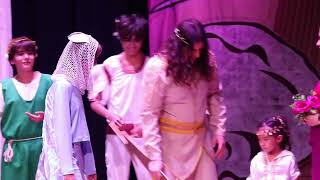
🎭 Hércules El Musical de Disney interpretada por la compañía de Teatro LIKS.CO. Función 1.
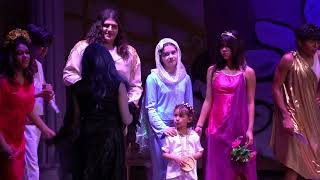
🎭 Hércules El Musical de Disney interpretada por la compañía de Teatro LIKS.CO. Función 2.
🎭 Hércules El Musical de Disney interpretada por la compañía de Teatro LIKS.CO. Función 3.
🎭 Hércules El Musical de Disney interpretada por la compañía de Teatro LIKS.CO. Función 4.

👾 Bloque 2: Genius Hours LIKS NextPlay presentado por KidZania en alianza con Colegios México Nuevo.