Planet Explorer Week - Parshuram "Edugems"
Parshuram, founder of the Center for Environmental Education Nepal, describes how he teaches sustainability through project-based learning in Nepali schools. Students research local issues like water and waste, then create reports and videos to share with their communities. He argues education, not just technology, changes minds about environmental problems.
Chapters
Welcome everyone, good morning. We are really happy to finish this amazing week and to have this golden closure, we are so excited and honored hosting Parshuram. Parshuram is a person from Nepal and he is here with us at LICS, the School of Creators. He is the Director of the International Management Training at EduGems. It's a school in Finland. He has experience on environmental education, education for sustainable development, and climate change education. He was the founder and chairman and executive director of the Center for Environment Education Nepal. He is talking to— with us today about what is he doing to help the planet and to change the education. Welcome, Persharam. Thank you for being here with us, and it's all yours.
Hello, hello, hello, hello, hello. Can I, can I, can I, can I? Yeah, I'm ready. I'm ready. Yeah, perfect. We can start now. Okay, okay, thank you so much. So if you can put my slides on the thing— yeah, that's good. So thank you so much, uh, everybody. Uh, I'll try to, uh, move my slides. So first of all, once again, namaste, because this is how we greet, like this, saying namaste in Nepali. Even in India also is the same. So I'll just try talking about my journey into education, how I became a teacher, and later on I became an environment educator. So am I audible? Is it clear to you all? Hello? Hello? Hello?
Yes, we can We can hear you and we can see your slides.
Okay, okay. But I see— okay, now the slides are good. So let me move the slides. So I come from the eastern part of Nepal, which is a— which used to be a very rural area when I was a child. Now it's become a town. And I grew up in a village, okay. I was born in a remote village and I grew up working with all the, you know, the village. Like, I plowed the field, I looked after the cows, and I was in the forest with the cows and the cattle. So like that, my childhood. So I went to a primary school, I walked about 20-30 minutes to the school. But fortunately, my father was a teacher there, so my father took me to the school and he took— brought me back to school and took care of me. And a lot of things that I learned about teaching was through my father. So I happened to become a teacher mainly because my— I saw my father as a role model. So later on, after I did my Class 12, plus 2 we call it, after 12th grade I joined teaching. Then later on I again did my college things in a private way. So in the school I was inspired by my teachers who were really good. Some of them were really, really good. And one of the teachers, even today also I had a chat with him, he He's quite old now, and actually he inspired me to become a teacher. Actually, he was a very, very good teacher. So later on, uh, I did my higher studies almost self-motivated. I did, uh, like distance mode college and things like that, and I went to India for my 2 years of education course after I taught. So for, for 2 years 1982 and '83. So I joined teaching in 1982, April, and '82 and '83 I taught. Then I went to India for, for my further studies on education for 2 years. Then later on I studied ecology from New Delhi, India, and also did my master's on sustainable development. But I was a teacher and also a school administrator And I worked with an NGO also, uh, so here it's there. So I was with an NGO as an environment educator since 1993 until 1998. Then I left that and I founded my own NGO called the Center for Environmental Education in 1999. And later on, about 12 years ago, I founded another organization called the Smart Minds. Mainly to train teachers on ESD, Education for Sustainable Development, because I learned this skill from Scotland back in 1993, uh, from Strathclyde University. I did a course on environmental education, so that was the main turning point. Until then, I was just a kind of a plain teacher, a trained professional teacher, but once I went to Scotland to study environmental education Then I realized that we have done so much, so much. I mean, we have extracted so much from the earth, but we have given hardly anything back to the earth because we have only one earth. And if this gets spoiled, we will all suffer together. And environmental issues have no political boundaries. Anything that happens here in Nepal may affect Mexico tomorrow or any other part of the world the next day. So similarly, whatever happens in Mexico or another part of the world can affect Nepal in no time. So political issues have no political boundaries, environmental issues. So that's what I realized. So I started then working from 1993 onwards on environmental education by educating the teachers, by training the teachers, by working with the school children, by developing small, small projects, projects on water issues, projects on garbage issues, projects on sanitation, projects on firewood, the fuelwood issues, and things like that. And now at the moment I'm, uh, involved with climate change education and disaster management education in rural part of Nepal. So next week I am going there to start because we were supposed to start, um, Uh, before the pandemic, and just because of the pandemic, we had to wait, wait, wait. And last year we thought we will start again, there was lockdown. So very soon now, I hope things will be much better in terms of pandemic. So I'll be going to that area, in a very rural area in the hill, to launch a project in two schools and two communities. So I have to do some meetings with the government agencies, stakeholders, before I start the training and the launching of the project in July, maybe June or July. So I'm going quite soon there. And I also worked in, uh, in the Swiss, uh, Swiss organization called the Helvetas in Nepal as a consultant in drug lab. World Wildlife Fund in Nepal and UNESCO also partly. And because of my involvement in ESD, Education for Sustainable Development, and I had a contact with— we had— we came in contact with EduGems Finland. So we then decided to work together. So I am a core team member of EduGems, which is an online teachers training academy mainly for focusing on ESD, Education for Sustainable Development. So I operate everything from here in Nepal, but we work very closely and we have very regular meetings. And I have also developed a few environmental education activity books. Basically, very lately I have developed a kind of an activity book for the Central Zoo, mainly for teachers who work for conservation education. So it is called Conservation Education Manual for the teachers, where there are quite many activities for the children. And I also written books for the children, mainly on environmental education, to understand environment more in a very child-friendly way. Children, they are very notorious, they spoil a lot of— especially they don't know about the value of pencils, and I've seen children spoiling, breaking pencils every day. So like that, I have addressed those issues also there. And also I have developed books for teachers and guidelines for teachers to— especially on how to approach the classrooms in a more professional way in terms of classroom management, lesson plan, and things like that. So this is what my what it is all about at the moment. I'll be talking a little bit more about what I'm doing now. So this statement by Gregory Bateson I found somewhere in the website, and I use this in my training programs. It says that the major problems in the world are the differences between the way that nature works. The nature has its own way of working, and for the last So many billions of years, the nature has been working its own way. But ever since the humans came, we have reacted against— we have gone against the nature. We have done a lot of things which are against the nature. So that is what has brought in a lot of environmental issues which were unheard of 20, 30, 40 years ago. So when I was at school, um, you in the school, high school, I— we never learned about climate change because there was nothing there at that time, about 40 years ago. But now it has become the world's most pressing issue. So we have to really think about how we can work together hand in hand because we all belong to the same world, same Earth. Although we may belong to Mexico, Nepal, India, Europe, but the Earth is one. It's all— if we spoil this, we spoil everything. That's what I believe. So we have to think globally and act locally. That's my point. So this is a, this is a, this is a very nice picture. I always present it to my audience. This, about 4.5 billion years, the Earth age is being fitted into 1-hour clock. So just assume that, uh, the whole 4.5 billion years is, you know, within this 1 hour. So when did the Earth start? It started here at 0, and there's a little mistake here. When it was 9.9 minutes 18 seconds, then only the life started. So until then it was a hot ball of fire. There is no life. It was not possible because it was just a ball of fire. Sorry. Then the water, water formed, water, water formed somehow, and in the water the life started as a single, single-celled organism, a single cell. So then, uh, 10 minutes 27 seconds, the oldest rocks preserved on the Earth's surface. That's been found through fossil dating and carbon dating and things like that. So the scientists have roughly calculated that by, um, only, uh, 10 minutes 27 seconds, the oldest rocks present. So likewise, 13 minutes, uh, for fossil fuel evidence of life, LB cells. And only when it was 17 minutes 37 seconds the first bacteria were formed. So it continued like this. The life was very primitive. So this is geological time, this is geological time. So the life was very primitive, the whole chemistry was different, so the organisms were also like that. So the first cells with the nucleus was seen only when it was 40 minutes— after 40 minutes since the Earth began. As I told you, please imagine that the whole 4.5 billion years is fitted into 1 hour. So until 40 minutes, there is no, uh, cell with, without, with a nucleus. Only when it is 40 minutes. So like that, the first multicellular organism— so multicelled, 41 minutes 45 seconds. First jellyfish was very, very close, 51, 51 minutes. Like that, the first everyday divers see life, 52 minutes. Very, very close, very recent. So, but since because we, we, we calculate everything from the human time, we feel that, oh, it's long time, long, long time ago. But if the Earth was to speak, if the world, if the Earth was able to speak The Earth would say, oh, you humans, you don't know. No, the first fish came only very recently, 53 minutes, very recently. So like that, the first amphibians, 55, first reptiles, 55 minutes. Then Paleozoic extinctions, so a lot of extinctions happened then because of maybe a sudden drastic change in the climate or weather, whatever. Then the first dinosaurs, when we, when it If I ask you, when do you think the dinosaur lived on this Earth? We might say, we will say, oh, long time ago. Oh, we can't really think, it's a long time. But if the Earth was to speak, it's just very recent. 57 minutes, 1 second, 0.1 second. First mammal, 57 seconds. The first bird, 57.59 seconds, minutes. Then the first ancestor, the human ancestor, was 59.58.8, very, very recent. And the first modern man came into existence only at 59.59.9, very, very recent. So within this very short time— there are 3,600 seconds in an hour, and the modern human appeared at 59.59.9, that means 0.01 second and during this very short time we have pushed this Earth, our common home, as I told you, it's our common home. Suppose if we are meeting in the moon, suppose if we have a meeting on the moon, then we will all say that, oh, we belong there. Our home is the Earth, we all belong to that. So we have to think from that level. And this Earth has become so polluted, we have pushed this Earth to the brink of extinction. So today we are drinking, breathing, and eating poison. Because the air that we breathe is of very low quality, especially in the city area, town area. Water, we never know. We always try to take best water, but we never know whether that's really, really clean and germ-free. And we are eating poison because a lot of chemicals are being put, a lot of pesticides, a lot of fertilizer, chemical fertilizers are being put. So everything is going inside our body. And it's remaining there. And one day when it has become too heavy for our body to, to just hold it, then it triggers any disease, any kind of disease. So any, any, any disease you have, you go to the hospital, then just the blood or the urine or the excreta, and they find that something is there. It's all because of our intake. So we are all consuming, um, this, uh, this poisonous things. By breathing, eating, and drinking. Why has this happened is because of the human population growth. See, in 1950, the human population was about 2.5 billion only, total world population in the red. So by 2050, let's see, so the, the, the population would— is expected to cross 9 billion. Even we have about 8 billion now, 7.8 they say, but it must have increased. So even today we have a lot of issues because of the human population, because we have a lot of wants. We have, we have become very high consumers. We consume everything, and, and we are, we are taking in more than what we really require. We, for example, I need only one shirt to wear, but I may have so many shirts just dumped in the cupboard, but there's no use. So we have to really consume less, and by consuming less, we are controlling the pollution, we are controlling all the chemicals. So the world population has really, really doubled, um, tripled. Since 1950, about 70 years ago, it was just 2 to 2.5 billion. So it has more than tripled at the moment. So we have to really think about it and consume less, consume less. And as humans, we have a lot of ego. We feel that we are at the top of the ecosystem, we have everything in control, all the other animals have to be controlled, consumed by the humans. So you can see here, at the top of the ecosystem is the human. So, and, and it's especially a male figure here, and this, this is a female figure. And especially is that we have many parts of the world, male-dominated, you know, system. So the male males especially humans, especially males, think everything is around our control. So small insects, germs, everything is very important. Every animal, every organism is very important, but we always feel that is snake is for us, we have to kill it. The bird is for us, we have to kill it. The pig is for— we have to kill. We have to— so since the humans started killing destroying nature, trees, cutting down trees. I think that's the first, um, environmental destruction that the humans started— cutting down trees and killing animals, poaching, illegal hunting, and things like that. So this has really, really spoiled the whole environment, the whole ecosystem, and disbalanced. So at the moment, it's all disbalanced. So it's high time that we all think and come together to, to work for a better future, for a sustainable future. So how can we do this? Now, I— this is a very nice picture. I actually had this picture when I attended a kind of a global conference in India on ESG as a, as a driving force for for succeeding SDGs, the Sustainable Development Goals. In 2016, I attended this and I somehow borrowed some of these slides from there. So all these challenges, you can see all these challenges, some of them, these are some of the challenges, but the challenges in the society are environment degradation, climate change, health and diseases, especially the present pandemic is a very, very, um, big thing that we have all suffered. And we are all— I can see you in the masks because you are sitting in a group. So here also, when I go out, I have to have mask. So health and diseases, new diseases are coming up every time. And economic, because of that, they are all interlinked. So because of the health and diseases, there's economic meltdown. People have less jobs. They're out of jobs, the factories are closed, and schools have closed, and things like that. So as it is, there is inequality. There's a lot of haves and have-nots. There's a lot of— few haves and many have-nots. So there are about 20% of the people have more access to resources, and 80% are without any access. Without proper access. Migration from the village to the town, from the town to the other countries, you know, for, um, opportunities and things like that. Sometimes, um, because of the war, there's a migration, as you can see in Syria and, um, recently Ukraine, a lot of migration, a lot of running away from the country. Environmental refugees because of the, you know, unproductive land, they have to leave the place. And violence, I don't have to explain this to you because violence is everywhere, um, and this has become a very common thing. If you look at a newspaper, watch the television, there'll be about 80% of the news all about violence and all negative things. So, so all these things have to be— now, as teacher, because you are there as teachers and I am talking to a group Good teachers there. And, um, the only answer— the environmentalists have said that the only answer to all these issues in the world is education, but not the kind of education that we are doing now. A kind of education that takes the children to the depth of the things, doing research and why it is happening, and to find out the solution. By having a kind of problem-solving approach. So all these things we have to bring into the lesson plans to the classroom. We plan it properly in the school as a team and put it into lessons with a live example, local examples, global examples. So I call it a Glocal— G-L-O-C-A-L— Glocal, by connecting the local issues to the global issues by when you are talking about the global issues connected to the local issues. So all these examples, so for that we need to have a dialogue and change project. So we have to have teacher education, we have to— because you see, UNESCO has very clearly stated to have few competencies. The teachers, a visionary teacher, things like that. So strategically planning teachers and things like that. And it has, um, enforced, or it has suggested that all the teachers in the world need to be well-versed on ESG by the year 2025 so that we can fulfill the Sustainable Development Goals by 2030. Because of the pandemic, I can assume that a lot of, a lot of, a lot of goals— say, out of 17 goals, a lot of goals are still in the negative side because of the pandemic. A lot of things could not happen, so they might rethink and revisit the whole, whole the SDGs. So we have to have a new syllabus to tackle the current situation, local situation, make it more locally relevant, and use the methods, the modern methods, the practical methods, and use new approaches. Because as Albert Einstein has said, that we cannot solve our problems with the same thinking when we used— we used when we created them. Because we created a lot of— it's the human beings which has created the whole I mean, issue— a lot of issues that whatever we hear, it's all created by the humans, not by the other animals. And if we have the same thinking, we cannot think of solving anything. We have to change our mindset. Desgracia, aquí hay— no.
Hola, comunidad LICS, unos minutitos en lo que regresa nuestro invitado y los dejamos con la teacher Blanche y los tinkers. Okay guys, how do you think about what Vajram is telling us? What do you think about what he said about we are drinking, breathing, and eating Everything contaminated. Yes, Juan Pablo? Exactly, you cannot solve a word with a word. And what Albert Einstein said, we cannot solve problems in the way we created them. And what Parshuram is trying to teach us is that we need to change. This is a moment. We need to accept that we are doing the things in a wrong way and we have to change. Nat, what do you think about what he's saying? What is he telling us?
I think it's very interesting the way he thinks that the teachers need to teach us, like how to change and how to overcome our ego, because that's the main problem we have for being human.
Yes, thank you.
Gustavo. The same that said Nat, we should start to think more in the environment than our own personal necessities.
Yeah, to live in San Diego. Yeah. Any other question? No, okay. And guys, what do you think about this week? Have you been enjoying the activities? What about the lessons you're learning? What about the team you are working with? Would you like to share your experiences? Nobody there? We are really sorry we're having these internet problems. Okay, fun, that's the word. We learn by having fun. Yeah. Okay, Nat, you said something about teachers.
Yeah, I think that what Parshuram is doing is to like train the teachers to know what they should do about changing the environment for good. So I think that most of the tasks are for the adults, you know, to teach the new generations to understand what is wrong, what are we doing wrong and to overcome the problems with a new kind of way of thinking.
Yeah, that's right.
We as adults need to change to teach you, to convince you, to make you guys change, you know. And I think he's coming now.
Yes, please, please. Uh, so there are few things, like about 5 main points about people to end poverty and hunger in all forms and ensure dignity and equality. Planet is all about protecting the Earth's resources and ensuring that the climate is— the temperature doesn't increase anymore. The prosperity is all about people having more access to economy and economically well-off. Everybody becoming rich. Then peace, because there is no peace now. We have to also foster peace and just society and partnership. We have to all work together. So these are some of the main points, critical importance, important points of SDGs. So what we do is we first give out problems and projects, and then the children do the group discussion, then they do the research, then the group discussion group-wise. Then they prepare the project work and they prepare the report, and they again come to the class. Then they talk to the teacher, the teacher compiles, and they have a mini lecture. Now sometimes, sometimes they have an exhibition through, and they have also songs, poetry, and theater and all that. And we finish that with assessment again. We we again go back to problem and assignments. And this is the Nepali curriculum here on the, on the right side, and also which, which talks about including STEAM approach, STEAM or STEM approach. So according to the curriculum, what we have done is we have identified few projects that we are doing. So we have done water so far, waste management, urbanization, climate change. In some schools, they are doing energy, health. These are some of the themes of the project: forest, wildlife, culture, food and agriculture. So these are some of the things that— themes that we have identified, and we are doing this with the schools. So few schools have done a few, 4 or 5 projects. So the schools which joined us late are maybe with energy or climate change. So those schools which joined us in the beginning must have done quite a lot. And my program officer does all this, she does all this work. So after doing the project, how do the children report? Is by writing reports, by having case studies, research studies, by taking photographs, by making scrapbooks, making videos, short videos on the issues. Then also, if possible, writing letters and to the local leaders and stakeholders about the issues by creating awareness. And they also try to do some of the things at home by, like, for example, consuming less water, or, you know, going to the shopping, going for shopping without— with a bag, with a cloth bag, things like that. Parents interview— sometimes they interview parents also because, um, the parents are the best resource, I feel, because they know the past, how it was used to be 20, 30 years ago, how was the life and things like that, how do you think the things have changed and all that. So the children can learn a lot from the parents and elder people. And by doing the social media posts Action plans. If they have some, for example, a lot of paper wastage in the school, they can have an action plan. How can they reduce the wastage of water, water and paper? They can make songs all about these issues. They can have— they can write poetry. They can develop a role play and drama. They can write education clips by posting it into the social media. And we can also write imaginative writing. If I were the local leader, how would I solve this issue, and etc., etc. So they can also have this. So this will also develop their literary work, and by making models and things like that, and by also making posters and captions. So these are some of the things that the students are already doing here in Kathmandu and in some of the schools outside Kathmandu. And in Kathmandu, we have started doing face-to-face programs. Our people go there and they talk to the children. But for the schools outside Kathmandu, we have a weekly kind of a Zoom meeting. So the teachers are trained there and they undertake these projects. So the end product is— I showed you a slide almost like this. It was ego. And now by doing all these activities, what I want, what I desire, is to bring a kind of eco— ecosystem. We have to become a part of the ecosystem. We are a part of ecosystem. We are no— we are no senior. We are not in the top. We are a part of the ecosystem. So if all humans think that, oh, I am like other animals other animals also have to live as, as lively as us, as good as us, have to have the life as prosperous as us, then maybe we can think of a sustainable future. Otherwise, if we keep destroying everything, one day we will also be dying. We will die because it is said that Um, only it is only when the last tree has been cut, the last river poisoned, and the last fish caught. After all these things are finished, there's the last tree on this earth finished, the last river which is little pure but you know it's poisoned, and the last fish, the last fish caught finished, then only we will realize that we cannot teach money because everything What we are doing, what the humans are doing, is for making money. They are destroying nature for making money. So this ecology and economy are two things which have to be brought together, and the scientists, educators, politicians, world leaders are trying to bring this together, which is called sustainable development. So education about this is called education for sustainable development. And if we can all work together to, to promote environmental education by integrating the elements of environmental education and education for sustainable development into our teaching areas, maybe in 20, 30 years when we see our children growing up and becoming leaders, then they will become more aware, they become more wise decision makers. Otherwise we will be blind, because anybody who misses environmental education and ESG today will become blind individuals tomorrow in thought and actions. So with this, I end my slides. Thank you so much. Thank you.
Thank you, Prajoram. We are waiting for the questions, guys. Would somebody like to ask something?
Yeah, yeah. Oh, this is a Nepali hat. This is a Nepali hat. So we call it toopi.
Okay, thank you. Okay, thank you.
Symbolic Mount Everest. So you can see there's a mountain here. Thank you.
Okay, um, Santiago, 4th grade. He's from 4th grade and he's asking why your idea to help the planet. Why?
Um, can you just please type it out because I can't hear properly. Santiago.
Is asking why your idea to help the planet. You already told us that you became a teacher because you were inspired by your parents and by your teachers, but why your idea to help the planet?
Planet. I can't hear. Oh yeah, thank you. As I think I mentioned this, when I went to Scotland to do my environmental education course, there our lecturers in the Strathclyde University, they talked a lot and I was really amazed And I was quite shocked to find out that we have done so bad, we have treated the Earth so badly, and that a lot of problems were there mainly because of the human intervention, wrong human practices. So since then, I felt that I must do something, and I realized that it is only education which can really put in all the positive values into the child's mind. Because all the things that we are doing, all the activities that we are doing, is starting from here, mind. So before you ask anybody to hold the broom to clean, we have to clean the mind. So it is the children where, when they are at their formative years, when they are very young, if you can give all the best all the best positive values, all the family values, you know, into their head, then they can become more wiser and they can have a better decision to save the planet. Thank you.
Next, next question.
Yeah, yeah, yes. Thank you, thank you so much, thank you so much, thank you so much. Um, in fact, uh, we can't help just one person there, but if we— if you are interested to have a program with us online. We have this online program every week. We have a program officer who does the training of teachers and also talk to the children. So we can have 4th grade, the whole— not only you, the whole class can participate in our program. If you're interested, you can contact me and maybe we can talk about it. And you can do a lot of project work. We can give you project ideas and our program officer, whose name is Monica. She will do all the things that whatever she, she can do for you. Thank you. Nice that you are interested, and the children like you must think about the world because it is in your hands. Thank you.
Next question. Camilo from France.
Yeah, yeah, I can see, I can see that. What do you like the most? Ah, um, I always feel that teachers is— teacher is— the teaching is— the people think that teaching is very, very boring, but I feel that teaching is the most important job in the world. Most important work. Because, uh, when you are teaching, uh, you are handling the world's most complicated machine, most complicated and wonderful machine, that is the mind. So it is very difficult, but it's very interesting to handle the mind and to give positive values. And I feel that Whatever happens tomorrow in the world, whatever happens in the, in the world tomorrow largely depends on what we write on the blackboard today. So how we— what we do today can, in the classroom, can determine tomorrow's world. So that way I feel that teachers' work is very important. I, I, I'm a very proud teacher. Thank you. Question. Uh, um, I think now I won't choose any, any, any job. I have done— I worked almost more than 40 years in this, in this teaching job, teaching and teaching-related job, teachers training and environment education. So I have spent more than 40 years in education, so I would not choose any other job. And but if I choose, I would choose to become a— you know, once I retire in few years' time now, I would write I would read a lot and I would write books and short articles on environment and education. Thank you.
Okay, next question here, Gustavo, at the set.
Um, I haven't worked so much with other countries, but I always urge Because I have done few conferences like this, few sessions on environmental education, I always asked, I always asked, and I always like to urge to include environmental education and education for sustainable development in teaching. Because UNESCO has, as I told you earlier also, UNESCO has very important document on education, and it has told that anybody who is in the teaching profession must have the ideas of ESG, otherwise the teaching would be almost fruitless. So I urge everyone, all the teachers everywhere in the world, whoever I talk to, to include and to integrate the elements of ESG and environment education. Thank you.
Last question.
Ah, ah, yeah, it's very difficult to work with an NGO because getting Although we have a lot of ideas, getting funds is a problem. But I feel that if you really show some of the work that you have done, that you do, maybe people would come forward to help you, even locally and internationally. In fact, I have a very bitter experience of working with the NGO that I have established. It's very difficult, really. Yes. And people think that, oh, everything is fine, especially environmental thing. Everything is fine, why should we reduce environmental education? But we have to convince them. It takes time. It is a hard job to convince people to get funds. And it's not only funds, we have to really become selfless and do something, keep doing something, small, small, small things. Personally, at the personal level. Thank you.
Thank you, Parshuram. At Leaks, we accept the challenge, and as a team, we are really committed to change for good. Yeah, yeah, you have really inspired us. Thanks for sharing your knowledge, and we look forward to see you soon.
Thank you. Thank you so much. Thank you. Thank you so much. And, uh, we can be in touch, and I urge you to take on the courses from Elysium, at least Module 1 and Module 2, to get more knowledge on ESD, the integration of ESD into your teaching. A lot of teachers have taken the courses. I'm sure you have also done, and if you have not done, please do it. You can contact Linda for that and she can guide you more. And if you ask me also, I can also guide you, and I can even take one or two classes on environmental education, more ideas on project work. Thank you so much.
Namaste.
Bye. Bye. Bye.
More from Adolfo
🎭 Hércules El Musical de Disney interpretada por la compañía de Teatro LIKS.CO. Función 1.
🎭 Hércules El Musical de Disney interpretada por la compañía de Teatro LIKS.CO. Función 2.
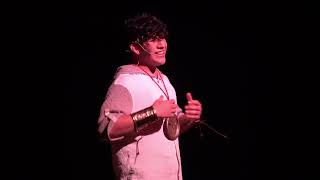
🎭 Hércules El Musical de Disney interpretada por la compañía de Teatro LIKS.CO. Función 3.
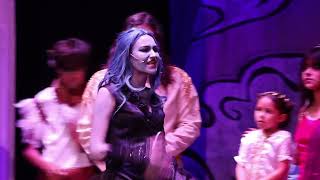
🎭 Hércules El Musical de Disney interpretada por la compañía de Teatro LIKS.CO. Función 4.
👾 Bloque 2: Genius Hours LIKS NextPlay presentado por KidZania en alianza con Colegios México Nuevo.