Engineering Brain Circuits to Improve Mental Flexibility: Alik Widge, MD, PhD
Dr. Alik Widge uses brain stimulation to improve mental flexibility, the ability to choose healthier responses across anxiety, depression, OCD, and other conditions. Deep brain stimulation increased flexible decision-making by 5-10% in patients. His lab is developing optogenetic techniques to target specific brain circuits without surgery.
Chapters
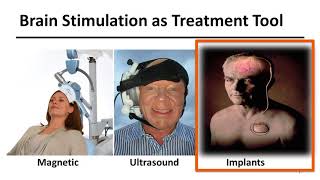
So I'm going to talk to you briefly about flexibility. We all could use some more flexibility, usually of this kind, especially if you've been sitting in a chair for the past 2 hours. But I'm going to talk to you about a different kind of flexibility, mental flexibility, which I like to talk about as the ability to take what Robert Frost called "the road less traveled by," this idea that Every decision we make, we usually have our habitual response, the thing we could usually do, versus an alternative. And when you look at mental disorders, so often it's the alternative that's actually the healthy choice. Think about what Sam was showing about the people who get stuck in avoidance behaviors that right after their trauma were incredibly adaptive, but 6 months after their trauma, they've got to let go of those and start taking a different path. So we want to make it possible to actually increase flexible thinking, that alternate choice, for two reasons. One, because it turns out that getting to the— Josh's point about how many mental disorders overlap in their features and their biology, it turns out that you can find inflexibility in almost every mental disorder that's available in the DSM. Mm-hmm. And more importantly, because we've got some preliminary evidence that we can specifically change it. We found a way in humans to move that needle, and if we can understand the mechanisms of how we're doing that, we might be able to make it more universally possible and develop this into a new kind of treatment, one that cuts across different psychiatric diagnoses. Inflexibility is everywhere when you're looking for it. Mm-hmm. I just talked about post-traumatic stress and really all the anxiety disorders and their habitual avoidance patterns. But then you can think about depression and how common to depression is this persistent negative self-talk that, "Well, why should I bother getting out of bed? Really, it's just going to be another bad day. Yeah, I could take that antidepressant, but, ah, the last 4 didn't help. Why is this one gonna— why is this one gonna make a difference?" And then we can move from the mood and anxiety disorders into what we think of more as the neurodevelopmental disorders. And we can think of the fact that in schizophrenia, fundamentally, one of the core symptoms is this fixed delusion, the grandiosity, the paranoia. There's some difficulty in learning new behavioral styles, what we call the negative symptoms. And then you go to the autism spectrum, where you've got the rigid, inflexible interests and this inability to deal with routine change, as basically the core symptom, the idea that really flexibility is one jumping-off point from which we might be able to address the entirety of the diagnostic manual. Now, this gets to the other point that Josh and the other speakers were making, is that when you've got something like this that cuts across disorders, that says that maybe it's got a common brain biology, that maybe there's some specific circuits of decision-making in the brain that are vulnerable or disordered across patients, and that we could be looking for them if we had a way to change them, specifically to target that, as opposed to applying a neurotransmitter and changing it across the entire brain. This is what I work on clinically: brain stimulation. The idea that you can deliver targeted electromagnetic energy to an area of the brain somewhere between the size of a golf ball and the size of a garden pea, and that if you can do that, you can affect a specific brain region, a specific circuit. We can take these insights that are emerging out of the animal literature and actually get very targeted in treating them. And that is available now, to some degree, as things like transcranial magnetic stimulation, which you see there on the left. On the left, the ability to modulate the excitability of one specific part of the brain, the lateral prefrontal cortex, through repeated pulses of high-energy magnetic field. People are working on pushing this to the deep brain, so in the middle you see my friend Sasha Bistritsky, who's working on doing that with focused ultrasound. That is actually Sasha wearing his own device. He's the sort of scientist who is perfectly willing to take his own medicine. And then on the far right, You see what I work on, deep brain stimulation, a surgical implant originally developed for Parkinson's disease and other movement disorders that's placed directly into a small area in the center of the brain, tiny little 1mm electrically active contacts. Through those we can deliver pacemaker-like stimulation and change the function of neural circuits. And what we've been able to show is that that kind of stimulation, this deep brain stimulation, or DBS, can be used both as a tool to study flexibility, as a tool to change it. Because there's a really cool thing you can do when somebody's got this kind of medical implant. Namely, you can turn it off. With a drug, once somebody's been on it, you're going to have to do a washout. You're going to have to take them off it for 4 or 5 weeks. And sure, it'll get out of their system, and you might be able to measure the neurobiologic changes. But in those 5 weeks, their dog might die, they're going to have fights with their spouse, they might go on a new diet. So many external factors are going to change besides the one teeny thing you want to measure. With a brain stimulator, you turn it off, you wait an hour, you don't even need to take off the EEG cap that person's already wearing to record brain activity. You can do one of the most powerful designs we have within neuroscience, a within-subject, same-day manipulation design. And that's what we did. We took people who'd received these implants in clinical trials for depression and obsessive-compulsive disorder— so again, working across diagnoses— we brought them in, had them do a standard laboratory test of flexible decision-making, turned their stimulator off, had them do it again. And what we saw— the red bar on the left is their stimulator on, the blue bar on the right is their stimulator off. They're just a little bit more, 5 to 10% more flexible in their decision-making. They're able to do this standard laboratory task a little bit faster without making more mistakes. So it's not a trade-off, they're just thinking a little bit faster, a little more smoothly, and we've been able to show that this isn't just making them generally faster. If you have them do something simple like just bang a key on a keyboard as fast as they can, That's the figure on the right. Absolutely no effect. But we ran into a problem. I said that we had an EEG cap on them, that we were trying to figure out, "OK, well, what changes in the brain when you turn this stimulator on and off?" We found significant changes, which is great. That's every little red bar there on the right. The problem is that we found statistically significant changes throughout the lateral prefrontal cortex and even into the more middle of the brain. Now, these are circuits that are involved in decision-making, so this is exactly where you should see these changes, except this doesn't tell us which one. So this doesn't let me narrow it down to say, "OK, we really should be trying to get at this circuit, this brain area, if we want to make this a universal, works-almost-every-time kind of treatment." The problem with these patients is that when they're willing to volunteer, you can get amazing insights like this, But you can't keep having them come back every day for months on end and say, "Hey, can I play with your life-saving medical device yet again?" Because A, you do that enough, you run the risk of causing something bad to happen to them, and B, they're in recovery, they've got lives, there's a limit to how much they are willing to do for me, even when they're grateful. Now, my rats, on the other hand, they don't have so much in the way of lives, they've got the shoebox they live in. And so, What we've been able to do is develop a rat version of the same flexibility task we give to humans. For humans, you've gotta find the odd number out in a set of 3, and we make you do an unusual mapping between what you see and where you press with your finger that forces you to have to stop and think. With rats, you train them to chase a blinking light back and forth between 2 levers, and then you force them to stop chasing the light and ignore where it is. So it's the same, You've got to suppress what you would normally do. And when we do that, and when we put an electrical brain stimulator into the rats, we get the same effect we get in the humans. Stimulator on, they're a little bit faster, and actually rats also improve their number of errors. They actually get better at the task in two different ways. So now we have the animal analog of the human effect that we can start to say, what's going on here? So it's a translational project where we're starting with reverse translation. We're going from people back into a model species to figure out what's going on. Specifically— and Josh hinted at this as well— the electrical stimulation is a fabulous tool because we have decades of experience with it. It's safe. It's easy. You can get— well, it's not easy to do, but it's easy to get it through the FDA. You can get an investigational device exemption for a new implantable brain stimulator in about a month, and I know this because that's how long it took me to get my last one for one of our clinical trials. So this is known safe. But the problem with an electrical stimulator is every neuron that's within the electric field that it puts out is gonna get activated in exactly the same way. That's why we get that mish-mush of activation. What we're gonna do in our One Mind project is replace electricity with light. We're gonna use those same tools Josh was talking about We can make individual single brain areas, one at a time, sensitive to pulses of blue light that we can then pick off the circuits, stimulate one by one till we find the ones that create this same flexibility effect, and that's going to then let us target those same circuits specifically, invasively and noninvasively, in people. To finish up, I also need to say thank you. Both to the people who brought us this far, a variety of funders, public and private, that got us these preliminary data. I have to thank Janssen and Johnson Johnson and the One Mind Institute for funding this. And that's another picture of Jeff Nye, the man after whom this award is named. And thank you guys. Without everybody who's sitting in— who's sitting in this room, these awards would not be possible. And I and every scientist here is incredibly grateful for you being here and making these contributions to help us move the field forward. So thank you very much, and I think we're ready for the panel. Thank you.
More from Alik


Healing mental illness through brain network stimulation | Alik Widge | TEDxMinneapolis



First-of-its-kind brain chip to treat mental disorders being developed at the U of M