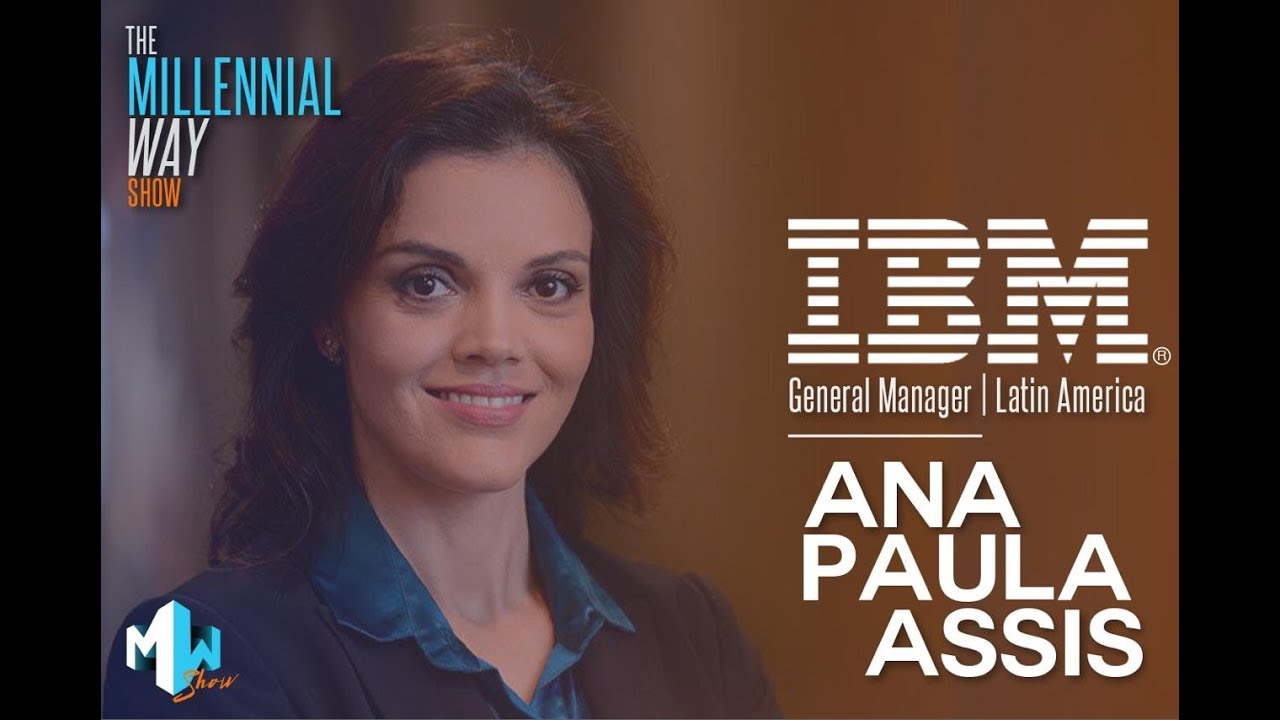
IBM's Ana Paula Assis says 78% of executives now see AI as a revenue driver, up from 40% a year ago. But most still don't know how to actually build new products or services with it. She argues companies need digital sovereignty, automation, and partnerships to scale AI beyond experiments.
Chapters
more and more looking at AI as an opportunity to increase revenue, not just drive efficiencies.
Ana Paula, it's wonderful to see you again.
Hey, Vikas, great to be with you in Davos again.
Yes. Another year. And congratulations on all the success that IBM's been having.
Thank you. It's been a great run.
It has indeed. And when we got together last time, we were talking about AI, and I'm curious to get your sense. So as you look forward, what are some of the key trends that you're seeing with respect to AI?
It's very interesting to see. So companies are now clearly shifting from experimentation to scaling AI. So I think that's point number one.
Yes.
Point number 2, more and more looking at AI as an opportunity to increase revenue, not just drive efficiencies.
Yes.
In fact, we conducted research with 2,000 C-suite executives and 78% of them said that AI is going to be a game changer in revenue growth.
In revenue growth.
In revenue growth compared to about 40% in 2023. So you're seeing really the focus shifting. Now, on the other hand, and I think that's where our partnership can help a lot of the companies, is they really don't understand exactly how that is going to happen, right? It's going to be new services, it's going to be new products, it's going to be new demand that is going to be created. So it's still not clear on how, But understanding that the technology can really unlock tremendous value on the top line.
That's really a significant shift from where it was.
It's a significant shift from 2 years ago, basically.
Yeah, indeed. And we're also hearing, and I would love your thoughts, I think there was a major announcement that IBM made around digital sovereignty.
Right.
So curious to get a sense of what are you seeing there? What are the opportunities?
I am actually impressed by all the conversations I've had here at Davos so far, 1 day and a half. And the topic of digital sovereignty was in pretty much every discussion that I had. Yeah. More and more companies are worried about how they control their data, how they drive resiliency of their IT infrastructure, how they comply with regulations. And when companies are approaching the digital sovereignty strategy, they are normally grappling with 3 challenges. First, replicability. So I developed a stack that works in Europe, how I make sure that it works in the United States, how I make sure that it works in Brazil, so on and so forth. and so forth. Many companies more and more becoming globalized. The second aspect is the auditability, right? So how can you demonstrate to your client, to your regulator, that everything that you're saying you're doing is actually happening, right? Yeah. So the documentation of the work that you are providing. And finally, the third element is how you do, how you have control of your IT and your data without sacrificing speed of innovation, right? So it's all about how you bring more automation to your capabilities, how you define disciplines around your IT environment that allow you to deploy applications and workloads with the speed without losing control of your infrastructure and of your data.
Ana Paula, you mentioned partnerships,
right?
And we are lucky enough to have a very strong partnership with IBM. I'm curious, how do you think about partnerships and the ecosystems as being an important enabler as organizations adopt AI?
Yeah, so that was another very interesting finding in the survey, right? I mean, almost 2/3 of the companies that we surveyed believe that it's impossible for you to get true value of AI without partnerships and without building ecosystems. And I think what we have done together, starting with our Client Zero story, which is really how IBM is the first implementer of the technologies that we provide and how we are driving value to not only our company but our clients, and how we scale that knowledge that you're building together to the market. I think it's a perfect example of how companies want to collaborate in the marketplace because we all know that this is an ecosystem game, right? You cannot have all the capabilities within the walls of your organization.
Right.
So creating those ecosystems and working with partners that have the same values that you have, that understand your business, that understand your challenges, I think is going to be really the path for success.
Ana Paula, thank you so much for your insights and for your partnership.