IBM's Ana Paula Assis on Leading Responsible AI Innovation

In a livestream for Miami Dade College’s Mike Fernández Global Business Leadership Series, IBM General Manager Ana Paula Assis discusses the rapid digital acceleration triggered by the COVID‑19 pandemic and its societal implications. She frames digital transformation as both a risk and an opportunity, highlighting two major inclusion gaps: a persistent gender disparity in technology fields and limited access to basic digital infrastructure for vulnerable families. Assis stresses the urgent need for reskilling and lifelong learning, describing IBM’s internal "Your Learning" platform and external education programs such as Pathways to Technology, Skills Academy, and OpenPTEC that aim to build both hard and soft skills across K‑12, higher‑education, and professional audiences. She presents data showing that tech‑savvy companies outperformed peers (e.g., 6‑point revenue growth overall, 16‑point advantage in retail) and identifies the technology mix driving success—mobile, hybrid cloud, and artificial intelligence. The conversation moves to cultural shifts, with hybrid work, empathetic leadership, and mental‑health awareness becoming top priorities for CEOs. Assis also outlines IBM’s stance on responsible AI, pausing facial‑recognition development until bias and regulatory issues are resolved, and looks ahead to quantum computing as a transformative future technology. The session concludes with practical career advice for students, emphasizing curiosity, risk‑taking, collaboration, adaptability, and humility.
Chapters
This is the Mike Fernández Global Business Leadership Series at Miami Dade College, live from MDC's Idea Center. It's wonderful to have this series back now with social distancing and an audience and speaker via livestream. I'm Isabella Artime, Director of Conferences at Miami Dade College, and on behalf of our esteemed President, Madeline Pumariega, and our more than 100,000 students, I would like to welcome you to this special presentation of Miami Dade College. This morning, we're extremely proud to present the very latest installment and first of 2021 of the acclaimed and popular Mike Fernandez Global Business Leadership Series. Our speaker this morning is Ana Paula Assis, General Manager, IBM Client Transition Leader, who will join us from Brazil. She will be formally introduced in just a moment by my colleague Sarah Tuskey, Dean of Faculty at MDC's Wollstone Campus, who will also lead today's conversation. The title of today's presentation is The Great Digital Acceleration: How Do We Make This an Opportunity for All? Very timely indeed. Before that, however, I want to once again thank the amazing community leader and benefactor of this series, Mike Fernández, who is likely tuning in this morning. Mr. Fernandez is a Miami pillar and college benefactor whose family name graces our acclaimed School of Business. He is also the generous funder of this series. It is Mike's support over the last 4 years of this series that has allowed us to bring to our students and community the thought leaders and executives from IBM, We previously had IBM's Chief Innovation Officer, Dr. Meyerson, and of course the senior management from global companies such as Pepsi, Boeing, Visa, Microsoft, Facebook, Carnival, SAP, Cisco, Western Union, Amazon, MasterCard, Brightline, American Airlines, Cisneros, and IBM once again today. What an impressive list of disruptors and thought leaders. So thank you, Mike, for all you do. If you're listening in, we hope to see you soon. And now it's my pleasure to hand things off to my able colleague, Dean Sarah Tuskey.
Thank you, Isabel, and good morning and welcome everyone to the Mike Fernandez Global Business Leadership Speaker Series. I am both honored and it is such a pleasure to be here today to introduce our featured Ms. Ana Paula Assis, General Manager of IBM's Client Transition Leader. Ana supports IBM clients and teams through the spinoff and every aspect of the client engagement. During her 20-plus years career in the IT industry, she's been devoted to strategic business development, change management, and innovative leadership. Prior to her current role, Ana was the first female executive to lead IBM's operations in Latin America. And was responsible for the company's business strategy, development of its professionals, and working with clients and the market to help accelerate digital transformation, adoption of artificial intelligence, and new cognitive models in the region. She's, she's recognized as a thought leader on topics such as artificial intelligence and data responsibility. She is committed to building an increasingly inclusive and diverse workplace as well as advancing education that boosts the professional skills of the future. Her commitment expands beyond her work at IBM, as she also serves as a board member for JA Americas, one of the world's largest NGOs dedicated to activating youth for the future of work by creating pathways for employability and job creation. We are fortunate to have you share your time and insights today as we discuss inclusivity and the digital acceleration. So without further ado, I'd like to turn it over to Ana.
Thank you, Dean, and thank you to the entire board of this so prestigious university college in Miami. I think that all of us thought that by now we should all be in the same room, but unfortunately this is not the reality that we are in. Hopefully we are going to be in a, in a situation where we can meet together again very soon. And I'd love to be there because Miami is really one of my favorite cities in the world. Yes, I decided to bring this topic because I think it's very timely. And interestingly enough, the World Economic Forum just released their report for 2021 with the 7 largest risks for our society, and digital power Digital gaps are being shown as 2 of the 7 major risks that our society is facing and is being challenged by, especially after the pandemic, together with global warming, climate issues, and the fact that we'll probably be going through infectious diseases in a more common way, unfortunately. So I, of course, am going to cover the topic of digital because it's really where my area of expertise is. So as I said, I think when we think about the situations that we're facing as a society today, inclusion, which is giving the opportunity for people to have at least access to being prepared to adapt and be competitive in a world that is completely being changed and transformed by the digital technologies has become absolutely necessary. Our society is facing significant challenges at this moment. All that we are seeing in terms of social unrest, certainly has something to do with this, the fact that more and more people are not feeling that they are being part or they are being taken together and being presented with the opportunities that are associated with how much technology is actually shaping up the way we live, the way we work, the way the society produces and generates value. It's no question that the situation of COVID-19 just made the acceleration happen in digital in ways that we never predicted. When we look at the comparisons between growth rates prior pandemic and after pandemic, it's really stark. And just to give an idea, e-commerce, e-commerce, it took almost a decade for e-commerce to go from 5% to 10% of the total retail consumption in the United States, just to give an example. And then in less than 2 months, it took just— and then it took less than just 2 months to do the same, to reach 20%, which was achieved in April of last year. So this gives an indication of how much the technology became pervasive and part of pretty much everything that we do today in our lives. So let's start with inclusion, because I think there are a few dimensions that are important for us to take into consideration. Let's start with gender and why gender is so important. Every time you have women participating in the economy, the multiplying effect that this has is significant because every dollar that a woman has access to, she's going to invest in the education of their children. She's going to invest in the health and safety of their family. So the impact, the long-lasting impact that this can have is significant. And today we still have a 70% gap in terms of gender equality in the region. And this is measured against participation of women in leadership positions, both in corporations or in politics, equal payment to develop or to perform the same activities, so on and so forth. This is a rank that is created by the World Economic Forum to measure how equal in terms of gender a society is. And here in our region, this is a significant gap. And this is also driven by the fact that we still don't see women participating enough in the technology industry. Today, less than 20% of the graduates in the computer science disciplines are women. So more and more, as we don't see women becoming a strong participant of this sector that represents today the major opportunity for growth, unfortunately, we're going to see this gap only increase, not to mention all the other aspects that as a society we'll have to adjust And again, COVID-19 made it very, very clear that when you need to have the focus on taking care of education of children, the health of the family, etc., the burden is still falling significantly on the shoulders of women. And this ended up making women, a lot of women, decide not to remain in the workforce so they could have time to dedicate to the family given the situation. So we— so this is a clear demonstration that we still as a society, we have a lot to do. Then we have another significant problem, which is the access to basic infrastructure in terms of technology to the broader population. So 30% of the most vulnerable families, less than 30%, have access to computer. And this represents a significant significant issue, both in terms of access to information and education, but also in the capability or the capacity to adapt and to readjust to the demands that the workforce or the workplace requires from people. And this ended up causing this major situation where 146 million students were affected in the region. Because of the interruption of in-school classes, where clearly the gap here was very, very visible. The children that had computer laptops at home could continue to carry on their studies, whilst those who couldn't have or couldn't afford those technologies really pretty much stayed out of the opportunity to continue to carry on their education activities. Now, what is this so-called digital acceleration that we're talking about? How does it impact the economy? So the predictions that we had for last year was that 40% of the major companies in Latin America would have implemented their digital strategy. I think this number, when the reports come for 2021, are going to look significantly higher. Because one of the major aspects that was not allowing companies to evolve their digital implementations or their digital initiatives was very, very much tied to culture, right? I mean, companies that really found making the shift, making the change very difficult, And this imposed as a huge barrier for companies to fully embrace digital. How many companies probably have gone through years assessing whether having a more flexible workplace would make sense, having people working remotely at least for some portion of their work hours from home, if this would be possible or not. In many industries, this was completely inconceivable. And then in a matter of days, we had, for those jobs, right, that could be switched to remote work, in days, in a matter of days, we had people working from home. And it was a massive dash. I can tell you because I work in a company that provides services to the largest corporations in Latin America. And there were situations where like in 72 hours we had people working in shifts in order to configure VPN access services to like companies that had 3,000 people that they had to move from working in the office to working from home. So companies were not prepared, but they quickly adapted. So this was a great demonstration that the technology infrastructure is there. It's ready. It was not—it was not just being used, and it was not being used because of customs and and culture that rapidly changed. And everybody says that necessity is the mother of all innovations and inventions, and that's a clear example of how something that that was this that totally disrupted our society completely shifted the way that we. Operate and we work. According to the IDC, by 2021, half of the regional GDP will be comprised of technology. So developing the skills associated with, you know, being able to use those tools and apply those tools to every profession must become a priority. It must become a priority from educational institutions. It must become a priority for the companies. So companies have a significant role in providing their workforce with the opportunities to reskill and as individuals. So I think I always look at this not as a one throat-to-choke kind of problem to solve, But it has to be a consistent and shared responsibility among them, among all the entities that share a responsibility in our society. Today, the gap is significant. We have almost 600,000 jobs that are not being fulfilled because we don't have the professionals prepared to take them. There are areas that are significantly problematic. Let's take cybersecurity, for example, which is an area that has become a focus for all the companies, particularly during the pandemic. Across the world, until the beginning of last year, we had a gap of about 3.5 million professionals. We are now with this major dilemma or paradox where we have unemployment on on one side, on one hand, and we have hundreds of thousands, if not millions, of opportunities on the other hand that people are not being able to capture because they are not educated and they're not prepared to apply. And that's why education really becomes, in my view, the answer and the way that we are going to address the problems that we are facing today. Look at the students, 70% understand that artificial intelligence will have an impact in their careers, but only 41% feel they are prepared for using it. So the challenge here is not only we need to ensure that people understand the importance of having these skills on those technologies, but also how do we prepare the people that educate these people to provide the skills and the curriculum, really, quite frankly, that will help these young students to perform properly when they go to the workforce. And at IBM, our point of view is that We believe in reskilling of all phases of life, starting at you know the the first infancy when you are in still in in the school in high school where the children will have to have access to those competencies. And quite frankly, this already happens. And one area that I think will have to enhance significantly is the area of soft skills. Skills, because not only we have to understand how to use technology, but we have to understand that the world is working in a very different way, where every day something new is happening, when you have to learn new skills at a velocity and at a capacity that is absolutely different from what we've done in the past. In the past, we pretty much defined, okay, this is the profession that I'm going to have, and that profession was for life. Now, on average, a person is going to change careers 2 or 3 times in their lifetime. So, and also there is very interesting statistics from the World Economic Forum that at every 5 to 6 years, 42% of the skills that you have acquired are no longer going to be useful. Then we have colleges and universities that will have to really adapt curriculum and make sure that every profession— this is not just a technology problem, this is every profession's problem, because it doesn't matter if you're going to be a lawyer, if you're going to be a businessman or businesswoman, if you're going to be a doctor, you are going to be working with technology in some shape or form in your profession. And it's no longer a statement for the future, it's a statement for now. And finally, the big challenge that we have, which is really adapting and making sure that people can reinvent themselves in the professional world. And we did a study with the University of Oxford in 2019. We predicted that in about 3 years, 120 million people in the 12 largest economies of the world would have to readapt their skills. And that is so true right now. How many people that because of the pandemic had to completely rethink or reposition themselves because the way that they did their work is no longer available, is no longer active. And making sure that this education is accessible. Accessible to everybody. So our objective is to, to make it easy to access, in some ways free where possible, and taking into consideration these aspects, right? I mean, making our staff, our people, our skilled professionals available to provide mentoring to either skilled professionals or youth leaving the university so that they can be ready to be productive in the workforce on day one. More and more certification on capabilities is gaining relevance when companies are making decisions on who to hire or not to hire. It's not just a diploma, but what knowledge on certain specific aspects, either a methodology or a technology, so that you can contribute to the way that the company operates on day one. Adapt the content to local language as much as possible because we understand that as much as English is a requirement, not everybody has access to good English skills. So we want to make sure that this is not a barrier for people's learning. And as I said before, hard skills alone are not making it anymore. Soft skills in areas such as learnability, leadership, openness, adaptation are absolutely critical for people to continue to develop themselves. and always be ready to take the opportunities that present to themselves, to them. So this is what I had to present, and now I'd like to open to comments, questions, and I hope that we can have a very good discussion on this topic.
Thank you, Ana Paula, for a great, great presentation. I think that's going to set the foundation for our conversation today. I'm going to ask you a few questions, and then I'm going to open it up to the audience. Audience members, I encourage all of you to post some questions in the chat, and once we transition, I'll pull the questions from there. So jumping right in, you talked a lot about— a stark statistic for me was the jump in e-commerce, right? It took us 10 years just to have an adoption rate of 10%, and now in a matter of months, it went to 20%. And how have you seen technology adoption impact performance of organizations?
That's a very, very good question. Technology has really become a major differentiator in COVID-19. And what we saw is that for tech-savvy companies, their performance in terms of revenue growth was 6 percentage points above the average of their peers across the board. Yeah, but it's very interesting to see that it changes depending on the industry, and I think it also has a lot to do with how the pandemic impacted the demand in the different industries, right? So if you go for the auto industry, this impact was only 3 percentage points between the tech-savvy and the non-tech-savvy companies. But when you go to retail, which we talked exactly at the beginning of this talk, the difference is 16 percentage points, right? So think about like an average $1 billion company that represented a premium of $1.6 billion of revenue in less than 1 year compared to their not tech-savvy peers. So I think it's fair to say that across the board, and we, and we visited 18 industries, and in 12 out of these 18 industries, we saw this phenomenon that the companies that had adopted technology and knew how to use technology were the ones that managed to better perform in this pandemic.
And what are some What are some of those technologies that you're seeing that are supporting that success?
Yeah, it's interesting to see that there was a shift during the pandemic in terms of the mix of technologies that are making the difference for the companies. So mobile has become number one by far. Then we had cloud, so companies more and more adopting cloud infrastructure in order to get a more resilient and a more flexible infrastructure for their technologies and artificial intelligence. So, on average, what we saw is that for the outperformers, 74% of those companies used some form of hybrid cloud infrastructure in order to to create their— the new technologies that they needed to make available to support the moment that they were going through. And 6 out of 10 companies used artificial intelligence to improve the client experience.
Wow. So it sounds like artificial intelligence is up there, but you mentioned that most companies that you've been working with use a mix. So is there a recipe for success?
I think the recipe for success is making sure that you decide for an architecture that is open. Open in the sense that it can connect with multiple technologies in an easy way, and that you can have the flexibility to move your applications to where they are going to perform the best. Point number 2, make sure you are taking good care of your data because the data is the source for a good AI. And finally, security and making sure that you have good risk management practices in place. In a world that is becoming more and more digital, more and more open and collaborative, you've got to make sure that your security capabilities are in shape. Otherwise, you you're going to be risking the company and the data of your customers.
Since the pandemic, have you seen this technology adoption change the way businesses are run?
Yeah, I saw significant changes and primarily because of the changes that we ended up seeing in regulation, quite frankly. Let's take health. Health, there were many regulations in place preventing us to use telemedicine. You couldn't pretty much exchange data on a platform. Anything that a doctor would give to you in a way that is not in an office with a paper printed and a stamp on would have no validity. And all those things fell through when the only way to do it was through, you know, digital. And this created a massive change in the health sector where they had to accelerate digital technologies to support their clients, to support their patients. They had to become much more nimble in terms of releasing new solutions because it had to be done in a very, very quick way. Even like, think about it, like scheduling appointments for people to go take their COVID exams, right? I mean, imagine if you had to do all this through a call center in a way that was like direct service. So, and this is a very interesting point because what we saw was the proliferation of digital assistants in a speed that we never thought would ever become reachable because it would be impossible to address all the demands that became part of our day-to-day lives with the typical way that we used to do it, like a personal or a person actually meeting or answering those questions and fulfilling those requests. So yeah, I saw a significant change, particularly on the front office of the companies. Of course, remote work brought a lot of changes to the way companies operate. I'm seeing organizations operating in a more asynchronous way, meaning, right, you are— you send something to someone knowing that probably this is not going to be attended immediately, but it's going to happen when the person makes itself available. And this is something that we were very used to, to work with at IBM because we are a global force and we have a lot of these follow-the-sun types of projects where I'm going to send something to someone that I know is sleeping at that time. But asynchronicity has become, in my view, much more accepted And I think this gives a lot of opportunities because this model or this way of operating— operation that we had before, where everybody had to be co-located at the same place to deliver an outcome, certainly poses some challenges for some professionals. And when we proved that it was possible to achieve the same outcome in a way that you can compartmentalize the activities and execute them in a way that is asynchronous showed that much more flexibility can be given to the workforce.
So speaking of the workforce, you mentioned in your presentation that the infrastructure for this technology adoption is there. It's just the culture and the people just hadn't moved toward it, right? Whether it's the clients or the organizations themselves. How do you think this rapid acceleration, the asynchronicity of work, flexible work environments is going to impact organizational culture?
This is probably the topic that is now on the number one priority list of every CEO. Because you really have to completely reimagine the culture of your company, knowing that people will be— will not necessarily be in the same building, in the same location all the time anymore. So a couple of things that I think are important to take into consideration. First, People want leadership that is empathetic and humane more and more. Companies have to be sensitive and open to the needs of their people. I think most of the reactions that we saw from, you know, CEOs really positioning themselves in activities like Black Lives Matter after all the incidents that happened in the United States was proof that companies have become much more open and attuned to the realities of their— of the communities that they are participating in. So I think that's one very important aspect to be taken into consideration. Flexibility, right? Flexibility in terms of hours of work. flexibility in terms of where you work from. And as I said before, if a company doesn't put learning central to its strategy, how you're going to ensure that your workforce has access to continuous learning, this company doesn't have a future. We can today absolutely say this with no No question, because the world that we're going to live on going forward is a world of constant change, is a world of a lot of complexity, ambiguity, and you can only be able to overcome those challenges or those constraints if you have a workforce that is constantly open to new ways of working, new ways of doing things. And among all this, it is very important that we create this sense of resiliency in the workforce and in the leadership because of this reality that, you know, the world as we knew it before, where everything was so defined and so clear, so black and white, this world will probably never come back. We are always going to be dealing with things that are in the gray zone where you need a lot of judgment, you need a lot of reasoning to make decisions, and this is energy-consuming and this is emotionally-consuming. So more and more We have also to see ways where people can take care of themselves, not only intellectually but also emotionally. And this is becoming probably another very interesting area where health, mental health, took a very high priority in the agenda of organizational health overall, because we know that people have to be mentally fit to be able to cope with the challenges of our time.
So looking ahead to the future, it's clear that the pandemic has had a profound impact in the way organizations conduct business and just the people themselves, the culture. But you'd mentioned for the future the importance of credentialing, right? Being lifelong learners. What are some things that IBM is doing to foster that, to foster that resiliency and that need?
Yeah. So starting with what we do internally, we do have a platform that is called Your Learning. Where each professional, each employee has a tailored track of activities that they need to execute in a given year. And we demand that people dedicate to education at least 40 hours of their year. Most of us do much more than that, and actually the averages are now above 80. If you look at the members across the world. So, and it's a very interesting one because it's a platform that takes into consideration your position in the company, what are the attributions that your job has, and in order for you to stay current, what are the things that you should be learning and what are the things that you should be unlearning. So it's really like a a Netflix platform that is going to be giving you suggestions on what you should be focusing on to continue to be a professional of value to the company. Then with our communities, we have a lot of programs. So to start with the high school, early college population, we started this program about 11 years ago in New York in a school in Brooklyn. And it's called Pathways to Technology, where we infuse these schools with knowledge associated with technology, but most importantly, soft skills that will give these young students the competencies for them to succeed in, in their life, actually in their careers, but most importantly in their lives. So things like How to how to improve your self-esteem, how to gain confidence that you can get out of that situation that you are in, or that your family you know back back family's background presented as a as a as a as a challenge for you to progress in your in your in your life and in your career, etc. So it addresses these aspects. As well, because what we've seen is that a great hindrance for people's development is their ability to believe in their own capabilities. So we reinforce that very much in the program. And not only we provide a methodology, but we train the teachers in this program, and we also pair for each student in the class with a mentor from IBM. And this program is now open. We have made it available to many companies here in Brazil. For example, we did it in partnership with Volkswagen. So we adopted one school, they adopted another one. And this is now a program that is— that has been rolled out in more than 20 countries around the world. And we also made a partnership with the institution, uh, Fei Alegria in Latin America, with Fundação Bradesco in Brazil, and we're making all the platform digital. So we have our OpenPTEC, uh, who is making many of these content and this, um, information available for free so that all communities can have access to, to the content that we have there. Then we have specific partnerships with universities and colleges in a program called Skills Build— sorry, Skills Academy, where we help the universities to change the curriculum of their courses to incorporate technologies, the most disruptive technologies: artificial intelligence, blockchain, security, and cloud, for example. So overall, these are the programs that we have in place, but certainly IBM really, as part of its global citizenship programs, put a significant portion on education because we understand that as a company that is influencing all this technology acceleration that we've been talking about, We have the responsibility to prepare the people to be competitive in this world and to provide the opportunities for them to succeed.
So what advice for students that are in college right now do you have?
Yeah, I will, I will use here my 10 list of the list of 10 advice, pieces of advice that I would give to somebody that is at college or about to graduate. So number one is stay foolish, stay hungry. This is a Steve Jobs, very famous quote. And it has all to do with this whole notion of, you know, a lifelong learner, never stop learning. Make sure that what doesn't work anymore, you forget so that you have— you open room for new knowledge. Take risks and learn from the mistakes. So fail forward. Don't let failure discourage you. Learn from the failures so that you can succeed after. Be a problem solver and be prepared to deal with a lot of uncertainty and complexity. Companies more and more want people that can help them solve, solve these complex problems. Collaborate with others. It's a team sport more and more. You'll need to work with people from different backgrounds. So you have to have an open mind and be inclusive. Flexibility and adaptability. So change is the only constant. And recognize that when something is not working anymore, change it and move on. Leadership attitude: if you think you can bring a contribution, just do it. Don't wait to be asked. Everybody can be a leader in each of the roles that they play in a certain, in a certain place or in a certain activity. Be a Be ambitious, but also be humble. Aim high, but understand that you'll get there one step at a time. The journey is the destination. So learn and contribute as much as you can along the way. Bring the best version of yourself every day. You never know when the opportunity will show up. Done is better than perfect. Start with something. Start with something, then improve until it's excellent, and always be grateful.
So you'd mentioned it's the journey, not the destination. You've had incredible success in your career, a number of firsts, right? So what would you say has contributed to that success?
I think that I am really— an insatiable desire to learn. That is a reality. And I think this kept me going forward and embracing the opportunities as they arose. And I was never afraid to take risks. So when, for example, I was invited to go to China to run our software business there, a country that I had never been before, I didn't know the language, I didn't know the people, I didn't know anybody. When I, when I, when I arrived in China, uh, to me was an example, right, of this, um, embracing the new and embracing the opportunities to, to learn and to do something that is going to push you forward. And it was, it was a perfect example, right, of taking a risk that at the end, um, brought a huge reward because it was— it's what gave me the opportunity to expose myself to the company. And then when I returned to Latin America, I came back to run the whole region. I think that another aspect is I have always been blessed, and I think I call this luck for lack of a better word, to be surrounded by great, great people that I could learn a ton from. people that gave me, you know, the opportunities to challenge myself. Many times when the opportunities were presented to me, I was not ready at all. So I think having these people that, you know, make the bets and take risk on you and give you the opportunity are people that I carry You know, in a very special place in my heart. And finally, I've always been a very good team maker, team builder. I don't believe that anybody can do anything by themselves alone. And I've always wanted to make sure that I brought the team together with me and that we were all part of something great. And so I think those, those 3 things combined probably helped me, you know, have this, have this career that I'm very fortunate to have had at IBM.
Well, thank you very much. I think this is a perfect time to take a look at the chat and see what some of the questions that we have from our audience. Let's see. This is actually one that you and I were discussing prior to the start of this session today. Do you think IBM will keep working from home, and as well as other big companies?
So what we are doing at IBM is what we call a hybrid scenario, because we totally understand that working from home doesn't necessarily work for everybody. And I saw this happening here in Latin America in the beginning of the pandemic. We, we issued a survey to try to understand how people would want to work when normality, right, would return. And I would say at that time, 75% said that they wanted to work from home. Definitely. We then took the same survey a few months after, in the second half of last year, and those figures had changed because, you know, people were finding it very difficult to do a few— some tasks in a remote way. Being together in a room where they could discuss a very complex project, for example, would make much more sense. But we also understand that not everybody at the same time will be wanting to do it. So how do you really implement a hybrid strategy? And now I think the cultural shift that is happening is exactly that, how you are mindful about the fact that some people are going to be remote and some people are not going to be remote. And this is what we have been thinking through in the next few weeks. Now, until we have really a scenario of complete security in the sense that vaccinations prove themselves as a good way to prevent the disease and so on and so forth, We are still keeping a policy of if you can work from home, continue working from home. And we are not encouraging or actually allowing people to go back to the office until they have a very specific reason to do so.
We have, how important are partnerships between educational institutions and big tech companies for the digital transformation and performance
I think it's critical. It's critical, and it's critical in both ways. Companies have to be much more capable to provide universities, colleges, schools with— these are the demands that I have, right? These are the types of professionals that I'm looking for. These are the opportunities that I want to provide. that I can present, and the universities have to make sure that they are really embracing those changes and preparing the people, preparing their students to be effective in their— in the workplace when they leave the university. So I think it's becoming much, much more clear that these partnerships are being reinforced, and that both sides have a significant impact to the success of each other going forward, because more and more universities will have to be able to prepare really people to be professionally capable, right? So I think it's absolutely a very important area for us at IBM, and I'm seeing a lot of companies on the same path.
The image that struck out to me was the Netflix-style learning that you all have at IBM. And what are some of the certificates or skills outside of the soft skills that we've talked about that you would say right now are in the most demand?
Certificates around agile methodologies. Because agile methodologies have become the way to develop projects regardless if it's a software development or a car. So you gotta understand agile if you, if you are going to become, let's say, an engineer, for example. Cloud technologies have become absolutely, absolutely critical because most of the new applications that the companies are developing are growing in this architecture. Data, and data is for everything, everything. It doesn't matter if you're going to be, I don't know, a teacher or an investor, you got to know how to work with data. data and cyber. If you want to, if you want to have, if you want to develop a career in technology, and if you want to go to an area where the demand for skills is infinite, cybersecurity.
So speaking of technology, and you talked a lot about the inclusivity And at the start of your presentation, you are a woman in technology. In fact, you received your bachelor's in computer science. And the STEM fields continue to look to attract women. I mean, there's still a huge gap in the area. With this digital acceleration, how do you see that changing, or do you see it changing at all?
I think we have a lot of work ahead of us to make this industry industry attractive. A very interesting anecdote, right? So until the '80s, from the '60s to the '80s, the participation of women in computer science disciplines just increased. In 1980, 40% of the graduates were women, and then we had a fall-off, right? I mean, then this, this thing completely— changed because there was a— there was a— there are some, some studies that point to a problem that was created by the way that people were assessing professionals to work in those careers. And they decided to take a psychological behaviorist type of assessment that basically looked at people of how introverted they were, how shy they were, how nerdy they were, and so on and so forth. And not really taking into consideration the analytical capabilities, the logical and reasoning capabilities, which are really very important characteristics that you want from any person working in the technology industry. And this ended up moving women away from the profession. So this, this goes to say how bias can really have an impact on, on the decisions, right? So I think we have to restore that. We have to, to make sure that the overall in the society, women that choose, you know, STEM, um, are seen the same way and that these careers are really for women. And, uh, I think this is a work that school plus families can have. I myself decided to take a degree in computer science because my father, when he saw that I had the interest in it, he bought me a computer. He hired a tutor when I was still a teenager. I think that these things make a significant impact. And as a society, we have to encourage more and more women to participate in those professions.
So this is a question from Diego. In life insurance, as an example, in terms of writing policies, many of their products require a face-to-face selling approach due to the trust factor, especially with populations that don't necessarily trust technology, older populations. What kind of steps or measures is IBM taking to provide in this type of case where the face-to-face approach is Well,
I think we have to figure out what face-to-face means, right? It doesn't necessarily have to be one person sitting in front of the other in the same room. You can certainly do that in a video chat like this one and have authentication technologies in place that can definitely attest that you are you and the other person on the other side is the other person, right? Digital signature capabilities implemented in your workflow to make sure that the person that actually provided the agreement is the person that is entitled to do so, right? So I think more and more we are having technologies that can automate this workflow on one hand, but also even in remote situations demonstrate that the 2 persons were the ones that should be, right? One thing that we have been extremely careful right now is the use of face recognition for security surveillance. This is an area where IBM really decided to put some of the technology development on hold until all the legislation in different parts of the world start to have clear rules of how the data gathering to create those technologies is effectively put in place. Because one of the issues that we have so far, when you put like facial recognition technologies out there, the databases that you're using are probably not inclusive enough. They are not taking into consideration different, you know, different races or features or aspects, and these end up creating very biased algorithms that will certainly recognize a person, let's say a person of color, as a criminal because of the bias. Right. So until we have those things fixed, we are putting a hold on the facial recognition technologies.
Yeah, I know that there's been a lot of issues with bias, exactly as you've stated, with facial recognition technology. And we have got another question as it relates somewhat to the consumer side. Do you have any ideas from everything that you've seen and worked in at IBM of new ways of doing things in our society that will be mind-blowing to think about for most of us today, such as self-driving cars? I think facial recognition is certainly one. Any others?
Listen, I think the great— the new wave of technology will be opened by quantum computing. Quantum computing is a completely new way of solving problems with a computer that by 2023, we believe that we'll be able to have technology really developed at a stage that we can have actual applications. And at that time, we are going to be able to find new materials. We are going to be able to be developing new chemical composts to find drugs, for example, to cure diseases that still today we couldn't find. Probably developing a vaccine for the coronavirus could have taken much less, even though this was a record time. It could have been even shorter with a technology like this. So quantum to me, it can really present a significant change in, in the way that we are going to be discovering new, new solutions and new alternatives to, to our world, particularly in the area of materials.
Well, Ana Paula, I could probably sit and chat with you for at least another hour, but I'm getting the wrap-up signal. And this has been such a learning opportunity for me, so I want to thank you so much for your time, your insights that you've shared, and I want to thank our audience members for such great questions. Thank you.
No, thank you. It was a pleasure to be with you all. I know this was long due, and I'm happy that we managed to do it. Unfortunately, in the those circumstances, but always great to be with students and, you know, the future. This is the future of our society, and I'm always very glad to be part of it. Thank you.
Thank you.
Bye-bye.
Bye.
More from Ana

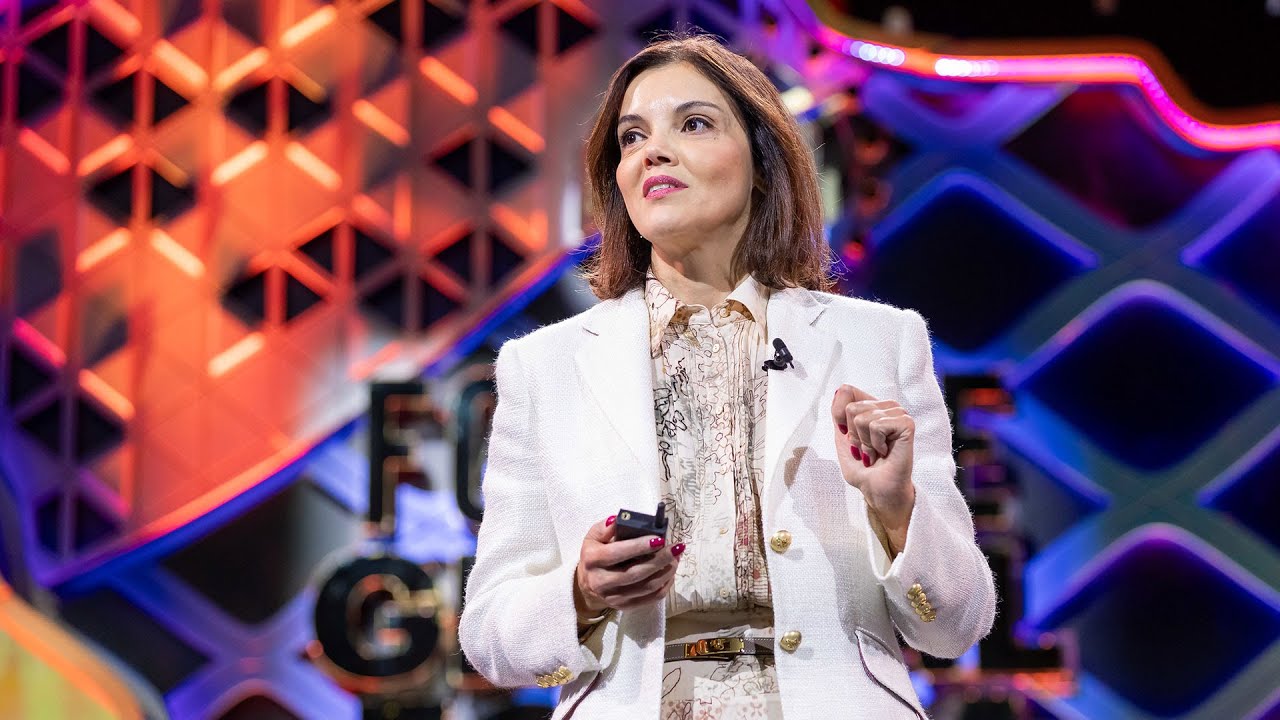


ITF Grandes Entrevistas com Ana Paula Assis: o que a IBM busca com a nova NewCo?

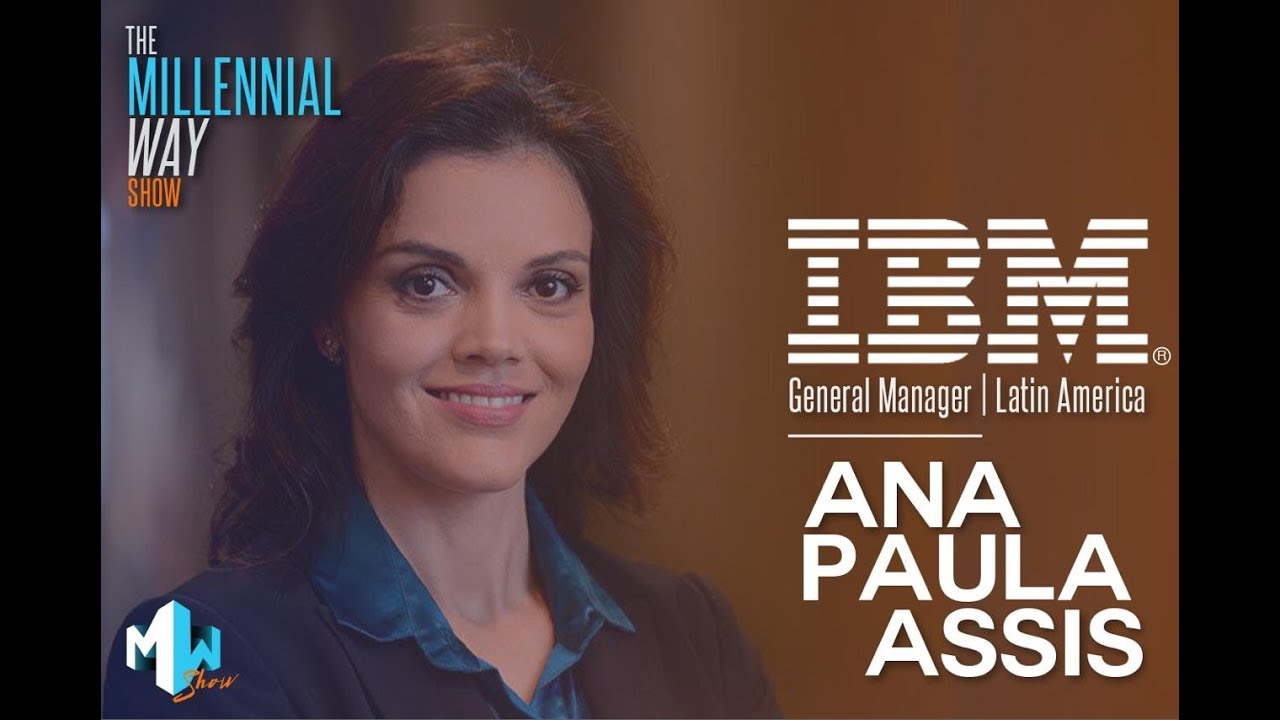

Ana Paula Assis, de IBM: ¿Cómo aprovechar la economía de los datos y reducir sus riesgos?