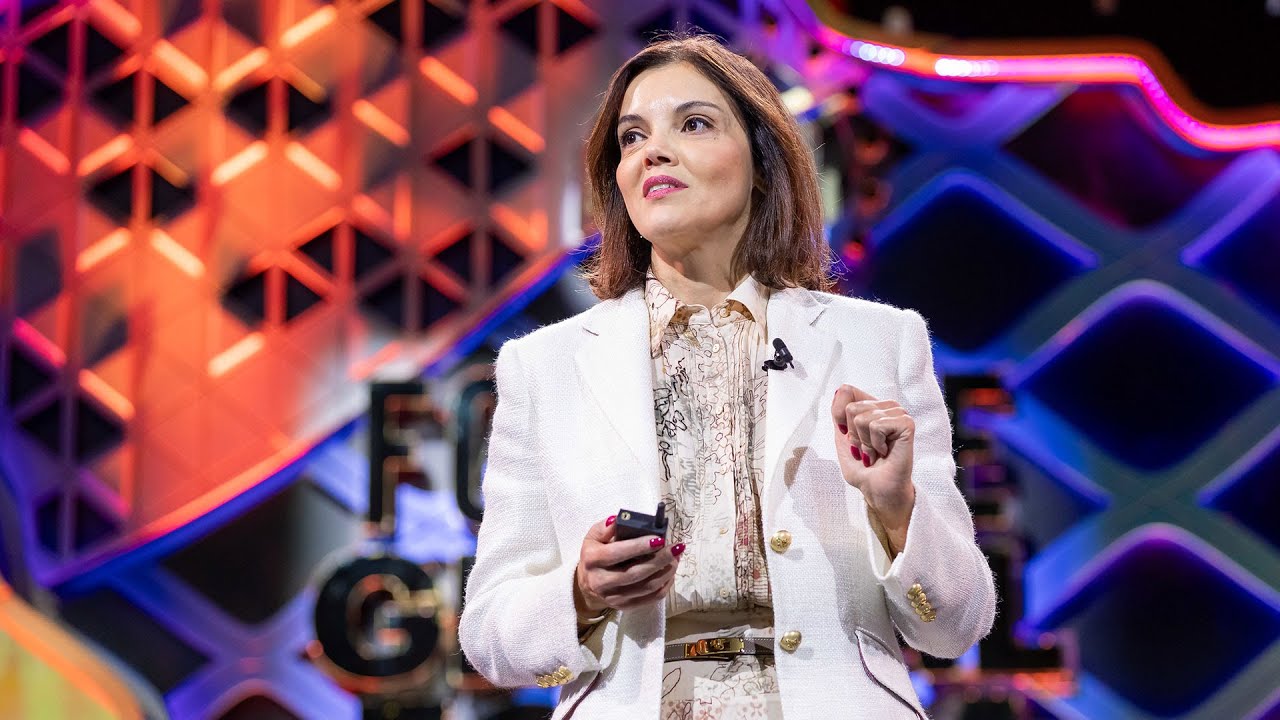
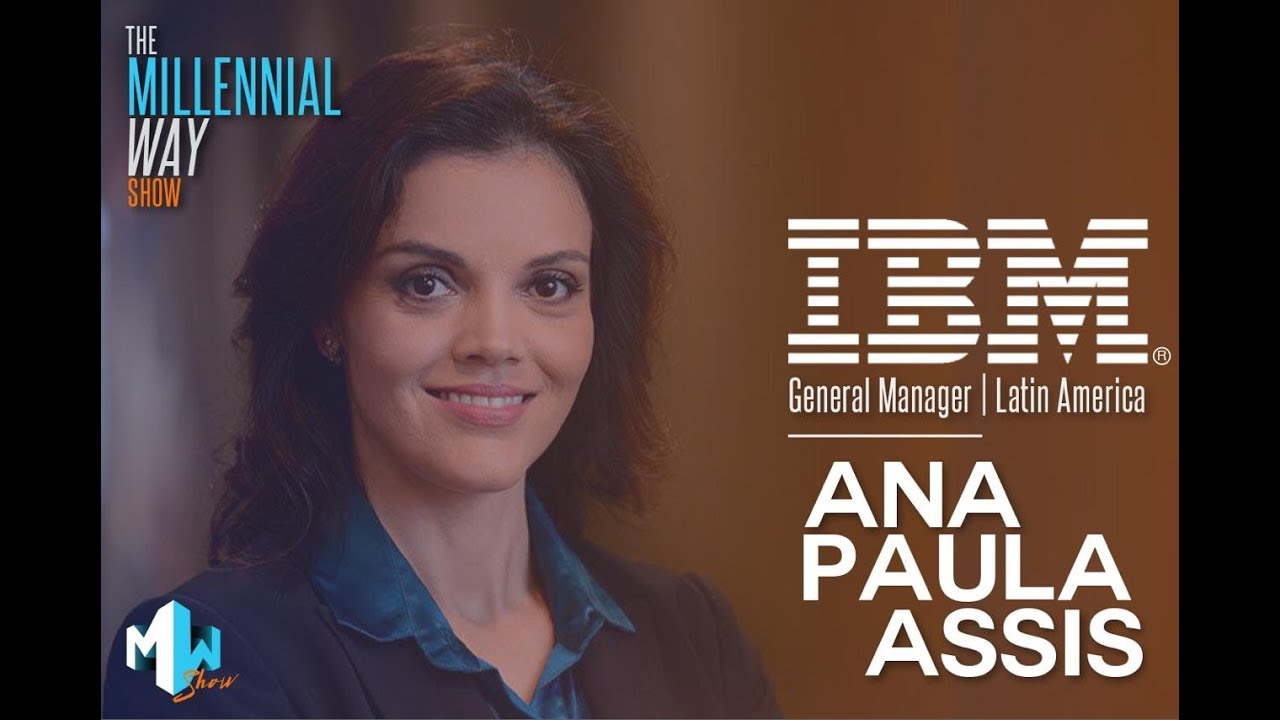
In a keynote at a women‑focused conference, IBM SVP and Chair Ana Paula Assis frames the current technological era as a transformative wave comparable to the Industrial Revolution. She begins by linking demographic shifts to technology, then outlines AI’s unprecedented adoption speed, noting that while the iPhone took a decade to reach 2 million apps, AI is projected to generate a billion new applications by 2028. She distinguishes three eras of AI: classic machine‑learning prediction, the recent surge of generative AI that democratized creation, and the emerging “agentic AI” characterized by autonomy, self‑learning, and goal‑orientation. A concrete illustration shows an agent planning, purchasing, and delivering a Thai‑style dinner, contrasting it with a simple chatbot assistant. She then pivots to quantum computing, explaining qubits, superposition, and exponential processing potential, while highlighting the technical challenge of noise and IBM’s transparent roadmap (data‑center infrastructure, Qiskit language, ecosystem building, demonstration of quantum advantage, and the target of fault‑tolerant commercial machines by decade’s end). She stresses the security implications (cryptography breakage) and IBM’s partnership with EY for transition planning. Concluding, she draws a parallel to the Industrial Revolution, urging leaders to upskill workforces, build inclusive infrastructure, and shift focus from cost‑efficiency to broader value creation enabled by AI and quantum technologies.
Chapters
Thank you, Lynn. My fans are all here. I have a big delegation from IBM. Big shout to the IBM team. Very good. So just an energy check. How are we? Are you still with us? Yes. Yes? Great. You look so great from here. Such a colorful room. I think that's the biggest difference between a conference for women and men. It's the colors that you see. Beautiful. All right, I mean, Muriel really left a great point for us to reflect on and think about, because demography is destiny. And the only way to shape this destiny in a way that is positive for us is with the support of technology. I think it's very hard to disconnect progress from technology. And that has happened in many fields of our lives. If you think about healthcare, increasing our lifespan, increasing the productivity so that products that are basic to us became more affordable and accessible. Telecommunications, making the world much more interconnected, the world is smaller, and Julie touched on those topics brilliantly in her presentation. And now we have another massive emerging new technology among us, which is artificial intelligence. If you think about all the technological waves, all the shifts that happened in information technology over the past 50 years, that is probably the most profound impact we are experiencing and we are going to see. This is the technology that had— that has the highest adoption the fastest adoption rate in history. Let me just share with you some, some basic information. When the iPhone was introduced in 2007, it took 10 years, and by 2017 we had 2 million apps in the Apple Store. We are projecting that by 2028 we are going to have 1 billion new applications that are going to be created by or created because of artificial intelligence. So AI is not just a shift. It's a shift, it's a rift, it's a cliff moment, it's everything happening at the same time. And I think we are all looking and observing in the news the changes that are happening at a pace that is absolutely unbelievable. Now, AI is not a new technology, or it's not a new concept. The first conference about AI happened in the '50s. What happened is that the technology changed its goalposts over time. So basically we started with machine learning, which was, you know, using data to make predictions, to get insights, to make better decisions. And over the past 3 years, we have been experiencing a very new form of artificial intelligence that is called generative artificial intelligence, generative AI. And that's what made AI so accessible, so simple for any person to use, to experiment with, to introduce in the way that they work, in the way that they live. As generative AI evolved, we also improved the way that we interact with technology through assistants, chatbots. And now we are entering a new era that is the era of agentic AI. So what is an agent? I would say that at this point, the industry is still working on what is the right and the, let's say, common sense definition of what an agent is. But I think we are all coming together with some set of characteristics that define an agent and separates an agent from a simple assistant, copilot, or chatbot. 3 characteristics of an agent. First, it's autonomous. It makes decisions in an autonomous way. It figures out how to solve a task. Second, it learns, it self-improves. So next time it's going to execute that task, it's going to be performing better than it did before. And it's usually goal-oriented. It has the objective to accomplish an outcome. Best way to make it tangible what an agent is compared to the traditional artificial intelligence we have been used to is if I use a very simple example. Let's say that I want to give a dinner party and I want to cook a dinner inspired in Thai food. Where's the Thailand people? Very good. I am not an expert in Thai food, though I love it. So I go to, if I go to a chatbot, to an assistant, I would say I want to host a dinner for, 10 friends, and I want to cook a dinner inspired in the Thai cuisine, and I want to spend, I don't know, $100, $150 per person in this dinner. And assistant is going to come up with recipes. It's going to tell me the ingredients I need to buy. It's going to tell me the quantities I need to buy, and it's probably going to point to me some of the sites, the online shops that I can go to in order to buy the ingredients for my dinner. If I give that task to an assistant, to an agent, that agent is going to not only come up with the recipes and the quantities, it's also going to go do a research on, a search on the online shops and order everything I need for my dinner at the right budget and have it delivered in my house in time for me To cook the dinner. So it does the complete task. It doesn't do the dinner yet. Hopefully we're gonna get there. But it really eliminates what I think is the most boring part of preparing ourselves for a dinner party. So that you can really focus on the fun, which is cooking, which is being among your friends. Now, we are still trying to grapple our heads around agents and AI and how this is going to influence the way that we live and work. And there is already a new technology looming on the horizon now becoming more and more a possibility, and that's quantum computing. Now that's the other question for a cocktail party. What is quantum computing or quantum computer? So what differentiates a quantum computer from a traditional computer is its unit of information. So traditional computers, they operate with a unit called bit, which has only 2 states. It can either be on or off, 0 or 1. Quantum computers operate with qubits. And the interesting thing about these units of information, due to the quantum mechanics characteristics of it, and I'm not gonna go into those details, is that they can have a state of 0 or 1 or anything in between at the same time. So what does it mean in practice? That your ability to process information increases exponentially when you're using a quantum computer. Now, if we have quantum— if you have the quantum mechanics, which is a phenomenon of the nature, If you have all this knowledge already among us, why is it so hard to have a quantum computer? The reason for that is because those qubits are very sensitive particles, very sensitive elements. So anything from temperature, vibration, light that gets into those systems can interfere its state. So it makes the computer extremely unstable. And all the research and development that has been happening right now is with the objective to address this problem called noise, which makes quantum computer— computers still unreliable to do most of the tasks that we expect them to do. IBM has been investing in quantum for quite some time now, but since 2020, we decided to publish a very transparent roadmap with our expectations of when we believe quantum computers can really become useful and can have an advantage over classical computers. Because if you cannot prove the advantage of quantum computers on classical computers, we might as well continue with, with the existing technology that we have. 'Cause it's not an easy task to build quantum computers. So basically, we, the first step was really to set up data centers, to create a programming language called Qiskit, to really create the ecosystem so that we can start to think what are the use cases? What are the types of problems that quantum computers can really solve? Then we started to deal with the fact of how we can really demonstrate quantum advantage. And now we are on the verge of really building fault-tolerant quantum computers, which are going to have commercial usage. And our expectation is that it is going to happen by the end of this decade. Is it a firm date? No, it's still a lot of research going on in this field. But the great breakthrough that we made a couple of weeks ago is that we have come to a point in the evolution of, of the development of quantum computers where we are moving from science, which is really like we still need to do a lot of research to find a way to make this work, to engineering, which is I understand the problem I need to solve. Now I need to build the components, the software, all the elements that are required to make it available and make it useful for applications. So that's where we are today with quantum. Exciting moment for the technology. Of course, lots of things that we need to think about. I'm sure that you have always heard that, that you have already heard that quantum computers can break all the cryptography keys that exist today. So we need to completely change the way that we secure data going forward. EY is a tremendous partner for us in that space. And we have been working with a lot of clients in that transition. So, but if you outweigh the benefits against the potential impacts, quantum computer is going to open a new world of possibilities for us in solving problems that today would be impossible to solve with the traditional classical computers. So in conclusion, and Julie said that very well, and I think that we had a lot of, other thinking aspects here in this morning. This is a leadership shift more than anything. I always connect the moment we are living today with what happened in the Industrial Revolution. Imagine the amount of people we have had to move from the fields into the cities. People had to learn how to write, how to read, how to do math. They had to acquire new skills. We had to build a completely new infrastructure. for these people to live in a different place. So this is the moment that we are in. We have, as leaders, the responsibility to bring everybody along in this journey, to make sure that these technologies are accessible, these technologies can have positive impact for everyone. And we've got to make sure that the entire population is on board in terms of education, as Muriel mentioned before. And finally, this is about value creation. It's no longer just cost efficiency. It's really transforming the way we work, the way we live, the way we operate, hopefully bringing a much brighter future to all of us. Thank you.