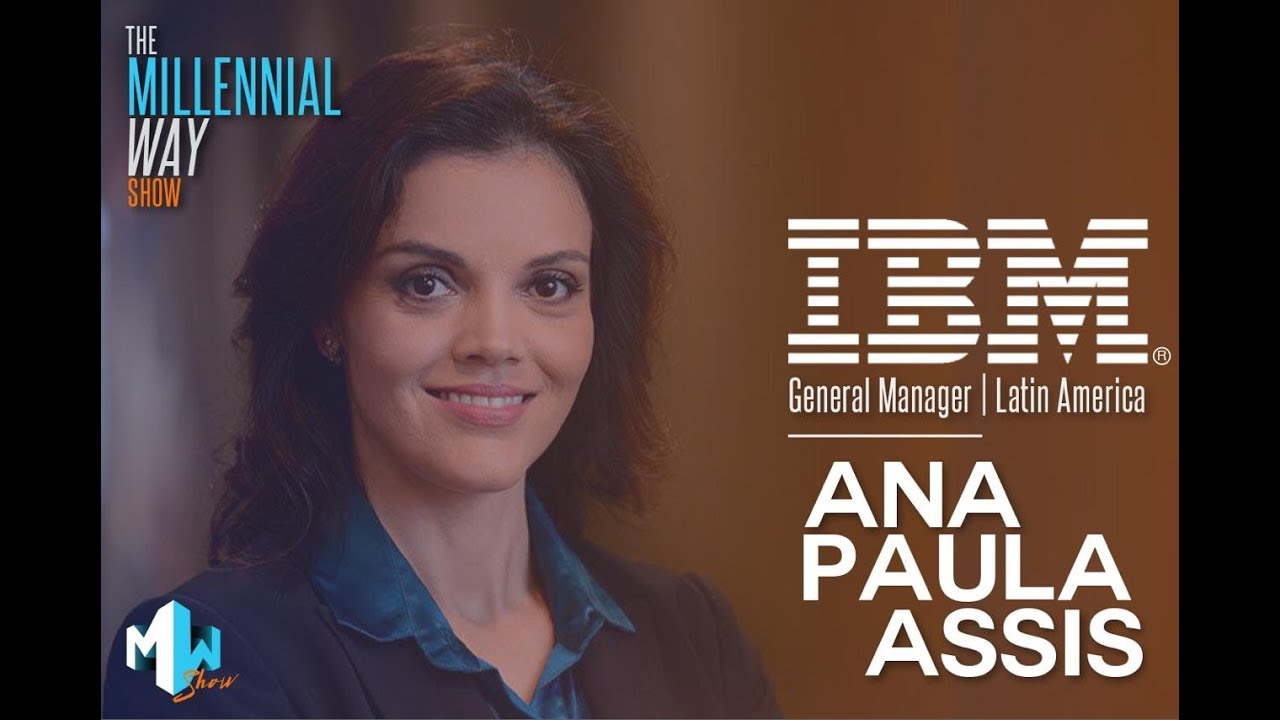
Ana Paula Assis from IBM describes how 84% of EMEA leaders report positive AI impact, with Saudi Arabia leading the way. IBM is investing $200 million in a Riyadh lab and upskilling 100,000 Saudis. Real gains come from systemic transformation: IBM's Ask HR chatbot handled 11 million interactions and raised customer satisfaction from 19 to 74.
Chapters
Good morning, everyone. Very happy to be here. It's a great opportunity to reflect on the visionary work that the Kingdom of Saudi Arabia has presented in embracing technology and artificial intelligence. So let's get started. AI is everywhere, in the conversations with clients, in the news, and in the statistics. We have recently conducted a survey to understand how leaders around the world, or in EMEA in particular, are dealing with the impact of artificial intelligence in their businesses. 2/3 of the leaders that we surveyed have said that they are seeing positive impact of artificial intelligence in their productivity initiatives. And Saudi Arabia is leading the pack. In fact, the leaders of this region claim that— 84% of the leaders in this region claim that they are seeing the positive impact of artificial intelligence in their organizations. I wasn't surprised when I saw those numbers. This is really the result of how the vision that has been created for the region is being embraced by the organizations here. And that's the reason why we have made a decision to invest $200 million in creating our software development lab here in Riyadh, in the Kingdom. We partnered with the Minister of Communications and Information and Technology to skill up 100,000 Saudis so that when the opportunity comes, they are ready to grasp it. When SADIA, the Saudi Data and Artificial Intelligence Authority, made the decision to create its own Arabic large language model, Alam, the decision was to host first in our Watsonx artificial intelligence platform. So these are great examples of how we are partnering in the country to deliver the promise and the capabilities of AI in a way that is not just looking at the technology, but at the people and the expertise. Now, while we are seeing a lot of progress, there is still opportunity to do more. In most of these responses, the benefits are coming from primarily operational efficiencies. We believe that the true potential of AI, the value that it can really unlock, is going to come from transforming business models. And this is not because of lack of innovation. Actually, I would argue that generative AI, the most recent version of artificial intelligence, is the fastest adopted technology in history. Just to give you an example, the iPhone was introduced— when the iPhone was introduced, it took another 10 years to have 10 million apps in the Apple Store. We are now projecting that by 2028, we are going to have 1 billion new apps introduced, one-third of them with agentic nature. So it's not lack of innovation for sure. So what is holding us getting the ability to explore the full potential of AI. It's really about adopting a systemic approach to it, one that embraces a pervasive implementation across the organization, one that integrates silos, one that moves from just experimentation and isolated pilots to corporate-wide adoption. So in order to create the systemic approach or to establish these capabilities, at IBM we look at it from 3 different perspectives. First, the perspective of the data. Your AI is only as good as the data you use to train it and to augment it. We project, or we assess, that only 1% of the data that is today residing in corporate applications in their own data centers is being touched by artificial intelligence. So imagine the opportunities that are going to be created when we expand. This reach. Corporations have complex environments with multiple different technologies that need to be integrated, that need to be orchestrated. So openness, interoperability, and giving choice— meaning where you're going to deploy your AI workloads— is absolutely critical when we are talking about AI for enterprise adoption. And finally, with great powers come great responsibility. Companies more and more are looking for partners and companies and, and solution providers that can demonstrate that they're going to scale this technology in a trusted, responsible way. And that requires orchestration capabilities, security at the core, and governance approaches that allow them to encode in these workflows their guidelines, their principles. Because with the speed that this technology evolves, you cannot consider security and governance as an afterthought. It has to be part of how you are building those workflows. At IBM, taking this systemic approach has already demonstrated for us tremendous opportunities. By the end of this year, we are going to achieve $4.5 billion of productivity savings by the implementation of artificial intelligence. A great example of a use case is what we are doing in our human resources department with a platform called Ask HR that today handles 11 million employee interactions per year, representing 94% of all the inquiries that come to our HR department. And while this brings tremendous efficiencies, On the other hand, we are seeing improvement from our employee base with our HR department, with an NPS that moved from 19 to 74. And it's not just about bringing productivity, it's allowing those professionals to do more, to invest their time in creative work, in helping leaders like myself develop my talent, assess my leadership capabilities. Now, while it gives me a lot of pride to talk about what we're doing at IBM, I'm even more— I'm even happier when I talk about what we are doing with our clients. For example, Riyadh Air that is in its final stages to go for its first flight, and we are doing the entire journey for customer experience for them. Recently, we made an announcement with AWS to bring our capabilities to the Kingdom where we are going to host our solutions and we are going to announce our first joint hub for innovation in Riyadh. The work we are doing with Diriyah Company using our Maximo suite of applications to implement capabilities around smarter cities and providing great citizen service combined with a sustainable approach. So to conclude, these are great examples that when you integrate vision, technology, and expertise, the opportunities are boundless. Thank you very much.