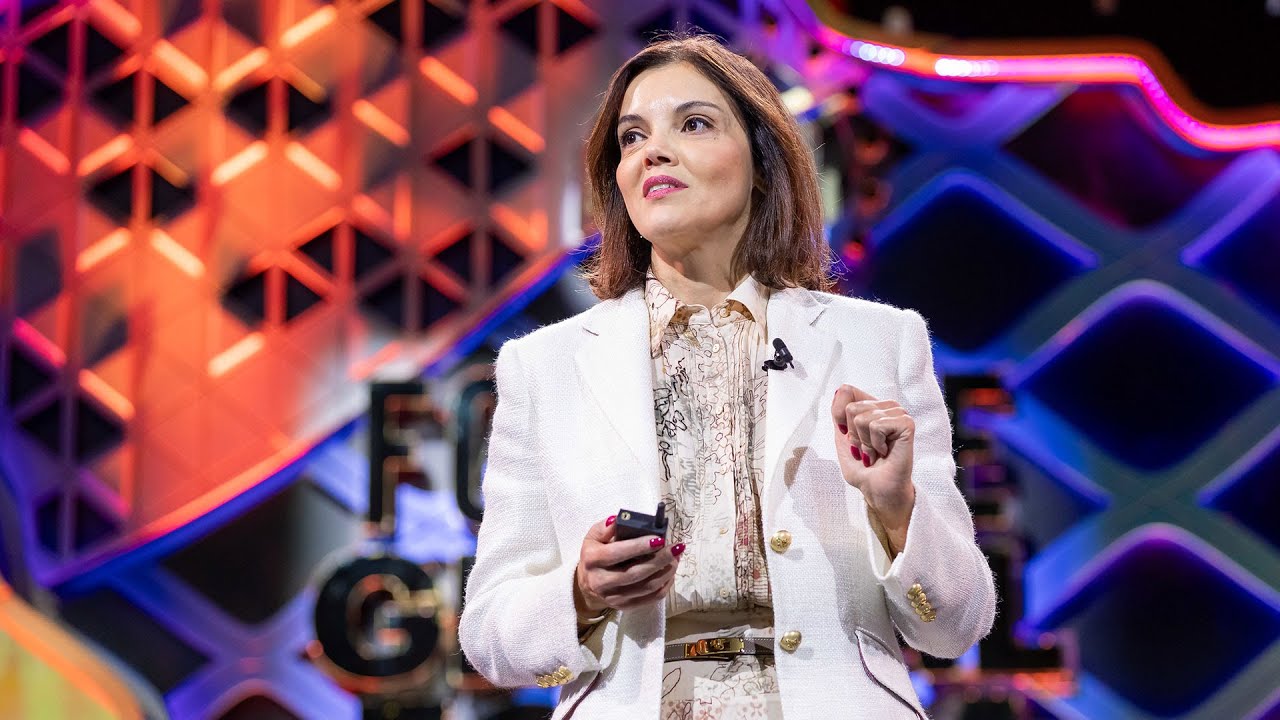
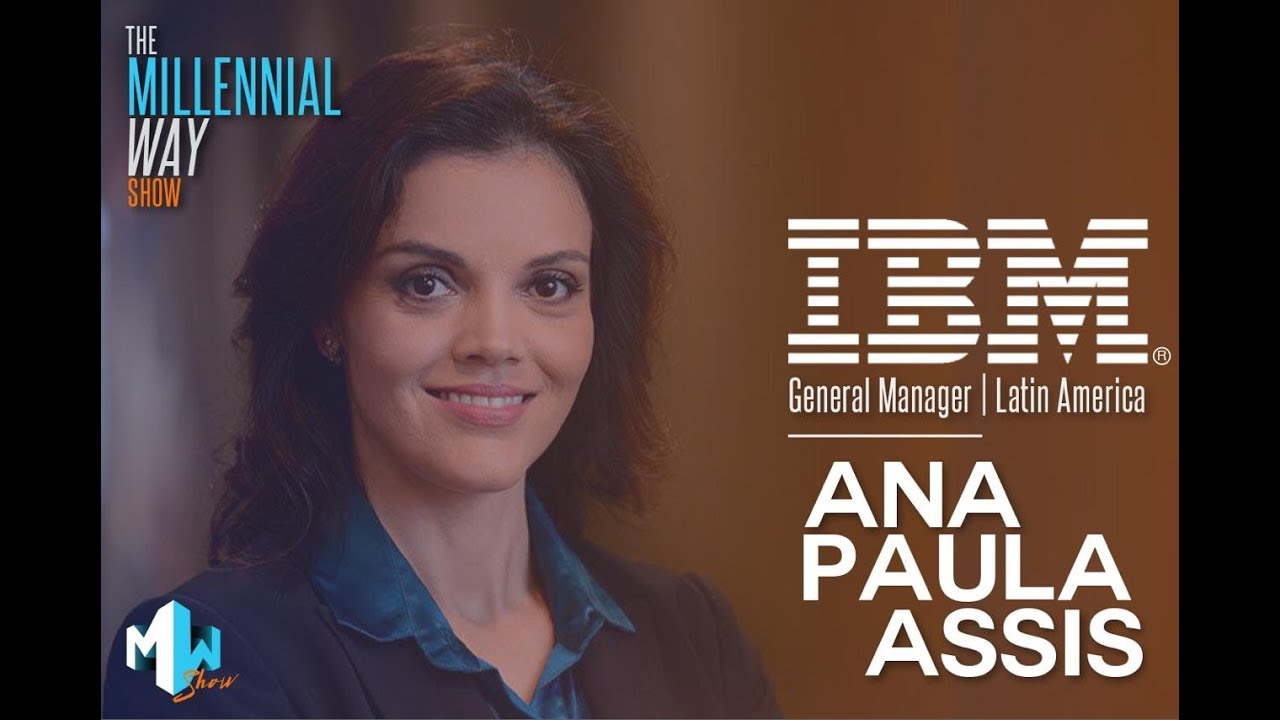
In this interview, IBM executive Ana Paula Assis discusses how data and digital transformation can drive corporate sustainability and emissions reductions. She emphasizes that sustainability must be embedded directly into business strategy rather than treated as a separate initiative. Three operational pillars are highlighted: smart infrastructure with real‑time sensors, energy‑efficient IT using green components, and circular supply‑chain visibility—often enabled by blockchain. Assis describes IBM’s role as a strategic convener, citing projects like a smart‑utility platform in Copenhagen that balances demand and supply, and the Sustainability Accelerator program, which includes a $30 million grant to help SMEs and low‑capability regions adopt sustainable technologies. She reflects on lessons from Latin America—resource constraints, abundant renewables, and creative problem‑solving—and stresses the need for faster industry action while ensuring a just transition for workers. Data automation, ESG‑integrated platforms, and AI are presented as essential for handling massive emissions data, and quantum computing is mentioned as a longer‑term disruptive technology for material efficiency. The conversation concludes with practical advice for CEOs: focus on immediate, available tools while planning for future breakthroughs.
Chapters
I'm really proud to honor and bring up onto stage Ana Paula Assis of IBM, who is a force of nature. After running the Latin American division of IBM, she now is the chair of Europe, Middle East, and Africa, and is a 25-year veteran in IT. Ana Paula, thank you.
Thank you, Ken. Thank you for having me.
What should we talk about?
Oh, yeah. I mean, you are the prophet of hope, I heard.
You heard wrong.
On data.
On data, yes. On climate change, I'm definitely the prophet of doom. But because I'm a prophet of hope on data, I do believe that data can solve a lot of our problems. And maybe that's a place to begin in terms of thinking about the role of technology and the digital transformation that needs to take place for a sustainable transition that needs to take place. What are you seeing in the marketplace?
So first of all, I'm seeing a lot of commitment, clients with a very clear strategy on how they are going to do and work on their transition. Where is the challenge? How you make it operational, how you make this part of how you actually execute your business, how you have the processes in place and how you're capturing that data, making sense of that data, and being transparent about how you're actually making this transition. So lots of great intentions out there, great strategy in place, a lot to happen on the execution side.
How do you bridge the two?
So I think that companies need to start with the fact that they need to embed sustainability into the business strategy. Trying to do that as a separate element of how you actually execute your business is not going to be successful. Then you do have to have a management system, a platform you could say, where you're going to integrate the data of your operations And the way that we are doing that with our clients is that we're looking at 3 elements of their operations capability. First, of course, all companies have lots of assets, buildings, trucks, industry plants, et cetera. How do you make those more intelligent? How do you get sensors to make sure that you're getting real-time data of how your operations are being executed? So smart infrastructure, is the first key element of how you make that integration starting to happen. Then we all know that IT has become essential to how companies run their businesses, and IT is a major consumer of energy, as we all know. So how do you make your IT more efficient? How do you make sure that you're using green components in your IT architecture? And then the third element for us is how you bring circularity in in the supply chain, how you make your supply chain more sustainable, how you have visibility of your entire supply chain, because it's not just about you. I was talking to a big food company a few months ago in Davos, and they were telling me that 95% of their emissions are outside of their core operations. It's really on the farmers, the cattle raisers that they work with, that those emissions are. So how do they help those multiple farmers and producers to become more sustainable?
So Paul Polman, who spoke earlier this morning, said something really fascinating. He talked about when he was leading Unilever, how he brought a lot of the beverage makers together and said, hey guys, like, we all have a refrigerator that is, you know, selling our drinks, and no consumer is going to buy the beverage based on the engine in the refrigerator and how— CFCs that are pollutants. So why don't we just actually, as a group, create a much more sustainable and environmentally friendly refrigeration system, and the planet will benefit and our consumers will still be able to make the right choices in terms of whatever they want to drink. And it showed the role of collaboration in a very powerful way. Yes. But it takes a sort of a strategic convener to manage that collaboration. They don't mushroom up By themselves. So what is the role of IBM to act as a strategic convener to bring industries together or an industry together and act as a node rather than a part of the spoke?
Yeah, so first is really the ability to put out there technologies that enable that integration. So things like blockchain, for example, where you can have traceability of different elements of the ecosystem having visibility of what each one of them are operating. So we have a great example in the city of Copenhagen where we are implementing a smart utility capability where elements that are part of the flexible part of what we call buildings, supermarkets, right? I mean, 40% of the energy consumed in the city comes from buildings. 33% of the energy in those elements is flexible. So how you bring that flexibility into the grid, make the grid smarter, and make sure that the supply side of the equation can also participate and become an element, a forcing factor in that ecosystem. So we created this platform that integrates the demand side with the supply side, and the mechanisms and the contracting mechanisms where you can use those 2 sides to balance the grid and make sure that the energy that is consumed in the city is done in a more effective way. So it is really creating these 2-side market capabilities with technologies like blockchain, AI, bringing insights, and then acting on this data.
So I've been really frustrated by the slow take-up of some of these technologies. just adding a microchip and, you know, a wireless module to anything that plugs into the electrical grid will improve it. Yes. Right? It'll collect data. You can use the data to do new things. And companies that have been doing that and have a long-term vision have been succeeding wildly. And we actually see that in the economic data, the phenomenon that the OECD calls the best versus the rest, in which you have these outlier firms that invest in technology. That's sort of the distinguishing element. They're not like 10 or 20 or 30% more productive than the other firms. They're like 2 times or 4 times or 6 times more productive and have greater profitability, that level of profitability. So you get these companies that are now close to trillion-dollar companies or hundreds of billion-dollar companies. You have these small fries Right? You can't even talk about the Fortune 500 anymore. You're talking about like the Fortune 100 and the rest. So smart companies are going to do smart things, and they have a capital structure to allow them to invest. What do you do about the other companies that don't have the incentives or the smarts, to be blunt, to invest in technology?
That's the big conundrum that we have to figure out, because probably 70% of the emissions right now are sitting on the small and medium companies. Right? So how do you bring those together? As you said, they're probably not being visible in the regulatory framework. They don't have the capabilities to invest. So that's where the big influencers in the ecosystem do have a very responsible role. So, for example, what we are trying to do at IBM, in addition to taking care of our own business, is creating this I mean, we created this platform called the Sustainability Accelerator, where we are helping communities identify areas of improvement in parts of the world that don't have those capabilities. And we get there with our consulting services, with our technology. And, you know, you have those grants where we plan to invest $30 million until 2030 to support those types of implementations in communities that, quite frankly, don't have the capabilities.
Now, you came up in an environment that is resource-constrained in Latin America.
Yes.
What have you learned in Latin America that cross-applies to everywhere else?
It's resource-constrained in terms of—
Capital.
Capital, but it's rich in renewables and other sources of energy. I think Latin Americans tend to be very creative, right? I think that's one element of the equation. We have all the natural capabilities that the region has, have been very well used. As I said, this company that I was talking to you about, this big food company, is a company from Latin America. I think that we understand that at the end of the day, when we look at the core competencies of the region, there is no way that you can continue to evolve economically if you don't integrate sustainability to the model. So I think that reality is there. And more and more, we see companies investing and transitioning the way that they operate to integrate those 2 things.
OK. Now, we have Slido for questions if anyone wants to ask any questions. If there are some, throw them on screen. Let me be a bit mischievous and mention that Paul Polman also gave us a very nice analogy about the importance of going very quickly in these issues. And he described it as like the challenge of industry not acting fast enough is a little bit like a murderer who instead of killing 10 people is now only killing 5. Isn't he a better murderer? How would you respond to Paul Polman's sort of injunction that industry isn't going fast enough, it needs to go faster? That in fact, the very nature of applauding themselves for the transition is actually doing a huge disservice to solving the problem.
So listen, I welcome the challenge. I don't accept the accusation. I think business leaders, they are tasked with the responsibility of balancing a lot of elements in the equation, a lot of stakeholders, and the environment is another stakeholder. I could go and say, tomorrow, no more fossil fuels, and I'm in the transportation system. how many millions of people will not be able to move because of that decision, right? So it is a transition. It needs to happen much faster. If you think about it, at the beginning of the century, people were killing whales to get oil to have energy at home, right, to have light at home. When they found oil, they didn't need to kill whales anymore. So there is technology that needs to evolve over time. Thank you. to make sure that that transition happens. Second, you have to make sure that the transition is just. Think about how many people we still have working in coal mines and the fossil fuel industry that we will need to retrain in order for them to be able to perform in this new environment. There are lots of elements that we need to take into account. Again, I welcome the challenge. Don't take the accusation. But we do have to move much faster.
Okay, let's end at where we began, which is the role of data.
Yeah.
So essential, but at the same time, a lot of companies are looking at the targets and just tying themselves up in knots, wondering what to do with all these numbers.
Yes.
What do you tell them as advice?
So getting the data right is certainly the first element. I mean, when we look at the major challenge that all the companies are raising is really around data. 73% of the data is still manually collected. Just think about that, right? Just putting a platform out there with APIs that can connect to your ERP, to your IoT platforms, you're already going to be able to automate a lot of that data capture. Then platforms like the ones that we have where many of the ESG frameworks are already embedded, so you can do the calculations automatically and don't put that on a spreadsheet that requires, I don't know, 30 people in a department just doing that. So technology is out there. There is automation. Capturing the data has to become part of how you actually execute and run your business. And that's the way to really start making this change happen.
And AI?
AI is going to be absolutely a key technology in that sense. And why is that? The volume of data that we will need to deal in order to achieve those objectives is massive. No human will be able to make sense of all that data, and AI is going to be really the tool to bring those insights to life.
And lastly, skills. It seems to me that we have the technologies, some companies have the capital structure to invest in those technologies, But to actually do it right requires both technical skills, but also re-engineering your own business model and your workforce operations.
Yes.
No one has the stomach to— actually, the wrong metaphor. Nobody has the mental agility to have that sort of sense of reframing what they do. So when you interact with CEOs at the highest levels, who typically have their job because they're the source of constancy in a firm, not the source of disruption, How do you get them to see the light?
So I think that CEOs are really thinking horizon 1, 2, and 3, the things that you can do really to, let's say, buy you time until you have promising technologies coming from things that are going to be available more in the long term. So for example, as you know, we are investing a lot in quantum, right? And quantum can really revolutionize the material— the science of materials industry. So we're probably going to be able to get more efficient cement, or we're going to be more efficient on how you produce steel and things like that, right? So until we get there, let's focus on what's really available to execute. That will give us the opportunity to optimize the infrastructure that we have, get the longer-term view in place so that you can invest in things that are going to be much more disruptive and that are really going to transform the way you produce things. And that's the way that I think we're going to be able to balance this very complex equation.
It is complex. Ana Paula Assis, thank you very much.