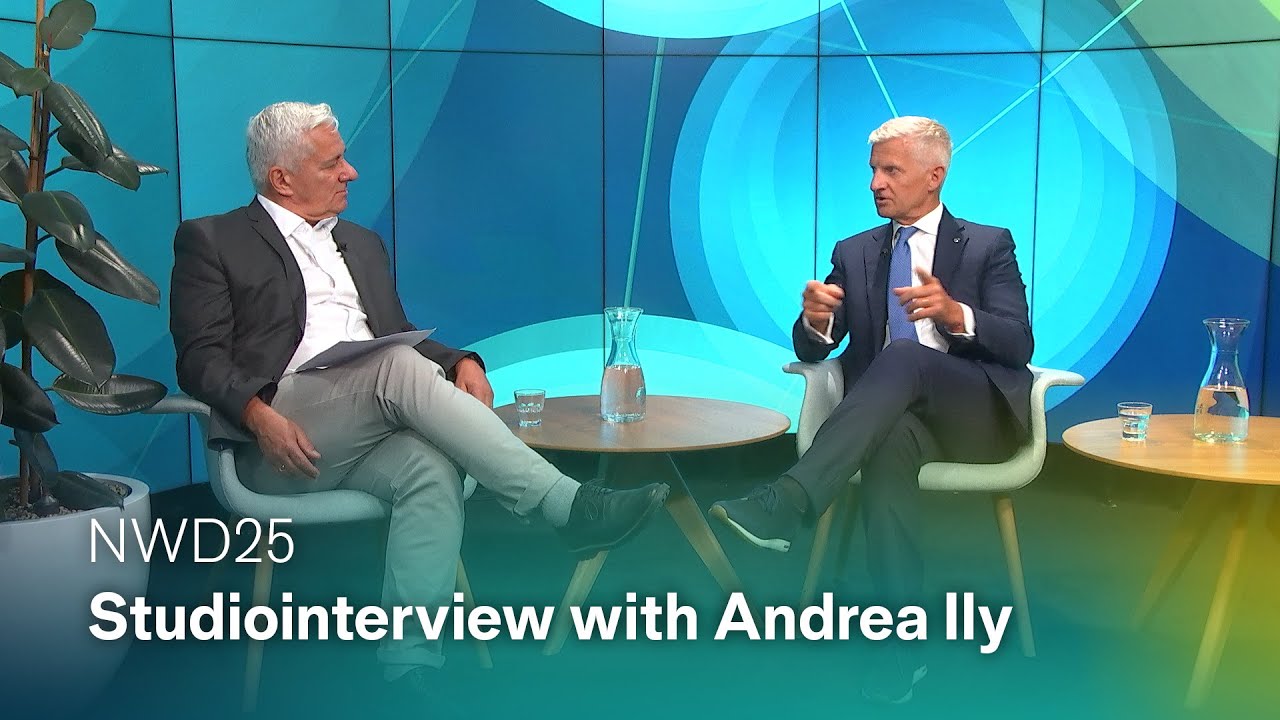
In this presentation Andrea Illy delivers a comprehensive, data‑driven overview of the global coffee sector, structured around four pillars: market size and value distribution, consumption dynamics, production challenges, and strategic pathways forward. He estimates the coffee market at roughly $300 billion, highlighting the stark income disparity for the 25 million growers (average $1,000 / year, with 20 million earning less than $200 / year). Consumption has expanded from 600 million to 1.5 billion consumers over two decades, driven by emerging‑market growth, differentiation, convenience (portion‑ed systems), and health perception shifts (coffee re‑classified as non‑carcinogenic). Production faces a climate‑change reality that threatens half of suitable land; Illy calls for $1 billion / year investment in adaptation (agronomic practices, new cultivars, plantation migration) and proposes the COPHIC Global Adaptation Plan as a public‑private financing vehicle. He critiques structural deflation, price volatility, and unreliable statistics, noting the decoupling of futures prices from fundamentals and the influence of oil markets. Industry consolidation is illustrated by $43 billion of M&A activity, creating dominant players like JAB. For the way forward, Illy advocates two complementary strategies: (1) deeper product differentiation (expanding varietals, specialty roasters) to command higher prices and share more value with growers, and (2) vertical integration—upward through direct sourcing and downward through producer‑led roasting—to improve traceability, quality, and farmer premiums. He frames these actions within the “Milan Coffee Legacy” vision of a virtuous cycle linking consumer well‑being with producer development, emphasizing the necessity of public‑private partnerships and impact‑investment funding.
Chapters
TranscriptAuto-generated · 24 min
Good morning, all of you. Good morning. And I'm pleased to be here with you. And congratulations for your 10th anniversary and for what you have been able to accomplish so far, because this kind of discussion and then the follow-up creates a lot of value. So, my assigned topic is the complex global economics of coffee. As a scientist, of course, I love complexity, but I will try to give you a simple picture as much as possible. What I will say is very much my personal interpretation of the economics of coffee. I will be also a little bit challenging and provocative for the discussion. So let's see. So I will cover 4 topics: market, consumption, production, and the way forward. As far as the market is concerned, here is a little snapshot. Just to give you some figures, it's the best educated guess that this is a market around $300 billion at cap level. One of the problematic numbers is this one, which is this is a very small number compared to the aggregated value. But this is the problem: if you divide 25 million growers' community, you get only $1,000 per year, which is, per se, a small number. But if you then apply the ABC distribution, you will know that 20 million of those 25 will only get $200 per day. And you know that the United Nations have $2 per day— less than $2, $200 per year. And the United Nations has $2 per day as the threshold of poverty. So, as we will see, we did a good job in improving this situation, but we are not there. Problem is that this is— and we have to be, let's say, as we will see, honest in acknowledging this is the only the first ring of a long value chain. So I can get only a smaller portion of the value, of course. And we will see some possible strategy how to address this imbalance. Another important figure here is what's going on. 1.5 billion consumers used to be 600 20 years ago. And this is a figure that it's interesting to be correlated with 2% compound average growth rate, because 2% is not a big number. 2% is just the world's demographic increase. But of course, because emerging countries that we will see have a per capita consumption much lower than we do have, Then we have to conquer at least twice of them. And this is what we did in the last 20 years: have a compound average growth rate of 4% of the consumer base in emerging countries. 20 years ago, the OECD countries were accounting for 80% of the coffee consumption, now less than 50%. But 1.5 billion is nothing compared to more than 7 billion we are on the planet. And there is no reason why, with the growth of disposable income in all countries, everybody will eventually drink some coffee. So just to say that the 2% increase is, let's say, not realistic because nothing is realistic, but it's reasonable as an expectation, referring to what has been said by the panel. Yes, we will need to produce more. Trends— very important. There is a substantial trend for differentiation, and we will talk more about that. Sustainability has been already said. Globalization and the industry consolidation, which is a more recent trend but equally important. Finance. Troubling picture. Why this? First, already seen the predominance of consuming countries in the value chain. Second is the structural deflationary trend over centuries, because this graph starts for all main commodities starts in mid of 19th century, so it's over 150 years old. So there is no way that agricultural commodities can grow in value. It didn't happen in the last century and a half. Why should we reasonably expect it will happen in the future? Maybe because of climate change. But then we will talk about the price shock. We'll talk about that. Volatility, as you can see, we all know that. The problem, one of the big recent problems, since now a crop is traded 50 times at least on the marketplace, on the stock exchange, there is more and more a decoupling from the price made on the stock exchange versus the price commanded by the so-called fundamentals, which are production, consumption, and stocks. So in the last 2 decades, there has been, particularly in the last one, many times substantial, let's say, divergence between what the fundamentals of the coffee market, physical one, were commanding compared to what the stock exchange did. This very much depends on the fact that there is a heavy influence by other index commodities. The biggest one, of course, oil. So one of the problems we have in that room is now it's the American shale oil. Why this? Because in this index that funds, pension funds, hedge funds buy, there is 50% of oil. And the price of oil, as you know, is now flat as a consequence of the— War. United States becoming the leader in energy production, in oil production, with a cost of production which is around $50, $60 per barrel. And this is reflected also on the price of coffee that, not surprisingly, is very low and flat. So these are structural issues that we can— or only hardly, let's say, changed, as we will see. And finally, unreliable, totally unreliable statistics. Who knows really how much coffee is produced? Nobody knows how much really coffee is consumed. And for sure, nobody can guess stocks level in reality. So we have some numbers. What I do since 10 years is to make a weighted average of all the possible statistics I receive by reliable sources. But I can tell you, this is not the way of working. And I think there is a general interest to have this kind of unreliability of those statistics because it makes the market more fluid. It's good for speculators. So consumption. This acceleration of coffee consumption— 20 years ago, it was growing at less than 1%. And it was the victim of soft drinks. Now the situation is inverted, and we grow—we grew up to 2.7%, thanks to coffee becoming much more positive. These three virtues of coffee, which have been the let's say the core strategy for promote for the Coffee Promotion and Market Development Committee at the. International Coffee Organization. These 3 virtues are really solid. Pleasure. There is much better quality in the cup now. There is an enormous amount of differentiation. Consumers can find plenty of new stuff to try in the market. And this is, you know, it's fun. It's— people love it. Much more sophisticated technology for preparation, specifically portioned systems, make this convenient and consistency really positive in terms of consumption. And we know that consumers drink more cups thanks to this technology. And there are also much better places, including some of your own places or our places. Health. This is very important. I know you will talk about science. 20 years ago, you know, people, 60% of people, consumers, were thinking that coffee was so-so for human health. Now, it's exactly inverted. It's clear, thanks to at least, let's say, 10 significant epidemiological studies, that coffee is about longevity. It makes you live better, Because it's— thanks to its stimulant effects of caffeine, you are inspired. It's really the best way to live, to be social, to be brilliant, etc., but also live longer thanks to the antioxidant property of coffee, which makes coffee to be the most effective preventative cure against the elder age diseases, particularly the degenerative ones, but also diabetes too. So, this is great, and it's official because the latest and most significant studies have been published by the International Agency for Research on Cancer. And last year, something enormously important happened in the industry that the International Agency for Research on Cancer, which is part of the World Health Organization, did reclassify coffee after 25 years. As non-cancerogenic, not classifiable as cancerogenic. It used to be possibly cancerogenic. So it's the first time in history that one product improves its classification. Thanks to what? Thanks to amazing work made by the scientific community. In the last 25 years, there have been 25,000 scientific studies accumulated And there is an organization which is called ISIC, which is constantly monitoring these studies and classifying them per category and impact. So this is good. This is the proof that if we work together, we can address important challenges. Sustainability— things did improve substantially because there is more economical sustainability now. There is no more Slavery. There is no poverty. There is no malnutrition. There is no— this kind of stuff that was existing is not existing in the coffee plantation any longer. Still, there is a long way to go, but we made a significant improvement thanks to growth. Social sustainability is much better than before thanks to Responsibility. When you go at the United at the International Coffee Organization, you find two blocks: consumer countries, producing countries. No, we are all in the same field. We are all in the same market. We must love each other so we can create value. And this is what is happening also through thanks to a community like yours visiting coffee plantation, exchanging knowledge, and so on. And finally, the environmental sustainability did substantially improve because in the last 20 years, we have been able to double production with the same amount of hectares. So that means that no deforestation any longer, and you can hardly find pollution in a coffee plantation. So this led to growth. Where did the growth come from? If you can see, the big contributor to grow, which has been also a trigger in order to better promote coffee, have been coffee shops. 6% compound average growth rate in the next 10 years, doubling the number of units. Amazing performance. And the food service in general did grow, let's say, more than the total average with 2.7%. Yeah. Off-premise, which is substantial to be seen, is that we have seen a 30% increase in per capita spending in coffee consumption. So that means that out of their pockets, you know, consumers pay 30% more compared to 10 years ago for coffee. This is good. This is good because it means that value added in the coffee brings— drives consumption, not the opposite. Usually you have a price-volume relationship. The lower the price, the higher the volume. In this case, no. In this case, it's quality which drives growth, which is great for our room. And interestingly enough, the big performer has been portioned systems. 14% compound average growth rate, quadrupling, nearly quadrupling the Or tripling, sorry, the— no, quadrupling nearly the market size. So over 20% of the households now consume coffee with a portioned system. And then finally, emerging markets. Emerging markets, big performance Asia-Pacific. Asia-Pacific is now the very first region Macro region in terms of coffee consumption. Look at Latin America, which has been the second best performance, and look at North America and Europe. Even Europe is smaller than Asia. So we have to take into account that also when we will talk about production. So production. So very more important concentration. The 2 first countries, only 2, went from 46% of the total world production to 53% in just 10 years. So now, let's look into the next 30 years. Where will this coffee needed for doubling and growing 2% come from? Because we have this problem. Climate change is not a risk, it's a reality. It's already happening. And I insist saying it's happening since decades already. There have been already big, big investments and changes in the industry in order to make coffee production resilient to climate change. But we need to do much more. The challenge is that we will lose half of the suitable land, as you can see from this chart. Every blue area in this chart is a decrease of suitability for coffee production, and the red one is an increase. So some of the growers which went away from Paraná in Brazil will have to go back to Paraná because the 3 strategies to address climate change will be first to change agronomical practices, as they are already doing. in some countries, not all, unfortunately. If it is not enough, we will need to develop new cultivars. As we will see, the natural genetic diversity of coffee is extremely narrow, extremely poor. This is a risk. And if— Colombia has been a benchmark for this kind of strategy. And last but not least, if not necessary, if not enough, we will also need to migrate plantations. The problem is that we will need to scale up investment substantially. The best educated guess is that we will need to spend $1 billion per year in the next 20 years in order to make coffee agriculture resilient to climate change. Now, we spend $350 million. So there is a substantial lack of funds. The problem will be even earlier because before— even before impacting productivity, Climate change impacts quality due to water scarcity and increasing temperature. So we are trying together also with a— of course, under the leadership of the Swiss Coffee Trading Association, which consolidates over 50% of the coffee traded, together with the big corporations and also with involvement, significant involvement of Rick Reinhardt, we are trying to lead this possible idea of a C-GAP. COPHIC Global Adaptation Plan, which would be— and we will have the go/no-go decision in October— will be a public-private initiative for fundraising, coordination, and knowledge transfer. The big opportunity is that there is a new emerging market of so-called impact investment, which is already an $80 billion industry, so— and it's growing, 2 digits. So that means pulling out some resource $1 billion or less, you know, for coffee will be feasible as long as we make projects which are bankable. So there is a lot of work to be done ahead, but I'm positive. So industry consolidation. Just to comment on this figure, this column is about $43 billion in 5 years. Never in history has so much money in M&A been spent in the in the industry. And the result is that we have a new big challenger, JAB, you know, with now second in terms of market share and first in terms of volume. But of course, this created also a movement, a reaction by all the other major companies to start M&A, changing the strategy from organic growth into external growth. Is it positive? Is it negative? Will it last for long? I think it's more or less indifferent because, as we will see, something very similar did happen in the beer industry. And together with the consolidation of the big industry, there has been also an extreme, let's say, fragmentation and differentiation thanks to microbrewers. So the way forward in order to try to cope with this complex situation which I'm trying to make simple. I hope, and I really dream, that we paved the road to the future in Milan at the occasion of this greatest— great coffee celebration in 2015 at the Universal Exhibition. Because it was so inclusive, it was so great, we organized a global coffee forum, and we did signed this important declaration, which is the Milan Coffee Legacy. This is about acknowledging that there is a virtuous cycle combining the well-being that coffee delivers to consumers with the development it gives for those— for the producers. So, and committing to nurture, to strengthen this virtuous cycle as we have been able to do in the last 2 decades. And nurture this virtuous cycle with whatever it takes, starting from public-private partnerships, which are absolutely necessary in order to address the important endeavors that we have to address. Last but not least, so this leads me to identify 2 possible strategies in the way ahead. More differentiation. If you compare to what we have been able to accomplish, coffee now has— remember this chart I showed about the number of roasters exploding in the next 20 years, or I don't know how many? We are now in the world a dedicated guest of 30,000 roasters. Look at beer. Beer? 300,000. Wine, over 1 million. Differentiation: 36 varietals in coffee. If you combine hop and barley in beer, you have more than 480 varietals. And in wine, you have over 1,000 different grapes. Differentiation leads— this is empirical— leads to price increase. And the higher the price, consumer level, the higher the percentage of this price that we will pay to growers. So as you can see, the price of coffee is around $2.50, $3, whereas beer, $5 or $7, and wine in the hospitality, around $10, $12 per glass. So why should wine be more expensive than coffee? Tell me. There is no reason why. And the other possible strategy— and I'm finished— vertical integration upward. I hardly can see any different strategy in terms of vertical integration than direct sourcing. I can hardly see big or small coffee company owning coffee plantation in producing countries. But through direct sourcing, you can do a lot. You can transfer knowledge, you can pay premiums, you can create loyalty, you can improve quality, you can have traceability, you can narrate the product to the consumer, and so on. This is really great. And downward vertical integration could be an opportunity for producing countries. Some of them might start exporting roasted coffee, as they are already trying to do. And of course, for us in consuming countries, continue developing retail. So thank you very much and enjoy your nice conference.