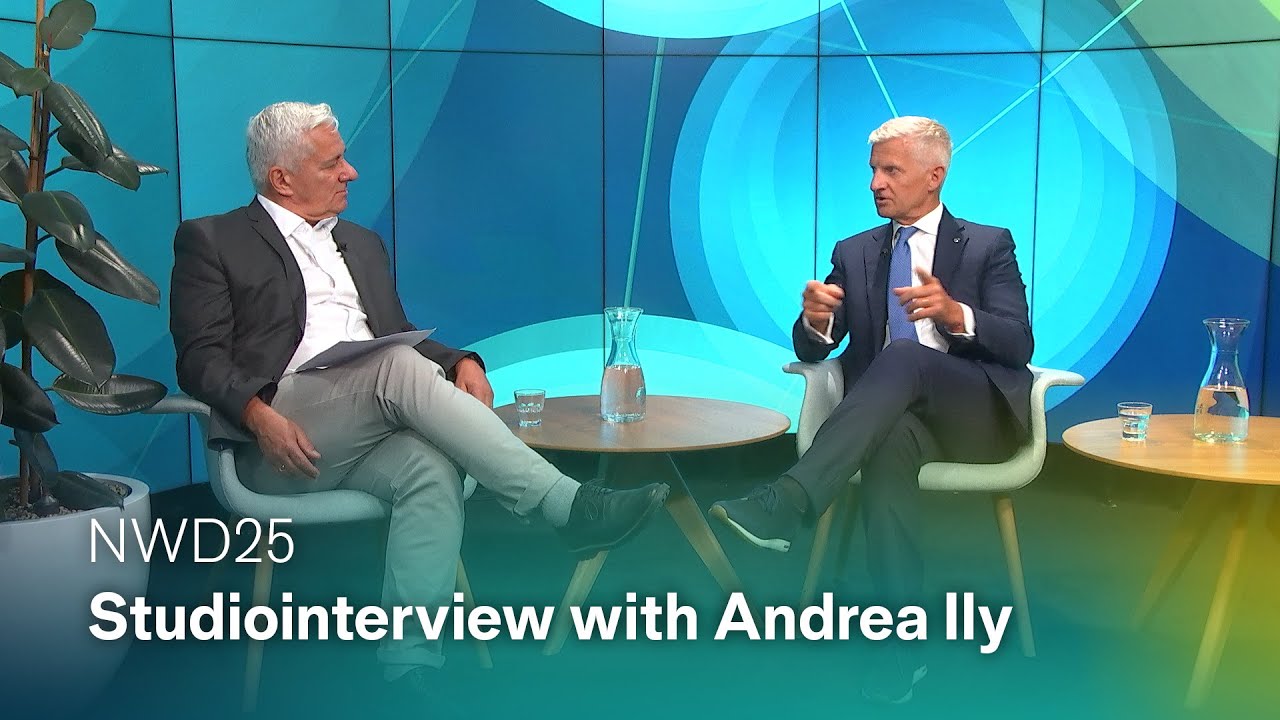
In this interview, Andrea Illy, former CEO and current chairman of Illy Caffè and co‑chair of the Regenerative Society Foundation, explains why a circular economy is a necessity rather than an optional sustainability add‑on. He contrasts the prevailing linear, extractive model—rooted in the Industrial Revolution—with a circular approach that respects the finite nature of ecosystem services. Illy argues that circularity can be financially profitable: it improves operational efficiency, reduces direct resource costs, lowers liability exposure, and can boost revenues through reputational gains and higher pricing or volumes. By adopting circular practices, a firm can lower its cost of capital because it is perceived as less risky. He describes the transition from a "vicious circle"—where monetary growth erodes natural capital—to a "virtuous circle" where monetary value creation supports natural regeneration, coining the term "regenerative economy." Illy warns against narrow sustainability metrics that focus only on emissions, noting that such single‑issue approaches can create new environmental harms. He stresses that achieving a regenerative economy requires a systemic, cultural shift involving all stakeholders—consumers, suppliers, policymakers, and educators—and that new tools, especially artificial intelligence, can accelerate problem solving and process optimization needed for circularity. The conversation concludes with optimism about AI’s role in expanding our capacity to address climate challenges.
Chapters
TranscriptAuto-generated · 11 min
Hello and welcome. And you join us today as we're about to talk about the circular economy. Well, that is where a business commits to reusing, recycling, refurbing. It's a virtuous circle. And one of the companies at the forefront of this, globally known coffee company called Illy Caffè. And my guest today was for 22 years the CEO of the company. He's now the chairman of the company and also co-chair of the Regenerative Society Foundation, which is a link-up between business and science. Andrea Illy, welcome. Thank you for joining me. Well, thank you. To some people, I suppose, a circular economy in business is a nice thing to have, but for you it's a must-have. Why?
Well, thank you for having me. It's really great to be sharing our philosophy and our practices, more importantly, here with Bühler in these networking days. Before touching about circularity, which is a first step and a very critical one, I would like to give the full vision. The full vision is that we, as living beings, rely upon 100% of, let's say, factors produced by nature. In our super excitement for progress, we forgot that. We forgot that the air we breathe, the water we drink, the food we eat, the fabric we wear, the material we use, and so on, All depends, 100% of them, from the so-called ecosystem services. Problem is, and I join your question about circularity, is that we still use a linear and extractive model, which we inherited from the Industrial Revolution. What does it mean? That we, as a society, as an economy, keep extracting resources from the natural capital. And we extract them as they were infinite, and they are definitely not. More importantly, because it's not circular, it's linear. At the end of the, let's say, the consumption, scrap, waste, pollution, whatever pollutes the environments, which is the second big enemy of the natural spontaneous regeneration. Because yes, these ecosystem services that I was mentioning before are perpetuated by the spontaneous regeneration of the biosphere. Which are the 2, let's say, hurdles, the 2 enemies of spontaneous regeneration? One, overexploitation. If you extract more than nature can, in terms of capacity, regenerate, then you go in a deficit and you basically reduce your natural capital stock. This is what exactly what is happening since over a century with deforestation, biodiversity loss, water reserve loss, and blah, blah, blah. And We need to change that. The first step, circular economy, is— I'm not talking about reducing activities because this would have a negative impact on the economy, which eventually would have preventing us to invest for the transition, which is negative. We have to continue to grow our economy and invest in clean tech.
I think that people will absolutely understand what you're saying. Their hearts will be won over, but the brain will be saying, We've got to make a profit. We still have to please our shareholders. Can a circular economy, if not make more money, at least keep you, you know, cost neutral at the end of the day or your profits where they were?
Very profitable at the end of the day. First of all, because you are more efficient. And then if we want to take into consideration what is currently understood as profitability in a corporation, which is Net present value. Okay, so you have to generate revenues, then you deduce your costs, and then you actualize the cost at the cost of capital, right? These flows. If you're circular, you might even be in the capacity to increase your revenues, thanks to a reputational benefit. The market people are looking more and more for sustainability because they are fed up with this unsustainable world. So if you are circular and you have clearly, let me demonstrate, that it's not greenwashing, you might have a benefit that helps you increasing your income, either with better pricing or with higher volumes. Or with lower costs.
Does it also—
Talk about costs. Not only because you use less resources, you have less, let's say, direct costs, but you have less liabilities. Because, sir, if you damage the environment, then you will have to pay for the liabilities. Third, you then have a higher cash flow and you actualize at the cost of money, which is lower. Because less risky company and unsustainable company, which would be the opposite of circular, an unsustainable company would have a cost of money which is higher.
And does it become a virtuous circle in that once you have a circular or regenerative economy within a business, your suppliers, your supply chain, they start to pick up on this and they start to change habits?
Absolutely. So in one simple way to, let's say, explain it, We are now in a vicious circular— circle, that the more we grow the monetary capital, the more we destroy natural capital. What we need is to revert this circle from vicious into virtuous. And the more we create monetary value, the more we regenerate the natural capital. This is the way forward. And this is what I was mentioning, regenerative economy.
Well, this is where you are. today, passionate about this. What have you had to unlearn? What habits have you personally had to change to arrive at where you are now?
So we made some mistakes. But I would say independently from the mistake we did, the problem, which is a problem for everybody, is the systemic approach. Because the It's not about a transition. It's an evolution of the course of progress that we need to do. It involves all possible aspects in the society, in the economy, and the environment. I give you an example. If you only focus on reducing your emissions, which is a typical problem, let's say topic for circularity, you might have a negative impact on other fundamental environmental factors like land. like water depletion, biodiversity loss, or pollution. You might have. If you only consider one of them, emissions, and you disregard the others, you might have a very possibly negative impact, you see. And then you might have spent a lot of capital, a lot of time, a lot of resources to create just another problem.
So final question, how do we make a circular economy, a regenerative economy within business, The norm more widespread? Is it down to individual companies and their leaders? Is it down to politicians? Is it down to the public and shareholders to tell them, you've got to sort this out? What is it?
It's an evolutionary problem— path which requires a significant cultural change. In order to do so, we need also to have tools. The good, good, good news is because of this systemic approach is the most critical aspect. And also the second most critical aspect is stakeholder engagement. I need to engage the consumer to understand how, what they do in their life, what they buy, how they behave, the environmental impact of their lifestyle, and also the social, for themselves, impact. Because at the end of the day, we entirely rely upon the ecosystem health. It's this principle of One Health. Ecosystem health, human health, it goes. So, but it needs to have a new culture which is beyond civic culture, is ecological culture, let me say it. to be taught in schools, etc. So it will take some time. Good news, AI.
Really?
Very good news. Why this? Where AI is extremely powerful is 2 things: problem solving and process optimization. What do you do? You want to be circular, you want to reduce your resource consumption, you want to reduce your pollution. Process optimization. You want to solve a problem as big as climate change, you have multiple, you know, factors involved, it's difficult to figure out what is the problem and how you can address the solution. Artificial intelligence has no problems. You ask the right question, It scans the whole amount of possible knowledge that has been created by humans over history, and it comes out with the fundamental factors which are involved in one situation. If intelligence is the capacity to solve problems, and progress is the amount of problems which already have been solved, then AI is exponentially increasing our capacity to solve problems and therefore to progress.
What an exciting time. It's been a pleasure talking with you and observing your passion for this subject. Andrea Illy, thank you very much indeed.