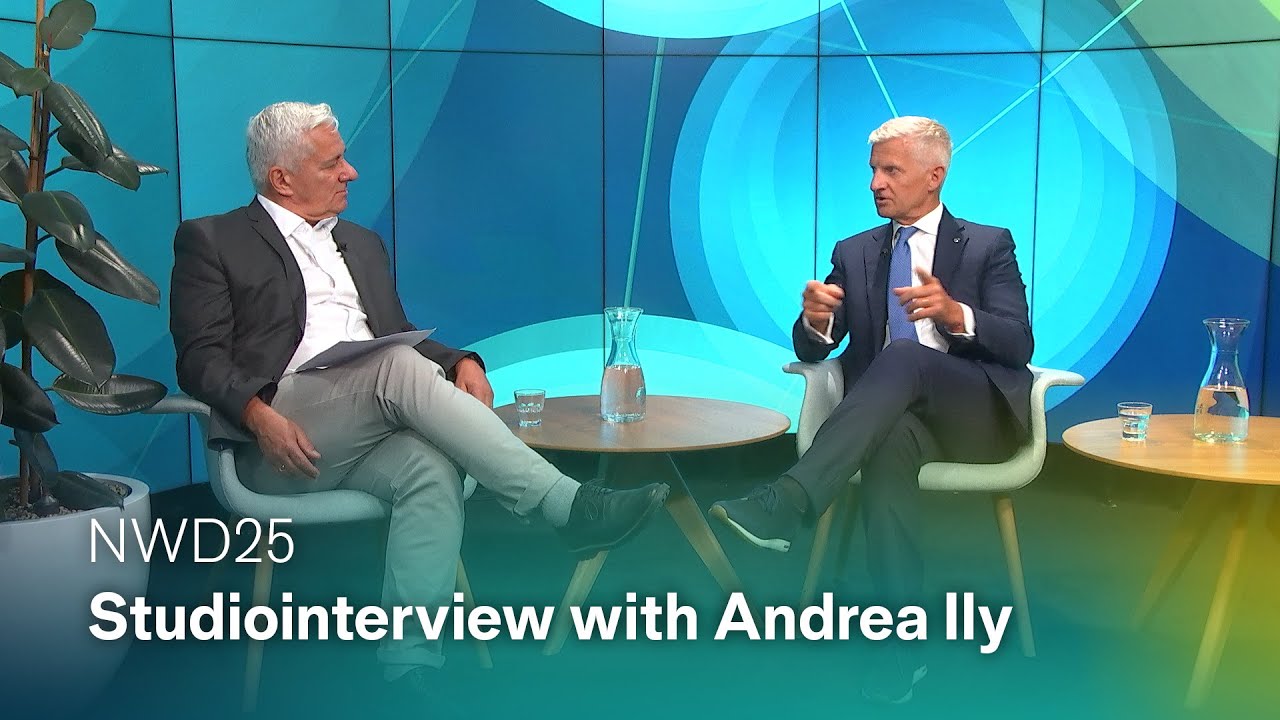
In a Bloomberg Businessweek radio interview recorded on November 16, 2023, Andrea Illy, chairman of Illy Caffè and grandson of founder Francesco Illy, discusses the company's approach to producing high‑quality coffee and its broader sustainability agenda. Illy explains how the firm pioneered direct sourcing in 1991 and created the University of Coffee to train growers, enabling strict agronomic standards and a 30% price premium for superior beans. He describes patented electronic bean‑sorting technology that reduced defective beans from 2‑3% to under 0.5%, and emphasizes that a single bad bean can ruin a kilogram of coffee. The conversation covers the Ernesto Illy International Coffee Award, which honors the most sustainable growers among nine origins, and highlights the link between quality and sustainability. Illy shares brewing advice for both espresso and filter coffee, noting the importance of grind size, water temperature (around 175 °F), and proper filter rinsing. He details Illy’s unique pressurized tin packaging that preserves aroma and allows intentional aging, likening aged coffee to fine wine. Climate change impacts are addressed, with Illy warning that up to 50% of suitable coffee land could disappear by 2050, and outlining three adaptation steps: regenerative agriculture, rejuvenating plantations with younger, climate‑resilient varieties, and, if needed, relocating farms to higher latitudes or altitudes. Brazil is identified as the primary source of Illy’s beans, valued for espresso‑friendly profiles. The interview concludes with a brief mention of a potential 2026 IPO, contingent on market conditions, and a light‑hearted note about Illy occasionally drinking tea.
Chapters
TranscriptAuto-generated · 17 min
You're listening to Bloomberg Businessweek with Carol Massar and Tim Stanwick on Bloomberg Radio.
You're the cream in my coffee. You're the salt in my stew.
We're talking about coffee. A little bit of news first. Arabica coffee futures jumping to the highest since June. Traders looking closely at the issue of declining exchange inventories, Tim, which were at the lowest since 1999. Basically kind of supply and demand. What were you going to say?
I was going to say Arabica or what's the other bean?
Robusta.
Robusto.
Robusta. We have an expert in the house.
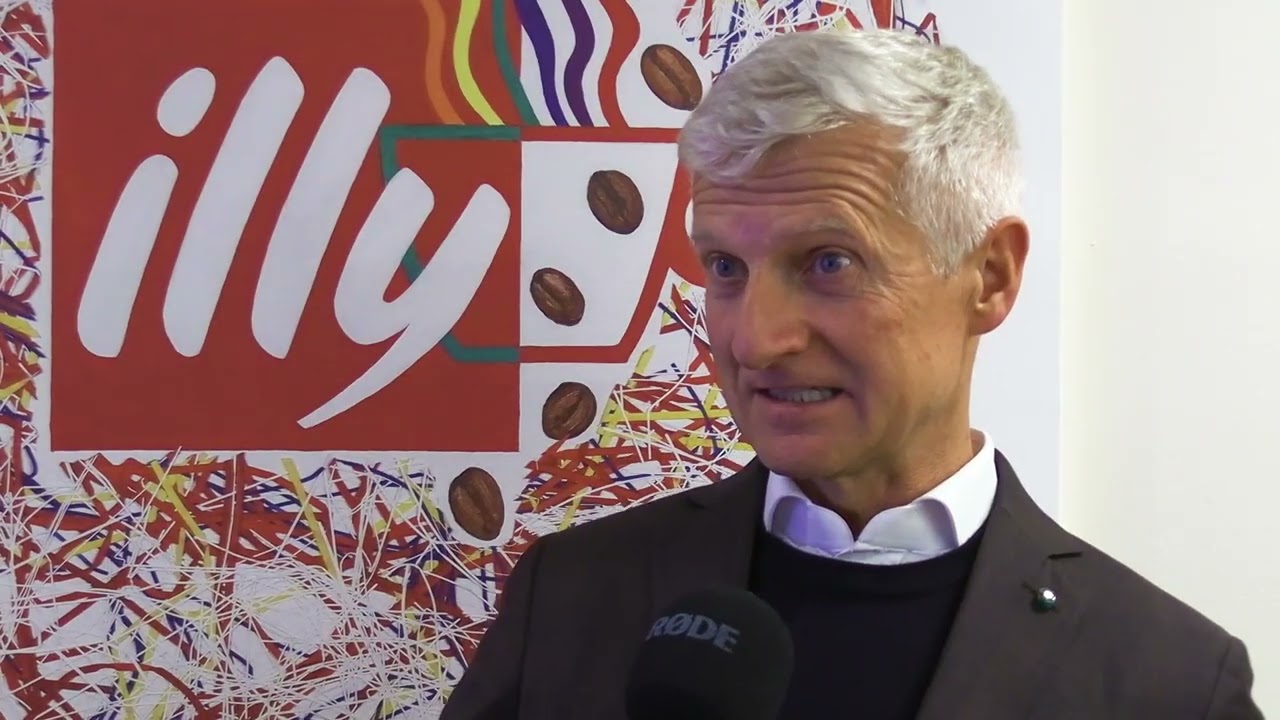
Yeah, that voice you're hearing, Illy Cafe chairman Andrea Illy, the grandson of Illy founder Francesco Illy, who started the coffee company 90 years ago in Italy. By the way, if you had any sort of espresso drink today, you can thank Andrea's grandfather because he invented the steam-driven coffee maker that we now know as espresso machines. Andrea joins us here in the Bloomberg Interactive Brokers studio. How are you?
Very well. Pleased to be here.
What was it like growing up with that history?
Oh, I felt it was— coffee was at the center of the universe because my father, as I am, was a chemist, always thinking and talking about coffee. And he started drinking coffee, sipping, let's say, coffee when I was 2 and a half years old. And since then, always coffee, coffee, coffee, coffee.
Always coffee, coffee.
So there's no— it's not too— 2 is not too young to drink coffee? No,
no, it was just sipping, you know, admiring my mother, you know, trying to prepare espresso with these little tiny espresso machines at home. At the time, no capsules that were still existing because we started the very first capsule portionate 15 years later than that in order to, you know, make it easier to produce coffee everywhere in the restaurants or offices or home. But before that, it was quite difficult. You needed to be a trained barista, but in this case, you need to have a cumbersome, a big machine at home. It was very difficult. So— I can see. And my mother, I nicknamed her the engineer of coffee, you know, was a precursor to this expertise in home espresso brewing.
So Andrea, how come there's always, there's so many bad cups of coffee out there? Like, what is the difference? Like, we were talking, we talk about it often sometimes about—
Don't go there. You're gonna get fired.
I'm gonna get fired. But why is it that you can have, what makes a great cup of coffee?
Well, you need good beans, first of all, and it's difficult to access them. Just to tell you, in order to access good beans, we pioneered direct sourcing in 1991. So we did organize ourselves to go direct, working hand in hand with coffee growers. And the second major step has been creating the University of Coffee. in order to transfer knowledge to them, how to elevate their agronomical practices for better sustainable quality. And this is the reason why we have this award that we are giving tomorrow to the best growers of the 9, let's say, origins where we source coffee from. But producing high-quality coffee is not an easy job. So direct trading, University of Coffee, electronic sorting out every single bean. This has been one of our patents, sorting every single bean, because one defective bean can spoil up to 1 kilo of coffee. You know, this is an amazing, let's say, science behind it. This is the reason why I'm second-generation scientist, chemist for coffee, for coffee quality.
How often do you find a bad bean that could spoil an entire kilo of coffee? Like, how, how, how What is the rate of a bad bean within a batch?
So at the time we started sorting, it was maybe 2, 3%. Now it's less than half a percent. Because of changing practices. Also because in the meantime we did improve substantially agronomical practices. But some of these defective beans could be invisible because maybe they have some off flavors. that you cannot, that you cannot find. So it can still happen, but if everything is well processed consistently, then you can prevent that. But this is not the standard in the industry because the coffee, coffee growers produce for us are specifically produced for us. We buy coffee upon our own standards. Coffee growers like to joke about that Illy coffee doesn't exist because because it doesn't correspond to any official market standard. And this is the reason why we also pay a substantial premium for that, because on average, we pay a 30% premium on top of the best, highest coffee prices in order to motivate them and reward them for the extra effort for producing a superior quality.
Is it harder to grow better coffee Coffee beans?
It is harder. You need the right people. This is why direct sourcing, because we need to really get access to the people who are, let's say, philosophically seeking the best in life, no matter how rich or how educated they are. There are some people like that. You need to find the perfect ecosystem. Yeah. You know, weather, soil, like the terroir. Yeah. This is the kind of—
I feel like I'm talking about wine.
Exactly, exactly the same. You need to find the right cultivar, so the right plant. Not all coffee varieties are as good. And finally, you need those people to process coffee in a way which is perfect. So yes, it takes quite an effort.
And increasingly sustainable, which when you talk about standards, I wanna talk a little bit about this award that is being given at the United Nations, the Ernesto Illy International Coffee Award. award. It is to the individual, the farmer that produced the most sustainable coffee. And what's interesting is that we're having this conversation. I've talked with the folks over at AB InBev. Like, they understand the importance of water. Like, their business will not continue unless they have great access to water and other things, obviously crops that go into beverages. Same thing for you guys, right? In terms of the impact on the environment.
Yes.
Your business is You need to make sure it's done in a sustainable way.
So yes, the award is for the best sustainable quality. So the company was born 90 years ago upon my grandfather's dream to offer the greatest coffee. And so as a strategy, we decided to have only one because the greatest can be only one, right? And of course, the greatest need only— must only not only be the but also the best in how it is produced. Actually, as a matter of fact, sustainability and quality are two faces of the same coin. Yeah. You don't have the one without the others. So it's not difficult for us to kind of, let's say, find a way. And this award, this blend that we produce is made of 9 origins. Because each origin has a different aroma profile. It's like having a nice orchestra, and the more instruments you have, the richest the orchestra. Okay, so 9, and the 3 best growers of each of the 9 origins are awarded tomorrow at the United Nations. So they would know who's the first, second, and third, and, uh, and go back home with an extreme satisfaction and, and being completely boosted motivation-wise and etc., which is also helping them to sell the rest of the coffee they don't sell to Illy, to the, to the rest of the market at premiums. So the company Illy Caffè has been acknowledged in many countries for having contributed to transform the coffee industry in a, let's say, more sustainable way. And this is— we are very proud of.
We're here with Illy Caffè Chairman Andrea Illy, of course, the grandson of the founder of the company, started some 90 years ago in Italy here in our Bloomberg Interactive Brokers studio. I want to pull John Tucker in because he's normally in, in the wee hours of the morning drinking a lot of coffee. And you're listening to our conversation. And I wonder if you have a—
Oh, you know, the beans that we get, there's a whole lineup and it's fantastic. They do this for us. Among them, Jamaican gourmet. There's the Rwandan high altitude Coffee bean, and just from your perspective, what do you suppose is the best coffee bean that is out there?
There is no such thing as the best.
What's your favorite?
Rwanda that you mentioned has been an award-winning coffee at our Ernesto Illy Coffee Award, and amazingly, because there are two awards, one is the let's say, best of the best, which is chosen by an independent jury of very sophisticated, you know, coffee tasters. And the other is the so-called coffee lover choice, let's say, selected by coffee people in the street, you know, in the coffee shops. And this Rwanda coffee was a lady who started a little cooperative, won both awards at the same time. Quite unique. Oh, well, it was quite amazing.
You can't—
Rwanda is similar to Ethiopia. Coffee. Yeah, this is the the plateau in in Ethiopia where coffee was born. Is still considered to be one of the refined most refined coffee, but not the only one.
Can you train us how to make a good cup of? No, I'm serious. You gotta have a YouTube YouTube video or something like that out there. How to make the perfect?
It depends if you if the preparation. If you want to be an expert in espresso preparation or American coffee preparation.
Well, let's start simple. American coffee.
American coffee. Well, I typically use a V60 or a brewer, uh, Chemex with the special filters. Then you— They look like hourglasses. Don't boil the water.
Don't boil it.
Make it 175 or something like that. Not too hot because otherwise you burn the coffee. And then rinse the filter before and in order to get— remove this flavor of the filter.
You get—
and then you do— you gently, you gently pour your water on top of the coffee and you will get a nice coffee.
Don't worry, I have a Chemex. I have a Hario V60. Come over to my place. I'll make you a great cup of coffee.
Or will you come in? But no, I'll bring it all in.
You have to come here.
I'll bring it all in. It's fine. I'll bring it all in. Well, it's also the grind of the beans matters a lot.
It matters, but less so for filter coffee. Very much so for espresso coffee. Yeah. Because espresso is critical. It's at the same time a solution, a little colloidal suspension of these tiny oil droplets, which makes the coffee so flavory and so smooth. And then it's also an emulsion with a crema topping the coffee. This is more critical to get, and you need really perfection also in the grind.
Can you talk a little bit about transporting the coffee after it's roasted to its final destination? Because my understanding is you need to have fresh beans. How do you keep beans fresh if they're roasted in Italy and sent all over the world?
This is an interesting question for us because, yes, you either have coffee freshly roasted or like we do, you have aged coffee because our technologies to pressurize coffee, which not only preserves under pressure and no air, so no oxygen which could oxidize the aroma, you preserve the fragrance, but then you enhance the aroma of coffee because you could age it like it would be a precious wine. So that means that our aged coffee is more complex, more richer, and elegant in terms of aroma profile compared to a freshly roasted one. But this is unique to Illy, okay? And we can make it only thanks to these tins, which are basically a kind of a flavor lock, you know, a kind of a locker of flavors instead of just a container. Otherwise, you could use a simple bag.
All right, now I want a cup of coffee. I wanna get to climate change and the impact it has had on farmers who grow coffee beans?
Yeah, coffee growing, coffee agriculture is very, very sensitive to climate conditions. You have narrow conditions to grow coffee in terms of temperature and rain. And as a consequence of climate change, up to 50% of the currently suitable land will be gone by 2050. Already there are some countries which are gradually exiting the market as a consequence of climate change. So we have to adapt as quickly as possible. And in order to adapt, there are 3 sequential actions to be done. First, improving the agronomical practices, transitioning. Regenerative agriculture seems to be the most promising one. And then we can talk about regenerative agriculture. Second most important move is rejuvenating the plantation themselves with younger plants, but also plants made of new varieties which are more resistant to the adverse conditions caused by climate change. And only if these 2 first initiatives are not enough, then you could consider moving, migrating the plantation to higher latitudes or higher altitudes where you can meet milder climates. But start with the regenerative agriculture.
And we only have about a minute left. Just a real quick question though. Where are most of your beans coming from?
Most of the beans come from Brazil. They do. Also because they, they're better for espresso coffees, high body and rich. Yeah. But also because Brazil is such a large producing country. And regenerative agriculture is important because not only is based on enriching the soil, nourishing the soil with their organic carbon. So not only it sequesters carbon in the soil, but it nourishes the soil microbiota, which is good for fertility, which is good for protecting against pathogens which might, let's say, damage the crop. And it makes the coffee production get rid of most of the agrochemicals that you use. Right. So that means that you also have a benefit, not only regenerative for the environment, but also benefits for health because you have less residues from agrochemicals.
We only have 30 seconds left, but earlier this year, the CEO of the company said that there's going to be an IPO in 2026. Are you still thinking about that?
Yes, I think I know that. This is the trajectory, let's say the roadmap. Okay. So '26 is still far away. The final decision needs to be made. Of course, as you know better than me, it will depend on the market condition at that time. So we shall be flexible about the timing. But this is the goal. This is the goal.
Just real quickly, do you ever drink tea?
Sometimes. Absolutely. Sometimes. But let's say occasionally.
Put some Baileys in the coffee. Baileys Irish Cream.
That's a lot.
The Nutty Irishman. You ever have that?
Andrea, what a pleasure.
Thank you.
So appreciate it. Andrea Illy, of course, chairman of Illy Cafe, here in studio.