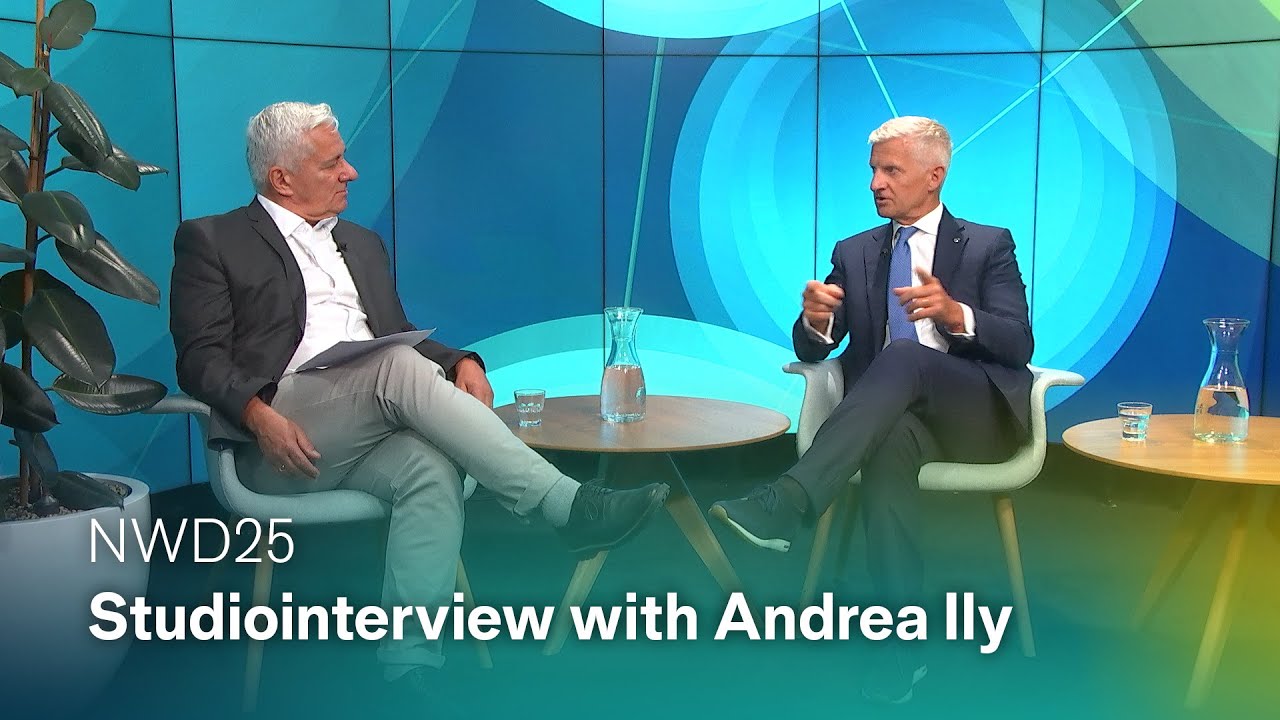
In this interview at the Hub Culture Pavilion in Davos, Edie Lush talks with Andrea Illy, Chairman of illycaffè, about the challenges climate change poses to coffee production and how illy is responding. Illy identifies water security—both drought and excessive rain—as the primary climate risk, noting that these conditions foster disease and, when combined with high temperatures, can cause over‑ripe beans, premature fermentation, or failed flowering, all of which degrade bean quality. Illy explains that coffee quality depends on three pillars: the terroir (the ecosystem where coffee is grown), the cultivar (genetic variety, largely uniform across regions), and agronomic practices (harvesting, processing, drying, and fermentation control). To safeguard and improve quality, illy has created the “University of Coffee,” a global education program operating in its 20 producing‑country partners, providing on‑field training and classroom instruction to growers on best agronomic techniques. This close collaboration aims to exceed market standards, ensuring growers produce superior beans for illy. Illy also makes a health‑related claim that coffee, when consumed in moderation (average three cups per day, up to thirty‑three), can prolong life. The interview blends conversational tone with promotional enthusiasm, highlighting illy’s mission to delight coffee lovers with the best nature can provide while confronting climate‑driven challenges.
Chapters
TranscriptAuto-generated · 5 min
I'm Edie Lush and I'm outside the Hub Culture Ice House, really pleased to be joined by Andrea Illy of Illy Coffee. Thanks for coming along.
Good afternoon, how are you today?
Very well! I've had my Illy coffee so I'm perfect.
Very good. You know that coffee helps you live better and longer. It's now clear that coffee prolongs your life.
How many cups a day though?
An average of 3, but no less than 33.
So tell me—
no more than 33.
No more than 33. Okay. So tell me, I know that you've been talking about climate change coffee. Tell me, when you go to your growers that grow the beans for you, what differences have you seen just in the last years or so that climate change has impacted them?
Well, it's erratic, you know, because the effects of climate change are not the same every year. But the 2 main damages are either by— the main one is water security, which can impact coffee either through droughts, not enough water, or excessive rain, which in this case facilitates, favors the proliferation of some diseases. And so it depends also on the region, not only on the year. So it's very complex to manage. And the other risk Another factor which is also impacting, particularly in certain months and seasons, is excessive temperatures. And when the excessive temperatures go along with drought, then you have problems.
What does that do to the bean?
Well, you know, it can— depends on the season. If the bean is already mature, it gets overripe and fermented on the plant itself. So there's really a big damage. If we are in the maturing season, it can mature too fast. So there are— it depends, you know, if it happens in the flowering situation, in the moment this is the worst because you don't get the flower. The flower dies, aborts itself without generating the cherry. So many possible impacts.
Tell me about working directly with the growers and how that's changed your relationship with them and the company.
Well, because the mission of Illy is, you know, delighting lovers of goodness and beauty with the best coffee nature can provide. So we have to go at the source and get the best beans from the plant. And we need to help growers to get this quality and exceed their standards because growers, they adapt to the market standards, but they can be exceeded and they exceed them for us. So they produce coffee on purpose for us with superior quality standards. And this involves a lot of education because we need to work hand in hand with them in order to find out which are the best agronomical practices in order to really elevate quality. And so we created this University of Coffee, which works in all the 20 producing countries where we work. And the idea is to— the activity is to work with them through on the field and also in classes. You know, in order to really find out which are the factors, determinants of quality.
And tell me, what is the thing that determines the quality? Or what's the thing that people end up learning that really changes how they produce?
Well, if you find the right conditions, which is the so-called terroir, like we say in wine, which are the ecosystem, let's say, where coffee is grown, and they typically have a good cultivar because very much the cultivar are very much more or less the same everywhere. Then the big problem is the, and let's say the third factor is the agronomical practices. How do they process coffee? And how standardized are these agronomical practices? Because most of the time they get very high potential quality, but they then damage this quality by mismanaging the crop management, you know, the process. And this is where we have to really Teach them how to avoid contaminations, avoid fermentations, how to really dry the coffee in the right way and so on. And, and it pays really dividends in terms of quality.
Andrea, thank you so much for coming back to the Hub Culture Pavilion here in Davos. And I'm Edie Lush.