139. Jesse Cole: Turning a Baseball Team Into a Marketing Phenomenon.
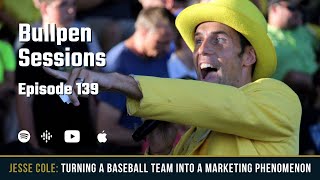
Jesse Cole turned the Savannah Bananas from a struggling summer league team into a sellout phenomenon by treating baseball like entertainment. He hired players who'd choreograph dances, wore a yellow tuxedo, and invented Banana Ball rule changes to speed up games and create viral moments. The Bananas now have more TikTok followers than any MLB team.
Questions this video answers
September 23, 2021.
Finding Your Yellow Tux (How to Be Successful by Standing Out).
2011.
$268.
23 years old.
Chapters
And one. All right, this is going to be one of my favorite Bullpen Sessions episodes I have ever done. Because anytime I get to mix the sport of baseball with the world of marketing and bring them together, that is heaven for me. And that's what we're going to do today. I'm excited. Today I have Jesse Cole, the owner of the Savannah Bananas on and if you have not heard about the Bananas, you are going to be blown away and you are going to quit quickly. Become a fan. Jesse is also the founder of Fans First Entertainment. His teams have welcomed more than 1 million fans to the ballparks and have been featured on msnbc, cnn, ESPN Entrepreneur Magazine.
Since the Savannah Bananas are a college team, a summer college team that sells out every single game. On top of that, Jesse is the author of Finder Yellow Tux, how to Be Successful by Standing Out. He is also the host of the Business Done Differently podcast where he interviews some of the most.
Well known world leading entrepreneurs out there. So, Jesse, again, I can't tell you how excited I'm have to have you on today. So welcome aboard. Welcome to Bullpen Sessions.
Andy fired up to be with you. And love, love the name of this podcast by the way.
So let's here I call it the Bullpen Sessions because when I was pitching, I had to have my weekly bullpen session to make sure I was staying on track. And that's what I want this podcast episode to be about, is helping people stay on track.
I love it. I love it. I gotta tell you something. We're actually in the works. I want to get a mechanical bowl and put it in the bullpen where pitchers have to actually ride the bowl before they take them out. So I'm actually working on that. I can see that happening in the future. So it's all coming full circle now.
All right, if you're, if you're listening in, you're about to get it. You're getting a taste of what you're about to hear. This is absolutely insane. And I absolutely love. Now I want to start with. You went to Wofford College.
Yes.
Which is actually a basketball school, not a baseball school.
We're Definitely, we were 40 my freshman year. So we were definitely not a baseball school when we first started. But now they're winning 30, 40 games a year. As soon as I left, they became a great baseball program.
That's where I actually want to start. Did you play college baseball?
Oh, yes, I was, I was very fortunate. I, I came from up Massachusetts and so it was very easy to Stand out. Playing baseball in Massachusetts, you throw 90 miles an hour as a pitch, you stand out. So I got some pretty good scholarship offers, you know, Boston College, Northeastern, a lot of the ones up there. But I wanted to go down south. So Wofford came in and gave me an unbelievable offer that I couldn't turn down. So I went down to Wofford and became a starting pitcher and a two way guy from day one as a freshman.
Oh, awesome. What, what other position did you play?
They ended up. I could tell some funny stories about playing first base against Clemson and throwing a ball that almost went out of the stadium trying to play the play or trying to run around in the outfield at Texas Tech having no idea what I was doing. Mostly turned into DH because I was a better pitcher. Couldn't play the defense the way I needed to. So pitch.
And you must have had a hell of a stick man to play both ways in Division 1 because that's not an easy thing to accomplish. And I agree with you. I'm 44 years old and I remember playing back in high school, it was rare that a kid from Wisconsin, where I grew up, got a chance to go play down south. And so that's awesome that you got a chance to go play in North Carolina because big time, Division one, mid level, Division one, that is some competitive baseball. So, so let's, let's fast forward. You graduate, you move on. What got you into running and owning minor league or college baseball, summer league teams? What, what intrigued you to get into that? Were you a marketing major? What was, what was the premise behind that?
I didn't know anything about marketing. I, I still, I. People say marketer. I don't even. We don't. We spend $0 on marketing. The only when we spend money on marketing, we failed. So I don't know if I'm. I just had to see something differently. But no, the reality. What happened? I tore my shoulder. Dr. Andrews did my surgery down in Birmingham, Alabama, but he couldn't get me back. It was three tears in my shoulder and I went into coaching. I coached in the Cape Cod League for a summer and I sat on that dugout with the best players in the country. All those guys went on to play mlb. And I found myself realizing that I loved playing the game but didn't enjoy watching the game as much. And for that moment, I said so. I took an internship with a small team in Spartanburg, South Carolina. And after two months, I got offered the job as a GM of a team at 23 years old. And how do you get offered the job as a gm? Well, it has to be one of the worst teams in the entire country to get offered a job at 23 years old to be a GM. And so, yeah, long story short, took over the Gastonia Grizzlies at 23. There was $268 in the bank account. My first day. We had three full time employees. Payroll was on Friday. There were only 200 fans coming to the games. The previous year, the team had lost over $100,000. It was not a pretty picture. I couldn't pay myself for the first couple of months. It was really, really tough. So it was then that I learned about marketing because I read every book about P.T. barnum and Walt Disney and every marketing sales book I could. And I realized very quickly that if we wanted to be successful, we couldn't be in the baseball business. We had to be in the entertainment business.
So we're going to get there. That's what I love about what you've created. It's what you are is marketing that happens to have a baseball game tied to it. And that's, that's what I absolutely love. And you brought back memories for me because I can remember playing in Helena, Montana and that RGM was in his mid-20s. You know, as a young guy running the organization, which when you're playing that was low level a ball, it's not easy. There's not a ton of money and there's not a lot of fans coming to every game. So. So I give you a lot of credit for jumping in. Now I want to fast forward because you were in Gastonia and I think, correct me if I'm wrong, this pivotal moment is where everything changed. There was a proposal done on the field that kind of.
Shifted the way you thought about what you were doing with Gastonia. Tell the audience about that.
Yeah, well, yeah. So the proposal. And you're referring to my future wife, I'm guessing. I'm hoping. All right, there's not another proposal. So I spent 10 years in Gastonia experimenting and failing things like flatulence, Fun Night, Salute to Underwear Night, Grandma Beauty pageants, Dig to China Nights. We actually gave away a one way ticket to China with no accommodations, no flight back. That was pretty ridiculous. But anyways, we started attracting fans. Players doing dances during games started attracting. Also attracted this amazing woman, Emily, who was working for Ripken Baseball, the Augusta Green Jackets, working for Cal Ripken. And she, we started talking and she wanted to join our team, became our director of fun. And she's the only girl that would wear a hot dog costume, like every day, not care what any guy thinks. She's like, I'm here to give fun. And I fell in love with that confidence. So the last game of our 2014 season, sold out crowd, I flew her family down, my family flew down. And in front of a sold out crowd, I stopped the game and proposed to her in the yellow tuxedo. And actually is the sixth inning and we stopped the game with a huge fireworks show. The umpires and the players are sitting there watching. When are we going to play again? Because now there's fireworks all over the field debris. I was like, this is our moment. Thank goodness she said yes. And that night to go to where you're going, she planned a trip to Savannah, Georgia.
And.
And I'd never been. And so she surprised us with a trip to Savannah, Georgia. And I went there and we found the stadium. 1926 ballpark. Walked in. There was minor league baseball, the New York Mets affiliate. Beautiful night, majestic stadium. Walk in, there's less than 200 fans there at the ballpark. And I was like, what happened? And it was that moment that I reached out to the Commissioner League. I said, if this team ever leaves, we are going to put a team there. And Emily said, yeah, go. Go for it, Jesse, whatever you think. And then all of a sudden we found out that they left and we came in there and proceeded to fail pretty miserably for six months before we started to figure a few things out.
Well, and you chose a good city. I have a colleague who lives down and operates his agency out of Savannah. It's a pretty cool city to be in and go back to Gastonia. A couple questions I have from that. You know, you said when you started, when you came into that organization, you couldn't even pay yourself for the first few months and attendance was low. But something I don't want to go overlooked was when you said you made the proposal to your now wife Emily, the stadium was sold out. So what would you say? What, what, what was that decision you made to go? How you transitioned Gastonia from an organization I could barely draw a crowd to. By the time you left Gastonia for Savannah, you guys were selling out.
Yeah, we went from, you know, the worst of the country. I do, I think fourth in the country in attendance. So we were, yeah, selling out games. And yeah, I mean, it started from, you know, you. Whenever you join something, you want to launch something, you want to do it big, but you also got to listen. And so I made all these cold calls. I remember I just. There was an article I found from November of 2007. And I said, the article, I'm going to meet with every single business owner in this community in the next month, which is impossible, but you better believe I called every single one. And I listened to them, and I listened to them, and I listened to them. And what they said is, our people don't like baseball. It's too boring, it's too slow, it's too long. You know, we're just not interested. You know, it's. It's not for us. I heard it over and over and over again. So I kind of said. I started thinking. I was like, we can't position ourselves as a baseball team. And I was like, well, you can't just say, oh, you're entertainment, because every minor league team does that. I go, we need to have something. Something that we can put our stake in the ground and say, we are different. And so the first thing I said, I remember it was just in a meeting. I didn't think too much about it. And it was like, well, what do you mean you guys aren't like baseball? They go, well, our players do choreographed dances. And he was like, what? I'm like, yeah, every game they're going to do choreographed dances. I had no idea how to do this, and so I just started saying that. And when people said they wouldn't, we don't like baseball, I started saying, perfect, you'll love our shows. And I changed the language from being a game to being about a show with leading, with players dancing. And I had no idea how I was going to do it. So we invited the dance instructor to teach the players to dance. And they were terrible dancers, much better ballplayers. And there was a long story there, but by the third night, I'm walking through the crowd, the players are dancing. I'm watching a husband and wife are talking, and I see the wife go, shut up, honey. They're about to dance. And I was like, all right, we are onto something. We are onto something now. And I knew it. Those guys are the most popular players. And that was the way to differentiate ourselves. It started with just one player dance. Doing it every game. And then that turned into something that really took off, and people started coming to the ballpark not knowing what to expect.
Well, and you've taken it to a whole new level in Savannah, which we're going to talk about. Question on that, though. When you know, today you're known as the man in the yellow tux. When did you really. When did you start wearing the tux? When did that become an idea?
Oh, it was 2011. And so I think my first three seasons, 28, 29, and 2010, you know, I was testing, trying, and crowds were starting to grow. We got a few sellouts, I think, in 2010. And then I was like, I'm putting on the show. I'm on the field. We're pine fans. You know, we're dancing. We're. It's. It's a circus. And I'm wearing a polo like everyone else. I go, that is not who I should be. I. That's not who I am. And so, inspired by P.T. barnum, I said, I'm going to get a black. I'm going to tuxedo. And so I got a black tuxedo with tails. One of my buddy owned a bridal formal show shop. And I put on that first night. It was 100 degrees in North Carolina in May, and I literally almost melted. I was like, this isn't going to work. And I need to find a color that was lighter. And the Grizzlies had a little gold in there in their logo. So I was like, all right, there's yellow. And I, like, found bright color. Tuxedos.com overnighted it, put it on the next day, and it stuck. And people didn't even know my name. They said, oh, look at that guy in the yellow tuxedo. Let's get a picture with him. Look at that guy. And it became a thing that just stood out, and it really embodied kind of like what we do. You know, we're about creating attention and having fun. And as I wasn't the owner then, but now as the owner, if I'm wearing this and I'm throwing underwear to fans during the games, and I'm dancing and I'm singing, and I'm like, this. That hopefully gives permission to everyone else to have fun. You look at most owners of sports teams, where do they sit during the games? They're up in their owner's booth, way up. Corporate, dressed up in suits. You know, you all got to be professional like that. That's not who we are. We are not trying to be corporate. We're not trying to be professional. We're trying to be fun. And it starts at the top. So unintentionally, me wearing this gave the rest of our whole staff permission and players to have more fun.
Well, and what I love you said about that, and I had to learn this, you know, for the baseball purists out there, they could look at what you're doing, be like, that's not good for the game. And it's even like, you look at the major league level today, say what you want about, you know, Vladimir Guerrero Jr. And Fernando Tatis Jr. How they round the bases and do their little thing. That's just where we are with baseball today. Whether you like it or not. It's about entertainment. And so now let's fast forward. You get to Savannah.
Yeah.
And I love, I watched, I watched the promo video you guys had on your website about you get there and literally the stadium is empty. They have taken everything out of it.
Oh yeah.
Talk about those first, first few months where you were literally building from scratch.
So picture. So it's myself, my wife, I was 31 years old at the time. My wife's 28. We have a 24 year old president and three 22 year olds out of college. And we show up that first day and the city gives us the keys and they say, good luck, like, like, like you're gonna fail like everyone else. And we walk in and every single thing, every piece of furniture, every, everything is gone from the stadium. And we go into an abandoned to the office and the phone lines were cut and the Internet lines were cut. The former team just did that. And then literally. So we found an abandoned storage building with the tiles out, water coming down. We're like, all right, guys, guess this is our office. And we're like, we didn't have any furniture. And so like we grabbed a picnic table from outside the park and brought it in. And there's pictures of this. So we didn't have any phones. So it's us just calling with our cell phones, calling people in the community. We're here. They're like, who are you? Like, what are you like? I met with a bartender, I met with a restaurant in a bar that was like big in the community. They're like, oh, we heard you guys aren't even serving beer at your games. We're not interested. I'm like, we're serving beer. What are you talking about? We'll have beer, you know, and we had just, we had to utterly can try to convince everyone we were this low level baseball team. We weren't even saying we were college summer baseball. We were saying we were independent because we were too afraid to say college summer baseball. So it was, it was so bad that in the, in the first three months, we only sold two total tickets and we sold two season tickets. That was it.
And I'm going to put that promo video that. About us, the history video that you have on your website in the show notes. Because I think everybody needs to watch. It's just a really cool story from where you came from to what you guys are doing today. And I want to talk about that because, yeah, your first few months were. Were. Were terrible as far as getting the interest of the Savannah community. I still. I even remember watching that. And you talked about your unveiling of the new team, and 100 people showed up, you know, to. To. To. For the unveiling. But I feel like everything changed when you came out with the unveiling of the nickname.
Yeah.
Because you had a contest. You had a contest about, let's, guys, we need to vote for a team nickname. And there were a lot of thoughts about what. How it should be tied to the city of sa. Its history. Talk about that, because how you ended up with the bananas is fascinating.
Well, we were marketing like everyone else when we first came in. You know, we teamed up with the newspaper. We did radio, we did social media, but no one cared because we didn't have the attention yet. You know, we were just another baseball team. So I. At that big first launch of that event where we invited the whole entire community to come, and it's like free food, free drinks at the conference center. Like, literally, we were taking care of you, and 100 people showed up. You know, it couldn't get worse. Like, we're literally taking care of you. And we said, all right, we want a name that's really, really different, really dramatic, really unique, real fun. Because I knew we couldn't just be, like, something normal. And so we sent it out, and then we got every single normal and generic name you could possibly get. Like spirits, anchors, ports, like skippers, sailors. I'm like, what are all these names? And we had one woman. She suggested bananas. And I looked at Emily and looked at Jared, our present. We started talking, and my wife goes, go Bananas. And I'm like, the mascot could be split. And then, like, oh, we could have a senior citizen dancing the banana nanas. It was like, oh, we get a frozen banana drinks. And like, our eyes started litting up. I was like, it was like, this brand could be crazy. And then, like, someone, like one of our team members said, people are going to hate it. I go, bingo.
They are going to be embarrassed by it. They are not going to like it. It's going to hurt, but it's going to get this polarizing effect. And I believe if you're not getting criticized, you're playing it too safe. And so we knew that we were. We spent two days, Andy, training our team on how to respond to the hate. Like, literally when this is the dumbest name ever. Oh, well, we just wanted to be unique and creative. We thought Savannah's unique. Like, we literally worked on the talking points with our 22 year olds and our team on it to plan for it. And we were right. When we announced the name locally, the news. I mean, there's the funny thing from the documentary was showing the news anchor looking at the screen, like, did they really just name the team?
I wanted, I wanted to say that watching that video was so funny is you have people clapping. And I visibly see this woman in the mood in the shot and she kind of looks around like, really?
And we rigged that. See, people don't know this. I'm going to get to it. We invited all of, like, the spouses, significant others, like, friends of all of our staff, like everybody we knew. And we told them, just cheer really loudly when it comes out. Like, we were trying to egg it on. So, like, it really wasn't that positive at first. So, yeah, the news stations, everyone, you know, it's an embarrassment to the city. You'll never sell a ticket. Leave our town now. But nationally, Andy, number one trending on Twitter, merchandise was going all over the country. People were talking about. Because they were like, this is fun. And I was like, yes, it's just going to take time to get the city to believe in it. And that's what happened.
Well, and I think a big lesson in marketing that you learned is, and I see it in the insurance industry every day is when you try to be different at first, most people aren't going to like it, but you gained the one asset you needed. Attention.
Yes. And then once you have it. Yep.
And once. Yeah, once you have that, that's hard to let go of. And so. Oh, go ahead.
Let's say, you know, Jeff Bezos says you need to be willing to be misunderstood. Everything they've done at Amazon has been misunderstood at first. I mean, you think about, like, think about like the idea of the Echo or the Alexa in our, in our, like, let's have something shaped like a Pringles can that listens to everything you can say and you talk to it like what? We're all misunderstood at first. But, you know, I believe you can't get the hearts of anyone until you first have their eyes in the ears. You have to get them to see and be able to hear you before you can get down deep to the heart. And so that's what we had to do. And it was painful. My wife and I were sleeping on an airbed. We had to sell our house. We were. You know, it was painful, but it was worth it.
But what Take. Take me to the moment. So we're going to get into the Savannah Bananas today, and all the things you guys are doing that are fun, because factually, if you're not familiar, if you're listening and not familiar who the Savannah Bananas are, it's a college team in the Coastal Plains league. So it's a summer league for college players. And what you're doing today, from the marketing perspective, I said it earlier. You know, what you are is you are your entertainment that happens to have a baseball game tied to it, which is what I absolutely love. When was the moment you realized, you know, in that first year, that, ooh, we got something here like, we're on? Because Savannah historically was this minor league affiliate of the Met, wasn't drawing a lot of people, but you're like, holy crap, this could be big opening night.
Now, we convinced enough people to come watch us potentially fail. So the opening night, we had almost four. We had 4,000 people show up, sold out, pouring rain. They rushed the stadium. Now, again, part of the business model we do is, you know, whatever is normal to the exact opposite. But also eliminate all friction points from the customer experience. See, I haven't showed Andy. The name of our company is Fans First Entertainment. Every decision we make, we ask, is it Fans First? We put ourselves in our fan shoes. Actually. Every night at our stadium, one of our staff members goes undercover, parks with the fans, comes in with a fan, sits with the fans, eats with the fans, and we do a whole presentation that night at midnight in front of our team on what were the friction points, what were the pros, what were the grows? Every night. So it's all about the fan experience. So we made every ticket all inclusive because we thought, you know, everyone hates to be nickel and dime. That's terrible. At a stadium, you pay $5. A park, you pay $8 for this, $4 for a soda, $8, whatever. So we said every ticket, all inclusive. All your burgers, hot dogs, chicken sandwiches, soda water, popcorn, dessert, and your ticket for $15. All right, that's what we started out. It was crazy. We had no idea if it would work. We just thought, if I'm a fan, I like that. I'm all in on that. So did it work? Not at first. 4,000 people showed up, and they rushed Our concession stands, we should have assumed that. But we went through 10,000 pieces of meat in the first hour and a half. I think we had about 4,000 pieces of meat ready. People waited for three hours. I mean, it was the worst experience, but you had to get through the messy to get through the good. And very people would quit right then. We knew that if we could figure it out, it would be worth it. So anyways, opening night disaster. Our team's in green uniforms because we're not quite ripe. And we made like. We made six errors. We wear green uniforms every opening night. Finally, we won this year, which was good. But anyways, we made six errors. Played terrible in the rain delay because the game didn't start till 8:30. I look at the Banana Nanas, the senior citizen dance team, and I was like, can you guys dance out in the rain? And they're like. They're like, sure, why not? So, because everyone's waiting for the game, and I watch as they get in front. There's a video, and there's the tarp behind them. There's like the tarp. No one's playing. And the Nanas are dancing with the pouring rain on them. They're all 65, 70 years old. And I look at the crowd, and the energy level went like this, straight up in the air. And I watched as every other person had a phone videotaping. And I was like, all right. People are seeing something they've never seen before. And you talk about marketing. We had 2,000 plus marketers that night, just in that one moment. And so I realized that night, if you create these moments that people have never seen something at a ballpark, like our breakdancing first base coach, like our banana baby, like playing in kilts, like giving away colon cleansings, like all the crazy things we do, then you create these moments that you have to be there that you wouldn't believe what happened at the ballpark. And that became our entire strategy.
Well, and what I. The lesson I took from that first game is, if I heard you correctly in that video, was you guys played like crap. But the crowd stayed around for the entire game.
Yes.
Because of the entertainment value. So.
And they told everybody. And they told everybody. So what happened from that game? We didn't have to be on market anymore. So we had 4,000 evangelists, an army of marketers that went around town, said, you have to see the Bananas game.
Well, and what. What really drew me in as a fan a couple years ago, just honestly catching you on YouTube videos and things like that. And even Snippets and Bleacher Report is how you actually get the players involved. So like in minor league baseball when I was playing out in Montana and Utah, there was a lot of entertainment but it was often fan entertainment. They'd have the fans come out and do. But what you do now to actually get the baseball team from wearing yellow plaid kilts. What sold me and made me a fan is watching a player come up the bat with his walk up music, literally being a marching band behind him.
Talk about how you've taken that entertainment value to the next level to actually get the players involved with the entertainment.
I think that it's a great and it's a, it's a big conversation because I think when you look at what happens in minor league baseball, professional baseball, professional sports, you have the front office and then you have the players. You have the players, the coaches in the front office and they're separated. There's two different, there's two different goals. The players win games and then the front office of like sell tickets, create an experience and you know they want to win too, but it's all kind of going against each other. We all have one goal and before anyone puts on a bananas uniform, they go through an entire orientation with me and our staff. Bananas you fans first you, you can't get a jersey until you know and you hear the stories about what our players do and how, you know, we have players that literally I never, I'll never forget this for you. Years ago two kids came up to one of our players and said can I have your autograph? And he got down to knee and said only if I can have yours. And he gave him his hat. And now if you look at our team, half the guys have kids like John Ethan Allen all over their hats. Just one name. Which is so funny because we tell these stories. Guys, this is why 4,000 people come. This is why fans will drive 40 hours from Utah, which has happened game and drive back 40 hours the next day. This is why fans line up at 130 for a 7 o' clock game. It's because of these experiences. And so when you tell the guys, like you mentioned the pep band, we'll have jam sessions with the guys. So once we say this is what we're doing, we're in this together. So every day 3:45 on a game day and say, all right guys, what are our scoring celebrations going to be today? What are our walk ups going to be today? And so we test one the first night we had, why don't we run through the crowd? And so the guys, after the first run, they sprinted around the entire crowd. So the whole dugout's empty. Every guy is going through high fiving the crowd and the fans are going nuts. I was like, this needs to be a tradition. And then the next guy was like, well, what if we had a grocery cart? So they put a grocery cart at the grandstand. The guy that scores, they put him in the grocery cart. They push him all the way down the grandstand. And so it becomes this buy in culture. I mean, one guy was like, you know, we didn't have. I'm sorry, I got to go here. This is good. But the constraints foster creativity, too. So if you think about any business, if there's a constraint, you go, oh, what are we going to do? Well, what can you do now? Because you never had to think of it that way. We lost our announcer because he couldn't be there. He had to travel. He's an Amazing announcer. DJs very good at what he does. And Shark wasn't there. We couldn't get another announcer. So he said, all right, well, all right, well, what if we have fans introduce our players when they come up? So we had fans, we go in the crowd, and now batting for the bananas. What if we had your teammates introduce yourself? We started doing that, and then one guy was like, well, what if I introduce myself and Bill Leroy? So Bill literally comes up to the plate, now batting for the bananas, UNCJ Aluminum myself, and throws the money.
It was ridiculous. But it starts in the beginning when you have a vision. And our vision is very, very clear. What we learned as far as marketing, you want to go into marketing. Marketing. We were so clear that we make baseball fun, and we want to be the most fun baseball team that guides every decision that we make. And so when you make that as the clear thing, it makes all your marketing, your content, your things. And the guys know, is this fun? Let's do it. And I made it.
Well. And I think what you've also understood is in the world of marketing, they talk about who's the hero of the story. The hero you've realized is the fans. It's not the players. Whereas in baseball and sports, you think the heroes are the guys, the women, men and women on the field, it's not. It's the fans. And you get that clearly. You know.
We think our team, our players and our staff, our game day staff are our biggest fans. So we also put them first. So when you try to look at Everybody in your organization as a fan, are you treating them like a fan? Like that you, you know, excited, you look up to them, you do great things for them. So it's like almost looking at everyone as a fan and that guides a lot of our decisions.
It's almost a trickle down effect. You as the organization, the management look at the players as your heroes. The players look at the fans as theirs.
Yes, there you go.
And that's so. And so the baseball guy in me has a couple of questions. Number one, knowing this is a college league league and you're recruiting college players to come play for you because of what you do, I gotta believe every college player wants to come play for you guys. Like how do you pick which guys you're gonna bring in in a given summer?
It's funny, we had a guy so orientation. We do the bulk of the guys like from before the season, but also guys trickle in because they're playing in the regionals or super regionals. So this guy coming, I had a one on one orientation which happens once in a while. So it's a one on one orientation. And the guy, he goes, before you go on anything, I just want to let you know I know everything about you guys. This is my dream to be a part of this. I go, what are you talking about? He goes, I have read every story, followed everything. I saw the first Baseball America article a couple years ago and I have told my coach it is my dream. I am just in awe that I'm here right now. And I'm like, all right, this is going to be a good orientation, let's do this. And so we've been seeing that. I get emails and messages. So we have about 1200 players plus that reach out to us for a 30 man roster throughout the entire year. So it's over a thousand, twelve hundred.
Wow.
So we're playing with, I mean, and again, there's, there's our coach, he sent me the other day, he goes, there's two criteria he looks for. Obviously you want someone that's a banana that understands what it's like, you know, to be fans first. But also he said he wants someone that throws down, knows how to throw down in the arena. He doesn't want someone, just want to be seen. We have over a million plus social media followers, more tick tock followers than every Major league baseball team. Not just their own exposure, wants to throw down in the arena and be a banana. And that's what he looks for. So he spends a lot of time.
More filtering than recruiting well, and think about this. You know, I want everybody listening in to hear what Jesse's been saying in the market. What I love about the marketing is just how detailed it is. Jesse, your first games of the year, you wear green. Why? Because bananas aren't quite ripe yet. You're. I loved, I loved, I loved your introduction of Split the banana mascot when you say you called him the king of potassium.
Talk about though, what you just said, though. It's one thing that have entertainment, but let's not overlook the fact you guys have been pretty damn successful on the field. In fact, this last year, I think you guys went what, 36 and 8, won the, won the league. Why do you think that entertainment has transitioned to success on the field?
We had a professor from Georgia Southern do a study on this because I, I said I was speaking at one of their college way back that I was like, oh, you know, the Bananas just play better because of our atmosphere, our culture, and because they have fun. And I didn't realize at the time he wrote that down and he was like, no chance. And so he studied stats of our players and every player in the league for two years. And he came back to me, said, hey, I heard your quote on what you read what you said and I found some data on that. I think you're going to find this interesting. I'm like, oh, shoot, did he find that?
It's not.
There's only one team that showed a strong correlation and an extremely strong correlation. When you put on a bananas uniform, you will play better because of the culture, the fun in the atmosphere. And for three years he studied it, it was the only team he could show a correl. And I believe, and as you, I mean, you can tell the energy you have doing this podcast as well. When you do things that you enjoy, when you have fun, you will perform better. And so for a lot of these guys that play in a college or play in front of a team from only 300 people and their coach is negative and it's not a fun environment, they will perform worse. And it's proven so we focus on the fans, the fun, the atmosphere and the culture and the baseball is taking care of itself. So yes, we've won more games than any team in the league over the last six years. We won two championship and we're always first round by in the playoffs. And it's just because we have fun and because our coach does a great job of building that culture with the guys and we get great players. We have more guys drafted than any Other team as well. But it starts with kind of, who are you, a banana? Do you understand what we're about? And let's put that together.
Well, let me ask you a couple questions that, you know, what is first and foremost, what would be the message you because of that success, what message would you give, not only another sports franchise, but just corporate America, about how to have more success as a business? What would be your number one piece of advice?
Well, I think it's to be very clear on your vision and what makes you different. So, and when you look, if you go to our website on our about us net, we have like all the things that we do that are different because we want to be very clear on that. So you think about a business, you know, if they're playing the same game as everyone, competing against everyone else. You know, in sports, everything's about the competition, the seriousness the competition. That's not a Fun game for 99% of the teams. You know, at least every night, half the teams are losing. So, you know, we said, all right, well, what if we just focus on that differentiator on make it about fun and make sure it's a great experience and a great culture. So I would ask business owners to think about, you know, what makes you different. What game can you play that your people will be excited about? We don't want to compete, compete against yourself. We compete against ourselves to create something at next game that's more fun than anyone else has ever done at a ballpark. And so I think that's where we start. And you know, I challenge everyone to stop thinking about how to create revenue in sales. How do you create fans? It's a different conversation, your people, and that can change everything.
I'm just curious if you had to pick the one, the craziest thing you've done during a baseball game, as a marketer, as entertainment, what would it, what would it be?
It hasn't happened yet. And I'm saying that not as a political answer, but I mean, you better believe I've, I've continued to think about how do I have players, how do I have players skydive to their positions? And so I know there's liability issues, but like, there are so many things that I'm thinking about of how can you do that? Something never seen at a ballpark. So it hasn't happened yet. I mean, we opened the show talking about mechanical ball. I mean, there's no chance that at some point we're not going to have a ball monkey delivering baseballs to an umpire while climbing up the umpire and handing them the baseballs. There's no chance we're not going to have a monkey. So it's the craziest. We haven't done it yet. And that's what makes it. And I'll say this, I'll say this. You know, every night we try something we've never done before in front of a live crowd. And every night something fails miserably that we've never done in front of a live crowd when we have banana ball, which we haven't even talked about. Andy. Where our whole redesign of baseball. A two hour time game, you know, with literally a fans catch a foul ball, it's an out, no bunting. You know, if you win the inning, you get a point. It's a whole different game. Steal first. It's amazing. I love it. But we did it. It's a two hour game. We had an hour at the hour mark. We did a halftime show in the first game. We did it. So we had a countdown in the middle of the game. It's a 21 count, there's a guy on second base, there's two outs and we count down. The players run off the field. They literally ran off the field. And I had for our St. Patty's Day when we did it, a bagpipe drum band come on out. And it was. They were all in their 60s and 70s and show I've ever seen, literally they walked out in the slowest and like. Please welcome our halftime show. And like what halftime show in baseball? And they're just slowly walking out to the field. And it was very slow, very painful. But we're going to continue to break the rules and do more halftime shows and we'll figure out how to get better at them. And I think that makes.
There's a huge, There's a huge message there. Jesse. When you're willing to be that different, you can actually compet completely redesign an industry. In this case, it's the game of baseball. Nine innings takes three to four hours. No, no, no, no. We're going to try something different here. I absolutely love it. Now you're the author too. You took this to a book and you're the author of finding your yellow tux. Find your yellow tux. How to be successful by standing out. You know, some of the things that I, that I took away, I absolutely love about. You know, number one, being normal is an undesirable position. And you said it before, you know, being normal. Look at being normal and go do the exact opposite I come from an industry, insurance, that is the.
The living example of normal. And this is how everybody else does it in the industry.
How could people use your book, you know, an entity, an insurance agency, use your book to develop that marketing. What two or three things do they need to do from a marketing perspective to start standing out?
Yeah, And I wrote that book. After the second season, I have a new book coming out that's coming to your fans. First, Change the game, break the rules, create an unforgettable experience, which I go more into detail. But, yeah, I start that book, and I'll share more in this next book as well. You got to have a mirror moment. And, you know, I think about the beginning of the Jerry Maguire movie where he's like, up all night and he's looking at him, he's like, we can't be like this. We can't be like every other agency. We have to have fewer clients and better focus on them. And he immediately did his whole preach, everyone's clapping, and then he got fired. All right. It was a great opening to the movie. What's your mirror moment? Most people look outside the mirror moment. You know, I'm one of my keynotes. I'll play the song man in the Mirror. You need to look at yourself and make that change. Everyone looks outside and looks at their competitors. Look at yourself. Look at the own problems in your industry. Look at the problems in your experience. If you put yourself in your customer shoes, know what is bad about the insurance agency. Know what all those frustrations are. Point and do the opposite. We realized baseball too long, too slow, too boring for too many people. You get nickel and dined at every game. All right, there's ticket fees, there's convenient fees, there's shipping fees on everything. We eliminate all that. We even went so far. We eliminated advertising from our entire stadium because we don't believe people want to come to the ballpark and be sold to marketing, advertised to. We threw away hundreds of thousands of dollars two weeks before the pandemic. One of the dumbest business moves you could ever do. But we are so gung ho on eliminating all those frustration points. So I'm any insurance agent, I would say start with that mirror moment and write down what are all the frustration points, the friction points of that experience as a customer, and do the opposite. And that's how you can create raving fans.
That's phenomenal. That's really why I was so excited to have you on, Jesse, is you have taken a sport by storm. In fact, I wanted to ask you this, this is totally off the scene subject. Do you feel because you took over the Bananas back in, what, 15, 16.
Yeah, 15, 16 or first season. Yep.
And you look at minor league baseball today. Back when I played in the early 2000s, most minor league teams had a lot of what I would call traditional nicknames. But now when you look at minor league baseball, there are some very creative nicknames. When you go around all the various leagues in single A, a Triple A, do you think you've had a little impact on that? A little effect on that?
I think we were affected by that. I mean, there were ones before us. There were the Flying Squirrels, the Montgomery Biscuits. I mean, there was. Obviously, it's becoming more prevalent now. I think the challenge is people look, oh, let's have a crazy name and create attention. You need to think more about the brand. We have things that we have ideas with Bananas that we haven't unveiled yet that might not be unveiled for three or four or five years. So I think with anybody, when they come up with a name for their company or come up with it, you need to think about the brand in a much longer term. And I think my team is like, oh, we're sell a lot of merchandise. We're the Trash Pandas. All right, well, what are you going to do with Trash Pandas in three or four or five years? And I'm just saying all these names. And so fortunately, this is what we've seen. Andy, I've talked to a lot of minor league teams. Their merchandise, they kill it their first year, you know, might do a million dollars, a million half. Then they go down and down and down. So they reach this plateau. We are doubling and almost tripling. We tripled our merchandise this past year, become well over a million because we're thinking about the brand and creating fans, not thinking about just, hey, let's do a crazy name. So, yeah, we may have played a role, but I think we've been impacted as well.
That's awesome. This is Jesse. This has been a phenomenal. In fact, you know, I even think about today, when you look at what's going on in college sports with this whole name, image and likeness thing, and the fact personal brands for college athletes are going to become more important than they've ever been. What you're doing for those guys who get to play with you every summer, to get them ready for that personal branding, especially if they've got a chance to play at that next level in professional baseball, you're setting them up for success.
And this Past year, we actually each had, each player had their jersey with their own face on it. And so we actually auctioned those off and then sold them and wrote over $7,000 to our players, which for college guys, you know, obviously split up between the team. But so you'll see, guys, I mean, they sold hundreds of jerseys with just their face all over the jersey. So, yeah, we really owned that name, image and likeness.
That's awesome. Well, Jesse, you know, you're an author, a sought after keynote speaker, and owner of one hell of an amazing college summer league team. If somebody wanted to reach out, there's a, there's a CEO of an organization listening in saying, man, we need this guy on stage in front of my employees. How can people best get in touch with you?
I appreciate it. I'll never Forget I was 25 years old and one night I read Mark Cuban's book, short book, but I read it through the night. I sent him an email, I think at 6am he wrote back within an hour. And I'll never forget that. And you know, you think about how reachable he was and accessible and I've tried to always be that way as well. So, yeah, I'm easy to find. You found me. And you search Yellow Tux anywhere, you'll find me, Jesse, Yellow Tux and our Savannah Bananas. And yeah, if I can help, there are any questions, I'd love to jam.
Well, I got to tell you, I am at this point in time, scheduled to speak in Savannah next late spring 22. So I am going to make sure, as long as your season has started, I'm going to make sure that my butt is in the stands and if I can get a ticket because I have. This is to me, going to a Savannah Banana games, especially if you're a baseball fan, has to be a bucket list item.
It's amazing. We keep hearing that from people and that's, that's quite the honor, quite the kind words.
Well, Jesse, I want to thank you for this time. I know you're a very busy man and if you're listening in, I Hope you had fun. One, do yourself a favor, go start watching the YouTube channels of the Savannah Bananas. Go to their page, learn about the team, but more importantly, learn what Jesse just said about marketing. It's about looking at normal and running as far from it as you can. Because when you, your team, your organization is able to do that, you get that clarity that gives you confidence. You know what happens next. You guys take massive action. So go make that happen today.
More from Andy

Stop living in the gray of maybe! Your job in sales is to get a clear yes or no


How elite producers use “validation” to give prospects the confidence to hire them.

The Transition, every great sales leader goes through: Stop being the hero and develop heroes.




