15. Spencer Smith: How To Create Brand Awareness With Your Podcast
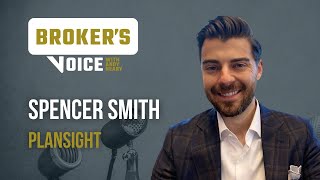
Spencer Smith went from whiteboard videos to hosting a podcast, then repurposed clips for LinkedIn. He recommends a decent mic and headphones over expensive gear, committing long-term, and picking topics your audience actually needs to hear.
Chapters
Foreign.
Welcome back to the Broker's Voice. I've had this man on early, before this actually officially became a podcast, so I just had to have him back on again. I'm excited today to be joined by Spencer Smith with PlanSight. Spencer, it is a pleasure to have you on, as it always is.
Andy, it's a pleasure to see you. It's always a pleasure to get to actually virtually hang out with you and then occasionally do it in person as well, man. But to somebody that I've learned a tremendous amount from this business from, it's always a pleasure to get a chance to join you and even be in your hot seat for once.
I appreciate that, and I know. I wish I could. I wish we were doing this live. This is what. This is a part of podcasting. I need to start copying from you, which is the tight. The topic of today's talk, of today's episode, which is podcasting.
Cool.
So what I. Why I wanted to have you on, Spencer, is there's a lot of advisors now who are starting to look at podcasting as a medium to market, which is. It is a great medium, but at the end of the day, you got to be able to do it right. There's an effective way to do it. And so I wanted to have you on to talk about your journey, because, as I said offline, I think you probably have the best podcast in the industry right now, and it's. It's. It's gaining followers by the day. So I want to talk about that journey. So why don't we just start there? You know, when you made that decision, like, okay, I think I'm going to do a podcast.
Yep.
What was going through their head? Did you have any hesitations? What was the thought process there when you finally made that decision? That, yes, this is a channel of marketing that I want to pursue.
Well, so Steve and I are. Our CEO, Steve Overton and I had been talking about podcasting for six months, probably prior to us starting, but we didn't know how to do it. You know, that kind of thing is like, well, yeah, we want to do it, but how do you do it? What's the format? Who do you talk to? What equipment do you need? And it was a serendipitous moment for me. I know you and I were talking offline about signs. Before this, I toured Venture X, which is a shared workspace that doesn't even exist anymore. And as I'm going through this tour, they said, oh, by the way, here's our podcast studio. You know, and I looked in and said, oh my God, like here is a ready made studio, super high standard. All I have to do is show up and everything else is taking care of it. It was one of those things when you asked, like, how do you make the decision to do it if that's laid in your lap? It was like, I would have had to be dumb to not take advantage of it. So really there was no decision. Like, it's here you've been talking about this. The only thing that would stop you is fear or doubt or something like that. So I made the decision right that second. I'm going to join Venture X and I'm going to start a podcast at the same time.
And if anybody's watched his, his podcast from Venture X, I do mine from home. Trust me, man, I am jealous when I got a chance to be on your podcast in that studio. That thing is. Was.
Was. Yeah, was.
It was. But hey, you're in a new beautiful space too. So we'll talk about that as well. So.
Absolutely.
What's really interesting about your journey with podcasting, Spencer, is you started with a topic that, let's be honest, for many, sounds boring. Stop loss. And you even named the podcast Stop Loss with Spencer. What was kind of, did you have a strategy or a thought process early on about how can I take this topic and actually make it really interesting? Because remember, you started with videos at a whiteboard even before you started the podcast.
Yeah.
So talk, talk to the audience about that. Like taking a topic that may seem uninteresting because a lot of advisors think insurance can be uninstring. How did you turn that into something that people wanted to tune into?
Well, so I just applied the land and expand principle. You know, we started with the stop loss videos landing, meaning finding something you're good at that you know, and talk about that thing. So the stop loss with Spencer was me just, you know, exhausting my knowledge around that particular subject. But it also was a nice starting vehicle for me to figure out the format. Of course, creating content just needed a whiteboard, just needed the subject matter and I could fill in the blanks from there because of the knowledge I had. The self funded with Spencer transition to the podcast was go, all right, let's move out from there. Now it's a little more variant because I could talk to brokers, I could talk to tpas vendors, carriers, point solutions. It's still healthcare related, it's still related to self funding, which includes stop loss. But now I can have instead of myself having to be the expert. I'm going to have folks like yourself on the podcast to bring their area of expertise in subject matter and make it more interesting because it's not constantly stop loss all day long. And so that was the thought process is like start to continually to venture out away from what you know well, but still say relatively tied to that core function of what I do on a daily basis. And so that's. That was the idea. It started to play itself out, and now I'm taking it, I think, a step further to look more healthcare, look at preventative health, look at physicians. I had a physician on yesterday. So just continuing to evolve it so that it becomes more broadly applicable to folks.
Yeah, I think what you just said is important. Just because the name of the podcast is Stop Loss of Spencer doesn't mean Stop Loss has to be the subject of cop.
You're right. Oh, my God. I totally do that whiteboard with Stop Loss. Wow. Did I just blow that self funding with Spencer?
So for the person listening in, talk to them about the theory. You and I have had this conversation with podcasting. You know, I think our industry often has this belief that you've got, you, the advisor, have to be the sage on stage with the microphone in your hand.
Sure.
And you and I both know that's not true, especially in podcasting. Talk about the value of being the host of the party, man.
I think everything I've done from a benefit standpoint or, you know, benefiting from the podcast as being the host of the party. I used to think of it as I wanted a seat at the table. You know, I was a guy trying to grind in my career and earn the right to be at the table. I realized with the podcast, I had the table, and so people were coming to me to join, and all of a sudden I had something of value to offer. That wasn't me selling them something. It was a platform in which they got to highlight themselves. They got to be the person of interest. And so I got to be involved in that. I got to go along with that. Obviously, being the host means you're always going to be at the forefront of the podcast itself. But I no longer had to be the expert. I no longer had to find everything that was interesting all the time to keep people tuned in. The guests got to be that for me. And I got to come along, like you said. So I think it's. It's been. It's indescribable, the value that it's brought to my career. Exposure, visibility, etc, just Simply being the.
Host of the party early on. Did you. You know, I think a lot of people also have this, this fear that no one's going to listen. Right?
Yeah.
And I think you've. You've been able to take your podcast self funded with Spencer. Self funding with Spencer. I apologize, my head's, my head's in other places today.
And you've now turned it into something that's damn popular. But that's not where it started. Right? It started where you just were. What? I guess the question I want to ask is.
If I'm going to start a podcast, what are the things I need to focus on as a beginner? Sure. So take us back to when self funding with Spencer just got off the ground. What were some of the things you were focused on? Knowing that it's not going to take off right away. What, what should a newbie to the podcasting world focus on?
Well, and I will tell you this, Andy, to that point, and I've heard a number of people that have become very successful in household names of podcasters or YouTubers, even the same thing. It's like, ignore the numbers for the first couple years, nobody's even going to listen to you. Probably better off nobody listening to you at that point because you're probably going to suck, you know, So I think setting aside this idea that as soon as I release my first podcast, I've made it, I'm out there, I'm ready to go, and people are just going to see how brilliant I am. I think if you just set aside the need for that and know why you're doing it, which is kind of the things you're asking, you know, the things that you should consider. Obviously have a decent setup. Right. You've got a nice microphone and arm and headphones. You don't need to spend a ton of money to accomplish that. But the way that I actually envision it is at least have it at a level that it's not distracting or detracting from the listen. So to have your audio be at a certain threshold so people don't go, oh, that sounds terrible, I'm not going to listen. But it doesn't have to be a $500 studio microphone either. Same with your camera. You could shoot it on your iPhone. If you want to have a video podcast, that's perfectly fine. You can stream it on a laptop, that's also perfectly fine. But I think more than anything is know what you're going to do or what you're going to talk about. Where's Your niche or where's your hook? Obviously, you're want to. Going to want to find decent guests. Right. Your guests often drive a lot of the viewership. So who can you find that's interesting that you know you want to talk to but won't be for good for conversation? And then the last thing is, commit to it. Don't do five episodes and realize, oh, nobody listened to it, and I'm done. I don't know when this is going to stop, but I hope it never stops, or I hope it's in the thousands of episodes, because you're going to have to at least shoot 100 or a couple hundred before you even really proficient at it. So know that if it is something you're interested in doing, it's going to be a commitment and it's a useful tool for your business, but you have to commit to it and you have to be in it for the long haul.
I think it's such. That's such a good point. Because when you look at the people we see today that are considered the icon, the podcasting, you know, whether you like him or not, Joe Rogan is an icon of the podcasting world. And if you go look at him, he's on episode somewhere between 16 and 1700 now.
Crazy. Yeah. Yeah.
And so it's. It's insane how long some of these podcasts been going. You know what you just said, though? I want to. I want to talk about that for a second. You talked about equipment. So the first, before you even consider equipment, know what it is you want to talk about? What is the topic? Second thing. Cool. I gotta go find some guests that can help me talk about that topic. Don't be afraid. I'll add in. Don't be afraid to have episodes where it's just you speaking once in a while. I do that with my bullpen sessions. Right. I have my Friday bullpen sessions where it's just Andy sharing some maybe mindset knowledge, personal development, content, things like that. But at the end of the day, it's audio content, right? Yeah. And so with equipment, you know when you realize that, okay, I'm gonna. I'm gonna make this a real thing, are there certain pieces of equipment you recommend someone have just to get a podcast started?
Well, and I would say I want to caveat this to a degree. I was very fortunate, Andy, you saw that studio. I was very fortunate that that's where I got to start. And I think people need to set aside the notion that if I don't have 4K video and studio microphones and a switcher board and all this crap, then why even bother? I think that's, that's a bad way to look at it. But if you have the means to buy those things, by all means. But I think, you know, you talked about equipment wise, a decent microphone. It could be a yeti microphone that might cost you 100 bucks or 120 bucks. I'm sure there's versions of those that are even less expensive that offer a similar quality. I don't know what that microphone arm is that you have, but you can get one that just sits on your desk that comes with a lot of these microphones. Headphones, I think you have the wired headphones. I think I would definitely recommend a wired headphone if you're doing a virtual version because of latency and sometimes some lag in conversation. But other than that, that's it, right? Somewhere to have your microphone sit. A microphone itself, Headphones, most likely. Although I am doing this on a laptop. And then the last but not least is if you want to do video, your iPhone is more than sufficient. Or you might be able to spend 500 bucks on a DSLR or something like that. Little bit better, but you don't have to do that either.
No, you're exactly right. I mean my first microphone was an Audio Technica 2100. I think it was $75 and it stood on this little tripod. Right then I went to the blue yeti that I use once in a while. Once in a while, when you're in the room with somebody and you want to catch good sound and then I've got the M sure. So just find a microphone that has quality sound. And to your point, if you plan on doing video, it can be your iPhone, your, your Samsung, it can be, heck, it could be your zoom, your laptop camera on zoom right now. Don't overthink.
If I was on mobile with my laptop, I have a little webcam that sits on top that's a slightly higher resolution and that cost me maybe 40 bucks. You know, it's same thing. I think you'll want to venture in, buy a bunch of toys. I know especially as us guys, we like toys. But you know, the point is is those things are not necessary. I think again is it's at a decent threshold of standard. And two, is the content engaging? And that's really what you need to focus on, make the content engaging.
I was going to say I want everybody. If you haven't had a chance to watch or listen to self funding with Spencer, the reason your podcast has grown the way it has. Yes, having that studio was nice. The camera angles were great, the equipment already there helped. But at the end of day, it was your content that made that thing grow. Even going back to you sitting at a whiteboard when it was stop loss with Spencer, you're a ability to make a. Let's what some might view a boring topic into something really interesting and entertaining was huge. Yeah. Now let's talk about this for a second. I want to give, I want to get your opinion. Now, your audience, meaning your prospects because of your work at plan site is the advisor community. So starting a podcast, self funding with Spencer that's designed to bring value to the advisor community is a great way to go for the advisors listening in who want to start a podcast where their audience might be CFOs, CEOs, HR professionals. Let's talk topics. What topics could they use to bring value.
To those communities, to really stay top of mind with their prospects? Because I have an opinion. I'd love to know what yours is.
Yeah. And I know your insight will probably be better than mine because I'm calling on the brokers trying to sell them software, right? And they're the ones doing obviously the outreach to the employers who have completely different demands and requirements of them. But I think from that perspective, right, it's, it's, I think meeting them at the level of language and understanding that they have, I think sometimes brokers want to prove how sophisticated they are and the jargon they use. And I've got the most cutting edge, innovative solutions and I'm going to show you the most radical disruption to your plan. I don't, I don't think that's necessarily necessary. I think just showing who you are at the end of the day is going to be a universal idea.
Right?
Like who am I? What makes me interesting? What are my value systems as a person? How many advisors are out there, Andy? 10,000? 20,000? I mean, I don't know the numbers.
But I think it's actually a half a million in this country.
Well, geez, I was way off. Imagine, right, like your value proposition versus someone down the road is probably a little bit different, but not that, really not that much. They want to know who the person is. You tell you this all the time and I was dead. Seth Denson says it too. You want to do business with another human being. So yeah, curate some good ideas, bring forth some new things, innovate things they want to talk about. But I think if you just show them who you are as a person, I think that's where people are going to connect. And that's where people I think have connected with me, even on some of the personal posts, is that they get a sense of who I am as a person and then ultimately the doing business with me comes down the road. If plan site makes sense for them. But never. I'm never selling them on plan site on any of my podcasts at all.
No, that's a. It's exactly right. And my opinion is if you're targeting the employer community, whether it's HR, CFO, CEOs, honestly, I don't think you should be doing a podcast on health insurance or benefits. It should be a podcast on business success. A podcast where you interview your clients, your prospects, and let them talk about their businesses. Because what that's going to do is let your prospects listen to their peers or listen from, learn from their peers about business strategy, about what's working for them, what are the challenges. And that to me is a content that is so much more valuable to your prospects than even you sitting there and having a podcast talking about benefits.
Well, and to your point, Andy, and I think you're spot on, I talked to somebody the other day that helps podcasts market themselves and get higher exposure and social media management and things like that. And the one thing that the lady suggested was exactly what you said, is, yes, you want to talk about healthcare, yes, you want to talk about self funding, but what about the business owners themselves? What about people that are making decisions about buying benefits or just making decisions that the benefit portion is part of their overall budget and they just have to think about it in such a small way in terms of the time they spend on it. But here's this huge line item. So talking about the person running a business or connecting over entrepreneurship and things like that, that's why the self funded name I picked it is not only because self funded is a type of funding type for insurance, but self funded can mean self funding. The podcast can mean self funding your business. I think, you know, I don't have to necessarily go through a name change iteration as I expand. And so that was some of the, you know, forward thinking that hopefully I introduced into the fold as well.
That's awesome. You know, I have a couple. One of the things I find myself spending a lot of time on with my agency clients is they want to get into the podcasting world and we start simply with zoom interviews. And I, you know, I have an advisor in the northeast who's starting an Interview series which will turn into a podcast around culture. She, she targets HR professionals. It's going to be a beautiful series. I have another one in the, in the mid Atlantic that's doing one just with the local businesses in town. Those that's content that works. Because the last two questions I want to ask you that go into this is, okay, you're doing a podcast, right? You got your interviews. Heck, you even have people fly into DF to Dallas Fort Worth, which is awesome.
I mean, I live. The guy flew in from Maryland yesterday and I'm still in all he had another reason to be here, which is always good. But it's like the fact that they even come in. I've had people fly in and I'm like, I can't believe this. I don't know how this happened. I'm just so grateful, man. But anyways, proceed.
This is where I knew you took your podcast to a level I have not even gone. And I am jealous of you because when you get people to fly to see you, man, that's pretty cool. But talk about how you use the podcast content in other channels because it's not just about the podcast sitting on Apple or Spotify, it's how are you using the content from your podcast to create marketing for yourself?
Well, I can tell you by far and away the most engaged platform for me on the podcast is LinkedIn. There's absolutely no doubt about it. So using a picture to promote the show in advance, getting people to engage with that. Talk about, oh, I can't wait to listen to this one. And then the clip there as well. A short version clip that hopefully drives people to all platform to the full episode. But knowing that my audience eventually is professionals, insurance agents, carriers, vendors, they all live and breathe on LinkedIn as a place to do business. And so it is the absolutely most useful platform for me to distribute it and market it, bar none. The thought process around expanding the full episodes and Spotify and Apple and YouTube, that's going to come. But I drive almost 90% of my engagement on LinkedIn and I would encourage anybody that's shooting an hour long podcast find a way to cut up 2 minutes or 60 seconds or 90 seconds of that clip to get something really interesting to draw attention to people. And hopefully eventually that leads to attention and attraction for your business as well.
Oh, that's. And, and if you do an hour interview, you probably have 10 clips that you can use.
I just don't have enough time to edit them all.
Exactly, exactly.
The other the other day and there's like eight clips I want to cut from this podcast. I'm like, I don't know what to do with eight clips, but there's so many dang good ones that I want to cut up. And to your point, right. You realize that that hour as such useful information that could be redistributed over and over and over again. And I have brokers that have used it in their signature when they were on my podcast. They send it out or they drip it in an email. Hey, I talked about this subject. Here it is. It's going to be a perpetually useful piece of content that you capture.
Here's a game changing ninja move though too is let's say you just want to do one podcast episode a month, which I think is too little, but you could, if you do it long enough, you have enough clips that you could probably use for social media for that entire month.
Of course you could. Absolutely.
So let's finish with this last question because we've talked about equipment. Okay. Get a good microphone.
Get a nice camera, whether it's your iPhone, your Samsung, or maybe I have the Brio Logitech Brio on top. Look, you have a webcam. Where do I host my podcast? You know, that's the last place is like I want to truly make it a podcast, which is the audio format of this interview. Yeah. Where would I, where would I go and host that podcast?
Well, and I know you'll have some opinions here about weighing in on the streaming version of Streamyard and things like that, but Anchor actually has been my distribution platform. It's owned by Spotify, but what you do is you get to upload it there. And even they've allowed me to upload video now, but then it'll distribute it to you. Connect your RSS feed, which you don't need to know what that is. It'll walk you through it. But you connect your RSS feed with Spotify, with Apple, with. You know, I think there's what a stitcher. There's like seven platforms they have access to. I also upload it to YouTube because I want the content to be there. I want the. I shoot it in video for a purpose and I want people to be able to access the video there. But I think also having a CEO that really supports what you do and he ends up creating a Wistia channel that you can host the videos is. It isn't hurtful as well, but I think just find a platform. I think Anchor. Anchor is the easiest for a dummy like me to figure out as a first time person. And that's been very useful for me and I don't know if I'll ever venture away from it anytime soon at least. What about you? What do you think?
That's a great point. I'm also an Anchor. I know you can use. What is it? There's Bean Pod, there's Riverside, there's. There's a lot of options out there. But honestly, to get started, Anchor FM is free.
It's free and you can literally record in your phone and distribute a podcast if you wanted to do that right there as well. So I think the barrier to entry is pretty low.
And that's the point I wanted to make is if you're sitting in and watching this, listening to this. First, thank you. Second, you've had that idea of wanting to do a podcast. It is really easy. Get a microphone that has good sound quality and again, it can be as inexpensive as 60, $70. Get a good camera, maybe it's a webcam that sits on top of your laptop, that's 40 to $80. Or just use your phone and then you've got a platform like Anchor, which is free. Does it take a little work, a little self teaching to get there? It does. But at the end of the day, it is so easy to start a podcast up. As long as you have the topic you want to talk about, the theme, you got good people to interview. You are on your way to creating a really cool, cool piece of content for your prospects. Any lasting thoughts, Spencer? You want your final thoughts you want to share for the broker audience listening in, who's had that thought of jumping in and haven't taken that leap yet?
Well, I was. I would leave you this. The. The why. For me, it makes a lot of sense. If I can shoot an hour long podcast that can live in perpetuity, it might be useful. A year down the road when I put it out there, I might get a thousand people or so that engage with it and I might realize six months from now somebody's been watching my episode that I had no idea they're listening to the podcast for that six months. They come to me and say, hey dude, I heard you talk about plan side. I really want to know what that is. I think it could be useful for us as a vehicle to sell the level of effort you put into one show versus making 100 or 500 calls and emails. You're going to be infinitely more productive, I think from a sales perspective utilizing this medium. If you. As long as you commit to it again. I'll say that again. As long as you commit to it, I think you will be surprised at how far your reach can go.
Execution is the name of the game, hands down. I want to share these last two things with you as a final parting shot because this is where I realized the power of podcasting. Spencer. I had a conversation with industry peer about six months ago, Chip, and been a long time since I caught up with him and the pandemic had been very hard on him, let alone the virus hit him pretty hard as well as mentally, it was hard on him. And he told me in the phone call that he had thoughts through the two years that we've all gone through of saying I'm done. And he said listening to some of my Friday Bullpen sessions podcast kept him going.
And I just had a another industry peer tell me that he just did an ultra marathon and he had this whole podcast list of stuff ready to go, this whole playlist for his podcast, for his. For his run, to keep him motivated and going. And he said one of my episodes was what he had coming in at about mile 32 to keep him going. And so point being, I don't say that to brag the point, the mate, the point I'm making. And I'm sure you've had the same impact that you don't really realize, Spencer, you never know whose life not only follow this guy self funding with. Spencer, this is somebody has used the medium of podcasting to go from creating entertaining videos with whiteboards to becoming an industry rock star, quite frankly. And it's. And it's because of the podcast. One of the reasons is because of the podcast and it's such an amazing podcast. So with that being said, Spencer, I want to thank you for taking the time.
My pleasure, man.
Thank you. And if you guys are watching, you'll notice this man has one hell of a cool working studio from which he. He's not a fake background. It's not a fake background. For everybody else listening in, this is.
The place to be for cool places to work.
I guess a little jealous here running this from my house. So for everybody else listening in, you know the name of the game. When you get clarity, clarity breeds confidence. When you're confident, you take massive action. Let's go take that action today.
More from Andy

Stop living in the gray of maybe! Your job in sales is to get a clear yes or no


How elite producers use “validation” to give prospects the confidence to hire them.

The Transition, every great sales leader goes through: Stop being the hero and develop heroes.




