How To Create The Ultimate Differentiator In Your Market with Kris Tawney
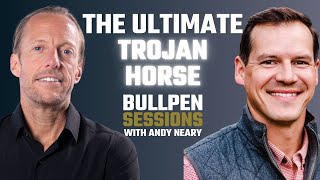
Kris Tawney, founder of Tawny Insurance and Safety Solutions, built a safety and risk-management services arm as a "Trojan horse" to win insurance business. He started as a college football walk-on at West Virginia, then moved from agency employee to founding his own firm in 2013.
Chapters
Hey. Hey. Welcome back to the Bullpen Sessions podcast. My name is Andy Neary and this is episode 315. Today I am joined by Chris Tawney, founder and CEO of Tawny Insurance and Safety Solutions. Chris is a trailblazer in the world of insurance and risk management. He's the driving force behind Tawny Insurance and Safety Solutions. And what I love about Chris's story is that he has built an agency that doesn't just sell compliance, commercial and employee benefits insurance. They also offer safety and risk management services. We call that the Trojan horse in marketing. So they not only can sell you the insurance if you're a construction company, they're the team that's going to come out and actually do your safety training. And I think that is very unique in this day and age when it comes to building an insurance agency. Now, we're not just going to talk about what Chris has done to grow Tawny Insurance and Safety Solutions. We could also talk about his athletic career because this man was quite a player on the football field playing high school football in Pennsylvania, which I screwed up if you listen to the early part of the podcast. But he went on to walk on at the University of West Virginia, right at the time, West Virginia football was ascending with Rich Rodriguez as its head coach. So we talk about his journey from college football, a lot of the cool traditions West Virginia has following its football program, and then we do dive into his insurance and career all the way up to what he's done to build a really unique model at Tawny Insurance and Safety Solutions. So I'm excited for you to hear this episode. If you're an insurance agency owner, you're going to want to take what Chris talks about today and determine how you can leverage it at your agency. Because what Chris is doing today when it comes to effective marketing is proving a pillar of modern day marketing, which is better no longer wins, different wins. And what he is doing at Tawny is different. And you need to take this episode and walk away asking yourself, what can we do as an agency to be different, not just try to be better. So here we go, episode 315. Chris Tawny, founder and CEO of Tawny Insurance and Safety Solutions. Chris Tawny, welcome to the Bullpen Sessions podcast, my friend.
Thanks for having me, Andy. I appreciate the time, buddy.
I have to tell you, I believe you are my first podcast guest from the great state of West Virginia.
All right, Happy to be it. That's great. Go Mountaineers.
Now, I'm looking forward to this, this conversation, especially if we have some college football fans on this listening in. They're going to love the conversation. So you're in Leesburg, West Virginia, right?
Lewisburg.
Excuse me, Lewisburg, West Virginia. Before we get into your insurance career, let's talk about the pre. Insurance career. Born and raised in West Virginia. One thing I do want to talk about is you played football at the University of West Virginia. Remind the listeners, when were you there?
03205.
So three to five.
Which beginning. The beginning of like the, at the first, when it first was starting to crest up to the big years, you know, with Pat White and all those guys.
I was just gonna say you were there. Which for the football aficionados you were there at the beginning of Rich. Rod. Rich Rodriguez's tenure, right?
Correct. Yeah, yeah. His, when I was here in high school was like his first year and they had a real down year and then my freshman year they kind of started the winning tradition. So talk about that a little bit. Not because of me, but you know, that was the year that was kind of the start of the rise.
Yeah, talk about that a little bit because I'm a former athlete. I love hearing the journeys of athletes going from playing, you know, going from one level to the next. So playing high school football in West Virginia, we. When did you realize that you had a legit shot?
Actually, Andy? High school was in Pennsylvania.
So I apologize. I'm sitting here thinking you got, you, you were born and raised in West Virginia, listeners. I made a mistake, man.
I was 11, 12 years old. We moved to, I've been here, I'm 40 years old, but I was only out of the state about five years.
Six years from playing high school football in Pennsylvania.
Yeah, so, so we had it, you know, I played in high school up there and, and you know, that's a big, oh, that's like a big thing in northwest Pennsylvania. And so yeah, I, you know, as far as the sport, I wasn't, didn't really grow up playing the sport, you know, as a kid never even, we didn't even. Weren't allowed to wear helmets in Oil City, Pa till 9th grade football. Like, you know, you had your flag and in seventh and eighth grade you had helmets. And in ninth grade it was really when you kind of start playing, you know, it wasn't like today, all these like 10 year old kids are out there playing ball. Like we never touched it. But. But yeah, I mean it was a gritty town, a bunch of great people. You know, we had a great group of coaches and people that kind of drove you. And so I. I take a lot of our business stuff today back to that time where I started to learn.
When did you realize you had a legit shot of playing D1 football? Did you have that epiphany, you know, all state, whatever it is, where you're like, man, I think I really do.
Have a. Yeah, I mean, no, it took a while, actually, so I didn't really. Sophomore year, high school, my dad actually got me to play. I was going to play basketball and focus on that. I'd had a good summer at basketball, and I foot or baseball is my sport when I was like, 12, 13, and I couldn't hit the curve, so I just couldn't. You know, I was really good in Little league for Little League, and then it just kind of went downhill from there. So start playing hoops.
You know, had some. Some success. Like I said, kind of that summer leading up, I'd grown a little bit leading up to my sophomore year and just, you know, had a good time. I was like, you know what? Football's hard, and they hit hard, and we had a really good team. My freshman year of high school, some guys that went to WVU ahead of me ended up being all Big East. Guys, like, went there. They had like, 11 or 12 people play college ball from those teams. So I was kind of scared, frankly. I was like, this is a bunch of big dudes. I'm still this skinny little sophomore. I might play. And, you know, my dad was like, hey, you know, Friday Night Lights are pretty cool. You should give it a shot. Like, you know, and really, I just kind of messed around my sophomore year till maybe like a month to go in the season. And some guys got hurts. I got some opportunities and just kind of learned how to play. And I was kind of a physical guy, and that was, you know, more physical than skilled at that time, you know, my skill level wasn't high, but we had a lot of fun. And, yeah, maybe end of my junior year, we thought we had a really good coach. Ray Beers was his name, took me under his wing, and he handled all the recruiting. Really different world back then. Now there's apps and Twitter and, you.
Know, you had to, like, hours of video today.
You had to record the vhs, right? And then mail out the VHS tips right to the. And you did a highlight, and they wanted to see your highlights for five or ten minutes, and then they wanted to see, like, a whole half of a game, you know, every snap you're in. So there was like a period of time was like their strategy. So maybe ended my junior year, but I didn't know what level. I grew up, like in West Virginia, so that's why I wanted to go there. And when it came down, I was like.
Pitt or West Virginia were kind of the things. And I probably had a better opportunity at Pitt, but I just couldn't do it. You know, we don't, we don't like Pitts if we're from West Virginia. And they had, you know, so it was fun. I mean, it was a unique experience for sure. A lot of great guys that I'm still friends with today. And so I love that, that part of.
And what position were you again?
I was a safety.
Safety, which is a very important safety to me is like the catcher in a baseball field. You got to know where everybody is and what position they're in.
Yeah, yeah, yeah. It was a lot of fun. And, you know, get to wvu, a whole different level. Everybody's really good at the game. You know, you can really stand out at high school and that changes. But gave me a ton of respect for. I thought I worked hard till I got there, Right. And I was like, oh, like, this is a job. You know, it's for real. So when they talk about paying athletes and, And I, I don't disagree with that. I think that that's a, you know, I don't know how the, you know, it's weird how they're going to piece it together, but. But, you know, I think it's. I think it's. It's difficult, you know, and I already wanted the clock back to be 18 and 19 years old, too.
That's a lot of stuff coming at you at one time.
I couldn't agree more, man. You know, I think at the time was West Virginia in the big East.
Yeah, okay. That's right.
You know, I played mid major Division 1 baseball, so I wasn't in one of the big conferences, but even at our level, you get to Division 1 at any level, in my opinion. I think what a lot of kids realize is you're no longer the hometown hero. And every kid is good. Every kid was all state at that level. And yeah.
And if you make a mistake, it hurts really bad. It hurts really bad.
And there's another, there's another guy right behind you ready to take your spot.
That's right. That's right. That's right.
And I think for a lot of high school kids that come from that background where let's call it the hometown hero, it was hard for them to make that transition to realize now it's no longer. You can't just get by on skill alone. You've got to bust your living tail off the field to win the job.
Sure. And, you know, and I walked on and, you know, I was kind of bottom of the barrel too. But, you know, the, the, the, the best part about it was the relationships, the friendships, the. You went through a lot of stuff together. So, you know, I see these guys, I see guys that, that, you know, I was with to this day, and it's like, you know, you leave, you know, right where you left off. And that's now like 20 years ago. Right. It's. It's starting to add up, like how long it was. But you. Yeah, I mean.
I see a lot of people talk about football or baseball or anything, and there's.
A lot of linear relationships to business.
Right.
Like being part of a team, doing your job, knowing your role, and, you know, pushing when you don't want to. You know, a lot of that, you know, the effort and then just kind of the heart. I still think about sometimes some of the workouts we had to do, and I'm like, okay, maybe my day today was not as hard as what that was.
Yeah.
You know, you know, because it was just. It was a lot of difficulties. But, but they were. It was fun too. I mean, there's a lot of fun things too, but it taught a lot of lessons, that's for sure.
Well, I'd love your perspective on a couple things. One, you know, you talked about the recruiting today. Recruiting today in collegiate, at the collegiate level, both probably more football and basketball is berserk. Right. Between the amount of content you can see on a kid, the amount of camps there are today, Travel ball, now we've got nil money. I think one of the problems that is created if I'm being on, you know, in my opinion, is a lot of these kids are just unbelievably athletically gifted. So they're good on paper. But where I think a lot of these kids fall short is what's going on between the ears. You know, you put a kid in, in the fourth quarter with the game online, how are they going to perform? And I think that's what we're seeing. A lot of these blue chip athletes falling short. In your opinion, playing at a high level like you did, and now running a business. Where do you see some of the commonalities or the, the lessons you learn in sports from a mental aspect that have helped you succeed in business?
Sure. I, I think Kids today, I am not faulting them. There's so many people out there like, oh, these. I'm the oldest millennial. I think technically Those born in 84, I think is the end of millennials. And I mean, if you hear what you heard, like the last four or five years, it's kind of falling off now. But millennials were the problem. Right? Right. Like, oh, they don't know how to work hard, they don't how to do this. Well, these kids have got a lot of stuff to deal with that I didn't have to deal with. Social media. We're, you know, a lot of what we're doing is social media work now. Right. Doing LinkedIn or whatever. But, you know, you're so visible. Right. I believe like now it was like Larry Ellison's tweeting out to the Michigan quarterback and like, you know, we're going to give you $10 million. And whatever, whoever is doing whatever. That didn't happen when we, I mean, I'm sure there were guys that got paid somewhere. I was never at that level, but, you know, we just kind of got to be kids.
Yeah, right.
It wasn't all on the Internet. And, you know, I think that you do have to kind of be careful. Take them talking about recruiting today. What's between the years does, does matter. And I think it's harder to get what's between the ears.
Right.
Given all the exposure of, to things that I didn't have. And I don't think you did either. Like, just, we shouldn't have those, those problems. You know, our recruiting was. And I was not, you know, the blue chip guys always got a bunch of phone calls, a bunch of mail. Like, I was not that. We kind of had to put VHS tapes together and mail them out. Right. And then call to see if they got them and watched them and all that. So, you know, I, I feel for these kids too, because then when they make a mistake, people forget that they're kids.
Yep.
Like, the 65 year old person needs to remember when they were 20, did they do everything right? And I don't think they were trying to throw a football in front of 100,000 people with, you know, guys breathing down their neck, you know, So I kind of, I kind of have a, I have a softer spot for.
Same here.
For the pressure that they're under. And even now being, being paid. I was watching the Georgia Texas game the other night and I was like, oh, gosh, I feel bad for these kids if they mess it up. Like, you know, like, because they just, there's no merciless and it's on social media and there, there's a group of people out there, they're just going to hammer you like no matter what.
Think about what you just said though, Chris. Like the PR, the, the watching or listening to a 55 year old quarter armchair quarterback literally yell at a 19 year old at a football game or basketball game is illogical.
No, yeah, you're exactly right. It's, it's, you know, it's, it's a tough. Yeah, it just doesn't make sense and it's not that big a deal either. And you know, I mean, I think that we kind of over, we over emphasize sports or we over emphasize business and we make it what makes us happy or what makes us sad or.
You know, you bring up a really good point. You know, it's interesting. Amy and I lived in Colorado for nine years, so we weren't here in Wisconsin. Close to one of my favorite sport teams, the Badgers. Wisconsin Badgers. And it's interesting, I've noticed since we've moved back, I've moved back. I'm a completely different person than I was 10 years ago. And I am, I am much more removed from tying my happiness to the result of my sports team than I've ever been. So even going to the Badger games, as frustrating as they are to watch right now, they don't impact, it doesn't impact me as much as it used to.
Right, right. I agree. It doesn't. Just doesn't make sense, you know, And I think as you mature, you know, different things, politics. Right. That's something else. I have my own views. I do not let other views bother me. I'm like, hey, it's fine. It doesn't matter. I'm not powerful enough to make anything super big change or update or whatever. It's kind of, you know, try to enjoy life as much as possible versus being mad.
Yeah. Well, I've got another question we talked about offline based on your time at West Virginia, because it really applies to the coach you played for, Rich Rodriguez, you know, when you played for him, he was on a rocket ship to success. You know, he left West Virginia to go coach at Michigan and then it was at Michigan he ran into, let's call it failure, which led him to, I believe, Arizona, where he ran into a lot of failure. And now here he is today, coaching at Jacksonville State in Alabama, having success, possibly coming back to West Virginia if West Virginia fans have their way. But how does a coach, one thing that fascinates me. You said there's a business lesson to this, and I would love to hear it. You see, these coaches in college sports just keep rising on quickly, and then they hit a point where it's like they hit their ceiling, they run into failure, they lose the job, they get fired, and it's all of a sudden, like there's this streak of bad momentum, and they can't seem to win no matter where they go. Why do you think that happens to some coaches?
It's, you know, you see it with. You see it with business folks, with athletes. You're like, hey, why is that guy really successful over there, but he couldn't do it here? You know, it depends on, you know, Rich is a good example. I mean, people get really mad in the state because he got a call from the biggest football school in the country.
And went there. It's like, hey, Andy, I'm going to give you $5 million a year in the most prestigious university there is, and. Or one of the two or three, if you're going to mention them. Correct. And he went there. And, you know, I think people live and learn, too. I mean, Ryan claps 20 years ago, he was 40, right? You know, and I think if you're. If you're looking at a business. If I were to go work for another agency today, I immediately am going to have a completely different set of circumstances to deal with to achieve success than what I do today. I own my shop. I build my own team, right? I'm doing things my way, but with the input of my team. I've been fortunate to have a bunch of team members that fit really well. You know, it's like if you look at NBA basketball teams, right, you're like, why didn't that team win? They don't have the right fit. They have the right guys doing the right stuff. Speaking of, Wu, our basketball team looks pretty good because they have some guys that are fitting together. And, you know, I think, you know, you always say, say his success here, he took a lot of the same guys with him, but a couple didn't, right? And the team changes a little bit. And at the end of the day, too, it's personnel, man. I mean, if Pat White came out of high school today, whatever college team got him is going to be pretty good pretty quick, you know, and there was a lot of other good athletes, but having truly special personnel still helps.
Yeah, that's. Well said. Well said. I think, I think that's true in. In insurance, right? Is at the end of the day what makes an agency thrive is the personnel. Even if I've seen plenty of agencies who have that star athlete, that star advisor. But if the, if the advisor, just because their talent, they're talented, it doesn't mean the team that they're on is going to be successful. I truthfully, I see a lot of star insurance advisors who are cancers to their organization.
What makes them a star, Andy? It's not that they're nice. It's not that they're knowledgeable. It's that they sell a lot of stuff.
We tie it to the revenue they bring in. Absolutely. And I see a lot of agencies. One item, I see agencies put themselves in a, in a very precarious position because they have that star producer, though he or she is a cancer. When the answer is they should probably get rid of them, they don't because they, they want to make sure that revenue keeps coming in.
Sure.
Yeah.
And it's pressure from, from all levels, and it comes from insurance companies down to. If you don't talk much about that, but yeah, those reps come in.
I gotta, I got a couple more questions, a couple more questions here before we move into your insurance career, because I really love what you're doing, you know, at Tawny Insurance and Safety Solutions, which is a unique title on its own, people might be wondering, pawnee Insurance and Safety. We're, we're gonna get to that. Why, why it is that name? But I am a college football nerd. I gotta know two things, man. Number one, I, I, I, I shouldn't say gotta know. One, I want to share. It is still a bucket list item to me to sing Country Roads after a West Virginia football game, because I know that is a tradition. But I gotta know what is behind the burning of the couches in Morgantown, West Virginia? It's a tradition right after football games that people burn couches. What's that?
That got a little out of hand, I want to say. Maybe it was like my sophomore or junior of college, but the basketball team, you know, we had the John Beeline team that made all the threes, and they were awesome. Those were buddies of mine. Great, great people. And he went to Michigan in the same year, too. Michigan took what, a punch in the gut and yeah, yeah, yeah. And his son Mark and I are good friends to this day. He's in insurance, and so we were buddies and. But anyways, those guys made a run to the elite eight kind of out of nowhere, unexpectedly. And what happens in Morgantown back in those days, a little less Today I sound like the old nostalgic person, but there was all these, like, really crummy houses, right? And on the porches were old couches. You know, you put an old couch on the porch, and that's where you sit on the porch, you know? And so I don't know where it came from, but people started being like, let's start a fire, like, in the street. Let's pull this couch down, and, you know, a couch is just gonna go poof. Like. And I remember actually being around. I never have lit a couch on fire, personally, but I have witnessed a number of them. And that was like the old. The night where, like, the car got flipped over. It was like a Pontiac Sunfire. Remember? A bunch of people got under it, like, flipped it over, and, like, the. The fire was, like, going up a light pole, like, and it was like. It was truly weird. And out of nowhere because we were all. I was with a group of guys, and we ran down there like, oh, what's going on? And out of nowhere, we started, like, pelted. And what they did was they got the deck gun, like, on the fire truck, like, you know, shoots the water out from the top, and they just start spraying water on everybody to try to, like, calm everyone down. And I don't think that worked, really. But then there for a while, you know, I believe the city then said they're like, no more couches allowed on porches or outside of the house. Like, they put some. Some. Some things in place, but, you know, those are cool, cool traditions. I don't think anybody was seriously injured, to my knowledge, in. In some of those. I'm sure someone got hurt at some point, but, you know, a cool time to be a mountain. Those years were a great time to be a mountaineer.
I mean, yeah, that sounds like basketball.
Our athletics were great. Our school was on the rise. It's fun time.
You know, you got a good tradition when it forces the city to change its bylaws.
Yeah, yeah, yeah. When the law enforcement gets heavily involved in the politics.
Well, let's talk about insurance, man. You know, I. For most of us, insurance finds us, right? We. We didn't. We didn't. We didn't get into the industry by design. What was that journey like for you? How did you find yourself in the insurance industry?
Yeah, so.
My cousin, an attorney in Charleston, West Virginia, and we kind of became like brothers as I was getting up into my college years. He was like, so what are you doing this summer? You getting an internship? What are you doing? It's my last going in my senior year. And I was like, I don't really know. I had this insurance class, I like, in banking. That's kind of what people do. I finance degree. So that's what kind of direction you go, right? And he's like, oh, I know a guy that works for an insurance agency. You know, send me a resume maybe. Maybe they got something going on. Turned out they had an internship program. So, you know, I went there, worked for the summer, like inputting claims data, like, you know, folding letters, like, you know, whatever, like, you know, intern stuff. And then, you know, I had some options out of. Out of college. Had a really good mentor in college. His name is Paul speaker, finance professor. Really good, really good man. He got me a number of opportunities to interview and deal with people. And it was kind of banking or insurance. And I did notice the money people made. You can just see it, right? Wear nice clothes, have really nice cars, clearly take really nice vacations, all this stuff. And I kind of thought there was maybe a ceiling in banking, you know, I'll never, like, own the bank, you know. And so that was kind of what steered me toward insurance. So I came out of college doing it, went to work for that same agency and, you know, worked there six or seven years, built up a pretty good book of business. And then, you know, some things kind of changed. And that's what kind of pushed me to start my own agency. And that was 2013. So from. I graduated college in 2007. So from 2007-13, I worked there. But. But my cousin giving me an intern contact a guy to get an internship was how happened for me. But I didn't have a plan. No one in the family did it.
You know, which I think is the case for about 99% of the people in the industry. Right. We had no plan to get in here. Well, let's. There's a. There's a point in that journey when you're at that first agency where I think your story really resonated with me because I. Whenever. Whenever I look at the agencies that I was a part of, one thing that I notice a common trait amongst them. And I'd say more. Maybe a common trait amongst me, Chris, is I was always fighting what I would call possibly an uphill battle because I always had these marketing ideas. And what would ultimately happen is I would become the quasi chief marketing officer, let alone the producer, because they're like, great idea, Andy. You go do it. And I think that had a big influence on our business. Today, Complete Game Consulting is. I was always the guy coming up with the marketing ideas inside the agency. And I feel like you had a similar epiphany, albeit not maybe, maybe not marketing, where you realized that, you know, from a safety perspective, right, there is some really cool things we could be doing as a value ad that would go above and beyond the call of duty that would ultimately land us the insurance business. So talk about that, because that's really. We're going to talk about what you're doing today at Tawny, but talk about that epiphany where we realized, man, there's another way to do this.
Yeah. So the agency work for. Had a risk management kind of team, a few people that did risk management, but it was more so as a contracted services for large pieces of business. So, you know, they're making a quarter million dollars a year on YouTube. You know, we'll do safety services for you or, you know, we'll do a risk management contract. And it was. It was a piece of the business, but sort of ancillary to, you know, the. The main business, which was insurance. And so, you know, I kind of was thinking in my head, well, hey, I was asked to go, right, work comp business. And I was trying to think in my head safety services we could just give, right. You know, we make a bunch of commission off this product. You know, can we give a certain level of services? And, you know, I look back, you know, the answer wasn't always yes. And so. But I don't blame them. That was their model. Okay, but. But I was thinking to myself, okay, well, if all this commission's out there, you know, if there's a dollar out there, how is that dollar being cut up, right? And so I knew what I was making, which is 40% on new business and 30% of renewal business, right? And that was what my split was. And there was some assigned business that you got to lower. You know, I think it's pretty consistent, 50 and 25, whatever, throughout insurance agents. And I was like, what's going on with the other 50%? Right. What's going on with the other 60%? You know, I'm out here kind of busting my butt and I started doing the math. And even after taxes, every dollar I generated, I just didn't make that much of that dollar. Right? And then I wanted to provide all these extra services. And I think that's part of being young, too. You want to take on the world, do things differently, and be that squeaky wheel when in fact that organization is Running really well, doing things the way they've done it, right? That's going to create some upheaval, right? They've got systems in place. They've got the way they want to do things. And, you know, for me, I kind of felt a stagnation where I was just. Overall, I mean, you can view the room. You've been in sales meetings, right? I mean, you can tell when everybody's busting it or everybody's not, or there's infighting or there's. You know, because at the end of the day, there's a prospect and someone else has called on that prospect, and then there's all this stuff. And I started feeling that, and.
And I was like, well, maybe I'll think about going somewhere else. Then I was like, well, I'm just going to have the same set of problems with a different logo, right? And I was 28, probably at the time when I was like, okay, I need to probably start this in motion or start thinking about this. And. And so, yeah, it was 2013, you know, I said, hey, I'm gonna build. I'm gonna do an insurance. Insurance agency. I'm gonna open an insurance agency. So.
You know, not that intelligent about business. I was educated, but not in how to run a business, you know, and so. So five or six years, you know, out there kind of on my own, doing my thing, getting some clients, doing fairly well, and then I wanted to go start. I started to get my confidence built up, and I said, okay, I want to start attacking some of these larger, riskier ideas, so. Or clients or prospects. So I said, hey, here's what I need to do. I need to copy what those guys did, right? Because it worked for them. They had a safety guy, and by virtue of having this safety guy and selling that, I can get the insurance and offer free services, kind of, you know, or offer some services dependent upon what they get me. Well, that didn't work, you know, and what happened was I hired Clay, who, you know, well, and we didn't know how to sell it, really. I mean, we really didn't know. I knew the idea, but you had to have willing clientele and someone who's seeing you as the insurance salesmen. They kind of just want the insurance from you, you know, and they don't really want to deal with, like, okay, all these other ideas are great, but I'm busy doing other stuff, right? They're hiring and firing employees. They're bidding business. They're, you know, and I didn't get all that yet because I didn't have the number of employees. I didn't have the headaches and then the opportunities and the happiness and the sadness that they've experienced. Right. So I was in a business mind, an experienced enough business mind to make that work. And what ended up happening is we had some. We had a few contractor.
Relationships that we didn't even have business with and they were getting a couple of subs on a couple of big projects that had safety issues and said, hey, don't you have safety guy? Yeah, I do. Like, what can we do for you? Like, yes, opportunity, you know, like. And so, you know, we got our first couple of contracts and dealing with. And the first. What created the problem was a problem, right? Usually someone has to have a problem, right? For you to get to go. Some has to be a pain point. And they had had an OSHA violation and you know, they had some other things. Some, some union versus non union issues and some safety issues. And, and so we got thrown in there and we kind of learned on the fly. We knew the regs, we knew what we needed to do. But then we started figuring out, I was like, hey, this was something that wasn't our client. And we got a contract to perform a service. So I said, okay, what all can we do? Like right now? Let's write it down. Like, what can we do? Okay, we can teach this course. We can do these things. So then I started saying, well, heck, I'm fighting 20 year insurance relationships every day. No one out there has a direct safety relationship.
And so I said, well, shoot. And that is money I control, right? We control the contract, we control our pricing. I'm not waiting for an insurance renewal. That is something that we actively participate in. So in the insurance business, you experience this. I mean, someone at some point said, what do we pay you for? Like, you know, this just goes up every year. Like it's a pain in the butt. Like, right? I mean, and this is something we could directly have a fee for service deal that wasn't tied to an insurance company. So, you know, the last four or five years, up until a year or so ago, we continue to get new insurance clients. But I spent the bulk of my time building up this risk management side. I kind of had this plan. I'm still only 40 years old. I'm still the young, young guy, but I've been around a while and there's still a lot of old relationships that a business that I want on the insurance side. But we have built something that's unique and we're Working with a lot of people that we don't write the insurance for yet. They still have a relationship. They still have a best friend that does it, or I want to respect that, and that's okay. I think when I rewind the clock 10 years, I didn't respect the relationship as much, but now I'm making a relationship about business. So we're starting to circle back around and say, okay, let's look at all the money you spent. Because now my experience has been our clients, and we love them, but they'll come at me on contract prices, right? They'll be like, that's too much money. Like, what are you talking about? Well, let me show you how much money you spend on your insurance and on your commissions. And when I break down, you know, like a paycheck, you know, taxes. We've all had paychecks before. You go in your own business now, but we've all had paychecks, right? Here's the top line, and here's all these little things that come out of it, right? And so I started. I call it the Anatomy of a Dollar. So I started breaking the dollar down that they spent. How much does the logo get? I call the logo. You know, there's a $10,000 commission out there to an insurance agency. You're not paying the agent. The insurance company's paying the agency, then the agency's paying the agent. Then this is how that flows. And when you turn back around and you see where all that money is, then you can make a more educated decision. Because it used to be. I believe that if you rewind the clock back, there wasn't a whole lot of difference between insurance agencies, and there didn't really need to be. You know, I think the environment was different. You know, pre ACA and benefits, Right. It was pretty consistent pricing because, you know, I had three or four years in before, you know, before ACA kicked and everything went like, you know, it wasn't that big of a deal, right? It became a bigger deal. And everybody views insurance agencies is all selling the same product, similar to a car lot. An F150 is an F150. Well, my worker's comp is my worker's comp, right? No, that's not the case. There's a lot to it. So building that risk management team around, having the expertise and insurance, plus being able to help your employees be safe and do the right things and protect you on the back end from a lawsuit, if someone gets hurt really bad and you get sued, but you didn't train them, your safety manual wasn't explained to them, you're in big trouble. But we can control all the things. We can control safety manual training, all these different type of things we do for our clients to make sure if and when they need their insurance, it is used for the financial tool that it is, because that's what insurance is. It's a financial tool if and when something really bad happens. Right. And does that insurance company like you after they have to spend their money on you? No, they do not. So we want to make sure that if we're making money from all this product, we're providing a service back that helps eliminate that from happening, or if it does happen, we attack it really aggressively and keep the costs of claims down. Because you're always going to pay back your cost of claims. Right. It's always going to come back down the road. So that. That's kind of a long winded, roundabout way, but. But we. And we kind of stumbled onto it as we went.
Right.
You know, this wasn't something I had it all figured out up front.
But what I love about the model, Chris, what I love about the model is you saw a problem, safety, risk management, right. And.
You went at it from the approach of we're just gonna solve the problem by doing it for you, which I absolutely love. You know, we have a program today we call Agency Brand Mastery. We do your social media content for you, and it was our way to offer something nobody in our space was offering. And instead of just coaching and consulting, we'll do your content for you as well. You've done something very similar in the insurance space. You're not just the agency out selling commercial insurance and benefits. You're actually doing the safety management for people. And you have gone out and found professionals in that space to join your team. Right, Clay? Adam, those guys aren't producers. You have brought guys who have experience in safety and risk management, and you've really created a unique niche. We call it a Trojan horse in marketing. Like you're doing a service for people that ultimately, at the end of the day, is going to win you the insurance business. Because these companies see how valuable you are with your safety and risk management services. And to your point, when you prove yourself in safety, you know, good safety programs, effective risk management lead to what? Lower insurance costs. And at the end of the day, your safety program, your safety services are going to lead to better insurance. And at the end of the day, guess who's going to win that insurance? You are. And that's What I love about that model.
Yeah, yeah. And it just lowers overall business costs for our clients too. Well trained employees that feel like their employers care about them, they stay on, they stay on where they're cared about. They don't automatically jump through a 50, 50 cent raise. You know, we, we build relationships with those men and women on the ground that, you know, we usually deal with the cfo, CEO, you know, whoever, to get contracts done. And then we're in the field, we're with their people, you know, and we deal with problems when they come up. But a lot of our best clients just say, handle it like that's what you're hired to do. And we're like, we'll let you know how it goes, you know. And that's been more fun for me too, because, because I've gotten to work in the business too, and I've been able to expand to learn a lot of the safety things and go out in the field and do all that. And that's been a lot of fun for me because I'm not built to sit inside and try to just hammer the phone for insurance business. So.
It'S been, it's been a, it's been a really fun ride so far and we're really excited for what's coming.
Well, here's, here's what I really love about it. You know, you sell commercial insurance, you sell employee benefits, and you offer safety services. And I think where it comes full circle is at the end of the day, you're dealing with some higher risk construction industries. Right?
And at the end of the day, what your safety service is doing is protecting their job site. And if you protect the job site, you're protecting their employees. And if you protect their employees, you're protecting your bottom line. And I think that's what your safety services are doing at the end of the day is for a construction business to grow, they need jobs. Projects. Projects require job sites. And so you're an avenue that helps them protect the job site, protect their people, and protect their bottom line. And that service, you don't see many in our space offering, instead of outsourcing it, find somebody else who can do it. You guys have, you have made the choice that we will just do the safety and risk management for you, which I think is phenomenal, which is going to lead to large growth within your insurance book of business as well. Quick question for you on that as people are listening. Where do you see some of the challenges with safety programming and risk management today? Where, where are businesses missing the Ball, Are they, are they checking the box? Do they feel like, hey, we got a safety guy, so we're good. Where do you feel like some businesses out there, some construction companies are making mistakes when it comes to risk management?
Yeah. I mean, one of the most valuable pieces of what we do is we are a third party doing the service. Right. We're not a W2 employee of them. And if you get into a regulatory bind, let's say, you know, osha, you did something and you got fined, they're going to require you to hire a third party to take care of whatever training or whatever you do. They're not going to say you can do it in house. You know, when you agree with them of what you're going to do after you pay your fine.
That'S going to be a third party. And what I have. So originally we would run into, hey, we have a guy, like, we're good. Well, what did that mean? We have a guy? A lot of times it meant they had a superintendent that had worked there for a long time and he was smart and was safe. Right. Understood the business, so they made him safety director.
No real reason other than those, you know, longevity reasons. Nothing wrong with that. There's a lot of nice safety directors out there today. But what happens is the CEO, the cfo, whoever, really doesn't know the role of what we do or what should be expected of that person. Okay. Because unless you do it at a high level yourself, you don't know. Right. That's why an agency president was a salesman and worked their way up. Right. They know the business, they know what expectations to have.
There are a whole lot of things that you need to do annually, semi annually per job that just don't get done because they don't have the resources. And a lot of what we've been able to do is be that resource. So if you need a specialized training to work on this one job, poof, we can do it and get it done for you at a high level. Whereas maybe your in house person or your team is not comfortable doing training. I mean, I know companies that spend 3, 4, $500,000 a year.
They don't have one person I would hire on my team. Okay. And that's not arrogant, that's just don't think you've got what we want out of our safety professionals. Not bad. But just saying, you have a guy or hey, we got a new safety manual. We just got one five or six years ago. There's been three or four things that you've Needed to change in the last couple of years that are new requirements that you can get in trouble with. And it's not hard work for us. It's just we're experts at it, so it's easier for us to get it done. I believe that thinking you're good because nothing bad has happened is like the major issue. So the absence of bad things happening does not equal safety and bad things, or insurance losses, whatever you want to call it. Because the safety issue becomes an insurance issue really, really quick, right? It's an injury. Employees out of work, rates go up, you know, all that. I think thinking you're good because nothing bad has happened or hey, we had a guy die, but it was in 1985 and that was the last one. We're not worried. You know, we've been doing pretty good. Well, what's pretty good? Me, you know, and, and so that's. We're doing a lot of education when we're dealing with our new clients. Our clients we've had for a number of years now, they get it. And what it is, what we're offering for them is like, you know, it's like sleep insurance. You know, they know it's handled because I think all the, in the contracting space especially, it's a sport, man, new jobs, the job changes every day. You got to be able to move with it. And I heard, I heard Alan, it was actually from a NASCAR safety professional and it was. Safety is not a journey, it's not a destination. You're never going to get there. You're never going to completely be safe and be like, we're safe, we're good, we don't have to worry about it. You have to worry about it every day. New hires, you know, I mean, new personnel. Back to personnel. Think about the personnel in a construction company. We had a construction client that had a huge job. They had about a 50 man crew. They did 200 W2s in a year.
That's a lot. And a lot of bad things can happen. And most bad things happen to people in that first 90 days of employment, you know. And today, you know, we're seeing a less skilled workforce at a younger age. Not a knock on younger people. It's just less people do their own things now. Right. I grew up doing things with my papa and my dad and we're just kind of seeing less and less of that. Less people come out with skill and knowledge. And so. And that's a danger. Doesn't mean don't hire them and train them, but we need to put a little more effort into them. So again, that absence of something bad happening does not mean you're good. I always say it's all, it's, it's all good until somebody dies. And then everybody gets real serious real quick and everybody gets real, you know, someone gets their arm cut off or the, the most devastating thing happens and then you're like, oh, what do we do? I'd much rather be in a position of, hey, due to doing all of these things in the past number of years, we're in a position to aggressively attack that situation.
Yep.
Doesn't mean just manage it. We've got to manage it. And if you're, if you don't know how to manage or you don't have a resource to go out to, it's difficult. And I feel for these companies that get in that situation.
Well, if you're listening to this episode, the reason I wanted you to tune in is not to convince you to start a safety division within your agency, but what I do want to convince you, you and, and from hearing Chris's journey is, and Chris, I, I, I got one more question here to drive this conversation home. What I want you to hear is what you've done, Chris, is you've built an insurance agency. However, you've built it around a value add that you saw a need for, that you saw most agencies, almost no agencies offering, and it's now allowed you to go at prospecting opportunities with a very unique.
A unique model that really nobody else is replicating, that makes you look different. But at the end of the day, it's providing a service that you can get paid for even if you're not winning the insurance right now. But ultimately you're going to win the insurance because of all the value you're bringing. From the safety and risk management perspective, that's what I wanted people to hear is what are you doing today as an insurance advisor, an agency owner, to bring additional value add other than, hey, I'm the guy, I'm the man, I'm the woman selling you insurance. So here's my last question. Chris, you've had a journey through the insurance career from working for somebody, starting your own agency, coming up with a very creative value add as part of your agency. What advice would you give another insurance advisor out there who's listening in? Maybe at that point you were when you were working for your first agency or they just went out, started their own, very recently, knowing what you've been through, what you've gone through and what you are doing today to have success. What would, what advice would you give that advisor?
I would say to try to find a place you can help an HR professional. If you're a benefits guy, an HR pro or a cfo, where can you help them? Because the problem in the insurance industry is if they, if they didn't have insurance, it'd be easy to sell. But almost everybody you're selling to already has the product, they've already purchased it.
And they're already working with somebody.
And they're already working with somebody. And whenever you call on them, that somebody is going to very quickly say, oh, you don't work with that guy. He just started out right. And I'm here to tell you.
Experience is really, you know, you've read this line in different variations. Someone with 30 years of experience has three years of experience repeated 10 times. They've likely been doing it the same way the last 27 years of that 30. And I think today with the technology available and with a fresh look and frankly with a whole bunch of people sitting on their books, right, or aging out of the business or buying M and A is huge. You know, people selling their agencies, that's okay. I'm not hating anyone for making a whole bunch of money selling their business. Good for you. But those are all opportunities for you to say, hey, here's how I work. And transparency gets thrown out like every day so much that it doesn't matter, but say, hey, here's how much money I'm going to make on this. Here's what I'm willing to do for that, for that money. And here's the expectations you should have of your broker and what happens with us too. And we deal with a number of people that have long standing relationships. It changes the narrative. Maybe not the first year, maybe not second year, but it's still starts to change the narrative where they start to do the math. And what I want to do every day is force a business owner to make a bad business decision to not work with us. I want to make it a good business decision. So the advice I would give somebody, and I did not know this stuff immediately, I'm still working on it. But find a way to make it a good business decision. You know, if you've got a big group out there, so you got a hundred employee group in personal cell phone or whatever, you're gonna make $40,000 on that 50. It gets up there. Why can't you come in a half a day, once a week if you're just starting out, you don't have a ton of clients. I guarantee you that agent they've had for 10 years isn't coming in there half a day, once a week. Right? Find a way, find a way to do something. And it was all in such a transactional business. Find a way to say, hey, I'm going to work. Because really I don't think the work is rewarded. The sale is rewarded in our industry today, not the work for the client. I see it as a paycheck I'm getting from the client. It's a business expense. They have, they've got $100,000 premium and 10,000 or 20,000 or 15,000 of that, hundred or 30,000 is commission.
Well, that's money someone's being paid to do something for them. Right? That's what it is. And so, you know, I would say have really open conversations about the money. I always say, and when we talk to a new prospect and I say, hey, I need to see everything you have. I need to see how much money you're spending. Like, oh, I don't know if I want to send you all that. I'm like, well then we can't work together. I want to tell you about every dollar you're spending and I want to help you spend that money better. And maybe I can save you money, maybe I can't. But if it's, if you have the exact same spend and you get a whole lot out of us and you feel better about it, aren't you happy you did it? And so I think I would always talk to the money because people who own businesses, they know about their money. But our industry has always made it about who's your friend, who called on you, who played golf with you and no one really separated themselves. I think there's just millions of dollars out there for someone people to go grab starting agencies out. And if you have a non compete agreement or something like that, it's okay, it's a couple of years. How fast does two years go by? Yeah, really fast. Well, so like, you know, if you can do it, try it. I really think it's worth it.
Well, and you're proving one of the most important pillars of modern day marketing in real time, Chris. Better does not win anymore. Different wins. And you are bringing a different solution today than your competition. That's why you're winning. And I want every insurance producer listening to this episode to understand that you're not going to win insurance business by simply being a better advisor. You're going to win. When you come in and they look at what you have and they go, that's different. And by you offering your safety services, the risk management services you have, and building a team to do it, you're offering something different. And that is the most important thing in marketing today. And so, Chris, if there's an advisor listening in, heck, there might be a construction company listening in and they want to get a hold of you. What is the easiest way to reach out to you?
You can look me up on LinkedIn, Kris with a K, K, R, I, S, Tawny, T W, any Y or my email, chrisaniinsurance.com you know, feel free to reach out. I regularly check that stuff and, you know, yeah, if there's someone out there in the field. I've dealt with a number of people over the years because I was so young when I started. So when there's a young guy started, I kind of became like a guy to call, like, what should you do or not do? And so, yeah, I'm happy to help people out. I think it's. It's not going to hurt you to help other people along their journey. You're only going to learn from that. So it's a rewarding career. I'm happy with it. And what's more rewarding to me is being able to have people on my team that like where they work and we work together, we work through problems and we're excited for each other and I think that's really important. And try to find that team. That's something else too. Try to work with people who are excited for your success. I think that.
Ladies and gentlemen, Chris Tawney, founder of Tawny Insurance and Safety Solutions. Thanks, Chris.
Thank you, Andy. I appreciate it.
That's all we got for today's episode of the Bullpen Sessions podcast. One thing that would really help us both and other new potential listeners is for you to rate this show and leave a comment in itunes, stitcher or wherever you tune in to listen to the show. Also, make sure to link up with us@completegameconsulting.com on social media and please share this podcast with anyone who you think might enjoy it. Until next time. Remember, clarity creates confidence. Confidence creates consistency. Consistency makes you unstoppable.
More from Andy

Stop living in the gray of maybe! Your job in sales is to get a clear yes or no


How elite producers use “validation” to give prospects the confidence to hire them.

The Transition, every great sales leader goes through: Stop being the hero and develop heroes.




