How To Take the Pain Out of Your Musculoskeletal Claims Webinar July 24, 2018
Andy Neary, Dutch Rojas, and Dave Williams discuss strategies to reduce musculoskeletal claim costs, covering bundled pricing, supply chain problems, and cost transparency in healthcare plans.
Chapters
Dutch, are you there?
Yes, sir, I'm here.
Andy, can you hear both of us?
Yes, I can.
Okay, so we just merged through.
Dutch. Now you're really low volume, but I can hear you.
Is that any better?
Yes, that's way better.
Okay.
Yeah, I just took my headphones out. I'll just hold the talk.
That's fine. Okay.
And then I will mute both of us. The only wrinkle from yesterday will be that we won't be able to mute me while he's talking.
Well, good. That way you can chime in anytime you want.
All right, guys, welcome to the webinar. This morning. You can obviously hear the speakers. We're just feeling getting rid of the last few glitches here. If you were able to join us today, I want to thank you, and first of all, thank you for your patience. It has been. We had a couple glitches in the registration process as well as glitch with trying to get the three panelists on the call as well. So thank you for being here. I'm very grateful for the time or that you're going to give us over the next 50 minutes, a few housekeeping rules. Guys, if you have any questions for us, just click on the Q and A, ask a question, click send, and we will address all questions at the end of the meeting. Our goal today, guys, is to bring massive value. We could have spent hours trying to make all the slides look beautiful in sync with each other. But you know what? Our goal is to bring value. So when we transition from myself to Dutch and to David, you are going to see a transition in slides. I hope you're okay with that. But again, it's about the content, guys, and we want to bring massive value to you today. So here's the agenda.
Our agenda today is to.
Wow, apologize. Here we go. Our agenda today is to start with the three challenges facing today's health plans. I'm going to talk to you briefly about as a broker, as an employer, what are the challenges you face today in trying to bring control to your health care budgets and your clients health care budgets. Dutch is going to talk about why we should be bundling services, specialty care services. And then David will be wrapping this thing up with some success stories and talking to you about what his firm can do to help you lower the cost of your claims tied to your musculoskeletal claims.
Apparently, we are having a little more technical difficulty. People are not able to see the slides right now.
Our three speakers today are myself, Andy Neary. I am a Healthcare strategist with the Olson Group, Dutch Rojas is joining us. Dutch is CEO and founder of Sanosurgery, which is focused on bundled price procedures. And then we have again, rounding out the trio, Dave Williams, vice president of sales and business development with the Xerocard 0 card, is reinventing the way employers and employees access specialty care services. So let's dive right into this, guys. Right now, I think it's safe to say that the cost of health care is one of the biggest financial threats our country faces today. And let's be honest with ourselves, we are not doing a very good job addressing this threat. Unexpected medical bills are a leading cause of personal bankruptcies in America today. These same unexpected medical bills are eating away at US Households where the average family. Get this, guys, the average family has less than $1,000 sitting in a savings account. And for the past 20 years, 80% of the wage increases employers have handed out to the workforce has gone to pay for health care. And as a result, the cost of health insurance has far outpaced the rise in cost of health insurance, has far outpaced both wages and inflation. And you have CEOs, CFOs, around the country today going, how in the world our net profit continuing to shrink even when our revenue is going up, guys. And we know what the problem is. It is that ballooning growth in health insurance cost, guys, right now, every employer in America has a business unit, a business division called health care, and it's losing money. Now.
One thing I loved back in my days playing professional baseball was the game of baseball itself.
Is a constant battle between pitcher and batter. And what I loved about the battle, guys, is no matter how vast the difference in talent level was, the outcome of the battle could never be disputed because the pitcher and batter, myself and the batter, were playing, playing on an even playing field. And we were playing by the same rules.
Guys, in our quest to put an end to rising health insurance costs. Not only are you fighting an uphill battle on an uneven playing field, guys, the teams are playing by different rules. You could even argue this game is rigged. And as a result, employers find themselves every year getting in line for their annual shearing when that medical renewal comes up for renewal.
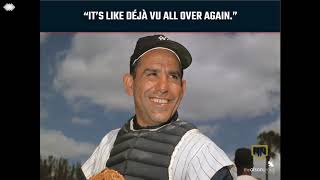
And I think Yogi Berra said it best when he said, it's like deja vu all over again.
And you guys know what I mean. This year's renewal.
It seems like last year's renewal, this renewal we're getting this year looks a lot like the renewal we got three years ago. And it even resembles the renewal we saw five years ago. And now we're seeing employers, we're seeing brokers satisfied if the rate increase is slightly below trend.
So how do we fix this? Can we fix this? Well, that's what we're excited to talk about today. But before we dig into how we fix one area of your health care spend, I think it's important that we understand the three fundamental challenges your health plan faces today. And if you can understand what these challenges are, you can begin going to work and trying to figure out how to fix them. Challenge number one.
Insurance companies have no desire to save you money.
Now, some of you might be sitting there going, okay, Andy, I've thought that for years, but why do you say that? Well, there's a couple reasons. We've come to believe insurance companies just are not built to help you save money. Number one, it's this thing right here. The thing we know is the medical loss ratio rule. And for the brokers sitting on the phones, you guys are very familiar with what this rule was. What this rule is, the medical loss ratio rule was enacted with the Affordable Care act, and its goal was to put a cap, per se, on the amount of revenue an insurance company could bring in for every premium dollar they made. Made sense. We cap the insurance, cap the premium, cap the revenue, we can have a chance at curbing health insurance costs. The problem with this fact, though, guys, is that they curbed it a percentage.
And they told the insurance companies that if they spent and made too much money on admin cost revenue and overhead, they had to give some of that money back to their clients, you, the employers.
And what this in turn created was a disincentive for health insurance companies to help you lower your medical and your pharmacy claims, because if their book of business was too healthy, they had to return some of that money back to you, the employers. So now they don't want or have a desire to help you reduce medical and pharmacy claims, because if they do, they've got to cut a check back to you. They got to return money back to you, and they don't want to do that. And, guys, I think it's become a fact that this has been very profitable for the insurance companies because if you look at the stock prices, these are the stock prices of the four big insurance companies, what we know as the Buca's, back on March 23, 2010, the day the Affordable Care act was put into place.
Look at where their stock prices closed last Friday.
Guys, they have done very well these past eight years. They are not too upset with what has gone on with the Affordable Care Act. So that's challenge number one. Insurance companies are not designed to help you save money. Challenge number two, it's important to you, or important for you to ask whether or not your broker's compensation is aligned with your financial objectives.
For the past 10 to 20 years, most brokers have been getting paid a percentage of the premium you pay as commission guys. So as your medical premium has gone up, the broker's pay has gone up. And this has created a great misalignment in financial goals and financial objectives between broker and employer. So the most. The two most important questions you can ask yourself right now is, how is my broker getting paid today? And how much is my broker getting paid today? Because if you can understand how and how much you can start going to work in trying to align your broker's compensation with your financial objective, which is, I hope, trying to lower the cost of your health insurance, then challenge number three, guys. And this is the most important and most difficult challenge you face today.
This medical ID card you see on the screen here, this is a medical ID card you hand out every single year to your employees. But this is how your employees look at that medical ID card. It is nothing more than an unlimited company credit card. And as long as the workforce stays inside the PPO network of doctors and hospitals you're giving them, they can go wherever they want and they can spend whatever they want. And it's their decisions inside the health care system that are the driving force in your ability or inability to bring some control to your health care budget.
Let's imagine right now that Dutch, David, and I went to a baseball game this evening and we decided to walk into the team store to buy a jersey.
But when we get into the team store, we realize there's no price tags on the jerseys. But we want to buy jerseys anyway, so we're okay with that. We grab the jerseys and we head to the checkout counter. And Dutch checks out first, and he's told his baseball jersey is going to cost him 100 bucks. He says, you know what? That's what I expected to pay for the jersey. So he hands over his hundred dollars, grabs his jersey, and heads out the door. David grabs his jersey, checks out, and he's told his jersey is going to be $200. And he says, well, that's strange. Dutch only paid $100. Maybe my jersey is of better quality. So he pays his $200 and he walks out the store, and I go to checkout and I'm told my jersey is going to cost me $2,000. And I look at the cashier and I say, how in the world can I pay $2,000 when those two paid a fraction of the cost for the jersey of the same quality? And the cashier looks at me and says, well, sorry, Mr. Neary, but you used a Discover cart.
Folks. This would never happen inside a baseball stadium. Right? But you know what? This is happening every day inside the US Healthcare system. And this is how your employees are buying their MRIs, their surgeries, and their CAT scans with this company credit card while your health plan picks up the tap. And that's what we're going to work to fix today on today's webinar. Because here's the thing, guys, there's not one employer on this webinar today who has an insurance problem. What you have is a supply chain problem, a health care supply chain problem. And trying to fix the supply chain problem with an insurance solution will never be enough. If you're truly invested to putting an end to rising health insurance costs, you must focus how your employees are interacting with the healthcare system. And today we're directing our attention to an area of the healthcare system that is filled with financial waste and unnecessary services, which is all impacting your organization's bottom line. Gang. Musculoskeletal claims are one of the fastest growing segments of your health plan today. And I think you're going to be blown away by the facts, the stats and the opportunities that Dutch and David are going to share with you here in just a bit. But think about this for a second.
This data is probably a bit old, but on average, 56 million Americans.
Have back pain in a given year. Deal with back pain, some kind of back pain. Of those 56 million, 5% will probably need to have surgery.
Yet our country spends $86 billion.
Treating back pain. And Dutch will probably confirm that this is probably very low. These numbers are very low by today's standards. So, guys, the musculoskeletal claims that are occurring inside your health plan right now filled with over inflated pricing, unnecessary treatments and ineffective surgeries. So with that being said, I want to bring on Dutch Rojas, who's going to talk to you about why it's important to take a look at this area of your spend and how bundled pricing can start helping you eliminate some of that financial waste and start reducing those over inflated prices. So with that being said, Dutch, take it over.
Thanks, Andy. I thought the story about the jerseys I'm going to have to steal that one. Just so you know, I thought that was, that was, that was a. That was a pretty solid. I think when we explained to employers that we pay different prices depending on the insurance company or administrator, they're like their eyes, you know, kind of begin to open. Well, thanks again for your time. I'm going to take about five to seven minutes and then Dave Williams will go after me. I've already always said that I'm the worst presenter out of the three, so I appreciate you guys jamming me in the middle.
One of the companies that I worked with in the last 10 years was Castlight. We had a unique opportunity to do a Fortune poll with 500 CFOs, but really this was in the top Fortune 100. And so we began to say, like, what are the issues? What are the challenges we're facing? And look, I think it's important that all of us kind of feel like we're on the same page. One employer might say to themselves, you know, I'm having a problem. Is anybody else having a problem? Well, when you see this type of data that's on your screen now, you realize that everybody's having a similar problem. The most important item, I think, on this piece is that employers must take the lead and employers must take the lead. And it must be something that you, the advisors that are on the call and the employers that are on the call, make sure happens.
Can I go back one, Andy?
I went forward one.
Oh, there we go.
No.
I'll take it over here.
Yeah, can you please.
Something just.
You know what?
Okay.
Yeah. So this is important, right? Healthcare 2017, the spend was $3.55 trillion. In other words, that's in excess of $10,000 per person, 19% of GDP. If you don't know what GDP means, let's have that conversation after this. Essentially, it's two times. And now we know that 2018 looks like it's going to be 2.7 times the next industrialized nation, which is the Netherlands. All right, so what can we do to really combat this? Right, Enterprise solutions. What can employers do?
All right, I'm going to click on.
There are four primary cost drivers. Everybody knows inpatient, outpatient, pharma and professional. We're going to concentrate today on outpatient, but we are going to be able to, when we finish this call, be able to identify what's the difference between inpatient, outpatient, pharma and professional.
Okay.
There you go. Yes.
Okay.
Solutions. All right, so the first solution I have for you is don't have surgery. Now, some people think this slide's very funny, right? And it's really meant to. But Walmart between 2010 and 2012, along with Lowe's, Home Depot and Target, all the biggest retailers in the country do that study. And they basically said, out of our membership total, let's track who has procedures and surgeries, and then let's determine what is appropriate, who had good outcomes and who had not so great outcomes. So what we found from that study and then subsequently since then, we found out that about 35% of surgeries are not necessary. And by not necessary, I mean they're not appropriate. So there's a clinical indication for that procedure. And the patient is like, they are a candidate for surgery, but the outcomes that they receive really did nothing for them. So then the question is, as an employer is how do we kind of fix that problem and how do we encourage our people not to have surgery? Well, we do that.
By number two, making second opinions mandatory. Now, I get a lot of pushback on this. Oh, but Dutch, you know, turnover's high, hiring is very difficult. We don't want to make it difficult for people to spend money.
We.
Look, I don't want to make it difficult for people to spend money either. But what I do want to do is I want to make it difficult for people to have unnecessary surgery. I don't want high quality standards. And I want people to have surgery when they need it because that means they're going to miss work and that means we're going to end up paying a lot of money. So making second opinions mandatory is a very simple process. Lots of vendors out there. We can show you, your advisor can show you a lot of vendors out there who can make that happen fairly.
Quickly.
Get out of the hospital. If we could. If I could leave everybody in the world with one thing, I would leave them with this. Number three, get people out of the hospital. Teach your employees what it means to go. The difference between an in office procedure, an ambulatory surgery center procedure, a surgical hospital procedure, and a hospital procedure for 80% of treatments that were rendered in 2017. That's 112 million procedures and surgeries. 80% of those did not need to.
Be in the hospital.
We have lots of room in surgery centers.
Deploy direct primary care. When people have deployed options like Zero Card, Bridge Health, Employer, Direct, Tono Surgery and whoever. Like there's six or eight vendors out there, right? Whenever people deploy bundles, they say, well, how do we drive utilization? For us implementing just our solution, we got to about 18 to 20% utilization. Then we started using medical management. Think somebody like Nurse Deb or American Health holdings, we got to just over 40 with direct primary care and virtual primary care where it's over 80. So if you want people to understand cost, quality and appropriateness, the people that work for you, deploying primary care has been a lifesaver for us.
And Dutch, you have controls back.
Okay, thank you.
Get data. This would be the second most important piece of everything we've talked about so far. Most employers don't have access to their own data. They're afraid to get the data. They'll hear back from UMR United or CIGNA or Aetna and they'll tell them, we're not going to give you this data yours. And so as you see when Dave talks and gives you real life examples, you're going to want to see that you're paying $300 for physical therapy instead of $85 day rate. You're going to want to see that you paid $197,000 for a one level spine fusion like one of our employers just did, versus $52,000. You're going to want to be able to look at that. So what we found was that human resources, very difficult for us to deal with human resources. But once we sit down with a spreadsheet and we show them, hey, look, you just paid $5,800 for a colonoscopy, real life example in New York City. And you could have paid 1,200 people, start understanding what it is we're talking about. So if you're an employer, an advisor for an employer, make sure you start reviewing the medical claims data.
We're not going to talk about surgery futures and options. And Dave, I leave the best part to you, my friend.
Ah, thank you, sir. Andy, let me know when I have control.
And you are a go.
Okay, There we go. Okay, so thanks everybody for joining. Dutch, I don't know, maybe a run for the money. I don't know that you're the worst of the three on here. So I guess we're saving the best for last year as the zero card. You know, what are we, how do you keep this thing simple? And that's what we always want to do with our product. It's built to be the most simplest way to deliver key components of healthcare delivery and services in such a complex, convoluted, opaque, confusing marketplace. But on the surface, what we've done at the zero card is we reimagined. Andy mentioned it earlier, the supply chain concept. We Reimagined healthcare supply chain with the end goal to lower the plan cost while simultaneously. And that's a key component of this improving the member experience by focusing on on value.
So heard several stories on this call earlier. Here's a comical but real graphical representation of what's going on all over this country. On the wall we see health care costs are rising. That's cutting into profits and competitiveness. You see everything from colorful quotes, partnerships, Buffett diamond, all the way up to those big corporations, down to the smallest employer on a local level. It's just eating away at the revenue stream that they're bringing in, whether it's wages, whether it's R and D benefits. And most are now feeling like what you see down on the bottom, they don't know or don't think what they can do, like anything's possible, but they don't have control of the situation and they're hoping that they don't have to change anything and something just magically happens. So this is the situation we want to come into and this is a situation we want to completely change through the partnerships with the producers, the consultants, the brokers, employers, to be able to deliver new ways and new ways to think of delivery and new products and services to be able to service those wants and needs. So here's what I call the wheel of insanity. This is essentially a graphical representation of healthcare purchasing today and it's the hamster wheel of the relationship between a Chargemaster and carrier discount. What we're finding is the best producer, the best consultant, can go get the best discount and the best rates, but the system is going to have those benefits be short term because it is a vicious cycle that feeds off itself. Chargemaster increases, so we go get bigger discounts. Chargemaster increases, so we have to go back and get bigger discounts. And every time the Chargemaster increase, the discounts go up. Every time the discounts go up, the Chargemaster goes up. So we have to get out of this cycle of insanity. We'll respect something, do the same thing over and over and expect something different.
This is where partnerships like what Dutch is doing at SANA surgery and the bundled case rates and the surgical case rates, what the zero card is doing by building systematically these healthcare purchasing marketplaces, that's the terminology we like use. It's essentially a network, a narrow network, but network screams insurance. We don't want to be associated with insurance. It's now a consumer driven healthcare purchasing market place. And this is the number one problem that we're trying to address and that's the cost they continue to rise. And employers, employees have no way to actually manage the cost of the care price transparency of these services don't exist. To Andy's point. The only thing that was wrong with Andy's analogy on the baseball jerseys that he found out at the point of sale what the jersey was going to cost him in the real world of medical, he would have gotten a bill 35 to 60 days later and he would have found out how much it was and he would have been contractually obligated to pay that no matter what. So, you know, we don't know what it is up front. And that's. That should not be the case in any consumer driven marketplace and it shouldn't be that way in healthcare. So JAMA published an article in 2013 that says exactly what we're talking about today, that it's not about what's billed, it's not about what's discounted, it's the actual price that services and it's the price price, not the demand for services or the aging of the population that's produced 91% of the cost increases in the US healthcare system. So we hear a ton about utilization management and there absolutely is clinically appropriate and a place for it. We hear about the baby boomers, but those two combined are a small portion of the contributing factor of what's happening with the rising healthcare cost. But it's not addressing the crisis. So what we see as we've created and gone out and employers have demanded choice and built these large PTO networks, what it's done is while they've gotten the benefit of a broad choice, they've opened and exposed themselves to this massive variance in pricing. And what you see on the right is an actual example of what we find on one particular surgery, a knee replacement and zero cost database. Dutch mentioned data. We're a data driven company who will look at everything down to this basic CPT code and be able to show this type of detail where in our database of over $1.7 billion in medical claims, over 200,000 members. In our database we've seen the lowest price actually paid for a knee replacement is 17,422. Or the highest that we've seen paid is 128,000. So that variance between the high and low is so extreme I can't even calculate the percent difference. The average, when we look across all of them added together and divided by that number, we see the market average is 34,742. So that's our baseline of what we think in the PPO channel is a fair market PPO discount price. That's what we use on our baseline to go out and negotiate and work with people like Sano, Dutch, other providers that are willing to do these bundled case rates to get to our flat price locked in price of 19,131. So by going the bundled contract, direct contract.
Channel one, you eliminate the variance, you eliminate the risk. So not only is this, but you have no idea. The consumer, the employer doesn't know where the $17,000 facility is. They don't know where the 128,000. And so everything is happenstance, by chance, by accident, unpredictability.
Instability. So not only do we lock in that low price and lock in considerable savings over the market average, we then provide tools and resources for the employer and the employee to be able to shop and find that $19,000 surgery. So that one, they save the plan money and then they are allowed to pass. The employer passes the savings through zero dollars out of pocket. So we talked about musculoskeletal alone. This is going to be some examples of the data that's out there and the data capabilities of what the zero card can do for any employer, any producer broker that's out there interested in our program. So you see the numbers on the left. Andy talked about it with some numbers. The volume, just this alone in these six musculoskeletal procedures. You're looking over almost a billion and a half procedures on an annual basis. This was in 2011. Imagine what that is today. I'm sure it's gone up considerably. That's probably closer to the two, two and a half that Andy was talking about. And we see exactly the same thing when we look in our database. We looked at 157,000 unique members, over 1.7 medical billion in medical spend. And which interest is 4,648 procedures. Those 4,600 procedures totaled a paid amount of almost $51 million collectively by the employers in our database, where our bundled case rate, if all of those services were switched to our agreements, would have knocked that price down to just under 28 million, putting $23 million back into the hands of the employers and the employees. Just less than 5,000 services. So the numbers are real and there's a huge opportunity if you take advantage of this new delivery system using direct contracting and bundled case rates. Here's an actual case study of an existing employer that we have in our network in the Oklahoma markets. They're a higher education employer, they have over 5,000 employees, just over 7,000 total belly buttons.
And their network on their plan. And they implemented the zero card on January 1, 2017. So they're just entering their 19th month of the agreement with the Xerocard. And over the first 18 months, when we go back retrospectively and look at the utilization that they've gone through, we found 116 musculoskeletal procedures and 27 spinal procedures, the 1.8 million and the 552,000. These are numbers based off of the market average. So we look at the market average for those that number of procedures, we look at what our procedures cost. And we estimated combined in just 18 months, we've saved this employer just over a million dollars in 18 months on just musculoskeletal. I think it's a good time for me to take a step back and say we don't just do musculoskeletal. We have the opportunity to look at everything that's non emergency, predictable outpatient type procedure. We can do everything from a basic CBC panel, diagnostic imaging, orthopedic gi.
General surgery, you name it. And what we can do, and the best opportunity, and Dutch mentioned it, is get the data. We will partner with you to work with your administrator to get your data. And once we do, we have built an analytical platform that we own, that we manage, that we've created. And it gives us the opportunity to be able to ingest hundreds of thousands, if not millions of lines of fee for service claims, automatically bundle them up and then compare them to our bundle price. So we can do an analysis, bundle to bundle, and show you historically what you've paid. For example, this one, the 14 million, almost 15 million in the allowed amount, knocking it down to the 9,000, you know, $9 million. Knocking it down by the number of bundles that we could do, the number of members that would be impacted, the estimated cost. You see on the right side of the slide, we can show you by CPT code Dutch mentioned, you want to know what you are paying. So not only do you know the highest that you paid, but with our services we can show you what you paid for all 147 individual colonoscopies. We can show you the high, the low, the average compared to our price, how we can impact that. And then we can do it by category, whether it's advanced imaging surgery, you see, see the list there? So what we do from stem to stern is partner with them, look at your goals, what you're trying to accomplish. As an employer as far as savings and benefit delivery, work with you to get the data, then put your data into our analytical platform and then take that data and create insight, goals, actionable steps and measurement. And we partner with you throughout the entire process, whether it's quarterly, biannually, whatever you need as a customer to be able to see where we are and how things are going. We provide an educational, marketing, communication element of the arm and we provide what we call personal help assistance that serve as a concierge to do everything from answer questions about basic coverage all the way to where you can go and be the member advocate to help them make sure these orders are placed and schedule appointments and navigate through the complicated systems. So everything that we do is based off of three things, cost, quality and convenience. And that's what we hang our hat on. And that's what we use as our North Star, so to speak, to deliver these services.
Well now, thank you, David. Thank you, Dutch. I want to finish up with this too, folks. You looked at the case study that David just provided and it's very easy to look at that and say, well, that makes sense. That group has 5,000 employees. They have a ton of procedures, a ton of claims. I want to be the first one to tell you guys that I don't care if Your organization has 100 employees or you have 5,000 employees. Musculoskeletal claims is attacking your financial, the financial health of your benefits plan today. And those employers who have been able to bring control and stability and predictability to their healthcare budget are those employers who are no longer trying to just solve this through insurance alone by switching carriers, upping deductibles, upping out of pocket limits. It's the employers who have gone to work on figuring out how their employees are interacting with the health care system and developing strategies and solutions to help their employees access high quality care. And as you can see with the Xerocard, for little to no cost to the employee. Guys, we truly believe the best way to create a world class health plan is to improve the benefits because that will reduce your cost when you focus on the healthcare supply chain. So let's get. We have a couple questions that have come through. First question for Dutch. Dutch, how is sonosurgery or the Zero card able to obtain better pricing with providers than say the Buka carriers like Blue Cross, Blue Shield, Cigna, United and.
That now.
Hey, Andy, I think that's a great question. I think you answered it earlier when you talked about the equity prices, who do the allegiances belong to most allegiances for the bucas as an administrator or as an insurance company, belong to their shareholders and belong to themselves. And so they have no incentive to align with employers. And I think the three of us on the call, including the advisors that are on the call, are generally aligned with the employer's goals. So we're able to produce radically different results because our alignment is different. What do you think, Dave?
Yeah, I totally agree with that. The other thing that the providers see is as the cost, as the cost is going up, more employers have been revolting through the cost shift and they're putting more and more on the member, which is in turn causing a much greater and higher.
Pressure point on their accounts receivable. And so any opportunity for them to be able to enter a direct contract that gets guaranteed 100% payments in a quick and easy fashion, they have tons of opportunity and wiggle room now to work with their prices based off of, without compromising, you know, sticking to the efficiency which leads to quality and gives them more room to work with their prices. And that's probably when I talk to different providers. One of the biggest advantages to them is, you know, by having this agreement with something like the zero card, where the employer recognizes enough of the savings, where they'll now pay 100% and it eliminates the member portion part of it that really incentivize is the providers to give those deep discounts, work directly with the purchaser, the employer and just focus on surgery and not get into all the admin and overhead and problem that they have in the existing system.
Cool. All right, next question. How do your results compare? This is for Dutch or David. How do your results compare price and quality to a reference based pricing model? At that point, is it mostly quality or are you still getting price value?
Look, when it comes to rbp, I think there's a couple of things that we all need to get on the same page. One is RBP and bundles don't compete. I think if you're entering a new market and you've got, you need protection or a hedge against high inpatient claims, why wouldn't you use RBP for that? But as soon as I got an RVP claim and I actually got, oh, I paid 130% of Medicare, I would figure out what the dollars were and then I would say to myself, well, if I think that the physicians that are at that facility and I think your facility is high quality, then I think I'd go out and get a bundled payment contract with them, right? So the two work hand in hand. I think Zero card. I know Sano does. We work really well with a bunch of RBT providers and gosh, we provide.
Most of the direct contracting for vast majority of them.
Excellent, excellent. David, quick question. Are the cost to the employer for the zero card, so the zero card cost of implementation, are they included in the bundled price?
Yes, they are. So what we do is we know that on average we're going to have about a 20 to 25% number share that's going to be eliminated and shifted over to the plan at 100%. We also know that we do not do from the zero card model. We do not all we do not charge a PEPM. So we have a $0 PEPM, but instead we do a 15% flat 15% transaction fee on the paid claim. So for example, we had a $300 MRI through the Xerocard. You would pay $300 to the provider for the image and the reading and then $45 to the zero card for processing and administering that claim. And that 15% is also added into the cost analysis of what we do. That's why we start at anywhere from 45 to 50% discount of the average market price so that it can absorb the employer share our fees and still net the plan of savings. We know the member is going to benefit because it's now going to be $0 out of pocket. We also have to ensure that the plan that's that savings and that's part of our calculations when we develop and negotiate and work on our fee schedule with each individual provider.
Excellent, excellent. Can savings David, again two questions for you David, that have popped up here. Can savings one, can savings be guaranteed or can there be a guaranteed return on investment to the employer? And then the second question as part of that is when can you implement the zero card? Does it have to be done in alignment with an employer's medical renewal?
Okay, thanks. Two great questions. One, we don't contractually guarantee them like as a risk share contract agreement. But what we do is back to the explanation is in how we.
Determine and negotiate our fee schedule that is based if we can't deliver or get a price that we know will deliver a net savings to the plan, then we just won't have it in our fee schedule. It's also a dynamic system. As we go through month by month, the algorithm is built to pick up areas where pricing maybe have changed and we'll get out of bounds pricing. And in that situation, if that savings gets too narrow or gets upside down we will use that data to go renegotiate with our providers. Or if we can't get that price at a lower rate and we don't see that savings between the ppo, then we just take it out of our fee schedule and we would steer them back to.
Their normal insurance channel. So yes, we do, but no, we don't, if that makes sense. We do through how we do our fee schedule and bundle and our pricing, but we don't contractually guarantee at this point. Second thing, great question. I think it's one of the most, the biggest left on the table opportunity and that is it is a supplemental medical benefit. It can be bolted on and therefore it can be implemented at any point in time. Does not have to wait for the renewal process, does not have to wait for the renewal dates. In fact, what we find is it actually is better to do it off cycle, sooner rather than later because it allows the employer and our customer success team to be able to give it its full attention and not get kind of lost. It's a new concept. It's not hard, but it is new. And sometimes we find it can get lost in all the other changes that are taking place during renewal. So we'd like to have that advantage of doing it off cycle.
Awesome. Awesome. Thanks, David. Last question and then we will let everybody get off here. Dutch, can you give us some examples of specialty services where large price spreads do exist in the system today?
Can you give me an example of.
The question, say whether it be spinal fusions.
Joint, you know, knee replacements, rotator cuff surgeries, you know, things procedures tied to what you. We call the musculoskeletal system. What are some examples today where you might see large, you know, when you think about the large. Dave shared with us, the large price spreads that exist. Yeah, spinal fusions. Are there any other examples like that where large price. Where you're seeing large price spreads exist in the system?
Look, I think the examples David gave were perfect. You know, I'm here in St. Louis presenting on behalf of Health Rosetta. And you know, the couple examples I gave that were just in from the last week. Two from locals Taft Hartley groups in New York City and then one from a Taft Hartley group in Washington state. And so one of the things we talk about is labs, right. So we have this 80053 and the customer paid $629 for a panel that 0 card and us are paying somewhere between $6 and $8 for. And so we're seeing employers spend all this reckless money on things that they don't need to spend. And by the way, both of those contracts are Quest contracts. So you can pay $6 or $8 with us, right?
Us the good guys.
Or you can pay $629 with Quest, with Aetna, Cigna and the Blues. So whether it's labs or whether it's MRIs, you're seeing lots of places where the price spread is so big, and it's because there's no transparency to either the employer or the member. Does that help?
Nope.
And I'll add to that. And you see it across all.
There. Andy.
Well, let's just wrap it up then. We've answered most of the questions. David Earl had one more. David, Dave and I and Andy will email you the answer. That's a super easy question. And then listen, everyone. Thank you so much for being on the call. David and I appreciate it, and I know Andy does. And if you have any questions, please email Andy. He's got it on the last slide. Thank you.
Thank.
You.
More from Andy

Stop living in the gray of maybe! Your job in sales is to get a clear yes or no


How elite producers use “validation” to give prospects the confidence to hire them.

The Transition, every great sales leader goes through: Stop being the hero and develop heroes.




