Locked In On LinkedIn | 4 Core Principles That Drive Inbound Leads On LinkedIn
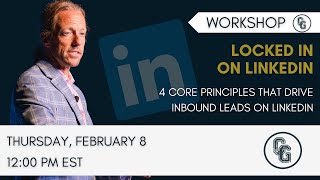
Andy Neary outlines four principles for LinkedIn lead generation: treat connections as community, optimize your profile like a website, use content to build credibility, and save selling for direct messages and offline. He shares a case study where Chris Hamilton generated a $70,000 account that later became a million-dollar deal.
Questions this video answers
Minimum of five years; went deep starting in 2019.
About one lead per week.
18 phone calls.
An initial inbound lead that became a $70,000 AOR; later won a (roughly) million-dollar account in a competitive RFP.
Six-week Social Media Sales Academy starting on Valentine’s Day; capped at 25 participants; price stated as $1,997; includes a 25-page LinkedIn Diamond Playbook and video lessons.
Chapters
All right, guys, here is what we are talking about today. So I'm getting a lot of questions probably in the last, especially since the beginning of the year, where we have a lot of people who are starting to really consider social media, mainly LinkedIn, as an option they want to pursue. But a lot of people are just stuck or they just don't know where to start. So what I thought I would do is when I look back at how we use it.
There are some principles I think we apply to LinkedIn that work really well and they're very practical principles. And so I wanted to share these principles with you guys today because I think they'll help people get so into the weeds on how to use things like LinkedIn that they, they now they're inside the bottle and they can't see the label. What I want to do is help you guys is take a step back and just look at it practically and go, okay, if I just apply these principles, going to be more effective.
Now I'm going to have a little fun with this. When I share the principles, I want to share this because I hope I don't offend anybody. I'm going to share each principle, starting with thou shalt. So I want you guys to say, I say that I'm using it to describe, display the principles. I hope I don't any offend anybody by saying that. However, we're going to have a little fun with this, guys. What I'm going to share with you is the four principles we use. And right now, guys, we have been doing, running this strategy for.
A minimum of five years at this point. I really, really went deep on this starting in 2019, and we're generating about a lead a week right now on LinkedIn. And I don't say that to brag, I say it to tell you this can work. Now you'll also know that I said it. We've been doing this for five years, so there is a level of patience here, folks. But I promise, if you start leveraging these pillars, guys, these principles, it is going to work. You just got to be a little patient and most importantly, you've got to be consistent. So I am going to share my slides here and we're going to get this cranking.
And we're, we'll save a little time at the end for some Q and A if people have it.
All right, so what we are talking about is the four principles that lead to inbound leads on LinkedIn. That is what we all want. We would all love to have prospects reaching out to us. So here's what you're going to learn today. Number one, you're going to learn how not to use LinkedIn to grow your business. So definitely I'm going to share some things, guys, that don't work. And I, and I say that I share it because 90% of the people are doing it the wrong way.
Number two.
You'Re going to learn how to turn connections into conversations. That's the ultimate goal. Because if you turn more connections into conversations, you're going to create more inbound leads. This is my promise to you today. You're going to learn how not to use it. You're going to learn what to avoid. You're going to learn how to turn connections into conversations. But most importantly, you are going to learn how to create inbound leads. If you stay consistent enough with it. That is the key.
You guys don't mind if somebody, if you just have to deal with background noise. If you could just mute yourself, that would be phenomenal. I know. Somebody just coughed and that's uncontrollable. So we're okay with it. All right, now let's talk about why you are here. Maybe you're here because you think I'm full of crap and you wanted to jump on and prove me wrong. Thank you, Vic Nerland, for putting your thumbs up. You are that guy every single time. So maybe you, maybe you don't believe me. Maybe you say, andy, I, I've tried this. It doesn't work. I think you're full of crap. Cool. I had. I have a guy on LinkedIn right now, guys, a broker out, out on the West Coast. Every time I post, he literally says stuff to me, like, now it's getting personal.
But he just disagrees with everything I say and I kind of love it. It's starting to get a little fun. Number two, you're looking to use LinkedIn as a prospecting tool, but you don't know where to start. That's where most people are, but then we also have a handful of people who are using it. But you feel like you're not getting anywhere. You don't feel like it's working. And these are. If this is you, my goal today is to give you some hope, because I promise, if you take what you learned today and apply it, it will work over time. It will. It's not going to create an overnight win, but it will work over time. That I do promise you. Now.
Let'S just dive right into it. Why isn't LinkedIn working for you? Let's talk about that. Here are some things I see people doing right now that lead me to believe I think LinkedIn is not effective for them. Number one, you're bringing your personal bias to your prospecting. That is problem number one. What do I mean by that?
If you're somebody who does not like social media, you think it is poisonous today. You think there's a lot of toxicity today, which there is. And you bring that attitude to LinkedIn, you're not going to have success. If you're somebody who says, I don't like LinkedIn or I don't like social media, I think it's a waste of time. Yet you try to use LinkedIn, you're not going to be successful because you're bringing that bias. And trust me, guys, there's a lot of people in this industry who just still don't think social media is a thing. And the point I am going to try to drive home today, guys, more than anything. And if you watch my content, I have said this a lot lately. You see me holding up my phone. This is where people hang out today. This is the modern day country club. This is the modern day hot lunch spot that we were all told, go hang out to hang out with the CEOs. This is where people are hanging out these days. You've got to be there. My question to you today is how are you showing up in people's phones right now? Because if you're not, they don't know you exist. This is the one tool that connects everybody in this country, demographically, psychographically, socioeconomically. We all have these and we all spend way too much time on them. If you're not hanging out there, you've or you're not showing up there, you're missing a huge opportunity. And by the way, guys, this doesn't matter if you're in a metro metroplex like Dallas Fort Worth, or you're in Jackson, Wyoming or rural Idaho. Everybody is hanging out on their phones.
Problem number two, you're chasing dopamine hits, not dollars. So every time you post content, you're sitting there going, I hope they like you. Turn yourself on mute, please. I thought I was gonna be surprised. If she does, I think it will be so we won't put that. But.
All right. Every time you post a piece of content.
You'Re doing it so that you get the likes in the comments. This is one of the biggest mistakes I see our industry making. We're posting to try to get reactions out of our peers. We're posting to try to be popular within the insurance industry. That does nothing for your business.
There are a lot of people in this industry who are follower rich, profit poor. They got a lot of people who love their stuff. But is it actually generating business? Not whatsoever.
And then the third challenge, the third problem a lot of advisors are running into today is you're using LinkedIn like a sales platform. So you're spitting out a bunch of sales pitches. You can't use LinkedIn that way. How many of you, and I can't see your hands. How many of you have connected with somebody and then immediately they came around and threw a sales pitch at you? We get those all the time now, right? You can't use LinkedIn like a sales platform.
And the reason I am so passionate about this subject, guys, is because I know it is still a platform that most in this industry do not give enough credit to. I just gave a keynote talk to a team and I asked the room of 50 producers who here in the room would like to use LinkedIn better to grow their business. You know how many people raise their hand? 2 out of 50.
This is why no one's leveraging it. They don't think it's important. But I am here to tell you, gang, it is one of the most important tools you could be using today. And it's not going to slow down anytime in the future.
Because dealing with these problems right now, here is where most advisors sit. One, you're not building any credibility with your prospects. This is why you think it's a waste of time. You're building a lot of credibility with your peers. You're not building any credibility with your prospects.
You're trying to impress the wrong people.
For my benefit. Advisors out there, this is why we can't spend all our time posting about why the health care system is corrupt and it sucks.
Your, your prospects don't care about that. Your peers do, but your prospects don't. And number three, you think LinkedIn is a waste of time because you're using it the wrong way and you're about to give it up. So my goal today is I hope I share. By sharing these four principles, I hope I give you a little clarity. I hope I give you some hope that this stuff can work. And I want to give you a very practical path as to how to use it. I am not a smart man. Overall, guys, I've got to keep things simple. So if I can build my own process that is simple for me, I know it can work for anybody else. And I share this because.
When I look at how we teach our process.
I struggled with trying to find a good solution for social media. When I went digging for my own social media strategy five, six, seven years ago, I got so frustrated because every strategy course, call it whatever you want, that I found was all these sales courses on how to sell B2C business to consumer.
I couldn't find any good LinkedIn strategy that was business to business.
And if anybody on this call used to sell business to consumer, now sells business to business, you know what, they are very different.
And so I said, all right, I'm going to take all these different things I've learned and I'm going to create my own B2B strategy. And lo and behold, it worked. It definitely allowed me to build credibility even when I was as an advisor, now as a coach, consultant or coach trainer to the industry.
And this is where it started. Guys, I'm going to share a quick story and then we're going to dive into the four principles. It's 2014. Some of you have heard the story. I'm an advisor in the state of Wisconsin. I've been an advisor for 13 years. We make a decision to move out to Colorado in 2014.
And when I got out to Colorado, I quickly found myself in a precarious situation, which was this. I'm in a market nobody knows me, and I'm working for an agency that really doesn't know what the word marketing means. I have no, no support here. And I made the decision at that time that I have two choices. I could do it the way I was taught, which was pound the pavement, pick up the phone, send a bunch of cold emails out, or I could try something different. I said, it is time to go different. And that's where I really started using LinkedIn. This was 10 years ago. At that time, LinkedIn was still very much a recruiting tool. And it's very different today, for sure. So I started hanging out on LinkedIn a little more, sending out some LinkedIn invites to my prospects. I started writing an article, article. So I would post an article every month on LinkedIn. And little by little, I started dabbling with it. And it was effective. Not as much as it is today. But I made the decision that 2014, I cannot do it the traditional way. I cannot sit here behind a phone and think that I'm going to have success in a market where nobody knows who I am. I am literally an unknown. And I share this, guys, because fast forward a decade later, most people are still using the same traditional forms of prospecting. And the truth is it is harder to prospect today than it's ever been. If any of you sat in on my December workshop about creating the cold call script, I told you it takes 18 phone calls to get a prospect on the phone today. 18.
On top of that mix in the fact you're calling more cell phones than you ever have and nobody picks up a cell phone number they don't recognize. And three, your cell phone could be telling you that somebody else is spamming. Cold calling is very difficult and you gotta have a different channel to win today. LinkedIn can be that channel. It is where CEOs hang out. It is where CFOs hang out. It is where HR directors hang out. I know not everybody is there, but they're there. Your buyers are getting younger.
We're no longer working with a 66 year old CFO. We're, we're working with more 40, 30 year old CFOs than we ever have. We're working with 30 upper 20 year old HR directors. Guys, these are people who were born in the generation of social media.
We're going to have a big transition, by the way, in this industry. And for my veterans, this can be a hard truth to hear. I have a lot of producers on this call. I can tell by names, I recognize them. These cats, as I'll describe them, were born in the social media era. This is how they, this is all they know. They're coming into the industry going, yeah, of course this is going to be part of my strategy. And the folks that sit here and say, nah, I don't think I need to be on LinkedIn. You're going to start losing because your competition, who is 20, 30 years younger than you, is creating a heck of a lot of awareness and building a heck of a lot of credibility.
And that's what I want to help you do on LinkedIn. Because credibility leads to trust, trust leads to opportunity, which ultimately leads to people reaching out to you. Now my second pivotal moment. Anybody know who this guy is? This is Gary Vaynerchuk. Gary Vee. Some of you may know who Gary Vee is. So 2018, Amy and I decide to go to a Tony Robbins event in Denver, Colorado. And kicking off the day is this guy named Gary Vee who gave a keynote speech. No idea who he was at the time. All I knew at the time is, wow, this guy drops a lot of F bombs on stage. And he was talking about this, this, he was talking about this concept called social media selling. Like, huh, this is really interesting. And I Remember, he said something on stage that really stuck with me. He said, folks, now this was six years ago, guys. He said, this smartphone.
Is the tv, the TV now is the radio, and the radio is defunct. His point was, when we all grew up, the TV was the main way companies marketed themselves.
This is now the tv. This is how people market themselves. So we have to have a phone strategy. After that talk, I started following Gary on YouTube, watched his videos every single morning. I still do today. And it was Gary V's message that made me realize it is time to go all in on a social media strategy because content is king. If I can create content that educates my prospects, that gets them to know me, guess what? I will literally guilt them into doing business with me. And that's what happens. And this is why this is such a powerful tool. Now the question comes up, Andy, do I need to be on Instagram or Facebook or TikTok? Do what you ever want. Do whatever you want. But LinkedIn in a B2B platform, a B2B scenario is the number one platform you need to be on. So let's talk about the four core principles that drive inbound leads. Now that I've set this up, principle number one, Thou shalt treat connections like a community. What in the heck does that mean? Well, I want to paint a little picture for you.
When you look at your connections on LinkedIn, whether you have a thousand, five thousand, ten thousand or twenty thousand.
You need to look at that like it's your community and you are the mayor of that community. So this is your town, this is your city.
And as mayor of that, bring more of the right residents into the community. So if you're a mayor of a town, wouldn't you like to grow your town with good residents? Of course. Well, what is. Who are the right residents?
These should be people you do business with. Prospects.
If I'm growing my. That is with prospects and potential centers of influence.
They just connect with everybody.
But I would have, I would much rather have you have less connections with the right people then worried about you. See, they have 20, 30,000 connections, guys. I can tell you the majority of them have nothing to do with their business. It was a chase to grow a following. Not effective. Your. What does that mean? It means you need to learn how to say no.
And don't be afraid, guys. If you turn it down, they don't get notified. They don't. Because I look at who they are and I'm like, there's no way we can help each other. So connect with prospects, connect with centers of influence. Say no to everybody else. If you want to connect with an industry carrier rep or something, go ahead. But my point is clear. To keep it the prospects keep the COIs. People can help you grow your business.
You also want to make the current residents feel proud they live there.
How do you do that? Content them feel good that they are connected to you.
You got to make better connections, better content. Two areas of focus. I'm going to take time to send out connections to people I could do business with or centers of influence. And I'm going to turn your profile into a personal website. It's a big one. If you want to have. If you want to be effective on LinkedIn.
What do I mean? Okay, let me go through some steps, guys, to help you out. Number one, who you are. You'd be surprised how many people I know that have profile pictures. Make sure it's accurate for my men on this call. That includes anyone I meet live is not the person who I have seen in a profile picture. For the last. There's a Dis Disconnect.
2 banner. Think of a website for a company. A website. If I go to a company website today, right? There is what's called a headline statement. You got to catch my attention in three seconds on a website. Otherwise I'm gone. You got to use this banner to catch my attention. You'll notice on my banner I have a statement. It's no longer about who you know, it's about who knows you tagline. I've got contact information. I've got our company logo. This is a billboard, guys. That's what a profile banner. The friction between your prospects and meeting. Reduce the friction. We help insurance professionals book more appointments with the right prospects. You know exactly what we do within two seconds.
So think about what we just did here. Good profile picture, good banner. Good. Good billboard. Good headline statement. And I've given you a call to action so that you can actually click and put yourself on my calendar if you wanted. Reduce friction.
And then the last place you want to look is down in your about section. Too many people use their about section like a professional bio. We help our clients do this. No, no, no, no. Use your about section to let us get to know you a little bit. Think about a website. Every website has an about us section, right? That's what this is. Tell your story a little bit. I don't need to know what you do for your clients. I want to know who you are.
I want to know your story.
This is what it means. To turn your profile into a personal website. Because if a prospect lands on your profile, guys.
They can quickly tell if you can help them. They know who you are, they know what you do, and they can tell if you can help them pretty quick. And that is a good thing. Just like a good website. I come to a website, it catches my attention. I'm going to stay for a little bit. Want to do the same thing with your profile? So get those profile pictures updated, get a banner up there, put a call to action. Good headline statement under your name and write out your bio a little bit under your about section. Little personal story goes a long, long way.
Principle number three, thou shalt use your content to build likability and credibility.
This is your only job, folks, with creating content. And yes, you must create content.
Now I used to say.
Even if you post once every couple weeks, get started.
Starting to challenge that belief a little bit. It's getting noisy in this industry. How many people my benefit folks on this call, how many people posted the Johnson and Johnson lawsuit? In the last six days.
I saw no less than three dozen Johnson and Johnson post about the lawsuit going on at Johnson and Johnson. Everybody's talking about the same stuff.
If you use your content to create likability and credibility, you will win. How do you do that?
By letting us get to know you and teaching the heck out of us. Remember this phrase, A personal brand is built at the intersection of what makes you unique and what you do better than anyone else.
There's only one thing your competition cannot take from you guys or replicate. And that's your story.
You gotta let us see why you're different. And by the way, you are not different because you're a trusted advisor. Everybody says that.
What literally makes you unique. What is it about your story? I'm a former professional baseball player turned health insurance advisor turned coach trainer. Now that's part of my story. What's part of your story?
Murray Bass. I'm looking right at you, man. I see you on my screen. You love hunting, man. You have, you've gone done some big game hunting, you own a ranch, it's part of your story. Let people get to know that a little bit and then what do you do better than anybody else? This is your zone of genius, guys. Maybe you know captives better than anybody else, you know, self funding or nobody. Nobody builds outside the box strategies like I do. But this is how you build a brand. When I see what makes you different, and I constantly see what you do better than anybody else, you start to become My go to expert and I like you because you look different.
And how you do that with content is using personal stories and education.
Just live in this zone right here, folks. Let us get to know you with your content. Tell stories about your past, things you're passionate about.
And then educate. Go to work. Bringing value to my life. And the more you do that, the more trust I'm going to build with you. And I haven't even met you yet.
The people who do the education the best are the ones who save the best for first. This is something you need to learn, guys. Save the best for first. Share the good stuff. This is how you build credibility. I know your competition might be listening, but if your prospects are learning from you, that's all that matters. I share this story all the time. 2015 I build an email newsletter. I literally took strategies that I had been using and I would PDF them once a month and send it off to all my prospects. I knew they could literally download the PDF and give it to their broker and go hey, could you do this? But I took the risk and with a PDF newsletter in a terribly written outlook email once a month to a list of prosec prospects that were all blind copied. I wrote almost $200,000 of business the first year off that newsletter and it was because I delivered a ton of value which built credibility before I ever walked in the room.
That's the name of the game, guys. Personal stories let people get to know you. That creates likability. Education is what builds the credibility with them. They now start to see you as the go to expert. You see, every one of you on this call has probably lost a piece of business to a broker. You know you're better than then you can't figure out why. You're mad because you have applied the loss to your knowledge. There's no way that broker should have won. I know more than them and it's probably true.
But it didn't matter. They won the likability game. Too many advisors are focused on just knowledge and you're not building likability with your prospects. You got to do both and content on LinkedIn can do both if you do it the right way. The post I create guys that generate the most business for us is when I put out a personal story and the lessons learned in that story. Because if there's an advisor out there who finds themselves in that same position now, I resonate with them now. I build likability with them now. It makes it easy for them to reach out.
Anybody can do this as long as you stay consistent.
And principle number four.
Save the selling for offline.
Guys. LinkedIn is not a sales platform.
If you are considering or already are using one of those programs that automatically sends out invites, and then the second somebody accepts, there's an automated sales pitch that goes with it.
I'm curious to know how much success you're having.
Because our prospects are more sensitive to sales pitches today than they've ever been. I have a couple clients right now who are using those models, using those programs, and I'm asking them, how many leads are you actually generating? And I can tell you, for most of them, it's low single digits over a period of six months. And even if it generates an opportunity, a lot of those people don't even show up for the call.
You can't sell online, guys. The whole point of LinkedIn is to build awareness, is to build trust, and it's to build credibility so that you can pull them off the platform where you can do the selling.
One of the best things you could do.
To turn an online conversation into an offline sale is to use a platform like LinkedIn to promote all of your events, whether it's a webinar, whether it's an online or offline live event. You can create events, guys, that invite people to join your online offline events, your webinars and your live events. Because if you pull them off into a webinar or at a live event, that's where you do your selling.
But don't try to sell people online. They sniff that out in a second and they're going to disconnect. They're gonna block you. Connect online, sell offline. So what do I mean? Well, number one, you just gotta recognize guys, if you want to turn connections into conversations, content alone will not do it. A lot of our own clients make this mistake. They think now that they're creating content, it's gonna create all this inbound activity. Content alone can't do that. You still gotta put the work in behind the scenes. Content builds the awareness, builds the name recognition. It does not generate the lead.
The work is done in the DMs. What do I mean by that? Well, there are certain different areas of LinkedIn where you can generate leads. A connection is a lead.
If you have a newsletter for LinkedIn and you have a subscriber, that's a prospect, that's a lead.
There's an analytic on LinkedIn called who's Viewing your profile? These are people looking at you. Check me out. That's a lead.
But the work is done by sending them messages, by the way, guys, it's not sending them sales pitches, it's not sending an invite request, getting it accepted and turning around and saying, hey, I would really love to grab coffee with you. No.
You gotta let your content do the talking for a while to build the awareness, build the credibility, and then go to work in the DMs to try to start a conversation.
Hey, Heather, how's the year going? You're off to a good start. Hey, what are you guys focused on in the business right now? Just start sending your prospects DMs, just like you would text a friend. And this is how you start to generate a conversation.
And if you want engaged prospects, engage with them first.
One of the best things you can do right now, folks, if you want to build more engagement with your prospects, even before you're connected to them, I would go follow them so that their content, if they post it, shows up on your feed just by hitting the follow button. That's going to tell LinkedIn you want to see their content. And I would start engaging with their content. They post something about their business, they post something about an anniversary or maybe a new project they want. If they're a contractor, engage with that content just like you would if they were talking to you at a networking event. Because as you start to engage with the content, guess what? They're going to start looking you up. They're going to try to figure out who you are because you're taking the time to engage with them. That's a big deal. And the more you engage with them, the more they're going to want to engage with you. So when you send that LinkedIn invite out, they're apt to accept it. So if you want to create engaged prospects, guys, engage first.
This is the key, guys, right here. If you want to take a picture of this screen, take it right here. Because this is where most people go wrong. They do not put in the work behind the scenes. They post content, hope it gets likes and comments, and then they wonder why they're not getting any activity.
Every week I'm sending out invites. Every week I'm turning around and thanking the people who accept them. Every week I'm looking at who's looking at me, and I'm sending messages. Every week I'm going into the connections of people I've had been connected with for a month or two and I'm sending messages. Guys, the magic is in the messaging. The magic is in the DMs. You got to put the Work in. And for anybody out there who's a little nervous that that's not a good use of your prospecting time, I am here to tell you sending a prospect a direct message, especially now that you can send it as a voice message that is equally, if not more effective use of time than leaving a voice message on their phone.
LinkedIn activity is a prospecting activity. We are all good at blocking out time for calls, blocking out time for emails, blocking out time for a networking event. We're terrible at blocking out time for LinkedIn.
It's a, it's a prospecting activity these days, folks. So the final principle is do not use. Use LinkedIn to sell. Use it to give, use it to engage, use it to create conversations to pull them off the platform so you can do the selling.
Because the result, if you do these four things right, number one, you use your connections like a community. Two, you treat your profile like a personal website. Three, you use your content to create likability and credibility. Four, you save the selling for offline. If you do those four things, here's what happens. Oh, I actually posted that wrong. It should say you are building credibility with your prospects.
And what's going to happen is you are going to generate more conversations, you're going to have more prospects who are following you, you're going to have more prospects who are engaging with you. And if you just stick to a consistent weekly linked in strategy, you are going to start having prospects reach out to you. Which is why I have Chris Hamilton's profile up. Most of you on this call probably are familiar with this guy right here. Even if you've never met him, I guarantee you probably have seen him on LinkedIn. I worked with Kris two years, three years ago. Now, Chris is one of the few clients I've had that has absolutely just all in on LinkedIn. And I'll tell you guys, August of 2022, this is when we first started working together. We built out Chris's LinkedIn plan. And trust me when I say he had his doubts, he had his fears, because he was nervous about the judgment, the comparison, who's nervous about failing? What happens if I try it and I fall flat on my face? So we launch it. August 2022, October 2022, I get a text message from Chris, dude, the haters are out. I said, okay, what are you talking about, man? He said, I'm posting every week, but now I've got peers who are sending me messages saying, hey, man, are you just trying to become famous? Like, what are you Doing said, don't worry about it. They're just jealous because you're doing things. They're not sticking to it. So he kept going. Three weeks later, I get another text. Okay, it's working. He got an inbound lead. He got a message from a CFO in his market who's been watching his content. I don't even think the guy was connected to him. And he said, hey, I really like your message. Chris, do you mind if we jump on a call? Jump on a call. That led to a deeper conversation, led to a proposal. He ultimately won a $70,000 AOR. With that, fast forward five, six months, spring of 23. So just last spring, Chris is participating in an RFP. And he's in the RFP with seven other advisors. We all know RFPs are tough gang, right? Well, out of eight advisors, Chris ultimately wins this RFP in a very competitive market. Dallas Fort Worth. So anybody in the DFW on this call? It's good, Mark. He ultimately wins this group.
It was a million dollar account.
I remember the day he called me crying, almost crying because he won. Found out in the car. And I asked him selfishly, I said, chris, did your social media content have anything to do with it? He said, absolutely. He said, when I got the call that I won, the CFO said, I wanted to tell you what one of the re. One of the things that made it easy to hire you is because not only did you give a good presentation or presentations in the rfp, we've been seeing your content for months. And out of all eight advisors, you had the most credibility.
Did he have to do well in the RFP presentations? Absolutely, guys. But his content showing up, personal stories, education, that's why he won. He walked into that room with the most credibility.
This is how it's done today, guys. We win business today before we ever walk in the room. We couldn't have done that five to 10 years ago. And today, if you guys go follow Chris's content, and we have plenty other clients that are doing this well, but I highlight Chris because of what it's done for him. If you go follow Chris's content, not only is he a humble guy, guys, when he comes to LinkedIn, he has one goal. He talks to CFOs. That's it. And what's Kris's story? Chris is a former banker turned insurance advisor.
Who talks about how CFOs are getting the shorthand, short end of the stick when it comes to health insurance. Notice his personal brand. What makes him unique? Former banker Turned health insurance advisor. What does he do better than anybody else? Teaches CFOs how to get the upper hand.
You got to stay focused, you got to know who your prospects are, you got to put the guardrails on and avoid any other distraction.
And it's going to come with less comments, it's going to come with less likes. But your only job on LinkedIn is to talk to your prospects.
So what I want you to do, guys, right now, if you could do me a favor, go to the chat box and if you have any questions, I want you to put a question in the chat box. I'm going to start answering a couple questions and then please stick around. I want to share, I want to share one thing with you in two minutes here, John. George, do you see a higher rate of interaction on a LinkedIn DM or through email? Also, what are your thoughts about using video on LinkedIn as a DM? Awesome, John. Number one, I do believe a LinkedIn message is more effective than an email. You gotta remember our Prospects are getting 100 plus emails a day, just like us. Emails are still effective by the way, but it is still noisier than a LinkedIn direct message. Are videos good on DMs? Absolutely. Guys, when I'm trying to reach out with to a broker, a prospect, I'm going to direct message them on LinkedIn with a voice message, I'm going to send them an email. If I have their cell phone, I'm going to send them a text and then eventually I might do a video. Try it all. You've got so many different channels today to try to connect to the prospect. Just do whatever you need to do to try to get their attention. But DMS on LinkedIn can be very, very effective. Peter LinkedIn navigator, regular, premium, does it matter? Guys, you can win with the free subscription. I will tell you I think Navigator is effective or premium because of one reason. They give you an unlimited view of who's looking at your profile, which is a great tool when you get to see everybody who's checking you out. LinkedIn is telling you, here are people who are thinking about you. You might want to send them a message or you might want to connect with them. Where are you getting the content to post? Just think about who you're trying to educate, Stacey. Just educate your prospects. That is all you have to do. Do not try to overcomplicate the education. What are the challenges your prospects have? What are they struggling with? What are the questions they're asking you create that content. We Judge our content too much, guys, because we're afraid of what our peers are going to say. Create content for your prospects. That all. That's all that matters. McNerland, with all the DMS, how do you stay organized? Just block time, Andy. I check my DMs twice a week. I'm not afraid that if I don't get to it four days from now, I'm going to have time to check it out so that I can sit down with undivided attention and go through them. So just block time to look at your DMs. Don't be looking at them constantly. It's going to drive you nuts.
All right, guys, with that being said, I do want to make a quick announcement for you. Please take the time to check this out. For anybody here who wants to improve their use of LinkedIn, I'm not sure you have heard. We now have launched a Social Media Sales Academy.
Okay, what is the Social Media Sales Academy? Here's what you're going to learn. It is a six week course that I am teaching starting on Valentine's Day. You're going to learn how to identify your personal brand. You're going to learn how to identify your ideal prospect. Those are two key things, by the way. Before you start using LinkedIn, you have got to know who you're going after and what you're saying to them. You got to know who you're trying to target. You're going to learn our LinkedIn diamond strategy. This is the strategy we use to grow on LinkedIn.
You're going to learn how to create championship content. So how do I create great content that creates likability, credibility.
We now have our Compounding Content Maximizer formula. So, guys, you are going to learn how to create a month of content in a half hour.
With all the tools out there today, guys, artificial intelligence, everything else, you can create an entire month of content in a half hour. We're going to teach you how to do that because people ask me all the time with content. Andy, is this something I can do myself? Absolutely. It's a lot easier today than it was just two years ago. And then you're going to turn the whole thing into a bulletproof weekly plan that you can use to go out and win win on LinkedIn. This is it, guys. If you get a clear plan on how to use LinkedIn and just follow the plan, it works.
Too many people overthink it. You're also going to get a copy of the LinkedIn Diamond Playbook, guys. This is an excerpt from the playbook. This is a 25 page playbook where I walk you step by step through every single part of the diamond strategy. At the bottom of every page is a video where I am teaching you how to do it. This is worth the investment alone. So it's six weeks, starts Valentine's Day, we cap it at 25 and it's 1997. So I'm just throwing it out there if you want to get in this. Guys, I think this is one of the best LinkedIn courses out there. I know I'm biased, but I have seen what has done for us and what it's done for our clients. Here's what I want you to do. Either email me@andyompletegameconsulting.com or take a picture of that QR code. It goes to a page where you can learn more. Either way, I'm happy to jump on a call and tell you more about it, but it starts in six days. So, guys, whatever you do, whether you jump in our academy or you just take what I told you or taught you today and you apply it, here's the reality. LinkedIn can't be ignored anymore. This is a place to win. If you do it right.
This is a place you can build trust and credibility before you ever walk in the door. And I will tell you, there is not a better feeling in the world as a producer, when you walk into a meeting with a prospect who tells you, I feel like we already know you, or you have a prospect that reaches out to you. You.
It's hard to just try to get a prospect attention today. Picking up the phone and calling one after another a hundred times a day, it's hard. But man, if you pair it with awareness, you pair it with using LinkedIn to grow some brand recognition, some name recognition and some awareness. Guys, it's going to change your career. And for my young advisors out there, you grew up with this stuff. Leverage this. This is your competitive advantage. So before I let you go, I'm going to answer a couple more questions. Email me or go to the QR code. Somebody brought up Canva. If anybody wants to know where to create a LinkedIn banner, go to canva.comC-A-N-B a.com There is a free version. You can literally look up the parameters of a LinkedIn banner and create one. It is very easy. Great question. What other questions you guys have on LinkedIn before I let you roll? For the day.
Thoughts on using AI and chat GPT Chris, all day long, here's the Key with chat, guys, don't just copy paste. Use CHAT to create the foundation. You still need to edit it, humanize it a bit. But could you be using CHAT to help you write video scripts? Yes. Could you be using Chat to write emails? Yes. Could you be using Chat to write a LinkedIn newsletter? Yes.
In fact, our compounding content maximizer that I talked about, you'll learn that in week five in the Academy, it's very much using AI tools to help you do it.
Guys, with AI today, check this out. You can create multiple videos, articles, blog, an email, a YouTube video, all in about a half hour.
If you applied this strategy every week on one topic, guys, you will create more attention than you know what to do with.
You're going to create so much awareness with your prospects, you almost can't not have some reach out to you. That's why I'm begging you guys to do this. I've seen what it's done for us and I've seen what it's done for our clients. So.
To stop myself from repeating myself, I'm going to let you guys roll. But here's my ask for you. Please leverage these tools.
Turn your connections into a community. Use your profile like it's a personal website. Create content that builds likability and credibility. And stop the selling online. Save it for offline, Create engagement, start conversations, pull them off, and then do the selling. It's going to be magical for your business. So with that said, I'm giving you back six minutes of your life. You guys will get a recording on this. I think it'll go out about two hours from now. You got any questions, hit reply. Or you want to know more about the Academy, email me. Hit the QR code. I am happy to chat. So have a beautiful day, guys. Go out and make crap happen. But Most importantly, use LinkedIn. It's going to help you grow your business. You got, guys.
Thanks, Andy. Overcomplicate the education. What are the challenges your prospects have? What are they struggling with? What are the questions they're asking you create that content. We judge our content too much, guys, because we're afraid of what our peers are going to say. Create content for your prospects. That all. That's all that matters. McNerland, with all the DMS, how do you stay organized? Just block time, Andy. I check my DMS twice a week. I'm not afraid that if I don't get to it four days from now, I'm going to have time to check it so that I can sit down with undivided attention and go through them. So just block time to look at your dms. Don't be looking at them constantly. It's going to drive you nuts.
All right, guys, with that being said, I do want to make a quick announcement for you. Please take the time to check this out. For anybody here who wants to improve their use of LinkedIn, I'm not sure you have heard. We now have launched a social media sales academy. Okay, what is a social media sales academy? Here's what you're going to learn. It is a six week course that I am teaching starting on Valentine's Day. You're going to learn how to identify your personal brand. You're going to learn how to identify your ideal prospect. Those are two key things, by the way. Before you start using LinkedIn, you have got to know who you're going after and what you're saying to them. You gotta know who you're trying to target. You're gonna learn our LinkedIn diamond strategy. This is the strategy we use to grow on LinkedIn.
You're gonna learn how to create championship content. So how do I create great content that creates likability, credibility?
We now have our compounding content maximizer formula. So, guys, you are gonna learn how to create a month of content in a half hour.
With all the tools out there today, guys, artificial intelligence, everything else, you can create an entire month of content in a half hour. We're going to teach you how to do that because people ask me all the time with content. Andy, is this something I can do myself? Absolutely. It's a lot easier today than it was just two years ago. And then you're going to turn the whole thing into a bulletproof weekly plan that you can use to go out and win, win on LinkedIn. This is it, guys. If you get a clear plan on how to use LinkedIn and just follow the plan, it works.
Too many people overthink it. You're also going to get a copy of the LinkedIn Diamond Playbook. Guys, this is an excerpt from the Playbook. This is a 25 page playbook where I walk you step by step through every single part of the diamond strategy. At the bottom of every page is a video where I am teaching you how to do it. This is worth the investment alone. So it's six weeks, starts Valentine's Day. We cap it at 25 and it's 1997. So I'm just throwing it out there if you want to get in this. Guys, I think this is one of the best LinkedIn courses out there. I know I'm biased, but I have seen what has done for us and what it's done for our clients. Here's what I want you to do. Either email me@andy completegameconsulting.com or take a picture of that QR code. It goes to a page where you can learn more. Either way I'm happy to jump on a call and tell you more about it, but it starts in six days. So guys, whatever you do, whether you jump in our academy or you just take what I told you or taught you today and you apply it, here's the reality. LinkedIn can't be ignored anymore. This is a place of wit to win. If you do it right.
This is a place you can build trust and credibility before you ever walk in the door. And I will tell you there is not a better feeling in the world as a producer when you walk into a meeting with a prospect who tells.
More from Andy

Stop living in the gray of maybe! Your job in sales is to get a clear yes or no


How elite producers use “validation” to give prospects the confidence to hire them.

The Transition, every great sales leader goes through: Stop being the hero and develop heroes.




