LOVE your work ... LOVE the process! [Major League Mindset Episode 5]
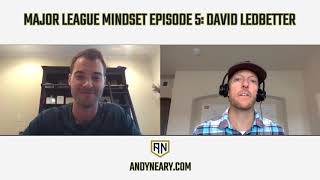
David Ledbetter, a former Texas Rangers pitcher drafted in 2013, talks about loving the process over outcomes, leaning on his twin brother for accountability, and bouncing back from a brutal 2015 season in High Desert. He now works at Big League Advance, which funds minor-leaguers using predictive analytics.
Questions this video answers
2013.
99th overall (reference mentioned during the interview).
2017 and 2018.
7.5 ERA (seven and a half).
About $10,000 per year.
Chapters
Welcome back to Major League Mindset. I am excited this week to have on my guest, David Ledbetter, former pitcher in the Texas Rangers organization. This interview is going to speak home to me. For those of you who know me, I myself pitched in the Milwaukee brewers organization. So, David, I am very grateful for you to be on, and I'm excited to have you.
Hey, glad to be here. Thank you for getting this together.
Awesome. Well, for those who may not know a whole lot about you, why don't you take a minute to fill the audience in on upbringing and kind of your background in baseball and what led you to making it to Triple A in the Texas Rangers organization.
All right, I'll try and keep this under 30 minutes.
No. Played baseball my entire life. Got into it at a very young age. You know, Greg Maddox once said, hey, someone asked him, when did you know that you were really good? You know, he said, when I was striking out everybody. And, you know, but for me, it wasn't. It wasn't that case. I actually ended up getting cut from a lot of different Little League teams when I was growing up, you know, so. And I think that taught me that this whole. This whole baseball thing, like a. It is. It's designed to be fun. Sports are a way we can build teams and learn to connect with one another and also compete our butts off. But for me, it was also a great opportunity to learn how to work really, really hard. And so I wasn't always gifted with, you know, the best blazing speed and the greatest power, but I really loved baseball, and I really loved working hard. And so I had an identical twin brother as. I have an identical twin brother as well.
We'll talk about that in a little bit. Yes.
But having him just having a partner that you can always go to in order to like that, you know, is going to outwork you, right? And having that just kind of through middle school, through high school, and then going into college, that helped a ton of my journey towards professional baseball. So Ryan and I went to the same college, Cedarville University in Cedarville, Ohio. It's a small D2 Christian school, and it's just way out in the cornfields. But we were able to make an impact as freshmen, and the people there obviously created the experience, but we ended up just putting our heads down, keep working hard. Hey, what can I do today to be able to maximize my talent, essentially, right? I'm 6 foot. I was probably 170 at the time. You know, soft and wet like just a small kid from Indianapolis just trying to make it. And I just wanted to be the best that I could be so that we could win. Right. Because I want to. I take winning seriously. And I think. I think most people should. I think it gets a bad rap with participation, trophies. You know, everybody complains about that, and that's fine. But I think if you're going to want to do anything, well in this life, you have to take winning seriously. And so we tried to do that at Cedarville and ended up getting drafted by the Texas Rangers in the same draft, 2013. And so unbelievable. Twin brothers drafted the same team, same year.
And then the professional baseball career started. Ups and downs. I started off really hot, did really well right after I got drafted, became a prospect and lived the prospect life for a hot second. But then the following year learned, you know, I was just trying to make way too many people happy. And I wanted to do what everybody was telling me to do because it was new, it was exciting, and I thought that they. I thought everybody else knew more than I did. And I think that's what a lot of people go through. Just kind of when you're in that next level, when you're in professional baseball, like, you got to stick with the girl you brought. And so I was not doing that. Struggled in 2014, struggled even more in 2015, and then started figuring things out in 2016. And I want to give a shout out to my wife, too, because she was my rock during those hard times. And, like, when I look back, those times of failure were extremely hard. And when you're going through it, you're like, I don't need this. Like, why am I here? And you're doubting yourself, and there's just a lot of negative self talk. But I think once I realized that this whole thing, this game, is just a learning process, every opportunity I get to be on a mound is just an opportunity for me to get a little bit better. And the games, you know, what is the purpose of a game? You want to win. But after that, then I want to get to the playoffs. And then if you win the playoffs, then I want to get to the championship. And if I want to get to the championship, then I got to get the World Series. And what is the World Series preparing you for? Right. We're in this season right now. World Series is about to happen. Nationals, Astros. Here we go.
Yep. David, if you don't mind, I want to chime in there what you said. There's so many directions. We're going to take that one story. I want to share this with you, Amy. My girlfriend and I were on vacation in June, and we were at the pool, and I remember sitting there and I. She literally had just ripped on me. Because I swear, I had seen all these former pro athletes at this resort, and they weren't even close to those people. But here we are at the pool. You bring up Greg Maddox. And for anybody who pitched between 1995 and 2015, Greg Maddox is a legend. Somebody you wanted to model yourself over, right? Yeah. So here we are sitting at the pool, and I'm staring at this guy laying on a chair wearing a Superman shirt and Batman swim shorts. And I go, amy, that's Greg Maddox. Sure enough, I walk over there and I tap him on the shoulder. I'm like, hey, are you Greg Maddox? He's like, yep. So Greg Maddox at a pool in a Superman shirt in Batman swimming shorts. Greg, if you're out there, we love you.
I got a short story. So he actually was a. Like a. Like an assistant, like a helper with the Texas Rangers.
Oh, okay.
I remember him watching some video with me, and it's like, instructs. It's like 2015 or something. And I throw a pitch and I'm ahead in the counts, like, 1, 2. And I missed my spot a little bit. And I missed a little bit over the plate. It was a foul ball. I think I still got an out, but I could have got a strikeout. And Greg goes.
What happened? Right there? And I was like, I missed a little bit over the plate. You know, I was trying to go inside. He goes, why didn't you just. Why don't you just throw it inside? I was like, this guy, man, that easy, right?
But for him, it really was like. What he did was he minimized everything else. He was like, I gotta throw the ball here. I'm gonna throw the ball there. I don't care about anything else in the world. Yeah, so that's another one. And just laser focus, but laser.
Yep, yep. That. I mean, he. He literally could put the ball wherever he wanted to. It was unbelievable. If you're out there, you don't know who Greg Maddox is. YouTube, the man. Sometimes his accuracy on the mound is, I don't think ever been replicated. So let's go back to your childhood. Davey, you bring up a really good point. A lot of people have this assumption that you played pro baseball, therefore you were always the best player on your team growing up, and that wasn't the case. Right. You said you've got cut from a couple travel teams as a Kid in Indiana, you and your brother both go to Cedarville University, which isn't a Division 1 school. It's a NAID school. Correct. Now it's D2. Now it's D2. Say. I mean, in a lot of cases, the odds were stacked against you. If you had to pinpoint a couple mindset factors, what would you say gave you and your brother the opportunity to go from NAI at the time, now Division 2, to being drafted 99th overall?
Dude, I think, again, it comes back to just, like, you have to love your work, what you're doing, right. Learn to love the process. There's a quote that says, like, you know, their separation is in the preparation. And so I completely believe that. But I think you need to take more pride in your preparation than you actually do your performance. Right. Because that is going to lead you to those different success measures that everybody judges themselves by. The numbers are only.
They're only seen as based on your preparation. Right. What you do when no one's looking magnified, when everybody's looking. And so I think that was the. That was the biggest thing. And just resting. Resting in knowing that I was trying to beat everybody else and outworking them. And that means resting, too. Like, literally taking a break.
Yep. Would you say. So I got an interesting question for you because you. You obviously grew up playing baseball alongside your twin brother your entire life. As you guys got older, in high school, college, even pro ball, would you say you two became somewhat accountability partners for each other?
Oh, my gosh. That started at, like, I don't know, age one. Like, when you finally start talking to each other, maybe you're like, hey, this is. This is my guy. And so, I mean, even when we were going through the minor leagues and we were on the same teams, like, I mean, we were blessed to be able to play on the same teams for multiple years with the Texas Rangers. And so that was super, super fun. And I wouldn't trade those years for anything. But even the years that we were apart, it was like, hey, you're not having success in this area. Like, what's going on? Tell me about what's. What's happening. Hey, how can I help? Because I want to bring you up to another level, your next level, because I know where you can be.
And I bring that up because no matter where you are in your career, if you're watching this interview, having an accountability partner is so important because everybody likes to set these big goals. I used to be guilty of this, but no one was holding me accountable. Therefore, I Started making excuses, started focusing on the wrong priorities. And I never came close to hitting my goals. In business, once I found myself with the right accountability partners, people who I was checking in with constantly to make sure I was hitting my daily tasks, daily goals, everything changed. And in baseball, having your brother by your side, it only elevated. Allowed you to elevate your performance every single year.
Oh, my gosh. And it's something we take for granted, too. Like those closest friends. You've heard that you're the five people these. That statement could not be true. And so I'm hoping that me and Ryan get to stay close together. We just moved. He lives up a little bit north of me. What? In Westville? She's like, 20 minutes away.
Okay.
And so. But it was for that purpose. Like, I wouldn't want to be. I wouldn't want to have anybody else in my life than that guy, you know?
Yeah, yeah, yeah. So that's. Geography helps. So even though you and Ryan are now out of baseball, you finally have taken different paths in a way, you guys still remain very close, 100%.
I mean, we talk once or twice every single day.
That's awesome.
And I think that's important just because you got. I mean, you have to know who's. Who you want in your. In your fire hole. You know what I'm saying?
Go ahead. Sorry.
I mean, even for us, I think it's more important in terms of prioritizing the way you want your life to look. Right. Not just your career goals, but also, like, where. What are the most important things in my life, and am I staying accountable to those things?
Yeah, well, it's. It's so important because, again, some people watching this interview, you've gotta. You gotta have. You gotta know who your tribe is. As you said earlier, find the tribe of people who are gonna lift you up, and then you have to stay in constant contact with them. You gotta continuously be holding each other accountable if everybody's gonna achieve the goals they're capable of. So let's go to pro ball now. Here you are in the Rangers organization, and this is where you're really speaking to me. Now I can go back to my days in the brewers organization. And what's interesting about sports, mainly baseball and being a pitcher, is, number one, every time you're on the mound, all eyes are on you, right? And in professional sports, you are constantly being compared to the competition. And what makes minor league baseball so unique is, you could argue, even your own teammates are your competition, because you're all trying to get promoted, right? And so what did you have to do from a mindset perspective, David, to kind of zone out the statistics, zone out the comparison so you could go out on the mound every single day and do the best you can.
I had to suck for a long time. I seriously think that's. Again, I went back to 2006, like 15 was a really, really tough year to put it in perspective. High desert, okay, that was probably the hardest place to pitch in the world.
Not a pitcher friendly ballpark, no longer.
In minor league baseball. But I got to. I was able to spend a whole year there and I finished the year with a seven and a half era and I took the ball every five days, if that means anything. So stayed healthy the whole year. And I'm like, okay, this one's going to be better, this one's going to be better. And I just, I just stunk. And that was a huge growing year for me.
Right.
A catalyst for my personal, both personal and professional growth in terms of learning that it doesn't matter what anybody else is doing, you know, because professional baseball is such a competitive area, like, people are always out to get each other, right? You see another guy perform bad and you're like, oh, this might be my shot to be able to kind of like, you know, get my leg up on the competition. And that doesn't really go away until I felt like AAA guys are really treating professional baseball like a job. Everybody thinks they're gonna make it to the big leagues. You think you're gonna make money. And so for that to happen, there's not an idea of abundance. You know, there's only so many spots that are available. I think when I, when I sucked and I finally went back the next off season and just kind of, you know, recalibrated, it was an opportunity for me to realize, like, it doesn't matter about what anybody else is doing, it matters about me going back to what got me here, which is I'm going to outwork everybody. I'm going to focus on what I do well, which is throwing strikes, getting ahead of guys and then trying to put them away with a pretty good slider. You know, I was very average, let's be honest.
So let me ask you, let me ask you this. Here you are. Seven and a half era. For those who aren't baseball fans, seven and a half is not good.
You could have easily quit, right? How many teammates you know of in pro ball have a bad year and they think it's time to hang it up, that they think they're not capable of doing it. Did I hear you correctly in saying what really, in a way kept you going, kept you moving forward, was getting back to the basics and realizing, you know what, you know what, I can control out working my competition.
Yeah. I mean, that's it. And then.
Through that failure, like, it's easy to be like, oh, I'm injured, my arm, my shoulder hurts, I'm fatigued. I need a break. I need a break. No, you don't need a break. You just need to get up and keep going. You know what I'm saying? And I think that was, for me, was just I wanted to be able to prove to myself that I could do it, that I did belong. And so even in a place where the odds were so stacked against me, and that's kind of where I don't want to be like, oh, woe is me, you know, like, that's what it sounds like. It wasn't like that. But for me, it just felt like there was. I was putting a lot of pressure on myself and that didn't need to be there. And I think we. I think we all do that. I think we all perceive ourselves in a light that I have to do these things. But if you just rest in the work that you do in the process, then things become a lot easier and more enjoyable. And I think I enjoyed it more those following years. That's where I found more success as well.
So let me ask you this, because we're going to now get into a little bit about your after baseball life, or you're still involved in baseball just in a different way here. You were, for those, again, not really familiar with baseball. AAA is one step away from playing in the big leagues. You were one step away from going to Arlington, Texas, to pitch with the Texas Rangers. It's so easy to look at that and go, I was so close.
Achieving my childhood dream, and it never happened. Right. Was there a lesson you learned in that and that you've now been able to transition maybe into your business life?
Definitely. And that is that you're going to achieve the dreams that you set for yourself, first of all. And I think it's all about perspective and keeping things in perspective. Right. Your life is literally just the blink of an eye. You know, what are we going to do in the time that we have? There's a quote that I really like says, time misused can never be replaced. And so when I was in AAA, I was in Triple A for 2017 and 2018, and I was doing my. I was doing my job well. It wasn't. There was no more four or seven and a half era. It was like, hey, I was getting quality starts. I was doing what I needed to do to play at the next level. I believe that I could. And I think that's another thing, is that you have to believe you're going to accomplish what you're going to accomplish. Say what you're going to do and then go believe you're going to do it. And I believed I could play, pitch in the big leagues. And to this day, I still think that I could pitch in the big leagues, you know, But I also know that I really want to be a great husband and I want to be a great dad. And I wanted to start a family. And I wasn't going to be able to do those things the way I wanted to. Playing baseball, even playing baseball at the highest level. And I respect all the guys who can do that at the highest level. But for me, it was about, hey, I want to be home, I want to be consistent. I want my wife to know that, you know, baseball, what is it was a great gift, but it's not everything.
It's knowing about what matters to you most and focusing on what's going to make you the best human being out there. I love that fact that you said that, because a lot of former pro athletes can't think that way. Right. That the sport is all they know, the sport is all they wanted to achieve, and when it's over.
They fall hard. And so it's so great to hear the stories of people who understand where they are in life and know exactly what matters most to them. So let's transition there. You're now part of.
Pro Baseball Advance. Why don't you take them a big league advance? Excuse me? Take. Take a little. Just spend a little time telling us what that pro. What big League advance is all about and how you now are able to give back to current pro athletes.
So great question. Big League Advance. I love this company. Right? And so you being in the minor leagues, completely understand it's a travesty with these seasonal employees are paid on. So I mean, I was getting paid 10, around $10,000 every year.
Right.
And that doesn't include per year people.
Not per week, not per month, per year.
You're living on $10,000 a year. You're eating PB&J every lunch.
Living with host families, you're trying to find host family.
You're living with five or six guys in a bed. So I've been there Love those times. Trust me, trying times and trying times are great for our growth. But what Big League Advanced does is it's all based on predictive analytics. The data in baseball today is just absolutely nuts. And so what we've done, or Big League advance has done is created a predictive analytic model that will essentially find guys, minor leaguers specifically and we'll be able to project their future earnings, all things constant. So typically you'll have a younger guy, right? Age is a big factor in future earnings. And so let's say a guy does really well in high A, gets promoted to double A and does really well at the end of the month. That's kind of the guy that is going to do well on our algorithm because all things constant, his progression will continue. Right. What was his hard hit percentage? We take a number of different things into account, but what we try and do is based on that future value, give them a lump sum of cash today and then in exchange for a future percentage of big league earnings. So if a guy does go make it big, we'll share in his success. But if not, and obviously what happens most of the time is that we'll lose on these deals, but that guy will keep the money forever. And so it was able to provide for him both when he was playing de risk his entire career and prepare his financial foundation for the future. And so that's the way. I really like that part. I try and every time I talk to a guy I want him to know, hey, this opportunity exists. But I also want you to know, like I'm here as a resource to be able to prepare you for success off the field. Also on it because typically those run in tandem.
So let me hear, I want to make sure I heard you correctly. You make investments in these athletes knowing that they name it may never pan out.
Yes.
The win for you in the future is if they pan out, you get a percentage of what they're making at the big league level. But if they never pan out, they keep the money.
They keep the money.
You're willing to make the investment on their growth knowing that there is no guarantee of return.
So if you're out there right now watching this and I David, I talk about this all the time. I'm in the insurance industry and I see such a huge gap in sales training and I see so many agencies just not make investments in their people. Please, folks, if you're out there right now, you've got to invest in your producers, you've got to invest in your employees knowing that you Might not get anything in return. They may leave you for a competitor. But if you're not making the investment in these people now, there's no guarantee for success. And David, could you agree if you show them that you care, they will definitely show you they care about being there.
They're only going to care unless until you care. And so we see that in our business as well. Like, it's so much different to be able to talk to a guy who doesn't really know what we do. Right. Because I didn't get to talk to him and share the story and give him. Give him a meaning. Right. And be able to say, like, hey, this, this means something to me and I think it's going to mean something to you. And I think even with sales, especially, like, people need to know that you care.
Yeah, absolutely. So let's finish with this. Let's put a bow on this.
If you're speaking to somebody right now who's new in sales, my audience, somebody who's struggling a little bit with sales, thinks they're behind because they got in the industry too late, didn't. Doesn't feel like they've had the resources, what would be the one piece of advice you'd get that person if you were looking at them right now?
Don't have the resources. Good. Hey, you don't have.
You're not.
You're not as well spoken as somebody else. Good. Like, these are good things because it gives you an opportunity to learn how to outwork them. Right. You got to put up those blinders and you got to focus on what can I do today? Because that. Being able to identify what is my mission, right. And then be able to kill the noise and then execute the mission. If you can do that with less resources, with not as many talents, you're going to be that much more prepared when those things are given to you. Right. When you do have the resources, when you do learn how to speak better, you practice your craft. Like, learn to love the process, learn.
To love the work. That's it right there. Love the journey, man. Right. So it goes back to being a pitcher. When you're on the mound in the opposing players stadium, opposing team stadium, with 5, 10, 15,000 people in the crowd all wanting you to lose, you gotta put the blinders on and tune all of that out. And the same is same as in sales. You may think you don't have the resources. You may think the odds are stacked against you, you started too late, zone all that crap out, put the work in. When no one's watching. You can have as much sex success.
As much success, if not more than your competition. So, David, last thing, if somebody wanted to reach out to you, wanted to connect with you, what are the best ways for people to get to know who you are or to connect with you?
Call me. My number is 317-694-6726.
Awesome. Well, folks, if you're out there right now, first we got to give a shout out to our friend Ben Connor, who was kind enough to connect us. Ben, if you're out there listening, I'm going to tag you. Thank you. This was an awesome interview. But if you're out there right now, you're watching this and you're struggling, you want to quit. You don't think you have the resources. You don't think that time is on your side. I'm here to tell you, you are just one mindset shift away from greatness. So keep being persistent, keep being consistent, and keep focusing on working on your craft and you will ultimately achieve the goals you know you're capable of. David, thank you again for the time. I appreciate that. For everybody else, that's it for major league mindset. Until next week, have an awesome day.
More from Andy

Stop living in the gray of maybe! Your job in sales is to get a clear yes or no


How elite producers use “validation” to give prospects the confidence to hire them.

The Transition, every great sales leader goes through: Stop being the hero and develop heroes.




