Simple Tips To Find Your Target Prospects with Warren Cleveland.
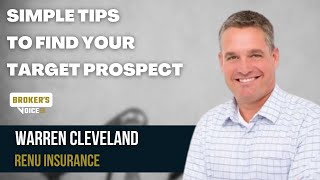
Warren Cleveland, founder of Renew Insurance in South Florida, went from commercial pilot to insurance entrepreneur after 9/11. He explains why his agency focuses on self-funding and performance-based insurance, and why Florida's hurricane market forces agencies to get creative about what they can actually sell.
Questions this video answers
March 1, 2023.
October 1, 2001.
Renew Insurance, South Florida.
Flight Plan 365.
About 22 years (since ~2002).
Chapters
Hey. Hey. Welcome back to the Broker's Voice. I am excited today. I have the one, the only Warren Cleveland joining me from the Brokers or on the Broker's Voice. Warren is the founder of Renew Insurance in South Florida. He is a commercial insurance advisor who also specializes in benefits. But I am excited to have Warren on because I think Warren's done a very exceptional thing with this business that very few in our industry is willing to do, and that's become known for very few things. So, Warren, welcome to the Broker's Voice, my friend.
Thanks for having me. Appreciate it, Andy.
You bet. Well, you've got quite the story of how you ended up in the business, because I always enjoy what people. Some of us got into it right out of college, but others, you know, came from different careers and found themselves in the insurance industry. Your path or your career prior to insurance was pretty. Pretty unique compared to our peers. Talk about it.
I don't. Honestly, I don't see it as being the big deal, but everybody else does, so, yeah, I'll tell you the story. So.
From the time I was a little kid and I could point to the sky, I wanted to fly airplanes for a living. Went to college to do it, got a job right out of college flying, you know, little. Little turbo props all over the country and. And then eventually got into flying for continental. That was great. 737, 757. And then 911 showed up and. And along with other, you know, 6,000 other pilots, got laid off, furloughed, as they call it. October 1st of 2001. I mean, thankfully, it'll be alive. But now I had to go find something else to do because there were no jobs to be had in that field, you know, given the airline industry. So I became an entrepreneur overnight. Didn't know I was ready for that. But as they say, you know, God gives you lemons, you make lemonade. And.
I just started business building and understanding what it took to be an entrepreneur and, and growing as a person.
So were you flying internationally?
I was, yeah. That's. That's what I like to do. My seniority number came back in like, oh, four. And I stayed out for another year and then tried to try to go do both, run a business and fly airplanes. And I just flying triple sevens all over the place, and it just didn't make sense for me to. To continue to work for somebody else. And so I. I made the choice. My wife and I decided that it was time to, as I say, burn the bridge. So here I am, entrepreneur 22 years later, still going.
You know, I. One thing I've learned by working with you is don't get your plane terminology mixed up.
If I'm gonna fly one style of plane, Warren, what is it?
If it ain't Boeing, I ain't going.
Let's. Well, I'm curious. So that happened 22 years ago. How did you pick insurance?
It was actually, I, I got into real estate first because, you know, once again, another industry where people kind of come from another place to, to jump into it. And, and we were, you know, we found a mentor. I say we, my wife and I, because she was at, at that time, she was really. We were partners in, in building that business from zero, man.
It.
I mean, from a place of. We didn't have enough money in the bank account. You know, it was a, it was a bad spot in the beginning of 2002 to where we are now. So we built that on.
You know, just sweat equity. And, and I just got tired of somehow some of the real estate piece that, you know, there's, there's not a lot of technical.
Low barrier to entry. And I was playing golf with a friend who, who was an insurance. He was CEO of an insurance company, and he's like, you know, we pay these agents all this money and you should go open an agency. And I looked into it in about three months. I decided, you know, that makes sense. We had the agency license, I was licensed, and we pivoted the entire real estate team to get in the insurance business. And that's. It just took off.
You know, I'm curious.
When you think about, you know, you're in South Florida, your, Your agency does commercial and benefits. More commercial historically, for the folks that might be listening and more, more the advisors who do not have an office in Florida, what is it like to sell commercial insurance in Florida when you have hurricane risk and everything that comes with it? It's got to be chaotic.
You, you, you have to kind of, you have to silo yourself a little bit. And this kind of goes in line with other decisions we've made recently, is that we are going to do only a handful of things in our agency and outside of it, we just don't. We refer to other agents that want that business and can do well with it. You know that we're not going to just refer to somebody in a phone book. It's somebody I know personally, who I know is going to take care of that referral. But I will tell you this, between the brokers that, you know, you would Typically buy wind coverage from their aggregates are getting cut. If you're not in with them in a big way. You're, you're, you're going to be outside looking in going I I don't have a market and you, you won't be able to get it. It's is, it is getting, it is getting pretty bad in our state.
Got it. Well and you, you said something there I don't want to go overlooked which was you realized you guys were going to be pick a lane and be okay with. If somebody came to you with another need that that wasn't something you specialized in, you'd refer to other agents.
So I've been fortunate to meet some really smart people in the industry. A mentor, Scott Addis is a mentor of mine and.
He did it in his career. Others who run very large private equity firms that you know, gobble up agencies have said it to me and it finally I just decided that okay, we, and, and it's something I'm very passionate about. So it's not, it's, it's not hard for me to just say look this is it and it's, it's not anything else is performance based insurance. Right. This, this whole quoting thing that we do in our industry and it's just, I don't understand. I, it's so funny when I come in when I was in a real estate business as well and I hopped into insurance looking around going the tech in this industry is about 40 years behind what is going on here. Like why are we still even bothering with this? And, and then you know that leads to kind of the products and look, Main street needs insurance products to, to be able to operate. I mean just insurance moves the world around and allows people to do things without you know having $10 million in the bank to worried about what could happen. So it's needed but it's, it's just there are agents who are probably better suited or want to do that business versus what we provide is the performance based insurance where we can help a particular business owner or management team become.
Stewards of that and with safety and risk management kind of take the lead on that they can now turn insurance spend into income.
Yeah. And I think you know, two things you've done extremely well is number one, tie your past into your present as part of your branding. You know, I felt the same way when I moved out here to Colorado. I said what makes me different? Well there's very few former pro baseball players that sell health insurance. So I'm going to Build a brand. You've done the same thing with that. Being a former commercial pilot, now selling insurance, you've built it even into your branding around your process with Flight Plan 365. Like talking about how, hey, when I, when I flew a jet internationally, we had a flight plan we had to follow, otherwise we would not end up at our destination. And the same holds true when you design a effective insurance program. I love that. That's number one. But number two, one thing I preach, Warren, is you have to stand for something. Whatever it is you sell, you have to sell, you have to stand for something. And you, my friend, stand for something. So this is for the employers listening in. Warren, let's talk about fully insured products.
If I'm an employer listening to this episode on LinkedIn and I am a fully insured, I have a fully insured commercial program or benefits program, how is that impacting me today?
I call it the winners are paying for the losers. So you're paying premiums to a for profit corporation and their job is to manage their book of business.
And, and if you get a little bit of loss control, risk management out of it because you went and sought it out, that's great. And look, I mean I, I still have some of that on our book. I, I'm not knocking it, you know, we need it. But ultimately you're, you're never going to see the end of that hamster wheel ever. Because there's no, it's a misalignment of incentives, right? There's no reason for them to charge you less going forward. Even if your loss history is spotless and, and it's the law. Large numbers, right? You gotta have, you gotta have this big pool of people or companies in a, in a insurance world to make that work.
And that's yet another reason why I moved on to performance based insurance. We're only gonna take the top, call the top 20% in any particular industry and pluck them out and show them nirvana. It's, it's the hard, it's, it's one of the hardest clubs to get into. But once you're in, you're in. You never want to go back. And you'll look at it in the past, scratching your head, going, I can't believe, why didn't I do this five years ago?
So you're telling me it's like flying United and I want to get in the United Club. I've got to, I've got to apply and I've got to be approved.
Well, here's you know, you said something offline that I thought was so, so well said and you've said it in your content as well, is when you're fully insured. Think about this. You could be paying for your competitors mistakes. You are right. Talk about that for a second because I think people have seen that in your content but they're like, I don't understand, what do you mean I'm paying for my competitors mistakes?
So you're in the same pool regardless of what industry you're in. You're in, you know, you and the neighbor and the guy down the road and the guy you know across your state who's doing the same business and you're operating your business really, really well. And they're not meaning they're filing claims, they're not proactive in risk management. So that carrier is insuring both of you at the same rate or maybe they're paying a little higher rate, but the winners pay for the losers. So the fact that you don't have claims, that carrier is banking on you not to have claims so they can afford to take the underwriting profit they make from you or a portion of it and pay for the person who's got claims and you know, isn't as good a steward of, of their risk management safety program. And, and I just, you're, you are subsidizing your competition because that carrier looks at their book is, is, is just that, it's an entire book of business. They're not going onesie twosies. They look at it from an industry standpoint. So if you're in construction, you're in construction. If you're in retail, you, you're in retail manufacturing, same bit. So the, the, the, the what you get out of a traditional insurance product is just that you get, it's easy to buy. I just, I just shot a video on this. It's easy to buy, it's fairly vanilla.
And you're always going to be on the wrong end of the performance side of that.
Yeah, that's a really good point. You bring up if it's really easy to buy, there's probably a catch. And, and you used another analogy I really liked, which was imagine you sit down and have dinner with a friend, right? They order a very expensive meal, you know, the market price steak and you order a more healthier, lower cost option. Yet you agreed to split the bill before the dinner. His bill's $70, your bill's 30, but now you're paying 50. Is that fair? Most people probably say no, it really doesn't make sense. Well, that's what you're doing with insurance. Yeah. If you're managing your risk well, you're a clean group and your competitor has the same carrier. But they're not. Your rates are based off of their performance too.
And this is probably a friend of mine told me this, you know, in a, in a one on one conversation. It's probably a little on the edgy side, but it. Insurance is the greatest form of socialism you'd ever want to see in your whole life. Because I'm taken from the winner and I'm given to the loser to offset their, you know, so I can, so I can make a. Folks, this is.
The last episode of the Broker's Voice ever recorded because we are about to be canceled.
Well, I would love to be canceled. I'll take that on all day long. I stand for something and that ain't it.
But it's true. Yeah, what you said is true. Well, let's talk about this for a second because. Okay, cool. Fully insured isn't, isn't your best friend. But I've, I've been been told, Warren, self funding is too risky. Talk about why that isn't always the case. Because I think a lot of employers are told that right. By the broker community. Oh, you shouldn't do that. There's too much risk, you're not big enough. Why is that just not true?
Well, you know, it's always interesting to hear when somebody says you can't do something like I am just not that guy. Right. I'm gonna always try and figure out a way and then sometimes in the end of the day, maybe there isn't.
Right.
But I'm never gonna just say, well that can't be done or we don't, we never did it that way. We shouldn't do it. So self insurance from a true definition standpoint is really only reserved for the largest corporations who they have unlimited money to be able to offset, you know, a loss that they. That may occur. The IRS isn't necessarily going to give them a discount or be able to, you know, you can't make those payments tax deductible because they're not, you're not buying insurance, you're not shifting risk or distributing risk. But I just say, you know, self funding is something you hear in the, in the medical benefits side versus on the PNC side. Moving into a captive where you are going to move to self insurance but you're going to have the backstop like you know, stop loss and medical. On the pnc or on the benefit side, you have that same idea on the PNC side. There's, you know, you can buy a fronting carrier, you can buy access. So what you're doing though is you're taking a bet on yourself. You're going to have, you're going to have an entrepreneurial spirit. You know, the people who succeed with this are typically really strong business owners or a good management team. They're entrepreneurial, they're not afraid to take a little risk on themselves. And I'm not talking, you know, we're going to, we're going to leverage, you know, $10 million and you're only spending a million bucks in insurance, nothing like that.
Yeah, I like what you said there. So I didn't mean. No, no, you have more to say because what you said there was so, so profound about the entrepreneurial spirit of, of insuring your company. Every entrepreneur out there at some point took a bet on him or herself and buying your insurance through a self funded arrangement is no different. You're, you're betting on yourself that you are going to be good, you're going to have a clean history. So why not be rewarded for it? I love, I love how you said that.
Yeah, well, and that's the thing everybody thinks, oh well, you're not big enough. Well, I mean that's really changed over the last even call it 15 years, 10 years, that's changed substantially. You know, it used to be, well, the concept we're talking about. So for those of you are not in insurance, right, you go back 70, 75 years considering it's 1950, you know, the worst of the worst got into this self funded arrangement because they couldn't get insurance anywhere else. And then as the markets, as we call hard markets, products liability was a big thing. You couldn't get products coverage for whatever you were selling or manufacturing. And then, you know, captives now move from the worst to the best because it allowed those really well performing businesses to take advantage. And not, we're not, we're not paying for the underwriting profit of a carrier. We're retaining that underwriting profit for our us because that's our, that's our hard work. That's, that's, that's, you know, from a business owner standpoint, that's, that's something I'm going to use to further enhance my risk management and safety strategies. You know, you, you're a more profitable business, your people are safer, you benefit from it, you know, exponentially.
No, and I think it's ironic that self Insurance started out for companies with no other option and here we are. Self funding is the gateway to many options. Right? If you want to give your company more options. Let's finish here, Warren. So if I am a company watching this on LinkedIn and I'm like, all right, I've been told every one of those things you just said, I'm not big enough, it's too risky, I shouldn't, you know, just stay right where you're at with the certainty and safet of my current program because this carrier is the best A plus rated carrier in the market. What should I do? What, what advice would you give me?
Go. Maybe take a peek behind the curtain. You know, what are some of the motivators that cause people, you know, I think you and I have talked about that many times. It's a misalignment of interests. You know, I, and I, I write some of that business that has, you know, the fancy name on the piece of paper.
But it is not the focus, nor is it the majority of our business. It's just there. I think business owners would do themselves a huge favor to go look at that option from somebody who is not directly tied to their current program. And I'm not saying you have to come to me at all. I'm just saying go. I'm sure your phone's rung a few times. Be aware of the guy who's pitching you. Somebody that says tax savings initially and they're screaming tax savings. That's a huge red flag. Don't see that being a good idea. This is not. You can get some tax savings potentially, but that is not the reason to do this.
Yeah, and I, I love your tagline, man, that you use all the time. Stop buying insurance. Start owning your insurance and be rewarded for your hard work. And that's what it is at the end of the day. And like you said, if you're a business owner who's entrepreneurial, you've better, you've bet on yourself before. It's why your company exists. Why not do it with your insurance? So, Warren, I want to thank you, man. Thanks for being on today. This was great. If you, especially for any commercial advisors might be listening in, this is what you guys got to do. Quit trying to be all things to all people. Become known for very few things. Heck, become known for one thing and let others know that you can help them. But if there, if there's anything else outside of that box, your gift, your genius, you recommend somebody else. It's the best way to build a great book of business. So, Warren, thank you. Everybody else listening in. You know what happens when you get clarity and confidence? You go do big things. So go do big things today. Thanks.
Thanks, Andy.
More from Andy

Stop living in the gray of maybe! Your job in sales is to get a clear yes or no


How elite producers use “validation” to give prospects the confidence to hire them.

The Transition, every great sales leader goes through: Stop being the hero and develop heroes.




