Stop Quoting Spreadsheets. Use Forensic Audits to Win Clients.
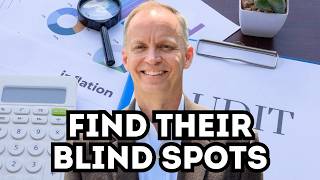
Jeff Borglund of IntegroIQ explains how forensic audits expose overpayments in self-funded health plans. He found that 80-85% of plan spend goes to claims, many overcharged due to outdated codes or inflated ER billing. His method recovers money while helping brokers meet fiduciary obligations.
Chapters
The biggest problem in health insurance is employers are choosing to be ignorant.
And the worst part is they're at risk and they don't know it, or they're trying to bury their head in the sand. I mean, what would happen at Ford Motor Company if they only had partial access to all the data on purchasing steel? They would be up in arms. They would say, this is— there's no possible way this is happening. But it happens all the time in the healthcare.
I'm excited for this one. I've known this gentleman for quite a while. Jeff, we've known each other for what, about a decade?
That's correct.
Uh, I've got Jeff Borglund joining me, co-founder of IntegroIQ. Uh, we're going to talk about that today and what the heck that is. If you are in the benefits space, you're going to want to know more about what IntegroIQ is doing. Um, but before we get there, Jeff, I've been waiting weeks to ask this question. All of us got in this industry typically with an unconventional path. And you might have one of the best stories because you're one of the only guys I know that before you were in the health insurance industry, you were dealing with sausage parties. You sold sausage casings for a living. Talk to us about that. What was it like to sell sausage casings for a living?
Matter of fact, I actually loved every minute of it. It was—
it—
I sell to blue-collar a little bit more than white-collar, which I loved. And, you know, everybody in there was just hardworking and they loved what they did. I was quite surprised, to be honest with you. And what I will say, I even told this to Jim Rome on a— I called into his show one time. I watched how all of this stuff is made and I still eat it. So, I need you to understand that it's maybe not as bad as what everybody says. But, you know, our clients were Johnsonville, Bob Evans, Hillshire Farms, you know, a lot of the big guys. It was actually quite a riot to be honest.
Well, and you also are a pilot, so you would actually fly to a lot of your clients by yourself, right?
Oh yeah, absolutely. That was a great way to travel.
Okay. So, here you are selling sausage casings. What made you make a decision to go from that to, I'm going to sell health insurance?
Oh, that's a great question. The truth of the matter is, is when I got into the casing business, there was about 12 or 13 different companies that had product. So, it was a fun sales process in regard to competition and everything. And then, over years, it just got consolidated and it came down to about 4 vendors, which means that you steal from Peter and Paul and everybody else. And so, it just became a commodity at that point. And, I was looking for something different in my life and I kind of got recruited into the business a little bit by a few people I knew at my church. And thought, well, this could be interesting. And, you know, I will talk a little bit more about, you know, sales and what that looks like. But I kind of thought, wow, this could be, this could be an interesting direction to go. So I started investigating it, looked into it and said, yeah, I think I'm going to make the leap. I knew I wanted to leave the casing industry because I just didn't want to sell a commodity anymore.
So you got in like most of us. Somebody told me I should give this thing a try.
That's exactly right.
You know, if you're watching the interview right now, you might see a ski patrol sign behind Jeff. He's living a dream right now. So you spent most of your business career in Michigan, but you and Melissa are now empty nesters. So you're living in Breckenridge, Colorado.
Correct. Correct. And my dad was a ski patroller for years, so I got this sign to honor him. And, and I love skiing.
That's awesome. Well, let's talk about— so you and I actually met as you got into the business. We met because we were both part, uh, part of agencies who are UBA members, United Benefit Advisors, and you were part of the new Producer Academy. Yep. And let's take it to the point— you and I, you still reference this today— you and I had a specific conversation, um, I think it was over a, a phone call back in about 2014-15 that you felt like changed your career. Let's go back to that conversation because quite frankly, I I probably don't even remember what I said, but there was something that triggered for you to like, wait a second, there's a different way to do this.
I remember exactly what you said. You walked into the— it was actually at a UBA conference and I was sitting around talking with a few of the producers and you walked in, your Andy Neary strut, and you walked in and you said, the, the, the, the health insurance renewal process is the biggest BS game in the— that I've ever witnessed and been part of. And I'm like, A kindred spirit. Oh, my gosh, that's fantastic. I was thinking this, but nobody was saying it. And I'm like, am I the only one? What's going on? And that actually freed my mind to start saying, okay, somebody else believes in this. And you and I had multiple conversations after that. As a matter of fact, you actually sent me an article in 2016 from Forbes Magazine with Dave Chase explaining what I thought was happening. The article explained that the self-funded employers were doing it wrong. And I was at that time only selling fully insured business. And I thought, wow, the self-funded guys, I thought we're doing it right. So, that article really intrigued me to learn more.
I think that's an article that probably changed a lot of people's career. If I remember, it was— I don't remember if it was the health insurance advisors have one of the most important jobs in America article. I can't remember which one it was exactly.
I know exactly what it was called. It was called 7 Steps That Employers Can Take to Save $500 Billion and Improve Education. Which was like, where did the education part come? That's really bizarre of a statement. But when I read the article, wow, it was powerful.
Yeah, I think the one that really changed it for me is the one I just referenced. He had, he had written an article about being a health insurance advisor. Do you realize you have one of the most important jobs in America because of the impact healthcare is having on the economy? And that really changed my perspective on I'm not just another guy slinging health insurance. Like, no, this is a really important job. Well, let's, uh, let's fast forward. You spent a lot of career, a lot of years on the advisor side. Yep. And I, I would say what, maybe in the last 5, 6, you really got into the claim payment integrity. And let's talk about that because we are going to go, uh, we're going to go into IntegroIQ. Did I say that? I am. I'm, I'm keep saying that wrong.
It's IntegroIQ, correct?
Yeah. But talk to us a little bit about, number one, what the heck is claims payment integrity and what got you so interested in it?
You know, it was really interesting because I was asking a bunch of people like why costs seem to increase every year without fail. I mean, other industries go up and down and things happen all the time, but health insurance just keeps going up. And I kept asking everybody in the industry, why was this happening? And most of them told me they just didn't have access to the information, the claims data, because the carriers won't share it with them. And I thought, well, that's really weird. And it also dawned on me in that article that some people did have access to their claims data and were beating the system in a way. So those two things happened simultaneously.
Yeah. And, you know, let's talk a little bit. Let's just pause right there with claims payment. You know, I think obviously that has really come to the forefront in the last 5 to 7 years as being one of the bigger issues we have in health insurance, is why health insurance costs keep rising. I, I feel like even in 2026, it's still kind of a blind spot. Would you agree? Like, do you feel like a lot of people are still ignoring what can be done from a claim payment perspective to try to help somebody control their health insurance cost?
Yeah, I mean, you know, it's, it's definitely a blind spot because there are a lot of the people in the industry still feel like they can't get their hands on the data or the correct data to get the claims done. And we have kind of solved that problem. And we understand, you know, there's, there's certain claims data you look at to do what people consider claims audits, which is really specified and really focused. And then there's the bigger picture, which is the entire claims picture of what's going on. And that includes a bunch of different areas that one can look at. And so, our goal is to help our clients forensically kind of own and control their data and do it in a very—
people ask me all the time, "Forensic, do you mean like CSI?" Like, "Yeah, it's CSI." I was going to ask you to define forensic a little bit.
Yeah. I mean, there are people that are looking at large claims. There are tons of large claim auditors or reviewers out there, but one company I ran into was looking at smaller claims and they came back to me with one of my clients and said, "Do you understand that this company is using the wrong code for—" I'm trying to think what it was. "The wrong code for mammograms. They're using an old defunct code. It should be charged at $100 per visit and now it's being charged at $200 a visit. So your employer overpaid by about $69,000." just in mammograms in one year. And I thought, nobody's looking at that granular level at all. And yeah, you can find a $100,000 claim and knock some money off of it because of the bogusness. But, you know, one of the things that you and I know, Andy, is that most of the carriers auto-adjudicate every claim under either $5,000 or $10,000. Well, if you pay attention to how many $4,990 claims there are, you'd be shocked. But they're not looking at the $500 claim. They're not looking at the $200 claim. We're looking at all of it and coming back and providing a holistic view of what's going on. So, we're not just focused only on a claims audit. We're focused on saying there might be 10 or 15 fiduciary concerns that we find in this data set. And then let's put together a plan to attack these concerns because, Mr. Employer, you're the one that's on the hook for those ones. You're the one that's holding all the risk for this scenario. And it's been a pleasure educate people on stuff that they've never been educated on before.
I was going to say, you know, let's use this as an opportunity, one, to introduce IntegralIQ. So definitely take a minute to talk, tell us a little bit about what you're doing. You're one of the co-founders. But going back to that point right there, when you reveal this data to an employer and they're seeing this information for the first time, what's their reaction like?
Depends on the employer. You know, if We presented some of these results to a union, and I got more MFers in that meeting than I've ever heard in my life in any business.
I hope not directed at you, directed at the situation. Yeah.
Correct. No, they loved us. They hugged us. They were so excited that we opened their eyes. And then, you know, everybody else is, "Wow, I didn't know this was happening. And how did you find all of this stuff?" And said, "You know, our team has been doing this for 3 decades and we know what we're looking for. We know where the dead bodies are buried." You know, that's the best part. And now, some of our solutions, we can actually look at a company's data and give them the results before they even sign up with us. So, they'll know what the ROI is before they even agree to work with us, which is even more exciting.
So, yeah, let's talk about that because when you really first started diving into this, you were, I think, working more with an outside. Claims payment integrity service, which over time there has definitely been a transition for how effective were they in the past to how effective are they now. What led you with the partners you have today to start IntegroIQ? And where do you or how do you feel like claims payment integrity has transitioned over time?
Yeah, I mean, it's really interesting because we first started almost in these targeted audit sections, but we recognized that they're abrasive, they take a long time, there's a lot of manual labor that's needed in them. So, when we got data in, it might take us 3 to 6 months to go through all of that data and really climb up that tree to find all the issues. And so, therefore, there was always a lag in there. And then, when we went to try to go recover those monies for our clients, there was some pushback from some of the carriers and some other stuff. So we, we realized that we call that identify and recover. We are now shifting over to identify and prevent. So we're trying to identify the fiduciary anomalies and prevent them going forward, which we still do some of the recoveries. We still have some vendors that do some of the recoveries for us, but that's now the icing on the cake. The cake is identify and prevent. The icing is identify and recover. And it used to be the other way around. So that's what switched for us. That's interesting.
I always used to laugh at carriers who would have services where they audit their own overpayments they allowed, and then they would find the overpayment. And so not only did they get paid on the claim, they went back and corrected their mistake and got paid again. Correct.
We find that all day long. It's a wonderful way to manufacture money.
Well, so let's— I guess when I think about what, what you guys are doing today and how the whole claim payment system has shifted over time. The obvious, I guess, answer would be everybody should be doing this. Yep. Why do you feel like either broker or employer are still ignoring opportunities to leverage a solution like this that can come in and audit and prevent future overpayments from happening? Why is this still something people don't pay enough attention to?
I, you know, I don't have the exact answer, but my opinion is that there has been a belief for a long time, Andy, in this industry that you just can't get your hands on the data. That is still accurate today, regardless of the ERISA federal law, regardless of the Consolidated Appropriations Act, any of those programs that require the employer to be the fiduciary. And my argument to every employer is, how are you the fiduciary if you do not have access to the full set of data. I mean, what would happen to Ford Motor Company if they only had partial access to all the data on purchasing steel? They would be up in arms. They would say, "There's no possible way this is happening." But it happens all the time in the healthcare industry. I think a lot of the broker-advisors believe that. I think a lot of the employers believe that. And so, there's a fear. There's a fear that has been perpetuated and it still lasts today. Yeah, yeah.
It amazes me how many people still choose to put their head in the sand. I was talking to a client this morning about, you know, they're in an area of the country where they're trying to really sell the self-funded concepts. And it's hard because most people there are fully insured. And it's, you know, I told them, I said, guys, the biggest issue we have in this, in this industry is the one problem you're all trying to solve. You can't talk about too much because you would offend people. Because the biggest problem in health insurance is employers are choosing to be ignorant. Correct. There is no other answer than that.
They're choosing to be ignorant. That's exactly right. And the worst part is they're at risk and they don't know it, or they're trying to bury their head in the sand. And, you know, more and more lawsuits are popping up with employees that are saying, I don't think my employer is spending this money correctly. And nowadays, the money is about 25% to 30% employees' money and 65% or 70%, you know, employers' money.
I was gonna ask you that. As, as the fiduciary exposure continues to increase and the lawsuits continue to come out, do you see the need for your services only increasing because of that, where employers have to dive into what is actually being paid for so that they can have that forensic watchdog sitting inside their health plan making sure they're not overspending their money?
Yes. I mean, you know, there's no question that has to happen. The costs are out of control. I mean, I know you talk about this all the time in your podcast, but if you look at what family coverage was 15 years ago to what family coverage is now, it doesn't even make sense. If you're in any other industry, you'd say this has to stop. We have to do something about it. But there has been traditionally a problem with getting this stuff.
Yeah, well, and I think employers need to understand, going back to my comment about the ignorance, You know, when you have, you use the term, you used mammograms as an example, right? When a mammogram in your plan can be paid for at, I'm making numbers up, but $200. Yep. And the same service somewhere else can be paid at $3,500 and your plan isn't even looking at why that's $3,100 or $3,500 and they're auto adjudicating that, which I still laugh at that carriers sell the fact that over 90% of our claims are auto adjudicated.
Yeah, that's a problem. That's bad.
And as an employer, that check's coming right out of your bottom line, and you're okay with that? You're choosing to be ignorant.
Well, there's a lot of people, Andy, that argue that, you know, pay raises have not really happened in the last 10 years. Because it's all been milked in the healthcare side of it. And I find employees should be up in arms saying, well, I need, I'd rather make more money than pay more money to healthcare, for crying out loud. And you know, they don't have any control over it. That's the challenge.
So, well, it's funny. It makes me think about when, uh, I contributed to the book, uh, Breaking Through the Status Quo, and I wrote the chapter on the unlimited credit card. And I used the analogy in the, in the chapter that says, hey, if you were a bank and you were dumb enough to offer an unlimited credit card, I guarantee you would probably have some spending parameters on it around where you could go and what you could buy. You'd probably arrange deals with vendors to offer discounts, right? Because you're stupid enough to offer an unlimited company credit card, unlimited credit card. But that is what employers are doing every year with healthcare, and they're not putting any guardrails on how that money is being spent. Having something in your plan that says, oh, by the way, that was overpaid for might be a good idea.
Yeah, correct.
So I'm curious, as you guys dive into health plans and, and talk to us a little bit, I mean, you work with some organizations. I mean, how big are some of these employers you guys are working with today?
They're pretty sizable. Oh yeah, we, we work with companies from 500 to 50,000 right now. Um, and yeah, we just— matter of fact, I'll tell you an interesting story. We just looked at a a client's data. So, part of the issue, Andy, is there are overpayments that are happening that shouldn't happen. The other issue is there are overpayments that are happening that the contract allows to happen. And most employers are ignorant on that. So, we went to a client, looked at their claims, and we actually picked all the claims that were paid greater than the billed amount. You and I both know that answer should be zero. We should have found zero claims. We found thousands of claims paid over the allowed amount in the millions of dollar range. And then we found that this was actually allowed in their ASO agreement. So not only are we finding this stuff and trying to recover it, but we're also finding this stuff to try to prevent it. And we're going back to a lot of our clients and saying, you need to redo your ASO agreement, and here's the 10 areas that you need to renegotiate. And if so, it's going to save you X dollars or 20% or 10% or whatever it is. So a lot of it is crookery that's allowed and some of it's crookery that's not allowed.
You can't even call it crookery, I guess, if it's allowed, right? Correct.
Same in the PBM business.
So as you guys dive into claims, I'm curious, are there certain types of claims that you often find overpayments, certain types of services where it's happening all the time, or is it pretty agnostic across claims?
Oh, it's, you know, there are definite areas that we find for sure. And, you know, we look at, you know, the term in our business is fraud, waste, and abuse, right? We're not really focused on fraud. We will find it and turn it over to authorities or whoever else needs to know about it. But really, we find it most in the waste and abuse area. And the waste we kind of categorize as providers that just don't know about the lack of understanding of the millions of payment guidelines that are out there. And it's a fiasco, right? Just maybe $5 million or something. So everybody's trying to figure that out. And we can just come back and say— and a lot of providers are very nice to us and saying, thank you, we just didn't understand all of these things. And they'll correct it going forward. Then there's abuse, which is what we call fat fingering sometimes, where, you know, A gallbladder surgery that happened would, you know, is 12345 is the code number and that's a $3,000 surgery. But if you type in 12346, that's a $6,000 reimbursement on that surgery versus the $3,000. And who's really checking that? What does it look like? The biggest area we kind of find stuff is in the ER coding that happens. You know, level 1 is a stubbed toe and level 5 is a gunshot wound. And we see stuff marked that should be a level 2 that's marked at a level 4. Reimbursement on those is a huge deal. Yeah.
Wow.
So that's what we look at. And yeah, we have probably 40 areas that we highlight right away, but then we— but we look at everything. So we come back and our clients own their data like nobody owns their data. And it's really exciting. And everybody should own their data that way.
I got a— I know there's a question that's probably, uh, going through the heads of the advisors listening in. Love this, maybe it's something I could use. Jeff, talk a little bit about, you know, obviously in this realm you're getting involved with stop loss and TPAs and how do you guys do your work without pissing off the partners, the TPAs, the stop loss carriers? Yeah.
Well, stop loss carriers love us because we're looking at the dollar from dollar one. They love that and they really are. Yeah.
You're obviously helping them minimize their liability. Yep.
Correct.
Correct.
So, they love it. And then, when it comes down to the TPAs and the carriers, basically, we kind of call ourselves the accountability police or the accountability team. So, our job is to make sure that what was agreed to at the beginning of the day between both parties is actually happening. I would think everybody should bring in a third party. If you think it's not happening, no matter what industry you're in, you should bring in a third party. That doesn't do anything and has no vested interest in this program to see if it's actually happening. So, our accountability team, which works for the client and the broker-advisor, but we'll just go back to the TPAs and say, "Hey guys, you're not playing nice over here in the sandbox. If you want to play nice, we'll keep working with you. But if you don't, we have to go back to our clients and recommend to find carriers and TPAs that will allow accountability and fair play." And that's what we do. And we find that there are certain carriers that do a wonderful job. There are certain carriers that do not do a wonderful job. There are certain TPAs that do a wonderful job and certain PBGAs that don't do a wonderful job. So, but we're just accountability. We're not here to tick anybody off and we're just giving the information to the employer and the advisor so they can make data-driven decisions. Yeah.
I noticed you didn't label yourself anti-BUCA. I mean, but yeah, no, your point is well made. How about the brokers, the advisors you guys are trying to work with? Two-part question. What kind of advisor do you look for? And if we have one listening to this episode right now, how can they position this with— how can they position this conversation with their client?
That's a great question. The, you know, what— well, I'll tell you something that's new that's just happening is we are starting to get hired by broker firms as their back office data team. So, they're coming and saying, "Hey, Mr. Employer, let me bring my data team in and blah, blah, blah and do whatever." If they're trying to close a deal, we come in and have those conversations as well because it just differentiates themselves from everybody else that's out there. And we're looking for— really, the interesting part about the way we do what we do, Andy, is, as you can imagine, It takes almost as much work to look at a 10,000-life group as it does a 100-life group. So, economies of scale have us pushing up. We want to help everybody, but really, we're looking for 1,000 lives or more. And our sweet spot lately has fallen in that 10,000 to 20,000-life group. We're bringing those on like wildfire. So, I got broker groups that are calling us saying, "Hey, I got 30,000 lives that are all 500-life groups and whatever." Yeah, we can help them with that and we want to help them with that. But we're really for that sophisticated broker or advisor that wants to take the conversation to the next level. And, you know, how should they be positioning it? We would encourage brokers and advisors to educate their employers, their self-funded clients, on the importance of managing their federal fiduciary responsibilities under ERISA and CAA. And of course, this will allow them to kind of frame the importance of helping their clients fight for the truth of what's really happening. I think a lot of brokers might shy away from it because if I bring this subject up and I can't get the data, does that make me look bad? I think some of them might be asking that. And we have a lot of different ways to help them get the data. I mean, my gosh, there are analytics tools out there that are getting data all day long from all the carriers. They're not as aggressive as we are. So, you know, but the point is, is that they're still getting data and we can do something with almost any data.
Yeah, I think, I think if you're not having that conversation with a self-funded client right now, you're exposing yourself to somebody else having that conversation. Correct. And there's more of a fear of looking bad if somebody else has it than you versus anything else you could be doing with your client. You bringing up this conversation with the client right now saying, yo, fiduciary requirements are higher than they ever been. This is something I'd recommend we look at. It's going to make you look pretty dang good right now. Yeah.
And our argument with what you're just saying there, Andy, is if the advisor helps their client forensically own their data, what's the chance that that advisor is going to lose that business?
Not very well.
Not very much. Not very much. Yeah. Not at all. So, we—
I was just going to say, if you're running with self-funded clients right now, Jeff, you and I both know what claims make up today, 60, 70-plus percent of the total spend.
Well, the statistics show 80 to 85, 80 to 85, usually 20, 15 to 20% is admin stuff and whatever.
So yeah, it's important to have the right partners, TPA, stop-loss, PBMs. I get all that. But hands down, what are you doing to guide your client to manage that 80 to 85? Exactly right. You're not doing anything right now. You're exposed.
You and I talked about it in the last 10 years. Everybody tries to focus on dropping the admin costs by 10%. Well, Well, if it's 20% of your total cost, you've dropped it by 2%. If you attack the 80% and drop it by 10%, you've dropped 8% on the cost.
I mean, that's a huge difference. No, I think people will benefit from today's conversation. If you're listening in right now and you have clients, I know what Jeff said may have opened your eyes, 10,000 life groups. But if you're playing in that space where you do have clients north of 1,000 lives, that's a big deal. And, you know, just start to do the math. You got a client paying $5, $10 million in a health insurance plan. Jeff just said it, 80, 85% is claims. That's a lot of money that they may be spending right now that they shouldn't, but they're completely unaware of it. And guess what? The fiduciary police aren't gonna care if they're unaware of it in the future.
That's not an excuse.
Not knowing is not an excuse in the court of law. Correct. And so, yeah, I think what you guys are doing right now, Jeff, is going to continue to become paramount in this industry. Industry for those brokers who are playing upstream and playing in the self-funded sandbox. Yeah, agreed.
And I'm happy to talk to anybody and educate them on how they can frame the conversation, whatever it looks like, because we want to come in along and support it. We are here to make the broker advisors look like heroes, the employers and the people that are managing this for their employers look like heroes. And it's just a little bit of rolling up sleeves and some hard work to do it, but it's been done time and time and time again. So, the track record's there. The fear is still there though. That's it.
The fear, the fear is still there as much as the track record. So we've gotta, we gotta knock down that fear. Well, before I, I share or let people go find, figure out where they can connect with you, let's have a little fun and get to know Jeff. I did not prepare you for this part. Oh gosh. So we're gonna, we're gonna do a little lightning round to get to know Jeff Borglund. I'm a big routine and habits guy, Jeff. So I'm, uh, I'm gonna ask you some questions that are important to me that I'd love to hear from you. First and foremost, what does your morning routine look like?
Wake up, make the coffee, get myself into the Word, into the Bible, and make my head straight on that to start off the day well. I found if I got into social media and some other stuff, man, I could just be all over the board. So, just to kind of settle myself on that one and plan for the day. But that's my morning routine is quiet, listening, and learning, and setting my heart right.
Living at 10,000 feet where heart elevation is very easy to attain, if you had an hour to exercise, what are you doing up in Breckenridge?
Oh, that's easy. In the wintertime, I'm skiing. In the summertime, I'm hiking. Actually, I hike all year round. After, after this interview, I'm going to go on a hike. Uh, I hike probably about 10 to 20 miles a week, uh, up here. So at 10,000 feet, that's— from where I was in Michigan, that's probably double that, you know, if you really think about it. Uh, so I love that part of it. I love getting out in nature. I mean, we're surrounded by everything. It's just incredible up here. So, that's what I do.
If you and Melissa had an afternoon off to do whatever you want, what are you doing? Does that include hiking?
It includes hiking, but one of the things we've found in the last couple of years that we love is we love dreaming together. And so, we go in the car and drive through the mountains. It could be a 2-hour drive, 4-hour drive. Sometimes, it seems like a half hour because the view is changing. It's spectacular and we just get to go. And then, the cool part is, you know, because you've lived in Colorado, these little towns, these small little mountain towns. Yes. And so, we've got to meet a whole bunch of people in a whole bunch of towns and everything. So, that's what we do. That's cool.
I love that. Any books or podcasts that you're reading or listening to lately that you'd recommend?
You know, yeah, I should pull up my list because I do read. I try to read a book a month, but I try to mix it up. I try to, you know, I used to be Really a nonfiction guy, but I'm mixing it up now.
I want to try to do the same.
Yep, yep, yep. So I love those. I love— I love— I love— really what I like the most are documentaries or, you know, or historical pieces like that. So no books I can think of at the top of my head that—
well, I can think of them, but yeah, I got into a phase where I'm like, I was reading so much professional development, but then you realize like they're all saying the same shit. So, I need more fiction in my life because I think it helps your creative juices.
One I just read recently, I will say, by the way, is called Limping with God. And it's a really cool story about a guy in the Old Testament named Jacob who had one of the messiest lives following God. It was totally ugly. If you read the story, you're like, "Why would God even like this train wreck? Why would He even honor it or whatever?" And it's a really cool story to understand the bigger picture because I could argue that my, my walk with the Lord is messy too, so I kind of live with him as well. So it was one that really— God, limping with God is what it's called. Yep.
Yeah. Here's my last question designed specifically for you. One party, one sausage, what are you going with? If you had to put one sausage on a platter for a party, what are you going with?
I'm going with Nathan's Famous Nathan's Famous Natural Casings, the one that Joey Chestnut eats and everything else. I think it's the best hot dog I've ever had in my entire life. Our joke when we used to be in the industry was if you hear that snap and you bite into that hot dog or the sausage, that's the natural casing that you're hearing snap. I just think the East Coast has done it right. If you haven't gone to a taco or a taco, if you haven't gone to a hot dog stand in New York City, you're missing out. They are just spectacular. Awesome.
Well, Jeff, if we got an advisor listening in who's like, all right, I got clients here I need, or I want to try to get into a big opportunity, I could use you guys. What is, uh, what are the easiest ways to reach out to you?
Yeah, I mean, you can, you can find us on integroiq.com is, is what that is. And my email is jeff@integroiq.com. And I'm happy if they want to reach out.
Yeah, so go find Jeff on LinkedIn. LinkedIn.
Yep, I'm on LinkedIn as well. Correct. So yep, that's the majority of it. Perfect, man.
Well, this was awesome. I think there's gonna be a lot of people who benefit from this, uh, and probably you probably open some eyes, um, because this is an area that is, uh, very much an opportunity for cost containment if done right. And it's an area that's very overlooked. And, and like I said earlier, it's an opportunity to do something pretty damn cool for your clients. And, and, and, and if you're not and you've got those self-funded clients, the last thing you want is somebody else coming in and having this conversation. Yeah.
And I will say this, when you bring solutions to the HR department or the CFO or whatever, a lot of that requires change, change in the company, change with the employees. The people love our program because we can find 5%, 10%, sometimes 20% in the spend that doesn't require any change for them. Zero changes. Yeah. It just requires them to maybe have a better contract or have people like us monitor it all the time. So, it's really what I would call the first line of defense out there that should be happening.
Jeff Borglund, everybody. Jeff, that was awesome. Thanks, man.
More from Andy

Stop living in the gray of maybe! Your job in sales is to get a clear yes or no


How elite producers use “validation” to give prospects the confidence to hire them.

The Transition, every great sales leader goes through: Stop being the hero and develop heroes.




