The Credibility Factor: How To Become The Most Searched Advisor In Your Market
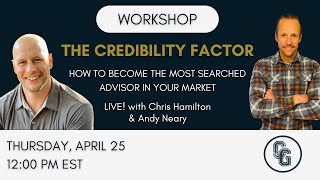
Andy Neary and Chris Hamilton explain why insurance advisors need to act like media companies to dominate search results. Chris shares his shift to consistent video content across LinkedIn, YouTube, and TikTok, posting three times weekly and already seeing inbound leads and closed deals from the strategy.
Chapters
Record. Here we go. All right, guys, I'm excited for this one. I got a chance to spend a day or a morning with this guy a few weeks ago, and after I left, I said, you know, Chris has been through a hell of a journey with his own content strategy and building credibility with his prospects.
I think it would be good for. For others to learn about what he's doing. And one thing I really respect about Chris is he's willing to come on and chat with you guys about this because he is just that kind of person. So he's willing to share what he's doing, which makes him one of my favorites. And so our goal today, guys, in fact, I actually have presented. I have given you guys a little presentation for you. And as I say this, I just realized I didn't pull it up. All right, present. Chris, before I bring you on my man, I am going to go through a couple things for everybody to set them up. So let me share my screen.
Let's go to the presentation. All right, so, guys, let's talk about why you're here today.
First thing I promise you is by being here today, you are going to learn tactical strategies to grow your online presence. That's number one. Online presence is more important today than it's ever been. And my goal today is to convince you, and I know some of you already know that. Two, you will learn how you can get prospects to reach out to you who would not like to have the more inbound leads. Please say I. And number three, the best news is you don't have to hear it from me. You get to hear it from one of the best in the game. You get to hear it from Chris Hamilton. Now let's talk about why you are here. You might be here because you know Chris. You've seen him on LinkedIn. You're a fan of Chris and you wanted to learn from him, I'm sure. Chris, there's a lot of people like that on this call today. They're Chris. They're Chris Hamilton fans, and they want to learn from the man himself. Two, you are sick of coming in second place when you know you have more knowledge and better strategies than the competition. I see this every day, guys, right now. Innovative advisors going in who clearly have a better strategy and the prospect still saying, hey, thank you for your time. It was a tough decision, but we've chosen to go a different direction. And number three, you know, you need to be more active online, but you don't know where to start. And this is where a lot of advisors sit today. So why are we talking about this conversation in the first place? Here's why. Number one, traditional prospecting, guys, is not as effective as it used to be. I often get blamed for telling people they shouldn't be cold calling. I'm not saying don't, don't cold call. What I am saying is cold calling is a lot harder. Can we agree the traditional methods of prospecting are harder than they used to be?
The second challenge right now is you have to figure out where your prospects are hanging out. I know when I got in the industry 23 years ago, I was given two pieces of advice. Dye my hair gray so I look older and go get a membership at a country club I couldn't afford because that's where the CEOs hang out. Guys, if there is one place every one of your prospects has their attention glued to today, it's this thing right here. Smartphone. This is the modern day country club. You have to find a way to get their attention here.
And number three, when somebody googles you, what are they gonna find? I'll give you guys a real quick example. We got a bunch of referrals a couple weeks ago, two agencies and our director of marketing, Chris Floria, just did some research on them, went to Google, looked them up. Guys, we actually couldn't find some of these agencies online. Their website did not show up on page one. That's a problem. If people can't find you, they do not have the confidence to hire you.
So let me share my story real quick before I bring Chris on, just to set the stage for today. Guys, 10 years ago, I decided to make content my thing. In 2014, when you're a health insurance advisor and you decide to lean on in on content, you get a lot of people who make fun of you. I had a lot of friends say, dude, we don't do this in the insurance industry. What are you trying to do? You think you're trying to become famous? Like, what is the point? But in 2017, my hunch of where this was going was solidified when I saw this guy speak at an event. I don't know if anybody has ever seen Gary Vaynerchuk speak. It was 2017. Amy and I were at a Tony Robbins event. He steps on stage and just starts dropping one F bomb after another. I'm like, who is this guy? But what he was saying was hitting home with me because he made a couple comments that really made me realize where the game is heading. He said, number one, today you need to think of Yourself as a media company that happens to sell the product you sell. So for every one of you on this call, you need to think of yourself as a media company that happens to sell health insurance, that happens to sell property and casualty. Wherever you're coming from, life insurance. Di at the core, you need to become a media company. You have to grab attention. Then he said, number two, you have to dominate page one at Google. When people look you up and they type your name in, you have to dominate page one. And then number three, and this was the thing that made me say I am all in on this is he said, if you put out enough value and you do it long enough, you will literally guilt people into doing business.
And I've seen it happen and I've seen it happen with some of our clients who are doing it well as well. Because the point of the game today, folks, if you want to grab the attention of your prospects, you need to start considering some of these things here. Number one, we trust people we see, we trust people we know and we trust people we learn from. Every one of you follows somebody on social media today. You've never met them, but if they endorse a product, you would probably consider buying it because you trust them even though you've never met them. Why? Because you see them all the time. You feel like you know them and you learn from them all the time. This is the name of the game today. Are your prospects seeing you enough? Do they feel like they know you enough and are they learning from you enough on a consistent basis?
2 value times volume equals credibility velocity. This is a philosophy we live by here. The more value you put out, the more often you do it, the faster you will build credibility.
Now the third question I get with this is, Andy, how much should I share before it's sharing too much? Right? Remember this, if you're willing to give away the farm, you will reap the harvest. Folks, the more you share, the more you teach, the better results you are going to get. The man you're going to hear from today does it as well as anybody else, he gives away the farm when he produces his content.
Because this is what you need to create today. You need to build a sphere of influence. When this webinar or workshop is done today, I want you to go look at your website. Is it putting out a consistent message? Look at your LinkedIn presence or your social media presence. Is it putting out a consistent message? Your emails that are going out to prospects, are you delivering value or you just asking for business and what is your YouTube presence like, if you're cutting up videos and producing video content, what does that look like? And is that consistent? This is how you create a sphere of influence. Because before people hire you, they're going to look you up, and if they see consistency, that gives them the confidence to hire you. And it doesn't matter how large or small your agency or consulting firm is. It does not matter. If I use the words homeowners and auto and I ask you who to think about. You're going to think about Allstate, you're going to think about State Farm, and you're going to think about progressive. Why Mayhem. Jake from State Farm and Flow. Are they the best insurance products in the game? Not even close, but they're winning the awareness game, so it doesn't matter. And that's what we're going to talk to you about today. Because if you can build a sphere of influence, here's what happens. When you create searchability, when you create credibility, you lead to profitability. So searchability becomes credibility. Credibility becomes profitability. So with that said, I'm going to stop my share. And Chris, you ready, my man?
Nope. I think you're on mute, Chris.
How about now?
There we go. All right. Well, Chris, before we dive into, we're going to do a fireside chat, guys. I'm going to ask Chris some questions. I'll let him do his thing. But, Chris, before we dive into the questions, why don't you just take a minute? If there's somebody on here who has no clue who you are, take a minute just to introduce yourself.
Yeah. Chris Hamilton. First of all, I just want to say thank you to everybody that came here. Hopefully, I think we're going to open this up for questions. I want to make sure that this is valuable to everybody, but I know everybody's time is super valuable, so I really do appreciate everybody wanting to. To join and participate, but I'm Chris Hamilton. I'm a partner at Hotchkiss Insurance. We're based in Texas, lead our employee benefits consulting practice. Been here a little over six years. Been in the industry 10. Prior to getting into benefits, I spent about 15 years in corporate finance, where one of the big national brokerages was actually a client of mine. I actually helped put together financing for their acquisition strategy. That's how I learned about the brokerage business. So it really.
You know, shaped how I think about the industry and the work that we do.
But, yeah, that's. That's kind of me in a nutshell. Health benefits.
Awesome. Well, let's start here, Chris. So you and I, I can remember it was August of 2022. You came to me and you said, man, I need to go all in on content. And there's a lot of advisors on this call that probably haven't even taken step one with how do I build more awareness, how do I create content? What, you know, all this stuff that goes into building an online presence. What was your view of content at that time?
Actually, I'm going to take it back a step further. So we started, Andy and I started working together in 2019.
And I, I went to Colorado Springs. Is that where it was?
We went to Fort Collins. Yep.
Fort Collins.
Yeah.
And Andy tried to pitch me on this idea of creating content on social media. And I was like, no way. I don't think I can do that. I didn't have social media at the time. I had a LinkedIn page, but I didn't do. I was an anti social media guy. My.
@ for life @ that time was if you googled my name, you would never find an image of me on the Internet. I did not want to be on the Internet at all. And he, this guy tried to convince me that that's actually where I should be. And I just, I don't like being on camera. I don't like having a public image. I just don't want to be out there. And so after working with Andy, I thought to myself, I don't think I can do what he's asking me to do. I'm going to try something different. And it took me a while just to even create a text post. And I just dabbled with it periodically here and there, but really kind of Fast forwarding to 2022, the biggest mistake I realized at that point is I really wish I would have gone all in in 2019. If I would have done that, it would have changed my life. I wasted several years not just not taking the plunge and starting. So I got a little bit later starts like that old adage, the best time to plant a tree was 20 years ago. The next best time is today. And so in 2022, I had this realization. I'm trying to scale my team, I'm growing, I'm training consultants, we're building a service organization, I'm trying to sell and consult for my own clients. I just didn't have time to do the marketing piece of it. And I thought to myself, how many calls can I make in a day.
Versus if I created some piece of content that could sell for me 24 hours a day people could find it today, tomorrow, six months from now, it'll sell for me in perpetuity. That's replicatable, it's scalable. And so I thought, okay, maybe there's something to this. And I knew people that were doing it in other industries and I thought, wow.
I need to do something about this. I actually bought from a guy, I've never met him to this day on social media. And that was the moment I realized, oh my gosh, the matrix just worked on me. Maybe there's a way I could do this. And I thought Andy was on to something. And so I called Andy up. I was like, hey, I think I'm ready to get serious about this. Now.
What do we do? And that's where.
We started. What were some of your early hesitations? So, okay, you bought.
In.
Great. Yeah. But I gotta believe there were still some hesitations you had even, oh, yeah, mindset was, okay, I gotta.
Do this. I, I don't want to look silly.
When you and this happened recently. If you create 60 second sound bites, people will be able to shoot holes in it because you can't really explain something complex in 60 seconds. Well, what about this? What about that? It's like, yeah, so I, it just, I was worried about what other people would think. That was the biggest thing is what are people going to think? I don't want to look stupid. What if I'm wrong? You know, that sort of thing. Those are the big hesitations.
For everybody who's, who's tuning in right now. I, Chris said this was August of 22nd, right? October of 2022. I got a text from this guy. I still know exactly where I was at. I was working at a coffee shop and it just said, dude, the haters are out in full force. And I said, why? Said, mom, my buddies are picking on me. They're trying to say, what are you trying to become famous? And I said, chris, just keep going. And so you're going to have the hesitations, guys. You're going to be afraid that if you put yourself out there, especially on a platform like video, and people are going to cut holes in it. To your point, Chris, why? Let me ask you this, Chris. You know, you said you wish you would have started sooner, but was there like a specific, Was it that purchase of that product online where you didn't know the guy? What made you go, okay, I mean, I got to.
Do this?
I think it was that. I think it was seeing, just seeing what other people were doing with social media in different industries. Led me to believe this was going to be the future. Because anybody that's on this call, if you're making cold calls and you're sending emails.
That'S just getting more and more difficult. In fact, we had I'm part of True Network of Advisors and we brought clients to our conference in Fort Worth this year and we put them up on stage and we let the Advisors, we had 400 advisors from around the country ask our clients questions. And a lot of the people in the audience were asking questions about what kind of calls would you take or an email that would catch your attention. How can, how can we get in front of you? You know, and, and every one of the clients said, we don't take phone calls. We screen them. We, we delete emails from people that we don't know. We're inundated. And so that just kind of validated what I was thinking at the time. In 2022, I've got to come up with a creative way that's non threatening and non pushing to get in front of my prospects. And what better way to do that than just to show up repetitively, repetitively in somebody's feed, potentially. Even if they don't listen to what I have to say, even if they just see my, my picture or they see my name, there's got to be some value in that. So that if I do run into them or I do call them, at least they're like, oh, I have some context of who this person.
Might be. Yeah, yeah, let's go down the path. So what you're talking about is you had an online presence. It's a very, you can almost call it a passive sales approach. Right. It's just, I'm out here, I want to be teaching you, but at the same time, it's not going to be pushy. I just want you to know that I'm out here. So when you go look me up or look for me, you see this content. Now, one thing you've done a masterful job at which a lot of people are hesitant about is video. I mean, you, you basically, you started with video from day one. And there's a lot of people who are very hesitant about that. How did you get started with video? You used an analogy with me offline that I thought was really good. A lot of people don't know. If you don't know, Chris is actually a former drummer. Really? You used a really good analogy on drumming, your experience as a drummer and how it relates to video.
Share that. Yeah, so I grew up Playing the drums. I started playing the drums when I was 8 years old. And it's a. I'm very passionate about it. It's one of my biggest passions in life. I love it. And I. I took. Two things happened. One, I got kicked out of band in high school my freshman year, and we were at a Christmas concert, and we were in the middle of White Christmas, and I don't know what got into me. I was taking lessons from a jazz drummer, and he always talked about improvisation. And so I broke. I broke into, like, a drum solo during the Middle of White Christmas, which is a very boring song. And it threw the entire band off so bad.
That.
Our. The. The director had to cut the band off in the middle of the song because it sounded literally like a train wreck. And at the end of the concert, he came up to me and he said, you're out of here. You. Tomorrow morning you're going to the principal's office. You're not being banned anymore.
And one of the things that happened is I never played live again. I still continue to take drum lessons. And my drum teacher told me my senior year of high school, he said goodbye to me at the end of one of my lessons. And I thought, well, that's kind of weird. Like, what, are we good? What's going on? And he said, you've pretty much gone as far as you can with me until you go play live somewhere. So go play live and then you can come back. And he passed away about. About six months later from an aortic aneurysm. And I never played live until Monday night this year. Like, this week, I played live for the first time with a band Monday night. And what it taught me was, man, I look back and I've wasted, like, 30 years, 25 years I could have been playing live. I just. I wish I would have done it. And that's kind of the same thing with the video. As I had that realization in 2019 and then again in 2022, it's like, I don't want to just let that slip. I need to do something about it. And the reason I thought about video, I would love to tell you that I thought AI. I knew AI was coming. I didn't know. None of US did in 2022. But I think because of the emergence of AI, videos become even more important. Because what came out on stage between with those clients asking about emails and what they look at on social media, they say they skip over a lot of the text posting because they know most of it's AI generated. Now people are using AI to generate that. And when I was in the sales breakouts, a lot of the producers talked about using Chat GPT to create LinkedIn, text messaging, text posts. And so I think there's going to be this dilution. People want reality, they don't want artificial. And there's, there's going to be more emphasis on being personal with people. And I think it's just luck that the video is there. I like the video medium. That's typically what I look at because I'm a big, I like using TikTok, I like learning from people. And so that was the thing that really springboarded me thinking I want to create video content because it's authentic. People can hear my voice. I feel like they have more of a connection with somebody when they see the video. The voice, the inflection, the passion, the whatever it is versus this static text with an image. And so I just decided that that was the format that I was going to use.
Was video.
What was it like to create your first.
Video, Chris? Oh man, it was like nerve wracking. It was nerve wracking. I was like, do I have the right equipment? Do I have the right lighting? If you go, my first video is still on my LinkedIn page and if you scroll all the way back through, you'll see it. And it's, I mean it was, it's not very good.
But you gotta start somewhere. And that would be the advice I'd give to anybody is like just starting, like what I do today is very different than what I did when I started.
Real Time. As I'm telling you this, my content is changing. And I guarantee you this, two years from now, what I'm doing today is they're going to be different. It's a constant evolution of what you do. And I'll give you a couple of examples. If you want me to, if you want me to go into.
That and we're going to get into the tactics guys on how does Chris think about content? What does he decide to post and how does he post? Post it. But yeah, if you want to share, go.
Ahead Chris. Yeah, so I thought, initially I thought, okay, like I need a, what kind of equipment do I need? I need a microphone, I need lights, I need a high performance camera. You know, I use the high definition GoPro to start and then I tried to use a camera that I had. I worried a lot about that sort of stuff. And what I've realized now, I'm on a computer camera today.
But most of Everything I shoot now, like, if you see it on YouTube or LinkedIn, it's just shot with this. It's just a camera. It's my iPhone.
And so if I'm indoors, I'm usually not even using a microphone. I'm just using the camera. Now I have lights. I have box lights. I use because I sit behind this glass. If I don't, it's. It'll look like I'm in witness protection because the backlighting is really bad in this office. And so I. If I'm talking anytime before, you know, noon central, I have to use these lights or you won't see me.
But for the most part, it's like a 50 investment, and then, boom, you're in business. Use your iPhone and a.
Box light. I think the key point you're making is it's. It's still more about the message than the equipment. Yeah, I've had Chris. It's funny, I've had people who look at your videos and go, like, he's just sitting at his desk. I'm like, exactly. But it's what's coming out of his mouth that matters. It's not about where you are and what's in the background. It's about, what are.
You saying? Yeah, I think so. I mean it. And the other thing that's important to think about, guys, because I had. This may resonate with you. I worried about what other people in the industry would think. So anybody on this call, I mean, everybody here is probably really competent. They know what you know, what you're doing, and you're good with your clients. You're probably going to be able to shoot a hole in something that I say. And I worried about that. But at the end of the day, the content that I create is only intended for one audience. It's intended. My audience is. I'm trying to get a hold of business owners first. Some of the stuff I'll say is going to be geared towards a cfo, and then very little of it's going to be geared towards HR people. I try to create something that will at least talk to those three people, though that something there will resonate. The majority of people that view my stuff aren't my prospects.
That. I think that's. That's what I found most interesting in this whole exercise, is the majority of the people that view my stuff are not my prospects. But if I have a video that gets 10,000 views and on average when I go through LinkedIn, because I have a premium, I can see roughly the breakdown of industries and geographies and all sorts of stuff. It's about 10% would be my prospect target audience, which is going to be owner, CFOs, HR. 10%, which is a low percentage. But then you do the math. You're like, well, 10 of 10,000 is a thousand. Well, how could I ever get in some. How could I get a hold of a thousand people with what might have only taken me if 20 minutes to create? And so that's when I started realizing the power. I was like, okay, well, not only that, I can put this on multiple different platforms. Somebody will be able to go back and look at it at some point. I could use this in three years. And so to me, I felt like.
It just even resonated more that this is probably the right thing to be doing with.
My time. Well, and I think your point there is the people who will ultimately reach out to you and say, hey, been watching your content. Really like it. Can we connect? Those are the people who often never comment or like, but they're.
Watching 100%. So I've actually written inbound business cold leads. I never knew who they were from LinkedIn.
And what I realized about all of those people, I've never had a prospect or even somebody I would consider a prospective client or prospect like, or comment ever on anything I've ever posted anywhere on YouTube, LinkedIn or TikTok. Nobody. They're.
Silent lurkers. Walk us through that moment, because there was that moment you had your doubts at the beginning. I got the text messages, but you had that first wait, it's kind of working. Walk us through that story when you got, I think it was a message from a prospect about 90, 120 days after you started doing this. Walk us through that experience because again, you had your doubts at the beginning. You've now gone on to produce several inbound leads from LinkedIn. But walk us through that first one when you're like, now I see what's going.
On here. Yeah, there were two that really stand out to me. So the very first deal I wrote for from LinkedIn, well, and, and I, I took this one as just a coincidence. Somebody reached out to me and said, hey, I see what you're talking about. I'm interested in this. Can we meet? But it was somebody I was already first person connected with, but I hadn't talked to them in like 15 years. It was a CFO of one of my clients when I was in finance, and I had, like, didn't even know the person existed. But we were A first part, first party connection. And she was a CFO of another company. And she's like, hey, I'm interested in this. We're having issues. Come talk to me. And I was like, yeah, we're already connected, so whatever, that's just a coincidence. I already knew her, she knew me, my, my track record in finance. So that was easy. But the one that really solidified in my mind that this might actually work was shortly after that, I got another DM from somebody that was like, hey, this guy didn't even have a picture on his LinkedIn. His profile doesn't even have a picture. He was a cfo and he said, hey, I'm interested in what you're talking about in this video. Can we schedule some time? And so I tried to. I was like, hey, yeah, you want to do zoom or meet in person? His business is six hours from my office and he's like, I'm constantly on the road. Just call me. And I had a 24 minute phone conversation with this guy and he signed a BOR for me. After a 24 minute phone conversation, I'd never. And I was like, how did you get connected with me? He's like, I. I don't know. But your stuff just started showing up. I started following.
And periodically when I'd open my LinkedIn page, your face would be there and I would hear, period. I don't watch all your videos, but I watched some and it kind of made sense.
To me. Isn't.
That interesting? And then he's like, I just got a bad renewal. Yeah, I got a bad renewal. And I'm just. You're talking about how you manage that. So I'm, what do you do? And I just, you know, he's not a client of mine, but I just told him, hey, here's 20. At that point, it was like, here's the 10 minute version of what I do. And he's like, I, I want, I want to try that. All right, here's how we do it. Now, I would love to tell you that happens, like, repetitively. It doesn't. That's like the seeing the weight loss ad. And then at the bottom of it, it says, results. Not typical. Like, that's, that's not happened since. But content has really helped me in more ways than just generating inbound leads. I don't even create content for that. I mean, I would love to say, like, man, I'm just like 25 accounts a year out of this. I don't. But if you're watching this, you know, you get two or three, five. I mean, last year I wrote five accounts out of it.
This year, I haven't written any from LinkedIn. I haven't gotten any. Well, I take that back. I had one opportunity that didn't close.
But it's really helped me with people that I'm meeting.
Before I meet with them. I send them my YouTube page and say, hey, if you're interested in learning about what we do, here's some stuff. And I'll let them go through it and they'll click through, and here's my TikTok, here's my. Whatever platform you're on, go check it out. And so it gives them more of a flavor of who.
We.
Are. Yeah. Because the people I typically compete against don't do that. I'm usually competing against somebody at a big national firm that's him. And hawed by compliance departments that aren't allowed to post anything but the shiny, plain vanilla stuff that the corporate team puts together. And I. It's kind of like SUNU in the Art of War. He says, never attack your enemy's strength with your weakness because we're not big and bad. Like, insert the big national firm. That's not what we are. But I can do things that they can't.
And I want to.
Leverage that. I think the main point you said there, Chris, is you don't go on with the intention to generate inbound leads. It happens. I've known, you know, last year you won an rfp, and I believe, if the story is correct, your content helped create the consistency of the message, which helped build the credibility to give you the.
Ultimate win. Yeah, 100%. So you one, I typically, I don't respond to RFPs. They were referred to me. And then I didn't want to respond to the rfp. And then the guy that referred it to me was like, dude, what are you doing? You got to respond to this. I'm going to look bad if you don't. And so there's a blackout period where you can't speak with you can't call or email. They're like, we're going to let you know in 90 days. Well, I was like, okay, I got 90 days. I'm blacked out here. What am I going to do? And if you go back and look at my feed from November, December and January, I went on a tirade on one subject, and it was to drip my prospect. That one prospect is a really big case. And so I talked about everything I knew that I was pitching to them in My response. And they even confirmed after they hired us, I said, hey, did you guys ever see any of the stuff I created on LinkedIn? Like, yeah, we saw a lot of it. And I was like, that was for you. I even told him, I was like, I created that.
For you. Think about that, guys. Think about what he just said. He literally spent 90 days creating content for one prospect.
And it led to that victory, which, Chris, I won't even ask you to tell what it was. A.
Massive victory. Yeah, it was a, it.
Was the size of a book, the size of most people's book, and it probably built a hell of a lot of credibility for everybody else. Oh, by the way, it probably attracted the attention of other people just like this because of what.
You said.
Yeah, perhaps.
That's beautiful. You know, Chris, I want to get into some of the tactics now, guys, if you got questions, by the way, you can either throw them in the chat box right now and we'll get to them at the end, or write it down. We're going to leave some time at the end for Q and A so you can ask Chris questions. Let's get into some of the tactics. Chris, you are one of the most consistent content creators I've ever seen in our industry. You know, that's one thing we preach is consistency. And you have definitely lived up to that. How do you decide what you're going to talk about? So when you decide to create a bit, most of your content's video based, if not all of it today. How do you decide what you're going to talk about in.
The videos?
Well, there's a few different ways. I think that's the most common question I get because a lot of people reach out to me, like, hey, how do you, how do you, how are you creating the content? This is a really common question. The very first thing I would tell you is you need to document it somewhere. A notepad, a note on your, you know, use the notes app on your phone, something. Because content stuff like literally, like I might wake up in the middle of the night to go to the bathroom and there'll be an idea that pops in my head, like, I gotta capture that. I gotta put that down somewhere because I'll forget by 5am so you gotta have a way to capture it in the moment. That's a big thing. And the most common things I capture are questions I get from clients, prospects. When I go meet with somebody, you'll find that there's typically gonna be 10 to 15 questions that just everybody's going to ask when you're talking to them.
And so my thought is, if these people are asking the same questions, that means my prospects are probably. The people I want to get in front of are probably asking that same question. And I think the way I answer some of those questions is probably a little different than their broker. And that differentiation, the different answer that they're getting or the different viewpoint is probably what's going to make them want to engage, I think.
And so that questions is one. The second thing is it's just things I'm passionate about, so it's things I see that I think people should know. So I talk a lot about healthcare, healthcare costs, how the system's designed, what works and what doesn't. Because clients and prospects, they don't even know to ask those questions. They're not even thinking about it because they got no idea. Literally, right before I got on this call, I was meeting with a prospect at the coffee shop downstairs. And I'm walking him through, and he's like, I've been buying health insurance for 20 years. I had no idea this is how this works. It's like he. I wouldn't have even known to ask somebody this. And so that I get really passionate about that. And I think that's a real differentiator that anybody that has the ability to do some of the really unique things that are available to us in our industry, it's not proprietary to me. Any of us can do them. Figuring that out and then talking about it with people.
And I. Yeah, so that's. Those are the real.
Big things. We got a great question here, and we'll get to it about Cadence. Chris, talk. Talk to us a little bit. Because one thing, if people look at your content today, you're doing a lot of interviews right now, whether it be with a client, a prospect, or even just other industry subject matter experts. Is there. Is there a strategy.
Behind that?
Yeah, I. I don't know what works and what doesn't. I know. I. It goes back to the passion thing. When I get on TikTok, one of the things I love is watching these short interviews. So, like, there's guys out there that'll interview like, hey, how did you make your first million? Hey, there's another guy that's out there asking people.
He likes to ask more senior people, you know, what's. What's a mistake that you've made in your life that you wish you could change? What advice would you give to somebody who's in their 20s? What advice would you give to Somebody. And so I, I'm like, I find myself consuming interviews from other people. And I'm like, wow, that's. I love that format. Nobody's really doing that in insurance. And then I started thinking about it, like, what if you could create content that was not just clients and prospects, like CEO, cfo, HR people, Which I have a. I've interviewed a bunch of my clients. But what if I interviewed people in the industry? What if I interviewed people that run PBMs or people that run insurance companies? And then furthermore, what if I interviewed the employees? I just catch them at a coffee shop. And then you create this 360 degree perspective. That's what I call the project perspective. I don't know what else to call it. But it's like. And it's been so mind blowing to me to hear from an insurance carrier executive on what they think is happening. And then you hear the person on the street what their perspective is, and you got the employer in the middle. And I don't know how to make it work. But if somebody. I'm gonna, I think I'm gonna host all those in like one section. And you can just scroll through and hear from a PBM CEO and then a company CEO and then Average Joe, and you can just get that on repeat. And it's like what you realize is the whole thing. Nobody knows what in the heck's going on. We all think we know what everybody else is thinking and feeling and experiences, but nobody got any idea. It's.
Messed up. Well, I think your point made that the content you're creating, it's getting prospects. You made a point that said the prospects don't even know what questions.
Ask.
Right? Yeah. And if you continue to put out the stuff you're passionate about and you're willing to, as I talk, give away the farm, which is what you did such a good job of. You're getting these people to think differently often before they ever meet you. And by the time they meet you and they sit down with you, they're already bought in. And I think huge piece.
To this. Yeah. And you know the thing I would say too, the interview thing, I'm just really passionate about that. Like, that's for fun. But it's helped me like this. This is what I would encourage everybody. If you're trying to create content, your mindset will shift on. Like you're trying to come up with ideas. The more you start doing it, the more ideas you come up with. But I now get my clients involved in my content. And so when they when, when you've some of the things that I do for my clients now I'm like, hey, don't you think other CEOs need to know what you've done? Think about the how big this problem is in our society and our economy. Wouldn't it be helpful if I sell insurance for a living? Andy John John, CEO, people aren't going to listen to me as much as they are going to listen to you. You need to tell this story because you kind of have obligation to society to help people fix the problem. You're part of the revolution is what I tell my clients. And so I get them. Now, what do you think I should be talking about, CEO, like, what should I be talking about? How can you help me do this? And they get pumped up. They're like, yeah, let me help you. And so you can find inspiration and ideas from more than just right here. Other people will give it to you if you ask. You can just ask clients, like, hey, I'm going to help educate other people like you. What should I.
Talk about?
Simple question. Ask what your audience wants. Right. And I love that strategy because it actually kills two birds with one stone. Your client can drive what they want to talk about, which is what their peers want to hear anyways. And number two, it allows you to create a client testimonial at the same time. And it's a beautiful way to use content. You talked about the interviews, your perspectives. That's one of the buckets you use with content. But you talked about two other buckets that I'd love for you to talk about if you're willing. Number one, you put a lot of shorts out there, right? And you had said offline that your goal with the shorts is to drive people back to your.
YouTube.
Channel. Yeah. What's the.
Strategy there? Well, when I first started creating content videos, it was hard because I would try to create a video, one video on one topic that's 90 seconds long. And there's a question that says, define a short. A short is a clip that's 60 seconds or less. But it's not designed to give you. You can't really explain a lot, but you can give somebody a teaser of what the longer content is. Because most of us, when we see a LinkedIn video, we're not gonna watch a five minute video. I don't. And I got this idea and inspiration from other content creators. I saw on TikTok, some of the podcasts that I follow now. People were dripping these 60 second clips and I would see it And I would skip over it and then I would see the same guy being interviewed again. I was like, I'd skip it. But then it would come through again and, and I would watch it and it was a 60 second clip. And I was like, oh, wow, that was kind of interesting. I want to hear the rest of that story. I'd go find the whole podcast and I would listen to it and I'm like, oh, this guy's got some good stuff. Let me flip through what else he's got. And then I start following him. And so I thought, well, nobody's going to listen to me talk for five minutes. Like that isn't going to work. Is there a way I could just take a 60 second clip of something and then I can just take. Maybe I've created a 15 or 20 minute video that I really want somebody to watch, but they're not going to watch it. If I can get 10 sound bites out of that, I got 10 opportunities to try to drive somebody to go watch the full episode. The first one I drop, they may not be interested in.
But maybe the third one.
They will.
Yeah, that's. Well. And you've created enough content on YouTube now that for those who might be sitting there going, why the heck would you have a YouTube channel? It's the second largest search engine in the world. And so when people look you up, one of the first things that's going to pop up is your video content, if you have video content. So if you go search Chris Hamilton, Hotchkiss Insurance today, guess what you're going to see A lot of videos, probably a lot of YouTube pop up. And that creates that online presence which builds that credibility. Chris, we got some good questions that are coming through that we.
Can get. I don't know if I answered that one fully, but yeah, I.
Had a couple more for you here before we go into the Q A. This is one that's always comes up. How do you handle the negative feedback? So you put out a video, you said people love to shoot holes in it. This is what keeps people from posting. They could get a thousand likes, but that one comment just kills them. How do you handle.
Negative feedback?
Well, I guess in my mind I realize.
Not everybody's going to agree with me. Look, there are people that think we should have single payer healthcare and they've got an argument for that. And there's people that think we should have an open, free market. We don't have free market economics working in health insurance today. But there are things you can incorporate to make it more.
Free.
Market. Right? There's two opposite ends of the spectrum. People can make really valid arguments for both of them. And so I tell myself this is probably something that's a difference of opinion of mine. The ones that hurt the most were my partners. Like, people within my own firm were like, hey, dude, what are you doing? Like, you trying to be famous? Like, oh, here comes the. Here comes the insurance influencer. Here he is. Guys, you know, they would do that stuff when I'd walk into the room, and it's like that they shut up pretty quick when I started writing business from it. And.
And when they would go to meetings, like, literally, my partners have told me this. I will walk into a meeting and they'll say, hey, do you know Chris Hamilton? And they're. Now that's the joke. It's like, hey, how many of your prospects have asked you about me? And they. It comes up and so they don't laugh anymore. And I haven't got. I don't have this figured out. I mean, dude, I'd be lying to you if I tried to pretend that I had this all figured out, because I don't. There are going to be people on this call that they're going to, like, figure something out way better than what I figured out. I'm just tinkering and I'm not really worried about writing business from it today. I look at this from the standpoint of, like, I'm really interested in what is it going to be in five years? Because I don't know what that's going to be. I may not write a single account from it this year, but I think whatever I'm doing today is going to help me. It's going to help me be able to hone my message so when I meet somebody in person, I'll be better at that, at delivering that message.
Every time you get in front of a camera, it makes you less nervous the next time you get in front of a camera. So I just. I think nothing really bad comes from it. There was a question that just popped in here that I thought was a really interesting one, but, Andy, I'll let.
You drive. Yeah, we're going to go into the Q A here, but what you just said is really important, guys. I showed you that wheel of searchability leads to credibility, leads to profitability. I could have added a fourth one there, which leads to sustainability. And Chris, I was going to ask. You're going to probably say this at the end. I'm going to ask you a question at the end. One of your biggest lessons, I loved when you said this offline, guys, a content strategy, you got to be thinking in years, not days. This isn't a, I'm going to try this for two weeks and I hope it writes a piece of business. This is a long term strategy that you've got to commit to. But Chris is proof that it works when you put in the work. So with that being said, Chris, one of the great questions is what does your weekly cadence look like today.
For content?
I typically try to post three videos a week.
I'm typically trying to, I'd love to be able to get it up to every day. I, I can create it. I have enough content to post every day, but I don't, I have a, I have a library. So if I don't create anything else, I probably at the cadence I'm going now, I probably have another 90 to 120 days worth of content already shot just sitting in a folder ready to go. I think that's a big trick is figure out how to batch content, create a big library.
So that it look, I may not feel like shooting another video for another two weeks. If I don't feel like it, I'm good. And then when I get the inspiration, I'm like, oh my gosh, I want to, I want to shoot on this content, this idea. I'm ready to rock and roll. I'll create it and then I'm good. So it frees you up to be able to create content when you want to create it versus I have to create it. But when I started, it was, I have had to be very discipline to say I'm going to create it.
At these times. But then I figured out how to.
Batch it. Let's go to the question from Jonathan Anders. I think it's a great question because one thing you do as well is you don't just sit down and create a bunch of shorts. You're actually using.
Longer.
Videos. Yep. And then turning them in, cutting them in, up.
Into.
Shorts. Yeah. How many people comprise your team? So talk like, have you hired somebody to edit your videos? What does that look like? And just quickly walk through like how you're using longer form content to create the.
Short content. Yeah. So creating individual videos is very time consuming. I used to edit all of my stuff and I did for a very long time. It took a lot of hours, it was nights, weekends to edit my videos and it's hard to edit. I figured out how to.
Batch it. Let's go to the question from Jonathan Anders, I think it's a great.
Question because. Bunch of three minute videos, down to 90 seconds, et cetera, et cetera. Once I started writing business, once I had written my four or five accounts from LinkedIn and I realized, hey, this actually pays for itself. I'm just gonna hire somebody and buy my time back. So I pay somebody to edit my videos, but then furthermore, to create a bunch of content.
I will. One thing you do as well is you don't just sit down and create a bunch of shorts. You're actually using.
Longer videos. Shoot a podcast. It's not even a podcast, guys. It's a solo cast. It's just me in this office or in my conference room down the hall talking to myself on a topic. And I'll shoot a video for 15, 20 minutes.
And then with that video, we'll get seven to 1260 second sound bites and boom, there you.
Go. Yep. And then turning them in, cutting them in up.
Into shorts. Yeah. And you'll see a random assortment of these videos that just pop up in LinkedIn. So that's, that's my main content strategy is creating a podcast, which is just me talking.
To myself. How many people comprise your team? So talk like, have you hired somebody to.
Edit your. The second thing is I'll do hot take. So if there's a topic that comes up and I'm interested in that, I say, hey, I really want to create a 60 second video on that. I can talk about that. And then the interviews, the interviews in the podcast have been my biggest content forms right now. And so what I'll do is I'll batch. Like, I literally will go sit down at the coffee shop. And as people walk by, I'll say something like, hey, I'm doing a series on tick tock, asking people's thoughts on health insurance. You mind if I get your opinion? And some people are like, get the heck out of here, dude. Creeper. And then some people are like, yeah, sure, whatever. Right. It's kind of that those are the most nervous ones for me. I, I don't like doing it because it's weird. You get rejected publicly in front of a bunch of people. But whatever. Some of the interviews have been really interesting. Um, and then I interview my clients. I interview people that I know in the industry, other advisors, vendor partners, that sort of thing. Just really short clips. That's my main content strategy right now. But, and then, so my, my, my, my, my editing now the way my process works is I'll batch a lot of content. I drop it into an online folder. And then the video editor will go in and do his thing. And then I, I pay him. They manage my social channels. I don't post anything anywhere, so I don't know what stuff gets posted. And I get a notification like, hey, you just loaded a video to LinkedIn. Like, oh, cool, I did, but I didn't.
Post that. But to your point though, Chris, because a lot of people might get caught up. Oh, so I gotta hire somebody to do this. You started by doing this on.
Your own. Yeah, it wasn't until just very recently I hired somebody to do this, but I could justify it because I was spending 10 hours a week. You don't have to spend 10 hours a week. If I knew, knowing that, what I know now, I would do the.
Big videos. What does that look like? And just quickly walk through, like how you're using longer form content.
To create long form content and then create the shorts. I could do that. Super efficient. But I know what goes into it now because I edited my videos. One, you have one topic you're talking on. You create long form content that you can put on YouTube. You just cut shorts out of it. That wouldn't take me 10 hours to do. That wouldn't hit me. Hardly.
Any time. We're going to try to get to all the questions here. We've got a lot of.
Them here. Content. Yeah. So creating individual videos is very time consuming. I used.
To edit.
How do you come up with your content? We kind of touched on this earlier and I think I know the answer. You know, my thought is you're probably documenting the conversations you're already having with prospects and clients. But when you think about how you're sitting down, you're going to batch content. Are these, Is it because you're creating that list of ideas as you go along when things pop in.
Your head? I have, I use an Evernote and I have a list that's like a mile long of all of my stuff. And I did for a very long time. It took a lot of hours. It was not topics. And when I'm thinking like, man, I've got a. Usually like, I've already got my topic on nights, weekends to edit my videos and it's hard to edit. I'm gonna record tomorrow. I already know what I'm gonna record tomorrow. And it's an idea that I had yesterday. But I have a list in Evernote. If I'm thinking like, man, I really need to create some content, I don't know what it is. I open up my Evernote and just kind of roll through which of these sound like fun. And if it's got a hundred ideas in there.
I'm going to find something that I will, I'll want to talk about. And what I find sometimes, like tomorrow, what might end up happening is I might shoot two or three long episodes. I might spend an hour recording video content. And that's going to get me, you know, a month's worth of stuff. Yeah. Shot in.
An.
Hour. Yep. Sometimes you get on a roll, you're just like, oh, I'm on fire today. Like, there's some of my episodes that you'll see on my YouTube. I literally just change clothes. I just changed my shirt and kept going like, all right, turn that one off, change my shirt, sit back in front of the camera. Here we go. I'm gonna shoot.
Another episode. But I think you can do that. The main point, Chris, is you're putting in the work. You, you've committed that this has to be part of your prospecting process. And you've put the work now in now for over a year and a half reaping the benefits. And now it's such a commitment for you. You decided that I needed to get some time back. Therefore I'm going to hire somebody to edit this for me so I don't have to do that. But yeah, it started with the fact you were willing to commit to the work. And that's where I see a lot of people fall short. They want the result, they don't want the work that goes into.
The result. Well.
Yeah, perhaps. But I think knowing what I know now, there was a probably easier way for me to do it. So if you're just starting out and you just have an iPhone and you want to create content, you could do it pretty easily because you don't have to have fancy editing. It just needs to be video. You need to be able to put captions on it and you need to be able to chop out just this sound bite, that sound bite, bunch of 3 minute videos, down to 90 seconds, etc. Etc. Once I start a handful of them, post the long form content somewhere. It doesn't have to be YouTube, it could be YouTube. I never wanted to be on YouTube, but I figured I got to host it somewhere so that people.
Can go look at it when I ask this final question. And then I'm going to share something of my own personal experience with everybody before we wrap. Chris has been.
Awesome, guys. If you can give a writing business. Once I had written my four or five accounts from LinkedIn and.
I realized, hey, thumbs up in your screens. This has been pretty. I hope you guys have taken a lot away from this. Chris, looking back, you know, Bob McCollins asked a really good question which really has nothing to do with content. But what has made you okay with coming on a platform like this and going on LinkedIn and sharing as much as you have when the competition could just steal what.
You'Re doing? Hey, this actually pays for itself. I'm just going to hire somebody and buy my time back. So I pay somebody to edit my videos, but then furthermore, to create a bunch of content.
I will. Why do that? Why are you giving away.
The farm?
Well, I had a mentor that told me one time that, you know, there I, and I hear this from prospects a lot.
My target market is typically going to be with a big national firm. And the big national firms they've told me won't give us advice until they've signed the broker record letter. And it really resonated with me because my mentor many years ago told me, when you show up at a prospective client, just start helping them, be the guy that helps out immediately and you build goodwill. And even if you give away the information.
The client is still going to need somebody to help them do it. And so that's, that's kind of always been my philosophy is I'm just gonna start helping you and I'll give you advice and, you know, you'll probably need somebody to do it for you. And what I found in the past is there have been people that have tried to take my idea back to their broker and their broker sells against it. Like, oh, you, you shouldn't be partially self funded. You have large claims. Well, Andy, pretending Andy's my prospect. Well, does that make sense based on what I told you about how to get lower health insurance costs? You got to manage the cost of the claims. Like, which one of these makes more sense to you? Which is common sense. And they're like, yeah, here, here you go, manage it for us. And so.
Again, what I do is not proprietary. Everybody's probably already doing what.
I'm.
Doing. Yes. It's just, you know, how do you position it? The story that you tell, the stories that we tell to our prospects are the. I think is the most.
Powerful thing. I agree, you know, narrative. That, that's the mic drop moment there, Chris, is. Guys, nobody here is talking about something nobody else has ever talked about before. There's nothing proprietary anymore. I hate to tell you, but if you win the attention game, if I hear it from you the most you're going to win. And one thing, I shoot.
A podcast. It's not even a podcast, guys. It's a solo cast. It's just me in this.
Office or I don't share in my story. Guys, I almost quit this industry in 2011 because all I was doing was the old school tactics. I was working for a small PNC agency. I was a one man show. And then this thing called ACA came around and I'm like, I'm done. This sucks. Fortunately, an age, another consulting firm saved my career because they made.
Me take my conference room down the hall talking to myself on.
A topic. And I'll shoot a step back. I actually removed myself from sales and I went to an account exec role for three years. Then Amy and I decided to move to Colorado and I found myself back in a sales role. And here's what happened. When I got my chance to sell again, I made a decision that I can't do this the old fashioned way. There's no way I'm going to enjoy this job if I have to do it the old fashioned video.
For 15, 20 minutes.
And then with that video we'll get 7 to 1260 second sound bites and boom, there.
You go. Wait. I'm going to try this thing called content. And I'm here to tell you guys, complete game consulting would not exist.
If I hadn't made that decision. When I realized this concept of you've got to become a media company today, that happens to sell what you sell, that's when everything shifted for me. That's why we literally built this company to help you guys do the same. Because we saw where this was going. When I heard Gary Vee talk about that in 2017, I'm like, this is where it's going. And so when guys like Chris take this, they run with it. You guys all see what he's doing on LinkedIn. This is an opportunity for you to model what Chris is doing. And he's been kind enough to come on and literally share his tactics with you. Now, guys, I'm going to share one more thing and I want you to see this if here's what I want you to do. Our social media sales academy starts next Wednesday. Our next session. And I'm sharing this because if you were to join this, you're going to learn exactly what Chris and I worked on in August of 2022. I am teaching you the strategy we use. I'm teaching you the strategy Chris uses. This is how you build awareness. Chris has Said it, he didn't win. He hasn't won an account yet this year because of it. But he's continuing to build credibility and an online presence every single day. And it's going to continue to help him win those businesses. When people look him up and they get all the warm and fuzzies, they need to say, this is our guy. This is why his teammates are walking in the room and they're going, hey, do you know Chris? Chris is building credibility everywhere. This is what you have to do these days to win business. So if you want to know more, there's a QR code. Just take the picture, get on my calendar, I'll be happy to talk about it. But it does start next Wednesday. But guys, please, please take what Chris is talking about. This is a man who has probably taken the strategy and run it better than anybody I've ever seen. He's had his ups and downs, but he has taken it and he is.
Building tremendous. And you'll see a random assortment of these videos that just pop up in LinkedIn. So that's, that's my main content strategy is creating a podcast, which is just me talking.
To myself. Credibility. Chris, before we go.
Any final words of wisdom you want to leave everybody with? This has.
Been awesome.
I think the biggest things I would say just on my experience, I don't know that it's wisdom. So I'm going to say just my experience is knowing what I know now versus when I first started. It doesn't have to be as complicated as I initially made.
Could be just as simple as turning a phone on and talking into it. And LinkedIn will make the captions for you. So even if you're just doing that.
Even if nobody views it, having a library of it when you go meet, the second thing is I'll do hot take. So if there's a topic that comes up and I'm interested in that, I say, hey, I really want to create a 60 second video on that. I can talk about that. Meet with the prospect, sending them your LinkedIn profile. It'll make a difference because I've had people say to me when I show up, I've, they didn't Find me on LinkedIn. I was referred to them by somebody. But hey, here's my LinkedIn page. Let's connect ahead of time. That's part of my process.
They'll at least see it. And then when I leave the meeting, those videos will continue to pop up as they leave, as they pull up their LinkedIn. So I, it doesn't have to be complicated. Um, and I would just encourage everybody. I was super. I mean, I was the last person in the world that ever thought I would ever create content. And now, I mean, it's kind of how I make my living. I. I prioritize it and.
And I hate to use the phrase change your life, but the impact it has had on your business has been.
Pretty profound. Yeah. I mean, without it, I, I think it's. It's changed my. It's definitely changed my business life. It's that. I think it's that important and I think it's going to become even more important with AI. Yes. Because people are going to look for. And I'm sure there will be eventually, guys, there's going to be AI bots that will deep fake us and we can just create whatever we want with video without even having to do it. So that's probably to come, but for the time.
Being.
Yeah. Well, everybody, I hope you got a ton out of this. This has been fantastic. Chris, again, you're the kind of guy that's willing to open up the kimono and share it all. So everybody here should be grateful for what you just did for the last 50 minutes. It's been pretty, pretty profound. Thank you for your consistency. Thank you for being a model of what we could be doing to grow our business online. Guys, if you want to know more about the social media sales academy, again, it starts a week from yester. So next Wednesday, you had the QR code shoot me a message and then.
The interviews. The interviews in the podcast have been my biggest content forums.
Right now. And so what I'll do is John, LinkedIn and email. You all have my contact info, but let's. Guys, stop sitting on the sidelines. This is your opportunity to build an online presence. It has to be part of your strategy today. This is how you're going to give prospects the confidence to hire you. So have an amazing Thursday, guys. You know where to find us. Chris, you are awesome. All right, guys, go make.
It happen. A batch. Like, I literally would go sit down at the coffee shop and as people walk by, last thing real quick, there's a bunch of questions I didn't get to here.
If anybody has questions, I mean, hit me up on LinkedIn. I'm happy to help anybody any way I can. So I just, I love helping people. I don't view everybody as my competition. If there's anything I do to help you, let me know. I'll answer any questions you want. I'll say something like, hey, I'm doing a series on Tick tock, asking people's thoughts on health insurance. You mind if I get your opinion? And some people are like, get the heck out of here, dude. Creeper. Thank you, Andy. Thank you all, everybody.
Appreciate it.
Beautiful afternoon.
And then some people are like, yeah, sure, whatever, right? It's kind of that those are the most nervous ones for me. I, I don't like doing it because it's weird. You get rejected publicly in front of a bunch of people. But whatever. Some of the interviews have been really interesting. And then I interview my clients. I interview people that I know in the industry, other advisors, vendor partners, that sort of thing. Just really short clips. That's my main content strategy right now. And then so my, my, my editing now, the way my process works is I'll batch a lot of content, I drop it into an online folder, and then the video editor will go in and do his thing. And then I, I pay them, they manage my social channels. I don't post anything anywhere, so I don't know what stuff gets posted. And I get a notification like, hey, you just loaded a video to LinkedIn. Like, oh, cool, I did, but I didn't.
Post that. But to your point though, Chris, because a lot of people might get caught up, oh, so I got to hire somebody to do this. You started by doing this on.
Your own? Yeah, it wasn't until just very recently I hired somebody to do this, but I could justify it because I was spending 10 hours a week. You don't have to spend 10 hours a week. If I knew, knowing now what I know now, I would do the big long form content and then create the shorts. I could do that. Super efficient. But I know what goes into it now because I edited my videos. One, you have one topic you're talking on. You create long form content.
More from Andy

Stop living in the gray of maybe! Your job in sales is to get a clear yes or no


How elite producers use “validation” to give prospects the confidence to hire them.

The Transition, every great sales leader goes through: Stop being the hero and develop heroes.




