This MINDSET Shift Will Change Everything! [MAJOR LEAGUE MINDSET EPISODE 7]
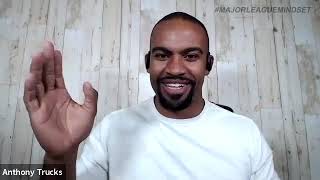
Anthony Trucks, a former NFL linebacker, discusses how identity shapes behavior. He argues that creating an ideal identity drives consistent habits better than willpower alone, and that aligning beliefs with actions builds a stronger mindset across sports, sales, and parenting.
Chapters
Welcome back to major league mindset. I cannot tell you guys how excited I am for this interview. I was connected to this gentleman through a colleague of both Anthony and I, and Michael Dash. If you're out there, man, thank you. This interview is going to be off the hook, guys. If you are out there, you're a sales professional right now, especially if you're struggling with sales or you're not where you're at to be or you're doing well, and you just don't know how to take it to the next level. This interview is going to be just for you because today I am interviewing Anthony Trucks. And this is just a short list of Anthony Trux and his accomplishments. First of all, played linebacker at the University of Oregon. Now, for the football fans out there, that was before all the fancy uniforms. That was before all the trick plays Chip Kelly brought to the university. He also played linebacker in the NFL with the Washington Redskins, the Tampa Bay Buccaneers, and the Pittsburgh Steelers. And then when an injury kind of derailed his football career, he took that into other aspects of life, where he now runs an extremely successful mindset coaching business called Identity shift. And he's also the first NFL athlete to ever ring the buzzer on American Ninja Warrior.
Yeah, buddy.
With that being said, Anthony, welcome aboard.
Hey, man. How you doing, man?
Good. I am. Again, thank you for taking the time to be on the interview today. So, Anthony, take us back. If you don't mind filling in the audience of people who may not know who you are. Tell us a little bit about maybe your upbringing and really, you know, what has led you to where you are today, which is helping people get through the shifts in their careers, in their mindsets with the coaching you provide today.
No, I'm back. So, you know, whereas the biggest thing for me is I help people make success their second nature. I think it's kind of. I figured out how to do it. So really, a lot of its mindset, a big. It's like mindset is a subsection of my identity work I do, but I started this by accident. I think life happens that way. You start these things. You don't know what you're doing or going through, but it creates this human. So years ago, when I was three years old, I was given into foster care, and you deal with a system that does not care about you. It's what's called a paycheck. So long as I didn't die, it was all good in the world. So I was beating, starved, tortured, man. A lot of crazy things put into A family. That's my family. This day it's an all white family. So I had that weird identity of like, who am I? Where do I fit in? The foster kid, all black kid. Then I got adopted 11 years later. So I was in the system for a lot of years with a lot of instability. Went to like five different homes. Never knew that I would wake up on this pillow and for sure go on to that one again tonight. Until I severed my mom's rights at 14, finally got adopted. My biological mom was no longer in a picture. My adoptive mom got diagnosed with Ms. So I have this sick mom. I'm the son of a sick mom. I'm this athlete trying to play football for the first time. So I'm really out of my depth there. I'm not good, but I love this sport. I'm the only black kid, all white family. I went to schools. I was the only black kid. Still a foster kid, not only adopted. So many different weird parts of who I am that I think a lot of us step in a space. Especially the sales word. You step in and just discomfort. It's like, I don't know what I'm doing. A little bit off. And you never really know where you quite fit. And so that was me. Like, that's the root of Anthony. And I wish did. I wish that was where it ended. Oh, man, it does get crazier.
So I got me. Oh, go ahead. No, no. Let me ask you, if you don't mind asking you a question quick. I want to take two parts of your life and put it into one question, please. You talked about life happens often in ways we don't intend, which for sales professionals, not a lot of people often get into sales by design, especially in the industry I've come from, which insurance. But then you also had to hit that at that part of your life where as the only African American kid in the elementary, you felt out of place again. Very commonplace. Salespeople find themselves. Can you go back and think about the mindset you may have had at that time that really helped you get through and move forward through those times in your life?
Yeah, man, it was just survival. I mean, you talked this up to like 15 years old. It wasn't much more than like, I don't like how I feel right now. I gotta do something to feel better. And it's that simple. I mean, it's like a lot of us, like, we will accept that the poison and the evil, like we believe in this thought that the evil we knows better than the Evil. We don't. So we just accept this weird discomfort, and I just. I just get okay with it. I get accustomed to it. And I'm a guy that's like, nah, I don't want any of that in my life, man. Like, I don't. I don't want any of that. I want to figure out how to feel very comfortable in this. And then over time, it's not discomfort. It's normalcy. And when you can do that thing that really moves the needle for you, when you can do it like it's nothing, like, it's a breeze, but it used to overwhelm you or scare you. Now you get success. But the people that, like, will sit back and enter sales and say, man, how does Jim do that? That's a lot. Like, it's overwhelming. It's scary. Like, oh, I could never do that. But Jim does it like he's eating breakfast on a Tuesday, you know, like, what in the world? So. But when you can get to that point, that's how you can actually become incredibly successful. And that's. That's what I learned over the years because, like, after I get adopted, I tried football, and I suck at football. I try to figure it out, and I get to this point, I'm like, you know what? I don't want to suck at this anymore. I want to be great. And I worked my tail off to be a better athlete. I didn't get better at football because I practiced football. I believe, like, there's this process inside of if we don't own that's who we are, then we end up not doing the things necessary to succeed in that over time, it drains us. Like, we may try it, and it may kill our soul, and we just don't do it right. So what I found is, like, what you create creates you. Like, literally, when I created this faster, stronger athlete in the weight room in running routes and just, you know, reading, like, little stuff, it gave this, like, chip in my shoulder of confidence. Like, I'm the dude. And I would go into the football field, I'd show up, I'd battle, I'd make plays. I'd get the praise, and the praise got the pride. Like, boom. Feel good about myself, chip on the shoulder. And that comes from what I did in the face of not feeling very comfortable. And that was one of the biggest catalysts, one of the biggest. And I teach people in my realm, it's like that you really have to step in and create something not for the end destination, but for the internal destination. I'm building this thing. It's going to be painful. I'm going to try these things. They're going to suck at first. I'm going to suck at first. But if I just stay the damn course, I'll eventually get to the point where I step back and say, you know what? I put too much time and energy into this to walk away and not feel like I'm that person. I'm that person now, and that person does X, Y, and Z. It's now, Jim, doing these things that were overwhelming and scared of you, now they're who you are, and they happen on autopilot. Effortless effort. I kill it. And that's what I learned.
What you just said there, Anthony, that I want to hear every. I want every sales professional to understand is you said you did not get better at football by just practicing football. Nope. You realized working on yourself, probably more with mind than physical, to become literally think yourself into becoming that football player is what helped you become that football player. Yeah. And so when I hear sales professionals all the time, yes, you need the product knowledge, you need, you need to practice those sales skills. But at the end of the day, what sales professionals can do to really take their sales to the next level is start by working on themselves and putting themselves in that right mindset of I am a great salesman. And if I just work on the fact that my mind knows I can do this and I will eventually become this, eventually, all that stuff I see all my peers doing, it's just going to become second nature for me. So I want to take you go back to that spot about, you're in high school, you're playing football.
Yeah.
Obviously there came a point where you realized, I'm pretty good at this.
When was that? And do you think a lot of it had to do with the work you put on with your mindset? Do you think all the mindset work you did off the field is what truly elevated your play on the field? Yes.
Yes and no. I mean, I realized I was good like my junior year when I started getting people looking at me. Right. And to be honest, what it was is this aspect that because it was who I was, I would protect that with my actions. And this is where a lot of people don't grasp because we just talked about, like, the chip on the shoulder. And what it is is like you have this ego. Everybody says ego is a bad thing. I don't think it's a bad. I call it everyone's greatest obstacle, but once you overcome it, it's everyone's greatest opportunity.
Yep.
And the reason is because imagine, like, you have this, like, this stick in the ground. There's this orb floating around it, and it gets close to it, it shocks it, and, you know, keeps it off. Well, this stick in the ground is your identity and who you believe yourself to be. And the orb is your ego and your actions. And it shows up in a way where if I'm this person, I will protect that stick with my actions. And so it's like saying, I'm a phenomenal football player. Well, what does that football player do? My ego will make me lift weights, make me eat the right food, make me practice, make me train, make me learn, make me. Because those actions are going to solidify the identity and protect that. Right. Same for Great Mom. Same for a great salesperson. I am a great salesperson. What are the actions I do to protect that? I feel that way about myself. And so what happens is a lot of people don't get what I call the ideal identity dialed in that pike, that stick that has the ego. It's the ideal identity. And the stronger that is, the better the actions are. And the way you get that is you have this overlap and you match, like a Venn diagram. Literally, like, yeah. The very top will have your beliefs. What you believe is possible. You'll have then your thoughts and your reactions. Where your beliefs and your thoughts overlap is, in fact, your mindset. It's like, if I believe this to be true, but then I'm like, but should you. Are you smart enough? Can you. I got this weak mindset stepping out. Like, because your thoughts aren't in line with your beliefs of what you're capable of doing. So the mindset's weak. And then you have this stage. Oh.
So then wherever that belief and thoughts overlap, that's your mindset. If the mindset's stronger, great. But then you have the area where it's another overlap, which is going to be your actions and your thoughts. So if I think I should be doing this, but I don't do it, then I'm out of commitment. I'm out of habits. If I don't have my habits in line, I can't succeed the way I know I'm supposed to succeed. Like, I can't be great for this week and then not good. This. I can't put a certain amount of calls in this week and then not do the same next week and expect to have results. That person I want to be doesn't do that. Then the big one that really Matters. It's the belief in the actions. If I believe I'm supposed to do this and my actions don't follow suit, I fall out of commitment and pride for myself. And this is where a lot of people falter. You're talking about the football player that I felt I was if I was the salesperson, right? I do that, and I step up strong because I know it's who I am. And I don't care what you say. You can't challenge me there. But if I fall out of commitment somewhere, my character's a little bit off. My mindset's weak. I don't have that strength. I lose the chip on the shoulder. And here's the big thing. A lot of people, they'll take a few actions, but if they lose that action in the line of where the belief's supposed to be, what happens is think about a person that you don't like, love, or respect very much. Like, you may not show up for them if they need you. Hey, I really need you to show up, man. I don't care about you, bro. I'm not worried about you. But my loved one, my wife, my kids, my family, like, they need me. I got you. Because I love respect these people. I'm gonna show up and do overwork. I'm gonna go, and I don't even feel like doing it. I'm gonna do it now. If you have a belief in action where you overlap and you miss a little bit of pride or you lack that character and, like, greatness about yourself, you don't care and love about yourself. Like, there's not the same kind of respect. So what ends up happening is you don't show up for yourself in the actions necessary consistently. You don't do it when you don't feel like doing it because you're like, I don't know. I don't even know I'm supposed to. I missed it yesterday. I'm not that great. And all these things are to kind of topple on your heart. So the biggest thing is when you look at how to become that person I did in football was literally, I created a guy who didn't miss workouts every day. I had to catch a football 500 times. That was a commitment. That was the action. So that when it came time, I had this chip. My sort of, like, you have the right to beat me. You don't get the right to outsell me today. Like, this is what I do, right? And the mindset's strong because I believe I'm great. And my thoughts keep telling me, yeah, bro, you put the work and you are great. The mindset's strong, the habits are strong, the pride's strong. I show up. The actions of my ego are effortless effort. Now, I'm not this football player trying to do what the great football player does, which becomes soul draining. But I'm the one that does that. And here. Oh, dude, here's the beautiful piece of it. I didn't even get to the great part yet. Here's the great part and what people need to grasp this one. If you get this just sinking, you'll get it. A lot of the time. What we don't realize is the problem we run into is the things that we're supposed to do to have success. They come overwhelming. We're always just like, we always decide things, you know, our brain has. And maybe they don't know this, but your brain is like a decision gas tank. We'll call it, like, based on, like your, like neuroscience. It shows you can make a certain amount of decisions before you're just like, I don't want to think anymore. Right. And women are always choosing things. I think it's why they can't pick dinner, because they make twists all day long. Like, you picked dinner. I don't want to. So this what happens. You get to. If you're a person who's like deciding, do I get the workout? Do I make the calls? Do I write that email? Do I follow up? Do I have this conversation? Do I? Do I? Do I? By the time you get to 2 o', clock, you've made so many decisions, you're done, man. Like, you just sit there and hold your thumbs the rest of the day, whereas the person that says don't, the person that gets the email out that makes those calls, that writes those emails, that makes us those conversations, that's who I am. It just gets done. I'm not deciding anymore. So by 2 o', clock, I still got a half a tank ready to roll. And now I can go into the rest of the day killing it. Because it's not something I'm trying to do and deciding should I? It's who I am and I'm protecting that and it's the pride I have for this individual. And that's how you become great at literally anything you do well.
And I know you'd agree with this, Anthony. This is how you know what I do with my life. There are some things I call those non negotiables. And so working out for me every day is a non negotiable. And some people might think that's selfish. But my point to them is, listen, if you want me to bring my best to you, you need to let me do what it takes to so I can be my best. And so I want to go back to something you said because that was so good. So good. It could be argued that people in sales often equate success purely to money.
Yeah.
And I see a lot of people in my industry and other industries with sales, you know, involved, where you may look at somebody and say they're super successful because they make a lot of money. However, if you were to do a macro view of their entire life, you would see they're probably lacking greatly in other areas of their life, whether it's being a good husband, a good wife, a good parent, taking care of.
More from Andy

Stop living in the gray of maybe! Your job in sales is to get a clear yes or no


How elite producers use “validation” to give prospects the confidence to hire them.

The Transition, every great sales leader goes through: Stop being the hero and develop heroes.




