What Makes True Captive Different? (with David Vorhees)
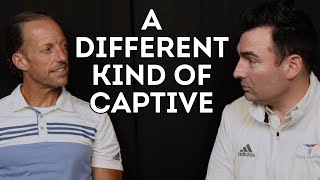
David Vorhees, CEO of TruCaptive, explains why captive insurance works: it smooths out bad years, builds ownership through capital investment, and prioritizes underwriting discipline over growth. He emphasizes that brokers should qualify candidates carefully and focus on long-term rate stability instead of chasing short-term revenue.
Chapters
Hey.
Hey. Welcome back to the Accelerate youe Insurance Sales Podcast. We're gonna do something unique today. I am here with David Voorhees, CEO, founder of TruCaptive, also the sponsor of our podcast. We're gonna use this episode as almost kind of little workshop works for me. I don't think people do this a lot with their sponsors, but I said, what the hell? Let's give it a shot. So David and I are here. We're at TruCaptive's office in Overland. Is this still Overland Park? It is Overland Park, Kansas. Yeah. Let's have some fun with this. Let's talk captive. So, David, let's start here. You have a unique story, and you actually shared it on an earlier episode of the Accelerate youe Insurance Sales Podcast. What led you to starting a captive in the first place? Cause you actually do not come from the industry, Right.
Well, there's a few different answers. Some are more humorous than others, but, you know, oftentimes I'm led towards something that needs somebody who wants to give attention to, if that makes sense. So if you think about those big, hairy, audacious goals of fixing healthcare. I watched my grandfather practice medicine, and it was one of the greatest privileges I've ever had.
I didn't think. I knew that.
Yeah, he was a World War II doctor, and he practiced in Leavenworth once he retired, and I would go on house calls with him, so I got to watch him practice medicine. Like, have you seen Doc Hollywood? Okay. Without the pig? It was like, Doc Hollywood. You'd go to somebody's house and you'd see the whole family, and he would never complain about it, and it was just really wonderful. In fact, the caduceus, which is our symbol, was off of his cross pen that he had.
Really?
And he would let me use his pen, and I would write. So that's where part of our symbol came.
Well, just so you know, I've had people. I wear your hat.
Yeah.
When I'm traveling, I've had peers and stuff comment on the logo. They're like, it's a cool. It's a cool logo.
I had somebody design several different logos, and it was one of the ones that just immediately came to me that it was. It. You know, I didn't need to see any more because of the partnership. You see the handshaking in it. But it all came from my grandfather. I went to school to be a doctor and realized it wasn't my calling. I know a lot of people go to be physicians because it's the family Trade. And that's where I thought I would do the same thing. But being able to see my grandfather practice medicine, I realized that I wouldn't be doing him justice by doing it just to make him happy.
Right.
He would have wanted me to practice because I cared about it as much as he did. So falling into human resources, I do enjoy working with people. Funny. Quick story. So my very first executive role. I'm at my first board meeting in Sanford. Francisco, you have a little bit of imposter syndrome. You're trying not to speak up too much, but when you're an executive, you know, you've got your, your table talk. So this was after the meeting. The chairman of the board walked up to me, had not said 15 words to me, but he walked up to me and said, david, business is easy. People are hard. It's why we hired you. Patted me on the back and walked away. What a job to do on a new kid on the block. One tremendous compliment. Don't get me wrong, that was a great compliment, but I'm going to. You've built a billion dollar organization and the most difficult thing you've tasked me with. Thank you. But in all human resources and all the things that came with it, healthcare was one of the biggest challenges that nobody was willing to tackle. Right. I mean, it was, let's stay fully insured. Oh, let's gripe about it. Here are the things that are good about it. Here are the things that are bad about it. And finally I just said, I'm going to take this on. This is going to be me. And in that, I learned how to dissect the different parts of the plan. And then how could I take those parts of the plan and put them with people so they could get value out of it? And then we just started to see how much people utilized it, how much they appreciated it, how much it started to attract talent. So we would hold open houses for people to learn about our businesses, and they would come and ask, hey, are you the ones that have that health care plan? All of those items and areas that I had researched and put in play in the businesses that I served led me to start an insurance company utilizing all of those things. And it was built on one basic premise. If I grew up in insurance, I would have built an insurance company from the insurance company down, because I would have understood the dynamics of an insurance company and I'd built it on the way down. I grew up in a business, so I built an insurance company from the business up. So all the elements that the end users need. We took that and we cascaded into insurance. So while that makes us quite different, I think what ends up happening is it's a really nice balance between being entrepreneurial minded, but also understanding that a human is using the tool that you're building.
I, and I think it's important to that point in our industry. I think a lot of people create a product, whether it be a captive or any solution, let's be honest, because I see a revenue opportunity. Very few people, few people build it the way you did, which is I was a utilizer, I was a user. And then I realized there's a better way to do it, which puts you in a very unique position as an entrepreneur. It's a lesson I learned from a mentor of mine. You are best positioned to serve the person you once were.
Oh, yes.
And you're in a unique position where you can say that because you were the HR director, now you are the company that's serving the HR director, building what you probably wish you had earlier as an HR director. Right.
One of our competitors is probably one of the best sales and marketing engines in the entire country. Agnostic of industry. I mean, they are phenomenal. And somebody said, we're looking at this and trying to figure out how do we understand? I said, here's how I articulate us based on that. We are an experienced company. Our company is designed to create a better customer, patient experience. And if we do those things right, that revenue follows. And we've found our revenue is highly visible or highly profitable, but because it's a byproduct of us focusing on the experience. And so I really liked it the other day. Randomly you say things, and that's what I said. I was like, we're an experienced company. Wow. Okay.
Here's where I think people go wrong in our industry. And I'm very opinionated about this because I've seen my clients go through the doubt. The, the bottom of this. I see a lot of companies come into this industry with good intentions, want to change healthcare, want to fix this, fix that, and they have some success. And then as they have success, revenue becomes the North Star.
Right.
So they start to make decisions that probably go against their original intentions. And before you know it, they're selling. Service isn't good, follow up's terrible, follow through is terrible. And in a matter of months, the wheels are falling off.
Right.
And now you have these brokers left to pick up the pieces.
Listen, if you run a for profit business, even if you run a nonprofit, revenue is Important. How you get your money helps you run your business. But when you start making decisions solely about revenue, that's where you can get twisted into making decisions that aren't in the best interest of what started to make you money in the first place. And that's why I was saying it's kudos to you to say look here, I'm not where I want to be. But look at this metric. This is really going to drive our long term revenue revenue and if I'm patient and focus on the things that are going to help us do that, it will come. And in a pre revenue or early revenue company, that's super hard to do, to be patient because everyone when they ask you, oh, you know, what's your revenue, what's your ebitda, what's your top line? What's your outlook for next year? Well, good.
That'S what I have for you. But here's what I'm focusing on. Here's something really cool that we did and it happened to us on a call the other day. We were on a call with a couple of prospects and a gentleman was introducing us to these prospects. And of course you're on a demo, you're telling your story, you're doing whatever. And we had stopped and asked questions as we ordinarily do because I think if people are engaging it gives you a sign that you're doing something right. But before we could get into it, the person that introduced us was telling our story. They were telling us some of our successes and things that they had learned from us. And I was like, wow.
I think the advisors that see a captive as an example, as another, as a vehicle to ultimately get them to push their mission out, which is I want to help the consumer or I want to help companies save money or whatever that mission is. And you see a captive as a vehicle to get you there. Those are the ones that are going to win big. The ones that say, hey, I got a new shiny toy that's going to go help me win some new business.
I don't see long term success, very different energy around either one of those situations.
100%. And I, and I say this to anybody who's willing to listen as a broker because I can tell you from being sold as a consumer, right? This isn't me running insurance company. The broker that comes in and says, I have all of these tools for you. You want Blue Cross, I can get you, you want self, you want level funded. You have now made yourself like every other broker because everybody has everything you don't have preferred rates, you don't have. You, you, you're giving me a buffet. The broker that comes in and said, this is the product that I vetted and I believe in, this is what I'm bringing to you, I think you should do this, that's the broker that's going to win more than not because the person is going to know that's what that person believes in. You aren't going to win at 100%. Shoot, you might not even win at 50%. But I promise you, you will have a far better visibility into who you're going to win with. Because I'm not saying what everybody else says it's hard to do in practice. But that's what you're talking about is a broker that is confident in what they'. Doing. And I'm telling you, the ones that say this is, this is my North Star, this is what I'm going to win or lose on. Those are the ones that resonate with customers.
Let's get back to some basics. If I am an advisor and I am putting ideas out on the table for a client or by the way, I think the sign of a good advisor is if you believe in a product that much, are you willing to put it in your best client?
Right.
Because I think another thing I see quite often, I represented a captive about seven or eight years ago. I helped sell one. And what I ran into time and time again with the agencies we worked with is they would want to use, use it as a wedge to get new business or they were trying to push a horribly unhealthy group through it because they had no other options.
Right.
Rarely were they willing to put their most valued client into that program that told me they didn't buy into it.
Right.
But if I've got ideas on the table and I'm going, why captives versus why partially self funded on your own? What would be reasons a company might want to go into a captive versus just do it themselves.
When the bad years come, that's where captives really provide a tremendous amount of value, is they can help you weather those storms. And they are coming at one every five years. It used to be one out of every seven, it's now one out every five. And it doesn't take a mathematician to go, you know what? It's probably going to be one out of every four or three.
Why do you think that is? Just the size of claims we're dealing with nowadays.
Size of claims and frequency of claims. You know, I mean the access to therapies are at an all time high, which is a great thing.
Drives up the price tag.
It drives up the price. The R and D that is being done, listen, you can vilify.
A manufacturer pharmacy all you want. What people probably don't really understand is they invest billions of dollars in R and D just to get one out of 100 drugs or 1,000 drugs in their pipeline. So they have to recoup that money somehow. The problem is they're not transparent about it. And then they might be a little greedy with some of that other stuff. So if you think about it, when they do come up with something that is truly transformative, that is really to the betterment of the people that are taking it, it's going to cost a lot of money. So the idea is, do you tell them no, you can't take it because it costs a lot of money or do I find a better way to finance it? And a captive is one of those ways that you have economies of scale and we can leverage some of our buying power to help you with that. So I think that the idea here is really that captives are not a gateway to self funding, they are self funding. That's just the way that it is. Or partially self funding, to put it accurately. You really have to think about what are my core motives. I will say the intermediate path here though. And I realize as I was trying to express this answer.
When you are either self funded or in a captive, in the captives that are group captives, you have to consider that you buying a share of that captive. I sometimes forget that in our program you're not buying a share of our program. You know, you're participating in our program like you would be buying a share, but we're protecting you from the downside. So if you have an idea of I'm partially self funded by myself, if I'm in a captive, that's group that I own, there's a really big decision point of do I want to own the downside of an insurance company? Do I want a second job?
Well, let's talk about that because I think that's one of the things that make you unique.
Right.
You know, and it kind of comes in. I was going to ask you a question about, you know, the terms people hear that they may not quite understand. Collateral capital.
Yes.
And how, you know, tomato, tomato, capital, collateral.
Yes.
Talk about that a little bit because I don't think a lot of advisors understand what that means when there's collateral involved in a captive. And then what you guys are doing that I think is unique in the space to protect the downside.
It's funny, we try to sterilize some of the industry terminology because your consumers don't understand it. They may nod their head, but they're also tired of the hour of options you put in front of us, so they're just kind of nodding along.
Or the hour you just tried to impress them with your knowledge.
That's correct. That's correct. The idea of collateral, to us we use the term investment because that's what it is. You are buying a share of a insurance company that you participate in and oftentimes you are a voting member. So you're buying a piece of a company. Conversely, my idea was what if we could give everybody the benefits of a captive without giving them the ownership of it. We can give them dividends, we can give them decision making on their plans, we can offer them options, economies of scale. We can offer them good rate availability over a period of time, but you don't have to buy into the program and then own the downside if we don't do a good job. That's the funny part. They buy into the company, they don't run it, and if it's not run well, they take up the dirty water because it wasn't run well.
What can brokers be looking for?
They've got clients who they think might be a fit, but they're not quite sure they're having a conversation with prospects or clients. How can they start to maybe qualify.
A group as a possible good fit for a captive? Is there anything they could be looking for specifically? Or how do they have a better conversation about it? Maybe is a better way to ask.
The first thing they do. They have to get through the bullshit barrier. Or if we're going to beep that out, it'll be the bs. There's no beefing in the BS barrier. But the idea is a lot of employer groups are foaming at the mouth to get out of fully insured because they have no control, because they're tired of their double digit increases. But when you them with the option, they're not truly ready. They don't really want to leave. So the first thing is qualifying that which is, hey, what do you want out of your insurance product? What are the things that are missing from your people? What are the things you're hearing most that they don't like? Let's get past the service level of how much it costs. That's always the thing. Well, I don't have access to doctors now. All right, what kind of doctors, primary care doctors. Okay, well, what if we did this? What if we said everybody in the network had zero dollar copay, zero dollar pocket? Would your people like that? Yeah, they'd love it. And what if I told you it wouldn't cost you a penny to do that in your plan? I would absolutely love it. And I'd tell you you were lying. Okay, let me show you how to do it. That's how you have to find out, like what is the thing that they need. You provide the solution for that and that's how you navigate to your tool. So I think it really is question based selling. It's understanding the consumer that's buying you as a broker, producer, advisor, and then being able to offer a solution to that which oftentimes is captive.
Yeah, you got me thinking. I remember when I was selling health insurance, I used to ask a question that at the time probably didn't think it was a big question. But now in this conversation looking back, I'm like, that was such an impactful question. I would ask the prospect, if you could do anything with your benefits outside of making them free. We're not going to make them free.
Right.
If you could do anything with your benefits, what would you do?
And what that would do is start to generate. At first they kind of look at me like, I guess I've never thought about that. And we just start going down that path. What would you do if you could do anything? And then they would just start listing off the things they would love to do. But they did it from the angle of like, but I know that's not possible. And then I'd say, but what if it is? What if we could do all that? What do you mean? What if we could do everything you just wanted to do there? Reduce your deductibles, make primary carefree, whatever it was. They'd look at you like, I don't know what you're saying because it's never been told to me that way, but it gave me a feel. For now I know what they're dreaming about. Is there something out there I can bring them that can actually help them accomplish that? Right.
We will underwrite anything and everything. It doesn't matter what kind of risk it is, we'll underwrite it. But here's the caveat. Because there is a misnomer and it's accurate for some of the people. They're trying to write as much business as they possibly can for as long as they can. Because the size of it is so important.
We'll do the same thing, but it has to be underwritten responsibly because if we do that correctly, then the folks that do join our program are going to see long term rate stability. It's not to be confused with we are going to underwrite something at a loss for the sake of growth. Because if we do that, we're harming everybody. So in the point that you said that we are not for everybody, we may underwrite a plan and I promise you our underwriting is correct. But it may be 200,000 doll more than the next option. Listen, do I think we're worth $200,000? You betcha. Do I think we'd make up that money at some point over the course of time you worked with us? You betcha. As a business owner, can you say no to $200,000? Nope. Sure can't. It's an economic decision and I'm sitting across from them going, you would be crazy not to take this deal. I'd love for you to take this deal and we will work our tails off. But if I'm running a business and it's a $200,000 difference, if you take a multiple, think about how much that is worth to your business. Take it. But here's what I do know about the industry. They're not able to do that as much as they used to do anymore. So they still do it occasionally, but the frog is getting boiled faster because they're realizing what we've known from the beginning. It is more important to be right than it is to win. Because if you're right, then you're going to create this benchmark where we know where everybody can be and when up is up and low is low. And if you can get a low rate, I don't have to boil you up to pay for the people that are up here that I brought down here. It's going to be a reckoning for the industry. It's going to suck because rates are going to go up at the same time. It's at least going to let people know, okay, I'm not going to play this game anymore. Where employers now will even say, I know so and so bought me last year. Grasp that for a second. The employer groups know that they're now being bought, but they have to make the decision because again, insurance company, if you're willing to make a bad bet just for the sake of saying, I signed somebody up, I'm going to call you. I'm going to call you on it and I'm going to take it so when you said that, I thought it was interesting because I've said that to people and the look on their face sometimes is crazy when they're going, wait a minute, you said pick someone else? Yeah, it's $200,000.
Yeah.
Get it?
When we look at true captive, we look at things like when you trust us with that person that is your customer, it is our job to retain that customer for you because that's how you put food on the table. So it's our job to keep them. You just place something that is your livelihood with us, and that's a responsibility twofold. Our responsibility too is to provide that experience to that customer so they have an insurance experience that they have not experienced yet before that they don't believe exists. And it's just basic common sense. You know, we are not Mother Teresa. You know, we're not a charity. We're not just doing this because it feels good. The great news for us is it feels good and it pays well. Right. Those are good things. But the byproduct is we make money. Not to your point. I'm making revenue. And then if something good happens over here, that's it. But the idea is you're going to get a company that is focused on being the best, not being the biggest. When somebody is at a procedure and for some reason there's a static where they can't get the procedure done and they're about to cancel the surgery, we're going to be there. We're not going to run. We're going to make phone calls. We're going to be in person if we need to be. You're going to get somebody that is so dedicated to leaning in. I don't think you're going to find somebody else that is that addicted to being a partner than we are. So again, if you're looking for the biggest, that's not us. If you're looking for the best, we're going out every day trying to get better so we can continue to be that person in the market that says, hey, we're here. We deliver year over year rate stability. We deliver great customer service and experience, and we continue to be in the market of learning new things and new ways to deliver a better experience and not resting on the fact that really what we have built doesn't exist in the market today. Well, let's build the next thing for tomorrow so we can be prepared to usher in the next tool or technology that will help embody what we've built before in the next year.
David, thanks my friend.
Yeah, it's been fun.
If you're in a health insurance advisor out there who is bought into this mission, you're trying to create a better experience for the consumer for your clients. Get a hold of David and his team. They're doing some great thing in the captive space.
Thanks, Andy.
Good.
More from Andy

Stop living in the gray of maybe! Your job in sales is to get a clear yes or no


How elite producers use “validation” to give prospects the confidence to hire them.

The Transition, every great sales leader goes through: Stop being the hero and develop heroes.




