Why Executives Need to Train Like Athletes | with Pete Mueller
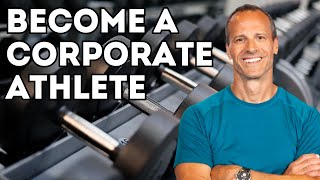
Strength coach Pete Mueller argues executives should train like athletes to perform better. He covers neuromuscular resets, common movement patterns that waste energy, protein intake, and how to stay consistent while traveling.
Chapters
Everybody listening, I'm assuming is in charge of their calendar. Opportunity can become obligation, and all of a sudden you're in this grind. So you got to pull back. And in your default calendar, you've got to put in time. You have the time to exercise.
First thing, you should put in your calendar.
Absolutely. And put it in. Make it sacred. Take care of yourself.
Hey, welcome back to the accelerate your insurance sales podcast. I'm here today, Pete Miller of Pete Miller Performance. Yes, I'm excited. Some of these interviews. Now I'm going to start introducing you to people I work with outside the business world that are helping me make sure I perform on it. And Pete, how would I describe you?
You know, I've been a strength coach since as far back as I can remember. We started Pete Miller performance group in 1990, and in those over three decades, we've worked with a lot of executives, leaders, influential folks in the metro Milwaukee area. And the goal is just to grab them, call out their inner corporate athlete. Because if we can get that to rise to the top, you know, the reality, I think, is a corporate athlete is under different but similar rigors of any professional athlete. And you know this game, right? I mean, you play professional baseball. There's, there's work time, there's play time, there's recovery time, and you've got to manage all those things. So in a nutshell.
Yeah. Well, let's talk about that. I love how you said you're inter corporate athlete because I think that's the key when, you know, you and I kind of knew each other years ago because you same circles sure didn't work together. We moved back two years ago and I think we did we connect on LinkedIn originally.
Yeah. I think I reached out to you because I was fascinated about how you were creating a presence. I loved a lot of the content and how fluid, you know, you were getting yourself out there. LinkedIn. And I thought, you know, it's an area I could use an upgrade in. So.
Yeah, well, and. And then that actually led to probably flipping the script because I think the timing was right. I was looking for somebody to help me with training.
Right.
You know, I think we talked about this trait of a lot of highly successful people is they're always looking for coaches in different avenues of their life. And for me, it was, I exercise, I lift four times, five times a week. I need somebody. I don't want to come up with the workouts anymore. I need somebody who's going to help me drive those workouts to make sure I'M working on the right things and hence that's how we connect them. But I would also tell you the unintended consequence, and I say that in a positive light, is the work you've helped me do just with my body in general. And so maybe we start there audience, high performing insurance professionals who are probably out of balance a little bit, if they're willing to admit it, more work than working on their bodies, working on their minds, working on themselves. What do you see? Because you work with a lot of executives in Milwaukee. When somebody comes to you, where do you see them needing, where do you see the gaps? Where do you see them? You know, they're starting at a deficit with you in some way, shape or form. Where do they need the most help?
Yeah, often it's the wake up call of our bodies are so miraculously designed we can abandon fuse the snot out of them and still perform at a high level. But you can only perform it that, you know, you can run the car with some bolts that are missing for only so long and eventually, you know, something's going to come off. Yep. And what I've seen over the years is people that are on the, they don't even know because they're just caught up in the game. Right. I mean, it's the, it's work ethic, it's passion, it's obligation, it's taking that call, going to that networking thing, having that cocktail and that cocktail and that cocktail. I mean, we're in Wisconsin, so that can be a real thing. I don't want to get too far down that rabbit hole. But it's managing all these things and stepping back and having somebody that can objectively look at them and say, all right, I'm going to ask these questions, we're going to pursue this. You're on the verge of adrenal fatigue and we've just, we've seen that it's a silent. Heart disease is a silent killer, but adrenal fatigue is just robbing. And eventually you hit 53, 52, 58, 62, whatever the number is, and the wheels come off and you're like, what happened? I was good last year. It's been going downhill for decades.
Yeah. This episode is brought to you by True captive insurance. What if you could take full control of your healthcare without the financial burdens of traditional insurance? At Trucaptive Insurance, they make that possible as the only captive in the nation that puts up the majority of collateral on your behalf. They provide financial flexibility from day one, making them an advocating partner. For their customer success. True Captive's fully customizable plans and cost saving strategies ensure you never have to choose between affordability and quality care. It's time to break free from the limitations of conventional insurance. Take the next step today. Visit TruCaptive.com and discover a smarter way to manage healthcare that is TrueCaptive.com I.
Mean, would you say a lot of executives operate at a red line and it's just become their norm so they're completely unaware of it?
I would argue the majority of Americans function. You know, again, we can get a little technical. These are high performing insurance people listening.
They probably want to know the details.
So without getting too technical, right, You've got two different drives, you've got sympathetic drive, we've got parasympathetic drive. So sympathetic drive, many of you are already know what I'm talking about. But just to put it into simpler terms, sympathetic is a version of fight, flight or freeze. Parasympathetic. The way we were designed to pretty much function 90% of the time is rest, digest, peaceful, powerful, creative, balanced homeostasis. All that we've just gotten so used to. And it's only been accelerated in the digital age to function in some version of fight or flight. Now very few of the people listening to you are in freeze mode, but there might be some where that overwhelm is. There's so much that they just retract and they retract so much that, you know, something small can then set them off into fight. So I think just many people that I see on a regular basis, you know, one of the, it's kind of a, it's something I pay attention to and now that I'm going to say it's going to get into your reticular activation system, but you're walking down the street, you see a buddy that you haven't seen in a while and there's not a lot of time because nobody's got enough time. Right? There's no community. We got to get going. I got things to do. Hey, how are you doing? And the answer is good, you're busy.
The famous answer, busy.
Like why do you need to justify your existence on this planet by proving that you're adding enough value? I'm reading way too much into it. But am I? Yeah, like you've got to say you're busy.
Yeah.
Really well.
And I think one of the things I was impressed by when I first started working with you again, I'm hiring you, thinking, great, I got a guy can help me put my workouts together. But then you had me come in. So the first time we met, I had to go in and visit you in Milwaukee. You have an office downtown Milwaukee. And you said to me, trust me when I say when we do this work, you're going to be blown away.
Actually oversell it.
You haven't oversell it because it's true. But walk through the assessment because it wasn't just, all right, man, I'll make some workouts for you. You made me come in and you took, for lack of better words, a deep dive into what's going on in my body. And why is that important?
Well, it's important because. So the work that I do is called Neuromuscular Resets. It's based off of some incredible principles that I picked up about 10 years ago from a physical therapist out of South Africa. And it functions off of the premise that foundationally human beings have two drives. We need to breathe and we need to move. So breathing we kind of touched on earlier. We're either going to be driving in that sympathetic, shallow breathing state. Someone's got a gun to your head. There's a lion chasing me. You know, on an extreme, you're just. You're constantly on. You're having a hard time, and you're finding that, you know, having a hard time finding that breath. Parasympathetic Rest Digest is a diaphragmatic breath or a belly breath or it's a breath that actually sends a signal to your mind, I'm not getting chased by a lion. The reality is I'm fine. I have all this work to do, but I'm safe, I'm good. Let's get the work done. And then when it comes to movement, you can only move. Run for you. You know, you're. You're into running, cycling. I don't think you're swimming much. Still swimming. But you can't move without flexing your hip and then extending your hip. So there's a primary hip flexor, there's a primary hip extender. We can find out. And we had you come in, you lay down on the table, we test as your psoas hip flexion on. Is it off if it's not working? And for you it was a fail. I don't have to. I'm not governed by hipaa, am I?
No. Anyway, feel free to dissect my body all you want.
So your primary hip flexor wasn't initiating, but yet you're an active guy. You're an athlete. You know, triathlons, biking you name it, climbing, hiking, something is flexing your hip. We found out that for you, and I don't recall what it was, but you had a cheat pattern or a.
Talk about that a little bit. I wanted you to talk about the cheat codes that you tell people. Our bodies have an ability to create a cheat COD code.
Absolutely. Because we have such a strong drive to keep moving because not being able to move is really horrible. So if your primary hip flexor, hip extensor are off and they can shut off for a variety of reasons, it's. It's usually. Well, it's a combination of. Or it's emotional trauma or physical trauma. So you're out on a cycling, you know, out in lake country here, riding your bike and you go down or, you know, God forbid you get hit by a car or something like that, there's an accident. You know, you can have a physical injury that then sends your body into a tailspin and you're going to keep cycling, you're going to keep running, but you're running a cheat pattern. That cheat pattern that takes over the primary movers then is inefficient. It'll get the job done. Like you're still competing, but it's an implosive stress on your system. So therefore, eventually the wheels come off and you get a knee injury, a back injury, hip is giving you grief, your neck is sore, your shoulder, you know, you're just out of whack.
You said you brought up something. I think it was you who told me you think of a lot of professional athletes who tear an acl. Yep. And it isn't much longer after that. All of a sudden you see them, they tear it up, the other one, and people are thinking, oh, God. But really what has happened is because of the first tear, they probably ran a cheat code on the other leg to overcompensate, which only created the stress.
On this, which finally imploded slightly. To pick on that comment a little bit. It's usually the same side that they'll tear.
Got it.
So they have a cheat pattern. In my language, it's a. They're a quad driver and their quad is taking care of hip flexion. It shouldn't primarily do that. It can do that. It's also trying to take care of the knee. But our body will always prioritize hip flexion if they're jumping. So we're in the NFL season right now. When you see somebody go down with a non contact ACL injury, that means their body was routing forces out of Their quad up to their hip flexor. Nothing's taking care of the knee, and the knee blows. So then we repair the acl. But if we don't solve the cheat.
Pattern, it's going to happen.
It's going to happen again. And you think about that, you know, if we take that into closing deals, getting the job done, you can run a cheat pattern in your office with your culture, and it can work. And it's just, I'm going to get this done. Like, you know, and it can work for a while until it doesn't. And then all of a sudden, the stress, the culture is down because everybody's, you know, there's just too much tension. So it's a, you know, step back. Let's fix the cheat.
Well, I think that's a really good point because I think about who our primary listener is. They're a lot like me. I like to outwork the problem. Right. I'll just work my way through it. I'll tell you one of the things that was really surprising for me, and it came out of our first session, neuromuscular reset. The reset where you looked at me and you said, do you realize you basically live your life in this mode where you're literally like, in this. Your body, you're flexing your body all the time. And it's shown itself in my abs, just the way my abs have developed. And the one thing that really blew me away was. I may say this the wrong way, but realizing how much of my body I run through my jaw. Talk about that a little bit, because it blew me away where you worked on my jaw and it loosened up other parts of my body.
Yeah. So you. There's some. Everybody's unique, but there's some common cheat patterns. You happen to be what we call a jaw driver. So.
And I'm sure there's a lot of them listening.
So for you, your body was your. Your psoas, hip flexion, your glutes, hip extension were not working. Your body could recruit quads and hamstrings. It that didn't work for you. It could recruit your ankle. That didn't work. It could recruit your opposite shoulder. That didn't cut it for you. You found stability and strength. Bite flexing, this. So my guess is, if we were to have a camera on you and watch you train all the time in the past, when you're putting out big efforts, there was probably all this tension in your job. And then I thought it was interesting. Here's a guy that makes a living by Speaking. You know, so if we, you know how much tension is here. If you're under stress and you're bringing that. How much. If we can loosen that up, get the body to support you, you're going to enter spaces with a more commanding presence.
Yeah.
A bigger you. Yeah. Because your body is peaceful and peace is power.
When you talked about the that that our body runs with, with breath and I've noticed it, it's almost my sign that I know it's time to come back for a reset where I can physically feel like I can't get as deep of a breath as I could a couple weeks ago.
Yeah.
And I notice it. My breath work.
Yes.
I can't get as big of a inhale.
Your diaphragm is locked up.
Yeah.
You know, we, we, we again from physical or emotional trauma or some combination and it could be decades old. Emotional or physical trauma, like it doesn't matter. We develop survival protocols to keep moving forward in life. So one of your survival protocols might be, it might have been to put tension up here and to just get, you know, just get that breath up in here. And it kept you alive. So we celebrate it. But it's not serving you. You know, you're not, you're not. High performing individuals can put out a 75% of their best effort and still outperform many. But what if.
Well, and I think, I think to your point, I think to your point though, as a driver, and again, I know we have a lot of drivers probably listening, what you perceive as a strength could actually be the weakness.
If, if you're. Our bodies are designed that breath and not just neuromuscular resets. But if you look at Tai chi and yoga and meditation and many of the martial arts and all that movement and breath needs to originate from the center and explode out. You want to be explosive. Under control, but explosive. And when you're in an implosive state where your jaw is driving down to try to take care of hip flexion, that's a chronic implosive stress on your system. So there's enough stress in our environments and in our world. Now we're. So if we can alleviate some physiological stress, then the emotional stress or your mind comes into play as well.
That's interesting. Let's talk. You know, I'm sure there's a pot lot of people who might be listening saying, all right, so why can't I just go to the gym and start lifting and jump on a treadmill or go start doing some cardio? Yeah, what's your advice? Because again, these are people wanting to play at a high level. Right. And, and I, I always talk to. I would say our top clients are not just trying to win insurance, they're trying to win in life, like everything. So from a physical standpoint or a mental standpoint, with this, with training, with exercise, where would you have somebody start? Because again, a lot of people are just at. Why can't I just. So you're just saying it can't just be about going to a gym and lifting weights. Where could they also start focusing on their body to make sure it's performing in peak states?
Yeah, it's a great question. You know, so let me start with muscle. Lean muscle tissue is the currency of longevity. So you're not going to develop lean muscle tissue by doing cardio. You'll develop some early on, but then there's going to be an adaptation process and you're not going to build any more muscle.
So you're telling me all cardio. No, protein is not the answer.
It's not the answer. You know, you're going to build some strength in your cardiovascular heart and lungs and all that. But. So muscle is the currency of longevity. If you want to live a full and robust life, strength and power are absolutely the elixir of you. Our ability to express power, meaning velocity, a punch, a quick movement. Stepping off the curb and seeing a car coming all of a sudden and getting back onto the curb, that's a plyometric. That's a powerful move. And you just saved yourself from getting hit by a car. That goes downhill as we age a bit. But I think what we're learning now is many things that we attribute to age are really due to inactivity. So to circle back, where do you start? You start with what you know, you can absolutely commit to and you'll fulfill it. And I would suggest for many, if they haven't been in the gym in a long time, set a target to train in a manner that after four weeks or six weeks, you look back and go, that was kind of easy. I would rather see that than some aggressive. I'm going in. I haven't lifted in 20 years. You know, I'm 48 now, and I'm going to go in five days a week because that's what I did when I was 28 or 18. And you blow up.
Yeah.
So. But strength training is key. Absolutely key. And you don't. Go ahead.
I was gonna say, I'm glad you brought that up because I think, you know something? I've listened, I've watched and seen a lot lately too is the importance of strength training as we get older. The grip strength, like you said, all those moves you will make as you get older, if you, you don't have the strength. I don't know what the statistic is, but the number of elderly people that end up falling and because of a lack of muscle, they break a bone or something happens and it just goes down from there. Yeah.
And it's a combination. You know, research would indicate that the fall often occurs because the hip disintegrates while they're standing and then they fall or they absolutely fall. There's not enough tissue, there's not enough strength, there's not enough resiliency in the connective tissue and you break it as you go down. But strength training solves both of those issues, right? I mean, compressive, thoughtful, deliberate practice in the gym is going to improve bone density, it's going to improve sex hormones. It's going to improve. I mean your muscle is an endocrine system. You know, people that are dealing with imbalances in their blood sugar levels, muscle gobbles up that glucose or that sugar that's going through our system and it filters it, it puts it to use, it pulls it out. I mean it, you want to solve for type 2 diabetes, put some muscle on your body and get your diet straight.
Any advice on the diet? You know, one thing I definitely try to focus on is protein.
Yeah.
And you know, I'm even over a gram per body, pound of body weight right now. I'm actually at 160, 165 and I'm actually trying to get 200 grams of protein a day. What would be your advice? Because I think that's something too for some. We might have a few folks who maybe need to lose a little weight or just get in more shape. Obviously it happens in the kitchen. What would your be, what would be your advice there?
And I have to be careful about advice. I'm not a, you know, these are more opinions, opinions. I'm not a dietitian but I've got a lot of practical, practical experience. So first of all, like I would ask back to you, how do you feel ingesting 180 grams of protein?
Some days it can feel like work because it's a lot. But I will tell you, the energy, you definitely notice a difference. Then more power, more energy. The next morning I just feel more awake and alert all day. And I, I try to focus on high protein, low calorie type But I also train a lot. Yes. So I try to make sure I'm guilty sometimes of not getting enough calories and then I feel it the next day. But I definitely lock in on the protein. Yeah.
So what you're touching on is, you know, we can't, we should be cautious, abdicating all of our common sense and learning to some perceived expert. Now I can sit here and say, yes, I'm an expert when it comes to being a strength coach and I've been in the game for a long time, so there's a level of expertise. But I also want you to be a citizen scientist and go, man, I hear that I should be getting a lot of protein. I've been putting in 180 grams a day for the past six weeks and I just don't feel good. Listen to your body. Yeah. Maybe it means you need more. Probably not, but maybe it just means you need a little less on some higher intensity workouts. Maybe you need some more carbohydrates in there to fuel that system. You have to listen to your body. But on a whole, I think the American diet is changing. I think there's enough information out there now. But we used to be very carb heavy and process ultra processed foods, you.
Know, still are in many ways.
I mean, you know, I'm old enough to remember that, you know, a healthy breakfast was a bowl of cereal and a glass of orange juice. You know, take on the day, bucko cereal.
The greatest scheme in the history of US nutrition.
Oh my goodness. You know, it's not a conspiracy, but do follow the money. Oh, yeah, right.
I've actually heard people go as so far. And I'm probably going to offend somebody by saying this. The Kellogg family's goal was to get kids addicted to cereal.
Absolutely. Why wouldn't you switch eggs?
Yep.
You're getting people addicted to great coaching. Is it wrong?
Well, and actually I was going to use an analogy back to what you said about training. It's like somebody who hasn't been doing social media content and says, well, I'm going to do it every day. No, you're not because you're going to get burnt out and after three weeks you're going to feel like it's a part time job. You're going to hate it. Same things with training.
Yeah.
Got to start slow, get consistent first.
And then, and then build, you know, build that work capacity. So when it comes to diet. Yes, I think you should prioritize protein. We don't need calories from a lot of different carbohydrates, fruits, vegetables primarily. Again, see how you function. How do you feel with the starchy carbohydrates, the breads, the rices, the potatoes, the things like that. I'm not anti. I'm not anti anything really. And then when it comes to fat, fat is your friend. Yeah. So with all of these things, we've got these macronutrients, we got carbohydrates, protein and fat.
Yeah.
Prioritize protein. Yep. If you stay away from eating anything that is ultra processed, you're probably going to be fine.
Yeah.
If man made it, don't eat it.
Yeah.
You know, and you probably need to either hire someone to cook for you or you need to make peace with meal prepping and cooking. I don't know how you eat in a healthy manner that is going to serve you, serve your mind, serve your health span, serve your family if you're not cooking well.
And I think the prep is huge. You know, most of my days, even though I work out of the house, most of my days are calls all day. Right. If I did not spend 20 minutes the night before preparing my breakfast and my lunch, I probably wouldn't eat enough and I wouldn't eat the right things. Right. That prep is so important. I'd love your opinion now, your opinions. You're not an expert, but we are talking to people about who are trying to perform at the best caffeine. What are your thoughts about caffeine? Because we have a lot of coffee drinkers on this podcast.
Caffeine is my drug of choice all day.
Do you cut it off at a certain point?
Again, for me, I think my understanding is that half the population does not metabolize caffeine. Well, the other half does.
Okay.
I'm someone that can probably have a double espresso and I don't. But I can probably have a double espresso at 8 o' clock at night and I can go to sleep at nine and I'm fine.
Wow.
Not everybody, you know, some people. So again, be the expert of you.
Yeah.
You know. Know what? So I think it makes some sense that you put off that first caffeinated drink in the morning about 90 minutes after you wake up.
Not right away.
Not right away.
I've noticed a huge difference since doing that.
And. And do you notice a difference energy levels in the afternoon?
Energy. And. And I would have. I used to be the guy that would wake up and. And first thing I have is a glass of water. My coffee.
Yes.
And I would notice some mornings when I'm like, why am I so anxious? And I wouldn't know why. Like it was almost an out of body experience when I went, I don't always do 90, but I'm at least 60 minutes after I wake up. I don't have that anxiety anymore and I haven't really thought about it, but I bet you I, I definitely have more energy throughout the day.
I would say for those that notice a consistent drag in their energy or their, their attention at like 2 o' clock in the afternoon, 3 o' clock in the afternoon. And the solution is often. I'm just gonna go get a coffee. Yeah, you know, that might be fine, but experiment with, what is it? It's, it's adenosine. What, what caffeine does is it shunts your body's production of adenosine. And if you can in the morning. So if you can allow adenosine to actually come into your system as it naturally does, when you wake up, you take in some sunlight, cortisol levels jump up. That's how it should, the timing should be, adenosine comes in. And if you don't shunt that adenosine by waiting 90 minutes, you're not going to get that crash in the afternoon. Got it. But that makes a lot of sense.
Because I don't experience that crash like I used to. For sure.
Coffee is great. I mean, I just, I love the ritual. Yep, me too.
Okay, so this is another one that comes up a lot. So you have people who are attending conferences, they're on a lot of road, business travel. Any advice or tips on how to make sure you eat right while you're on the road? Alcohol consumption, things like that. Because I think where people get off the wagon is when they're on the business trips. What would be your advice? Because people struggle with that.
Yeah, I mean, I'm sensitive to it. I've coached a lot of folks in the financial industries and guys that are on the sell side of finance and it's non stop, you know, you're entertaining all the time and for that person, that group that you're entertaining, that's their night out. But you might have four of those, you know, so, man, it's just, I think it's like your meal prep. I think you need to make a decision. And you know, again, I look at.
The menu ahead of time.
Well, look at the menu ahead of time. I'm just talking about the, the liquid distract, you know, the alcohol. I, I'm not anti alcohol. Yeah, but I think we're talking to some folks that are extremely disciplined in many aspects. But that can be a tough one. It was a tough one for me for a lot of years. I finally hit a wall and said, you know, I really need to do something different, you know, and that, that's a longer conversation. But I needed to change my relationship with how I was functioning with this. So you just have to make a decision. I'm going to have a glass of wine. I'm going to have two drinks, whatever it might be, but then I'm switching the club soda with a lime.
Nobody's people think you have a gin and tonic. Yeah.
You're worried about the look, first of all, don't worry about what it looks like. My God, it's okay. But you've got to get that managed because alcohol will crush you. It crushes your sleep.
Oh yeah.
You know, but again, I'm not going to demonize alcohol. If you don't have a, a pattern of how to downregulate at nighttime and that one drink actually helps you. Yeah, that might be a good thing. I'm not going to say it's a bad thing. Now I think put some effort into figuring out some other ways to down regulate that don't require the alcohol. But you know, I'm not going to.
I will say athletic brewing has been a godsend. I, I like beer. Yeah. But having the ability to have it that tastes good and it's non alcoholic has been a game changer option.
So then when it comes to, you know, when you're out, you're on the road, you're at these restaurants. Oh, you know something, there's an app. I wish I knew it off the top of my head. But there's an app that you can download on your phone. It might be a subscription, but it will tell you all of the restaurants that do not use seed oils at the restaurant. I don't have the app, but it's easy to find.
Google it.
So choosing restaurants that have entrees and other foods that do not use seed oils is a good thing. I think it's best to stay away from seed oils on a whole. But you can always. And when you're in a restaurant, there's always a best choice.
Yeah.
You know, you can even if the whole. You look at the menu and you're like, you know, there's nothing here that really fits. Make the best choice.
Can't really go wrong with a burger or steak or potatoes and, and it came from the ground. Right. As long as it's cooked in the right oils.
Yeah, yeah, yeah, preferably. But again, if, period, you know, if your diet's great, 85 of the time. Yeah.
I'm gonna ask you this one and you could say no opinion because it has been a hot topic amongst people I see posting in my industry, posting on LinkedIn, nicotine, these zen packets. What's your. So now there's studies saying nicotine can be good for you, Right?
Well, oddly enough, during COVID when we thought that all of the smokers with the compromised lungs were going to be getting Covid, they were some of the healthiest things. So. Yeah, I mean, again, nicotine is something that a natural, you know, cocaine's a natural substance too, you know, but micro, I'm not saying microdose cocaine, it's illegal in most states, I think everywhere.
But.
The micro dosing of a lot of things can be a good thing. I've experimented with I. Again, probably like many of your people tuning in, have a little bit of adhd.
We all do.
We're a little on the spectrum, folks. Like, I mean, the myth of normal, but. And so that's your superpower and it can be your kryptonite. I have noticed that using a little bit of nicotine, 3 to 6, 6 milligrams drops in some water when I'm at a conference interest, trying to take in a bunch of information, you know, it can help my focus. Absolutely. Some of the best.
And is that in a drip drop format?
It's in a drop. I, I went to a vape store and got some organic nicotine. Organic. I don't know if it's organic or not, but it was the best I could choose. And yeah, I've noticed that it does help a bit. So.
Yeah.
But, you know, the challenge with smoking is the, is not only the carcinogens that are, you know, packed into the cigarettes and all that and, but it's, it's the heat. That's what you know, the chronic heat in your mouth and in your throat. But you know, frankly, some of the best, most creative people minds on this planet, I mean, Ernest Hemingway, to name one famous one. I mean those people did their best work smoking.
Wow.
Now, so nicotine experiment with.
Yeah.
If you try it and you feel like you're jittery off the moon and it's too much, back it off or don't use it at all.
Yeah.
If it upsets your stomach, you know, listen to your body.
At the end of the day, it comes back to listening to your body.
Listen to your bull.
So let's let's wrap here. What advice would you give Executive listening and says, all right, Pete, I. Yep. I am operating on a red line. Yeah. I've been out working. My health, most likely. I've just. I grind. My grind has gotten me to where I am today. I'm now a CEO. I'm a sales director, whatever it is. Where should they start? What advice would you give them? If they know they're not exercising right now, they're probably not eating a little too much out because of entertainment. And they're just. Let's be honest, they're a clean slate. Meaning they are. They're not taking care of their body. Yep. What would be your advice? Where do they get started?
Right. It is so simple, but it is not easy. You know, every time you get on a plane, the flight attendants come up and they say the same thing. Put your own oxygen mask on first. So, man, it's getting. This is such. I mean, it's not a simple reply because it's deep.
Well, and it's probably customized to each person.
Yeah. Because it goes to your identity.
Yeah.
Why are you working this hard, this many lates. Why are you prioritizing, you know, the next deal, the next level, the next step up? Why?
Yeah.
You know, and that's a deep question that only, you know, an individual can answer, but. Well, I think.
I think what you helped me with, Pete, and I mean to cut you off, you've taught me that being in peak physical shape is a lot more than just lifting a weight.
Absolutely. Or running a mile. Yeah.
It's understanding what's going on in your body. The past traumas. Right. The cheat codes to know how can I reset me. And in the gym, to make sure I'm performing at my best. So don't just sit. Just don't just stop at. I need to go to the gym, I guess, is my point. Yeah.
I've got. I've got two thoughts. I guess everybody listening, I'm assuming, is in charge of their calendar.
Yes.
99% of them, anyway. So opportunity can become obligation. And all of a sudden you're in this grind, so you gotta pull back. And in your default calendar, you've gotta put in time for. You have the time to exercise.
First thing is put it in your calendar.
Absolutely. And put it in. Make it sacred. Take care of yourself. And then the other thing is that, like, my industry or the perception of my industry is that we focus on biology. We're talking about, you know, diet, sleep, lifting weights, cardiovascular. And that's biology. But the reality is everybody on this planet is we're biopsychosocial and spiritual. So don't just ignore the psychology, the sociology community, how you interact, your downtime. I mean, when you're alone and there's nothing to do with. Are you anxious? I mean, take a little.
I have times where I have a hard time being. By my being alone.
Yeah. So that says something. I've got to perform. Where does that performance module come from? And then spirituality. There's something greater than all this out there. Whatever, you know, your spiritual expression is your spiritual expression. Explore it. Because if you want to hit on all cylinders, it's not just biology and bank account.
Yeah.
It's how am I doing with my own mental state. Pay attention to that. Hire a coach. My sociology. How am I getting. You know, believe me, I've seen so many families over the 35 years have been working with this of bread winners that are choosing everything else other than the kids.
Yeah. I. I think. Well, and something you just said. I hope everybody heard. Get a coach.
Get a coach.
You know, I think my results drastically changed everywhere when I started hiring a coach and it's not one. I have several these days. I have a business strategist coach. I have a. What I would call a mindset, self worth coach. She helps me with my. What's going on here. You help me with my physical side of who I mean. You need coaches everywhere these days.
Yeah, the best. Again, if we go back to professional athletes, they've got people managing a lot of different aspects of their life. So why would you assume Giannis Anetokumbo is going to function at this highest level? He's got a support staff that is massive.
Yeah, I love that. So if somebody was tuning in and like, all right, it's time you. This, this episode is what got me over the top. I need to do something. Number one, could they reach out to you? And if so, how do they do that? And do you do any kind of virtual coaching?
I do. I do. So I do. I mean, basic. You know, you and I live in the same area, but what I deliver to you is remote coaching.
Yeah.
And so I do that across this nation. And I've got.
So I get the advantage of the resets because I can physically see.
But yeah, I've even done resets virtually, which is kind of fascinating, but that's a whole other topic. So, yes, they can reach out to me. I don't know if you want to post contact information after this is done.
But, yeah, you could just Also say, what is the easiest way to get.
Yeah. So easiest way to get a hold of me is to probably text to 262-352-5308 or reach out to me. It's Pete Mueller group dot com.
That's M U E L L E.
R. You got it. It's the German way. Yeah. So I'm happy. And anybody that is working with you or watching you, I am happy. I will give you 15, 20 minutes of my time. Complimentary, even if you don't choose to work with me. But I would call, bring it, get two or three questions down. I will give you my opinion on those. Maybe that will engage you to work with me and I can build programming. I've got an app that I deliver to your phone. You go to the gym, you pull it up, it's got performance points, it's got video. You've got sets, reps, rest periods. It tracks your data. I can see what you're doing in real time. And I'm happy to work with more people and do remote coaching.
Well, and I love that, that it's called train heroic. Right. And I love that because you've, you've given, you've put plenty of exercises in my workout from like, what the hell is this? But they've got the video right. On how to do the exercise, which has been super helpful. And I'll tell you, those resets have been game changing. Yeah. Like I said, whether it's the breathing or, or I have a knee issue, you know, I come for that reset and, and my running for the weeks after that, it feels effortless. It's, it's. Those resets have been game changing for me. Yeah. And for those, in fact, I'm probably due for one.
So typically those, you know, need to be done in person. Yeah. Happy to, to work with people.
So if you're in the Milwaukee area, look Pete up.
For the reason you're in the Chicago area, look me up. It's worth the drive.
Well, Pete, it's been awesome, man. This was a great conversation. I think people are going to get a lot out of this because it is, it is more than. It is more than just lifting up a weight and going out for a run. There's so much to physical being in peak physical shape. And I think what we shared today is gonna be super helpful. Awesome. Be good, everybody.
That's all we got for this episode of the Accelerate your insurance sales podcast. One of the most valuable things you can do to help us and other new potential listeners find our show is for you to rate the show and leave a review. So as a special bonus for for you, if you leave us a review, take a screenshot of your review and send it to me as a DM to my LinkedIn profile. I will send you a free copy of our LinkedIn Diamond Playbook, our proven four step strategy to grow your business on LinkedIn. So go right now, leave us a review, screenshot it and send me a DM on LinkedIn. Also, please share this podcast with anyone you think would enjoy it. That's it for now.
More from Andy

Stop living in the gray of maybe! Your job in sales is to get a clear yes or no


How elite producers use “validation” to give prospects the confidence to hire them.

The Transition, every great sales leader goes through: Stop being the hero and develop heroes.




