Treating Alzheimer disease with the insights of Ayurveda. Speech by Cornelis Peters.
A recorded speech by Cornelis Peters (Europa Ayurveda Centre) presenting an Ayurvedic, holistic approach to Alzheimer’s disease. Peters combines personal experience (his father’s diagnosis and death), collaboration with his wife Dr. Phoebe Mona Kumari (recognized for public service in 2011), clinical examples and two patient case stories ("John", male, 59; "Nancy", female, 63) to argue that Alzheimer’s can be addressed by identifying triggers (inflammation/ushna, nutrient deficiencies/shita, toxic exposures/visham), using combined Ayurvedic diagnosis and modern tests, and tailored herbal/ lifestyle treatments (e.g., Atma Churna, Bodha/Bodha Brahmi). The talk includes measurement claims (biological aging and stress scores for John and Nancy) and cites a cohort study of 27,000 Americans regarding vitamin D supplements.
Questions this video answers
2011
27,000
63
59
Inflammation (ushna), suboptimal levels of nutrients (shita/vata), and toxic exposure (visham)
Chapters
Today my subject is not about a fairy, it's about a dreaded disease and let me tell as it is. My name is Cornelius Peters, I'm from the Europa Ayurveda Center in Betharen and I want to talk to you today about something promises about this disease. First I want to know from you, you have anybody in your inner circle suffering from this disease.
Ich wollte nur kurz übersetzen für diejenigen einfach mal, ihr habt wahrscheinlich alle verstanden, aber ich möchte trotzdem meine Aufgabe wahrnehmen. Hat jemand in der Familie eben jemand mit Alzheimer? Er möchte hier Kommunikation reinbringen.
I just want to know if I see some people familiar with it in this lecture, I will give you all the details what I have so far. Yeah. So here I sit with my wife Dr. Phoebe Mona Kumari in our garden and she is an expert in the area of Ayurveda medicinal plants.
Sie ist eine Expertin für Ayurveda Pflanzen.
In twenty eleven she got decoration from the Queen of the Netherlands for her enormous help for many Dutch people to recover them from all kind of diseases including dementia and Alzheimer and she got awarded for that. And here she is interviewed for the Dutch National Television.
Seine Frau hat eben für ihre Verdienste, also nicht nur für Erkrankungen, Neurologie, sondern für alle Erkrankungen hier einen Award, eine Auszeichnung bekommen und gerade interviewt.
So I'm very proud of her. That is why I want to show you now. This is the three of us, our son Viganesh, my wife Mohana and me and we have you see that one clear vision and that is we really want to promote Ayurveda. Invest with the knowledge what we have and Vigines is not himself very much interested in treating people. He is fan of technique and filmmaking. So he's the filmmaker of the family and all the classes, all the workshops, all the lectures, even the talks what we have, he's recording it. So we have a huge database from our own findings from the records from the classes about the talks what we have. Because the moment when you ask something to Mohana, she just gets some idea and then the flow is coming.
Hier ist seine Familie, seine Frau und auch sein Sohn. Und man sieht hier die gemeinsame Vision von allen ist es wirklich den Ayurveda hier im Westen bekannt zu machen und das, was der Ayurveda Gutes macht. Sein Sohn sagt, er ist jetzt nicht so sehr im Ayurveda, das ist nicht so seine Passion, aber er ist ein passionierter Filmemacher und die Technik ist sein Feld und er hat alles was an Vorträgen, Workshops gemacht, aufgenommen. Also Sie haben auch eine sehr große Datenbasis des Seine Frau ist aber auch diejenige, die Ideen hat, Sie sprüht vor Ideen.
One is the clinic where the people come for the consultant treatment. In the middle you see our pride that is the herbal garden that is coming under the custody of Mohana. And on the right side you see research. I come basically from a scientific field, research field. So that is in me I really want to know, is it really true? She can talk beautifully, but I want to prove so I start searching contact with universities to prove to scientifically prove the thing what I see and what I know already now. But that is very helpful to convince our patients and our clients.
Sie sehen hier das Zentrum von ihm und hat drei Säulen. Einmal natürlich klinische Arbeit, dann in der Mitte sehen Sie ganz stolz auch das ist der Garten, die Pflanzen sind, Das ist wirklich das Feld auf seiner Frau. Und er kommt selber aus einer wissenschaftlichen Ausbildung, ist Pharmakologe und er hat in ihm ist immer noch so der Gedanke, das beweisen zu wollen. Seine Frau kann sehr gut darüber sprechen, aber er möchte das wirklich wissen, Ist das wirklich wahr, was wir da haben?
This is my father and my mother and my father was diagnosed with Alzheimer's in two thousand eight in twenty ten he died and in that two years I lost him many, many times. So he is really the reason that I started to study like what is it, what where it comes from and how it works and can we do something about it?
Hier sehen Sie eben seine Mutter und seinen Vater. Sein Vater ist eben in 2008 an Alzheimer erkrankt, in 2010 gestorben, aber so zwischen diesen Jahren hat er seinen Vater immer wieder an die Krankheit verloren. Und das war so auch der Grundstein, sich zu fragen, woher kommt das? Und können wir etwas dagegen tun.
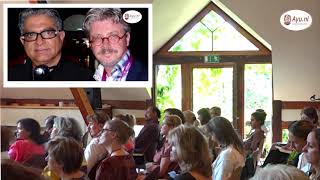
Here I'm with Doctor Deepak Chopra that was in a symposium about Alzheimer in Amsterdam. And interesting enough, that symposium was not organized by the medical field. It was organized by an entrepreneur who faced the same circumstances what I had as his family member, also diagnosed from Alzheimer's and experience and he is a philanthrope and he really thought I have to add so many people in this field together to see in any other way is there an answer on this threaded disease.
Hier sehen sie zusammen mit Dr. Deepak Chopra, das war eine Konferenz zum Thema Alzheimer und es wurde jetzt nicht von der Medizin organisiert, sondern von einem Unternehmer, der in der gleichen Situation war ein Familienmitglied, ist an Alzheimer erkrankt und er war Philanthrop, dieser Unternehmer. Und er wollte eben Menschen aus verschiedenen Bereichen zusammenführen, um eben gemeinsam einen Weg zu finden, erstmal zu verstehen, woher kommt das und was können wir tun?
So you really really understand and do something with it what it is and what we can do about it.
Er hat diesen Vortrag sehr kompakt aufgebaut, weil er wirklich das kompakt und konkret Ihnen mitgeben will. Woher kommt die Erkrankung, was können wir tun?
And here you see something extraordinary, but I tell you something according to the Dravidian culture, where my wife is coming for Lord Shiva is the father of the medicine and his favorite medicinal plants are for healing and mental diseases and Apasmara is nowadays known as Dementia. And Lord Shiva adopted the form of Sri Nadaraj, the Lord of Dance, and performed the cosmic dance of Tandava. And during this dance Sri Nadaraj suppressed Apasmara by crushing him with his right foot. The medicines to control Apasmara are cultivated in our center and we develop three types of nootropic medicines for that.
Sierra Shiva, er ist auch der Vater der Medizin, insbesondere auch von Pflanzen, der Heilung und auch von Heilung von mentalen Erkrankungen. Hier sehen Sie ja das Abbild eines distanzenden Shiva, des tanzenden Gottes, der hier quasi das, was als Sinnbild der Erkrankung gilt, niederdrückt. Und Apasmara, der Begriff, den Sie hier lesen, das ist wirklich auch, was wir heutzutage übersetzen würden mit Demenz. Aber er ist nicht, dass er diesen tötet, sondern es geht nur zum Unterdrücken, aber es geht nicht ums Töten.
This is the answer on your question. Alzheimer is coming under Dementia and Dementia is an umbrella term for several brain disorders and they have all one thing in common and that is they are characterized by an overall memory loss and a gradual decrease in ability to think.
Alzheimer hört ja zu den Erkrankungen, zu den Demenzerkrankungen, ist also ein großer Schirm und Überbegriff für verschiedene Erkrankungen. Aber das, was sie gemeinsam haben, ist eben, dass man das Gedächtnis verliert und eben man verliert auch die Fähigkeit letztendlich zu denken.
So what is Alzheimer? That part from the umbrella I take now. And that is what is Alzheimer now now? Alzheimer's is a progressive disease, so it is accelerating in a very fast speed. You can lose your memory ability to think what happened with my father, it just took two years.
Die Alzheimerkrankung, eine Form von Demenz und sie gekennzeichnet, dass sie sehr schnell voranschreitet und auch eine progressive, immer weiter voranschreitende Erkrankung, die seinem Vater, der innerhalb von zwei Jahren gestorben ist. Alzheimer fängt nicht als Erkrankung an, sondern.
Als eine Art von Schutzheimer. It is a process and there are three main items and I will repeat it many, many times, because this is the key from this presentation. The triggers are inflammation, suboptimal levels of nutrients and toxic exposure. So there are many, many, I skipped many, many slides with all kinds of explanation, but at the end I thought these are the three main items what we can remember.
Das sind seiner Meinung nach die drei wesentlichen Gründe oder Antworten des Körpers, die letztlich dann zu Alter führen. Die Entzündung, dann eine suboptimale, dass wir suboptimal mit Nährstoffen versorgt sind und dass wir eben irgendwelchen toxischen Stoffen ausgesetzt sind.
So again, Alzheimer's disease is a protective response to inflammation, suboptimal levels of nutrients and toxic exposure.
Es ist wirklich ein Schutz. Alzheimer ist eine Schutzantwort gegenüber von Entzündungen, dass wir nicht dafür nur suboptimal genährt sind und eben gegenüber irgendwelchen toxischen Einflüssen.
Think about that slide before the subject from today is also metabolism now inflammation and suboptimal levels of nutrients are intimately linked to metabolism.
Denken Sie an den Vortrag von vorhin. Die Entzündung und auch diese nicht optimale Nährstoffversorgung, die hat etwas natürlich zu tun oder ist verlinkt mit dem Stoffwechsel.
Metabolism is a function of our diet, our actions, our genes and also our ability to cope with stress.
Unser Stoffwechsel ist ja letztendlich eine Funktion oder resultiert aus der Ernährung, aus unserer Aktivität, auch aus unseren Genen und damit, wie wir mit Stress ausgesetzt sind und auch wie wir mit Stress.
That everybody knows, I don't have to explain you. But what we have always when a client is coming to or a patient, we start to find out what is your Prakriti, what is your vicarity and what is the balance in between.
Das muss ich Ihnen sicher nicht erklären. Das ist der Vorgang, wenn jemand zu uns in die Praxis kommt, wir finden, was ist deine Prakriti?
I told you, I'm from the actually I'm educated in the other corner opposite from Ayurveda. Now we are searching more and more and middle way. But when people are coming to me with this disease, you see the left side, the Darshanum, the sparsam Prashnam, you know the terms that has to do with the Ayurveda way of diagnosis this morning. There was an explanation about that yesterday evening or so, so I leave it like that. And from the right side we can of course add all kind of information from blood test, from all kind of measurements what we can use. So I also checked the genetics the we can measure the rate of inflammation, we can measure the infections, we can go when we haven't doubt often thought like is it maybe Lyme disease? We just go and check that. So that whole row of the right side are addings to make a very clear picture like what is the situation from this person at this moment And from here we start the treatment.
Wie Sie ja wissen, ist auch, kommt von seiner Ausbildung her, von der anderen Seite aus Ayurveda, von der Wissenschaft. Aber jetzt versucht er eben so einen Mittelweg. Links sehen Sie, wie wir gestern schon ausgeführt haben, die ayurvedischen Diagnosemethoden und rechts sehen Sie ausgeführt all die Möglichkeiten, die wir heute haben von der modernen Medizin, von Bluttests, von allen möglichen Tests. Und er nimmt diese modernen Tests als Zusatz, um wirklich ein klares Bild zu bekommen, wie geht's oder in welcher Situation ist der Patient im Moment, um wirklich ganz klar da zu werden.
And here comes the interesting Ayurveda part of this disease. There are three types of Alzheimer's when you look at it from The From the Ayurveda Point of View. And this is our strength, really speaking, this is our strength. With this flying route, we can really make a difference, because when we know the starting is more ushn heating, then we have to think about inflammation which can be caused by infection or elevated blood sugar. The test what I do when I measure somebody who has a high Pitta, I know I have to go into that ushna.
Die wirkliche Stärke, die wir haben, dass wir auch die Alzheimer Krankheit ayurvedisch gesehen unterschiedlich anschauen können, je nachdem welches Dosha betroffen ist. Also welches Dosha war ursächlich die treibende Kraft. Zum Beispiel bei Pitta eben das Ushna ist das die Ursache? Das ist die große Stärke im Ayurveda.
And then type two, that is the shitta, the cold. And then you can think about father people and that is. Caused by inadequate levels of supportive nutritions. Remember that other slide, this is the second one, but also hormones such as thyroid, estradiol, Testosterone, Vitamin D, I can go on and on with a list, but just to keep that mainframe present in your mind. Type two is fitting exactly in that second part of Alzheimer.
Der zweite Typus, der passt genau zu dem Vata Typ, Also das kalte, beziehungsweise modern gesehen ist hier das Problem, dass wir die Nährstoffe nicht ausreichend haben, aber nicht nur Nährstoffe, auch Hormone, Geschlechtshormone, Vitamin D und all das, das passt perfekt zu dem Vata Typ.
And the third one, the visham, that is when you are exposed by toxic, toxic exposure, mycotoxins, fungus, all kind of things. When you work in a factory where they use a lot of chemical compound, you are vulnerable for getting this kind of diseases.
Und der dritte, dass man toxischen Stoffen ausgesetzt, das heißt, dass man zum Beispiel irgendwo arbeitet, wo man mit toxischen Stoffen zu tun hat. Was ist eben der dritte Typ?
So this you cannot read, but that is not a problem. I want to introduce this abstract information about two clients I had. And this is patient John. And this is just one day from his life before he came to me, that John starts his day with medicines for his stomach, for his heart condition and high cholesterol. He does not use breakfast and is always too late from his bed, because he does not like his job. So he rushes to his work by car cortisol level high and because. He is in his car, he is not exposed to the sun. So vitamin D level down, so he come to his job and at around eleven. O' clock he is feeling. A little bit hungry, so he eats some sweet, sugar level is increasing and because he was late most of the time he didn't have some sandwiches with him. So he has to take lunch from the office canteen. After that he smokes a few cigarettes to calm his stress and then he go back to his work up to six o'.
Clock.
Then he goes home and underway he's really so hungry, so he stopped by the nearby snack, snack bar, eat some French fries that will increase trans fat intake starchy insulin and reheated oil. And at home he's really tired, so first he sees some Netflix films after that his. Dinner and then very late he's going to bed and then he takes some snacks. Now I don't have to explain much. This is the worst szenario what we can imagine.
Also das ist jemand, der in der Früh, wenn er aufsteht, muss er schon seine Medikamente nehmen für den Magen, das Herz, das hohe Cholesterin. Und weil er nicht so gut aus dem Bett kommt, hat er auch nicht so ein gutes Wunschstück. Er muss sehr schnell dann in die Arbeit gehen, aber er hat eigentlich auch keine, Er geht nicht gerne in die Arbeit. Und wenn er dann eben, oder auf dem Weg zur Arbeit ist er eben auch mit dem Auto unterwegs. Er hat damit auch keine, Er ist nicht der Sonne ausgesetzt, das heißt Vitamin D hat er auch nicht genügend in der Arbeit. So gegen 11 Uhr hat er bereits Hunger. Weil er aber auch nicht mit hat, ist das Süßigkeiten, da geht der Blutzucker sehr hoch wieder. Und weil er eben aber auch nichts mit nach Hause genommen hat, zu Hause muss er in der Kantine essen gehen. Das Essen ist wie auch nicht sehr gut dort Nachmittags braucht er dann noch eine Zigarette. Und wenn er dann abends so gegen 18 Uhr nach Hause kommt, dann auf der Heimfahrt ist er wieder sehr, sehr hungrig. Er hält an Snackbar oder Fast Food gibt, isst vielleicht noch ein paar Pommes frites und all das, was eben nicht sehr gut ist. Und abends geht er sehr, sehr spät ins Bett und vorher schaut er eben auch noch Netflix. Also so typischer Tagesablauf.
That is patient John, it's very clear, that is not very healthy, but now I introduce you to Nancy. Nancy came to me, also with the same symptoms that is the starting of Alzheimer's, that were the symptoms They came to me now. Nancy started day with fresh lemon yoga exercises, meditation and a shower. At seven thirty she has her breakfast with freshly baked bread and fruits and her fourteen healthy food supplements. At eight thirty she cycled to her job and Nancy is a teacher and she loves her job so with lunchtime I told already, but at four o' clock after teaching she is going to the gym, she's exercising for one hour and after that she is cycling home, take some food from the biological shop. And when she's home, she prepares her dinner. After dinner she takes some rest and after that she phones some friends as a social talk. So this is totally opposite from John with John. Everybody can understand that it's terrible. But what about Nancy?
Also Nancy, ich mach's ein bisschen kürzer, die kam mit den gleichen Symptomen aber der Tagesablauf war im Gegensatz zum anderen Patienten wirklich ein gesunder. Früh aufgestanden, Zitrone getrunken, Yoga gemacht, mittags eine gesunde Mahlzeit. Sie ist eine Lehrerin, sie liebt ihren Job, sie macht nachmittags um 16 uhr geht sie nochmals ins Fitnessstudio oder macht Gymnastik, sie geht einkaufen, sie kauft biologische Produkte, sie geht nicht spät ins Bett, macht abends noch mal Yoga und Meditation. Also genau das Gegenteil. Aber sie hatte die gleichen Symptome.
So these are both lifestyles, just to summarize it. And then you see, OK, somebody is coming to your practice place, one has this obvious very bad lifestyle, but the other one, what is your answer?
Hier sehen Sie nochmal die Zusammenfassung. Sie haben Patienten, die haben die gleiche Symptomatik, aber der eine hat einen sehr guten Leben, einen schlechten Lebenslauf, schlechte Lebensgestaltung, der andere die andere wirklich sehr gesund. Wie reagieren Sie darauf? Was ist Ihre Antwort darauf?
Again, keep it in mind. I just go to the next slide. Yeah, I measure. Also I told you from the Ayurveda point of view and I use the Veda pulse for that. And I just show you the green and the red arrows by Nancy. You see, the health level is optimal, her adaption level is very good, but look the rate of biological aging is running off the scale and even more more than with John, with Nancy at eight point eight and John it is six point two and also her stress level is two hundred and twenty two and by John is obviously more high, but seven hundred and thirty four. But look at Nancy.
Also schauen Sie sich das Bild an, der Gesundheitslevel von Nancy, auch wie sie sich anpasst und auch der Stresslevel ist alles nicht so schlimm wie bei John. Aber schauen Sie auch diese Rate, diese Führung, Altern, wo der Pfeil ist. Was ist bei ihr viel noch stärker ausgeprägt als bei John?
So this is the question. Why did Nancy, who was living so much more healthier than John, got also the same disease?
Das ist wirklich die Frage. Warum hat Nancy, die sicher viel gesünder Ernährung gelebt hat, warum bekam sie auch die gleiche Erkrankung?
The reason for Nancy that is, she had for a long, long period actually a low graded inflammation, why she wanted to be so healthy and she was so fanatic almost about it. That.
Was war bei Nancy? Nancy wollte oder hat über eine lange Zeit, sie wollte so gesund leben, aber in diesem Bemühen so gesund wie möglich zu leben, war sehr stressig. Es hat Stress bereitet.
She eats so many food supplements. She started in the morning with fourteen food supplements, dietary supplements three times a day. She was poisoning herself with being too healthy, so she fit into level one and level three and that was her trigger.
Und dann auf der Ebene der toxischen Belastung. Sie hat sehr viele Nahrungsergänzungs Präparate genommen, das heißt 14 schon in der Früh. Das heißt, sie hat sich in den Bemühen gesund zu leben, selbst vergiftet. Das heißt, für sie war der Level 1 Stress und Entzündung und eben toxische Belastung die Aus oder die Ursache.
So how we treat how we treat a person like Nancy and how we treat a person like John Now first of all to find out the why very important.
Wie behandeln wir jetzt Personen, die einerseits die Nancy, andererseits den Job? Also das erste ist warum?
Taking away what is not necessary in your body? Rasayana. What is necessary for your body?
Das zweite oder die erste therapeutische Maßnahme ist Shodana, das aus dem Körper zu eliminieren, was dort nicht hingehört und mit Rasayana die Dinge hinzuführen, die sie brauchen.
In this part it is very important that you measure when you have a doubt about do I have enough vitamin D level in my blood, You can measure that you know that when you have too much vitamin D, it is inviting cancer and worse. In April, there was a study, a cohort study. Twenty seven thousand Americans were interviewed for their lifestyle and their supplements from twenty years onwards and they were looking what is the cause of that death Now? They found this alarming information. Vitamin D, everybody can buy it, but when you simply eat it without knowing if you need it, it is actually dangerous.
Bei dem Punkt ist wichtig, wenn wir Nahrungsergänzungen nehmen, dass wir vorher messen, ob wir einen Mangel haben. Denn gerade auch beim Vitamin D, es hat sich herausgestellt, dass zu hohe Dosen kann krank machen, Krebs oder eben noch andere schlimme Erkrankungen. Es gab eine Studie bei US Amerikanern, um eben zu gucken, woran sind die auch gestorben? Und da gab es wirklich alarmierende Ergebnisse dahingehend.
Herbs and that are medicines what is actually activating or stimulating and also feeding your mind and we develop Bodhat prami for pitta persons, atmatura for vada and rogahari for visha. That are the herbs what we in our garden, what we developed for this kind of diseases.
Wir haben no Tropikas, die wirklich aktivierend wirken. Im Gehirn haben sie aber unsere Pflanzen genommen, die ayurvedischen, also Brahmi for pitta, atma, Jonam for vata und Bugahari für die dritte Kategorie für.
And we do and this is coming under the department from Mohana Bodakalam. This was particularly very important for Nancy Then why Nancy really had a feeling she lives so healthy, so why she got this disease. She was really very anxious to find out now this is a ceremonial treatment, we call it a Bodha column, and during this is a figure that is made with herbs and that is made with the presence from the person. And when they enter that moment, this place a kind of talk can come on the mental, but also very much on the spiritual level. So this is an important treatment from our center.
Hier sehen Sie eine Maßnahme spirituelle, eine Zeremonie, die durchgeführt wurde. Das war insbesondere wichtig bei Nancy, die ja erstmal verstehen musste, warum hat sie die so gesund lebt oder man versucht hat gesund zu leben, diese Erkrankung gehabt und ihre Maßnahme, die sie in Science Center machen.
Sixty three year old and at present in excellent health, that was not the case two years ago because I suffered from progressive memory loss. My mother at the age of sixty diagnosed with Alzheimer's. Disease and died from this when she was sixty two. When I visited my physician, he was quick in diagnosing Alzheimer's disease for me, when I complain about memory loss because of my family history, A good friend of mine suggested. Visiting an Ayurveda Doctor to see what. Ayurveda can do for me. I visited Cornelius Peters from Europa Ayurveda Centre in Wederin. He took one and a half hour consultation and presented me afterward with a twenty page written report with his measurements. At the end of this report he wrote a tailor-made program for me. With daily exercise and food advice and two times a day atma churna. After two weeks I noticed small improvements with my memory and that did not stop. After six months I was able to use my car again and visit my friends without being afraid to lose my way. I also could remember telephone numbers without difficulties. Last week I started a new job, my memory is better than it had been for years.
Das war Nancy. Jetzt ist sie 63 sie fühlt sich in exzellenter Gesundheit und sie sagt, ihre Mutter ist an Alzheimer erkrankt mit 60 und mit 62 gestorben. Und als es bei ihr anfing mit den Symptomen, Gedächtnisverlust und so weiter, hat ihr Arzt eben ihr empfohlen, nochmal Ayurveda Ausdruck zu und sie ist in das Center von Cornelius Peters gegangen. Und schon nach einiger Zeit gab es Verbesserungen. Sie hat, sagt sie, einen 20-seitigen Bericht bekommen und dann eben noch ein maßgeschneidertes Programm an Aktivitäten und Ernährung, Nahrungsergänzung, was sie nehmen sollte. Sechs Monate später war sie wieder so weit, dass sie ihr Auto benutzen konnte. Sie konnte Freunde besuchen und hat sich auch telefoniert, Telefonnummern wieder gemerkt und einen neuen Job.
My name is John and I'm fifty nine years old. Last year I was diagnosed with Alzheimer's disease. I was incredibly shocked by this and thought that this would be the end of my life. My wife went with me to Cornelius Peters to see what could be done about my condition from Ayurveda. At first I thought that not much could change. I had extensive consultations and received a report with all kinds of measurements and a schedule to optimize my condition daily. I got the herbal medicines Atma Churna and Boda Brahmi. I am now a year on and my health and memory have improved enormously. My most important insight is that my body can reduce diseases. Even a disease like Alzheimer's has the chance to be cured. If you get there early, I can recommend it to everyone.
John 59 vor einem Jahr wurde Alzheimer eben entdeckt und er war sehr schockiert darüber und dachte, das ist jetzt das Ende seines Lebens. Seine Frau hat ihn mitgenommen eben in die Klinik und er dachte erst, da kann man wahrscheinlich nicht viel tun. Aber er hat eben auch seinen Plan bekommen, seine Empfehlungen, tägliche Empfehlungen, was er machen sollte, seine Medizin. Und seit jetzt ein Jahr später hat sich wirklich einiges getan und ihm geht es viel besser. Und die Botschaft, die er für sich auch hat Ich kann etwas tun, dass ich meinen Körper wieder selbst hilft und dass ich diese Krankheit wirklich reduzieren kann. Das ist seine Botschaft.
So this is the conclusion really speaking with the Ayurveda input, with the knowledge what we have, that holistic approach with all the information we can reverse Alzheimer, we really can.
Wirklich die Botschaft mit all dem Wissen, dem holistischen Wissen, das wir haben im Ayurveda und noch mit allen anderen Informationen. Wir können, wir haben Informationen, um Alzheimer wirklich rückgängig zu machen.
More from Cornelis
Ayurveda Podcast Witharen aflevering 6: Parkinson vanuit een Ayurvedisch perspectief.
Ayurveda Podcast Witharen aflevering 5 - Lente & Ayurveda #AyurvedaPodcastWitharen video uitleg.